The P-25 marking, often seen as white squares or triangles on the road surface, clearly indicates the presence of a speed bump (próg zwalniający). These markings are crucial for increasing the visibility of humps, especially on approach, ensuring drivers reduce speed to prevent vehicle damage and maintain control. They are a vital part of road safety infrastructure designed to calm traffic in areas where slower speeds are necessary. Always be prepared to slow down significantly when you encounter these markings.
This explanation details the P-25 marking, a crucial visual cue for speed bumps on Polish roads, ensuring you understand its purpose for safe driving. Reviewing this sign's meaning is vital for theory test revision and navigating Poland's traffic rules.
The P-25 marking consists of white squares or triangles painted directly on the sloping part of a speed bump (progu zwalniającego). This increases the visibility of the hump, preventing drivers from hitting it at high speeds, which could damage the vehicle or cause loss of control. If the speed bump is made of pre-fabricated black and yellow segments, the P-25 white paint is not required.
Indicates a physical hump in the road used to force drivers to slow down.
Get clear, practical answers to the most common questions about the P-25 - Speed Bump Marking road sign. Learn how the sign works, what rules it represents, and how it affects real driving situations. This FAQ strengthens your understanding and supports accurate decision making for the Polish driving theory exam in Poland.
The P-25 marking is a visual cue to warn drivers about an upcoming speed bump. Its primary purpose is to make the hump more visible, especially during daylight or low-light conditions, encouraging drivers to slow down and avoid hitting it at high speeds, which could harm their vehicle or compromise safety.
Upon seeing the P-25 marking, you must immediately prepare to slow down. The marking is painted on the sloping part of the speed bump itself, indicating you should reduce your speed well before reaching it, typically to around 20-30 km/h as advised by relevant vertical signs, to cross it safely and smoothly.
Yes, maintaining a high speed is strictly prohibited. You should also avoid overtaking other vehicles in areas with speed bumps, as this is a dangerous manoeuvre that could lead to a collision. Failing to observe these markings, especially in poor visibility or at night, can also lead to damage to your vehicle.
A common trap is not slowing down early enough or at all. Learners might mistakenly think the marking is just decorative. The exam will test your understanding that P-25 markings require a significant and timely reduction in speed, not just a slight easing off the accelerator. You must anticipate the bump and slow down *before* you reach it.
The P-25 marking is applied to speed bumps that are not already highly visible, such as those made of standard black and yellow pre-fabricated segments. For humps painted entirely white or constructed with highly visible materials, this additional marking might not be used, but the presence of a speed bump still requires you to slow down.
While the P-25 marking itself doesn't dictate a specific speed, it signals the need to slow down considerably. Vertical signs often accompany speed bumps, typically recommending speeds between 20 km/h and 30 km/h. Always aim to cross at a speed that ensures a comfortable and safe passage without jolting your vehicle or its occupants.
A clear reference image of the P-25 - Speed Bump Marking road sign used in Poland.

The P-25 - Speed Bump Marking road sign may also be known by these alternative names or terms.
The P-25 - Speed Bump Marking road sign is part of the Road Markings (P) category, which groups together signs with similar rules and functions.
Reviewing related road signs side-by-side sharpens your recognition and helps you remember key differences, crucial for passing your theory test. Mastering traffic sign comparison and understanding sign recognition are vital steps in your Polish driving licence exam preparation.

The P-1 Single Dashed Line: Your guide to safe lane changes and overtaking in Poland.
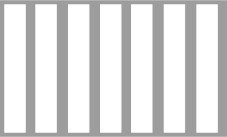
Understand the P-10 'Pedestrian Crossing' Road Sign and Your Obligations

Understand the P-11 Bicycle Crossing Road Sign and Cyclist Priority
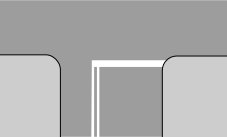
The P-12 Absolute Stop Line: You MUST stop here, no exceptions!
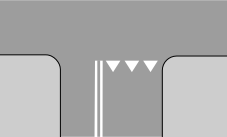
The P-13 'Conditional Stop Line' – Know When to Stop and Yield!
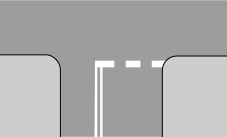
Know When to Stop: The P-14 Conditional Stop Line Explained

Prepare to yield: Understand the P-15 floor yield triangle road marking.

The P-16 'STOP' road marking means you must stop – even without a vertical sign!
After reviewing the full list of Polish road signs, explore specific sign categories for in-depth understanding. Challenge your knowledge with practice questions focused on sign recognition and interpretation to solidify your preparation for the driving theory exam.
Browse All Polish Road Signs