
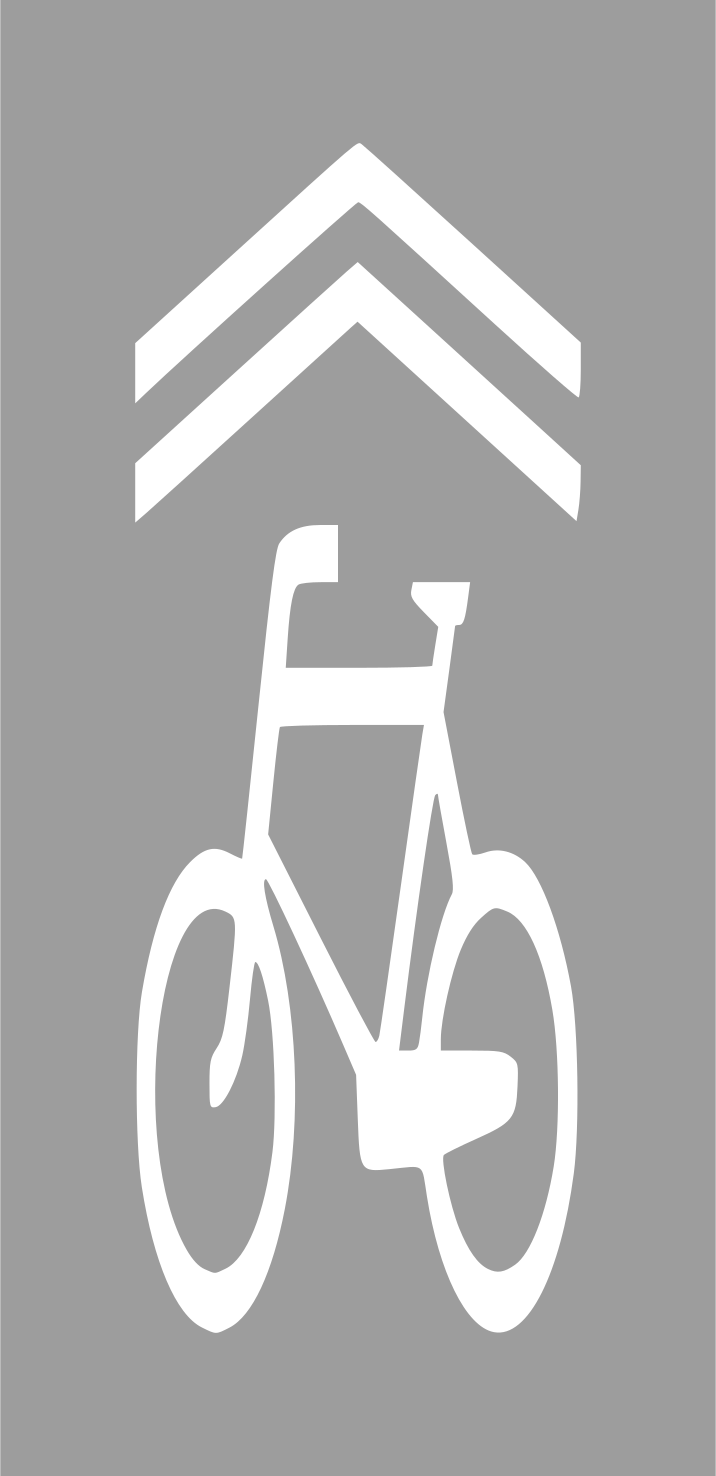
The P-27 road marking, often called a 'sharrow', indicates the recommended path and direction for cyclists on roads without a dedicated bike lane. It features a bicycle symbol with two chevrons above, guiding cyclists to a safe position and reminding motorists to share the lane. While it's a safety guide, not a mandatory lane, drivers should always give cyclists ample space and avoid harassment.
The P-27 marking is crucial for safe shared road use, indicating proper cyclist positioning and alerting drivers to bicycle presence. Correctly interpreting this traffic sign explanation is vital for both cyclist safety and your Polish driving theory test revision, ensuring you navigate roads effectively.
The P-27 marking, often called a 'sharrow' (shared arrow), consists of a bicycle symbol with two chevrons above it. It is used on roads where a dedicated bike lane is not present. It informs cyclists where they should position themselves for safety (usually away from the 'door zone' of parked cars) and reminds motorists that cyclists are likely to be present and sharing the lane. It also indicates the correct direction of travel for the cyclist.
Indicates the recommended path and direction for cyclists on the roadway.
Get clear, practical answers to the most common questions about the P-27 - Bicycle Direction and Path road sign. Learn how the sign works, what rules it represents, and how it affects real driving situations. This FAQ strengthens your understanding and supports accurate decision making for the Polish driving theory exam in Poland.
The P-27 marking shows cyclists where they should ride on the road for their safety and indicates the direction of travel. It reminds drivers that they need to share the lane with cyclists and give them sufficient space.
No, the P-27 marking is a suggestion and safety guide, not a mandatory exclusive lane. Cyclists can ride over the symbols to maintain a safe position, and drivers can share the lane, provided they give cyclists plenty of room.
Drivers should be aware that cyclists are likely to be present and should be prepared to share the lane. It is crucial to give cyclists following the P-27 markings ample space, especially when overtaking, and never harass or crowd them.
A common trap is assuming the P-27 is a dedicated bike lane, which it is not. Learners might also forget that cyclists should ideally ride in the direction indicated by the chevrons and not in the opposite direction, which is prohibited.
While the P-27 is a recommendation for safety, cyclists should ideally follow its guidance. Riding in the opposite direction of the chevrons shown on the sign is prohibited, as it poses a significant safety risk.
Parking directly on top of the P-27 symbol is not advisable as it obscures the marking for other road users, particularly cyclists. While not strictly prohibited everywhere, it goes against the spirit of sharing the road safely.
A clear reference image of the P-27 - Bicycle Direction and Path road sign used in Poland.
The P-27 - Bicycle Direction and Path road sign may also be known by these alternative names or terms.
The P-27 - Bicycle Direction and Path road sign is part of the Road Markings (P) category, which groups together signs with similar rules and functions.
Reviewing related road markings like the P-27 helps solidify your understanding and reduces confusion during your theory test revision. Comparing similar road signs is key to mastering sign recognition and passing your driving theory exam in Poland.

The P-1 Single Dashed Line: Your guide to safe lane changes and overtaking in Poland.
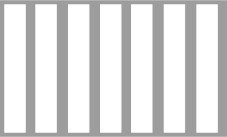
Understand the P-10 'Pedestrian Crossing' Road Sign and Your Obligations

Understand the P-11 Bicycle Crossing Road Sign and Cyclist Priority
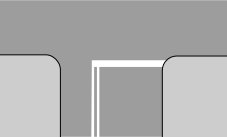
The P-12 Absolute Stop Line: You MUST stop here, no exceptions!
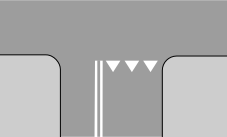
The P-13 'Conditional Stop Line' – Know When to Stop and Yield!
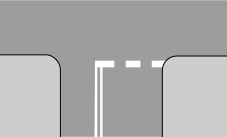
Know When to Stop: The P-14 Conditional Stop Line Explained

Prepare to yield: Understand the P-15 floor yield triangle road marking.

The P-16 'STOP' road marking means you must stop – even without a vertical sign!
Deepen your understanding of specific road signs by reviewing official Polish traffic rules and associated real-world driving scenarios. These expert-led resources help you bridge the gap between visual recognition and practical exam application.
Navigating the rules regarding bike paths and road usage is a critical aspect of Polish traffic law. This guide clarifies when a cyclist is obligated to use a designated path marked by a C-13 sign and identifies the rare situations where road use is legally permitted. By mastering these regulations, you will better understand road safety, priority rules, and how to anticipate the actions of cyclists to pass your Polish driving theory exam with confidence.
Don't Be a Road Block: Master Minimum Speeds and Smooth Traffic Flow for Your Polish Exam!
Learning how to interact with law enforcement is a crucial part of your driver training in Poland, as it helps you understand the legal procedures governing roadside controls. This guide clarifies how officers identify themselves, what behaviors are expected of you as a driver, and how traffic enforcement impacts your penalty points and record. Mastery of these rules ensures you remain compliant with the law and prepared for any roadside situation you may encounter.
Even a Second Can Be Fatal: Understand Microsleep to Drive Safely in Poland.
The R-4b is a more prominent version of the turn sign, used for significant regional or national routes. It features the route's specific logo and a large arrow. Because major routes often attract riders who are not local, these signs must be highly visible from a distance to ensure smooth navigation without stopping. It effectively says, 'The main cycling highway continues this way.'
The A-24 sign is used before bicycle crossings on high-speed roads or where a cycle path ends and joins the main road. Cyclists are vulnerable road users and can be harder to see than cars. This sign is a reminder to check your mirrors and blind spots carefully. In many cases, cyclists on a designated crossing have priority, similar to pedestrians on a zebra crossing.
After reviewing the full list of Polish road signs, explore specific sign categories for in-depth understanding. Challenge your knowledge with practice questions focused on sign recognition and interpretation to solidify your preparation for the driving theory exam.
Browse All Polish Road Signs