
The P-24 marking, easily recognised by the international wheelchair symbol, designates parking spaces exclusively for vehicles used by or for people with disabilities. These specially marked bays, often highlighted with blue paint in Poland for extra visibility, are a crucial part of ensuring accessibility. Remember, only vehicles displaying a valid disability card are permitted to park here, and failure to comply can result in penalties.
This P-24 disabled parking symbol designates reserved spaces vital for accessibility across Poland. Proper sign interpretation ensures drivers respect legal parking rights, avoid fines, and understand Polish traffic rules for their theory test revision.
The P-24 marking features the international symbol of a person in a wheelchair. This spot is legally reserved for vehicles carrying an authorized person with a valid disability parking card. These spaces are usually wider and located closer to building entrances for convenience. In Poland, these spots are often painted with a blue background to make them even more visible and to deter unauthorized parking.
Indicates a parking space reserved for vehicles used by or for people with disabilities.
Get clear, practical answers to the most common questions about the P-24 - Disabled Parking Symbol road sign. Learn how the sign works, what rules it represents, and how it affects real driving situations. This FAQ strengthens your understanding and supports accurate decision making for the Polish driving theory exam in Poland.
The P-24 road sign indicates a parking space reserved for vehicles used by or for people with disabilities. It features the international symbol of a person in a wheelchair, often on a blue background in Poland, to signify this special designation and ensure accessibility.
Only vehicles transporting a person with a disability and displaying a valid, clearly visible disability card are permitted to park in a P-24 spot. This permit authorises the use of these specially allocated spaces, which are typically located for convenient access.
You must not park in a P-24 disabled parking bay unless you have a valid disability card and are using the vehicle for or by a person with a disability. Even stopping briefly to wait for someone is prohibited, as the space must remain available for its intended users.
Parking in a P-24 disabled parking space without the proper authorisation and permit is prohibited and can lead to fines. It's essential to respect these reserved bays to ensure that those who rely on them have the necessary access.
Yes, the blue background often used with the P-24 marking in Poland is an additional visual cue to highlight that the parking space is reserved. It helps draw attention to the wheelchair symbol and reinforces the mandatory nature of the restriction for unauthorized drivers.
No, using a fake or expired disability card to justify parking in a reserved disabled spot is illegal and carries penalties. Only a genuine, current disability permit will allow you to use these parking spaces.
A clear reference image of the P-24 - Disabled Parking Symbol road sign used in Poland.
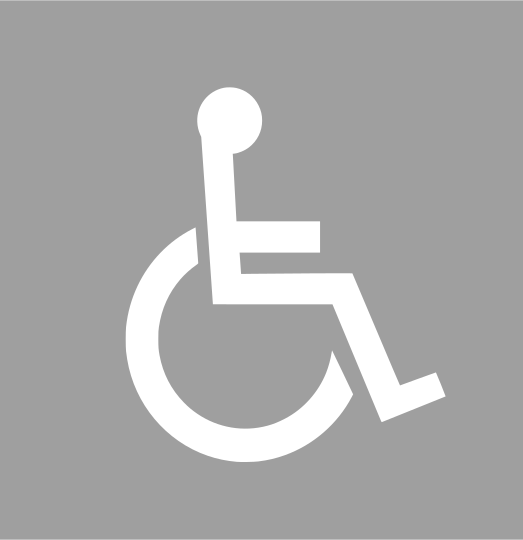
The P-24 - Disabled Parking Symbol road sign may also be known by these alternative names or terms.
The P-24 - Disabled Parking Symbol road sign is part of the Road Markings (P) category, which groups together signs with similar rules and functions.
Understanding similar road signs and engaging in traffic sign comparison is crucial for accurate recognition and fewer mistakes. Revising these distinctions helps solidify your driving theory test preparation and ensures you master sign recognition.

The P-1 Single Dashed Line: Your guide to safe lane changes and overtaking in Poland.
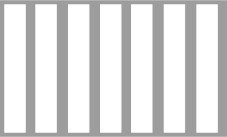
Understand the P-10 'Pedestrian Crossing' Road Sign and Your Obligations

Understand the P-11 Bicycle Crossing Road Sign and Cyclist Priority

The P-12 Absolute Stop Line: You MUST stop here, no exceptions!
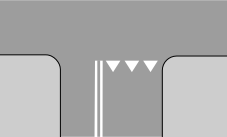
The P-13 'Conditional Stop Line' – Know When to Stop and Yield!
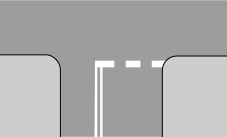
Know When to Stop: The P-14 Conditional Stop Line Explained

Prepare to yield: Understand the P-15 floor yield triangle road marking.

The P-16 'STOP' road marking means you must stop – even without a vertical sign!
Deepen your understanding of specific road signs by reviewing official Polish traffic rules and associated real-world driving scenarios. These expert-led resources help you bridge the gap between visual recognition and practical exam application.
The A-30 sign serves as a vital warning for drivers to prepare for unexpected hazards that fall outside standard category signs. This guide clarifies how the sign is paired with supplementary plates to indicate risks like blind or deaf pedestrians, and outlines the mandatory safety behaviors required by Polish traffic law. You will learn the legal expectations for driver conduct to ensure you are fully prepared for hazard perception questions in your theory exam.
Master Your Rights and Obligations During a Polish Roadside Inspection
Learning how to interact with law enforcement is a crucial part of your driver training in Poland, as it helps you understand the legal procedures governing roadside controls. This guide clarifies how officers identify themselves, what behaviors are expected of you as a driver, and how traffic enforcement impacts your penalty points and record. Mastery of these rules ensures you remain compliant with the law and prepared for any roadside situation you may encounter.
Don't Be a Road Block: Master Minimum Speeds and Smooth Traffic Flow for Your Polish Exam!
The E-15c sign features white letters and numbers on a blue background. In Poland, motorways are the highest class of road, featuring at least two lanes in each direction, a hard shoulder, and no flat intersections. These are often toll roads. The blue color is the primary indicator that you are on or approaching an 'Autostrada'.
The D-6b sign combines the functions of the D-6 and D-6a signs. It is used in locations where a sidewalk and a bicycle path run parallel and cross the road at the same point. The sign displays both the pedestrian and the bicycle silhouettes within the white triangle on a blue background. Drivers are obligated to treat this crossing with extreme care, yielding to both people on foot and those on bikes. The same rules regarding overtaking and parking apply here as with standard crossings.
After reviewing the full list of Polish road signs, explore specific sign categories for in-depth understanding. Challenge your knowledge with practice questions focused on sign recognition and interpretation to solidify your preparation for the driving theory exam.
Browse All Polish Road Signs