
This lesson guides you through the critical procedures for managing vehicle breakdowns and fire emergencies as a professional bus driver. As part of our Category D training, you will learn how to protect passengers and secure the scene in accordance with Danish safety regulations. Mastering these skills is essential for both your theory exam and your professional duty of care.
Lesson content overview
Operating a passenger transport vehicle, such as a bus, carries significant responsibility. Drivers must be prepared to handle unforeseen incidents like vehicle breakdowns and fires, which can compromise the safety of passengers and other road users. This lesson provides a comprehensive guide to managing these emergencies, emphasizing immediate safe action, scene securement, appropriate fire response, and legal reporting obligations for Danish Category D licence holders.
Prompt and correct actions during a breakdown or fire are crucial. They safeguard the driver, passengers, and other road users, minimizing the risk of injury and property damage.
A vehicle breakdown refers to any unexpected loss of power or functionality that renders the vehicle unable to move under its own power. This can range from mechanical failures, such as engine trouble or transmission issues, to electrical problems like a dead battery or alternator malfunction. For a passenger transport driver, the primary concern is to bring the vehicle to a safe stop and manage the immediate aftermath.
The first and most critical step in any breakdown scenario is to stop the vehicle as soon as possible in the safest available location. This means choosing a spot that minimizes obstruction to traffic flow and reduces the risk of further hazards. Ideally, this would be a hard shoulder on a motorway, a dedicated lay-by, or a wide roadside area away from bends or junctions.
Activate Hazard Lights: Immediately switch on your vehicle's hazard warning lights (often indicated by a red triangle button). This alerts other drivers to an unexpected hazard.
Safe Location: Steer the vehicle to the safest possible location. If on a motorway, aim for the hard shoulder. On rural roads, look for a lay-by or wide verge. Avoid stopping on bends, hills, or in tunnels where visibility is poor.
Bring to a Complete Stop: Once a safe location is identified, bring the vehicle to a controlled, complete stop. Engage the parking brake.
Assess the Situation: Briefly evaluate the nature of the breakdown and the immediate surroundings. Are passengers safe inside the vehicle? Is there any smoke or fire?
Failing to stop in a safe location can significantly increase the risk of secondary accidents, especially on busy roads or in poor visibility. It is a mandatory requirement to prioritize safety for everyone involved.
Once the vehicle is safely stopped, the next priority is to secure the scene to warn approaching traffic and protect both passengers and the driver. Effective scene securement is vital to prevent rear-end collisions and other incidents caused by unexpected obstacles on the road.
The Danish traffic regulations mandate the use of specific warning devices to alert other road users. As a professional driver, you must carry these and know how to use them correctly.
A reflective, triangular device placed on the road surface behind a stopped vehicle to warn approaching traffic of an obstruction or hazard.
Also known as hazard warning lamps, these lights cause all of the vehicle's turn signal lamps to flash simultaneously, signaling an emergency or danger.
Garments designed to make the wearer easily seen in all lighting conditions and against complex backgrounds, typically featuring fluorescent material and retro-reflective strips.
Prioritize Your Safety: Before exiting the vehicle, put on high-visibility clothing. This is crucial, especially on busy roads or in low light, to ensure you are seen by passing traffic.
Place the Warning Triangle: Exit the vehicle cautiously. Walk along the hard shoulder or verge, facing oncoming traffic, and place the warning triangle at the legally required distance behind your vehicle.
Required Distances for Warning Triangles:
Ensure Visibility: Make sure the warning triangle is clearly visible and not obstructed by terrain or other objects. In adverse weather (heavy rain, fog) or darkness, consider increasing these distances if safe to do so.
Never attempt to place a warning triangle if it puts you in immediate danger from fast-moving traffic. Your safety is paramount.
Leaving the vehicle without activating hazard lights or deploying a warning triangle can lead to a serious secondary collision, making these actions mandatory.
Vehicle fires, though less common than breakdowns, pose a much greater immediate threat to life and property. As a Category D driver, you must understand potential fire hazards, prevention measures, and the correct response should a fire occur.
Fires in passenger transport vehicles can originate from several sources:
To effectively combat a fire, it's essential to understand its class, as different types of fires require different extinguishing agents. Danish regulations align with international fire classification standards.
Prevention is always better than cure. Regular vehicle maintenance, including checks of electrical systems, fuel lines, and engine components, significantly reduces the risk of fire. Drivers should also avoid carrying unnecessary flammable materials and ensure any on-board equipment is properly stored and maintained.
All passenger transport vehicles are legally required to carry functional fire extinguishers. Drivers must know where they are located, what type they are, and how to use them correctly.
The most common types of extinguishers found in buses are:
Before starting your shift, always check the location of the fire extinguisher(s), confirm they are easily accessible, and visually inspect their pressure gauge (if applicable) and expiry date.
If a fire starts, follow these steps, often remembered by the acronym PASS:
P - Pull the Pin: Remove the safety pin or tab, breaking the tamper seal.
A - Aim at the Base: Point the nozzle or hose at the base of the fire, not the flames.
S - Squeeze the Handle: Press the operating lever to release the extinguishing agent.
S - Sweep Side-to-Side: Sweep the nozzle from side to side across the base of the fire until it appears to be out. Continue to monitor for re-ignition.
If the fire is too large, spreading rapidly, or if you feel unsafe, prioritize evacuation of passengers and yourself. Your life is more valuable than the vehicle.
Reporting breakdowns and fires is a mandatory legal obligation in Denmark and a critical part of a professional driver's duty. Timely and accurate reporting ensures that appropriate assistance is dispatched, traffic authorities are informed, and the transport company can manage the incident effectively.
Delayed reporting can lead to prolonged passenger inconvenience, delayed assistance, and potential legal repercussions for failing to meet your obligations.
In any emergency involving a passenger transport vehicle, the driver is responsible for the safety and well-being of the passengers. Clear communication and instructions are paramount to maintaining calm and ensuring an orderly response.
Upon stopping for a breakdown, calmly inform passengers about the situation.
If a fire or other immediate danger necessitates evacuation:
Regular practice of emergency procedures, including passenger communication, is part of being a professional driver. Familiarize yourself with all emergency exits and how to operate them.
Emergency response protocols must be flexible and adapted to the specific conditions under which an incident occurs. Factors such as weather, time of day, and the type of road can significantly impact the safest course of action.
Responding to vehicle breakdowns and fires demands a systematic, calm, and informed approach from passenger transport drivers. Your primary goal is always to ensure the safety of your passengers, yourself, and other road users, while also fulfilling your legal and professional obligations.
Regular training and familiarization with your vehicle's safety equipment are indispensable for managing these critical situations successfully.
This lesson covers critical emergency procedures for professional bus drivers, emphasizing that immediate safe stoppage and proper scene securement are the first priorities during any breakdown. Drivers must correctly deploy warning triangles at road-specific distances, wear high-visibility clothing, and activate hazard lights before exiting. For vehicle fires, understanding fire classification (A, B, C, D, F) is essential for selecting the right extinguisher type, and the PASS method provides a reliable memory framework for effective fire suppression. Legal reporting obligations require immediate notification to the transport company followed by emergency services (112) when fire, injuries, or significant hazards exist. Passenger safety remains paramount throughout, with clear communication and orderly evacuation procedures required when necessary.
A short set of high-value points that capture the most important learning from this lesson.
Always prioritize immediate safe stoppage in the safest available location to protect passengers and other road users
Correct warning triangle placement is mandatory: 30m on motorways, 15m on rural roads, 10m on residential streets
Fire classification determines extinguisher choice: Class A (solids) needs foam, Class B (liquids) and Class C (electrical) prefer CO2 or dry powder
The PASS method (Pull, Aim, Squeeze, Sweep) is the standard procedure for operating any fire extinguisher
Legal reporting to your transport company and emergency services (112) must be prompt with precise location and passenger count
Explore all units and lessons included in this driving theory course.
Hazard lights must be activated immediately upon breakdown before exiting the vehicle
Always don high-visibility clothing before leaving the vehicle to place warning devices
On motorways, passengers should remain on board unless immediate danger exists; if evacuation is needed, exit on the side away from traffic
Never use water on Class C electrical fires due to electrocution risk
Company control center is your first contact point after securing immediate safety; call 112 only for fire, injuries, or significant obstruction
Placing the warning triangle at incorrect distances, especially placing it too close on motorways where 30 meters is required
Exiting the vehicle without activating hazard lights or wearing high-visibility clothing first
Aiming the fire extinguisher at the flames rather than at the base of the fire
Failing to report the incident to the transport company before attempting to resolve the breakdown independently
Not informing passengers promptly about the situation, leading to panic or premature exits
Lesson content overview
A short set of high-value points that capture the most important learning from this lesson.
Always prioritize immediate safe stoppage in the safest available location to protect passengers and other road users
Correct warning triangle placement is mandatory: 30m on motorways, 15m on rural roads, 10m on residential streets
Fire classification determines extinguisher choice: Class A (solids) needs foam, Class B (liquids) and Class C (electrical) prefer CO2 or dry powder
The PASS method (Pull, Aim, Squeeze, Sweep) is the standard procedure for operating any fire extinguisher
Legal reporting to your transport company and emergency services (112) must be prompt with precise location and passenger count
Explore all units and lessons included in this driving theory course.
Hazard lights must be activated immediately upon breakdown before exiting the vehicle
Always don high-visibility clothing before leaving the vehicle to place warning devices
On motorways, passengers should remain on board unless immediate danger exists; if evacuation is needed, exit on the side away from traffic
Never use water on Class C electrical fires due to electrocution risk
Company control center is your first contact point after securing immediate safety; call 112 only for fire, injuries, or significant obstruction
Placing the warning triangle at incorrect distances, especially placing it too close on motorways where 30 meters is required
Exiting the vehicle without activating hazard lights or wearing high-visibility clothing first
Aiming the fire extinguisher at the flames rather than at the base of the fire
Failing to report the incident to the transport company before attempting to resolve the breakdown independently
Not informing passengers promptly about the situation, leading to panic or premature exits
Explore search topics learners often look for when studying Responding to Vehicle Breakdowns and Fires. These topics reflect common questions about road rules, driving situations, safety guidance, and lesson level theory preparation for learners in Denmark.
Browse additional driving theory lessons that cover connected traffic rules, road signs, and common driving situations related to this topic. Improve your understanding of how different rules interact across everyday traffic scenarios.
Learn vital protocols for handling vehicle breakdowns, fires, and passenger evacuations in Danish passenger transport. This guide covers immediate actions, scene management, and reporting for Category D drivers.
This lesson focuses on the driver's role as a leader during an emergency evacuation. It covers how to assess a situation, make the decision to evacuate, and provide clear, calm instructions to passengers. The content details the location and operation of all emergency exits and procedures for assisting passengers with reduced mobility to a safe gathering point.

This lesson provides a clear action plan for handling emergencies on the road. It explains how to secure an accident scene using a warning triangle, when and how to call the emergency number 112, and the fundamentals of providing basic first aid. You will also learn the safe procedure for dealing with a vehicle breakdown to protect yourself and other road users.
This lesson provides a step-by-step guide for managing a vehicle breakdown safely. It instructs the rider on moving the vehicle to a safe location, making it visible to other traffic using hazard lights, and personal safety while waiting for assistance. The importance of staying away from active traffic lanes is a key point.
This lesson provides an overview of essential first aid principles relevant to a transport environment. It covers how to assess a casualty, perform basic life support, and manage common injuries until professional help arrives. The content also details the correct procedure for contacting emergency services, providing clear and accurate information, and completing required incident reports.
This lesson covers the immediate actions to take at the scene of an accident. It explains how and when to call the Danish emergency number 112, and what information to provide to the operator. The content also includes the principles of securing an accident scene to prevent further incidents and basic first aid concepts.
This lesson provides a clear, safety-oriented protocol for handling a vehicle breakdown or tyre failure. It covers how to safely maneuver the vehicle to the roadside, the correct use of hazard lights and warning triangles to alert other traffic, and procedures for contacting assistance. Adhering to these steps, as required by Danish law, is critical for protecting yourself and other road users from further incident.
This lesson prepares drivers for critical incidents, including vehicle fires, significant load loss, and traffic collisions. It explains fire prevention measures and the proper use of an on-board fire extinguisher. The content also outlines the legal and safety procedures for responding to an accident scene, including securing the area, reporting the incident to emergency services, and providing basic first aid if necessary.
This lesson outlines a step-by-step procedure for managing a mechanical breakdown on the road. It covers moving the motorcycle to a safe location, using hazard lights, and wearing high-visibility clothing. The goal is to ensure personal safety while minimizing disruption and danger to other traffic.
This lesson covers strategies for safely managing passenger movement at bus stops. It provides guidance on directing passenger flow, encouraging the use of handrails, and providing assistance to those who need it. The content emphasizes the driver's observational role in preventing slips, trips, and falls, particularly during peak hours or in adverse weather.
Master fire classification, common causes, and prevention strategies for passenger vehicles. This lesson details how to effectively use different types of fire extinguishers according to Danish regulations.
This lesson prepares drivers for critical incidents, including vehicle fires, significant load loss, and traffic collisions. It explains fire prevention measures and the proper use of an on-board fire extinguisher. The content also outlines the legal and safety procedures for responding to an accident scene, including securing the area, reporting the incident to emergency services, and providing basic first aid if necessary.
This lesson explains the regulations governing the use of dedicated bus lanes in Denmark. It covers when it is permissible to enter and exit these lanes, how to merge safely with general traffic, and the meaning of specific road markings. The content also details how public transport priority systems at traffic lights work and how drivers should respond to them.

This lesson provides a comprehensive overview of a vehicle's lighting systems and their proper use. It covers the functions of low and high beams, fog lights, and all signal lights, emphasizing their importance for visibility and communication with other drivers. The material explains the legal requirements for using lights in various conditions, including daytime, darkness, and adverse weather, as specified by Danish regulations.
This lesson provides an overview of essential first aid principles relevant to a transport environment. It covers how to assess a casualty, perform basic life support, and manage common injuries until professional help arrives. The content also details the correct procedure for contacting emergency services, providing clear and accurate information, and completing required incident reports.
Properly functioning lighting and signaling systems are fundamental for safe communication on the road. This lesson details the purpose and correct use of all exterior lights, including headlights, brake lights, turn signals, and hazard lights, according to Danish law. It emphasizes the driver's responsibility to ensure these systems are clean and operational to maintain visibility and clearly signal maneuvers to other road users.
This lesson focuses on the safe and correct operation of passenger vehicle doors. It covers the different types of door mechanisms and the importance of monitoring the door area to prevent injury during boarding and alighting. The content details Danish regulations regarding door safety systems and the driver's responsibility to ensure doors are fully closed and secured before moving.
This lesson covers strategies for safely managing passenger movement at bus stops. It provides guidance on directing passenger flow, encouraging the use of handrails, and providing assistance to those who need it. The content emphasizes the driver's observational role in preventing slips, trips, and falls, particularly during peak hours or in adverse weather.
This lesson provides a clear, safety-oriented protocol for handling a vehicle breakdown or tyre failure. It covers how to safely maneuver the vehicle to the roadside, the correct use of hazard lights and warning triangles to alert other traffic, and procedures for contacting assistance. Adhering to these steps, as required by Danish law, is critical for protecting yourself and other road users from further incident.
This lesson focuses on the driver's role as a leader during an emergency evacuation. It covers how to assess a situation, make the decision to evacuate, and provide clear, calm instructions to passengers. The content details the location and operation of all emergency exits and procedures for assisting passengers with reduced mobility to a safe gathering point.
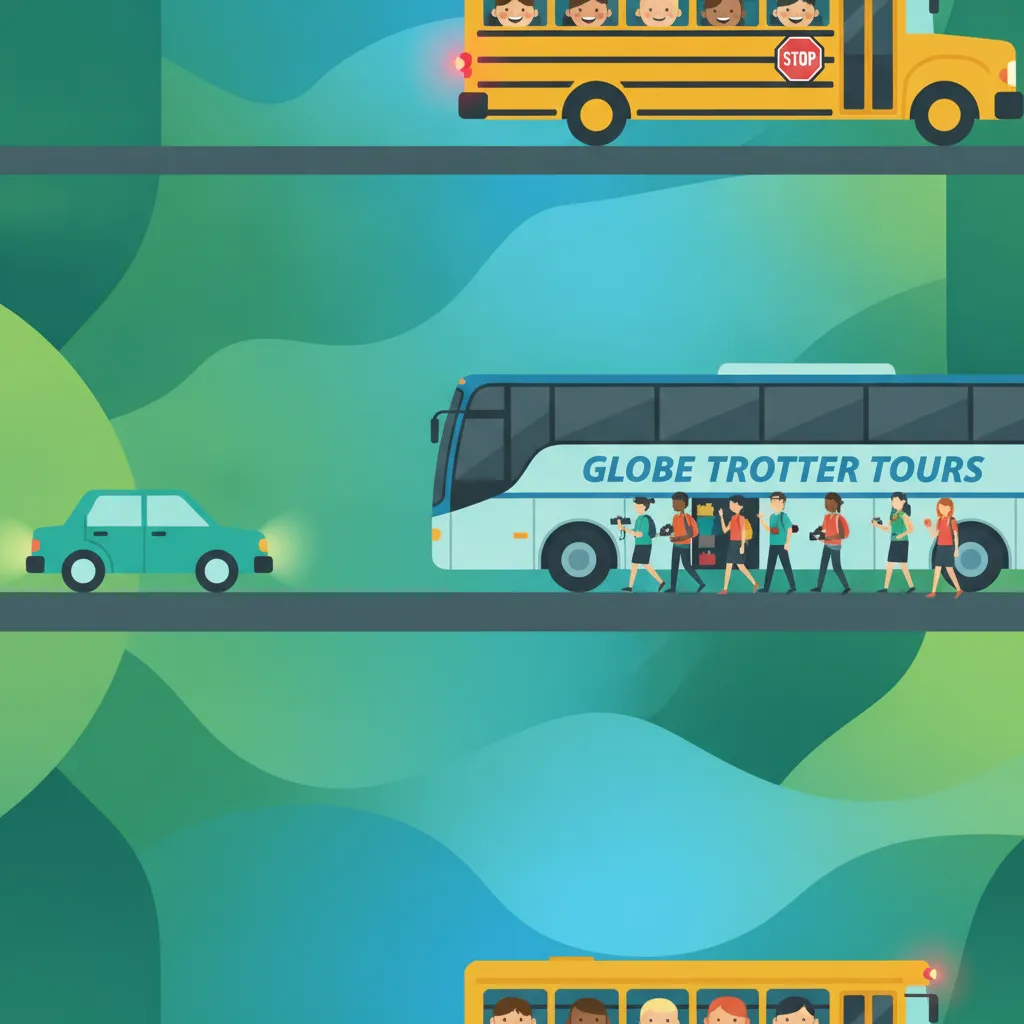
This lesson addresses the specific challenges of school and tourist transport. It outlines heightened safety protocols for stops near schools, including monitoring child behavior and working with school patrols. The content also covers techniques for managing large groups of tourists, dealing with luggage, and providing clear information at popular destinations.
Find clear answers to common questions learners have about Responding to Vehicle Breakdowns and Fires. Learn how the lesson is structured, which driving theory objectives it supports, and how it fits into the overall learning path of units and curriculum progression in Denmark. These explanations help you understand key concepts, lesson flow, and exam focused study goals.
Safety is the priority. You must move the vehicle to a safe location if possible, activate hazard lights, ensure passenger safety, and then place warning devices like warning triangles at the appropriate distance to alert approaching traffic.
The exam focuses on your ability to recognize fire hazards, know the location of emergency equipment, and understand the immediate evacuation and suppression priorities required by Danish law.
Yes, you must know the type of extinguisher available on your vehicle and its suitability for specific fire types, such as electrical or engine fires, as dictated by standard passenger transport safety protocols.
You are required to notify your company dispatch center immediately to coordinate passenger transfers or vehicle recovery, and notify emergency services if the situation poses a threat to public safety.
Use our powerful search tool to pinpoint specific Danish driving theory topics, road signs, or traffic situations you need to review. Start exploring relevant practice sets now to reinforce your knowledge and build confidence for your upcoming driving licence exam.