
This lesson introduces the critical physics of stopping your moped or speed pedelec, a fundamental skill for passing the Belgian Category AM exam. You will learn to distinguish between reaction and braking distances while mastering the control techniques required to handle your vehicle safely in various road conditions.
Lesson content overview
Operating a moped or speed pedelec safely on Belgian roads requires more than just understanding traffic rules; it demands a deep comprehension of how your vehicle stops. This lesson delves into the crucial principles of effective braking, distinguishing between controlled deceleration and emergency stops, and explaining how various factors influence the total distance needed to bring your small vehicle to a halt. Mastering these techniques is fundamental for preventing accidents, maintaining control, and ensuring your safety as an AM license holder.
When faced with a hazard on the road, the distance your moped travels before coming to a complete stop is not instantaneous. This total distance is a critical safety parameter that every rider must understand. It is comprised of two distinct phases: the time it takes for you to react to the hazard, and the time it takes for your vehicle's brakes to bring it to a standstill.
The total stopping distance is the sum of the distance covered while the driver perceives a hazard and decides to act (reaction distance), plus the distance covered from the moment the brakes are applied until the vehicle is completely stationary (braking distance). This combined distance represents the absolute minimum space you need to avoid a collision after identifying a danger.
Understanding this concept is paramount for maintaining safe following distances, particularly crucial for vulnerable road users like moped riders. If you don't leave enough space, you simply won't have the physical room or time to stop, regardless of your braking skill.
Reaction distance is the distance your moped travels during your perception-reaction time. This is the interval from when you first notice a hazard until you physically begin to apply the brakes. Even if your brakes are in perfect condition, your own response time directly influences how much ground you cover before any braking force is exerted.
Several factors significantly impact an AM driver's reaction time. Alertness, fatigue, age, and any impairment (such as from alcohol or certain medications) can dramatically lengthen this period. A driver who is distracted or tired will take longer to react, covering more distance before they even touch the brake levers. For instance, at 50 km/h, an average reaction time of 1.5 seconds translates to approximately 14 meters traveled before braking even begins. This seemingly small distance can be the difference between avoiding an accident and being involved in one.
The braking distance is the distance your moped travels from the moment you apply the brakes until it comes to a complete stop. Unlike reaction distance, which is primarily a human factor, braking distance is heavily influenced by physics and external conditions.
The most critical factor affecting braking distance is speed. The kinetic energy of a moving vehicle increases quadratically with speed, meaning if you double your speed, your braking distance quadruples. This is a fundamental principle of physics that drivers often underestimate. Other significant factors include the condition of the road surface (dry, wet, icy), the quality and condition of your tires, the efficiency and maintenance of your moped's braking system, and the overall load of your vehicle. A moped carrying a heavy load, for example, will require a longer distance to stop due to increased inertia.
Always remember that the braking distance is not constant. It can vary significantly based on speed, road conditions, and your moped's maintenance. Never assume the same stopping power in all situations.
Effective braking is a skill that distinguishes a safe and confident rider from a novice. There are different techniques for different situations, and knowing when and how to apply each is vital for controlling your small vehicle.
Progressive braking, also known as gentle or controlled braking, is the standard technique for everyday riding. It involves applying the brakes with gradually increasing pressure. Instead of grabbing the brakes suddenly, you squeeze the levers (or press the pedal) gently at first, and then gradually increase the pressure as needed to achieve a smooth and controlled deceleration.
The primary purpose of progressive braking is to maintain vehicle stability. It allows you to slow down smoothly, giving you time to adjust your balance and avoid abrupt weight shifts that could unsettle the moped. This technique is ideal for situations like approaching traffic lights, stop signs, or making small speed adjustments in traffic. It helps prevent wheel lock-up and maintains tire grip, which is crucial for staying in control, especially on varying road surfaces.
Begin by gently squeezing the brake levers (front and/or rear).
Gradually increase the pressure, feeling for the point where the brakes effectively slow the moped without causing skidding or instability.
As your speed decreases, you may need to reduce brake pressure slightly just before coming to a complete stop for a smoother halt.
Emergency braking is a technique reserved for critical situations where you need to stop your moped as quickly as possible to avoid an immediate and serious hazard. This involves applying the brakes with maximum and firm pressure, aiming for the shortest possible stopping distance.
While the goal is to stop rapidly, it's crucial to do so without losing control. For most small vehicles like mopeds, which often lack advanced braking systems like ABS (Anti-lock Braking System), emergency braking carries a higher risk of wheel lock-up. A locked wheel will cause the moped to skid, leading to a loss of steering and balance. Therefore, practice and a calm response are essential. In an emergency, your primary focus should be to apply significant pressure to both brakes, prioritizing the front brake, without locking the wheels if possible.
Mopeds typically have independent front and rear braking systems. Understanding how to use each effectively is key to maximizing stopping power while maintaining stability.
The most effective technique is to use both brakes simultaneously in most situations. This distributes the braking force, reduces the strain on any single brake, and maximizes your stopping capability while maintaining balance. In an emergency, apply firm pressure to both, with a strong emphasis on the front brake, while always monitoring for signs of wheel lock-up.
Always practice coordinated use of both front and rear brakes in a safe, open area to develop muscle memory and understand your moped's braking limits. This will prepare you for real-world situations.
Beyond the techniques themselves, several environmental and vehicle-specific factors profoundly influence how effectively and quickly your moped can stop. Being aware of these conditions allows you to adjust your riding style and anticipate longer stopping distances.
The condition of the road surface is a primary determinant of tire grip and, consequently, braking distance.
The state of your moped itself plays a vital role in its stopping ability:
While covered under reaction distance, the driver's state merits further emphasis due to its direct impact on overall stopping performance. A driver who is tired, distracted by a mobile phone, or under the influence of alcohol or drugs will have a significantly delayed reaction time. This increases the total stopping distance, even if the vehicle's brakes are perfect. Maintaining full concentration and being well-rested are critical components of safe driving.
As a Category AM license holder, your vehicle is exposed, and your safety largely depends on your ability to react quickly and brake effectively. Any factor that impairs your concentration or physical response time greatly increases your risk.
In Belgium, the highway code emphasizes the responsibility of every driver to maintain safety, and this includes prudent braking. While specific rules on how to brake are largely based on best practices, the overarching legal framework mandates maintaining a safe following distance.
The most crucial legal requirement related to braking is to always maintain a safe distance from the vehicle in front. This distance must be sufficient to allow you to stop safely if the vehicle ahead suddenly brakes or stops. The precise distance isn't fixed in meters but is proportional to your speed, road conditions, and your total stopping distance.
A widely recommended guideline is the "3-second rule". This means you should maintain a gap of at least three seconds between your moped and the vehicle in front. To check this, pick a fixed point on the road (like a bridge or sign). When the vehicle in front passes that point, start counting "one-thousand-one, one-thousand-two, one-thousand-three." If you reach the same point before you finish counting, you are following too closely. This rule provides a flexible minimum that accounts for variations in speed.
Your braking strategy must adapt to the context of your driving environment:
Understanding the specific vocabulary associated with braking will enhance your overall comprehension and communication regarding safe driving practices.
Mastering braking techniques is a crucial step towards becoming a safe and confident AM license holder. To further enhance your understanding of vehicle control and road safety, explore related topics.
Explore all units and lessons included in this driving theory course.
Lesson content overview
Explore all units and lessons included in this driving theory course.
Explore search topics learners often look for when studying Braking Techniques and Stopping Distances. These topics reflect common questions about road rules, driving situations, safety guidance, and lesson level theory preparation for learners in Belgium.
Browse additional driving theory lessons that cover connected traffic rules, road signs, and common driving situations related to this topic. Improve your understanding of how different rules interact across everyday traffic scenarios.
Understand the physics behind braking distance, including how speed, road conditions, and vehicle load impact stopping performance for AM license holders in Belgium. Learn to anticipate and adapt.
This lesson provides a comprehensive guide to motorcycle braking techniques, explaining the distinct roles of the front and rear brakes. It covers the concept of progressive brake application for smooth, controlled stops and the factors influencing total stopping distance. You will also learn about the function of Anti-lock Braking Systems (ABS) and how to adapt your braking for different conditions.
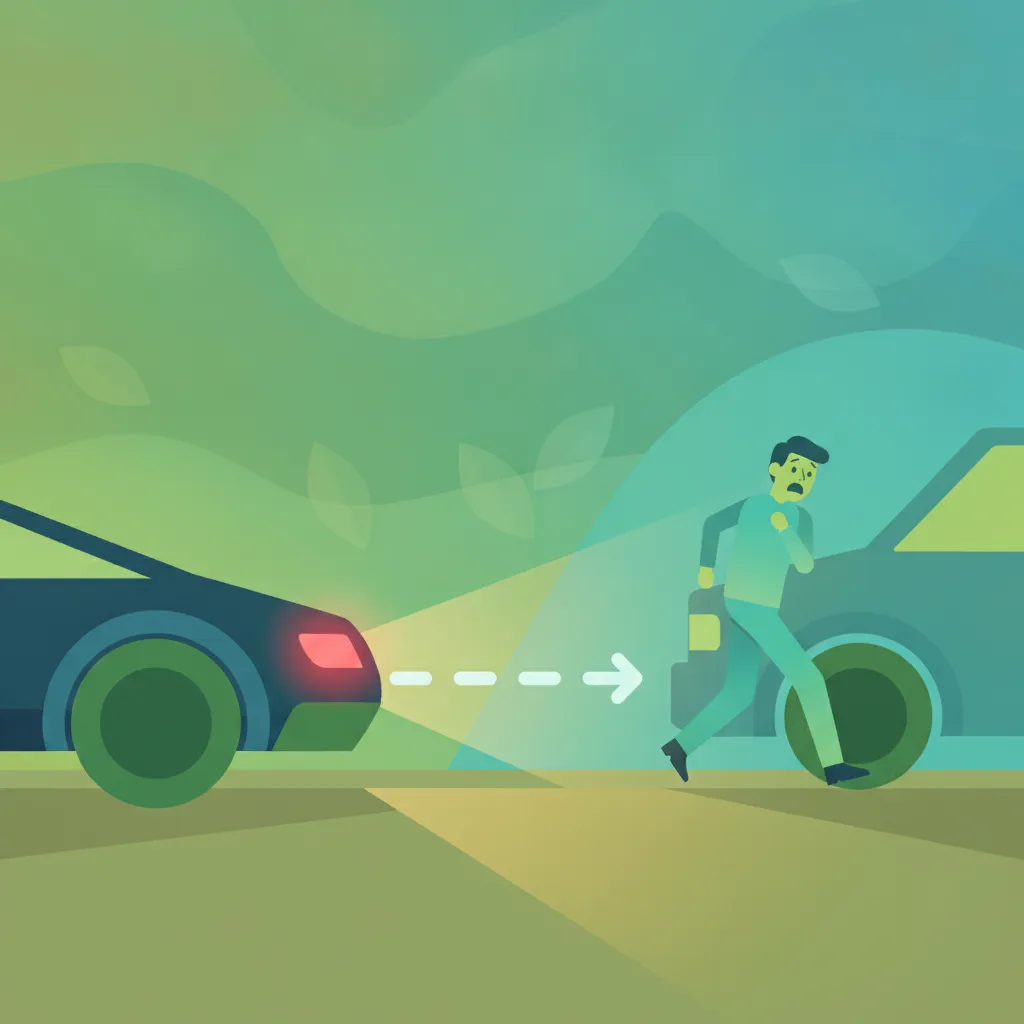
In this lesson, learners will explore the concept of a safe following distance, primarily through the application of the two-second rule. It also breaks down the components of total stopping distance: perception-reaction time and braking distance. Learners will understand how to adjust these distances based on their speed, vehicle, and current road conditions.
This lesson teaches the importance of smooth control over the vehicle's speed. It covers how to apply the throttle for gentle acceleration and how to decelerate smoothly using both the brakes and engine braking. The content encourages riders to look ahead and anticipate changes in traffic flow, allowing for gradual speed adjustments that enhance safety, comfort, and control.
This lesson focuses on driving safely in adverse weather like rain, fog, and low sun glare, which affects road friction and visibility. It provides guidelines on speed adaptation, maintaining a safe following distance, and the proper use of vehicle equipment like lights and wipers. Learners will understand how to reduce risks like hydroplaning and skidding.
This lesson focuses on the legal duties and responsibilities that an AM vehicle operator must uphold on Belgian roads. It covers critical rules such as adhering to speed limits, correctly applying right-of-way principles, and following regulations for overtaking other vehicles. The lesson also explains the system of fines and penalty points for traffic violations, emphasizing the legal consequences of non-compliance to foster responsible driving habits.
This lesson provides instruction on how to react in an emergency situation, covering techniques for performing a rapid, controlled stop. It explains how to apply maximum braking force without locking the wheels and how to manage a skid if one occurs. You will also learn about avoidance maneuvers, such as swerving, and the psychological challenge of overcoming target fixation.
This lesson provides crucial advice for riding in rainy conditions, a frequent occurrence in Belgium. It explains how water on the road surface dramatically reduces tire grip, extends stopping distances, and creates a risk of hydroplaning. Riders will learn how to adjust their speed, increase following distances, and manage reduced visibility from rain and road spray to maintain safety.
This lesson focuses on two key handling skills: maneuvering at low speeds and navigating corners safely. It provides techniques for maintaining balance and making smooth steering inputs in tight spaces. For cornering, it explains the principles of selecting an appropriate speed, choosing a safe line through the bend, and using body lean to maintain stability.
This lesson explores the concept of tire grip, or traction, and its importance for vehicle stability and control. It explains how different road surfaces, such as wet asphalt, gravel, or oily patches, can reduce grip and increase the risk of skidding. The content also highlights the role of correct tire pressure in maintaining optimal contact with the road, helping riders avoid a loss of traction.
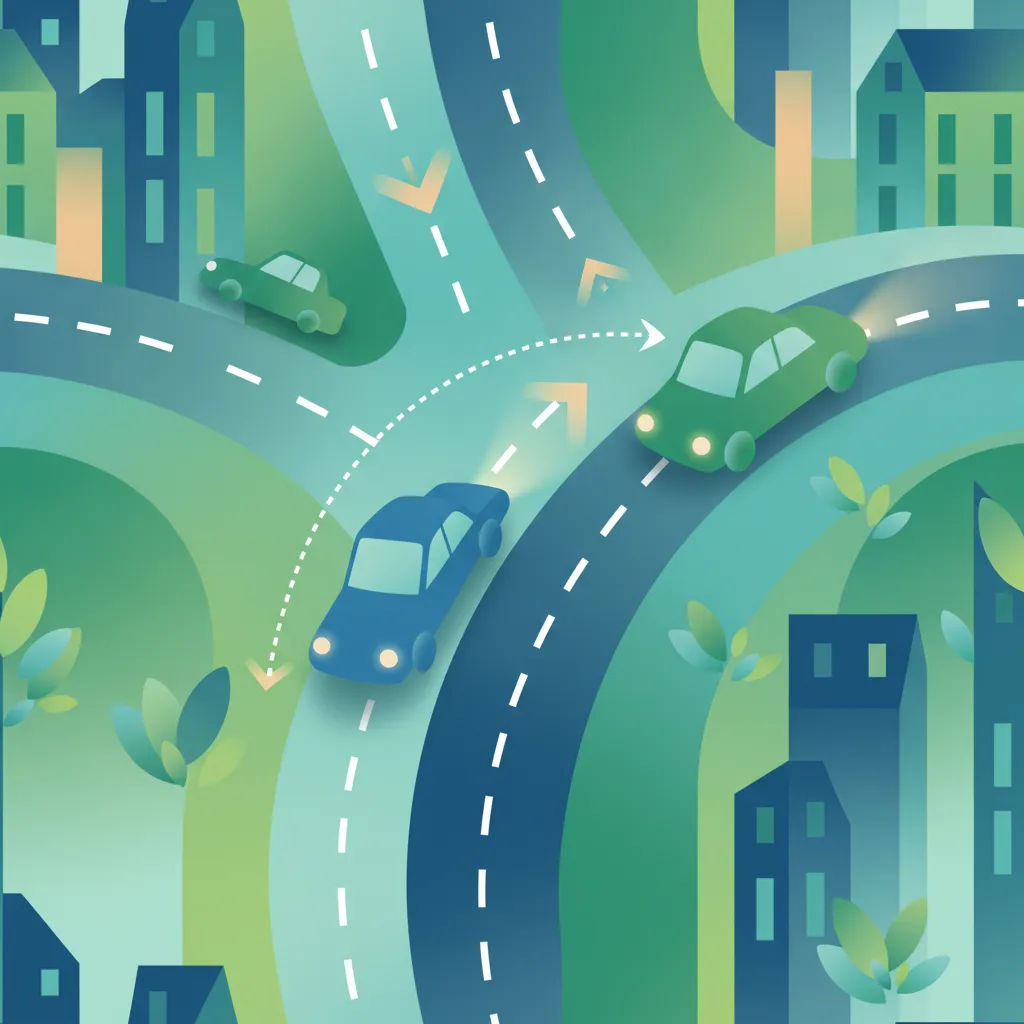
This lesson provides a step-by-step guide to executing turns and lane changes safely and efficiently. It covers the critical sequence of checking mirrors, signaling intent, and performing a head check for blind spots before any maneuver. Learners will also understand how to manage their speed and balance during cornering to maintain full control of the vehicle.
Learn the differences between controlled progressive braking and emergency braking for mopeds. Understand when to use each technique, focusing on maintaining stability and maximizing stopping power on Belgian roads.
This lesson teaches the importance of smooth control over the vehicle's speed. It covers how to apply the throttle for gentle acceleration and how to decelerate smoothly using both the brakes and engine braking. The content encourages riders to look ahead and anticipate changes in traffic flow, allowing for gradual speed adjustments that enhance safety, comfort, and control.
This lesson provides instruction on how to react in an emergency situation, covering techniques for performing a rapid, controlled stop. It explains how to apply maximum braking force without locking the wheels and how to manage a skid if one occurs. You will also learn about avoidance maneuvers, such as swerving, and the psychological challenge of overcoming target fixation.
This lesson focuses on two key handling skills: maneuvering at low speeds and navigating corners safely. It provides techniques for maintaining balance and making smooth steering inputs in tight spaces. For cornering, it explains the principles of selecting an appropriate speed, choosing a safe line through the bend, and using body lean to maintain stability.
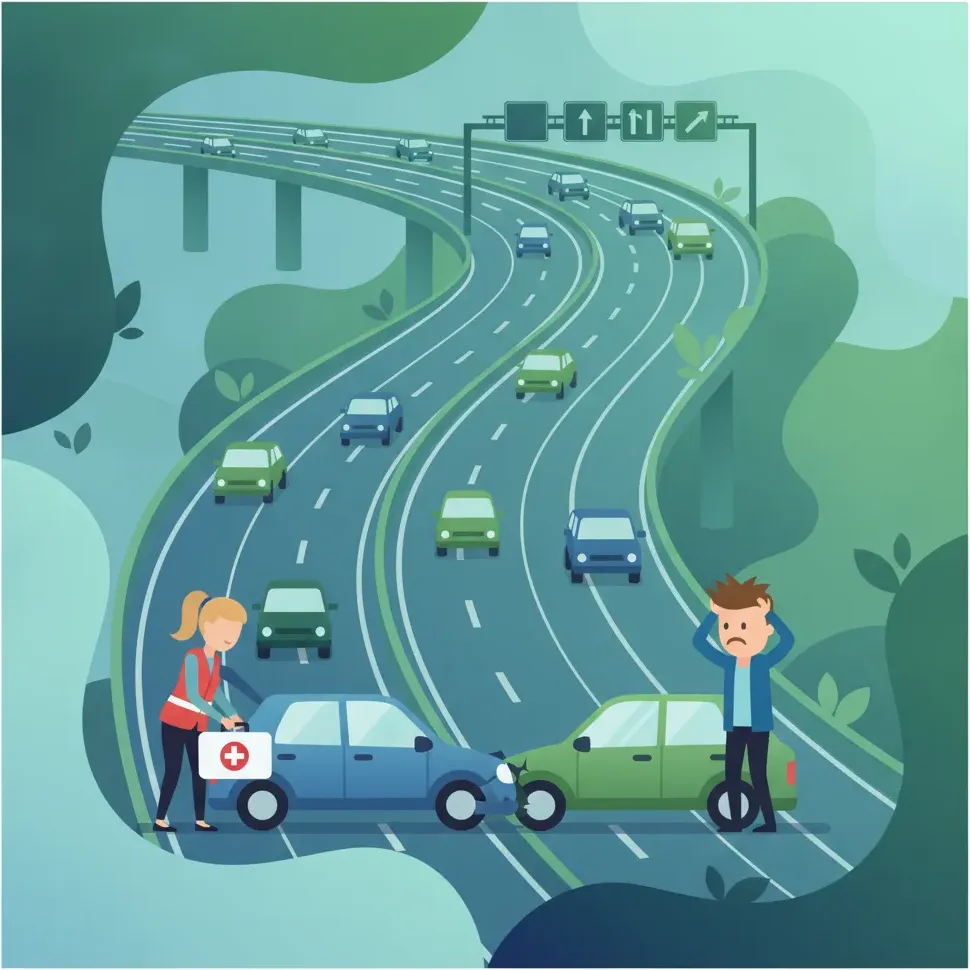
This lesson provides a clear and structured guide for responding to on-road emergencies such as a mechanical breakdown or a traffic accident. It details the steps for securing the scene safely, including the use of a warning triangle and high-visibility vest. Learners will understand how and when to contact emergency services via the 112 number and the basic principles of assisting anyone who may be injured.
This lesson provides a comprehensive guide to motorcycle braking techniques, explaining the distinct roles of the front and rear brakes. It covers the concept of progressive brake application for smooth, controlled stops and the factors influencing total stopping distance. You will also learn about the function of Anti-lock Braking Systems (ABS) and how to adapt your braking for different conditions.

This lesson provides a comprehensive overview of the mandatory lighting systems for all Category AM vehicles under Belgian law. It details the required functions of headlamps, rear lights, brake lights, and turn signals, explaining their importance for communication and visibility. Learners will understand the legal standards for this equipment and how to perform simple pre-ride checks to ensure all lights are functioning correctly.
This lesson provides crucial advice for riding in rainy conditions, a frequent occurrence in Belgium. It explains how water on the road surface dramatically reduces tire grip, extends stopping distances, and creates a risk of hydroplaning. Riders will learn how to adjust their speed, increase following distances, and manage reduced visibility from rain and road spray to maintain safety.
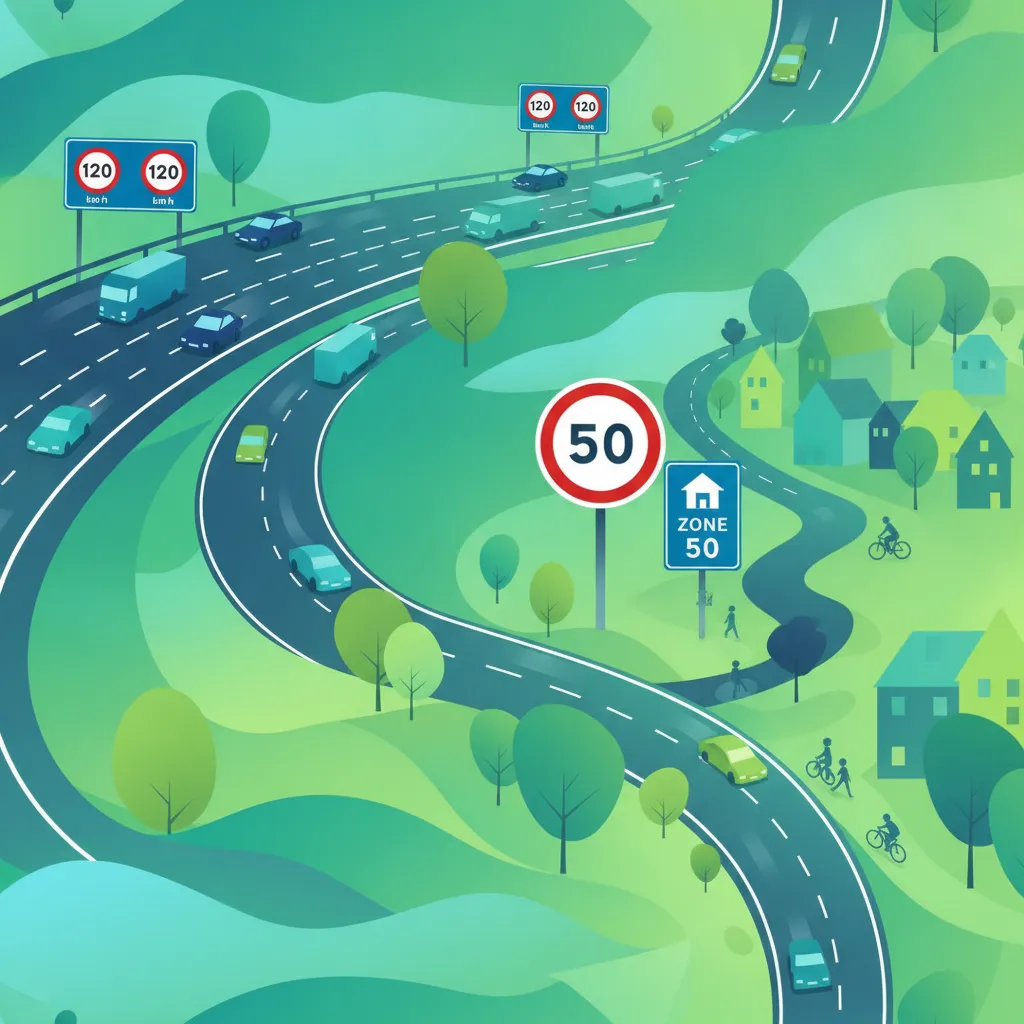
This lesson details the various legal speed limits applicable in Belgium, including those for urban, residential, and school zones. It explains the underlying safety rationale for these limits, linking speed to the severity of accidents and the time available to react to hazards. Learners will understand the difference between the maximum legal speed and a safe, appropriate speed for the prevailing conditions.
This lesson focuses on the legal duties and responsibilities that an AM vehicle operator must uphold on Belgian roads. It covers critical rules such as adhering to speed limits, correctly applying right-of-way principles, and following regulations for overtaking other vehicles. The lesson also explains the system of fines and penalty points for traffic violations, emphasizing the legal consequences of non-compliance to foster responsible driving habits.
This lesson provides a step-by-step guide to executing turns and lane changes safely and efficiently. It covers the critical sequence of checking mirrors, signaling intent, and performing a head check for blind spots before any maneuver. Learners will also understand how to manage their speed and balance during cornering to maintain full control of the vehicle.
Find clear answers to common questions learners have about Braking Techniques and Stopping Distances. Learn how the lesson is structured, which driving theory objectives it supports, and how it fits into the overall learning path of units and curriculum progression in Belgium. These explanations help you understand key concepts, lesson flow, and exam focused study goals.
Reaction distance is the space your vehicle travels from the moment you perceive a danger until you apply the brakes. Braking distance is the space covered after the brakes are applied until the vehicle stops. Together, they form your total stopping distance.
Both are important, but the front brake provides the majority of your stopping power. It must be used progressively to avoid locking the wheel, while the rear brake provides stability and control, especially on slippery surfaces.
Wet, oily, or icy surfaces significantly reduce tire grip, meaning your tires have less friction with the road. Consequently, your braking distance can double or even triple compared to dry, clean asphalt, requiring you to increase your following distance.
The exam focuses on your understanding of the relationship between speed and distance. You must understand that if you double your speed, your braking distance quadruples, making it a critical safety concept for avoiding collisions.
Ready to focus your Belgian driving theory revision? Utilize our powerful search tool to pinpoint exact topics, road signs, or difficulty levels. Engage with practice questions that directly address your learning needs and solidify your understanding of Belgian traffic laws for your upcoming exam.