
This lesson guides you through calculating safe following distances and total stopping distances, which are critical for passing your Belgian Category B theory exam. You will learn the importance of the two-second rule and how to adjust your driving behavior based on vehicle speed, surface conditions, and reaction times.
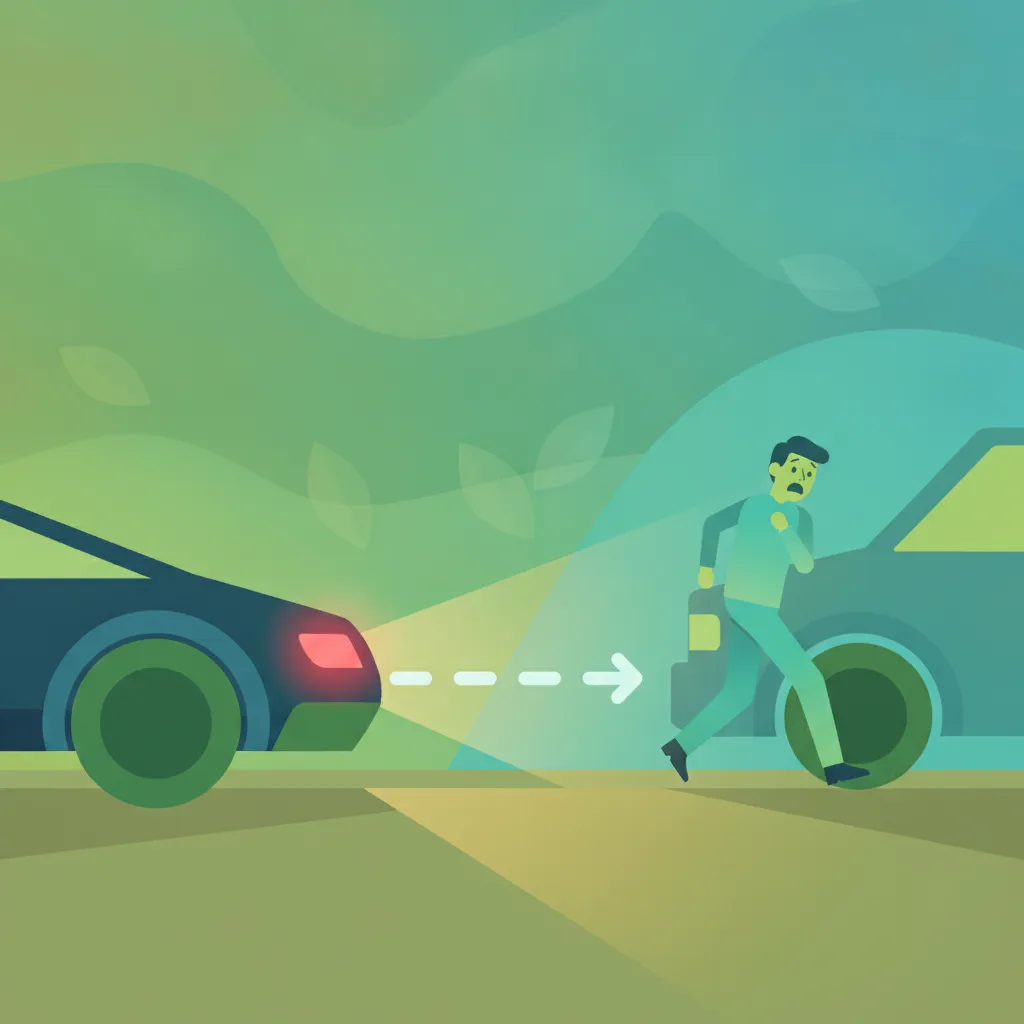
Lesson content overview
Maintaining an adequate distance from the vehicle in front of you is a fundamental principle of safe driving, crucial for anyone preparing for their Belgian Category B Driving Licence. This distance provides you with the necessary time and space to react to unexpected events, brake safely, and avoid collisions. This lesson will thoroughly explain how to determine a safe following distance using practical rules and delve into the science behind calculating your total stopping distance.
Understanding and applying proper driving distances is not merely a suggestion; it's a cornerstone of defensive driving and collision avoidance. In the dynamic environment of Belgian roads, where speeds and traffic conditions can change rapidly, ensuring sufficient space around your vehicle is your primary safety buffer. This proactive approach significantly reduces the risk of rear-end collisions, allows for smoother traffic flow, and provides you with vital seconds to perceive and react to hazards.
Beyond personal safety, maintaining appropriate distances is also a legal obligation. Belgian traffic regulations require drivers to operate their vehicles in a manner that does not endanger other road users, which implicitly includes keeping a safe distance. Failing to do so can lead to penalties and, more importantly, put lives at risk.
The Two-Second Rule is a widely accepted, practical guideline for maintaining a safe following distance under normal driving conditions. It provides a simple, speed-adaptive method to ensure you have enough time to react and stop if the vehicle ahead suddenly brakes. Unlike fixed meter distances, the two-second rule automatically adjusts for your speed: the faster you drive, the greater the physical distance covered in two seconds, thus maintaining a consistent time buffer.
The Two-Second Rule dictates that you should allow at least two seconds to pass from when the vehicle in front of you passes a fixed point on the road until your own vehicle passes that same point. This time interval accounts for your perception-reaction time and the initial phase of braking, providing a minimum margin of safety.
Applying the two-second rule is straightforward:
This method works effectively at all speeds, from urban driving to high-speed motorways, because the physical distance covered in two seconds naturally increases with your speed.
While the two-second rule serves as an excellent minimum guideline, there are many situations where you should significantly increase your following distance. These include:
When in doubt, always add more space. It's better to have too much room than not enough. A good rule of thumb in adverse conditions is to aim for a minimum of three to four seconds, or even more if visibility is severely limited.
Many drivers misunderstand or underestimate the two-second rule:
While the two-second rule is excellent for practical following distances, understanding Total Stopping Distance (TSD) provides a deeper insight into the physics of stopping a vehicle. TSD is the complete distance your vehicle travels from the moment a hazard is perceived until it comes to a complete halt. It is comprised of two distinct components:
Total Stopping Distance (TSD) = Perception-Reaction Time Distance + Braking Distance
Perception-Reaction Time (PRT) is the elapsed time from when a driver first perceives a hazard (e.g., seeing brake lights ahead) to when they react by physically starting to apply the brakes. This human element is a significant and often underestimated component of total stopping distance.
Perception involves recognizing the hazard, processing the information, and deciding on a course of action. Reaction is the physical movement of your foot from the accelerator to the brake pedal. For an average, alert, and sober driver, this time typically ranges from 1.0 to 2.3 seconds. This might seem like a small window, but at driving speeds, a vehicle covers a substantial distance in this time.
Several factors can significantly influence your perception-reaction time, making it longer and therefore increasing the distance your vehicle travels before braking even begins:
The distance covered during perception-reaction time can be calculated using a simple formula:
Perception-Reaction Distance = Speed (m/s) × Perception-Reaction Time (s)
To use this formula, you first need to convert your speed from kilometers per hour (km/h) to meters per second (m/s). A quick conversion is to divide the speed in km/h by 3.6.
Example: If you are driving at 70 km/h (which is approximately 19.4 m/s) and your perception-reaction time is 1.5 seconds:
Perception-Reaction Distance = 19.4 m/s × 1.5 s = 29.1 meters
This means you travel nearly 30 meters before your foot even touches the brake pedal, highlighting just how critical adequate following distance is.
Braking Distance (BD) is the distance a vehicle travels from the moment the brakes are first applied until it comes to a complete stop. Unlike perception-reaction time, which is primarily a human factor, braking distance is heavily influenced by the vehicle's mechanics and the road environment.
Once you have identified a hazard and moved your foot to the brake pedal, the braking system engages to decelerate the vehicle. The distance covered during this deceleration phase is the braking distance. It's the physical space required for the vehicle to shed its kinetic energy and come to a standstill.
Speed is by far the most significant factor affecting braking distance. The relationship is not linear; braking distance increases exponentially, roughly with the square of your speed. This means:
This exponential increase makes high-speed driving particularly dangerous if following distances are not greatly increased. A small increase in speed can lead to a surprisingly large increase in the distance needed to stop.
The friction between your tyres and the road surface is paramount for effective braking. Different road conditions offer varying levels of friction:
The condition of your vehicle directly impacts its ability to stop safely:
A heavier vehicle has more momentum, requiring more force and distance to stop.
Understanding the individual components of stopping distance is vital, but the real safety measure comes from combining them into the Total Stopping Distance (TSD). This is the overall space you need to bring your vehicle to a complete halt from the moment you identify a hazard.
As established earlier, the formula for total stopping distance is:
TSD = Perception-Reaction Distance + Braking Distance
Or, if we break it down further:
TSD = (Speed in m/s × Perception-Reaction Time in s) + Braking Distance
While the precise braking distance calculations involve complex physics (coefficient of friction, vehicle mass, etc.), for practical driving, it's more important to understand the proportionality and the impact of different conditions. Theoretical stopping distance charts often provide approximate figures for various speeds and conditions, which are helpful for general understanding.
Memorizing exact stopping distances for every speed and condition is impractical. Instead, focus on the principles: speed and adverse conditions dramatically increase TSD. Always assume your TSD will be longer than you think.
Let's look at some approximate total stopping distances for a typical passenger car on dry asphalt, assuming a PRT of 1.5 seconds:
At 50 km/h (Urban Area):
At 90 km/h (Rural Road/Motorway):
At 120 km/h (Motorway):
Notice how quickly the total stopping distance grows with increased speed. Now, consider these distances on a wet road, where braking distance can easily double:
This demonstrates why the two-second rule is a minimum and must be significantly extended in adverse conditions.
In Belgium, as in most European countries, the law does not typically prescribe a specific minimum following distance in meters under all circumstances. Instead, it relies on the principle of the driver's responsibility to maintain a safe distance.
The Belgian Road Code (Code de la route belge) generally states that drivers must maintain a sufficient distance from the vehicle in front to be able to stop safely in the event of a sudden slowdown or stop. This is often interpreted through a lens of common sense and the practical application of rules like the two-second rule. The responsibility lies with the driver to assess the conditions (speed, weather, road surface, vehicle condition) and adjust their following distance accordingly.
Following too closely, often referred to as "tailgating," is a common cause of rear-end collisions and is considered a serious traffic offense. If you are involved in a collision and it's determined that you were following too closely, you will likely be deemed at fault, leading to:
The general duty to maintain a safe distance is always in effect. The two-second rule is not a specific law itself, but it is the widely recommended and understood method for complying with the legal duty in practice.
Safe following and stopping distances are dynamic and must be constantly adjusted based on the prevailing circumstances. Mastering these adjustments is a mark of a skilled and responsible driver.
When visibility is poor, whether due to fog, heavy rain, or snowfall, your ability to perceive hazards is significantly reduced. This extends your effective perception-reaction time.
The environment of the road itself demands different distance considerations:
Vehicles with heavier loads or those towing trailers require considerably longer stopping distances due to increased mass and momentum.
Pedestrians, cyclists, and motorcyclists are particularly vulnerable. When following or approaching them, greater caution and space are essential.
Mastering safe following distance and understanding stopping distance calculations are critical skills for any driver, especially those pursuing a Belgian Category B Driving Licence.
By consistently applying these principles, you contribute significantly to your own safety and the safety of all road users on Belgian roads.
Safe following distance and stopping distance calculations are fundamental to Belgian driving theory. The Two-Second Rule provides a simple, practical method to maintain safe following distance by counting two seconds between your vehicle and the one ahead passing a fixed point. Total Stopping Distance consists of Perception-Reaction Distance (the distance traveled during the 1.0 to 2.3 seconds needed to perceive a hazard and begin braking) plus Braking Distance (the distance needed to actually stop once brakes are applied). Braking distance increases exponentially with speed and varies dramatically with road conditions - wet roads double braking distance while icy conditions can extend it tenfold. Belgian traffic law requires maintaining sufficient distance to stop safely, making mastery of these concepts essential for both exam success and real-world driving safety.
A short set of high-value points that capture the most important learning from this lesson.
The Two-Second Rule is a practical, speed-adaptive method to maintain safe following distance under normal conditions
Total Stopping Distance equals Perception-Reaction Distance plus Braking Distance
Braking distance increases exponentially with speed - doubling your speed roughly quadruples braking distance
Road surface conditions dramatically affect braking: wet roads can double braking distance, while icy roads may extend it five to ten times
Always increase your following gap beyond two seconds in adverse weather, when following heavy vehicles, or with reduced visibility
Explore all units and lessons included in this driving theory course.
Apply the Two-Second Rule by counting 'one thousand one, one thousand two' after the vehicle ahead passes a fixed landmark
Perception-Reaction Time typically ranges from 1.0 to 2.3 seconds for an alert driver before braking begins
At 120 km/h on dry roads, total stopping distance is approximately 120 meters (about 30 car lengths)
Perception-Reaction Distance (meters) = Speed in m/s × Perception-Reaction Time in seconds
Heavy loads, trailers, and large vehicles require significantly longer stopping distances and should be given more space
Assuming the two-second rule is only necessary at high speeds, when reaction time remains critical even in urban traffic
Believing that good brakes eliminate the need for adequate following distance, ignoring the physics of friction and perception-reaction time
Underestimating how dramatically speed affects stopping distance - a small increase in speed causes a large increase in stopping distance
Failing to increase following distance in wet or icy conditions, where braking distance can double or increase tenfold
Confusing perception-reaction time with braking distance, when both are separate components of total stopping distance
Lesson content overview
A short set of high-value points that capture the most important learning from this lesson.
The Two-Second Rule is a practical, speed-adaptive method to maintain safe following distance under normal conditions
Total Stopping Distance equals Perception-Reaction Distance plus Braking Distance
Braking distance increases exponentially with speed - doubling your speed roughly quadruples braking distance
Road surface conditions dramatically affect braking: wet roads can double braking distance, while icy roads may extend it five to ten times
Always increase your following gap beyond two seconds in adverse weather, when following heavy vehicles, or with reduced visibility
Explore all units and lessons included in this driving theory course.
Apply the Two-Second Rule by counting 'one thousand one, one thousand two' after the vehicle ahead passes a fixed landmark
Perception-Reaction Time typically ranges from 1.0 to 2.3 seconds for an alert driver before braking begins
At 120 km/h on dry roads, total stopping distance is approximately 120 meters (about 30 car lengths)
Perception-Reaction Distance (meters) = Speed in m/s × Perception-Reaction Time in seconds
Heavy loads, trailers, and large vehicles require significantly longer stopping distances and should be given more space
Assuming the two-second rule is only necessary at high speeds, when reaction time remains critical even in urban traffic
Believing that good brakes eliminate the need for adequate following distance, ignoring the physics of friction and perception-reaction time
Underestimating how dramatically speed affects stopping distance - a small increase in speed causes a large increase in stopping distance
Failing to increase following distance in wet or icy conditions, where braking distance can double or increase tenfold
Confusing perception-reaction time with braking distance, when both are separate components of total stopping distance
Explore search topics learners often look for when studying Safe Following Distance and Stopping Distance Calculations. These topics reflect common questions about road rules, driving situations, safety guidance, and lesson level theory preparation for learners in Belgium.
Browse additional driving theory lessons that cover connected traffic rules, road signs, and common driving situations related to this topic. Improve your understanding of how different rules interact across everyday traffic scenarios.
Understand the critical components of total stopping distance: perception-reaction time and braking distance. Learn how speed, road conditions, and vehicle factors affect your ability to stop safely on Belgian roads.
This lesson covers the principles of effective braking, distinguishing between controlled, progressive braking and emergency braking techniques. It breaks down the total stopping distance into reaction distance and braking distance, explaining how speed and road surface conditions dramatically affect the latter. Learners will understand how to use both front and rear brakes correctly to stop quickly and safely without losing control.
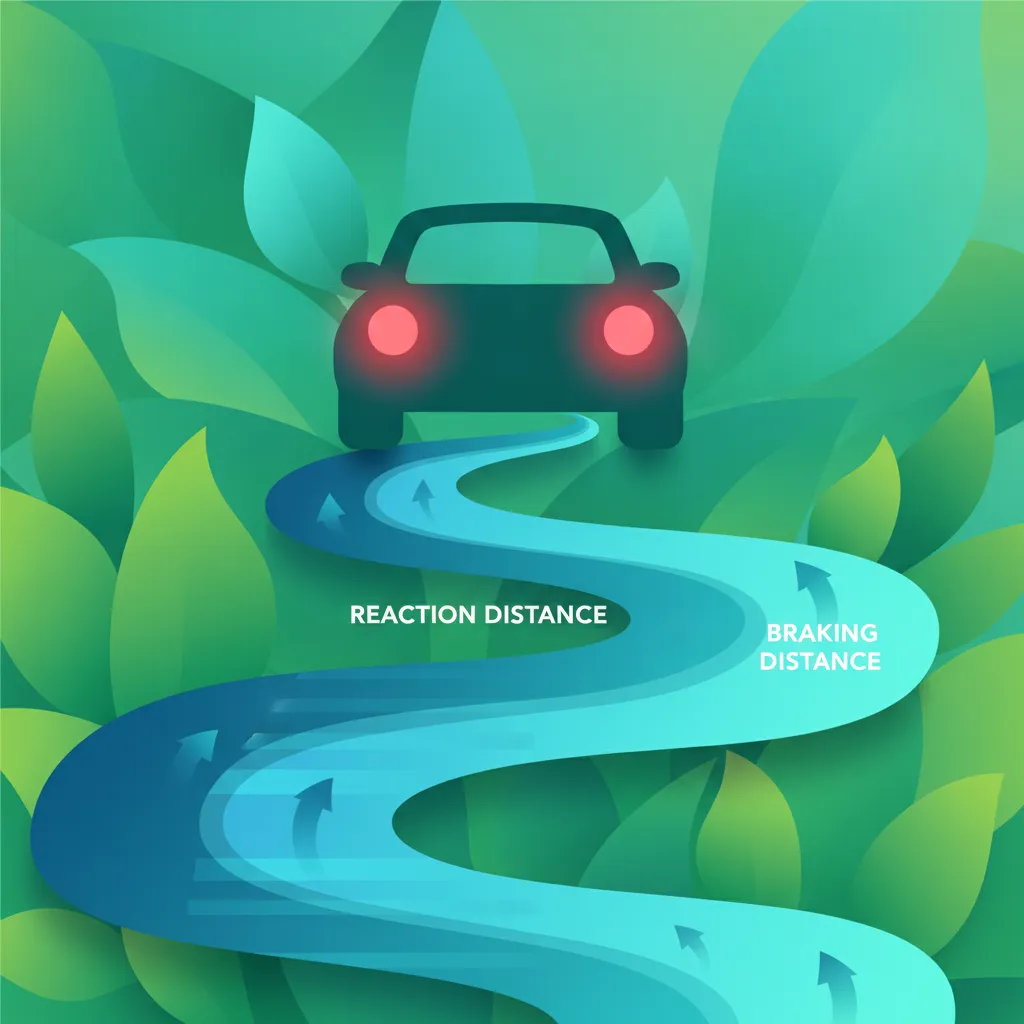
This lesson provides a comprehensive guide to motorcycle braking techniques, explaining the distinct roles of the front and rear brakes. It covers the concept of progressive brake application for smooth, controlled stops and the factors influencing total stopping distance. You will also learn about the function of Anti-lock Braking Systems (ABS) and how to adapt your braking for different conditions.
Driving safely requires anticipating potential hazards before they become immediate threats. This lesson covers hazard perception techniques, such as effective road scanning and identifying high-risk situations. Learners will practice recognizing common hazards and learn how to formulate a safe response plan in advance to avoid accidents.

This lesson focuses on driving safely in adverse weather like rain, fog, and low sun glare, which affects road friction and visibility. It provides guidelines on speed adaptation, maintaining a safe following distance, and the proper use of vehicle equipment like lights and wipers. Learners will understand how to reduce risks like hydroplaning and skidding.

This lesson explains how alcohol and drugs impair driving abilities, including reaction time, judgment, and coordination. Learners will study the legal blood alcohol concentration (BAC) limits in Belgium and the zero-tolerance policy for illicit substances. It also details the severe legal and personal consequences of driving while impaired.

This lesson focuses on the rules governing pedestrian crossings, including marked zebra crossings and signal-controlled crossings. Special attention is given to school zones and residential areas where pedestrian activity is high. Learners will understand how to recognize and respect pedestrian priority in various crossing scenarios to ensure their safety.
This lesson covers the specific challenges of driving on motorways, rural roads, and navigating roadworks. Learners will review lane discipline on high-speed roads and identify hazards common to rural roads, such as sharp bends and wildlife. It also explains the importance of adjusting speed and following temporary signage in construction zones.

This lesson focuses on warning signs designed to alert drivers to potential hazards ahead. Topics include warnings for sharp curves, steep gradients, slippery surfaces, and zones with high pedestrian or wildlife activity. Learners will understand how to correctly interpret these signs and adjust their driving behavior to maintain safety on the road.

This lesson details the spectrum of obligations that apply to drivers, from basic compliance with traffic signs to responsibilities like vehicle upkeep and accident reporting. Learners will understand the importance of maintaining a vehicle in a roadworthy condition. It also covers the legal expectations for safe driving practices, including the use of safety equipment.

This lesson provides instruction on how to react in an emergency situation, covering techniques for performing a rapid, controlled stop. It explains how to apply maximum braking force without locking the wheels and how to manage a skid if one occurs. You will also learn about avoidance maneuvers, such as swerving, and the psychological challenge of overcoming target fixation.
Learn how to adapt the two-second rule and other distance guidelines for different driving environments and conditions, including weather, speed, and vehicle type, as per Belgian traffic regulations.
This lesson covers the specific challenges of driving on motorways, rural roads, and navigating roadworks. Learners will review lane discipline on high-speed roads and identify hazards common to rural roads, such as sharp bends and wildlife. It also explains the importance of adjusting speed and following temporary signage in construction zones.
This lesson focuses on driving safely in adverse weather like rain, fog, and low sun glare, which affects road friction and visibility. It provides guidelines on speed adaptation, maintaining a safe following distance, and the proper use of vehicle equipment like lights and wipers. Learners will understand how to reduce risks like hydroplaning and skidding.

Overtaking safely is a critical driving skill. This lesson explains where and how overtaking is permitted in Belgium, the importance of correct signaling, and maintaining a sufficient speed differential. Learners will understand the rules for passing on motorways and single-carriageway roads, and how to identify zones where overtaking is prohibited.
This lesson focuses on basic manoeuvres, covering the proper use of indicators, safe lane positioning, and correct steering for turns. Learners will study the importance of checking blind spots and maintaining appropriate speed for a smooth transition when changing lanes. It also addresses turning at intersections and signaling intentions clearly to other road users.
The focus of this lesson is on maintaining proper lane discipline, especially on motorways and other high-speed roads. Learners will explore the rules for changing lanes, overtaking, and positioning in the correct lane based on speed and traffic flow. Emphasis is placed on safe merging techniques and adherence to all lane markings for fluid traffic movement.
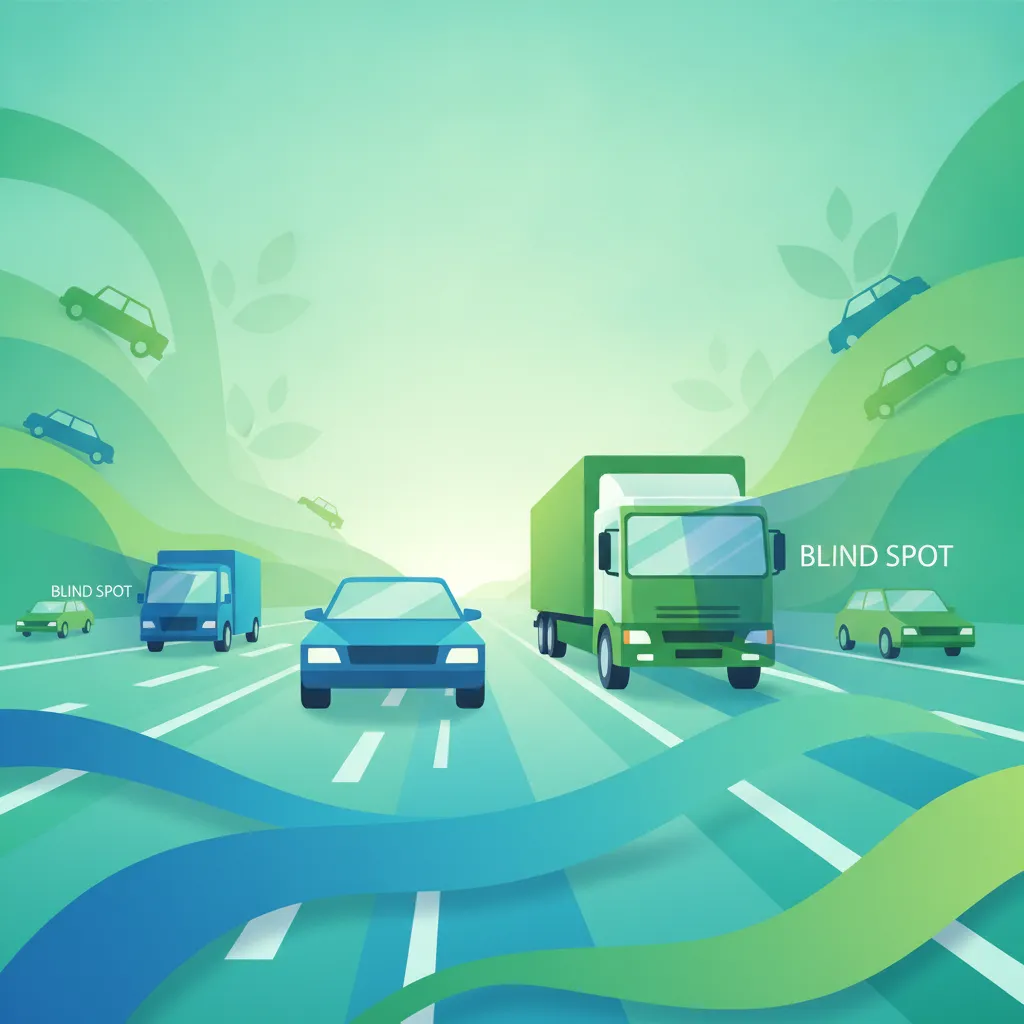
This lesson focuses on recognizing and staying out of the blind spots of other vehicles, especially large trucks and buses where 'no-zones' are significant. It provides practical strategies for managing your position on the road to ensure you remain visible to other drivers at all times. You will learn to anticipate lane changes and other maneuvers from vehicles that may not be aware of your presence.

This lesson explains the concept of strategic road positioning to enhance safety and visibility. It teaches riders how to select the best position within a lane to be seen by other drivers and to have a good view of the road ahead. A key focus is on identifying and staying out of the large blind spots of cars, vans, and trucks to prevent dangerous situations.
Roundabouts are a key feature of Belgian traffic management. This lesson explains how to approach, enter, navigate, and exit a roundabout safely, with a focus on yielding priority to traffic already circulating. Learners will also study correct lane positioning on multi-lane roundabouts and the appropriate use of signals.
Driving safely requires anticipating potential hazards before they become immediate threats. This lesson covers hazard perception techniques, such as effective road scanning and identifying high-risk situations. Learners will practice recognizing common hazards and learn how to formulate a safe response plan in advance to avoid accidents.
This lesson details the spectrum of obligations that apply to drivers, from basic compliance with traffic signs to responsibilities like vehicle upkeep and accident reporting. Learners will understand the importance of maintaining a vehicle in a roadworthy condition. It also covers the legal expectations for safe driving practices, including the use of safety equipment.
Find clear answers to common questions learners have about Safe Following Distance and Stopping Distance Calculations. Learn how the lesson is structured, which driving theory objectives it supports, and how it fits into the overall learning path of units and curriculum progression in Belgium. These explanations help you understand key concepts, lesson flow, and exam focused study goals.
The two-second rule means you should be at least two seconds behind the vehicle in front. You must increase this distance to at least three or four seconds when driving in poor conditions, such as rain, snow, or fog, to compensate for reduced grip and visibility.
No, braking distance increases quadratically with speed. If you double your speed, your braking distance will be four times as long. This is a common topic in Belgian theory exams and highlights why speed management is critical.
Reaction distance is the distance your car covers from the moment you perceive a danger until you press the brake pedal. Braking distance is the distance covered from the moment you press the pedal until the car comes to a full stop.
The exam often uses diagrams or animations where you must estimate if a driver is following at a safe distance or if they are tailgating. You must look for fixed markers on the road to time the gap between vehicles.
Ready to focus your Belgian driving theory revision? Utilize our powerful search tool to pinpoint exact topics, road signs, or difficulty levels. Engage with practice questions that directly address your learning needs and solidify your understanding of Belgian traffic laws for your upcoming exam.