
This lesson teaches you how to maintain control of your motorcycle during critical emergency situations, a vital skill for both your Belgian theory exam and real-world safety. You will explore advanced braking techniques, the physics of tire grip, and how to execute effective avoidance maneuvers while overcoming psychological barriers like target fixation.

Lesson content overview
Navigating the roads on a motorcycle requires not only skill and experience but also the readiness to react swiftly and effectively in unforeseen circumstances. This lesson, part of your Comprehensive Belgian Motorcycle Theory Course: Licence A, A1 & A2, delves into critical techniques for managing emergency situations, focusing specifically on rapid, controlled stops and maintaining vehicle stability. Understanding and practicing these skills are paramount for preventing accidents, minimizing stopping distances, and ensuring your safety and the safety of others.
We will explore how to apply maximum braking force without losing control, how to recover from a skid if one occurs, and the crucial role of avoidance maneuvers like swerving. Furthermore, we'll address the psychological challenge of overcoming target fixation, a common pitfall in high-stress situations. Mastering these concepts builds upon your foundational knowledge of braking principles, grip management, and overall motorcycle control, preparing you for the demands of real-world riding.
Emergency braking refers to the act of applying maximum possible braking force to stop a motorcycle in the shortest distance possible while maintaining control. Unlike routine braking, which is smooth and gradual, emergency braking is a reactive measure to an unexpected hazard. This could be a pedestrian stepping into the road, a sudden stop by the vehicle ahead, or an object appearing in your path.
The ability to perform an effective emergency stop is a fundamental safety skill for every motorcyclist. It directly influences your ability to prevent a collision or significantly reduce its severity. Without proper technique, a panic reaction can lead to locking wheels, losing balance, and potentially crashing, even if the initial hazard was avoidable.
Motorcycles behave differently than cars under heavy braking. They have only two wheels, which significantly impacts stability and grip. Weight transfer during braking is more pronounced, putting considerable stress on the front tyre. Furthermore, the rider's body position and input are integral to maintaining balance and control throughout the braking process.
Effective emergency braking on a motorcycle demands a coordinated effort between both brakes, precise pressure application, and maintaining an upright, stable posture. This lesson will guide you through these intricacies to develop a controlled and instinctive response.
The primary goal in an emergency stop is to achieve the greatest possible deceleration without causing the wheels to lock up. A locked wheel, whether front or rear, instantly compromises steering ability and stability, often leading to a skid or fall.
Maximum braking force is the highest amount of brake pressure you can apply just before a wheel begins to slide or lock. It represents the limit of adhesion between your tyres and the road surface. Reaching this threshold requires a delicate balance of pressure, feel, and understanding of your motorcycle's capabilities and the road conditions.
Threshold braking is the most effective way to achieve maximum deceleration. It involves applying brake pressure aggressively yet progressively, constantly monitoring the feedback from the tyres. As you approach the limit of grip, you might feel the tyres start to "chatter" or sense a slight loss of traction. At this point, you hold the pressure steady, or slightly ease it off, to keep the wheels rolling without locking.
For motorcyclists, this typically involves:
Practice is Key: The ability to find the maximum braking threshold comes from practice. Find a safe, open area to practice progressively harder stops, becoming familiar with the feel of your motorcycle at the edge of traction.
Many riders make common mistakes during emergency braking, often due to panic:
Applying brake pressure gradually but firmly, increasing the force as the motorcycle's weight transfers forward, allowing the tyres to maintain maximum grip without locking.
Anti-lock Braking Systems (ABS) are a significant safety feature on modern motorcycles, designed to prevent wheel lock-up during hard braking. This technology can be a lifesaver, especially in emergency situations or on slippery surfaces.
ABS continuously monitors the speed of each wheel. If it detects that a wheel is about to lock up (i.e., its rotational speed drops drastically compared to the others, indicating it's skidding), the system rapidly modulates the brake pressure to that wheel. It briefly releases and then reapplies the pressure many times per second, effectively "pulsing" the brakes. This allows the wheel to continue rotating, maintaining maximum braking force while preserving steering ability.
When ABS activates, you might feel a pulsing sensation in the brake lever or pedal. This is normal and indicates the system is working.
Even with ABS, proper braking technique is still essential. The system is a supplement to, not a replacement for, good riding skills. In an emergency, apply the brakes firmly and decisively, as if you were performing threshold braking. Do not "pump" the brakes; let the ABS do its job by holding steady pressure. You will feel the pulsing, but continue to apply strong pressure.
Do Not Deactivate ABS: While some high-performance motorcycles allow ABS to be deactivated for track use, it is crucial to keep it active for road riding. Deactivating ABS in an emergency significantly increases the risk of wheel lock-up and loss of control.
Despite the best braking efforts or the presence of ABS, skids can still occur, particularly on challenging surfaces or due to unexpected loss of traction. Knowing how to recover from a skid is a vital skill that can prevent a fall.
A skid happens when a tyre loses traction and slides across the road surface instead of rolling. This can be caused by:
There are two primary types of skids relevant to braking:
A front-wheel skid is extremely dangerous on a motorcycle because the front wheel is crucial for steering and balance. If the front wheel locks up, you immediately lose the ability to steer, and the motorcycle will typically fall over in the direction of the skid.
Recovery Technique for Front-Wheel Skid:
A rear-wheel skid occurs when the rear wheel locks up and slides. While still dangerous, it is generally more manageable than a front-wheel skid because you retain some steering control with the front wheel. The rear of the bike will typically slide out to one side.
Recovery Technique for Rear-Wheel Skid:
Identify the type of skid: Front or rear.
For front skid: Immediately release the front brake.
For rear skid: Gently ease off the rear brake.
Steer into the direction of the rear skid: This aligns your wheels.
Maintain calm and focus: Panic will worsen the situation.
Gradually reapply brakes only when stable: If further stopping is necessary.
High-Side Crash Warning: If you are in a rear-wheel skid and abruptly regain traction while the bike is leaned over or you're steering away from the skid, the motorcycle can violently snap upright and throw you off over the high side. This is why steering into the skid and gently modulating brakes is crucial.
Sometimes, simply braking is not enough to avoid a collision. If the stopping distance required is greater than the distance to the hazard, an avoidance maneuver, or swerve, becomes necessary. This is a rapid, controlled lateral movement to steer around an obstacle.
The decision to swerve or brake is often instantaneous and made under extreme pressure. Generally:
A controlled swerve involves a quick and precise change of direction while maintaining balance.
Practice the "Brake and Swerve": In some situations, you may need to brake hard initially to reduce speed, then release the brakes briefly to execute a swerve, and then reapply brakes after the maneuver if safe to do so. This is an advanced technique that requires significant practice.
Target fixation is a common and dangerous psychological phenomenon where a rider or driver focuses intensely on a perceived hazard or obstacle, unconsciously steering directly towards it. Instead of avoiding the danger, the rider becomes "fixed" on it, making evasive action difficult or impossible.
When faced with a sudden threat, our brains tend to narrow our focus onto the source of danger. This tunnel vision makes us lose awareness of our peripheral surroundings, including potential escape routes. For motorcyclists, where precise steering and balance are critical, this can lead to disastrous outcomes.
Overcoming target fixation requires conscious effort and practice:
Think 'Escape Route': When a hazard appears, your immediate mental process should be: "Is there enough space to brake? If not, is there a clear path to swerve?" Always be looking for that clear path, not just the hazard itself.
The effectiveness of emergency braking and avoidance maneuvers is heavily influenced by external factors. A skilled rider adjusts their technique based on the prevailing conditions.
When braking or swerving near pedestrians, cyclists, or other vulnerable road users, extra caution is paramount. These individuals may be harder to see, less predictable, and have slower reaction times. Always anticipate their movements and ensure any emergency maneuver you perform does not create a new hazard for them.
While most of these techniques are about skilled riding rather than explicit laws, they form the bedrock of safe and responsible motorcycling, which is implicitly required by traffic regulations.
Continuous Learning: The skills discussed in this lesson are perishable. Regular practice in a safe environment, such as a controlled training course, is highly recommended to keep your emergency response skills sharp.
As a motorcyclist, you are expected to operate your vehicle safely and competently. This includes the ability to react appropriately in emergencies. Practicing defensive riding principles – anticipating hazards, maintaining safe following distances, and constantly scanning – reduces the likelihood of encountering situations where emergency braking or swerving is your only option.
This lesson covers the critical skills of emergency braking and sliding management essential for Belgian motorcycle theory exam candidates. Learners discover threshold braking technique to achieve maximum deceleration without locking wheels, and how to recover from front or rear wheel skids using specific counter-measures. The content explains how ABS works and why it should never be deactivated. It also addresses the psychological challenge of target fixation and teaches visual scanning techniques to maintain awareness of escape routes. Finally, the lesson covers how weather, road surface, load, and visibility conditions require adjustments to emergency techniques, ensuring riders adapt their responses appropriately.
A short set of high-value points that capture the most important learning from this lesson.
Threshold braking applies maximum deceleration just before wheel lock-up, using coordinated front and rear brake pressure while maintaining an upright, braced body position.
ABS modulates brake pressure rapidly to prevent wheel lock, allowing you to maintain steering control while applying maximum braking force.
Front-wheel skids require immediate brake release to restore steering; rear-wheel skids require easing off the rear brake and steering into the direction of the slide.
Target fixation causes riders to steer toward hazards; always look at your escape path or desired direction, not at the obstacle.
Swerving releases brakes briefly to allow maximum tyre grip for the lateral movement, then counter-steers back into the safe lane.
Explore all units and lessons included in this driving theory course.
Maximum braking force is the pressure applied just before wheel lock, not the maximum pressure you can grab.
Front-wheel skids eliminate steering ability immediately; rear-wheel skids allow some steering but risk a high-side crash if traction is regained abruptly while leaned over.
ABS pulsing in the lever or pedal is normal and indicates the system is actively preventing lock-up; do not pump the brakes.
Swerving and braking are not simultaneous during a swerve—brakes are released briefly to allow maximum grip for the directional change.
Weight transfer under braking shifts load to the front wheel, making the front brake the primary stopping tool on a motorcycle.
Grabbing the front brake suddenly instead of applying progressive, firm pressure, causing instant front-wheel lock and loss of steering.
Staring at the hazard (target fixation) instead of scanning for an escape route or where you want to stop.
Over-applying the rear brake because it feels safer, leading to rear-wheel skid and loss of rear stability.
Pumping ABS brakes instead of holding steady firm pressure, which wastes the system's ability to optimize grip.
Releasing the rear brake too abruptly during a skid recovery, causing a violent high-side crash as traction snaps back.
Lesson content overview
A short set of high-value points that capture the most important learning from this lesson.
Threshold braking applies maximum deceleration just before wheel lock-up, using coordinated front and rear brake pressure while maintaining an upright, braced body position.
ABS modulates brake pressure rapidly to prevent wheel lock, allowing you to maintain steering control while applying maximum braking force.
Front-wheel skids require immediate brake release to restore steering; rear-wheel skids require easing off the rear brake and steering into the direction of the slide.
Target fixation causes riders to steer toward hazards; always look at your escape path or desired direction, not at the obstacle.
Swerving releases brakes briefly to allow maximum tyre grip for the lateral movement, then counter-steers back into the safe lane.
Explore all units and lessons included in this driving theory course.
Maximum braking force is the pressure applied just before wheel lock, not the maximum pressure you can grab.
Front-wheel skids eliminate steering ability immediately; rear-wheel skids allow some steering but risk a high-side crash if traction is regained abruptly while leaned over.
ABS pulsing in the lever or pedal is normal and indicates the system is actively preventing lock-up; do not pump the brakes.
Swerving and braking are not simultaneous during a swerve—brakes are released briefly to allow maximum grip for the directional change.
Weight transfer under braking shifts load to the front wheel, making the front brake the primary stopping tool on a motorcycle.
Grabbing the front brake suddenly instead of applying progressive, firm pressure, causing instant front-wheel lock and loss of steering.
Staring at the hazard (target fixation) instead of scanning for an escape route or where you want to stop.
Over-applying the rear brake because it feels safer, leading to rear-wheel skid and loss of rear stability.
Pumping ABS brakes instead of holding steady firm pressure, which wastes the system's ability to optimize grip.
Releasing the rear brake too abruptly during a skid recovery, causing a violent high-side crash as traction snaps back.
Explore search topics learners often look for when studying Emergency Braking and Sliding Management. These topics reflect common questions about road rules, driving situations, safety guidance, and lesson level theory preparation for learners in Belgium.
Browse additional driving theory lessons that cover connected traffic rules, road signs, and common driving situations related to this topic. Improve your understanding of how different rules interact across everyday traffic scenarios.
Understand advanced techniques for emergency braking and managing motorcycle skids in Belgium. Learn how to regain control during front and rear wheel slides, crucial for hazard situations and rider safety.
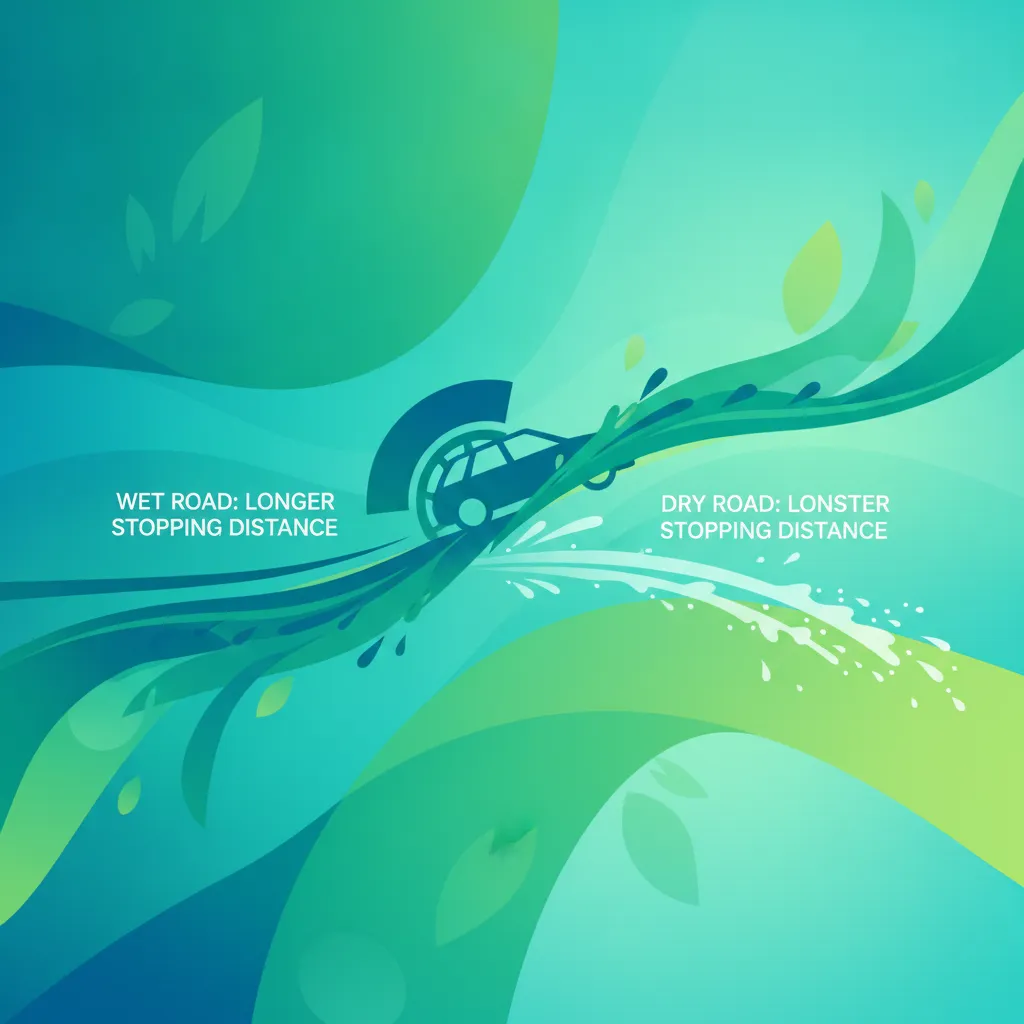
This lesson covers the principles of effective braking, distinguishing between controlled, progressive braking and emergency braking techniques. It breaks down the total stopping distance into reaction distance and braking distance, explaining how speed and road surface conditions dramatically affect the latter. Learners will understand how to use both front and rear brakes correctly to stop quickly and safely without losing control.
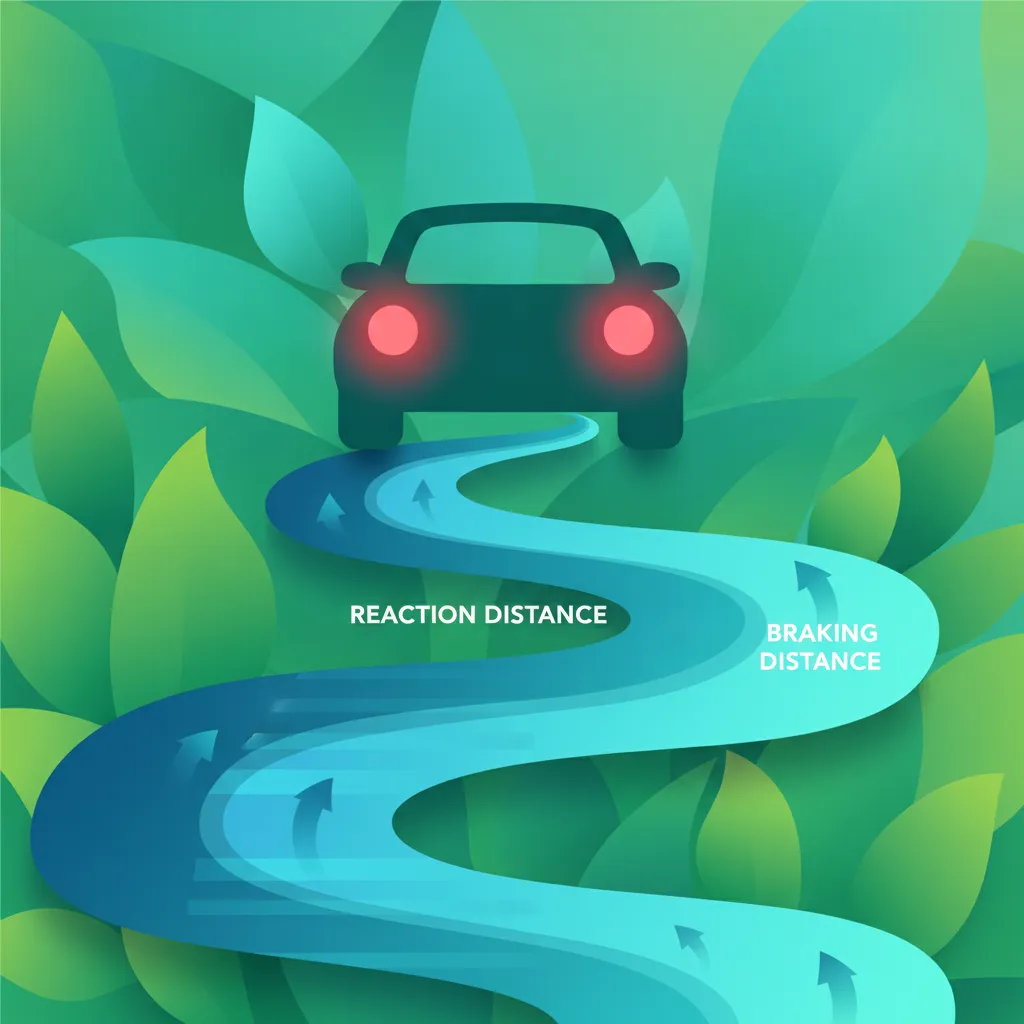
This lesson provides a comprehensive guide to motorcycle braking techniques, explaining the distinct roles of the front and rear brakes. It covers the concept of progressive brake application for smooth, controlled stops and the factors influencing total stopping distance. You will also learn about the function of Anti-lock Braking Systems (ABS) and how to adapt your braking for different conditions.
This lesson provides essential guidance on the correct procedures to follow in the event of a breakdown or a crash. It covers how to secure the scene to prevent further incidents, the legal obligations to assist if you are involved or witness an accident, and how to effectively contact emergency services. The content also reviews the legally required emergency equipment, such as a high-visibility vest.

This lesson synthesizes key safety concepts into the practice of defensive riding, a proactive mindset focused on anticipation and risk reduction. It teaches you to continuously scan for potential hazards, predict the actions of other road users, and always maintain an escape path. By mastering these strategies, you learn to manage the space around you and take control of your own safety.
This lesson provides a clear and structured guide for responding to on-road emergencies such as a mechanical breakdown or a traffic accident. It details the steps for securing the scene safely, including the use of a warning triangle and high-visibility vest. Learners will understand how and when to contact emergency services via the 112 number and the basic principles of assisting anyone who may be injured.

This lesson focuses on the critical skill of managing traction by understanding how tyres interact with different road surfaces. It teaches you to identify and react to low-grip surfaces such as wet roads, gravel, painted markings, and manhole covers. You will learn how to adjust your speed, braking, and cornering to prevent loss of traction and maintain control.

This lesson explains the essential and often misunderstood principle of counter-steering, the primary method for initiating turns on a motorcycle at speed. It details how to apply this technique for precise and responsive directional control. You will also learn techniques for maintaining balance and stability, particularly during challenging low-speed maneuvers.

This lesson provides a step-by-step guide to executing a safe overtaking maneuver in compliance with Belgian law. It covers the necessary pre-maneuver checks, proper signaling, and how to accurately judge the speed and distance of oncoming traffic. You will learn the correct procedure for passing a vehicle and safely returning to your original lane.

This lesson trains you to actively scan the road ahead for surface hazards that can compromise traction, such as oil spills, wet leaves, and loose gravel. It provides strategies for safely navigating these hazards, including avoidance maneuvers and gentle control inputs. You will also learn how to handle unexpected encounters with potholes and other road imperfections.

This lesson explains the concept of strategic road positioning to enhance safety and visibility. It teaches riders how to select the best position within a lane to be seen by other drivers and to have a good view of the road ahead. A key focus is on identifying and staying out of the large blind spots of cars, vans, and trucks to prevent dangerous situations.
Learn essential motorcycle avoidance techniques, including swerving, and how to overcome target fixation. This theory lesson focuses on reacting to hazards and maintaining control when stopping is not an option.
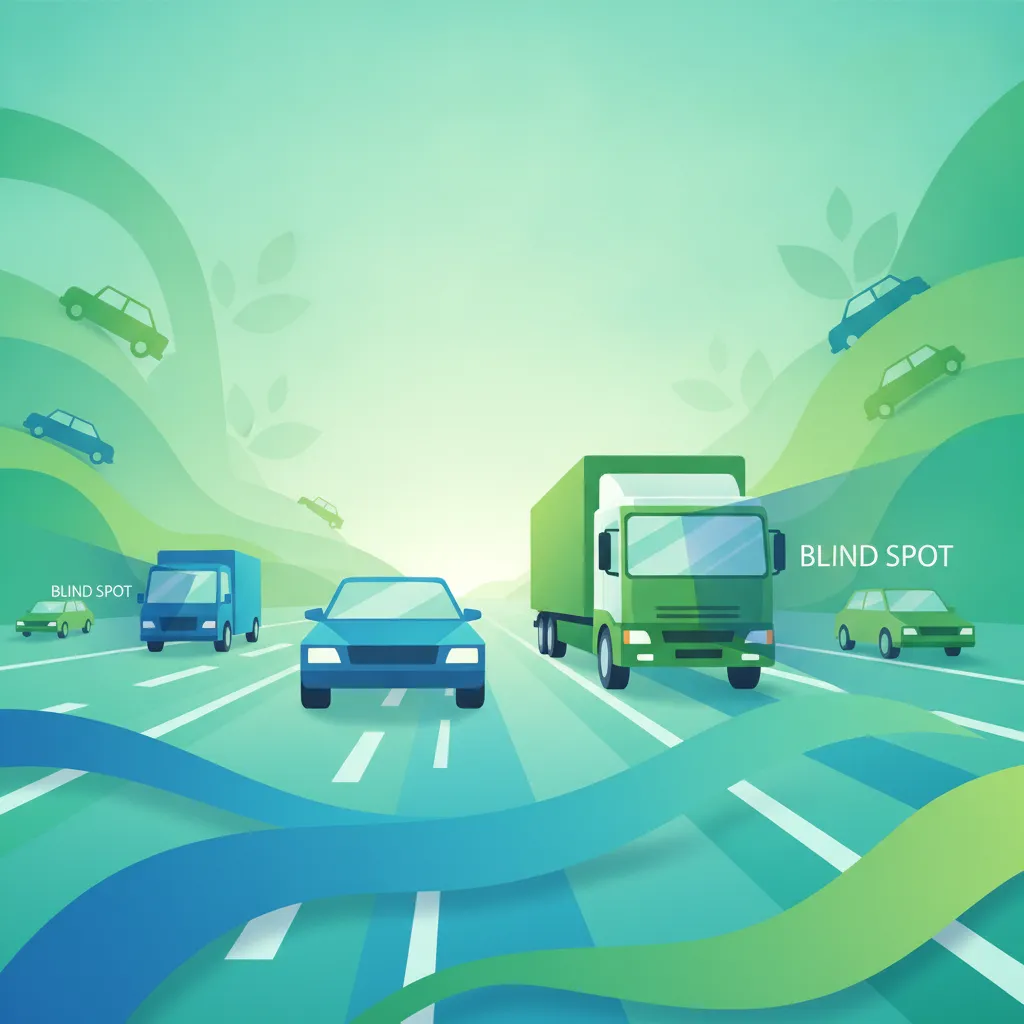
This lesson focuses on recognizing and staying out of the blind spots of other vehicles, especially large trucks and buses where 'no-zones' are significant. It provides practical strategies for managing your position on the road to ensure you remain visible to other drivers at all times. You will learn to anticipate lane changes and other maneuvers from vehicles that may not be aware of your presence.
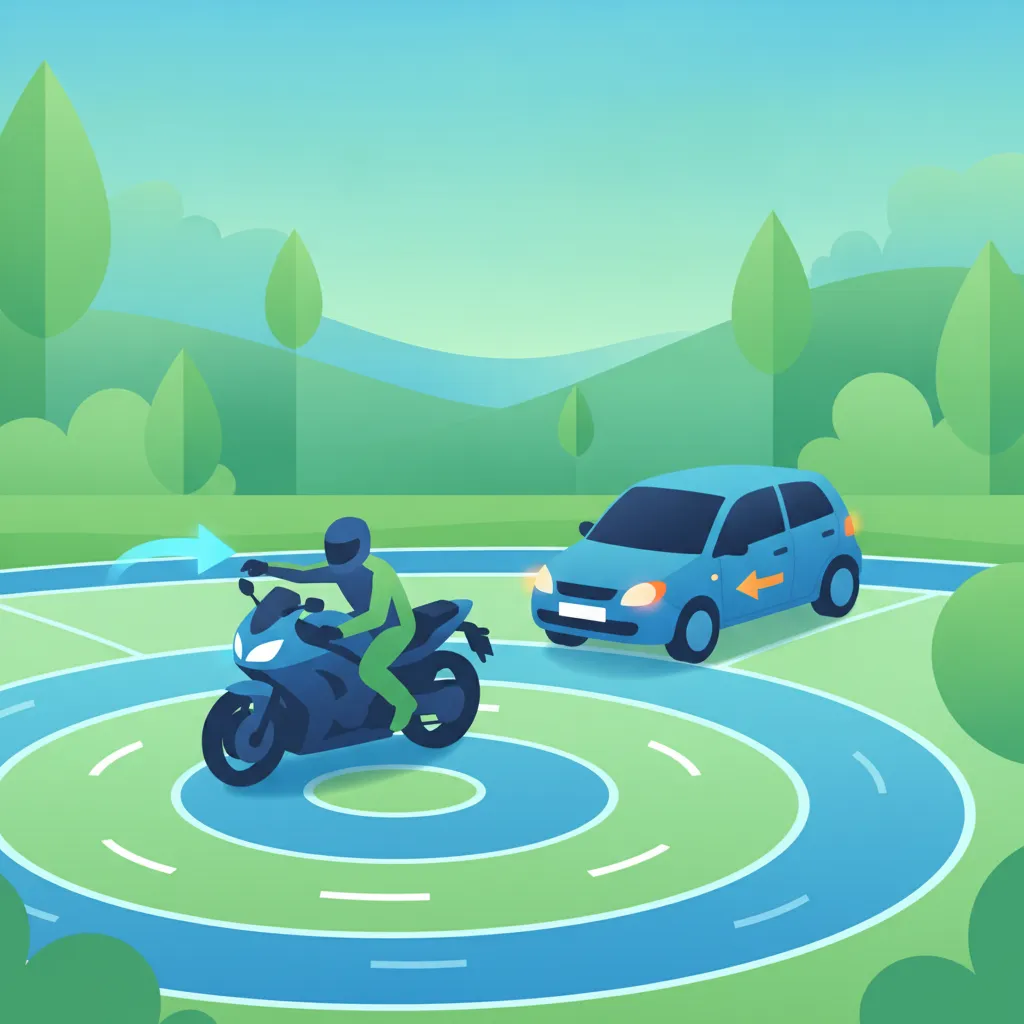
This lesson offers specific strategies for motorcyclists navigating roundabouts in Belgium. It covers the rules for entering the roundabout, including yielding to circulating traffic, and how to choose the correct lane for your intended exit. The content stresses the importance of clear signaling and maintaining awareness of other vehicles during entry and exit maneuvers.
This lesson synthesizes key safety concepts into the practice of defensive riding, a proactive mindset focused on anticipation and risk reduction. It teaches you to continuously scan for potential hazards, predict the actions of other road users, and always maintain an escape path. By mastering these strategies, you learn to manage the space around you and take control of your own safety.
This lesson explains the concept of strategic road positioning to enhance safety and visibility. It teaches riders how to select the best position within a lane to be seen by other drivers and to have a good view of the road ahead. A key focus is on identifying and staying out of the large blind spots of cars, vans, and trucks to prevent dangerous situations.

This lesson explores the unique challenges presented by dense urban environments, including riding in heavy traffic and navigating narrow streets. It provides strategies for positioning your motorcycle to avoid the 'dooring zone' of parked cars and to maintain visibility. You will learn defensive riding techniques to anticipate sudden actions from other drivers in congested conditions.
This lesson provides a step-by-step guide to executing a safe overtaking maneuver in compliance with Belgian law. It covers the necessary pre-maneuver checks, proper signaling, and how to accurately judge the speed and distance of oncoming traffic. You will learn the correct procedure for passing a vehicle and safely returning to your original lane.
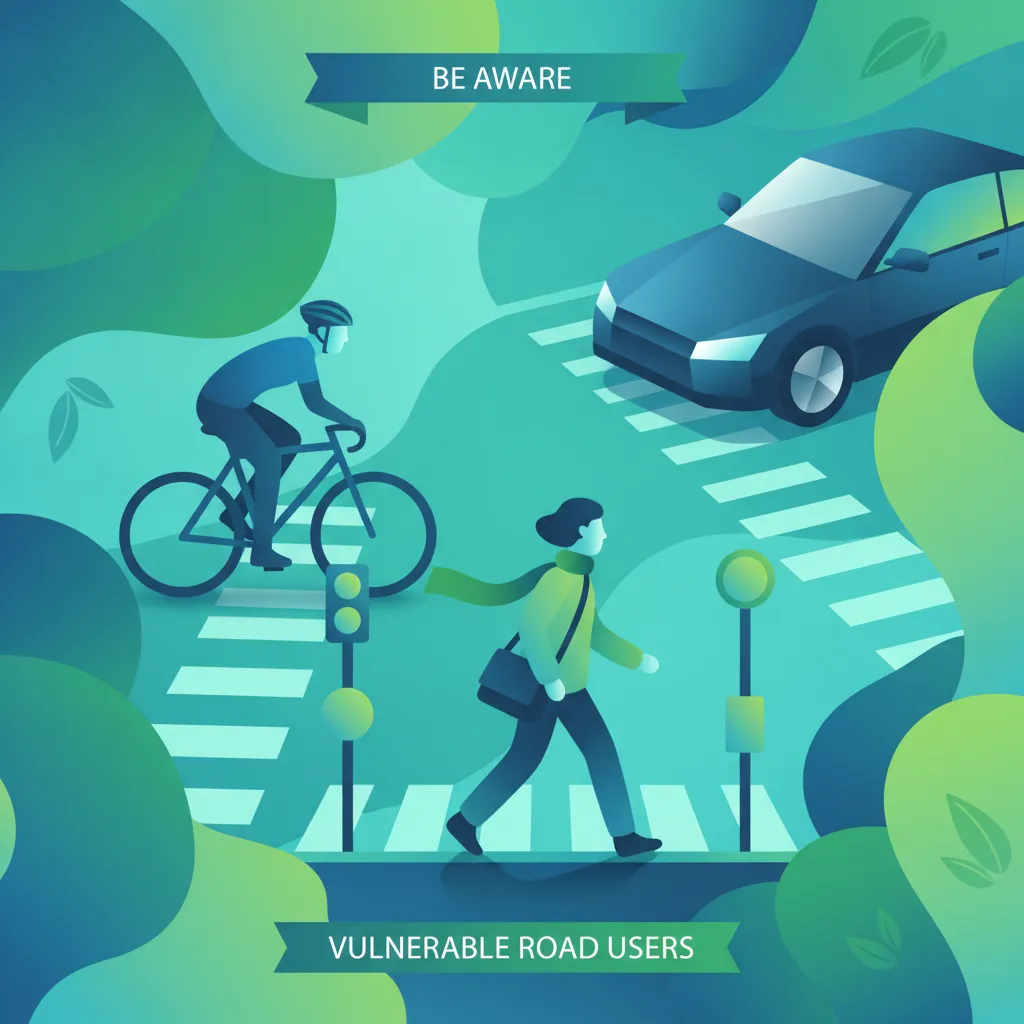
This lesson provides a systematic approach to navigating intersections, emphasizing the importance of observation, speed control, and correct positioning. It reinforces the application of priority-from-the-right and other right-of-way rules in real-world junction scenarios. You will learn effective visual scanning techniques to anticipate the actions of other road users and ensure a safe passage.

This lesson addresses two significant risk factors in motorcycling: fatigue and distraction. It teaches riders to recognize the signs of fatigue and the importance of taking regular rest breaks on long trips. Additionally, it identifies common sources of distraction, such as mobile phones and navigation devices, and provides strategies for maintaining full attention on the road.
This lesson examines the crucial psychological factors that influence riding safety, such as maintaining mental focus and managing stress. It explains the process of accurate risk perception and the dangers of both under-confidence and overconfidence. You will learn about effective decision-making techniques that are essential for navigating complex traffic situations safely and responsibly.
This lesson explains the essential and often misunderstood principle of counter-steering, the primary method for initiating turns on a motorcycle at speed. It details how to apply this technique for precise and responsive directional control. You will also learn techniques for maintaining balance and stability, particularly during challenging low-speed maneuvers.
Find clear answers to common questions learners have about Emergency Braking and Sliding Management. Learn how the lesson is structured, which driving theory objectives it supports, and how it fits into the overall learning path of units and curriculum progression in Belgium. These explanations help you understand key concepts, lesson flow, and exam focused study goals.
Target fixation occurs when a rider focuses too intently on an obstacle, causing them to subconsciously steer the motorcycle toward it. In your theory exam, you will learn that maintaining a wide visual scan is essential to keep your path clear during an emergency.
You should apply both the front and rear brakes progressively but firmly to maximize stopping power. The key is to apply sufficient pressure without causing the wheels to lock up, which would result in a loss of traction and control.
If the rear wheel locks during braking, the most critical step is to maintain your gaze and keep the motorcycle upright rather than releasing the brake suddenly. Releasing a locked rear brake abruptly while the bike is sideways can lead to a high-side crash.
Not always. You must decide based on the available space and your speed. If there is insufficient room to stop, a controlled swerving maneuver is the correct response. This lesson helps you identify the visual cues that dictate whether to brake or swerve.
Ready to focus your Belgian driving theory revision? Utilize our powerful search tool to pinpoint exact topics, road signs, or difficulty levels. Engage with practice questions that directly address your learning needs and solidify your understanding of Belgian traffic laws for your upcoming exam.