
This lesson explores the severe impact of physical fatigue and cognitive distraction on driving safety. By understanding the signs of drowsiness and the risks posed by mobile phones and other distractions, you will be better prepared for both the Belgian theory exam and responsible, real-world driving.
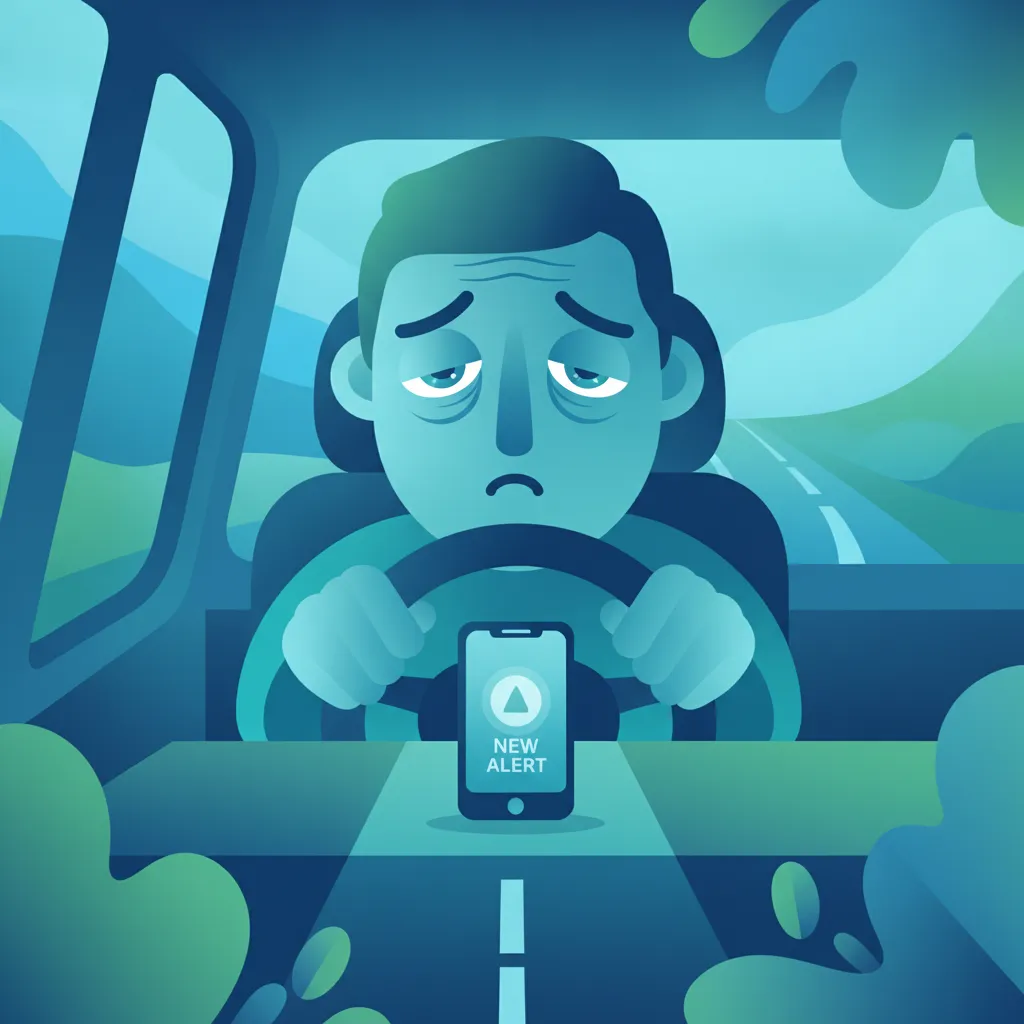
Lesson content overview
Driving requires your full, undivided attention. However, two significant factors frequently undermine a driver's ability to focus and react safely: fatigue and distraction. These are not merely minor inconveniences but major contributors to road accidents, leading to severe consequences for drivers, passengers, and other road users. This lesson will explore the dangers of driving while tired or distracted, provide strategies to mitigate these risks, and outline the relevant Belgian traffic regulations.
This chapter is crucial for anyone preparing for their Belgian Category B Driving Licence, as it covers fundamental principles of safe and responsible driving. Understanding and actively managing fatigue and distraction is a core responsibility of every driver.
Fatigue significantly impairs your driving ability, often without you even realizing the extent of the impact. It's a state of extreme tiredness that goes beyond just feeling sleepy; it affects your physical and mental capacity to perform tasks, especially complex ones like driving.
Driver fatigue can manifest in different forms. Acute fatigue is short-term, typically resulting from a single night of insufficient sleep or a long period of wakefulness. For instance, staying up late studying for an exam or driving after a night shift can lead to acute fatigue. Chronic fatigue, on the other hand, is a more persistent state caused by prolonged sleep deprivation, sleep disorders, or cumulative sleep loss over several days or weeks. This type of fatigue is particularly dangerous because drivers may become accustomed to feeling tired and underestimate its impact.
The practical meaning for drivers is that even if you feel you can push through, fatigue will compromise your performance. It's not just about falling asleep at the wheel; it's also about a significant reduction in your ability to drive safely.
Driving while fatigued is comparable to driving under the influence of alcohol. It reduces your ability to concentrate, process information, and react quickly to hazards. Research shows that being awake for 18 hours can impair your driving as much as a blood alcohol content of 0.05%, which is close to Belgium's legal limit for novice drivers.
The dangers of drowsy driving include:
Drivers often misunderstand that things like blasting loud music, opening windows, or drinking coffee can fully counteract fatigue. While these might provide a temporary jolt, they do not restore true alertness or address the fundamental need for rest. They merely mask the symptoms, leading to a false sense of security.
It is critical for drivers to recognize the early signs of fatigue in themselves and take appropriate action. Ignoring these signals can have severe consequences.
Common signs of drowsiness include:
If you experience any of these signs, do not try to push through. Your ability to drive safely is severely compromised.
Preventing fatigue is always better than trying to cope with it. Adequate sleep before a journey is the first line of defense. For most adults, this means 7-9 hours of quality sleep.
When planning a journey, especially a long one, incorporate regular rest breaks into your schedule. The general recommendation for private drivers in Belgium, consistent with best practices across Europe, is to take a break of at least 15 minutes after every two hours of continuous driving.
For long journeys, consider sharing the driving with another licenced driver if possible. Switching drivers regularly can significantly reduce the risk of fatigue.
During a rest break, make sure to:
Get Enough Sleep: Ensure you are well-rested (7-9 hours) before starting any long trip.
Plan Your Route and Breaks: Map out your journey and identify suitable stops for rest, food, and stretching every two hours.
Avoid Peak Fatigue Times: If possible, avoid driving between midnight and 6 AM, when your body's natural circadian rhythm makes you most susceptible to sleepiness.
Stay Hydrated and Eat Lightly: Dehydration and heavy meals can contribute to fatigue.
Check Medications: Some medications can cause drowsiness. Always read labels and consult your doctor if you are unsure.
While taking mandatory rest breaks is a legal requirement for professional drivers, it is a strong recommendation for private drivers in Belgium to ensure their safety and the safety of others.
Distraction is another leading cause of road accidents. It involves any activity that diverts a driver's attention away from the primary task of driving. When you are distracted, your ability to perceive hazards, make timely decisions, and control your vehicle diminishes significantly.
Driving is a complex task that requires continuous attention to the road, traffic, other road users, vehicle controls, and potential hazards. When something pulls your focus away from these elements, you become distracted. Even a momentary lapse can have severe consequences, as things on the road can change very quickly.
Distractions are often categorized into three main types, though many activities involve a combination of these:
Many distracting activities combine multiple categories. For instance, texting on a mobile phone involves visual distraction (looking at the screen), manual distraction (using hands to type), and cognitive distraction (thinking about the message).
Mobile phones are one of the most common and dangerous sources of driver distraction. Due to their pervasive use and the multitude of functions they offer, they present a unique set of risks.
The law in Belgium explicitly addresses mobile phone use due to these undeniable risks.
While mobile phones are a major concern, many other activities can distract a driver:
Belgian traffic regulations are designed to ensure road safety by minimizing common risks like distraction. While specific limits on private driving hours are not legally mandated, rules regarding mobile phone use are very strict.
In Belgium, the use of a mobile phone while driving is strictly prohibited. This rule applies when your vehicle is moving on a public road. It means you cannot hold your phone in your hand to make or receive calls, send or read text messages, check maps, or interact with any apps. The rationale is clear: any activity involving holding and manipulating a mobile phone takes your eyes, hands, and mind away from the critical task of driving.
The ban applies not only to calls and texts but to ANY interaction with a handheld mobile device while driving. Even if you are stopped in traffic or at a red light, if the engine is running, you are considered to be driving.
Correct application: If you need to make or receive a call, send a text, or check your phone, you must pull over to a safe location and turn off your engine. This ensures you are fully stopped and not part of the active traffic flow.
Incorrect application: Answering a call by picking up your phone, sending a quick text at a red light, or using your phone to choose music while driving are all violations of this rule.
While holding a mobile phone is forbidden, the use of hands-free devices for communication is permitted under specific conditions in Belgium.
Hands-free systems, such as Bluetooth integration in your car, a securely mounted phone with speakerphone activated, or a Bluetooth earpiece, are generally allowed. The key condition is that the device must be properly mounted or integrated in such a way that it does not obstruct your view, require manual interaction that takes your hands off the wheel, or cause any form of distraction.
The spirit of the law is to allow essential communication while minimizing distraction. However, even with hands-free technology, engaging in complex or emotional conversations can still be a significant cognitive distraction. Your mind might be focused on the conversation rather than the road, impacting your hazard perception and reaction times.
Even when using a hands-free system, keep conversations brief and avoid intense topics that divert your mental focus from driving. Your primary responsibility is always safe vehicle operation.
While there is no specific legal limit on driving hours for private drivers in Belgium (unlike commercial drivers who have strict regulations), the recommendation for regular rest breaks is very strong and widely promoted for safety reasons.
It is strongly advised that private drivers take a break of at least 15 minutes after every two hours of continuous driving. This recommendation applies to all journeys, regardless of length, as fatigue can set in faster than expected, particularly during monotonous drives or at night.
Failing to take recommended breaks and continuing to drive while noticeably drowsy is a dangerous practice that significantly increases the risk of an accident. Although not a direct legal offence for private drivers (unless it leads to dangerous driving), it contradicts the core principle of continuous attention and rest and recovery.
Proactive strategies are key to minimizing the risks of fatigue and distraction. By incorporating these habits into your driving routine, you enhance your safety and the safety of others on the road.
Careful planning can make a significant difference in preventing fatigue.
Many distractions can be eliminated or reduced before you even start your engine.
Even with the best preparation, unforeseen circumstances or the onset of fatigue can occur. Knowing how to respond safely is crucial.
Fatigue and driver distraction are critical issues in road safety, directly impacting a driver's ability to maintain continuous attention and react appropriately. For all drivers, especially those preparing for their Belgian Category B Driving Licence, mastering the management of these risks is fundamental.
By consistently applying these principles, you contribute to safer roads for everyone in Belgium.
Driver fatigue and distraction are major contributors to road accidents in Belgium, with fatigue reducing reaction times and judgment similarly to alcohol impairment, while distraction diverts attention visually, manually, or cognetically. Belgian law strictly prohibits handheld mobile phone use while driving, including at traffic lights, though hands-free devices are permitted with caution. Prevention strategies include getting 7-9 hours of sleep before journeys, taking mandatory 15-minute breaks every two hours, and proactively eliminating in-vehicle distractions before starting. Recognizing early warning signs of drowsiness and pulling over immediately rather than pushing through fatigue are critical safety practices for all drivers.
A short set of high-value points that capture the most important learning from this lesson.
Fatigue impairs driving ability comparably to alcohol intoxication, with 18 hours of wakefulness matching a 0.05% BAC level
Mobile phone use while driving is strictly prohibited in Belgium, covering all handheld interactions including at traffic lights
Driver distractions fall into three categories: visual (eyes off road), manual (hands off wheel), and cognitive (mind off driving)
Regular rest breaks of at least 15 minutes after every two hours of driving are essential for preventing fatigue
Recognizing early warning signs like yawning, heavy eyelids, and lane drifting can prevent microsleep-related accidents
Explore all units and lessons included in this driving theory course.
Acute fatigue is short-term from brief sleep loss; chronic fatigue is persistent from prolonged deprivation
Hands-free devices are legally permitted in Belgium but still cause cognitive distraction during complex conversations
Microsleeps are brief involuntary episodes of sleep lasting a few seconds that can cause catastrophic accidents at highway speeds
Temporary countermeasures like coffee, loud music, or opening windows mask fatigue symptoms but do not restore true alertness
The mobile phone ban applies whenever the engine is running, even when stationary in traffic or at a red light
Believing that coffee, energy drinks, or loud music can fully counteract fatigue and replace actual rest
Assuming hands-free phone use is completely safe; cognitive distraction remains even when eyes and hands are free
Answering a phone call or checking messages while stopped at a red light with the engine running
Failing to recognize early drowsiness signs until microsleeps begin, rather than pulling over at first warning
Trying to push through fatigue rather than taking an immediate break, especially during monotonous night driving
Lesson content overview
A short set of high-value points that capture the most important learning from this lesson.
Fatigue impairs driving ability comparably to alcohol intoxication, with 18 hours of wakefulness matching a 0.05% BAC level
Mobile phone use while driving is strictly prohibited in Belgium, covering all handheld interactions including at traffic lights
Driver distractions fall into three categories: visual (eyes off road), manual (hands off wheel), and cognitive (mind off driving)
Regular rest breaks of at least 15 minutes after every two hours of driving are essential for preventing fatigue
Recognizing early warning signs like yawning, heavy eyelids, and lane drifting can prevent microsleep-related accidents
Explore all units and lessons included in this driving theory course.
Acute fatigue is short-term from brief sleep loss; chronic fatigue is persistent from prolonged deprivation
Hands-free devices are legally permitted in Belgium but still cause cognitive distraction during complex conversations
Microsleeps are brief involuntary episodes of sleep lasting a few seconds that can cause catastrophic accidents at highway speeds
Temporary countermeasures like coffee, loud music, or opening windows mask fatigue symptoms but do not restore true alertness
The mobile phone ban applies whenever the engine is running, even when stationary in traffic or at a red light
Believing that coffee, energy drinks, or loud music can fully counteract fatigue and replace actual rest
Assuming hands-free phone use is completely safe; cognitive distraction remains even when eyes and hands are free
Answering a phone call or checking messages while stopped at a red light with the engine running
Failing to recognize early drowsiness signs until microsleeps begin, rather than pulling over at first warning
Trying to push through fatigue rather than taking an immediate break, especially during monotonous night driving
Explore search topics learners often look for when studying Fatigue and Driver Distraction. These topics reflect common questions about road rules, driving situations, safety guidance, and lesson level theory preparation for learners in Belgium.
Browse additional driving theory lessons that cover connected traffic rules, road signs, and common driving situations related to this topic. Improve your understanding of how different rules interact across everyday traffic scenarios.
Understand the strict Belgian regulations against using handheld mobile phones while driving. Learn what constitutes distraction and the legal implications for drivers preparing for their theory exam.
This lesson details the spectrum of obligations that apply to drivers, from basic compliance with traffic signs to responsibilities like vehicle upkeep and accident reporting. Learners will understand the importance of maintaining a vehicle in a roadworthy condition. It also covers the legal expectations for safe driving practices, including the use of safety equipment.
This lesson addresses two significant risk factors in motorcycling: fatigue and distraction. It teaches riders to recognize the signs of fatigue and the importance of taking regular rest breaks on long trips. Additionally, it identifies common sources of distraction, such as mobile phones and navigation devices, and provides strategies for maintaining full attention on the road.
This lesson focuses on the legal duties and responsibilities that an AM vehicle operator must uphold on Belgian roads. It covers critical rules such as adhering to speed limits, correctly applying right-of-way principles, and following regulations for overtaking other vehicles. The lesson also explains the system of fines and penalty points for traffic violations, emphasizing the legal consequences of non-compliance to foster responsible driving habits.

This lesson explains how alcohol and drugs impair driving abilities, including reaction time, judgment, and coordination. Learners will study the legal blood alcohol concentration (BAC) limits in Belgium and the zero-tolerance policy for illicit substances. It also details the severe legal and personal consequences of driving while impaired.
This lesson covers the specific challenges of driving on motorways, rural roads, and navigating roadworks. Learners will review lane discipline on high-speed roads and identify hazards common to rural roads, such as sharp bends and wildlife. It also explains the importance of adjusting speed and following temporary signage in construction zones.
This lesson details the proper use of all vehicle lights and signaling devices. It explains when to use low and high beams, fog lights, hazard lights, and turn signals to communicate effectively with other road users. Correct lighting usage improves visibility and safety, especially in adverse weather conditions and during hours of darkness.
This lesson focuses on the legal responsibilities mandated for all motorcyclists in Belgium, emphasizing strict adherence to the traffic code. It details a rider's obligation to conduct risk assessments, comply with speed limits, and maintain high safety standards. The content also clarifies the legal liability associated with traffic infractions and the importance of carrying correct documentation at all times.

Overtaking safely is a critical driving skill. This lesson explains where and how overtaking is permitted in Belgium, the importance of correct signaling, and maintaining a sufficient speed differential. Learners will understand the rules for passing on motorways and single-carriageway roads, and how to identify zones where overtaking is prohibited.
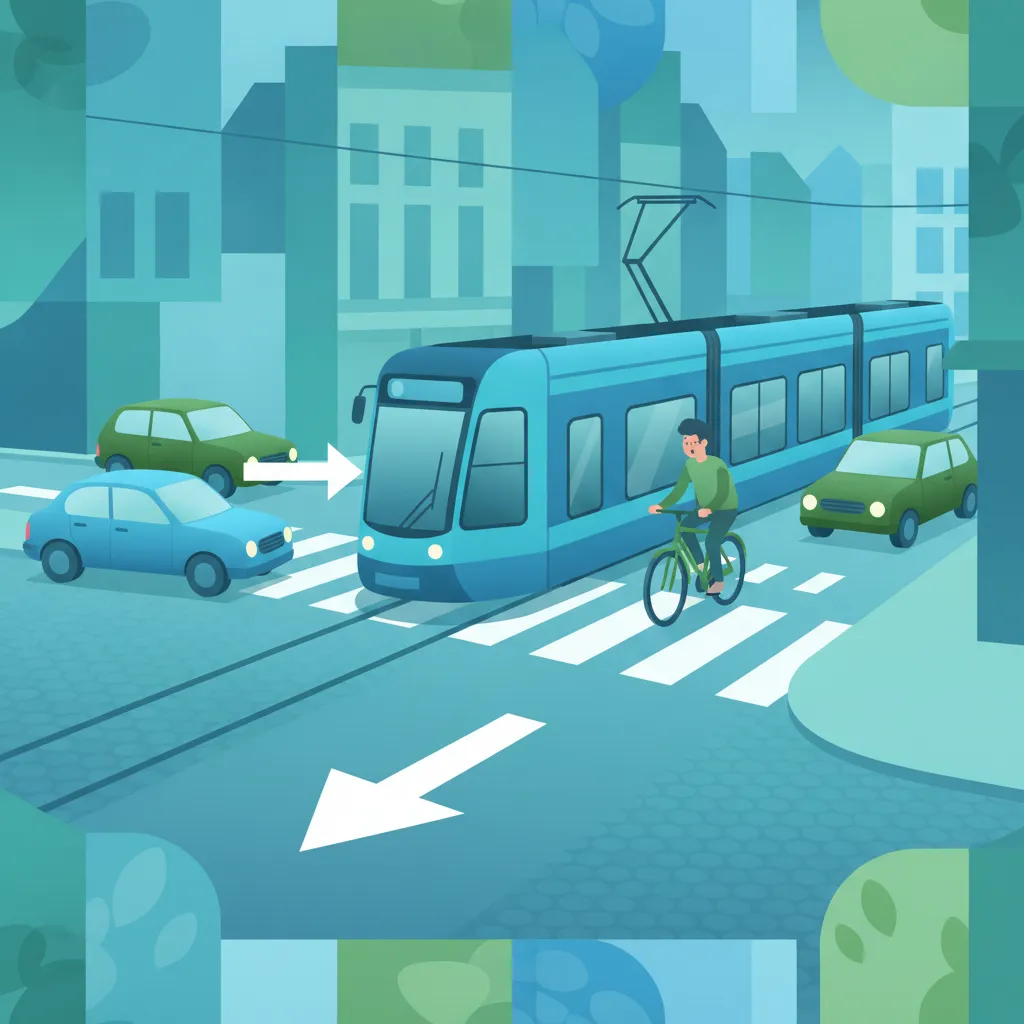
This lesson delves into the complex priority rules that govern Belgian roadways, with a strong focus on the default 'priority from the right' principle. It explains how to interpret priority signs, such as 'give way' and 'stop', and apply the correct right-of-way at various types of junctions. You will learn the hierarchy of road users and the specific rules for yielding in different traffic scenarios.
This lesson outlines the legal penalties for traffic offences, including fines and potential licence suspension. It also covers correct emergency protocols, such as what to do at an accident scene, how to call 112, and the basics of first aid. The lesson concludes by emphasizing the importance of responsible driving to foster a safer road safety culture for everyone.
Explore how fatigue and cognitive load impair driving performance, reaction times, and decision-making. Learn to recognize signs of drowsiness and manage driving risks for your Belgian theory test.
This lesson explains how alcohol and drugs impair driving abilities, including reaction time, judgment, and coordination. Learners will study the legal blood alcohol concentration (BAC) limits in Belgium and the zero-tolerance policy for illicit substances. It also details the severe legal and personal consequences of driving while impaired.
This lesson addresses two significant risk factors in motorcycling: fatigue and distraction. It teaches riders to recognize the signs of fatigue and the importance of taking regular rest breaks on long trips. Additionally, it identifies common sources of distraction, such as mobile phones and navigation devices, and provides strategies for maintaining full attention on the road.
This lesson addresses the unique challenges of riding after dark, focusing on the correct use of high and low beam headlights to maximize visibility. It offers techniques for coping with glare from other vehicles and for adapting to the body's natural reduction in visual acuity at night. The content also emphasizes the heightened risk of fatigue during night rides and strategies to manage it.
This lesson details the dangerous effects of alcohol and drugs on a rider's coordination, judgment, and reaction time. It clearly outlines the legal blood alcohol concentration (BAC) limits for motorists in Belgium and the severe legal penalties for violations. The content also addresses the risks associated with riding while under the influence of prescription or over-the-counter medications.
Find clear answers to common questions learners have about Fatigue and Driver Distraction. Learn how the lesson is structured, which driving theory objectives it supports, and how it fits into the overall learning path of units and curriculum progression in Belgium. These explanations help you understand key concepts, lesson flow, and exam focused study goals.
Signs include heavy eyelids, frequent blinking, drifting out of your lane, and struggling to remember the last few kilometers driven. If you experience these, you must stop in a safe location immediately.
Yes, using a hand-held mobile device while driving is considered a serious offence in Belgium. It leads to fines and can be classified as a third-degree traffic violation, which carries significant legal consequences.
Experts and road safety authorities generally recommend taking a 15-minute break at least every two hours. This helps maintain focus and alertness, which is a common topic in theory exam questions regarding safe driving practices.
Any activity that takes your focus away from the road, your mirrors, or traffic signals is a potential distraction. While not all are illegal, they can be dangerous, and the theory exam expects you to demonstrate a responsible approach to minimizing these risks.
Ready to focus your Belgian driving theory revision? Utilize our powerful search tool to pinpoint exact topics, road signs, or difficulty levels. Engage with practice questions that directly address your learning needs and solidify your understanding of Belgian traffic laws for your upcoming exam.