
This final lesson of the program ensures you understand the serious legal consequences of traffic infractions and how to respond during road emergencies. It ties together your knowledge of rules and responsibilities to help you develop the mindset of a safe, lawful, and responsible driver on Belgian roads.
Lesson content overview
Navigating the roads safely and responsibly requires more than just knowing traffic rules; it demands an understanding of the consequences of non-compliance, the protocols for handling emergencies, and a deep commitment to responsible driving. This lesson is designed to equip you with critical knowledge regarding legal penalties for traffic offences, proper emergency procedures at an accident scene, and the overarching principles of responsible driving. By mastering these aspects, you contribute significantly to fostering a safer road environment for everyone in Belgium.
Understanding legal penalties serves as a crucial deterrent against dangerous driving behaviors. Knowing the correct emergency procedures can save lives and prevent further harm in the event of an accident. Furthermore, embracing responsible driving principles cultivates a proactive approach to road safety, ensuring you make informed and safe decisions every time you get behind the wheel.
Legal penalties are sanctions imposed by law enforcement or courts when a driver breaches traffic regulations. These penalties are designed not only to punish offenders but also to deter future violations and reinforce adherence to the Belgian traffic code. Being aware of these consequences is a fundamental part of responsible driving.
The Belgian legal system employs various types of sanctions, which can range in severity depending on the nature and gravity of the offence. Drivers can face a combination of these penalties for a single violation.
Monetary fines are the most common form of penalty for traffic offences. These can be fixed amounts for minor infractions or variable sums determined by the severity of the offence and the discretion of the court. Fines aim to create an immediate financial deterrent.
Beyond the base fine, administrative fees may also be added, covering the costs associated with processing the offence. It is important to pay fines promptly, as delays can lead to increased amounts or further legal action.
For more serious or repeated offences, a driver's licence can be temporarily suspended or, in extreme cases, permanently revoked. Licence suspension means you are legally forbidden to drive for a specified period. Driving during a suspension period is a severe offence that carries even harsher penalties, including potential imprisonment.
Revocation, which is less common, means your licence is permanently cancelled, and you would typically need to reapply and pass all driving tests again after a significant waiting period. These measures are taken to remove dangerous drivers from the road.
In certain circumstances, particularly for severe offences such as driving without a valid licence, driving under extreme influence, or repeated violations, your vehicle may be impounded or seized by the authorities. This means your vehicle is taken away and held for a set period, often requiring you to pay release fees in addition to other penalties. Vehicle impoundment prevents the immediate continuation of illegal driving activity and serves as a significant inconvenience.
Belgium operates a penalty point system designed to track driver behavior over time. Points are accumulated for various traffic offences, with more serious violations incurring more points. Accumulating a certain number of points within a specified period can lead to mandatory retraining, licence suspension, or other punitive measures.
The system acts as a cumulative deterrent, ensuring that even seemingly minor offences, when repeated, eventually lead to significant consequences. It encourages drivers to maintain a consistently high standard of road safety.
The practical meaning of these penalties extends beyond the immediate legal repercussions. Traffic violations can lead to increased insurance premiums, difficulty obtaining insurance, and even impact employment, particularly for jobs requiring driving. A clean driving record is invaluable, emphasizing the importance of adhering to all traffic laws.
Despite all precautions, accidents can happen. Knowing how to react effectively and safely in an emergency is critical to minimizing harm, protecting others, and fulfilling your legal obligations. A structured, calm response can make a profound difference.
Your first priority after any accident is the safety of yourself, your passengers, and other road users. Panic can lead to further mistakes, so take a moment to assess the situation calmly.
As soon as it is safe to do so, stop your vehicle immediately. Do not move injured persons unless absolutely necessary for their immediate safety (e.g., from a burning vehicle). Secure the accident scene to prevent further collisions.
Stop your vehicle safely and immediately. Do not drive away.
Assess the situation for immediate dangers, such as fire, spilled fuel, or oncoming traffic.
Activate your vehicle's hazard warning lights to alert other drivers.
If safe, place a warning triangle (mandatory in Belgium) at an appropriate distance behind your vehicle to warn approaching traffic. On motorways, this distance is typically 100 meters, and on other roads, 30 meters.
If possible and safe, move your vehicle and any others involved to the side of the road or hard shoulder to clear the carriageway, especially on motorways.
Hazard lights are crucial for signaling a dangerous or stationary situation to other road users. They flash all indicators simultaneously, making your vehicle more visible, especially in poor light or weather conditions. The warning triangle provides an additional visual alert and is a legal requirement in Belgium to carry in your vehicle.
Once the scene is secure and you have a basic understanding of the situation, the next critical step is to call for professional help.
In Belgium, as in most of Europe, 112 is the universal emergency number for police, fire, and ambulance services. When you call 112, remain calm and provide clear, concise information.
State your exact location, providing landmarks, road names, kilometre markers, or GPS coordinates if possible. This is the most crucial piece of information.
Clearly describe the nature of the incident (e.g., "car collision," "vehicle fire," "person injured").
Estimate the number of people involved and if there are any visible injuries.
Mention any specific dangers, such as spilled fuel, smoke, or a vehicle blocking traffic.
Stay on the line and follow any instructions given by the operator until they tell you it is okay to hang up.
While waiting for professional medical assistance, basic first aid can be life-saving. Even without extensive training, knowing a few simple steps can make a difference.
DO NOT move injured people unless their life is in immediate danger (e.g., from fire or collapse). Moving an injured person incorrectly can worsen their injuries, especially spinal ones.
Check for consciousness and breathing. Gently try to rouse them. If they are unconscious but breathing, place them in the recovery position if you know how, to prevent choking.
Control severe bleeding. Apply direct pressure to wounds using a clean cloth or your hands.
Keep the injured warm. Use blankets, coats, or anything available to prevent shock and hypothermia, even in mild weather.
Reassure the injured. Speak calmly and let them know help is on the way.
In Belgium, you have a legal obligation to stop at the scene of an accident if it involves injury or significant property damage, regardless of who is at fault. Failing to stop and render assistance, known as a 'hit and run', is a serious criminal offence with severe penalties. For minor collisions without injuries and with only minor property damage, you should exchange contact and insurance information with the other party. However, if there are injuries, significant damage, or if the other party is uncooperative, you must always inform the police.
Responsible driving is an ongoing commitment to safe, courteous, and law-abiding behavior. It transcends merely adhering to traffic laws; it involves a proactive mindset focused on preventing accidents and fostering a positive road safety culture.
Responsible drivers continuously monitor their own behavior and the driving environment, actively seeking to identify and mitigate risks. This self-regulation is key to preventing many common accidents.
Speed limits are maximums, not targets, and responsible drivers adjust their speed based on current conditions, even if it means driving below the posted limit. Maintaining a safe following distance is equally crucial, providing adequate time to react to sudden stops or hazards ahead. The "two-second rule" is a good guideline: pick a fixed point ahead, and if you reach it before counting two seconds after the vehicle in front, you are too close.
Driving requires full concentration. Responsible drivers actively avoid distractions such as mobile phones, in-car entertainment systems, or engaging in intense conversations. Furthermore, driving under the influence of alcohol or drugs is strictly prohibited due to its severe impairment of judgment, reaction time, and coordination. Recognising and acting on fatigue by taking breaks or resting is also a mark of responsible driving.
The road environment is constantly changing, and responsible drivers adapt their behavior accordingly.
An overloaded vehicle or one with improperly secured cargo can significantly impair braking, handling, and stability. Responsible drivers ensure their vehicle is properly loaded, regularly checked for safety (tyres, brakes, lights), and always in good mechanical condition before embarking on a journey.
Driving is a shared activity, and social responsibility ensures harmonious and safe interactions among all road users.
Pedestrians, cyclists, and motorcyclists are particularly vulnerable in a collision. Responsible drivers give them ample space, anticipate their movements, slow down around crossings, schools, and residential areas, and yield priority where legally mandated or when it enhances safety. This includes being especially careful when turning or opening car doors.
Courtesy and patience contribute significantly to a smoother and safer traffic flow. This includes allowing others to merge, refraining from aggressive driving behaviors, and being mindful of noise pollution in residential areas. A respectful attitude on the road reduces stress and the likelihood of conflicts or accidents.
Several specific rules underpin the principles discussed, and their understanding is paramount for every driver.
Every driver involved in an accident, regardless of fault, has a legal and moral obligation to stop their vehicle, assess the situation, and render assistance if required. This includes ensuring the safety of the scene and calling emergency services if injuries or significant damage have occurred. Failure to comply is a serious offence.
Driving under the influence of alcohol, drugs, or certain medications that impair driving ability is strictly prohibited. Belgian law sets a clear legal limit for blood alcohol content (BAC). Exceeding this limit, or driving while impaired by drugs, leads to immediate and severe legal consequences, including heavy fines, licence suspension, and potentially imprisonment. The rationale is clear: impaired judgment and reaction times significantly increase the risk of fatal accidents.
Understanding common pitfalls can help drivers avoid them and act correctly in challenging situations.
A common misunderstanding is assuming that a minor incident with no visible damage does not require stopping. However, even a minor bump can have hidden damage or cause injury, and failing to stop is a legal offence.
Correct Behavior: Always stop, exchange insurance and contact information, and if there are any doubts or disagreements, or if there are injuries, call the police. Document the scene with photos if possible. Incorrect Behavior: Driving away without checking or exchanging information, even if you perceive the damage to be negligible.
Breaking down on a motorway shoulder without proper precautions can be extremely dangerous.
Correct Behavior: If your vehicle breaks down, pull over as far as possible onto the hard shoulder or off the road. Immediately activate your hazard lights. Place your warning triangle at an appropriate distance (100 meters on motorways, 30 meters on other roads). Exit the vehicle from the passenger side if safe, and wait behind a safety barrier if one is present, away from traffic. Incorrect Behavior: Attempting to fix the vehicle on the side of a busy road without warning signals, or remaining in the vehicle on the side of the road without adequate protection.
Delaying the call to emergency services after an accident, especially if there are injuries, can have dire consequences for the victims. Every minute counts in medical emergencies.
Correct Behavior: Call 112 as soon as the immediate scene is secure and you have assessed the situation sufficiently to provide initial information. Incorrect Behavior: Waiting too long, attempting to resolve the situation yourself, or assuming someone else has already called.
Responsible driving involves constantly adjusting your behavior to the specific circumstances of the road and environment.
Adverse weather like heavy rain, fog, snow, or ice demands significant adjustments. Reduce your speed, increase your following distance, and ensure all your lights (especially dipped headlights) are on. In very heavy rain or fog, visibility might drop to the point where hazard lights are appropriate if you are driving significantly slower than the flow of traffic or are pulling over. However, they should not be used as a substitute for appropriate driving lights while moving normally.
At night or in tunnels, use your dipped headlights. High beams should only be used when there is no oncoming traffic and no vehicle directly ahead of you, as they can blind other drivers. Be extra cautious of pedestrians, cyclists, and animals that might be harder to see. Your perception of speed and distance is also altered in low light.
If you are driving a vehicle with a heavy load, towing a trailer, or driving a larger vehicle than usual, be aware that its braking distance will increase, and its handling characteristics will change. Adjust your speed and maneuvers accordingly. Always ensure loads are securely fastened and do not obstruct your view or lights.
The concepts of penalties, emergency procedures, and responsible driving are deeply interconnected, forming a holistic approach to road safety.
The threat of penalties—be it a financial fine, points on a licence, or a temporary ban from driving—serves as a powerful legal deterrent. It incentivises drivers to comply with traffic laws, thereby reducing the incidence of risky behaviors like speeding, impaired driving, and dangerous maneuvers. This deterrent effect is crucial for maintaining order and safety on public roads.
In the critical moments following an accident, prompt and correct emergency response actions can dramatically alter outcomes. Securing the scene prevents secondary collisions, immediate communication with 112 ensures rapid arrival of professional help, and basic first aid can stabilize victims, reducing the severity of injuries or even saving lives. Every driver has a moral and legal obligation to act decisively and correctly.
Responsible driving is the proactive pillar of road safety. It encompasses a driver's ongoing commitment to self-regulation, risk management, and social responsibility. By making conscious choices to drive safely, courteously, and lawfully, individual drivers collectively contribute to a safer, more efficient, and more respectful traffic environment for everyone. This culture of safety is built one responsible driver at a time.
This lesson covers the three interconnected pillars of Belgian road safety: understanding the consequences of traffic violations through fines, penalty points, and licence sanctions; mastering emergency response by securing accident scenes, calling 112 with accurate information, and providing basic first aid without moving injured persons; and committing to responsible driving through continuous self-regulation, hazard perception, and protection of vulnerable road users. The penalty point system tracks driver behavior cumulatively, meaning repeated minor offences eventually lead to significant consequences, while the duty to stop and assist applies to every driver involved in any injury or significant damage accident.
A short set of high-value points that capture the most important learning from this lesson.
Belgium uses a penalty point system where accumulating points leads to mandatory retraining, licence suspension, or revocation for serious or repeated offences.
In an accident, your first priority is to secure the scene using hazard lights and warning triangles before providing assistance or calling for help.
Calling 112 requires stating your exact location, describing the incident, estimating casualties, and mentioning specific dangers while staying on the line.
Belgium operates a penalty point system where accumulating points leads to mandatory retraining, licence suspension, or revocation.
Responsible driving means continuously self-regulating your behavior, adapting to conditions, and protecting vulnerable road users.
Explore all units and lessons included in this driving theory course.
On motorways, place your warning triangle 100 meters behind your vehicle; on other roads, place it 30 meters back.
Never move injured persons unless they face immediate danger like fire; incorrect movement can worsen spinal injuries.
Driving during a licence suspension is a severe offence carrying potential imprisonment on top of the original penalty.
112 is the universal European emergency number in Belgium for police, fire, and ambulance services.
The duty to stop applies to any accident involving injury or significant property damage, regardless of who is at fault.
Assuming a minor collision with no visible damage does not require stopping; failing to stop is a legal offence even for small impacts.
Using hazard lights while driving normally in rain instead of dipped headlights, which reduces visibility to other drivers.
Attempting to fix a vehicle on a busy motorway shoulder without placing warning triangles first.
Delaying the call to emergency services thinking the situation can be managed alone, especially when injuries are involved.
Believing speed limits are targets rather than maximums that should be adjusted downward based on current conditions.
Lesson content overview
A short set of high-value points that capture the most important learning from this lesson.
Belgium uses a penalty point system where accumulating points leads to mandatory retraining, licence suspension, or revocation for serious or repeated offences.
In an accident, your first priority is to secure the scene using hazard lights and warning triangles before providing assistance or calling for help.
Calling 112 requires stating your exact location, describing the incident, estimating casualties, and mentioning specific dangers while staying on the line.
Belgium operates a penalty point system where accumulating points leads to mandatory retraining, licence suspension, or revocation.
Responsible driving means continuously self-regulating your behavior, adapting to conditions, and protecting vulnerable road users.
Explore all units and lessons included in this driving theory course.
On motorways, place your warning triangle 100 meters behind your vehicle; on other roads, place it 30 meters back.
Never move injured persons unless they face immediate danger like fire; incorrect movement can worsen spinal injuries.
Driving during a licence suspension is a severe offence carrying potential imprisonment on top of the original penalty.
112 is the universal European emergency number in Belgium for police, fire, and ambulance services.
The duty to stop applies to any accident involving injury or significant property damage, regardless of who is at fault.
Assuming a minor collision with no visible damage does not require stopping; failing to stop is a legal offence even for small impacts.
Using hazard lights while driving normally in rain instead of dipped headlights, which reduces visibility to other drivers.
Attempting to fix a vehicle on a busy motorway shoulder without placing warning triangles first.
Delaying the call to emergency services thinking the situation can be managed alone, especially when injuries are involved.
Believing speed limits are targets rather than maximums that should be adjusted downward based on current conditions.
Explore search topics learners often look for when studying Penalties, Emergency Procedures, and Responsible Driving. These topics reflect common questions about road rules, driving situations, safety guidance, and lesson level theory preparation for learners in Belgium.
Browse additional driving theory lessons that cover connected traffic rules, road signs, and common driving situations related to this topic. Improve your understanding of how different rules interact across everyday traffic scenarios.
Understand the full range of Belgian traffic penalties including fines and licence suspension. Learn crucial emergency protocols, accident scene management, and legal obligations for drivers.
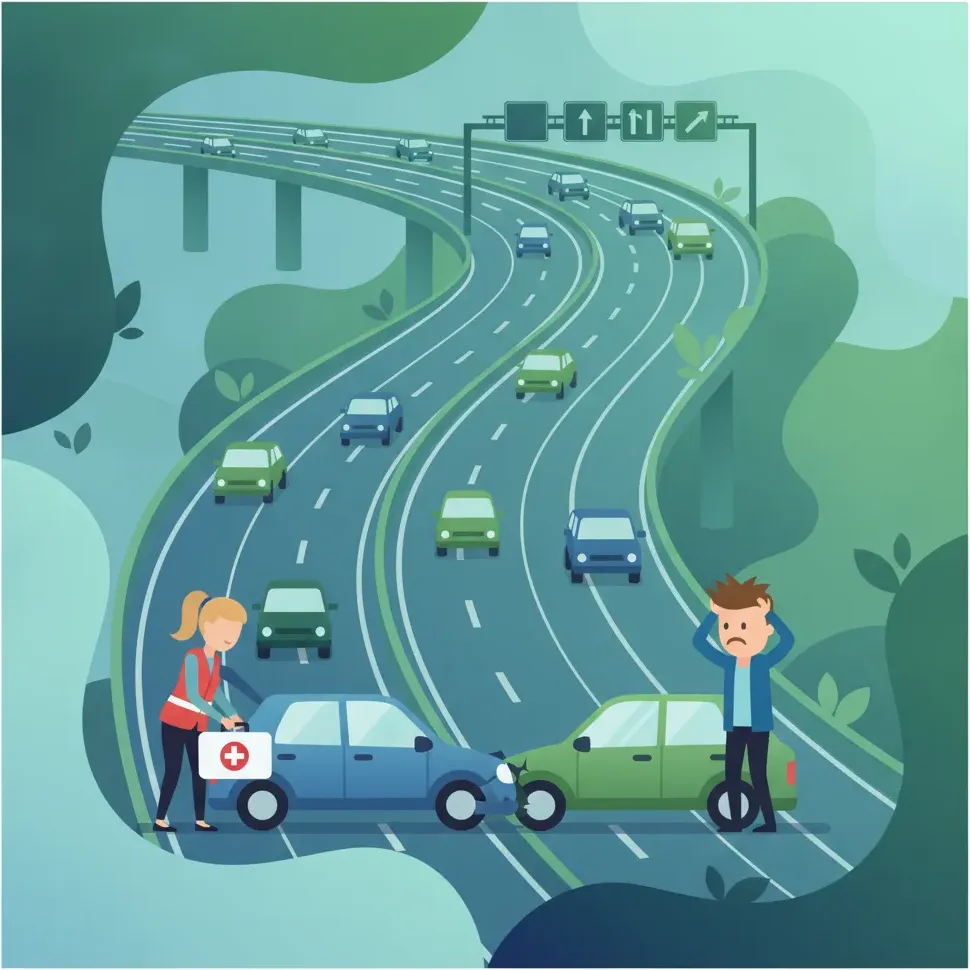
This lesson provides a clear and structured guide for responding to on-road emergencies such as a mechanical breakdown or a traffic accident. It details the steps for securing the scene safely, including the use of a warning triangle and high-visibility vest. Learners will understand how and when to contact emergency services via the 112 number and the basic principles of assisting anyone who may be injured.
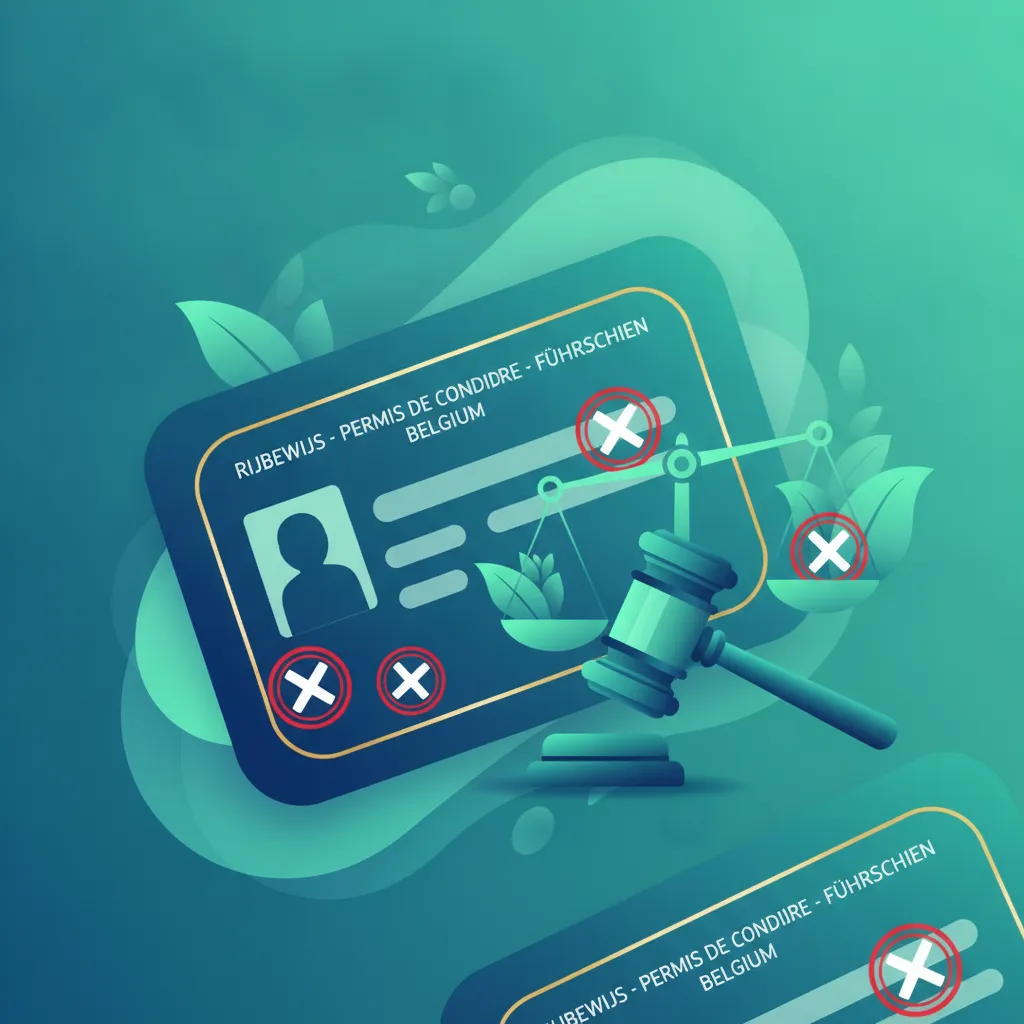
This lesson outlines the system of penalties for traffic violations in Belgium, ensuring riders are fully aware of the consequences of illegal behavior. It covers common offenses like speeding and explains the structure of fines and the demerit point system that can lead to license suspension. The content emphasizes the significant financial and legal repercussions of non-compliance, reinforcing the importance of lawful and responsible riding.
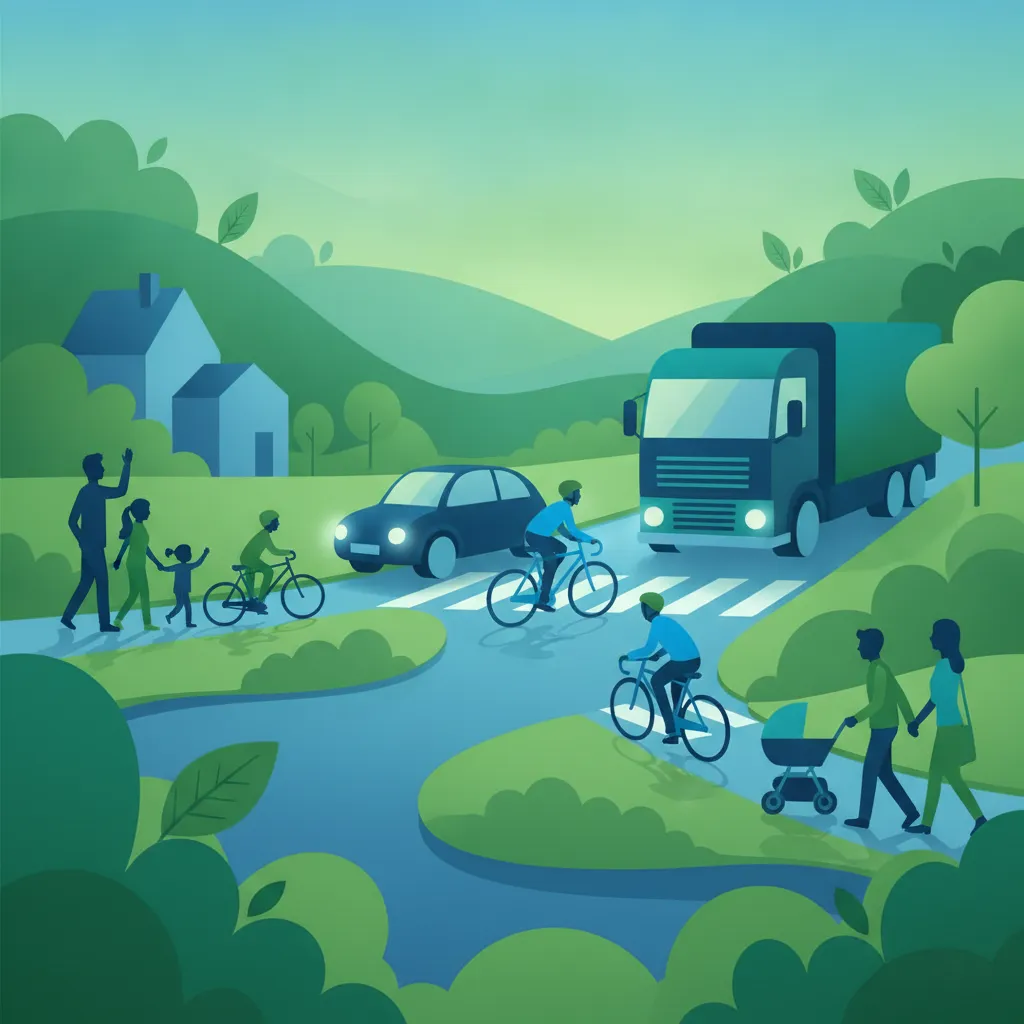
This lesson details the spectrum of obligations that apply to drivers, from basic compliance with traffic signs to responsibilities like vehicle upkeep and accident reporting. Learners will understand the importance of maintaining a vehicle in a roadworthy condition. It also covers the legal expectations for safe driving practices, including the use of safety equipment.
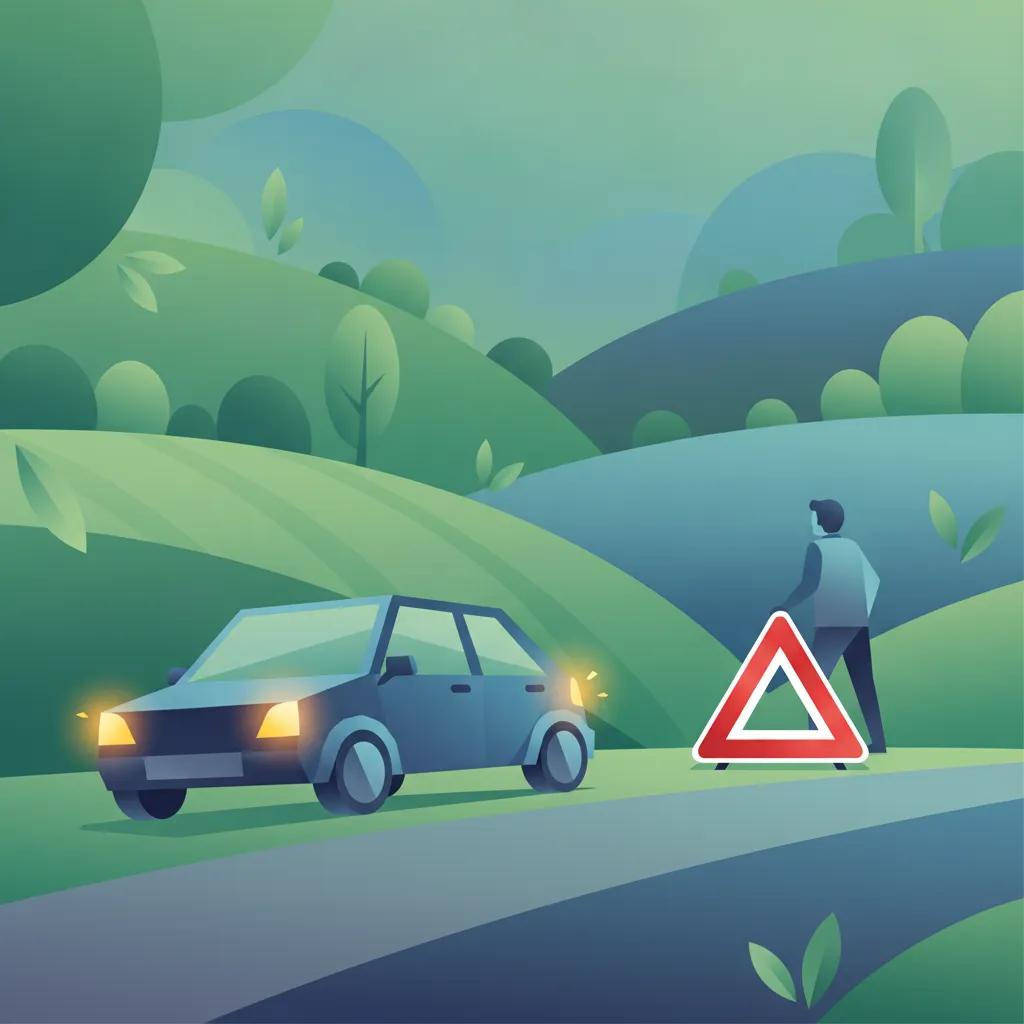
This lesson provides essential guidance on the correct procedures to follow in the event of a breakdown or a crash. It covers how to secure the scene to prevent further incidents, the legal obligations to assist if you are involved or witness an accident, and how to effectively contact emergency services. The content also reviews the legally required emergency equipment, such as a high-visibility vest.
This lesson focuses on the legal duties and responsibilities that an AM vehicle operator must uphold on Belgian roads. It covers critical rules such as adhering to speed limits, correctly applying right-of-way principles, and following regulations for overtaking other vehicles. The lesson also explains the system of fines and penalty points for traffic violations, emphasizing the legal consequences of non-compliance to foster responsible driving habits.
This lesson focuses on the legal responsibilities mandated for all motorcyclists in Belgium, emphasizing strict adherence to the traffic code. It details a rider's obligation to conduct risk assessments, comply with speed limits, and maintain high safety standards. The content also clarifies the legal liability associated with traffic infractions and the importance of carrying correct documentation at all times.

This lesson explains how alcohol and drugs impair driving abilities, including reaction time, judgment, and coordination. Learners will study the legal blood alcohol concentration (BAC) limits in Belgium and the zero-tolerance policy for illicit substances. It also details the severe legal and personal consequences of driving while impaired.
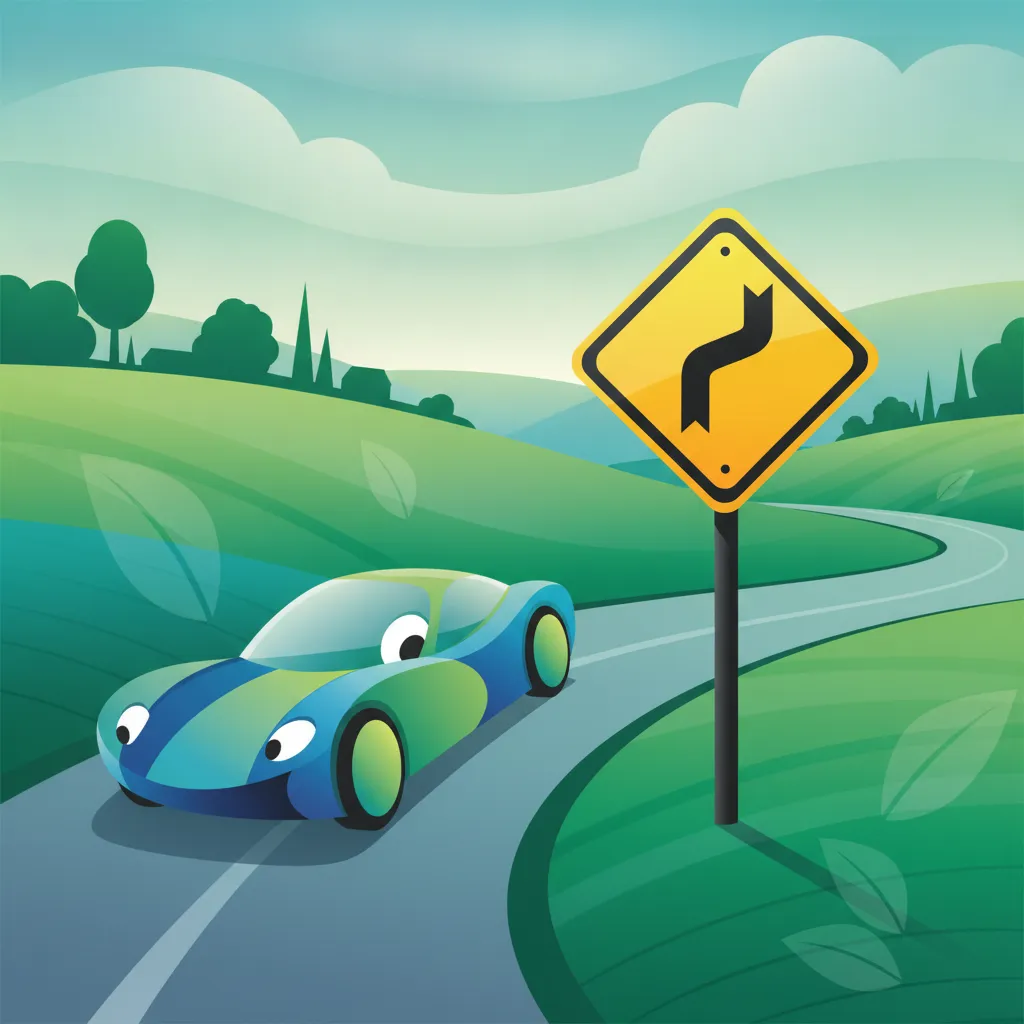
This lesson focuses on warning signs designed to alert drivers to potential hazards ahead. Topics include warnings for sharp curves, steep gradients, slippery surfaces, and zones with high pedestrian or wildlife activity. Learners will understand how to correctly interpret these signs and adjust their driving behavior to maintain safety on the road.
Explore the core principles of responsible driving, including self-regulation, risk management in various conditions, and promoting a culture of mutual respect and safety on Belgian roads.
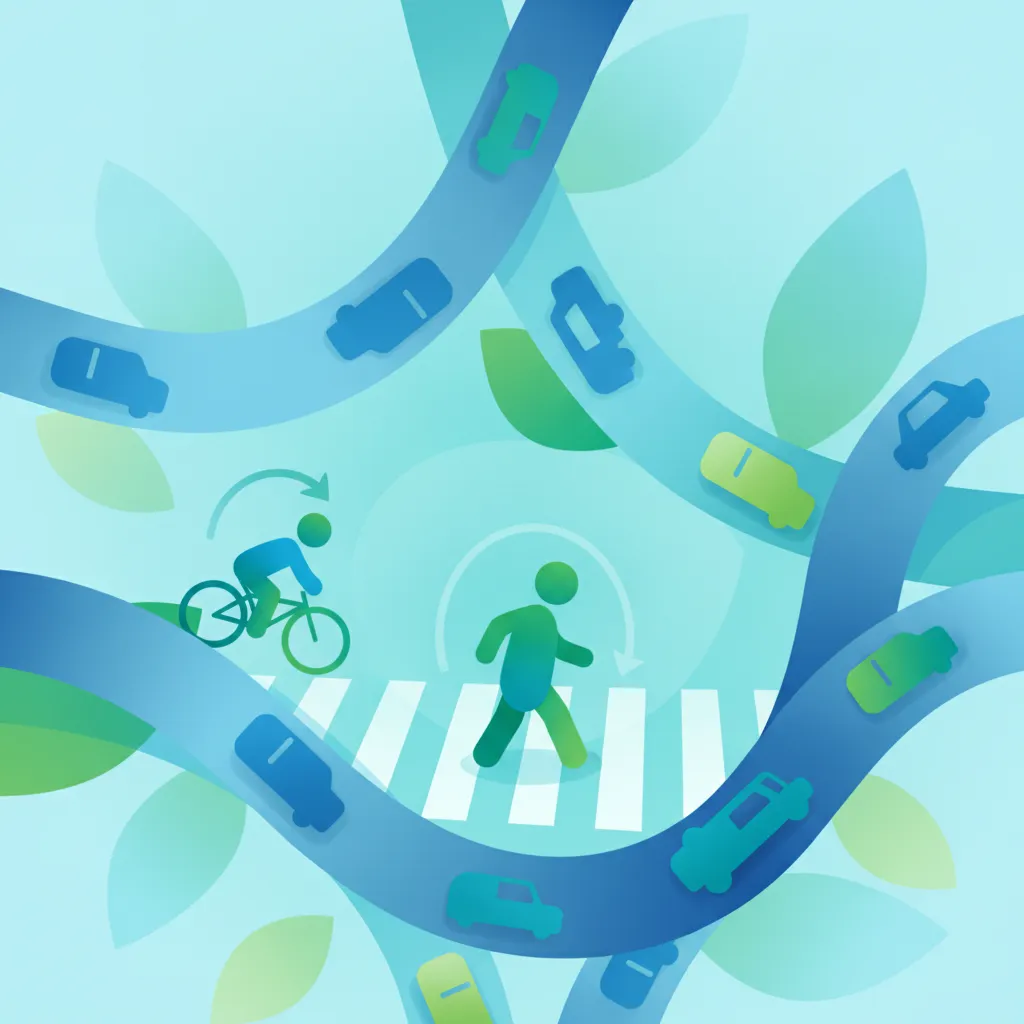
Driving safely requires anticipating potential hazards before they become immediate threats. This lesson covers hazard perception techniques, such as effective road scanning and identifying high-risk situations. Learners will practice recognizing common hazards and learn how to formulate a safe response plan in advance to avoid accidents.
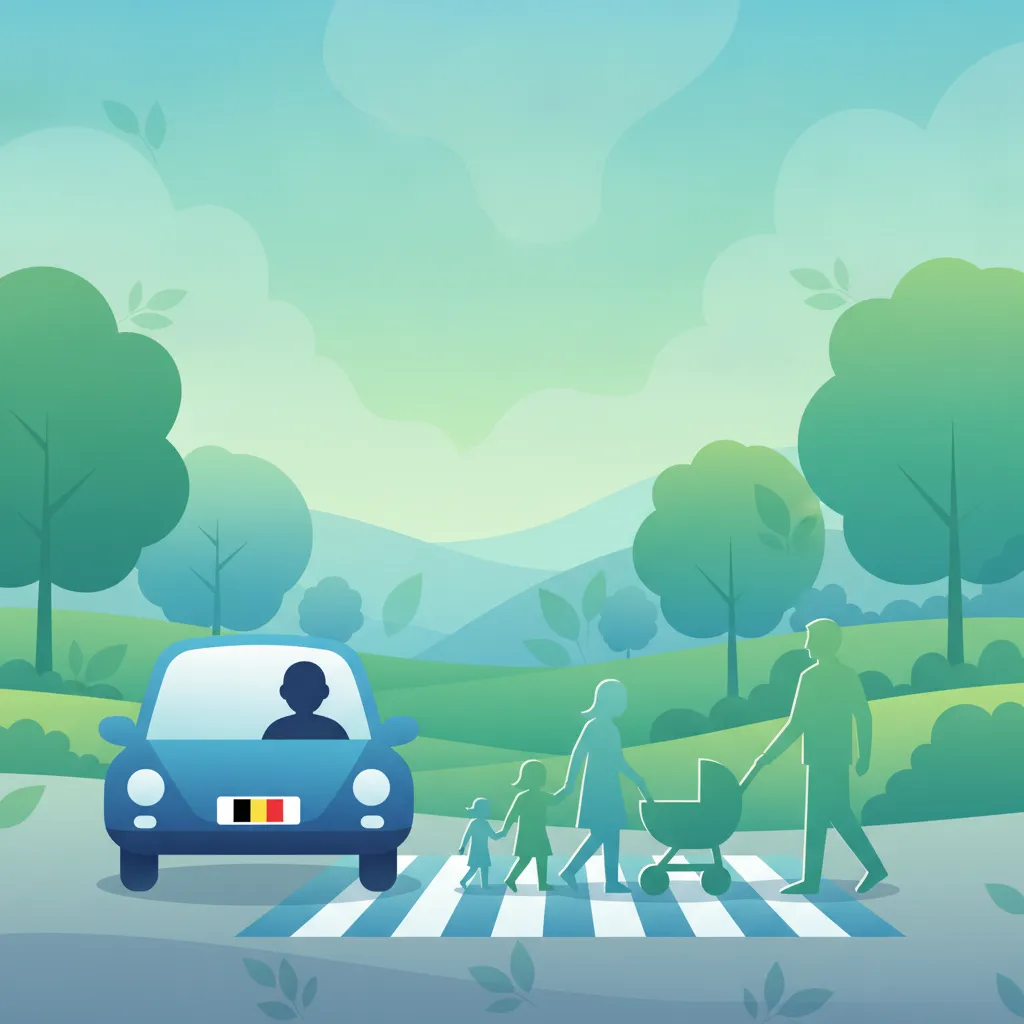
Beyond legal requirements, this lesson emphasizes the ethical dimension of driving, focusing on courtesy and cooperative behavior on Belgian roads. It introduces the social norms and etiquette expected of drivers, including respectful interactions with vulnerable road users. This ethical foundation fosters a responsible and harmonious traffic environment.
This lesson details the spectrum of obligations that apply to drivers, from basic compliance with traffic signs to responsibilities like vehicle upkeep and accident reporting. Learners will understand the importance of maintaining a vehicle in a roadworthy condition. It also covers the legal expectations for safe driving practices, including the use of safety equipment.
This lesson focuses on warning signs designed to alert drivers to potential hazards ahead. Topics include warnings for sharp curves, steep gradients, slippery surfaces, and zones with high pedestrian or wildlife activity. Learners will understand how to correctly interpret these signs and adjust their driving behavior to maintain safety on the road.
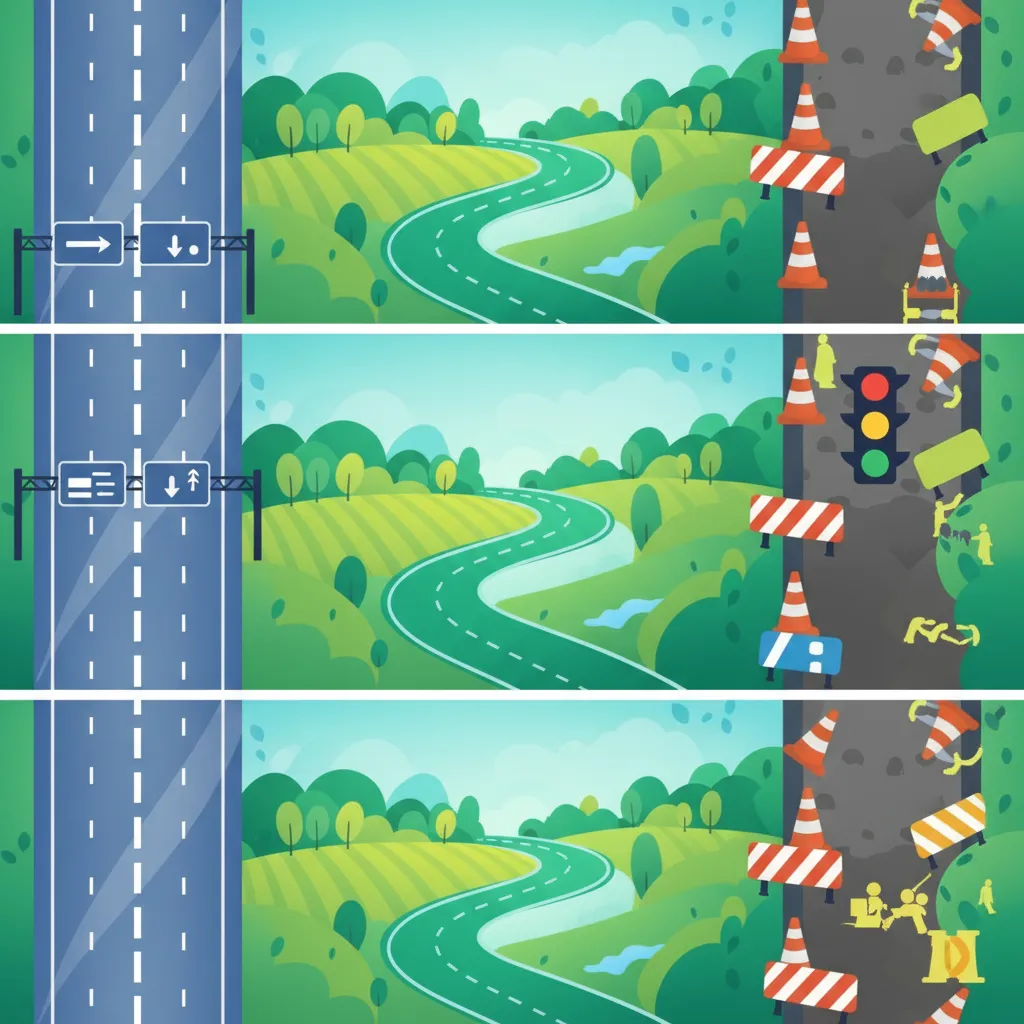
This lesson covers the specific challenges of driving on motorways, rural roads, and navigating roadworks. Learners will review lane discipline on high-speed roads and identify hazards common to rural roads, such as sharp bends and wildlife. It also explains the importance of adjusting speed and following temporary signage in construction zones.
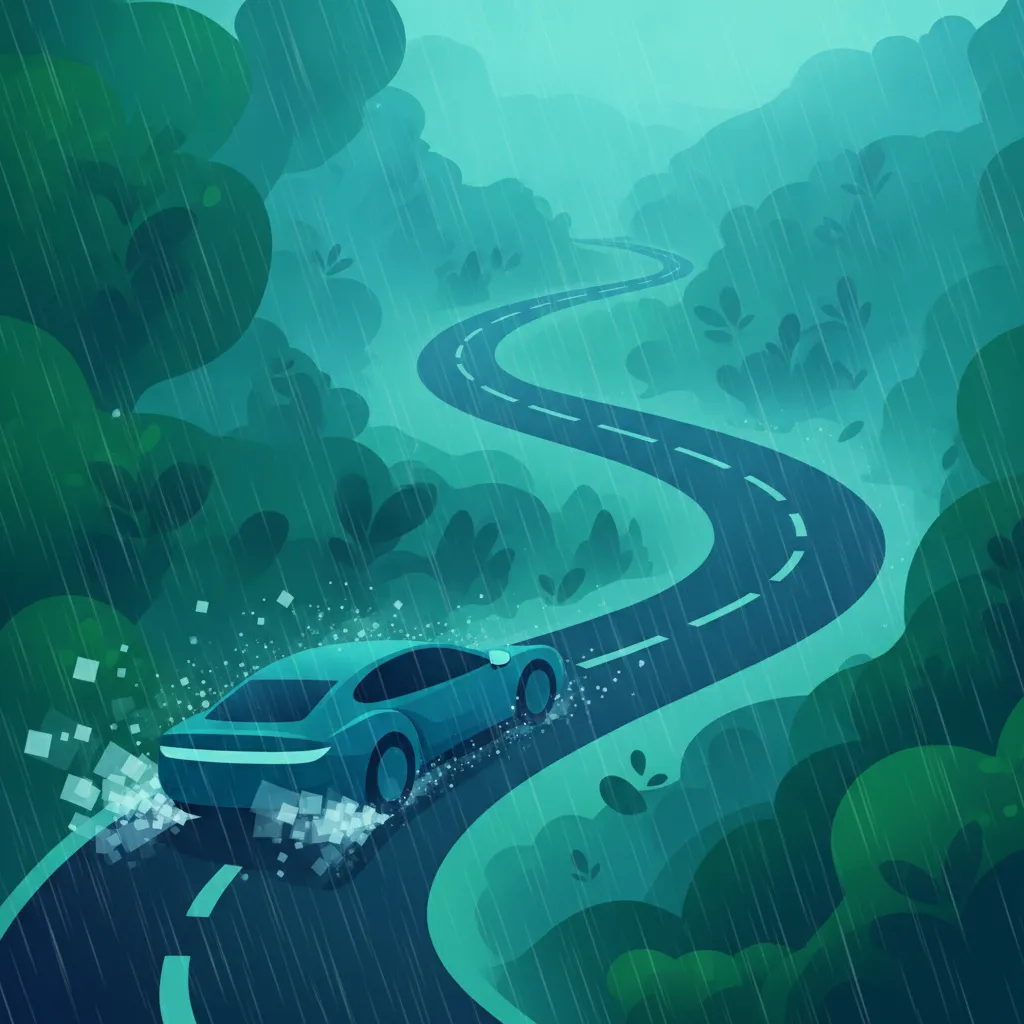
This lesson focuses on driving safely in adverse weather like rain, fog, and low sun glare, which affects road friction and visibility. It provides guidelines on speed adaptation, maintaining a safe following distance, and the proper use of vehicle equipment like lights and wipers. Learners will understand how to reduce risks like hydroplaning and skidding.
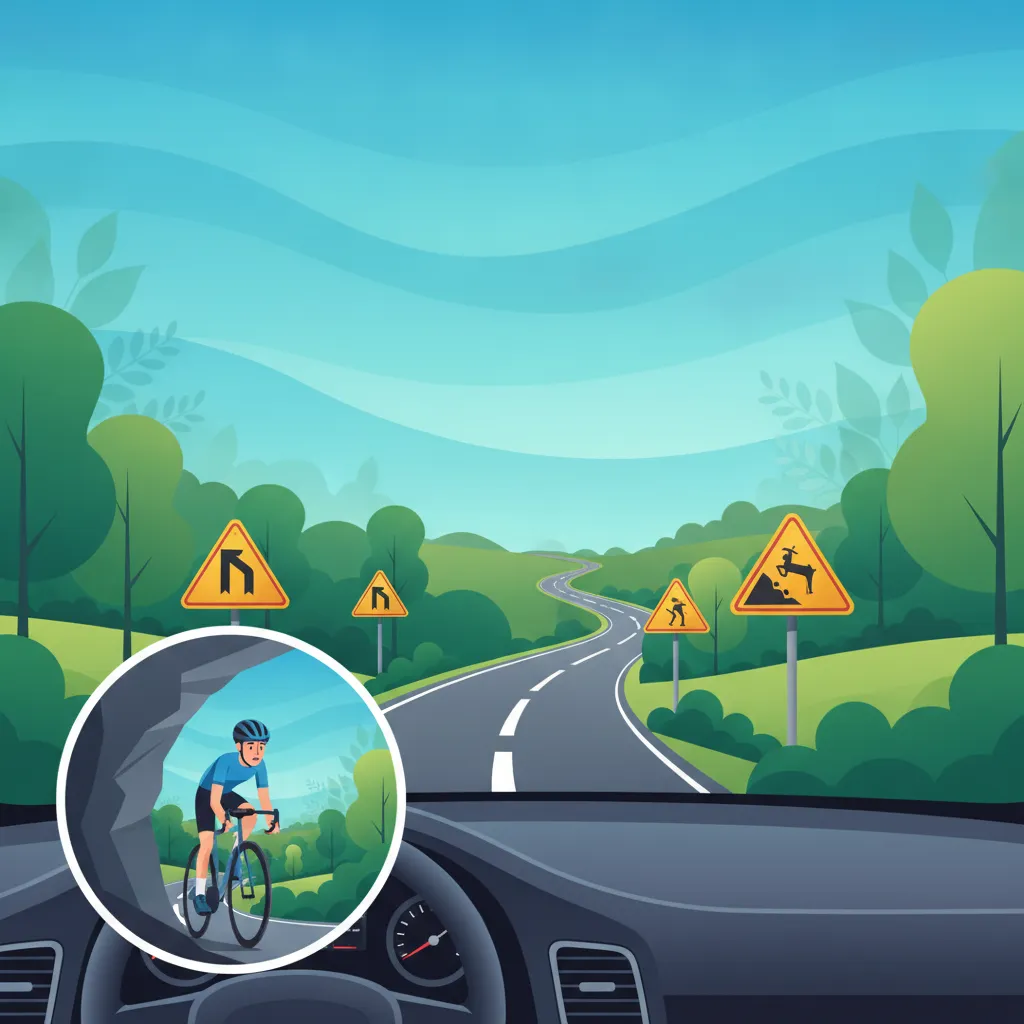
This lesson is dedicated to warning signs, which are designed to alert drivers to potential dangers ahead. It covers the interpretation of signs indicating sharp curves, steep gradients, slippery surfaces, and the presence of pedestrians or animals. By understanding these warnings, riders can anticipate potential hazards and adjust their speed and position proactively for safer travel.
This lesson synthesizes key safety concepts into the practice of defensive riding, a proactive mindset focused on anticipation and risk reduction. It teaches you to continuously scan for potential hazards, predict the actions of other road users, and always maintain an escape path. By mastering these strategies, you learn to manage the space around you and take control of your own safety.
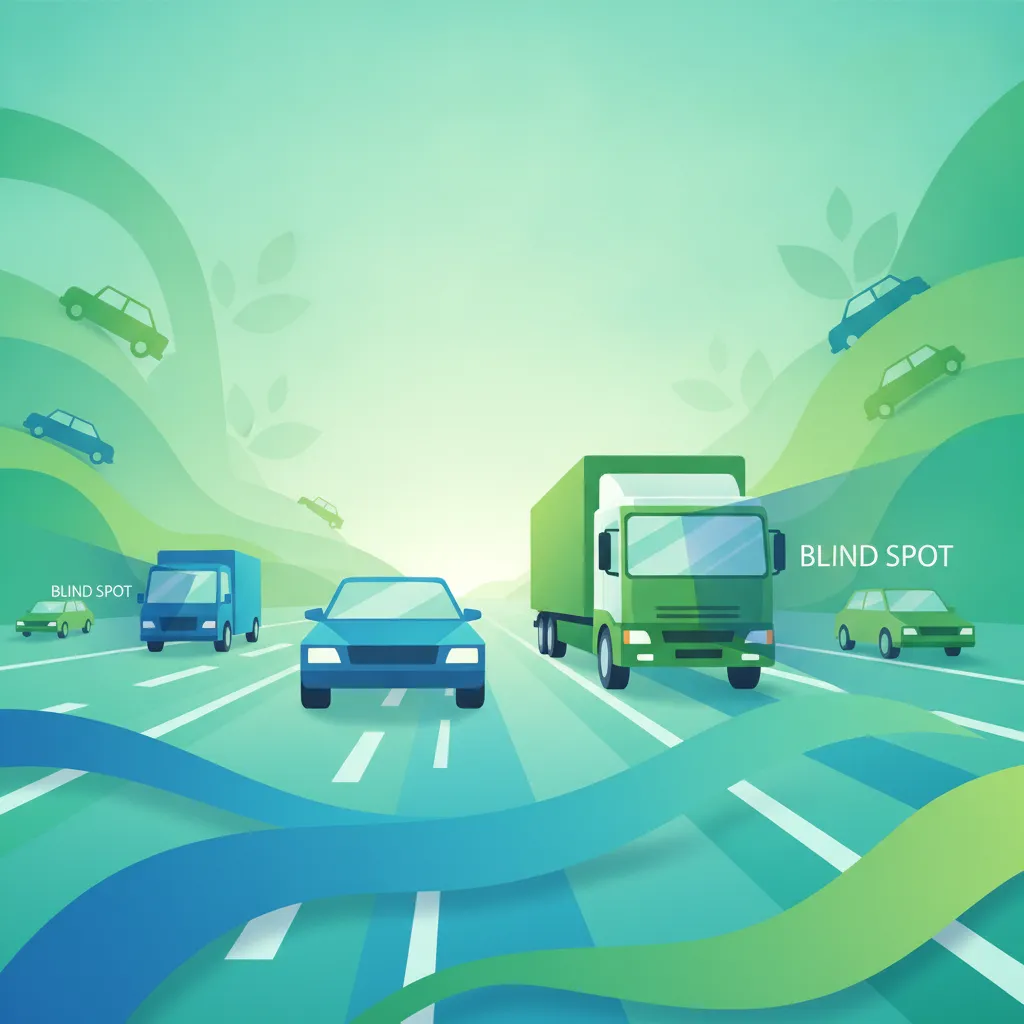
This lesson focuses on recognizing and staying out of the blind spots of other vehicles, especially large trucks and buses where 'no-zones' are significant. It provides practical strategies for managing your position on the road to ensure you remain visible to other drivers at all times. You will learn to anticipate lane changes and other maneuvers from vehicles that may not be aware of your presence.
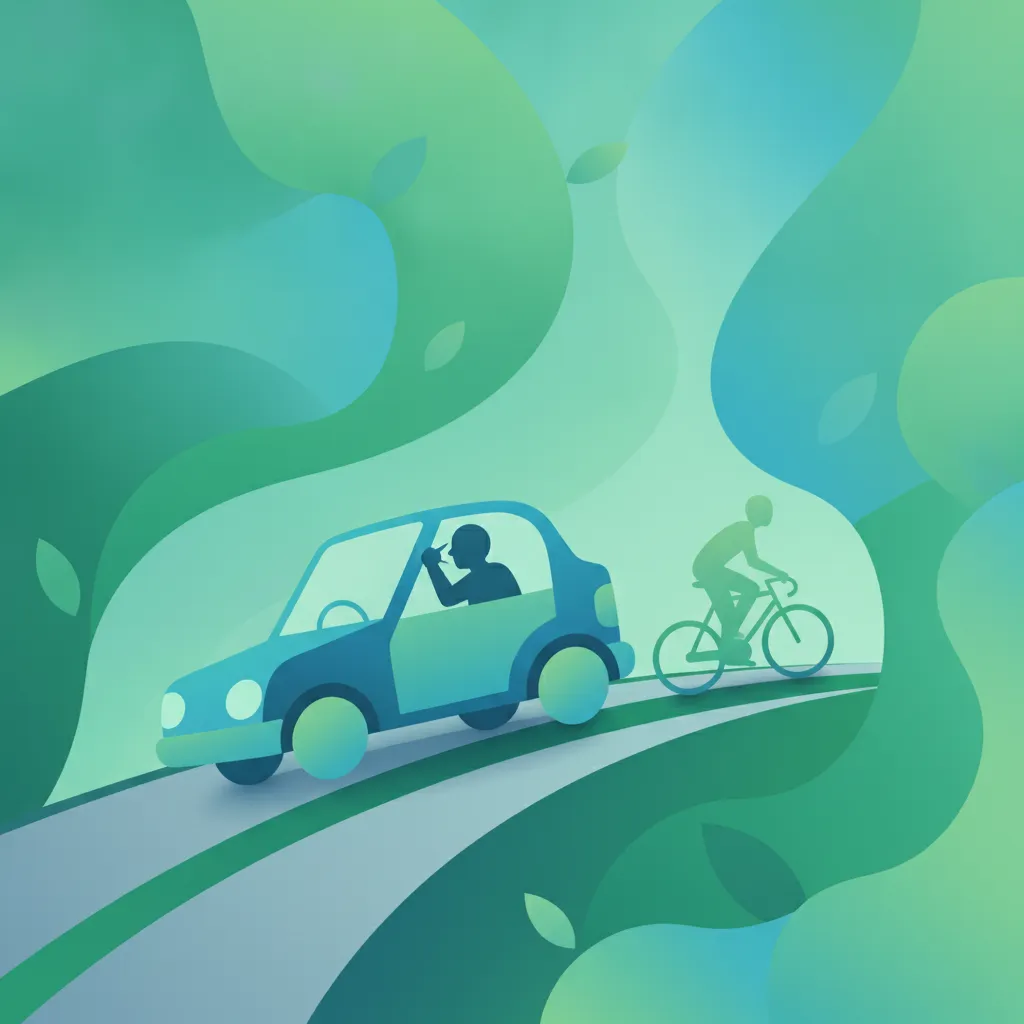
This lesson explains the concept of strategic road positioning to enhance safety and visibility. It teaches riders how to select the best position within a lane to be seen by other drivers and to have a good view of the road ahead. A key focus is on identifying and staying out of the large blind spots of cars, vans, and trucks to prevent dangerous situations.
Find clear answers to common questions learners have about Penalties, Emergency Procedures, and Responsible Driving. Learn how the lesson is structured, which driving theory objectives it supports, and how it fits into the overall learning path of units and curriculum progression in Belgium. These explanations help you understand key concepts, lesson flow, and exam focused study goals.
You must immediately stop your vehicle, secure the scene to prevent further accidents, ensure the safety of those involved, and call 112 if injuries or significant damage are present. Leaving the scene of an accident is a severe criminal offence.
While the system is evolving, Belgium uses a combination of immediate fixed fines and, for serious offences, judicial proceedings that can lead to significant financial penalties or the suspension of your driving licence by a police judge.
Always call 112, which is the European emergency number. When calling, be prepared to give your exact location, the nature of the emergency, the number of vehicles involved, and the status of any casualties.
Driving under the influence of alcohol or drugs carries severe penalties, including immediate licence withdrawal, heavy fines, and potential imprisonment, especially if an accident occurs.
Ready to focus your Belgian driving theory revision? Utilize our powerful search tool to pinpoint exact topics, road signs, or difficulty levels. Engage with practice questions that directly address your learning needs and solidify your understanding of Belgian traffic laws for your upcoming exam.