
This lesson provides a comprehensive guide to safe overtaking and correct lane discipline on Belgian roads, forming a crucial part of your Category B theory preparation. You will learn the legal requirements for passing vehicles, how to manage speed differentials, and when and where overtaking is strictly prohibited to ensure your safety and compliance during your driving test and beyond.
Lesson content overview
Overtaking, the act of safely passing a slower vehicle moving in the same direction, is a fundamental driving manoeuvre that demands precision, sound judgment, and strict adherence to traffic regulations. Equally crucial is proper lane discipline, which ensures smooth traffic flow and prevents hazardous situations for all road users. This comprehensive lesson will equip you with the essential knowledge and rules for safe and legal overtaking in Belgium, covering various road types, specific scenarios, and critical safety considerations for your Category B driving licence.
Effective overtaking extends beyond simply accelerating past another vehicle; it involves a complex interplay of observation, meticulous planning, and careful execution. To ensure both safety and legality, several core principles must consistently guide a driver's actions before, during, and after an overtaking manoeuvre.
All road users, including pedestrians, cyclists, and other drivers, rely on predictable behaviour to anticipate movements and react safely. Before initiating any overtaking manoeuvre, it is absolutely essential to clearly signal your intentions. This provides ample warning to drivers behind you, the vehicle you intend to overtake, and any potential oncoming traffic, allowing them to adjust their positions or speed accordingly. A sudden, unannounced lane change is not only dangerous but also a primary cause of collisions.
Visibility is a non-negotiable prerequisite for safe overtaking. Before committing to the manoeuvre, you must have a clear, unobstructed view of the road ahead, ensuring there is no oncoming traffic, hidden hazards, or restricted zones. A sufficient safety margin, defined as the minimum clear distance required to complete the manoeuvre without creating a risk, must always be established. This critical margin includes:
Before every overtaking attempt, ask yourself: "Is this manoeuvre truly safe? Is it legally permitted in this area? Is it absolutely necessary?" If the answer to any of these questions is no, you must refrain from overtaking.
A crucial aspect of safe overtaking is maintaining a significant speed difference between your vehicle and the one you are passing. If your speed is only slightly higher than the vehicle you are overtaking, the manoeuvre will take an extended period, significantly increasing your exposure to potential risks, especially from oncoming traffic or unexpected changes in road conditions. A sufficient speed differential, typically 20-30 km/h faster than the vehicle being overtaken (while staying within the legal speed limits), allows you to complete the manoeuvre efficiently, swiftly, and safely within the available space and time.
Lane discipline refers to the appropriate and predictable use of road lanes. It is critical for maintaining smooth and efficient traffic flow and ensuring safety during all driving manoeuvres, particularly when overtaking.
In Belgium, consistent with many European traffic regulations, the general rule dictates that drivers must keep to the rightmost available lane. This lane is considered the primary lane for normal driving. You should only move out of the right lane when you are actively overtaking another vehicle, preparing to turn left, or if specific road signs or markings instruct otherwise (e.g., due to an obstruction or roadworks).
On multi-lane roads, such as motorways and dual carriageways, the lanes to the left of the rightmost lane are generally designated as overtaking lanes. It is important to understand that these lanes are not for continuous driving, but specifically for passing slower vehicles. Once you have successfully completed an overtaking manoeuvre and it is safe to do so, you should return to the rightmost available lane. This practice, often referred to as 'keeping right unless overtaking', is fundamental to preventing congestion, promoting orderly traffic flow, and allowing faster traffic to proceed unhindered.
Adherence to the prescribed rules and conventions for using road lanes, which is essential for predictable driving patterns, maintaining orderly traffic flow, and enhancing safety during all road manoeuvres, especially overtaking.
Overtaking on motorways and dual carriageways, which typically have multiple lanes flowing in the same direction, is governed by specific rules designed to accommodate higher speeds and larger traffic volumes.
On motorways and other roads with at least two lanes designated for traffic in the same direction, overtaking is generally permitted from the left. The procedure involves moving into a lane to the left of the vehicle you wish to overtake, completing the manoeuvre efficiently, and then returning to the rightmost available lane once it is safe and practical.
Check Mirrors and Blind Spots Thoroughly: Before any action, diligently check your rear-view and side mirrors. Crucially, perform a quick head check over your shoulder to ensure your blind spots are completely clear of other vehicles, especially motorcycles or smaller cars.
Signal Your Intention Well in Advance: Clearly signal left using your indicators well before you begin to steer into the next lane. This alerts drivers behind you and the vehicle you intend to overtake of your intentions.
Accelerate and Move Smoothly: Once it is safe, smoothly move into the left lane, accelerating sufficiently to quickly and safely pass the slower vehicle. Avoid abrupt steering or excessive speed.
Maintain Safe Lateral Distance: While passing, ensure you maintain a safe lateral distance from the vehicle you are overtaking. Do not "hug" the vehicle.
Return to the Right Lane Safely: After you have completely passed the vehicle, and you can see its front entirely in your right-hand mirror (or central mirror if it's a two-wheeler), signal right. Then, smoothly and gradually return to the rightmost available lane.
Cancel Signal: Once you are safely back in your lane and travelling steadily, turn off your indicator.
As a general rule, overtaking on the right is strictly prohibited on motorways and dual carriageways in Belgium. This rule is in place because right-hand overtaking can create confusion for other drivers, increase blind spots, and lead to highly dangerous situations due to unexpected manoeuvres. While there can be very specific and rare exceptions—such as during extremely congested traffic where traffic in the right lane is moving faster in a continuous queue, or where specific road markings explicitly permit it (e.g., dedicated filter lanes for exits)—without such clear permissions, you must always overtake on the left.
Overtaking on single-carriageway roads, which often involve oncoming traffic, narrower lanes, and limited visibility, demands even greater caution, judgment, and adherence to rules than on motorways.
On single-carriageway roads with only one lane for traffic in each direction, overtaking also occurs by moving to the left lane (into the path of oncoming traffic, temporarily). Before initiating such a manoeuvre, you must meticulously assess several factors:
While the general rule is to overtake on the left, there are specific, limited situations on single-carriageway roads where overtaking on the right may be permitted or even required:
Certain situations, specific road signs, and particular road markings unequivocally prohibit overtaking due to inherent and significant safety risks. Ignoring these prohibitions is not only a serious traffic violation with potential penalties but also an extremely dangerous action that can lead to severe accidents.
Specific regulatory traffic signs are used to indicate that overtaking is forbidden for certain categories of motor vehicles. It is crucial to recognise and obey these signs.
Always be highly aware of and strictly respect these regulatory signs. They indicate high-risk zones where any attempt to overtake would be extremely dangerous and illegal.
A continuous (solid) white line separating traffic lanes is a strict prohibition against crossing or straddling that line. This means you absolutely cannot overtake if doing so would require your vehicle to cross or drive over a solid white line, regardless of whether it is a single solid line or a combination of a solid line paired with a broken line (where the solid line is on your side of the lane). These lines are strategically placed in areas where visibility is limited, hazards are present, or where it is unsafe to change lanes, such as approaching blind bends, hill crests, or intersections.
Overtaking is generally and strongly prohibited in the immediate vicinity of intersections, roundabouts, and pedestrian crossings due to the significantly increased potential for conflicts between vehicles, pedestrians, and cyclists.
Overtaking is also prohibited in several other high-risk areas and conditions:
Successfully executing an overtaking manoeuvre is highly dependent on the correct application of a sufficient speed differential and the maintenance of adequate safety margins throughout the process.
Your vehicle must be travelling at a noticeably higher speed than the vehicle you intend to pass. This allows you to spend the shortest possible time in the overtaking lane, thereby reducing your exposure to oncoming traffic, potential hazards, and the risk of being caught in another driver's blind spot. For instance, if you are travelling at 90 km/h and the vehicle in front is at 80 km/h, your effective speed difference is a mere 10 km/h, which makes the manoeuvre unduly long and potentially risky. A larger differential, ideally 20-30 km/h faster, is generally recommended for a swift and safe overtake, always ensuring you remain within the legal speed limits for that road.
As previously highlighted, Belgian regulations stipulate a crucial safety rule: you must only begin an overtaking manoeuvre when the distance to the vehicle directly in front of you is at least two times the length of your own vehicle. This "two-times rule" is specifically designed to ensure you have sufficient space to safely gain momentum, smoothly move out into the overtaking lane, complete the pass, and return to your original lane without having to brake suddenly, swerve, or cut off the vehicle you are passing. It provides the necessary buffer for a controlled and safe manoeuvre.
The difference in speed between your vehicle and the vehicle you intend to overtake. A significant and sufficient differential is crucial for completing the manoeuvre quickly and safely.
The minimum clear space, both longitudinally and laterally, and the necessary distance required around your vehicle to perform an overtaking manoeuvre safely, while accounting for other road users, potential hazards, and current road conditions.
Proper and timely signaling, combined with continuous situational awareness, are non-negotiable aspects of safe and lawful overtaking. These actions ensure that your intentions are clear to other road users and that you remain aware of the dynamic environment around you.
Throughout the entire overtaking manoeuvre, from initial observation to safely returning to your lane, you must maintain constant and active awareness of your surroundings:
While the core rules and principles for overtaking remain constant, certain environmental conditions, road characteristics, or types of road users require even greater caution and adjustment to your driving strategy.
In adverse weather conditions such as heavy rain, dense fog, or significant snowfall, visibility is severely reduced, and stopping distances dramatically increase due to slippery road surfaces. Overtaking in such conditions is inherently highly risky and should be avoided unless it is absolutely necessary and can be performed with absolute certainty of safety. If you must overtake, it is crucial to significantly increase your safety margins and potentially reduce your speed differential to maintain better control and allow more reaction time.
Extra caution is paramount when overtaking vulnerable road users, which include pedestrians, cyclists, and motorcyclists. Always ensure you leave a generous lateral safety margin: typically at least 1 meter (3 feet) in urban areas and 1.5 meters (5 feet) outside urban areas. This extra space accounts for sudden movements, wobbles, or gusts of wind that could affect them. Never assume that vulnerable road users have seen you or will maintain a perfectly straight line; always anticipate the unexpected.
When overtaking cyclists or motorcyclists, always provide them with ample space, treating them as if they occupy the entire width of their lane. This prevents dangerous close calls and allows them room for manoeuvre.
Overtaking with an overloaded vehicle, carrying a heavy load, or while towing a trailer significantly increases the power required and the distance needed to accelerate and brake. This means that achieving a sufficient speed differential will be harder, and the overall manoeuvre will take a considerably longer time and distance to complete. Before attempting to overtake in such circumstances, carefully consider if it is truly necessary and if you have genuinely sufficient engine power, space, and time to execute it safely without becoming a hazard.
Understanding the most frequent mistakes drivers make during overtaking can help you proactively prevent dangerous situations and ensure your safety and the safety of others.
This is one of the most common and profoundly dangerous violations. A continuous (solid) white line, a "no overtaking" traffic sign, or a specifically designated zone (like an intersection or pedestrian crossing) indicates an area where it is inherently unsafe to pass due to limited visibility, specific hazards, or critical road design. Always strictly respect these indicators; they are there for your safety.
Attempting to overtake without a significant speed advantage over the vehicle you are passing is a recipe for disaster. It means you will spend an unnecessarily long time alongside the other vehicle, increasing your exposure to risk, potentially frustrating other drivers, and reducing your ability to react to sudden changes. Always ensure you can complete the manoeuvre swiftly and decisively.
Failing to thoroughly check your blind spots before moving out, or neglecting to signal correctly and consistently throughout the manoeuvre, can easily lead to collisions. Always assume other drivers might not see you and make your intentions unmistakably clear through proper signaling and visual checks.
Returning to your original lane too soon after overtaking can result in "cutting off" the vehicle you just passed, forcing them to brake sharply or swerve, which creates a hazardous situation. Conversely, returning too late means you unnecessarily occupy the overtaking lane, potentially hindering faster traffic or violating lane discipline rules. Use your mirrors to accurately judge when it is safe to return, ensuring you can see the entire front of the overtaken vehicle before moving back.
Overtaking and maintaining excellent lane discipline are not merely rules to follow; they are critical skills for safe, efficient, and harmonious driving on Belgian roads. Mastering these elements involves more than just knowing the regulations; it requires developing keen observational skills, exercising sound judgment, and maintaining a consistent commitment to safety for yourself and all other road users.
Key Takeaways for Safe Overtaking and Lane Discipline:
By diligently applying these principles and rules, you will not only enhance your own safety but also contribute significantly to the safety and smooth flow of traffic for everyone sharing the road.
Safe overtaking in Belgium requires adherence to the 'keep right unless overtaking' principle, overtaking always from the left on multi-lane roads, and applying the 'two-times rule' for distance to the vehicle ahead. Maintain a significant speed differential of 20-30 km/h to complete the manoeuvre swiftly, signal clearly before, during, and after the pass, and never overtake in prohibited zones such as intersections, pedestrian crossings, on solid lines, or where visibility is restricted. Exercise extra caution around vulnerable road users by maintaining generous lateral margins of 1-1.5 meters, and increase safety distances in adverse weather conditions.
A short set of high-value points that capture the most important learning from this lesson.
Always overtake on the left on motorways and dual carriageways; overtaking on the right is strictly prohibited except in very specific queueing situations
Apply the 'two-times rule' before initiating any overtake: ensure the distance to the vehicle ahead is at least twice your own vehicle's length
Maintain a significant speed differential of 20-30 km/h over the vehicle you're passing to complete the manoeuvre quickly and safely within legal limits
Return to the rightmost lane after overtaking; the left lane is for passing only, not continuous driving
Never overtake at intersections, pedestrian crossings, on solid white lines, or where visibility is restricted by bends, crests, or tunnels
Explore all units and lessons included in this driving theory course.
Road sign C35 prohibits motor vehicles (except two-wheeled motorcycles) from overtaking; C36 specifically restricts heavy goods vehicles from overtaking
On single-carriageways, you may overtake on the right only for stationary trams (if no traffic island), vehicles turning left, or in heavy queueing traffic
Allow at least 1 meter lateral distance when overtaking cyclists or motorcyclists in urban areas and 1.5 meters outside urban areas
You must see the entire front of the overtaken vehicle in your right-hand mirror before returning to your lane
In adverse weather (fog, heavy rain, snow), increase safety margins and consider postponing overtaking unless absolutely necessary
Attempting to overtake with insufficient speed differential, which extends the manoeuvre time and increases exposure to oncoming traffic
Returning to the original lane too early, cutting off the vehicle just passed and forcing it to brake suddenly
Failing to check blind spots with a physical head check, relying solely on mirrors before changing lanes
Overtaking across solid white lines or in prohibited zones marked by road signs or limited visibility
Neglecting to cancel the indicator after returning to the lane, which can confuse other road users
Lesson content overview
A short set of high-value points that capture the most important learning from this lesson.
Always overtake on the left on motorways and dual carriageways; overtaking on the right is strictly prohibited except in very specific queueing situations
Apply the 'two-times rule' before initiating any overtake: ensure the distance to the vehicle ahead is at least twice your own vehicle's length
Maintain a significant speed differential of 20-30 km/h over the vehicle you're passing to complete the manoeuvre quickly and safely within legal limits
Return to the rightmost lane after overtaking; the left lane is for passing only, not continuous driving
Never overtake at intersections, pedestrian crossings, on solid white lines, or where visibility is restricted by bends, crests, or tunnels
Explore all units and lessons included in this driving theory course.
Road sign C35 prohibits motor vehicles (except two-wheeled motorcycles) from overtaking; C36 specifically restricts heavy goods vehicles from overtaking
On single-carriageways, you may overtake on the right only for stationary trams (if no traffic island), vehicles turning left, or in heavy queueing traffic
Allow at least 1 meter lateral distance when overtaking cyclists or motorcyclists in urban areas and 1.5 meters outside urban areas
You must see the entire front of the overtaken vehicle in your right-hand mirror before returning to your lane
In adverse weather (fog, heavy rain, snow), increase safety margins and consider postponing overtaking unless absolutely necessary
Attempting to overtake with insufficient speed differential, which extends the manoeuvre time and increases exposure to oncoming traffic
Returning to the original lane too early, cutting off the vehicle just passed and forcing it to brake suddenly
Failing to check blind spots with a physical head check, relying solely on mirrors before changing lanes
Overtaking across solid white lines or in prohibited zones marked by road signs or limited visibility
Neglecting to cancel the indicator after returning to the lane, which can confuse other road users
Explore search topics learners often look for when studying Overtaking and Lane Discipline. These topics reflect common questions about road rules, driving situations, safety guidance, and lesson level theory preparation for learners in Belgium.
Browse additional driving theory lessons that cover connected traffic rules, road signs, and common driving situations related to this topic. Improve your understanding of how different rules interact across everyday traffic scenarios.
Explore specific Belgian regulations and exceptions for overtaking, including scenarios like passing trams, navigating traffic congestion, and other less common situations. Understand when standard rules may differ for safe driving theory.
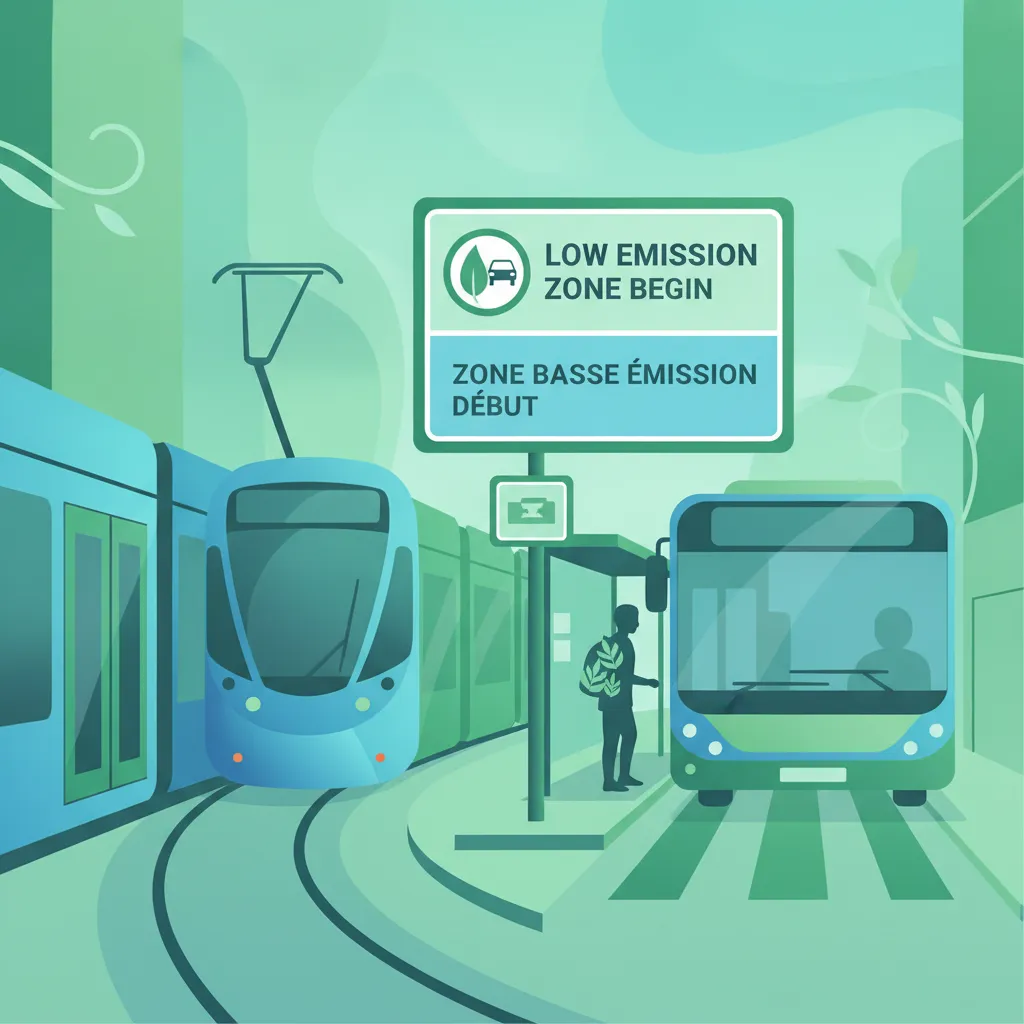
This lesson addresses unique traffic environments and special zones commonly found in Belgian urban areas. It clarifies the specific regulations concerning tramways, including where trams have absolute priority, and the conditions under which motorcycles may use bus lanes. The lesson also explains how to identify and comply with restrictions in low-emission zones.
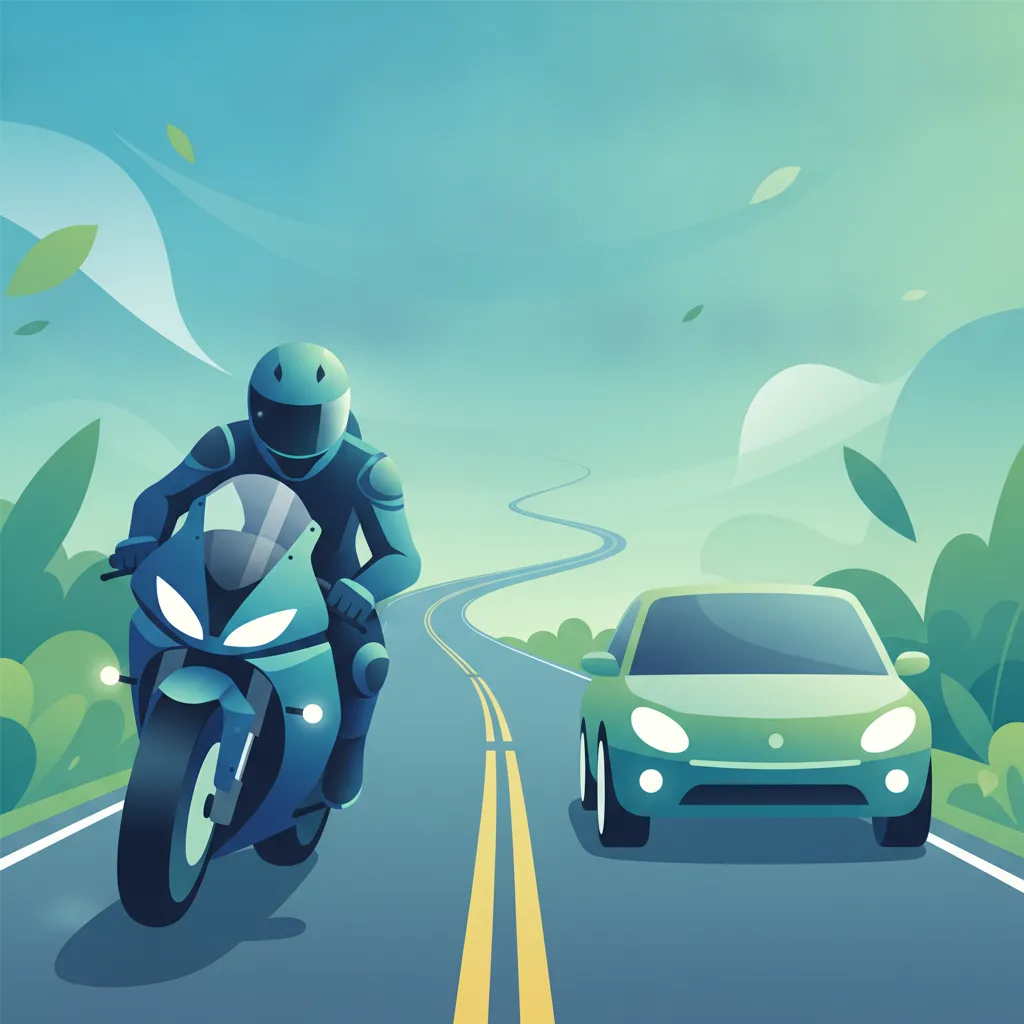
This lesson provides a step-by-step guide to executing a safe overtaking maneuver in compliance with Belgian law. It covers the necessary pre-maneuver checks, proper signaling, and how to accurately judge the speed and distance of oncoming traffic. You will learn the correct procedure for passing a vehicle and safely returning to your original lane.
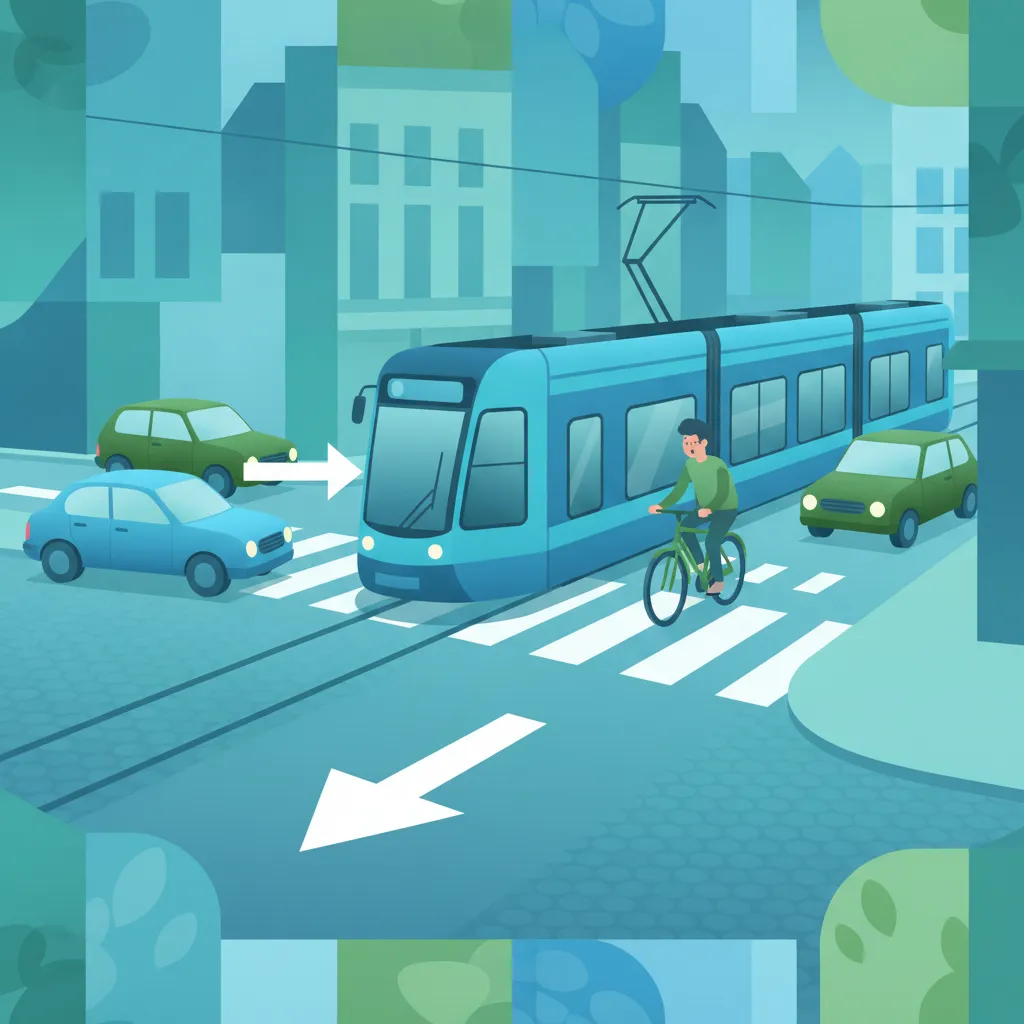
This lesson delves into the complex priority rules that govern Belgian roadways, with a strong focus on the default 'priority from the right' principle. It explains how to interpret priority signs, such as 'give way' and 'stop', and apply the correct right-of-way at various types of junctions. You will learn the hierarchy of road users and the specific rules for yielding in different traffic scenarios.
This lesson teaches motorcyclists how to safely navigate mixed traffic environments that include cars, buses, and trams. It highlights the significant blind spots of larger vehicles and explains the absolute priority of trams on their tracks. You will learn the rules for sharing space with public transport and how to maintain safe distances when following or overtaking buses.
This lesson covers the specific challenges of driving on motorways, rural roads, and navigating roadworks. Learners will review lane discipline on high-speed roads and identify hazards common to rural roads, such as sharp bends and wildlife. It also explains the importance of adjusting speed and following temporary signage in construction zones.

This lesson focuses on the rules governing pedestrian crossings, including marked zebra crossings and signal-controlled crossings. Special attention is given to school zones and residential areas where pedestrian activity is high. Learners will understand how to recognize and respect pedestrian priority in various crossing scenarios to ensure their safety.
This lesson examines the interactions between private vehicles and public transport, focusing on buses and trams. Learners will understand the priority rules for these vehicles, recognizing dedicated lanes and stopping positions. Special considerations for motorcyclists, school buses, and other vulnerable users are also discussed to ensure safe coexistence.
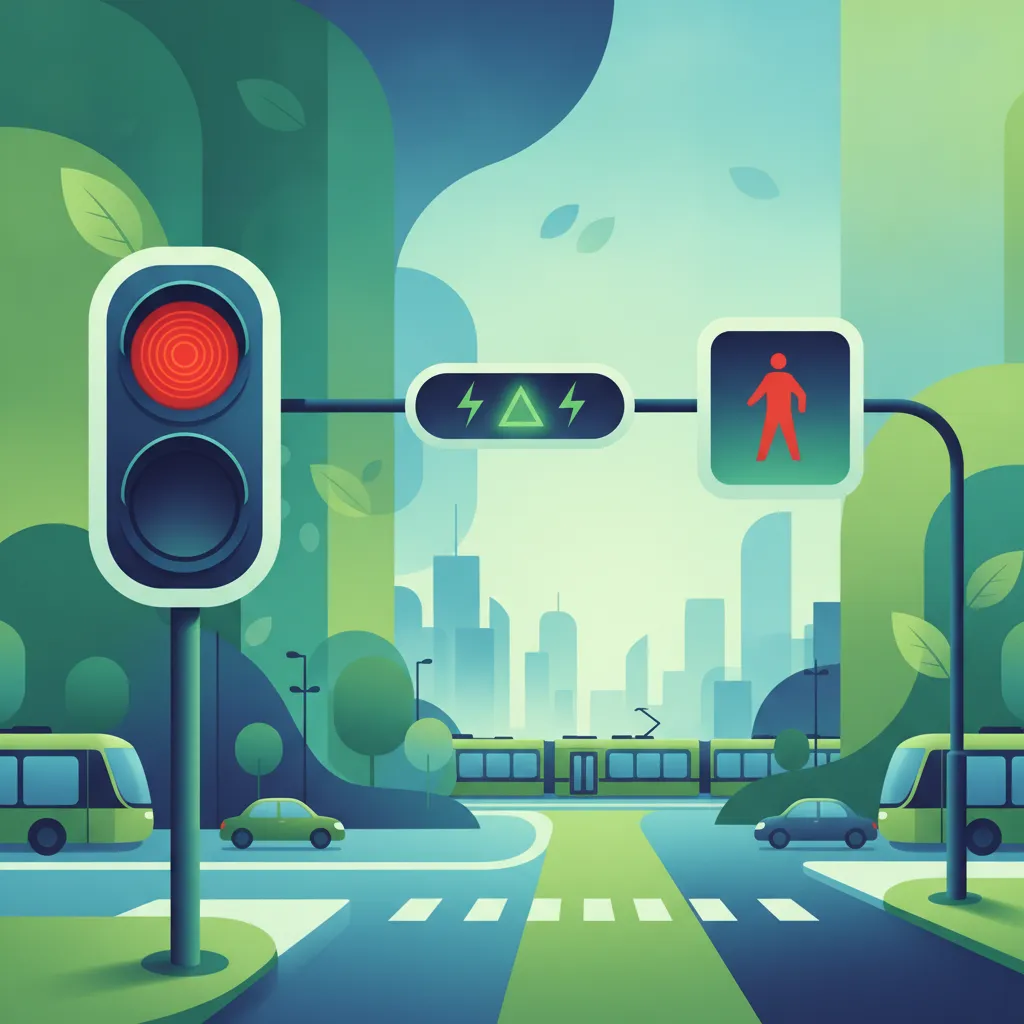
This lesson examines the operation of traffic light systems in Belgium, clarifying the meaning of red, amber, and green signals, including flashing lights and directional arrows. It details a motorcyclist's legal obligations when approaching and navigating signal-controlled intersections. The content also addresses specialized signals for pedestrians and trams that riders must recognize and respond to correctly.
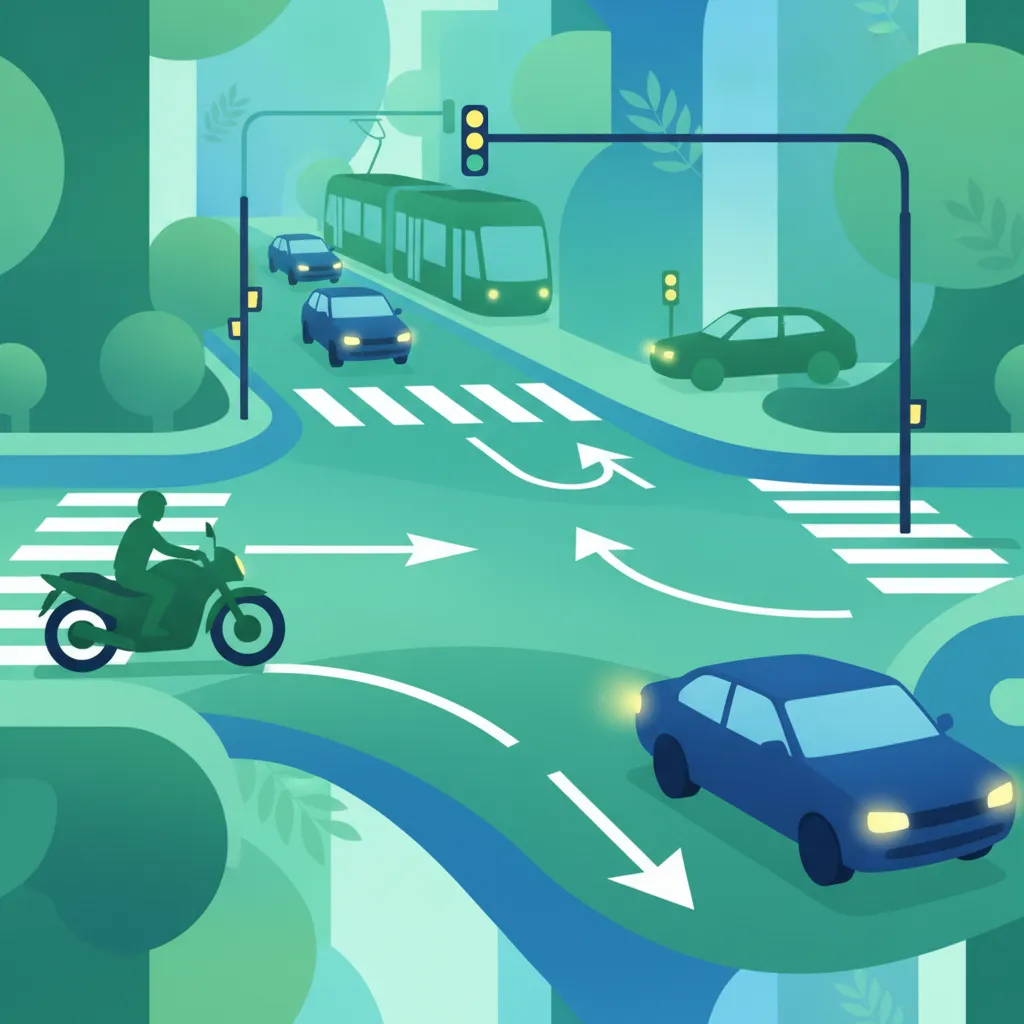
In this lesson, learners will examine the fundamental priority rules that dictate traffic flow at unmarked intersections. The lesson focuses on the principle of priority from the right, the hierarchy of traffic signs and signals, and situations requiring yielding or stopping. Understanding these principles is crucial for safe and lawful navigation of Belgian road networks.
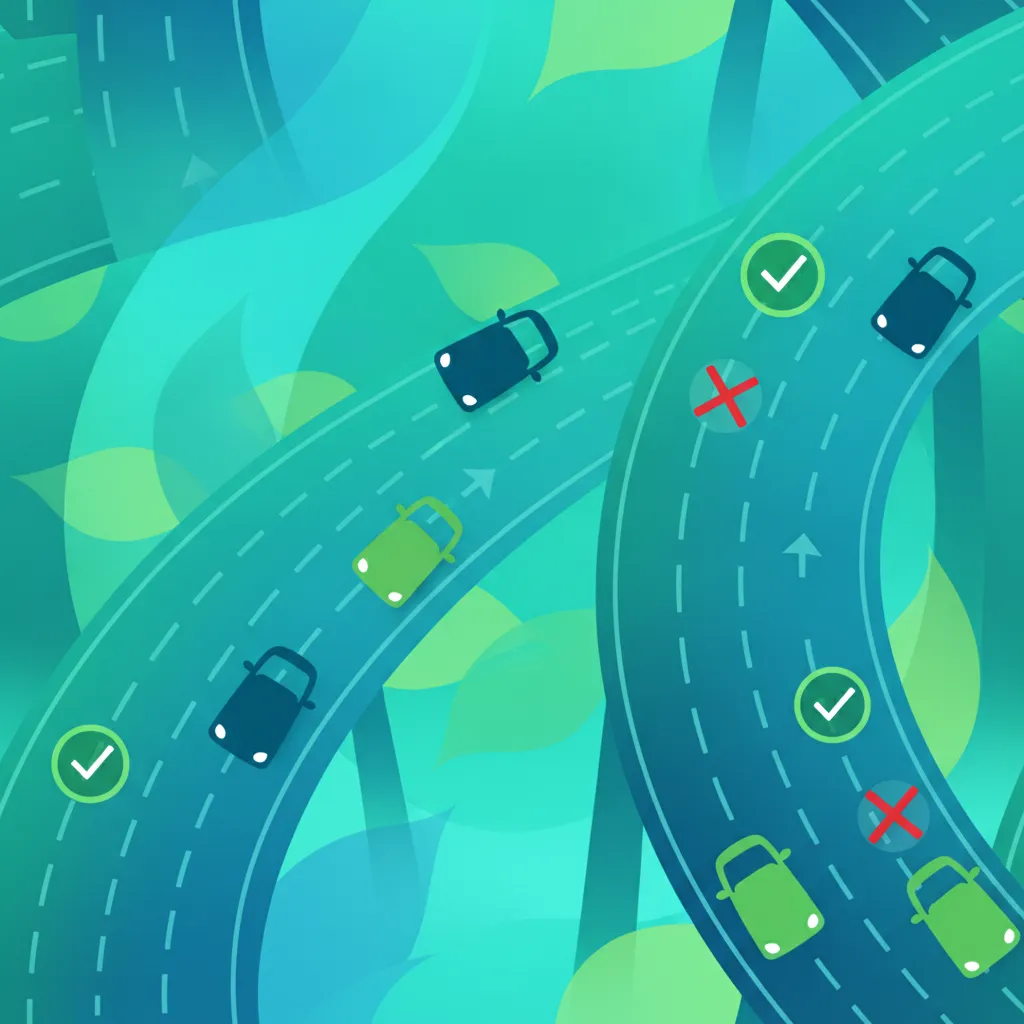
The focus of this lesson is on maintaining proper lane discipline, especially on motorways and other high-speed roads. Learners will explore the rules for changing lanes, overtaking, and positioning in the correct lane based on speed and traffic flow. Emphasis is placed on safe merging techniques and adherence to all lane markings for fluid traffic movement.
Understand the crucial link between maintaining proper lane discipline and adhering to Belgian priority rules. Learn how correct lane usage, especially during overtaking, impacts yielding at intersections and overall traffic flow for safe driving.
The focus of this lesson is on maintaining proper lane discipline, especially on motorways and other high-speed roads. Learners will explore the rules for changing lanes, overtaking, and positioning in the correct lane based on speed and traffic flow. Emphasis is placed on safe merging techniques and adherence to all lane markings for fluid traffic movement.
In this lesson, learners will examine the fundamental priority rules that dictate traffic flow at unmarked intersections. The lesson focuses on the principle of priority from the right, the hierarchy of traffic signs and signals, and situations requiring yielding or stopping. Understanding these principles is crucial for safe and lawful navigation of Belgian road networks.
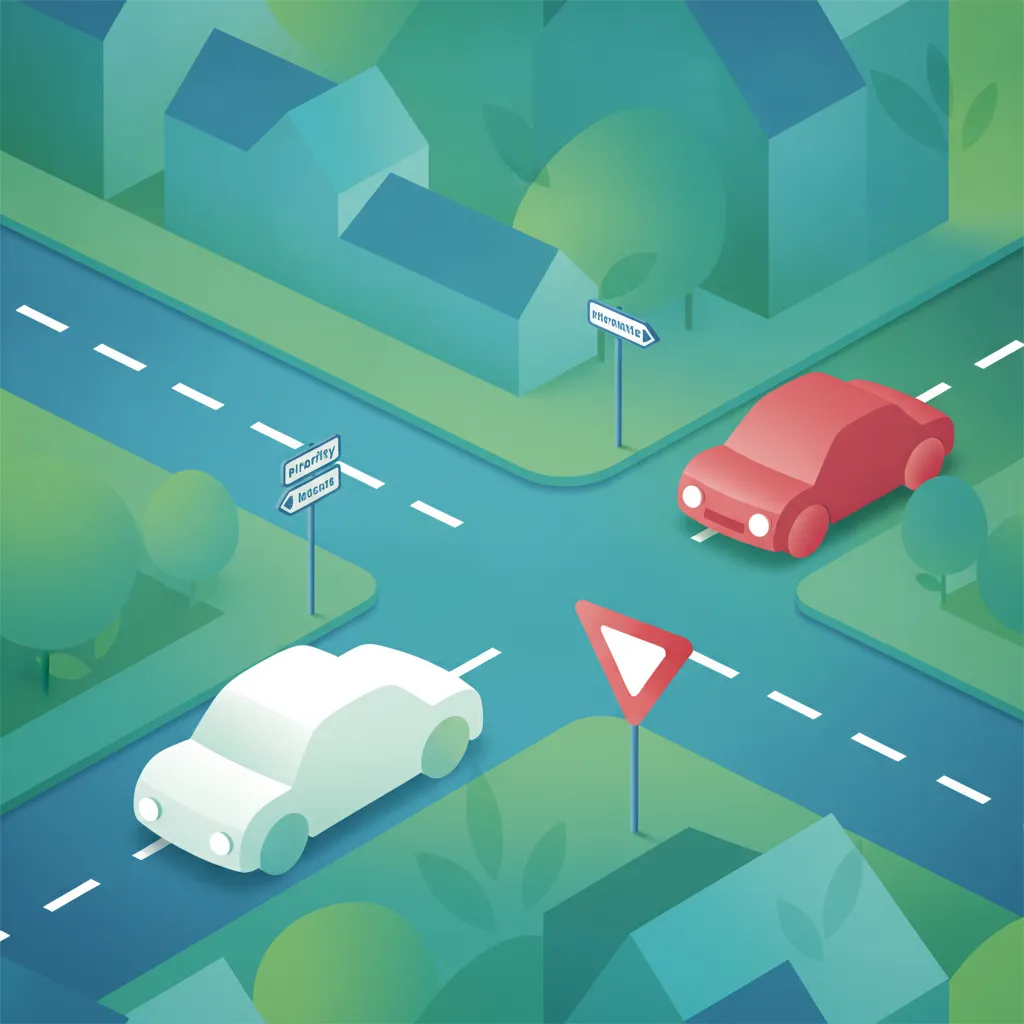
This lesson focuses on the distinction between the default priority from the right and designated priority roads, explaining how drivers should yield or proceed. Learners will discover the specific signs that indicate a priority road and when that priority ends. Understanding these concepts is essential for predictable and safe road use at intersections.
This lesson delves into the complex priority rules that govern Belgian roadways, with a strong focus on the default 'priority from the right' principle. It explains how to interpret priority signs, such as 'give way' and 'stop', and apply the correct right-of-way at various types of junctions. You will learn the hierarchy of road users and the specific rules for yielding in different traffic scenarios.

This lesson provides detailed guidance on navigating various intersections, focusing on yielding behaviors at give way signs and mandatory stops at stop signs. Learners will explore how traffic lights override other priority rules and the importance of granting right-of-way to pedestrians and cyclists. The lesson emphasizes safe crossing procedures and correct yielding.
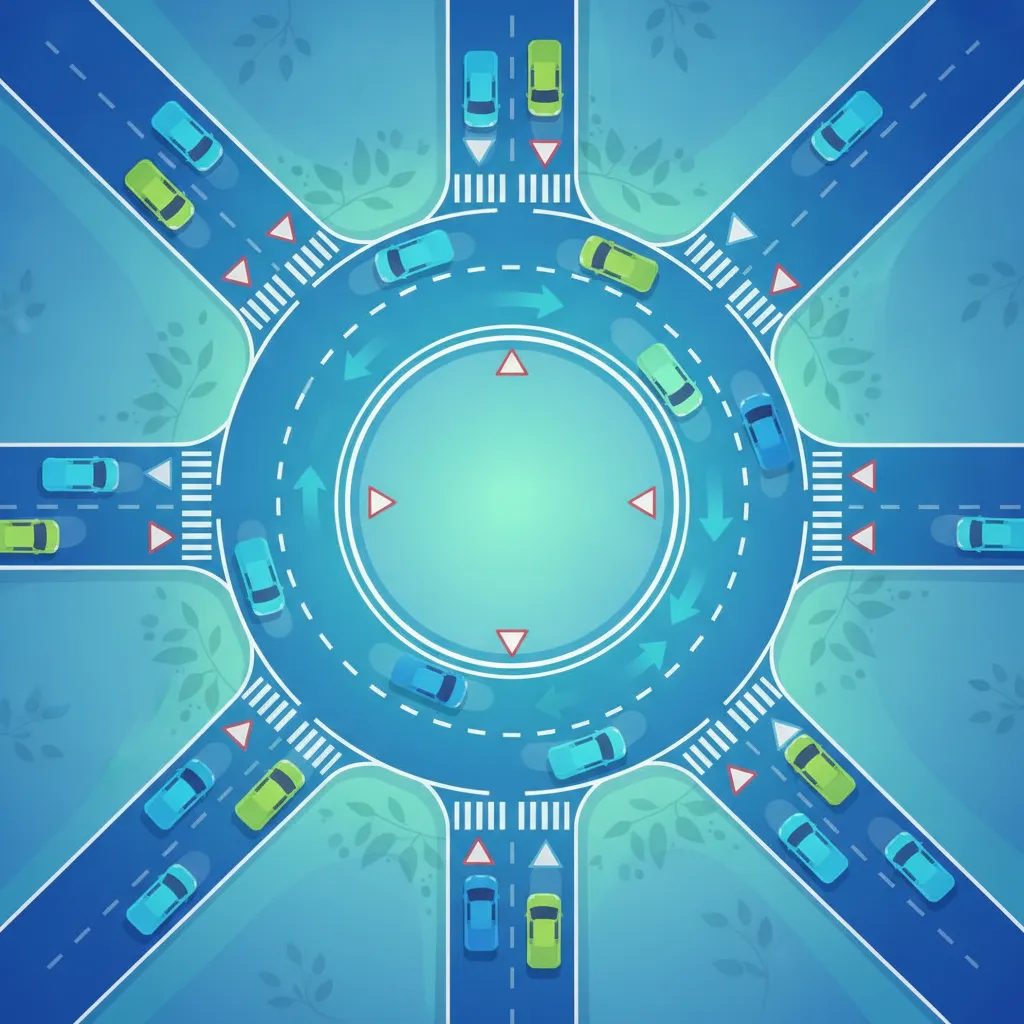
Roundabouts are a key feature of Belgian traffic management. This lesson explains how to approach, enter, navigate, and exit a roundabout safely, with a focus on yielding priority to traffic already circulating. Learners will also study correct lane positioning on multi-lane roundabouts and the appropriate use of signals.
Directional symbols and arrows painted on the road surface guide drivers on permitted lane movements and turning directions. This lesson explains the interpretation of these arrows, covering rules for one-way streets, mandatory turns, and lane-specific instructions. Learners will understand how to comply with these symbols to navigate complex intersections safely and efficiently.
This lesson introduces the core principles of priority that govern traffic flow in Belgium, with a primary focus on the 'priority from the right' rule. It explains how to identify priority roads indicated by signs and how to act at uncontrolled intersections where the default rule applies. Understanding these rules is critical for AM riders to navigate junctions, intersections, and roundabouts safely and without conflict.
This lesson focuses on the rules governing pedestrian crossings, including marked zebra crossings and signal-controlled crossings. Special attention is given to school zones and residential areas where pedestrian activity is high. Learners will understand how to recognize and respect pedestrian priority in various crossing scenarios to ensure their safety.
This lesson focuses on basic manoeuvres, covering the proper use of indicators, safe lane positioning, and correct steering for turns. Learners will study the importance of checking blind spots and maintaining appropriate speed for a smooth transition when changing lanes. It also addresses turning at intersections and signaling intentions clearly to other road users.
Find clear answers to common questions learners have about Overtaking and Lane Discipline. Learn how the lesson is structured, which driving theory objectives it supports, and how it fits into the overall learning path of units and curriculum progression in Belgium. These explanations help you understand key concepts, lesson flow, and exam focused study goals.
Generally, you must overtake on the left. Overtaking on the right is only permitted in specific cases, such as when the driver in front is signaling to turn left and has clearly moved to the left, or when driving in dense traffic lanes where vehicles are moving in columns.
Yes, overtaking is strictly prohibited at pedestrian crossings, just before or on crests of hills with limited visibility, at priority intersections where the rule of priority from the right applies, and in tunnels or on roads indicated by specific 'no overtaking' road signs.
The speed differential is crucial because a higher relative speed allows you to complete the maneuver quickly, reducing the time spent in the oncoming traffic lane or alongside the other vehicle. You must remain within the legal speed limits while ensuring you are fast enough to pass safely.
Yes, in Belgium, you are required to drive in the rightmost lane on a motorway under normal conditions. You should only move to a middle or left lane to overtake or to prepare for an upcoming exit, regardless of how light the traffic is.
Ready to focus your Belgian driving theory revision? Utilize our powerful search tool to pinpoint exact topics, road signs, or difficulty levels. Engage with practice questions that directly address your learning needs and solidify your understanding of Belgian traffic laws for your upcoming exam.