
The T-23c sign is an important supplementary plate indicating that restrictions or directions apply specifically to tractors, agricultural machinery, and other slow-moving vehicles. You’ll often see it used in conjunction with other signs like 'No Overtaking' or 'No Entry' to manage traffic flow and ensure safety on Polish roads, especially in rural areas. Drivers must pay attention to any associated signs to understand how this plate affects their route or actions.
Master the T-23c sign for Agricultural Tractors, crucial for your Polish driving theory test revision. This sign clarifies restrictions and guidance specifically for slow-moving farm vehicles, aiding your comprehensive road sign explanation and interpretation.
The T-23c plate shows a tractor silhouette. It is used to manage the movement of farm machinery. For example, it might be used with a 'No Overtaking' sign to specifically prevent cars from passing tractors on a dangerous stretch, or with a 'No Entry' sign to keep slow-moving farm traffic off high-speed bypasses where they would create a significant hazard.
Indicates that the sign applies to tractors and slow-moving vehicles.
Get clear, practical answers to the most common questions about the T-23c - Agricultural Tractors road sign. Learn how the sign works, what rules it represents, and how it affects real driving situations. This FAQ strengthens your understanding and supports accurate decision making for the Polish driving theory exam in Poland.
The T-23c sign, showing a tractor silhouette, is a supplementary plate that means the main sign it's attached to applies specifically to tractors and other slow-moving vehicles, including forestry and construction machinery. It clarifies that these vehicles have particular rules or restrictions on that section of road.
This plate is typically used to add specific context to other signs. For example, it could be used with a 'No Overtaking' sign to prohibit overtaking only tractors, or with a 'No Entry' sign to prevent farm machinery from entering a high-speed road where they would be a hazard. Always read the main sign and the T-23c plate together.
Your action depends on the main sign the T-23c plate is attached to. If you are driving a tractor or other slow-moving vehicle, you must adhere to any specific restrictions or directions indicated. If you are driving a regular car, this sign often means you need to be aware of slow vehicles, and you must respect any prohibitions or directions that apply to them, such as not overtaking if a 'No Overtaking' sign is present.
A common trap is failing to understand that the T-23c sign modifies the main sign's application. Learners might incorrectly assume a 'No Overtaking' sign applies to all vehicles when, with the T-23c, it might only apply to tractors. Always consider both signs when determining your required action. Also, remember that 'slow-moving vehicles' can include more than just tractors, such as construction machinery.
No, the T-23c sign applies more broadly than just agricultural tractors. It is also used to indicate that rules apply to forestry equipment and other slow-moving industrial or construction machinery. The key factor is the vehicle's slow speed and its potential impact on traffic flow or safety.
A clear reference image of the T-23c - Agricultural Tractors road sign used in Poland.
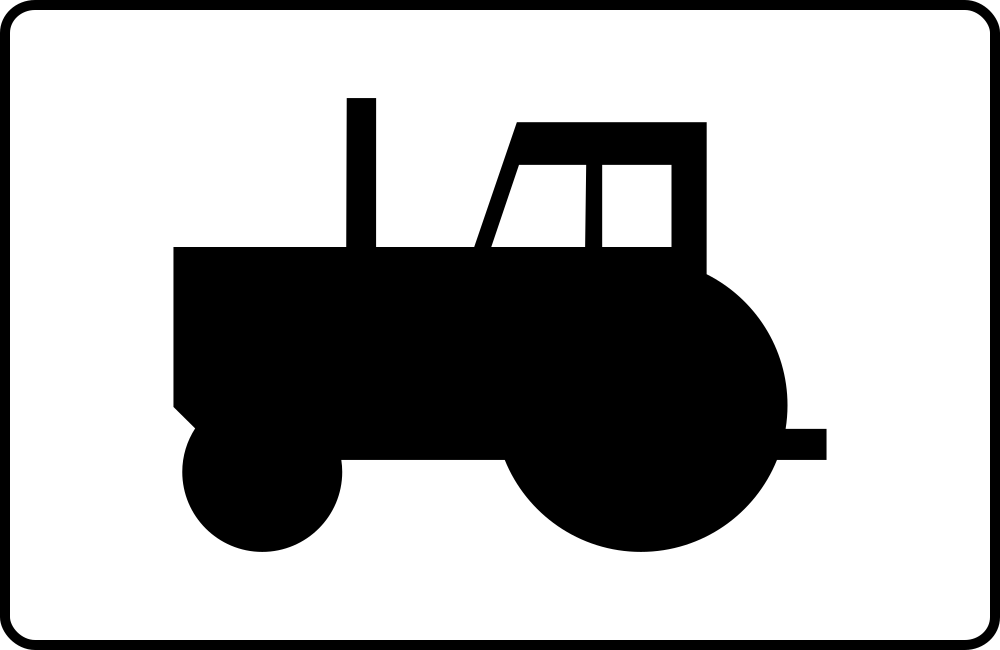
The T-23c - Agricultural Tractors road sign may also be known by these alternative names or terms.
The T-23c - Agricultural Tractors road sign is part of the Supplementary Plates (T) category, which groups together signs with similar rules and functions.
Mastering Polish traffic signs means understanding subtle differences. Comparing similar road signs, like this 'Tractors Only' plate, aids memory and prevents confusion, crucial for effective theory test revision and safe driving.
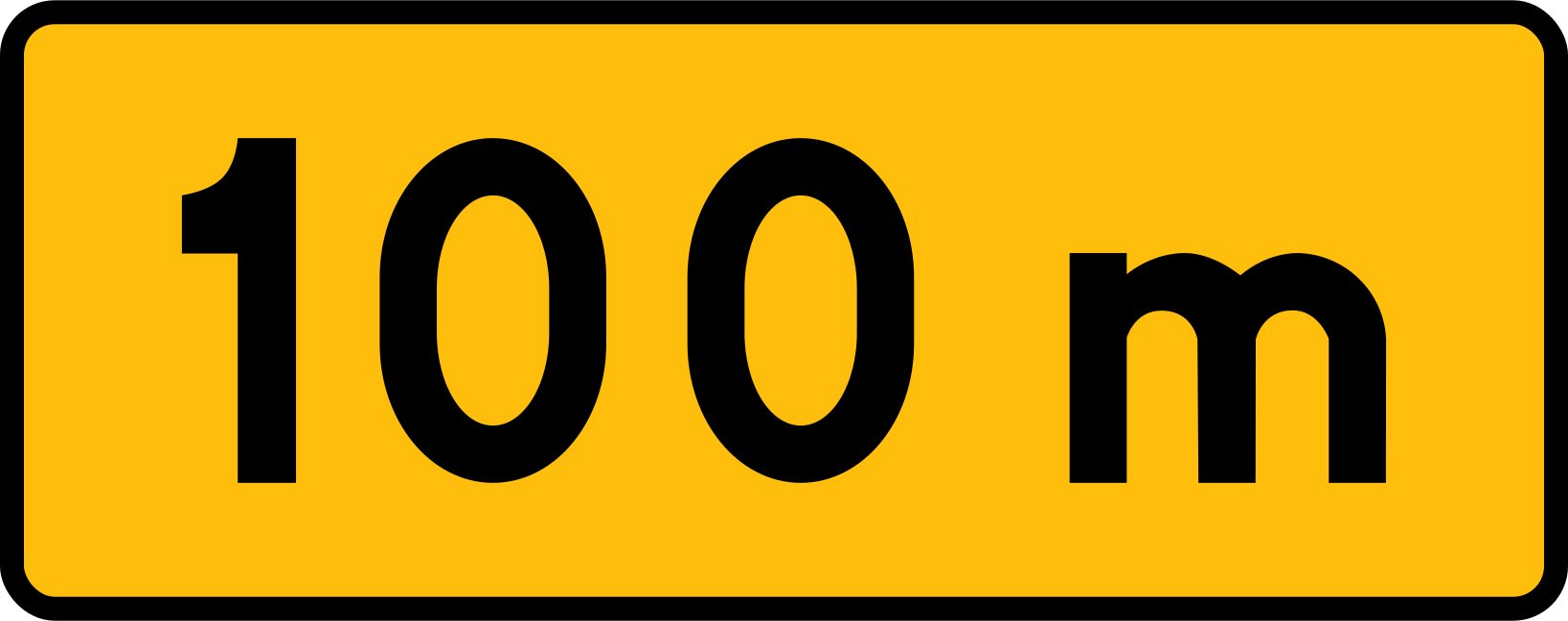
Understand the T-1 'Distance to Hazard' Plate for Safe Driving
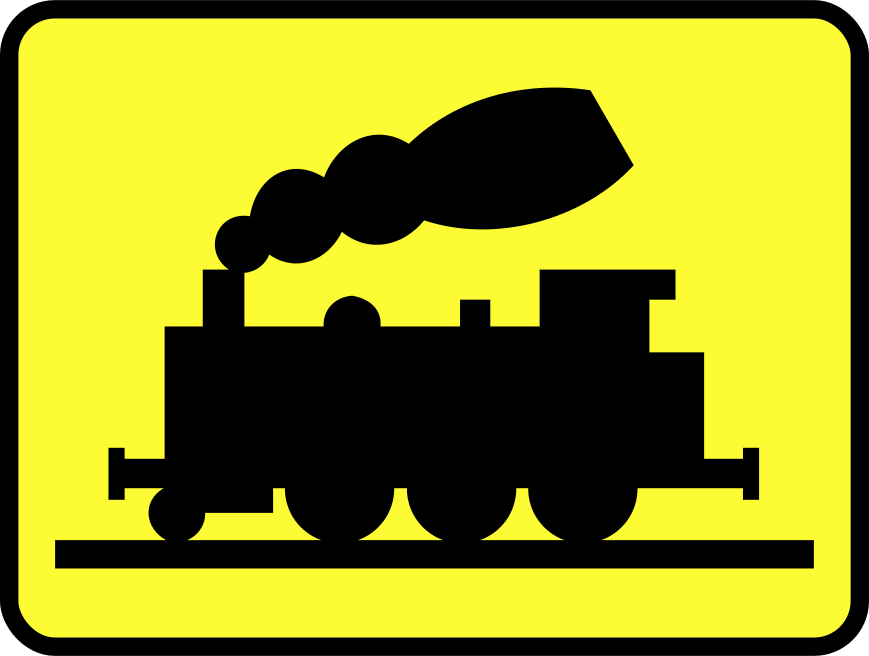
Beware of the T-10 sign: Industrial Railway Siding Ahead
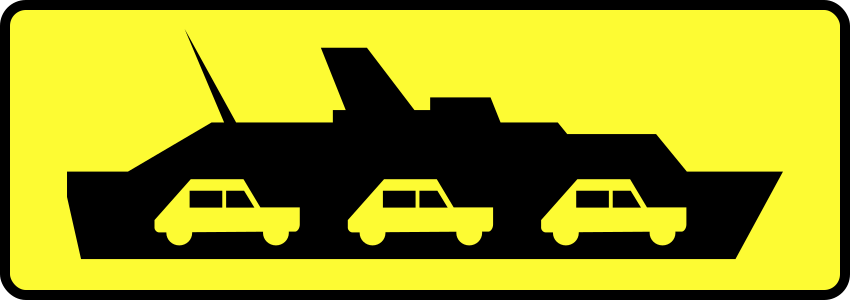
Prepare for a Ferry Crossing with the T-11 Warning Sign
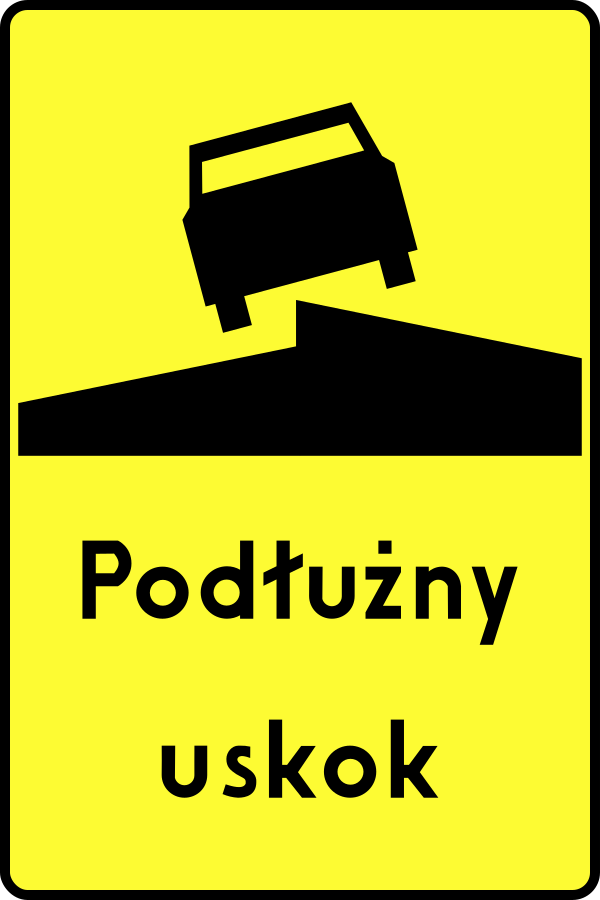
Watch out for the T-12 sign warning of a longitudinal step in the road surface!
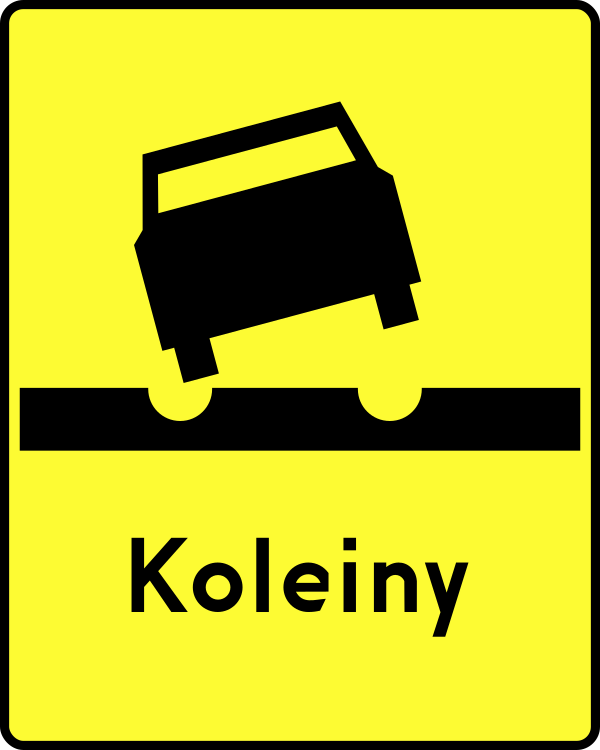
Warning: Deep Road Surface Ruts Ahead (T-13)
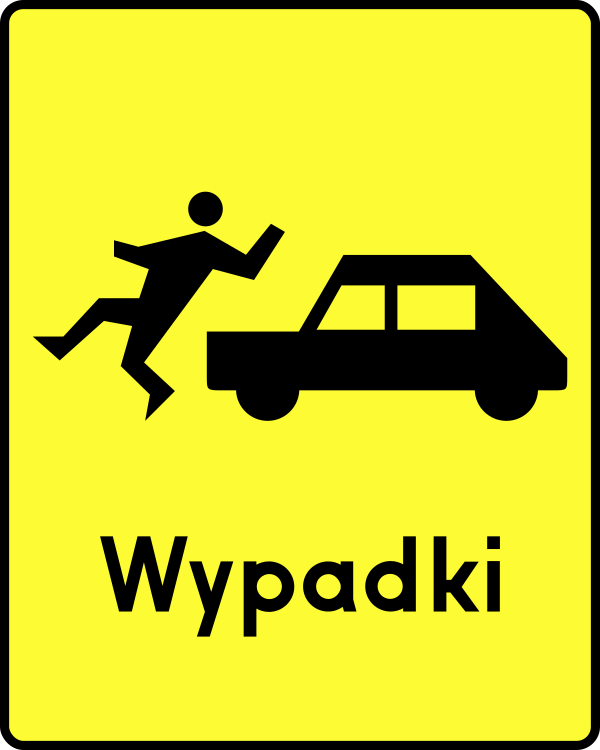
T-14: Beware of Frequent Pedestrian Accidents Ahead!
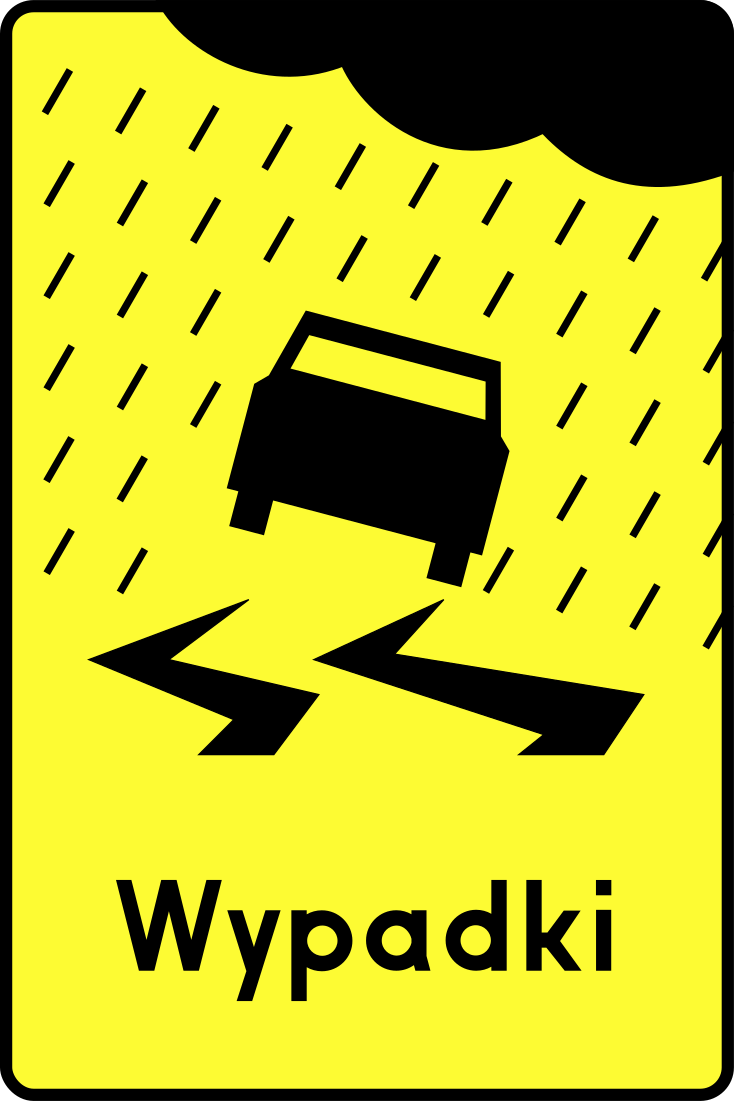
Beware: This Road Can Become Extremely Slippery When Wet!
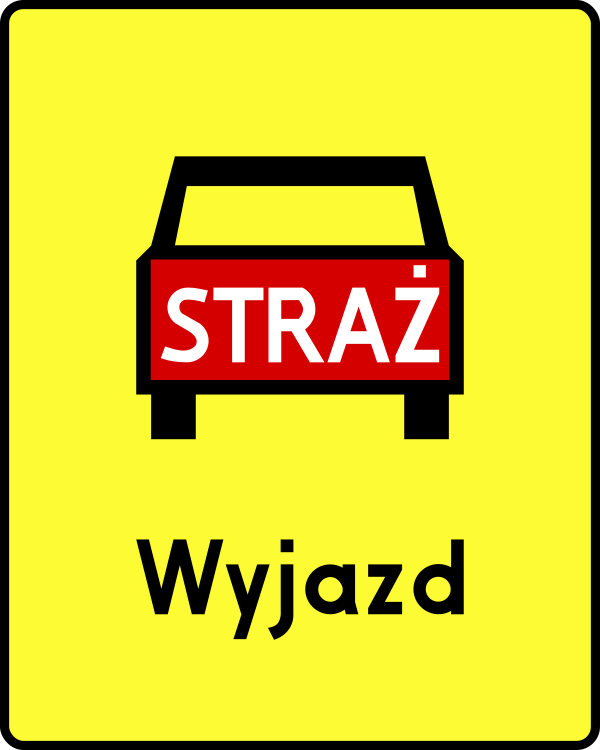
Prepare for sudden fire truck departures with the T-16 Fire Engine Exit sign.
Deepen your understanding of specific road signs by reviewing official Polish traffic rules and associated real-world driving scenarios. These expert-led resources help you bridge the gap between visual recognition and practical exam application.
Master the Complexities of Field Access and Avoid Dangerous Situations
Be Prepared for the Unexpected: Rural Roads and Farm Vehicles.
Navigating the different Polish driving licence categories for motorcycles can be complex. This guide breaks down the specific requirements for AM, A1, A2, and A licences, including the minimum age and the exact types of vehicles you can operate with each. Gaining a clear understanding of these categories is essential for success in your Polish driving theory exam and for safe riding on Polish roads.
Learning how to interact with law enforcement is a crucial part of your driver training in Poland, as it helps you understand the legal procedures governing roadside controls. This guide clarifies how officers identify themselves, what behaviors are expected of you as a driver, and how traffic enforcement impacts your penalty points and record. Mastery of these rules ensures you remain compliant with the law and prepared for any roadside situation you may encounter.
The B-2 sign is most commonly found at the end of one-way streets to prevent drivers from entering the wrong way. It applies to all vehicles, including non-motorized ones like bicycles and horse-drawn carriages. Unlike the B-1 sign, traffic may be flowing toward you from the other side. Entering past this sign is extremely dangerous as it leads to head-on collision risks.
The A-19 sign is placed in open areas, on bridges, or at exits from forests where crosswinds can be particularly strong. Sudden gusts can push a vehicle out of its lane, which is especially dangerous for high-profile vehicles like vans, trucks, and cars with roof boxes. A windsock is often placed nearby to show the current direction and strength of the wind.
After reviewing the full list of Polish road signs, explore specific sign categories for in-depth understanding. Challenge your knowledge with practice questions focused on sign recognition and interpretation to solidify your preparation for the driving theory exam.
Browse All Polish Road Signs