
Road signs often come with additional panels that provide crucial context, such as distances, lengths of zones, specific vehicle exceptions, or directions. These panels are vital for correctly interpreting and applying the main sign's meaning in real-time traffic. Mastering these supplementary signs will not only boost your confidence on the road but is also essential for passing your driving theory exam.
An explanation of how Additional Panels road signs apply in real traffic situations in Spain. Learn where these signs are typically placed, what drivers are expected to do when they appear, and how correct reactions help you stay safe, avoid fines, and succeed in your Spanish driving theory exam.
Additional panels are frequently encountered alongside main traffic signs, particularly those indicating restrictions, warnings, or mandatory actions. For example, a 'No Entry' sign (B1) might be accompanied by a panel stating 'Except local traffic' (S-860b), meaning you can proceed if you live or work in the area. You'll also see panels indicating the 'Distance to the beginning of the danger' (S-800) or the 'Length of the dangerous section' (S-810), helping you anticipate hazards or the duration of a rule. Signs related to priority roads often have directional panels (S-850 to S-853) to clarify which route maintains priority at complex intersections. Specific vehicle panels (S-880 series) are common in urban areas or on specific routes to inform trucks, buses, or cyclists about applicable regulations or exceptions. Understanding these panels is critical for knowing precisely where a rule applies, for how long, to whom, and how you should position yourself or adjust your speed accordingly.
An overview of the key learning outcomes when studying the Additional Panels road sign category. Understand the main concepts, sign meanings, and traffic situations covered here so you can recognise patterns, answer theory questions more confidently, and build a solid foundation for safe driving in Spain.
Additional panels are critical for precisely understanding Spanish road signs, as they modify the main sign's meaning by clarifying conditions like distance, duration, vehicle class, or specific exceptions. Studying these traffic sign interpretation rules together helps you correctly apply road rules in various scenarios. Mastering these sign meanings is crucial for the DGT theory test, ensuring you navigate complex situations and comply with Spanish driving regulations.

The S-800 Panel: Understanding Distance to Danger or Prescription

The S-810 sign tells you the duration of a hazard or restriction ahead.
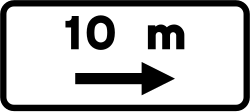
Understand the S-820 supplementary panel: Extension of the Ban, to the Right
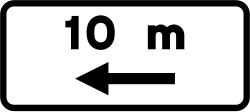
Understand the S-821 supplementary sign: Extension of the ban, to the left.
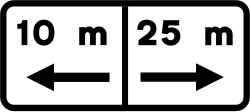
Understand the S-830 auxiliary panel: Extension of the ban, on both sides

The S-840 STOP Presignaling Sign: A Crucial Add-on to Main Traffic Signs

The S-850 'Direction of Priority Road' panel clarifies priority with a main sign.

Understand the Direction of Priority Road additional panel (S-851)

Understand the S-852 'Direction of Priority Road' Auxiliary Panel in Spain

The S-853 'Direction of Priority Road' sign clarifies priority road routes.

The S-860 Generic Additional Panel: Modifying Main Road Signs in Spain

The S-860a Generic panel clarifies the main sign's application.
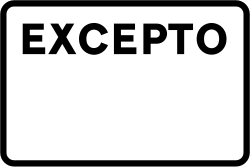
The 'Except...' Additional Panel: Refining the Main Sign's Message

Understand Primary Signs Better with the S-870 Sign Application Panel

This Sign Modifies the Main Sign's Meaning to the Right

This additional panel clarifies how the main sign applies to signage application on the left.

This supplementary panel clarifies which vehicles the main sign above it applies to.

The S-880a Additional Panel: Applying Main Signs Specifically to Trucks

This supplementary panel S-880b specifies how the main sign applies to vehicles with trailers, excluding those with a single axle.
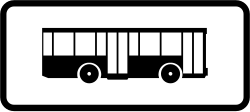
This S-880c panel clarifies how a main sign specifically applies to buses.
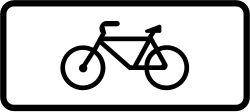
The S-880d Panel: How Main Signs Apply to Cycles

This Additional Panel Specifies Rules for Electric Scooters.
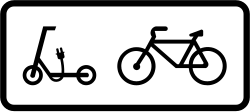
Understand How Main Signs Apply to Cycles and Electric Scooters with This Additional Panel
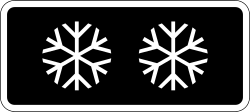
This additional panel clarifies the main sign's application based on specific conditions.
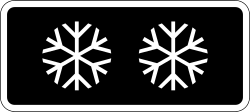
Understand How Snow Conditions Affect Main Road Signs with the S-890a Panel

This additional panel modifies how the main sign applies during rainy conditions.
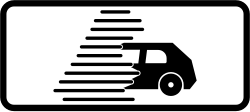
Understand the S-890c Additional Panel for Fog Conditions
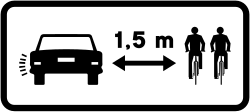
Understand the Minimum Distance for Overtaking Cyclists Sign (S-891) in Spain

The S-892 sign indicates a video surveillance area, modifying the primary sign it accompanies.
Clear answers to common questions about the Additional Panels road sign category. Use this FAQ to review tricky rules, understand how these signs appear in exam scenarios, and remove confusion that often leads to mistakes in the Spanish driving theory exam in Spain.
Additional panels provide supplementary information that modifies or clarifies the meaning of the main traffic sign they are attached to. They help drivers understand specific details such as the distance to a hazard, the length of a restriction, which vehicles are affected or exempt, or the direction of a particular road or route. Without these panels, the main sign might be ambiguous or incomplete.
Look for additional panels that indicate distance. A panel showing 'distance to the beginning of the danger or prescription' (S-800) tells you how far away the hazard or rule starts. A panel showing the 'length of the dangerous section or subject to prescription' (S-810) indicates how long the affected stretch of road is.
When you see a main sign followed by an additional panel that says 'Except...' (like S-860b), it means the restriction or rule of the main sign does not apply to the specific category of road users or vehicles mentioned on the panel. For instance, a 'No entry' sign might have an 'Except local traffic' panel, allowing residents to enter.
Yes, panels like S-850, S-851, S-852, and S-853 are specifically designed to show the direction of the priority road. These are very useful at complex intersections or roundabouts where it might not be immediately obvious which road has priority. They help you navigate safely by clearly indicating the correct path.
They can be, especially when multiple panels are present or when the exception applies to specific vehicle types. The theory exam often tests your ability to combine information from a main sign and its additional panel. Always read all signs carefully and consider how they work together before making a decision in a test scenario.
Dive deeper into specific road sign groups to test your knowledge and reinforce your understanding of Spanish traffic regulations. Start exploring each category to build a strong foundation for your DGT driving theory exam and ensure you drive safely on Spanish roads.
Browse Road Sign Categories