
Construction speed limit signs are crucial for maintaining safety in areas where road conditions temporarily change. These signs, such as the one indicating a 20 km/h speed limit, alert drivers to reduced speeds necessary due to roadworks. Understanding these temporary restrictions is vital for both passing your theory exam and ensuring the safety of workers and other road users.
An explanation of how Construction Speed Limit Signs road signs apply in real traffic situations in Spain. Learn where these signs are typically placed, what drivers are expected to do when they appear, and how correct reactions help you stay safe, avoid fines, and succeed in your Spanish driving theory exam.
You will encounter construction speed limit signs whenever there are temporary roadworks or maintenance activities underway. These signs are often placed on approach to a work zone and are essential for managing traffic flow and protecting both workers and drivers. Look for them on motorways, main roads, and even smaller residential streets where repairs are being carried out. The reduced speed limits are enforced because lane widths may be narrowed, the road surface might be uneven, or there may be unexpected obstacles or personnel present. It is critical to observe these signs and adjust your speed accordingly, as they indicate a specific, often significantly lower, maximum speed intended for that hazardous section of road.
An overview of the key learning outcomes when studying the Construction Speed Limit Signs road sign category. Understand the main concepts, sign meanings, and traffic situations covered here so you can recognise patterns, answer theory questions more confidently, and build a solid foundation for safe driving in Spain.
These crucial construction speed limit signs are vital for safe driving and passing your Spanish driving theory test. They indicate temporary speed reductions in work zones to protect drivers and workers alike. Studying these particular road signs helps you recognize specific speed limits and understand their enforcement in DGT-regulated areas, preparing you for real-world scenarios and the official exam.
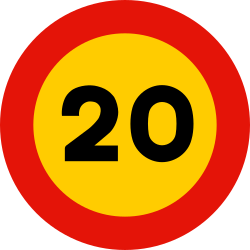
TR-301: Obey the 20 km/h Speed Limit Sign in Spain.
Clear answers to common questions about the Construction Speed Limit Signs road sign category. Use this FAQ to review tricky rules, understand how these signs appear in exam scenarios, and remove confusion that often leads to mistakes in the Spanish driving theory exam in Spain.
Construction zones often have reduced speed limits to protect construction workers, emergency responders, and drivers. The road layout might be altered, lanes narrowed, or the surface uneven, increasing the risk of accidents. A lower speed allows drivers more time to react to unexpected situations and reduces the severity of potential collisions.
Construction speed limits are temporary and are usually in effect only for the duration of the roadworks. They are typically removed once the work is completed and the road is returned to its normal state. Always pay attention to the signs, as they will indicate when the restriction is lifted or changed.
Exceeding a construction speed limit, like any speed limit, can result in fines, penalty points on your licence, or even disqualification, depending on the severity of the offence. Enforcement in work zones can be particularly strict due to the increased risks involved.
Yes, construction speed limits are almost always lower than the permanent speed limit for that road. The specific reduction, such as 20 km/h, is determined by the degree of hazard presented by the roadworks and the need to ensure safety for everyone involved.
Dive deeper into specific road sign groups to test your knowledge and reinforce your understanding of Spanish traffic regulations. Start exploring each category to build a strong foundation for your DGT driving theory exam and ensure you drive safely on Spanish roads.
Browse Road Sign Categories