
This lesson guides you through the fundamental control systems of your motorcycle, focusing on the precise coordination of the throttle, brakes, clutch, and gears. Building on your knowledge of motorcycle components, these skills are vital for passing your Swiss category A or A1 theory exam and ensuring safe vehicle handling. You will learn the mechanics behind every input to prepare for real-world traffic scenarios.
Lesson content overview
Learning to ride a motorcycle safely and proficiently hinges on a deep understanding and precise coordination of its primary control systems. These systems translate a rider's intentions into the motorcycle's physical actions, dictating acceleration, deceleration, and the efficient transfer of power. For anyone preparing for their Swiss motorcycle theory exam for categories A and A1, mastering these controls is not just a technical skill but a fundamental aspect of road safety, particularly when navigating the diverse challenges of city traffic or winding alpine routes.
This comprehensive lesson will explain how the throttle, front and rear brakes, clutch, and gear shift lever function individually and in concert. We will explore the physics, ergonomics, and safety principles behind each control, preparing you to apply this knowledge responsibly on Swiss roads. While no formal prerequisites are required, familiarity with the basic components of a motorcycle, as covered in Lesson 2.1 Core Components of a Motorcycle, will provide a valuable foundation.
Motorcycle control systems are designed for intuitive operation, allowing riders to manage speed, power, and stability with subtle inputs. Each control plays a distinct role in influencing vehicle behavior, and their coordinated use is paramount for safe and efficient maneuvering. Effective control leads to improved traction, optimized engine performance, and enhanced rider safety, reducing risks in various traffic and environmental conditions.
Throttle control is the rider's primary interface for managing engine power and, consequently, the motorcycle's acceleration and speed. Located on the right handlebar, the throttle grip directly influences the opening of the engine’s throttle valve. A larger opening allows more air and fuel into the engine, generating greater torque and power.
Traditionally, motorcycles use a linear throttle system, where a cable physically connects the twisting grip to the throttle valve. This offers a direct, mechanical feel. Modern motorcycles increasingly feature ride-by-wire throttles, which employ electronic sensors to detect grip rotation. These sensors then send signals to the engine control unit (ECU) to precisely manage the throttle valve, often allowing for advanced features like rider modes and traction control. Regardless of the system, the practical meaning remains the same: twisting the throttle to request more power, which the engine delivers to the rear wheel.
The implications of throttle control extend beyond mere speed changes. It impacts fuel consumption, influences tire traction, and is critical for selecting a safe speed appropriate for conditions. Applying the throttle smoothly is crucial, especially when initiating movement, cornering, or riding on surfaces with reduced grip. Abrupt throttle input can easily overwhelm the rear tire's traction, leading to wheel spin or a loss of control.
When cornering, particularly on mountain passes, apply the throttle gently and progressively as you exit the turn. This helps to maintain consistent traction and stability, preventing sudden weight transfer that could upset the motorcycle's balance.
Matching engine power to road conditions is essential; excessive acceleration that endangers other road users is strictly prohibited. While some might believe "full-open throttle is optimal for uphill," a smooth and controlled increase in power is almost always safer, preventing wheel slip, particularly on loose or uneven surfaces.
The braking system is vital for reducing speed and bringing the motorcycle to a stop. Motorcycles feature two independent braking controls: the front brake lever and the rear brake pedal. Effective braking requires understanding their individual roles and how to combine them for optimal stopping power and stability.
The front brake lever, located on the right handlebar, actuates the front brake caliper. This system typically provides approximately 70% of the motorcycle's total stopping power due to the significant weight transfer to the front wheel during deceleration. Most motorcycles use dual-piston calipers for effective braking. Applying the front brake involves a progressive squeeze of the lever. Under normal circumstances, the front brake must be used in conjunction with the rear brake for optimal stability and shortest stopping distances.
The rear brake pedal, positioned at the right footrest, activates the rear brake caliper. While providing less stopping power than the front brake, it is crucial for stability, especially at low speeds, in corners, or on low-traction surfaces. Rear brakes can be cable-actuated or hydraulic, with hydraulic systems typically offering more precise modulation. The rear brake should always be used simultaneously with the front brake during emergency stops to maximize deceleration and maintain control. A common misunderstanding is using the rear brake only for parking; it is a primary braking component in many riding scenarios, providing additional stopping power and balancing the motorcycle's weight.
Many modern motorcycles are equipped with ABS (Anti-Lock Braking System), which includes sensors that detect wheel lock-up during hard braking. If a wheel starts to lock, ABS momentarily reduces brake pressure to allow the wheel to rotate, preventing skidding and maintaining steering control. This greatly enhances safety, particularly in emergency braking situations or on slippery surfaces.
Even with ABS, it's crucial to understand proper braking technique. ABS is a safety net, not a substitute for skilled brake application.
The clutch lever, located on the left handlebar, is a critical control for managing the connection between the engine and the transmission. Its primary purpose is to allow the rider to change gears without stalling the engine and to facilitate smooth starts and stops.
When the rider pulls the clutch lever, the clutch mechanism disengages, temporarily disconnecting engine power from the transmission. This allows the transmission gears to be changed without resistance. Releasing the lever gradually re-engages the clutch, transferring power from the engine to the transmission and then to the rear wheel. Clutches can be standard manual clutches (often cable-operated or fluid-pressure activated) or hydraulic clutches, which typically offer a lighter pull and smoother engagement feel.
Proper clutch use is essential for preventing unnecessary wear and maintaining control. The clutch must be fully disengaged before shifting gears to prevent gear grinding and transmission damage. Holding the clutch partially engaged while riding, often referred to as "feathering" the clutch, is a common misunderstanding. While useful for very low-speed maneuvers, sustained partial engagement leads to accelerated clutch wear, overheating, and reduced control. When stopped at a traffic light, it's best to shift to neutral if the wait is long, rather than holding the clutch lever pulled in, to reduce strain on the clutch components and the rider's hand.
The gear shift lever, found on the left footrest, allows the rider to select different transmission ratios. This optimizes engine performance by matching engine RPM (Revolutions Per Minute) to the desired speed and load. Most motorcycles feature a standard 6-speed transmission. Some specialized bikes, such as certain dual-sport models or scooters, may incorporate semi-automatic or automatic systems that perform gear changes without a clutch lever, simplifying the rider's task.
The typical motorcycle gear shifting pattern is "one down, five up" (or similar):
First gear: Press the lever down from neutral.
Neutral: Half-press up from first gear, or half-press down from second gear.
Second through Sixth gears: Lift the lever up.
This pattern ensures that neutral is easily accessible when stationary and that subsequent gears are selected with a consistent upward motion.
The rider lifts the lever to upshift (changing to a higher gear, which provides lower torque and higher speed), and presses it down to downshift (changing to a lower gear, which provides higher torque and lower speed). This must be coordinated precisely with the clutch lever. Proper gear selection is mandatory to keep the engine RPM within its optimal range, known as the power band, where it produces maximum torque. Staying in a high gear for fuel saving, especially when climbing uphill, is a common misunderstanding that can lead to engine strain or insufficient power for acceleration. Downshifting is often combined with engine braking, using the engine's resistance to slow the motorcycle, reducing reliance on the friction brakes.
In Switzerland, specific regulations and widely accepted safe riding practices govern the use of motorcycle control systems. Adhering to these principles is crucial for passing the theory exam and, more importantly, for ensuring safety on the road.
The rider must apply both the front and rear brakes when reducing speed or stopping, unless specific road conditions or vehicle states dictate otherwise. This is a mandatory practice applicable in all road conditions.
The rationale is that balanced braking prevents wheel lock-up, maintains vehicle stability, and significantly reduces stopping distances. For example, applying the front brake with approximately 60% of the total force and the rear brake with 40% when slowing down for a stop sign is a common and effective strategy. Using only the rear brake when an abrupt stop is needed is an incorrect practice that results in longer stopping distances and increased risk.
The rider must select gears appropriate for the current speed and load, ensuring the engine operates within its designated RPM range. This is an implicit mandatory requirement for safe operation in all riding scenarios.
The correct gear selection prevents both engine over-revving and insufficient torque, ensuring the motorcycle always has adequate power for the situation, whether accelerating, climbing hills, or maintaining speed.
The clutch must be fully disengaged before the rider changes gears. This is a mandatory requirement for all gear changes.
This prevents gear grinding, potential loss of propulsion during a shift, and undue wear or damage to the transmission components. Attempting to force a gear change without fully disengaging the clutch can lead to costly repairs and unsafe riding conditions.
The rider should adjust the throttle smoothly, especially when entering or exiting curves, or when road conditions demand gradual acceleration. This is a recommended practice and an integral part of safe riding.
Smooth throttle input, rather than abrupt movements, helps maintain tire traction, especially on slippery surfaces or during sensitive maneuvers like cornering. It prevents sudden weight transfer and contributes to the overall stability and predictability of the motorcycle.
Understanding how to properly use motorcycle controls is just the first step. Recognizing common errors and knowing how to adapt control inputs to various riding conditions are hallmarks of an experienced and safe rider.
Several common mistakes can compromise safety and lead to accidents or accelerated wear on motorcycle components:
The ideal application of control systems is highly dependent on the riding environment and prevailing conditions. Riders must be able to adjust their technique to maintain safety and efficiency.
| Condition | Variation in Control Use | Reasoning |
|---|---|---|
| Wet or Icy Surface | Reduce front brake pressure, use more rear brake; smooth throttle input; possibly downshift early for engine braking. | Front wheels lose traction faster on slippery surfaces. Engine braking provides gentle, predictable slowing without over-relying on friction brakes. |
| Mountain Pass (Steep Uphill) | Downshift one gear early; maintain higher RPM for torque; use rear brake sparingly. | Higher torque is needed for climbing, and operating within the power band prevents stalling. |
| Heavy Load (Passenger, Luggage) | Use lower gear for better torque; modulate throttle gently; increase rear brake usage to prevent front-wheel lock. | Extra weight demands more engine power and affects weight distribution, requiring a more balanced approach to braking. |
| Urban Traffic with Frequent Stops | Frequent clutch use at low speeds; use both brakes gently; stay in lower gears to reduce clutch wear. | Low-speed maneuvering requires precise power delivery and smooth stops. Lower gears offer better engine response and reduce the need to feather the clutch. |
| Off-Road Gravel | Feather rear brake; use low gear; very smooth throttle to avoid wheel spin. | Low traction surfaces demand minimal brake force and precise, high torque at low speeds to maintain control. |
| Night Riding | Smooth throttle to avoid sudden speed changes that can affect rider’s perception; use both brakes confidently. | Reduced vision requires anticipating movements and executing control inputs with greater smoothness and precision. |
| Vehicle Malfunction (e.g., Front Brake Failure) | Rely on rear brake; downshift for engine braking; maintain moderate speed. | Compensating for a primary system failure requires utilizing secondary systems effectively and riding cautiously. |
| Highly Experienced Rider with ABS | Adjust front brake pressure based on ABS feedback; possible slight reduction in rear brake use. | ABS allows for more aggressive front brake application without locking the wheel, maximizing stopping power. |
| Rider with Limited Hand Strength | Use more rear brake and lower gears to compensate for reduced front brake pressure. | Provides adequate stopping force without over-reliance on a control that is difficult to actuate effectively. |
| Rider on a Dual-Sport Bike with Automatic Clutch | Gear changes performed with foot lever only; throttle and brake coordination remain essential. | Simplifies clutch operation, but precise timing of gear changes and harmonious throttle/brake use are still critical. |
Effective motorcycle control is deeply intertwined with fundamental physics principles and the physiological aspects of the rider. Understanding these underlying mechanisms enhances a rider's ability to make informed decisions and execute precise maneuvers.
Motorcycles are inherently dynamic, and their weight distribution changes significantly during acceleration and braking. This phenomenon, known as weight transfer, directly impacts tire traction:
Smooth throttle and brake application minimizes abrupt weight transfer, helping to maintain stability and prevent sudden losses of traction.
Human factors play a crucial role in motorcycle control. A rider's reaction time, typically around 0.5 seconds, directly influences their ability to respond to changing road conditions or hazards. This reaction time includes perceiving the situation, processing the information, and initiating a control input. Therefore, anticipation and smooth, timely inputs are vital, especially in emergency braking situations.
Ergonomics, or the design of the control interfaces, also affects performance. The placement of levers, the width of handlebars, and the adjustability of controls all influence a rider's comfort and ability to modulate throttle, brakes, and clutch precisely. An incorrect hand position, for instance, can reduce control precision and increase rider fatigue, compromising safety over longer rides.
Applying theoretical knowledge of control systems to real-world scenarios is essential for developing safe and proficient riding skills. Here are four common situations and the correct application of controls.
Setting: Urban intersection, dry weather, approaching a red traffic light. Rule/Decision: Safely bring the motorcycle to a complete stop, using both brakes, and prepare for immediate re-acceleration. Correct Behavior: As you approach the light, ease off the throttle, pull the clutch lever fully in, and begin downshifting through gears to first. Simultaneously, apply the front brake with a progressive squeeze (approx. 60% of total force) and the rear brake (approx. 40%) to decelerate smoothly. Come to a complete stop, keeping the clutch in and in first gear (or neutral if the wait is long), with both feet on the ground if needed. Incorrect Behavior: Using only the rear brake and remaining in a higher gear. This leads to longer stopping distances, potential rear wheel lock, and leaves you unprepared to accelerate efficiently when the light turns green, potentially stalling the engine.
Setting: Mountain pass, steep uphill climb, moderate traffic, clear weather. Rule/Decision: Maintain sufficient power and momentum to ascend the incline without straining the engine or losing speed. Correct Behavior: Anticipate the incline and downshift to an appropriate lower gear (e.g., third gear) before the ascent begins. This ensures the engine operates within its power band, providing ample torque for the climb. Keep the clutch fully engaged and apply the throttle gently and progressively to maintain RPM, adjusting as needed to overcome the gradient. Incorrect Behavior: Remaining in a high gear. This will cause the engine to struggle, lose RPM, potentially stall, or lack the necessary power to accelerate efficiently, creating a hazard. You might then need to make an emergency downshift, which can be jarring.
Setting: Rural road, raining lightly, series of sharp bends. Rule/Decision: Prioritize smooth inputs and traction management due to reduced grip on wet surfaces. Correct Behavior: As you approach a bend, reduce speed early. Downshift to a lower gear (e.g., second gear) to utilize engine braking, gently release the throttle, and apply the rear brake lightly and progressively to maintain stability without risking front wheel lock-up. Enter the curve with minimal, very smooth throttle input, maintaining a steady arc. Focus on gentle lean angles and avoid sudden movements. Incorrect Behavior: Entering the curve at high speed, applying the front brake abruptly. This will almost certainly lead to a front wheel lock and a loss of control on the slippery surface. Aggressive throttle in the turn could cause a rear wheel slide.
Setting: Highway, sudden obstacle appears, dry conditions. Rule/Decision: Execute maximum braking force to stop the motorcycle in the shortest possible distance while maintaining control. Correct Behavior: In an emergency, simultaneously apply both brakes firmly and progressively. Squeeze the front brake lever hard (without locking if not ABS-equipped) and press the rear brake pedal firmly. Pull the clutch lever fully in to prevent engine stalling and use engine braking by rapidly downshifting through gears, if possible, while focusing intently on maintaining balance and steering straight. Keep eyes up, looking where you want to go. Incorrect Behavior: Applying only the rear brake. This will result in significantly longer stopping distances and a high risk of the rear wheel locking, leading to a skid and loss of control, potentially causing a rear-end collision.
The throttle, front brake lever, rear brake pedal, clutch lever, and gear shift lever are the fundamental interfaces through which a rider controls a motorcycle. Mastery of these controls is not merely about physical manipulation; it involves a deep understanding of their individual functions, their synergistic coordination, and their impact on vehicle dynamics across a myriad of riding conditions.
Proper coordination of these controls ensures safe acceleration, effective braking, smooth gear changes, and overall stability, whether navigating bustling city streets, ascending challenging alpine passes, or responding to emergency situations. Key principles include the mandatory use of both front and rear brakes in most situations, fully disengaging the clutch before changing gears, selecting gears appropriate for current speed and load, and modulating the throttle smoothly to maintain traction and control.
Understanding the physics of weight transfer, the engine's power band, and how factors like load, weather, and road conditions influence control application are essential for safe and efficient riding. This foundational knowledge underpins subsequent lessons on advanced topics such as cornering techniques, speed management, and hazard perception, making proficient control system usage the bedrock of safe and confident motorcycle riding.
This lesson covers the essential control systems for motorcycle operation: throttle for managing engine power, front and rear brakes working together (front providing ~70% of stopping power), clutch for disengaging the engine during gear changes, and gear shifter for optimizing engine performance. Swiss regulations mandate using both brakes simultaneously and fully disengaging the clutch before shifting. Understanding weight transfer dynamics—rearward during acceleration and forward during braking—explains why front brake provides most stopping power and why smooth inputs maintain traction. Common mistakes include abrupt braking on slippery surfaces, wrong gear selection for conditions, and improper clutch use, all of which compromise safety and component longevity.
A short set of high-value points that capture the most important learning from this lesson.
The front brake provides approximately 70% of a motorcycle's total stopping power due to weight transfer toward the front wheel during deceleration.
Both front and rear brakes must be applied together in most situations for optimal stability and shortest stopping distances.
The clutch must be fully disengaged before any gear change to prevent gear grinding and transmission damage.
The standard gear shifting pattern is one down for first gear and neutral, then up through the remaining gears.
Weight transfer during acceleration shifts load to the rear wheel, while braking shifts load forward to the front wheel.
Explore all units and lessons included in this driving theory course.
Front brake lever (right handlebar) provides ~70% stopping power; rear brake pedal (right foot) provides stability and supplementary braking.
Gear pattern: press down for first gear, half-lift to neutral, lift up for second through sixth gears.
Clutch must be fully disengaged before shifting; never hold it partially engaged while riding except for very low-speed maneuvers.
Throttle should be applied smoothly, especially in corners and on low-traction surfaces to maintain tire grip.
Keep engine RPM within the power band by selecting appropriate gears for current speed and load conditions.
Applying front brake abruptly on slippery surfaces, which can cause front wheel lock-up and loss of steering control.
Using only the rear brake during emergency stops, resulting in significantly longer stopping distances and increased skid risk.
Remaining in a too-high gear when climbing steep inclines, causing engine strain, loss of power, or stalling.
Holding the clutch lever partially engaged while riding, which leads to accelerated clutch wear and overheating.
Entering corners at high speed with aggressive throttle, which can cause rear wheel traction loss and a slide-out.
Lesson content overview
A short set of high-value points that capture the most important learning from this lesson.
The front brake provides approximately 70% of a motorcycle's total stopping power due to weight transfer toward the front wheel during deceleration.
Both front and rear brakes must be applied together in most situations for optimal stability and shortest stopping distances.
The clutch must be fully disengaged before any gear change to prevent gear grinding and transmission damage.
The standard gear shifting pattern is one down for first gear and neutral, then up through the remaining gears.
Weight transfer during acceleration shifts load to the rear wheel, while braking shifts load forward to the front wheel.
Explore all units and lessons included in this driving theory course.
Front brake lever (right handlebar) provides ~70% stopping power; rear brake pedal (right foot) provides stability and supplementary braking.
Gear pattern: press down for first gear, half-lift to neutral, lift up for second through sixth gears.
Clutch must be fully disengaged before shifting; never hold it partially engaged while riding except for very low-speed maneuvers.
Throttle should be applied smoothly, especially in corners and on low-traction surfaces to maintain tire grip.
Keep engine RPM within the power band by selecting appropriate gears for current speed and load conditions.
Applying front brake abruptly on slippery surfaces, which can cause front wheel lock-up and loss of steering control.
Using only the rear brake during emergency stops, resulting in significantly longer stopping distances and increased skid risk.
Remaining in a too-high gear when climbing steep inclines, causing engine strain, loss of power, or stalling.
Holding the clutch lever partially engaged while riding, which leads to accelerated clutch wear and overheating.
Entering corners at high speed with aggressive throttle, which can cause rear wheel traction loss and a slide-out.
Explore search topics learners often look for when studying Control Systems: Throttle, Brakes, Clutch, Gears. These topics reflect common questions about road rules, driving situations, safety guidance, and lesson level theory preparation for learners in Switzerland.
Browse additional driving theory lessons that cover connected traffic rules, road signs, and common driving situations related to this topic. Improve your understanding of how different rules interact across everyday traffic scenarios.
Explore advanced applications of throttle, clutch, brake, and gear controls for challenging conditions. Learn how to adapt techniques for mountain passes, wet roads, and heavy loads, enhancing safety and rider confidence in Swiss traffic.

This lesson focuses on adapting braking techniques for low-traction surfaces like wet or icy roads. It explains the need for gentle, progressive brake application to prevent wheel lock-up and maintain control. Learners will understand how to scan the road ahead for potential hazards and adjust their braking strategy accordingly.
This lesson provides instruction on how to perform an emergency stop safely and effectively. It covers techniques for applying maximum braking force without losing control, both in a straight line and while in a lean. Understanding how to manage traction and stability during a sudden stop is a vital skill for avoiding hazards.

This lesson details how adverse weather conditions like rain, fog, and snow affect motorcycle safety. It explains how wet surfaces reduce tyre grip, requiring smoother control inputs and longer braking distances. Strategies for managing reduced visibility in fog and the extreme hazards of riding on snow and ice are also covered.

This lesson provides specialized techniques for safely handling hairpin turns and steep gradients. It teaches riders how to manage speed on approach, select the correct line through the bend, and use both brakes and engine braking on descents. Proper throttle control for maintaining momentum on uphill climbs is also covered.

This lesson focuses on identifying and managing specific road surface hazards that can compromise traction. It provides techniques for safely crossing slippery tram rails and painted markings, navigating uneven cobblestones, and maintaining control on loose gravel. The core skill is learning to scan the road ahead and adjust riding style proactively.

This lesson teaches riders how to identify and manage different road surfaces that can affect tyre traction. It covers the challenges posed by wet pavement, loose gravel, cobblestones, and slippery tram rails. Learners will understand how to adjust their inputs for throttle, brakes, and steering to maintain grip and control in these conditions.

This lesson explores the complexities of riding in busy urban areas with a mix of traffic types. It covers strategies for safely navigating alongside buses, trams, cyclists, and pedestrians. Key topics include respecting designated lanes, anticipating the movements of vulnerable road users, and maintaining heightened situational awareness.
This lesson provides guidance on safely negotiating intersections and roundabouts on a motorcycle. It details the correct procedures for approach, lane selection, and yielding according to Swiss traffic regulations. Emphasis is placed on heightened awareness of other vehicles, cyclists, and pedestrians in these complex traffic environments.

This lesson outlines the principles of safe overtaking, emphasizing the importance of accurate judgment of speed and distance. It covers the necessary steps: checking mirrors, signaling, checking blind spots, executing the maneuver smoothly, and returning to the lane safely. The content is tailored to different road environments, from urban streets to rural roads.
This lesson outlines the specific rules and skills required for riding on high-speed Swiss motorways. It covers the correct procedures for entering and exiting, merging with traffic, maintaining appropriate speed, and conducting safe overtaking maneuvers. Emphasis is placed on using mirrors and signals effectively to integrate safely into the flow of traffic.
Understand typical mistakes riders make with throttle, clutch, brakes, and gears. This lesson details common errors and provides corrections to improve safe operation and avoid issues on Swiss roads, as per driving theory requirements.
This lesson provides instruction on how to perform an emergency stop safely and effectively. It covers techniques for applying maximum braking force without losing control, both in a straight line and while in a lean. Understanding how to manage traction and stability during a sudden stop is a vital skill for avoiding hazards.
This lesson focuses on adapting braking techniques for low-traction surfaces like wet or icy roads. It explains the need for gentle, progressive brake application to prevent wheel lock-up and maintain control. Learners will understand how to scan the road ahead for potential hazards and adjust their braking strategy accordingly.
This lesson outlines the specific rules and skills required for riding on high-speed Swiss motorways. It covers the correct procedures for entering and exiting, merging with traffic, maintaining appropriate speed, and conducting safe overtaking maneuvers. Emphasis is placed on using mirrors and signals effectively to integrate safely into the flow of traffic.
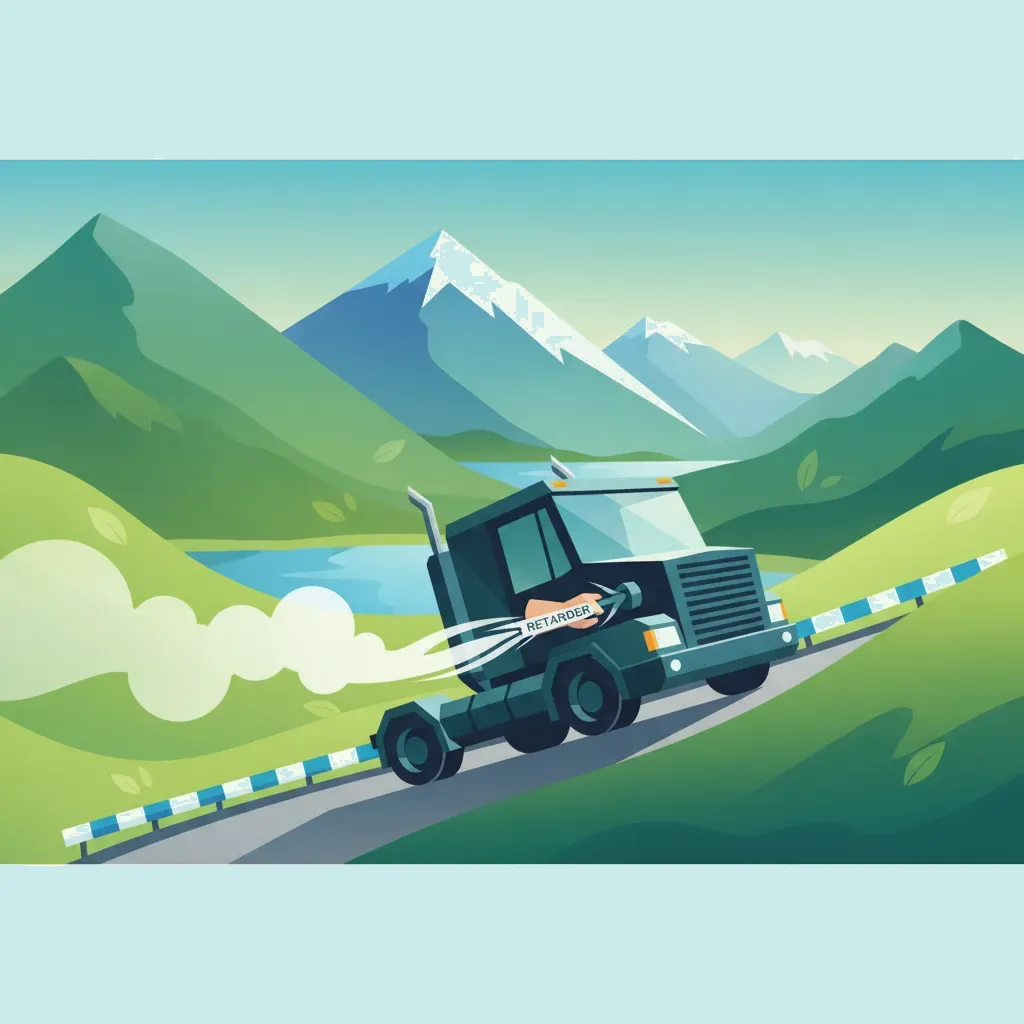
Relying solely on the service brakes on a long downhill stretch can lead to overheating and complete brake failure (brake fade). This lesson explains the function of auxiliary brakes like retarders. You will learn how and when to engage them to maintain a safe, controlled speed, preserving the main brakes for when they are truly needed.
This lesson provides guidance on safely negotiating intersections and roundabouts on a motorcycle. It details the correct procedures for approach, lane selection, and yielding according to Swiss traffic regulations. Emphasis is placed on heightened awareness of other vehicles, cyclists, and pedestrians in these complex traffic environments.
This lesson outlines the principles of safe overtaking, emphasizing the importance of accurate judgment of speed and distance. It covers the necessary steps: checking mirrors, signaling, checking blind spots, executing the maneuver smoothly, and returning to the lane safely. The content is tailored to different road environments, from urban streets to rural roads.
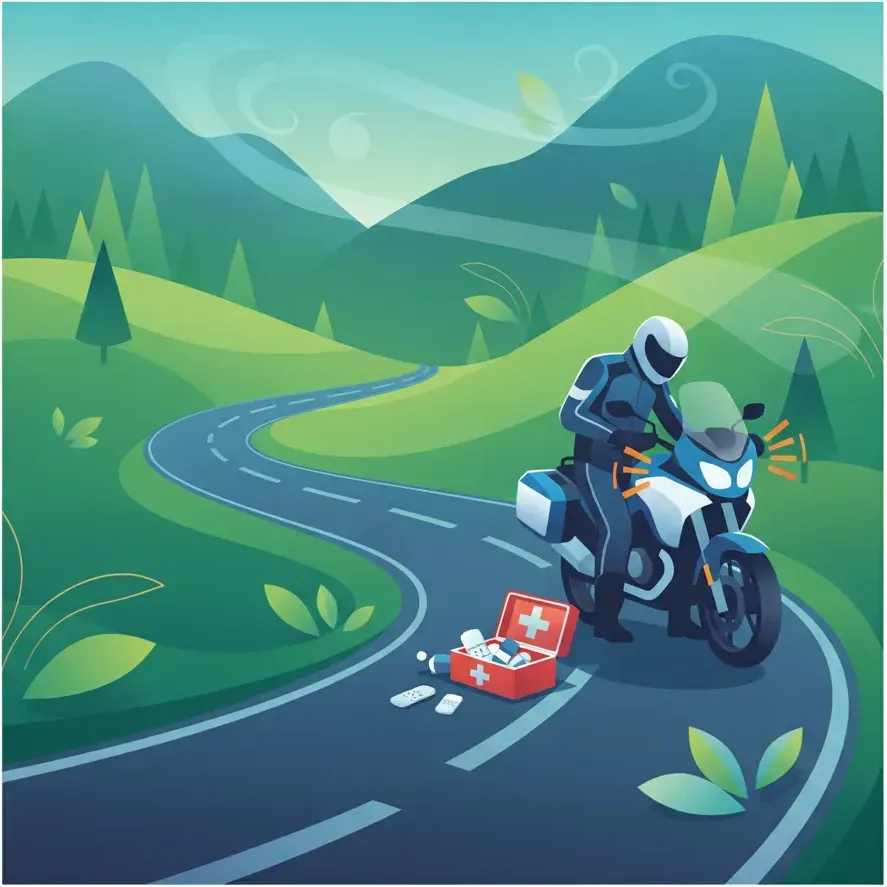
This lesson provides clear, actionable steps for managing a motorcycle breakdown safely. It covers moving the vehicle to a safe location, making yourself visible to other traffic with hazard lights and reflective gear, and contacting breakdown services. Following a proper protocol minimizes risk in a vulnerable situation.

This lesson covers the standard hand signals and the correct use of a motorcycle's lighting system to communicate intentions. It explains the importance of signaling clearly and in a timely manner before turning, changing lanes, or stopping. Effective communication is a key factor in preventing misunderstandings and potential conflicts with other road users.

This lesson focuses on mitigating the risk of collisions at intersections, particularly from vehicles turning across the rider's path. It teaches defensive strategies such as positioning for visibility, anticipating driver actions, and using head checks to be aware of surrounding traffic. Managing your own and others' blind spots is presented as a crucial survival skill.
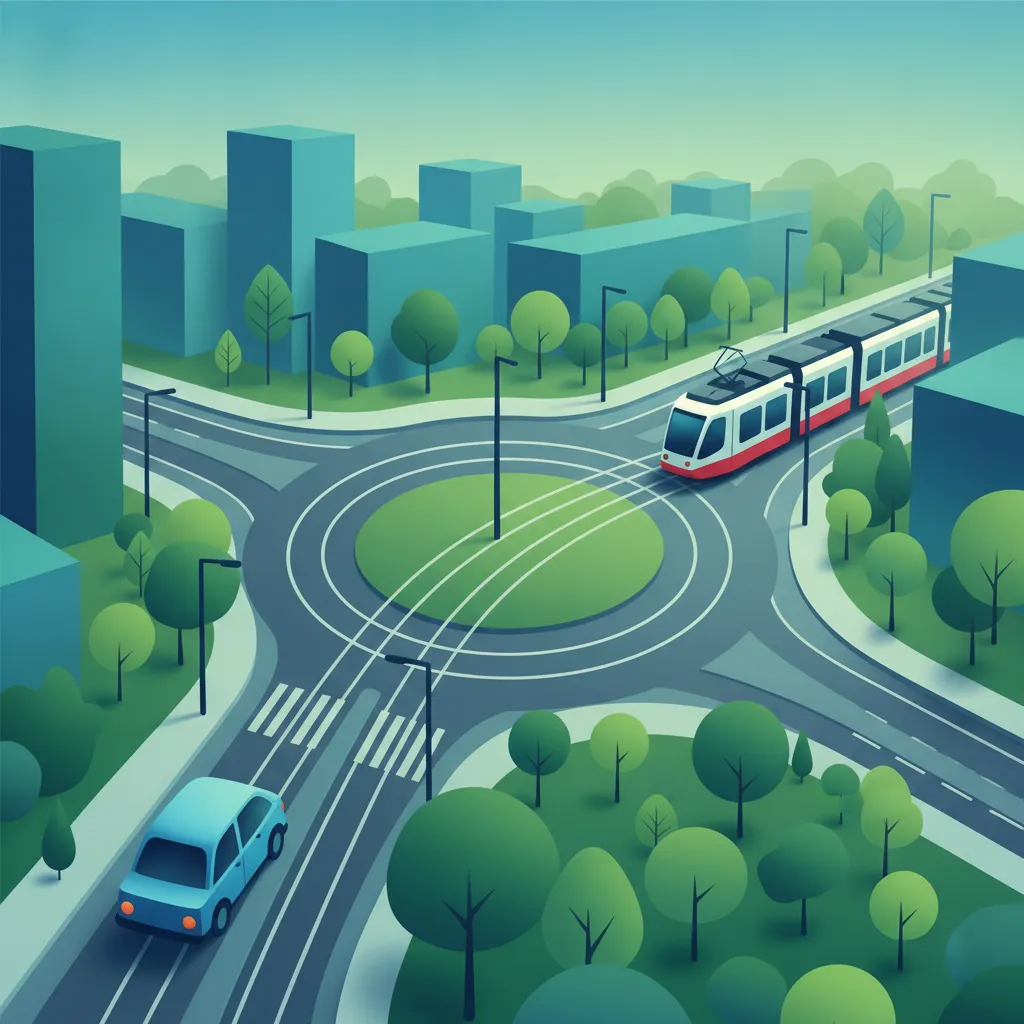
This lesson provides guidance on safely navigating roundabouts and tram lanes, common features in Swiss cities. It covers the rules for yielding, lane positioning within the roundabout, and signaling intentions upon exiting. Special attention is given to the hazards of crossing slippery tram tracks and sharing the road with public transport.
Find clear answers to common questions learners have about Control Systems: Throttle, Brakes, Clutch, Gears. Learn how the lesson is structured, which driving theory objectives it supports, and how it fits into the overall learning path of units and curriculum progression in Switzerland. These explanations help you understand key concepts, lesson flow, and exam focused study goals.
Precise clutch control is essential for smooth starts, low-speed maneuvering in urban traffic, and seamless gear transitions. In the Swiss theory exam, understanding this helps you answer questions about maintaining stability in complex, slow-moving traffic situations.
Yes. While both should be used, the front brake provides the majority of the stopping power. The theory exam often tests your knowledge of how to use both effectively without locking the wheels, especially on varying Swiss road surfaces like cobblestones or wet pavement.
Choosing the correct lower gear when descending steep Alpine roads allows you to utilize engine braking, reducing the load on your physical brakes. This is a common safety topic in the Swiss category A theory exam.
Incorrect throttle input during a turn can destabilize the bike or cause it to run wide. The theory exam assesses your ability to maintain a steady, smooth throttle to keep the motorcycle balanced through corners.
Pinpoint specific Swiss traffic rules, road signs, or driving situations you need to master. Use the practice search to start a focused revision session now and build confidence for your official driving theory exam.