
This lesson covers the essential communication tools for every rider, focusing on how to use your motorcycle's lighting system and standardized hand signals. Mastering these signals is critical for your Swiss A or A1 theory exam and ensures you can clearly convey your intentions to other road users, preventing accidents and misunderstandings.
Lesson content overview
Mastering the art of communication on the road is paramount for every motorcyclist, enhancing safety for themselves and all other road users. This comprehensive lesson, tailored for the Swiss Motorcycle Licence Theory Course for Categories A, A1, delves into the essential methods motorcyclists use to signal their intentions: standard hand signals and the intelligent use of the motorcycle's lighting system. Clear, timely, and unambiguous communication minimizes misunderstandings, reduces the risk of collisions, and contributes to a predictable and harmonious traffic flow.
Effective communication on a motorcycle goes beyond merely following traffic laws; it's a proactive strategy to be seen, understood, and anticipated. It forms a critical link with broader safety principles such as attentive observation, maximizing your visibility to others, wearing appropriate protective gear, and maintaining a correct road position. By integrating these elements, motorcyclists can significantly improve their presence and safety within the complex traffic environment.
Successful communication on a motorcycle hinges on three core principles: signal initiation, signal clarity, and signal timing. Adhering to these principles ensures that your intentions are not only noticed but also fully understood by other road users, allowing them adequate time to react appropriately.
Signal initiation refers to the precise moment a motorcyclist begins the action of signaling, whether through a hand gesture or by activating a lighting system. The primary rationale behind proper initiation is to provide advance notice of your intended maneuver. By signaling early, you allow other drivers, cyclists, and pedestrians to anticipate your actions, preventing sudden reactions such as abrupt braking or swerving. Proper signal initiation is a cornerstone for creating predictable traffic flow, which is crucial for reducing the likelihood of accidents.
Signal clarity is about delivering unambiguous and deliberate communication through your chosen signals. A clear signal leaves no room for doubt about your next move, which is especially vital in mixed traffic environments where various vehicle types and road users interact. For instance, a half-hearted hand signal or a turn signal that is barely visible can be easily misinterpreted or entirely missed. Clear signals enhance overall predictability and safety, particularly in dynamic and complex traffic scenarios that demand quick decision-making from everyone.
Signal timing defines the necessary anticipation period between activating your signal and executing the maneuver. The rationale here is to grant other road users sufficient time to process your signal and adjust their speed or position accordingly. Activating a signal too late can force others into sudden evasive actions, increasing collision risk. Timely signals are essential for smooth traffic integration, as they allow following and opposing traffic to prepare for your turn, lane change, or deceleration without having to react suddenly or harshly.
Motorcycle hand signals are physical gestures performed with the rider's arms to indicate intended maneuvers. They serve as a crucial supplementary communication method, particularly when a motorcycle's lighting system may be insufficient due to bright daylight, direct sunlight, or in the event of an electrical failure. These signals provide a direct and undeniable visual cue of your intentions.
To indicate a left turn or a movement to the left, the rider should extend their left arm straight out horizontally from the shoulder, palm facing forward or downward. This signal should be performed clearly and held long enough to be recognized by other road users. It is particularly effective for communicating with drivers behind you and those approaching from the front or at intersections.
Signaling a right turn can be done in one of two ways, though the left-arm method is more universally recognized in many regions for consistency.
To indicate that you are stopping or significantly slowing down, extend your left arm downward at a 90-degree angle from the shoulder, with your palm facing backward. This signal provides an early warning of deceleration, supplementing your brake light, especially useful when slowing gradually over a distance or in heavy traffic.
When using hand signals, your arm must be extended fully and deliberately, ensuring the gesture is clear and unmistakable. Holding your arm out timidly or only partially extending it can lead to misinterpretation or the signal being missed entirely. Hand signals should always be performed before initiating the maneuver, giving others sufficient time to react. A common misunderstanding involves confusing the right turn signal with a "slow down" signal if the arm is not bent correctly or if the context is unclear. Practicing these signals ensures fluid and confident execution on the road.
The motorcycle's lighting system is an indispensable tool for communicating intentions, especially during periods of low light, adverse weather, or at night. Understanding and correctly using turn signals, brake lights, hazard warning lights, and daytime running lights (DRLs) is fundamental for safe riding.
Turn signals, comprising amber lights at the front and rear of the motorcycle, indicate an intended left or right turn or lane change. They are essential at all times, not just at night or in poor visibility.
Common misunderstandings include failing to activate the signal early enough or, conversely, leaving the signal on for too long after the maneuver, which can confuse other drivers about subsequent intentions. Always switch off your turn signal promptly once the maneuver is completed.
The brake light, typically a red light at the rear of the motorcycle, activates automatically when the brakes are applied. Its primary function is to signal deceleration to following traffic. This automatic activation makes it a passive yet critical communication tool. Regularly checking that your brake light is functioning correctly is a vital part of your pre-ride safety checks. It provides immediate notice of slowing down, preventing rear-end collisions.
Day-time Running Lights (DRLs) are low-intensity lights designed to make the motorcycle more visible to other road users during daylight hours. They are not intended to illuminate the road for the rider, but rather to increase the motorcycle's conspicuity, making it easier for drivers to spot the vehicle, especially in complex situations like intersections, during adverse weather, or when the motorcycle's smaller profile might otherwise make it less noticeable. In Switzerland, consistent use of DRLs or dipped headlights is highly recommended or legally required to enhance motorcycle visibility.
Hazard warning lights involve both front and rear turn signals flashing simultaneously. They are used to alert other road users to a potential danger or an abnormal vehicle situation.
Effective communication on a motorcycle is a comprehensive strategy that blends both hand and light signals with other critical safety elements. It's about ensuring your presence and intentions are undeniably clear to every other road user, from drivers of large vehicles to vulnerable pedestrians and cyclists.
This overall strategy encompasses:
By combining these elements, you create a powerful visual message. For example, before turning left, you would activate your left turn signal (light signal), if necessary extend your left arm (hand signal), position your motorcycle appropriately in the left part of the lane, and continuously observe your mirrors and blind spots. This multi-faceted approach significantly improves interaction with all road users, helping to prevent misunderstandings and potential conflicts.
Adhering to specific rules for signaling is mandatory for all motorcyclists in Switzerland. These rules are designed to ensure consistency and clarity, thereby promoting road safety.
Even experienced motorcyclists can sometimes make errors in signaling. Awareness of common violations and challenging scenarios can significantly improve your communication effectiveness and overall safety.
The effectiveness of your signals can be significantly influenced by various external factors. Adapting your signaling strategy to these conditions is a mark of a skilled and safe rider.
The way you communicate your intentions on a motorcycle has direct and significant consequences for road safety. Understanding these cause-and-effect relationships reinforces the importance of diligent and correct signaling.
Effective communication is a cornerstone of safe motorcycle riding, demanding a proactive and comprehensive approach. By diligently applying the principles outlined in this lesson, you significantly reduce risks and enhance the safety of your riding experience.
Here’s a recap of the essential takeaways:
By integrating these practices into every ride, you will not only comply with traffic regulations but also become a safer, more predictable, and more confident motorcyclist, contributing positively to the overall safety of the road network.
This lesson covers the essential communication tools for motorcyclists: standardized hand signals for left turns, right turns, and stopping/slowing, plus the proper use of the motorcycle's lighting system including turn signals, brake lights, daytime running lights, and hazard warning lights. The three core principles of signal initiation, clarity, and timing underpin all effective communication. Key rules mandate specific hand signals when light signals may be insufficient, advance signal activation before any maneuver, and reserved use of hazard lights only for emergencies or significantly reduced speeds. Common mistakes include late signaling, ambiguous hand gestures, misuse of hazard lights, and over-reliance on lights in bright conditions.
A short set of high-value points that capture the most important learning from this lesson.
Signal initiation, clarity, and timing are the three fundamental principles that govern effective rider communication on the road
Hand signals supplement light signals when visibility is reduced by sunlight, glare, or electrical failure, requiring full and deliberate arm extensions
Turn signals must be activated well in advance of any maneuver and cancelled immediately after completing it to avoid confusing other road users
Hazard warning lights are reserved exclusively for stationary emergencies or when moving significantly slower than normal traffic flow, not for normal driving or as a thank-you signal
Effective communication integrates signaling with road positioning, high-visibility gear, and continuous observation to maximize rider conspicuity
Explore all units and lessons included in this driving theory course.
Left turn: left arm extended horizontally; Right turn: left arm bent 90 degrees upward; Stop/Slow: left arm bent 90 degrees downward
Always activate turn signals sufficiently in advance of the maneuver, not after initiating the turn or lane change
Hazard lights mean danger or abnormal vehicle situation—never use them at normal speed or to signal gratitude
In bright daylight or adverse weather, hand signals become mandatory supplements even when light signals are functional
If electrical systems fail, hand signals become absolutely mandatory rather than optional
Activating turn signals only after已经开始 the maneuver, severely reducing reaction time for other road users
Performing half-hearted hand signals with insufficient arm extension, making them easy to miss or misinterpret
Using hazard warning lights at normal speed, which incorrectly signals a breakdown or emergency situation
Relying solely on light signals in bright daylight where they may be difficult to see against glare or complex backgrounds
Leaving turn signals active for too long after completing a maneuver, confusing other drivers about subsequent intentions
Lesson content overview
A short set of high-value points that capture the most important learning from this lesson.
Signal initiation, clarity, and timing are the three fundamental principles that govern effective rider communication on the road
Hand signals supplement light signals when visibility is reduced by sunlight, glare, or electrical failure, requiring full and deliberate arm extensions
Turn signals must be activated well in advance of any maneuver and cancelled immediately after completing it to avoid confusing other road users
Hazard warning lights are reserved exclusively for stationary emergencies or when moving significantly slower than normal traffic flow, not for normal driving or as a thank-you signal
Effective communication integrates signaling with road positioning, high-visibility gear, and continuous observation to maximize rider conspicuity
Explore all units and lessons included in this driving theory course.
Left turn: left arm extended horizontally; Right turn: left arm bent 90 degrees upward; Stop/Slow: left arm bent 90 degrees downward
Always activate turn signals sufficiently in advance of the maneuver, not after initiating the turn or lane change
Hazard lights mean danger or abnormal vehicle situation—never use them at normal speed or to signal gratitude
In bright daylight or adverse weather, hand signals become mandatory supplements even when light signals are functional
If electrical systems fail, hand signals become absolutely mandatory rather than optional
Activating turn signals only after已经开始 the maneuver, severely reducing reaction time for other road users
Performing half-hearted hand signals with insufficient arm extension, making them easy to miss or misinterpret
Using hazard warning lights at normal speed, which incorrectly signals a breakdown or emergency situation
Relying solely on light signals in bright daylight where they may be difficult to see against glare or complex backgrounds
Leaving turn signals active for too long after completing a maneuver, confusing other drivers about subsequent intentions
Explore search topics learners often look for when studying Hand Signals, Light Signals, and Communicating Intent. These topics reflect common questions about road rules, driving situations, safety guidance, and lesson level theory preparation for learners in Switzerland.
Browse additional driving theory lessons that cover connected traffic rules, road signs, and common driving situations related to this topic. Improve your understanding of how different rules interact across everyday traffic scenarios.
Understand frequent errors in motorcycle hand and light signal usage. This lesson clarifies potential misunderstandings and reinforces correct application of signals to ensure clear communication with other road users in Switzerland.
This lesson covers the methods riders use to communicate their intentions to other traffic. It details the correct use of electronic turn indicators and the standard hand signals for turning and stopping. The content emphasizes signaling in a timely manner to ensure other road users can anticipate your actions.
This lesson details the operation of traffic light systems in Switzerland. It explains the sequence and meaning of red, amber, and green lights, including flashing amber signals. The content also covers specific signals for pedestrians and the priority rules associated with tram signals to ensure safe interaction at controlled intersections.

This lesson outlines the principles of safe overtaking, emphasizing the importance of accurate judgment of speed and distance. It covers the necessary steps: checking mirrors, signaling, checking blind spots, executing the maneuver smoothly, and returning to the lane safely. The content is tailored to different road environments, from urban streets to rural roads.
This lesson provides clear, actionable steps for managing a motorcycle breakdown safely. It covers moving the vehicle to a safe location, making yourself visible to other traffic with hazard lights and reflective gear, and contacting breakdown services. Following a proper protocol minimizes risk in a vulnerable situation.

This lesson introduces the core behaviour rules governing safe communication, focusing on the use of signals, mirrors, and eye contact. It emphasizes the importance of timely indicator usage and the correct procedure for checking mirrors and blind spots. The content also covers non-verbal communication cues that help convey intent and foster predictable traffic flow.
This lesson provides guidance on safely negotiating intersections and roundabouts on a motorcycle. It details the correct procedures for approach, lane selection, and yielding according to Swiss traffic regulations. Emphasis is placed on heightened awareness of other vehicles, cyclists, and pedestrians in these complex traffic environments.

This lesson introduces the fundamental traffic signs that directly impact small vehicle riders. It covers the classification of signs into regulatory, warning, and mandatory categories, explaining how their shape and color indicate their function. Learners will be able to recognize and correctly interpret speed limits, priority signs, and other key information vital for safe navigation.
This lesson outlines the specific rules and skills required for riding on high-speed Swiss motorways. It covers the correct procedures for entering and exiting, merging with traffic, maintaining appropriate speed, and conducting safe overtaking maneuvers. Emphasis is placed on using mirrors and signals effectively to integrate safely into the flow of traffic.
This lesson provides guidance on safely navigating roundabouts and tram lanes, common features in Swiss cities. It covers the rules for yielding, lane positioning within the roundabout, and signaling intentions upon exiting. Special attention is given to the hazards of crossing slippery tram tracks and sharing the road with public transport.
This lesson teaches the correct techniques for positioning and using mirrors to maintain situational awareness. It emphasizes that mirrors alone are insufficient and must be supplemented with physical shoulder and head checks to cover blind spots. Combining these observation methods is essential for making safe lane changes and maneuvers in traffic.
Learn how to effectively use hand and light signals in varied Swiss traffic conditions, including urban areas, rural roads, motorways, and challenging weather. This lesson focuses on adapting communication for maximum safety and clarity.
This lesson covers the methods riders use to communicate their intentions to other traffic. It details the correct use of electronic turn indicators and the standard hand signals for turning and stopping. The content emphasizes signaling in a timely manner to ensure other road users can anticipate your actions.
This lesson details the operation of traffic light systems in Switzerland. It explains the sequence and meaning of red, amber, and green lights, including flashing amber signals. The content also covers specific signals for pedestrians and the priority rules associated with tram signals to ensure safe interaction at controlled intersections.
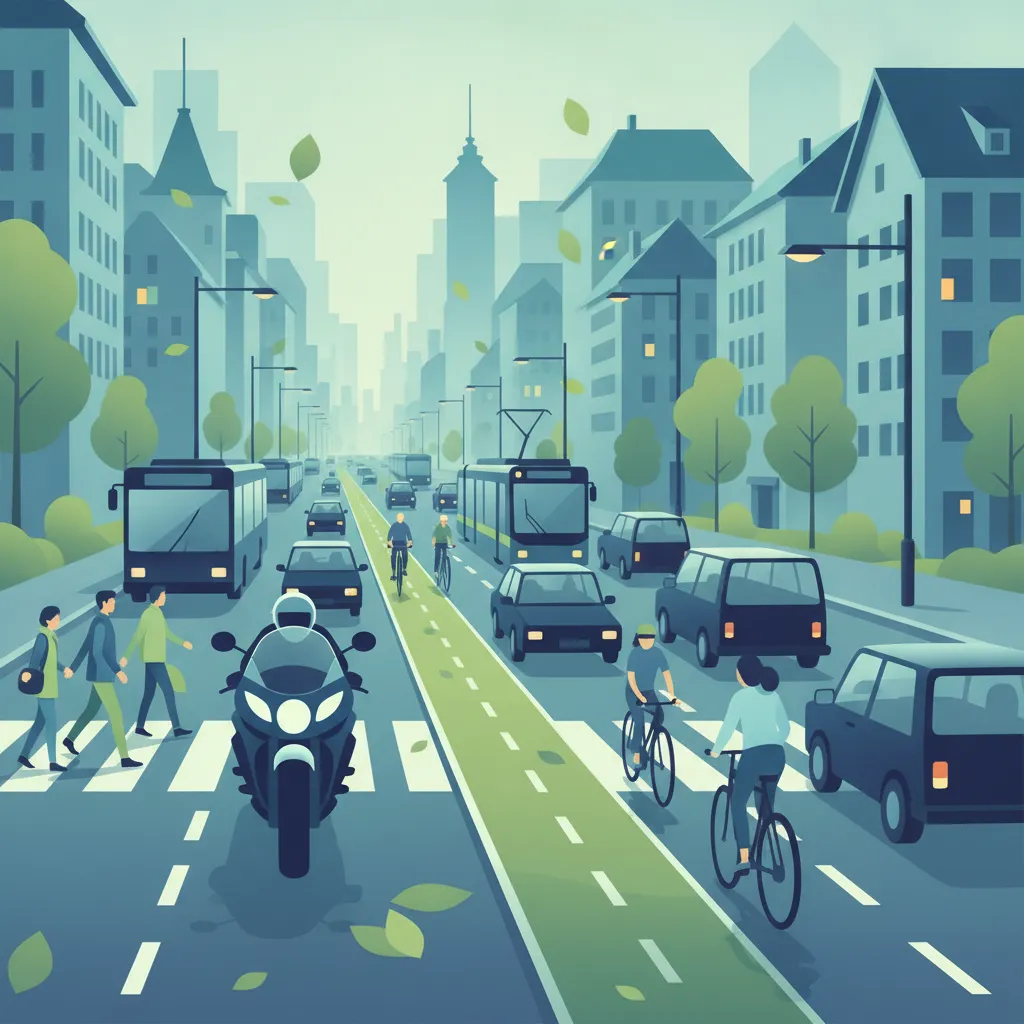
This lesson explores the complexities of riding in busy urban areas with a mix of traffic types. It covers strategies for safely navigating alongside buses, trams, cyclists, and pedestrians. Key topics include respecting designated lanes, anticipating the movements of vulnerable road users, and maintaining heightened situational awareness.
This lesson provides guidance on safely negotiating intersections and roundabouts on a motorcycle. It details the correct procedures for approach, lane selection, and yielding according to Swiss traffic regulations. Emphasis is placed on heightened awareness of other vehicles, cyclists, and pedestrians in these complex traffic environments.
This lesson provides guidance on safely navigating roundabouts and tram lanes, common features in Swiss cities. It covers the rules for yielding, lane positioning within the roundabout, and signaling intentions upon exiting. Special attention is given to the hazards of crossing slippery tram tracks and sharing the road with public transport.

This lesson explores the typical features of rural and alpine roads, such as narrow lanes, sharp bends, and significant elevation changes. It discusses the need for heightened awareness due to limited sight distances and the potential for unexpected hazards like wildlife or agricultural vehicles. Riders will learn to adapt their speed and positioning for these challenging conditions.
This lesson outlines the specific rules and skills required for riding on high-speed Swiss motorways. It covers the correct procedures for entering and exiting, merging with traffic, maintaining appropriate speed, and conducting safe overtaking maneuvers. Emphasis is placed on using mirrors and signals effectively to integrate safely into the flow of traffic.
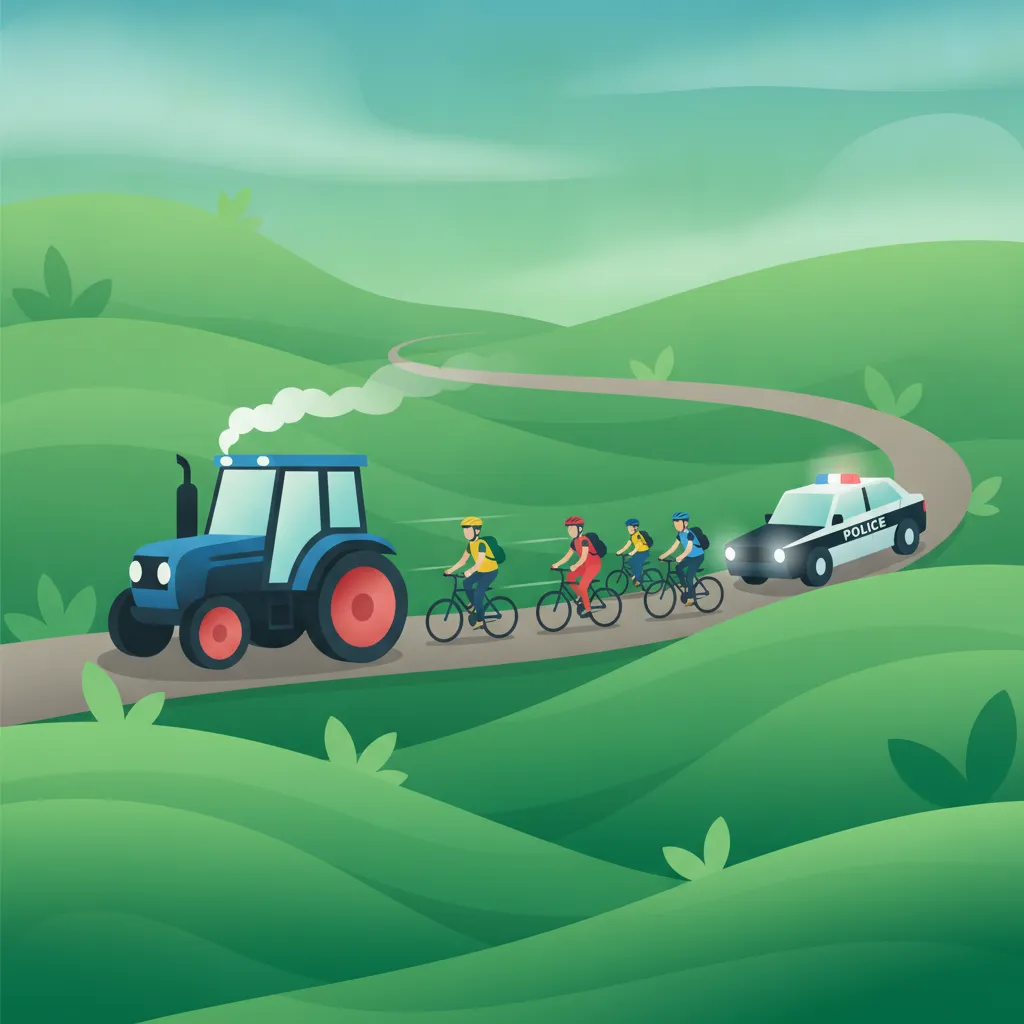
This lesson focuses on strategies for safely interacting with non-standard traffic common on rural roads. It covers how to anticipate the behaviour of slow-moving farm equipment and tourist vehicles, and the legal requirement to yield to emergency services. The importance of patience and safe passing opportunities is stressed.
This lesson outlines the principles of safe overtaking, emphasizing the importance of accurate judgment of speed and distance. It covers the necessary steps: checking mirrors, signaling, checking blind spots, executing the maneuver smoothly, and returning to the lane safely. The content is tailored to different road environments, from urban streets to rural roads.

This lesson clarifies the legal requirements for reporting traffic incidents in Switzerland. It provides guidance on how to interact with police and emergency personnel, providing clear and accurate information. Understanding these procedures helps ensure the incident is documented correctly for legal and insurance purposes.
Find clear answers to common questions learners have about Hand Signals, Light Signals, and Communicating Intent. Learn how the lesson is structured, which driving theory objectives it supports, and how it fits into the overall learning path of units and curriculum progression in Switzerland. These explanations help you understand key concepts, lesson flow, and exam focused study goals.
In Switzerland, you should primarily use your motorcycle's turn signals. However, hand signals are recommended as a supplement, especially in heavy traffic or to increase visibility to other road users, and they are mandatory if your vehicle's indicators are faulty.
You must signal in good time before starting your maneuver to give other road users sufficient warning. For the exam, ensure you indicate well before the junction, but avoid signaling too early to prevent confusion with previous intersections.
Most modern motorcycles do not have self-cancelling indicators. You must remember to cancel your signal immediately after completing your maneuver, as leaving it on is a common error that can mislead other drivers and will lead to points deducted in the practical test.
Yes, extending your left arm and moving it up and down is a common way to warn vehicles behind you that you are slowing down or stopping, especially in emergencies or when your brake light may be difficult to see.
Pinpoint specific Swiss traffic rules, road signs, or driving situations you need to master. Use the practice search to start a focused revision session now and build confidence for your official driving theory exam.