
This lesson guides you through the technical demands of navigating hairpin bends and steep gradients on Swiss roads. Building on your knowledge of motorcycle dynamics, you will learn how to adapt your speed and positioning to safely manage challenging alpine terrain.

Lesson content overview
Navigating hairpin bends and steep gradients presents some of the most challenging yet rewarding aspects of motorcycle riding, especially within the picturesque but demanding alpine environments of Switzerland. This lesson provides essential, specialized techniques designed to equip riders with the confidence and skills needed to safely and efficiently handle these complex road features. Mastering these skills is not only crucial for rider safety but is also a key component of the Swiss Motorcycle Licence Theory Course for categories A and A1, ensuring you are prepared for both the exam and real-world alpine conditions.
Proper management of speed, precise line selection, and effective braking strategies are paramount when the road suddenly reverses direction or changes elevation dramatically. By understanding the underlying physics and applying proven techniques, motorcyclists can transform potential hazards into exhilarating displays of control and riding proficiency.
A hairpin bend, often found on mountain passes and winding rural roads, is a severely sharp turn that typically reverses the direction of travel by nearly 180 degrees. These bends demand a significant reduction in speed and a highly precise riding line due to their tight radius and often limited visibility.
Hairpin bends can be categorized by their elevation changes:
Successfully navigating a hairpin bend relies heavily on forward planning. Riders must anticipate the bend, assess its type (uphill, downhill, or neutral), and adjust their approach well in advance. Insufficient speed reduction or an incorrect line can lead to a loss of control, especially on narrow mountain roads where recovery options are scarce.
Gradients refer to the steepness of a road, indicating its slope, and are typically expressed as a percentage or an angle. Understanding how gradients affect your motorcycle's performance and stability is fundamental for safe riding in hilly or mountainous terrain.
Improper handling of gradients can lead to significant risks. On uphill sections, stalling or losing momentum due to incorrect gear choice can be dangerous, particularly if other vehicles are close behind. On descents, relying solely on friction brakes can lead to brake fade, a critical reduction in braking efficiency caused by overheating. This makes understanding and applying various braking techniques indispensable.
A dangerous reduction in a vehicle's braking efficiency, caused by excessive heat buildup in the brake components (pads, discs, or drums) during prolonged or heavy braking, especially on long downhill gradients.
Safe and confident riding through hairpin bends and over steep gradients hinges on a few core principles that integrate motorcycle physics with practiced control.
Speed management is the deliberate adjustment of your motorcycle's velocity to perfectly match the demands of the road ahead. Before entering a hairpin bend, particularly a downhill one, significantly reduce your speed. This provides ample time to select the correct gear, establish your line, and maintain stability. On descents, speed must be continuously controlled to prevent uncontrolled acceleration. Conversely, on ascents, appropriate speed allows for steady momentum without over-revving or stalling the engine.
Always think "slow in, fast out" for bends. Brake early and sufficiently before the turn, then use gentle throttle to accelerate smoothly through the exit.
Line selection, often referred to as finding the "racing line" for optimal safety and smoothness, is the art of choosing the best path through a curve. For motorcyclists, this means maximizing cornering radius, maintaining stability, and ensuring clear visibility through the bend.
On a hairpin, particularly a very tight one, a common strategy is to approach from the outside of your lane, move towards the apex (the innermost point of the curve), and then accelerate gently towards the outside as you exit. This widens the effective turning radius, making the bend smoother to negotiate and reducing the lean angle required. However, it is crucial to stay within your lane and not cross into oncoming traffic, especially on blind turns.
The innermost point of a curve where a vehicle is closest to the inside edge of the road. Targeting the correct apex helps maximize the curve's radius and maintain stability.
Proper braking is critical before a hairpin bend or on a steep descent. All significant braking should be completed before entering the curve. This is because applying heavy braking while turning significantly reduces the available grip for cornering, potentially leading to a loss of traction or a slide.
Scan and Plan: Look ahead to assess the bend's severity and gradient.
Check Mirrors: Be aware of traffic behind you before decelerating.
Apply Brakes Progressively: Use both front and rear brakes smoothly and gradually, increasing pressure as needed. The front brake provides most of the stopping power, while the rear brake helps stabilize the motorcycle.
Downshift: Select an appropriate lower gear to assist with engine braking and prepare for acceleration out of the turn.
Release Brakes: Fully release the brakes before crossing the entry point of the curve, allowing the tires to dedicate their full grip to turning.
Engine braking is a highly effective and often mandatory technique for controlling speed on long or steep downhill gradients. It involves using the resistance of the engine itself to slow the motorcycle, reducing reliance on the service brakes and preventing them from overheating and fading.
To apply engine braking:
Engine braking helps maintain stability by keeping power to the rear wheel, which is crucial for traction, especially on slippery surfaces. It also saves your brake pads and discs from excessive wear.
Maintaining momentum on uphill gradients, especially out of an uphill hairpin, requires sensitive and deliberate throttle control. The key is to select the correct gear before the climb or hairpin exit and apply power smoothly and progressively.
Avoid abrupt acceleration, which can cause the rear wheel to lose traction or the engine to struggle. If you find your engine "bogging down" or losing revs, smoothly downshift to a lower gear to access more torque. A steady, consistent application of throttle will help you maintain speed and stability throughout the climb.
The corner apex is the innermost point of a curve. For hairpin bends, strategically aiming for the apex is vital for smooth and stable negotiation. By adjusting your line to meet the apex, you effectively widen the arc of your turn, reducing the required lean angle and making the corner feel less sharp.
For a left-hand hairpin, you would typically approach from the right side of your lane, turn in towards the inside (left) apex, and then allow the motorcycle to naturally drift towards the right side of the lane on exit while gently accelerating. This technique minimizes steering input and maximizes stability. Always ensure you can see through the corner before committing to your line, especially if visibility is limited.
Adhering to specific traffic regulations and recommended practices is critical for safety on Swiss roads, particularly in challenging alpine environments.
It is a mandatory rule that all significant braking for a curve must be completed before the actual curve entry line. Attempting to brake heavily while already leaned into a turn significantly increases the risk of losing traction, causing a skid or a fall. After completing your braking, release the levers before initiating your turn.
On narrow mountain roads, especially within tight hairpin bends, visibility can be severely limited. Swiss traffic law dictates that you must yield to vehicles already inside the bend if they are proceeding on the correct line. This rule is crucial for preventing head-on collisions in areas with insufficient space for two vehicles to pass simultaneously. Always approach blind bends with caution and be prepared to stop.
Posted speed limits on steep gradients, particularly descents in alpine zones, are often significantly reduced (e.g., 30 km/h). These limits are mandatory and are designed to allow riders sufficient control given the increased forces of gravity. Furthermore, maintaining a safe following distance, especially on uphill climbs, is mandatory. A minimum two-second gap provides crucial reaction time, as vehicles ahead might slow down unexpectedly due to gradient changes or other obstacles.
Overtaking on blind hairpin bends is strictly prohibited and carries severe risks. The lack of visibility prevents you from seeing oncoming traffic or other hazards, making a head-on collision highly probable. Always wait until the hairpin is cleared and you have a clear, unobstructed view of the road ahead before attempting any overtaking maneuver.
It is mandatory for all riders to use an appropriate gear for gradient changes. On steep inclines, this means selecting a lower gear that provides sufficient engine torque to maintain momentum without straining the engine or stalling. On descents, selecting a lower gear is essential for effective engine braking, which helps manage speed and prevent brake fade. Riding in a gear that is too high on an ascent can lead to a loss of speed, while riding in too high a gear on a descent can lead to uncontrolled acceleration.
Uphill: Downshift early to a gear where the engine can comfortably pull, maintaining a steady RPM range.
Downhill: Downshift to a gear that provides effective engine braking, allowing the engine to help control your speed without excessive reliance on service brakes.
Even experienced riders can make mistakes, but recognizing common errors allows for proactive avoidance and safer riding.
Motorcycle handling techniques must be dynamically adjusted based on prevailing environmental and traffic conditions.
Understanding the physics behind motorcycle dynamics reinforces why certain riding techniques are crucial.
v) before a hairpin, the rider dramatically reduces the required centripetal force, allowing the tires to maintain sufficient traction.Let's consider how these principles apply in real-world Swiss riding situations.
Decision Point: How to safely enter and navigate the downhill hairpin with an oncoming vehicle.
Correct Behavior: The rider, seeing the gradient and hairpin signs, begins to decelerate early. They smoothly downshift from 5th to 3rd gear, using engine braking to control speed. As they approach the bend, they apply progressive front and rear brakes, completing all braking before the hairpin entry point. Observing the oncoming car, the rider ensures they take an appropriate wide entry line (from the right side of their lane for a left-hand bend) but stay well within their lane, allowing the car to clear the apex. Once the car passes and visibility through the bend improves, the rider targets the apex, maintains a slight throttle opening for stability, and gently accelerates out of the turn.
Incorrect Behavior: The rider maintains too high a speed, relying solely on the front brake late into the bend. This causes the motorcycle to destabilize, leading to a front-wheel slide or forcing the rider wide into the path of the oncoming car.
Decision Point: How to maintain momentum and a safe distance while climbing.
Correct Behavior: Exiting the hairpin, the rider has already selected a low gear (e.g., 2nd or 3rd) to ensure sufficient torque for the climb. They apply the throttle smoothly and progressively, maintaining a steady RPM and speed without abrupt acceleration that could cause the rear wheel to spin or the engine to struggle. They maintain at least a two-second following distance from the truck, anticipating any potential slowdowns.
Incorrect Behavior: The rider exits the hairpin in too high a gear, causing the engine to bog down. They then try to accelerate abruptly, leading to a loss of momentum, potential stalling, or forcing a hurried downshift that destabilizes the bike on the incline. They also follow too closely behind the truck, leaving insufficient reaction time.
Decision Point: How to prevent brake fade and maintain continuous control over speed.
Correct Behavior: The rider anticipates the long descent and immediately begins using engine braking. They downshift sequentially (e.g., from 5th to 4th, then to 3rd gear), allowing the engine's resistance to primarily control their speed. They supplement this with light, intermittent applications of the rear brake for fine speed adjustments, ensuring the service brakes do not overheat. This method allows the brakes to cool between applications, preventing brake fade.
Incorrect Behavior: The rider relies predominantly on the front brake, continuously applying pressure. After a short while, the brakes begin to overheat, leading to reduced stopping power and a spongy lever feel (brake fade), making it difficult to control speed effectively for the upcoming curves.
This lesson covers specialized techniques for navigating Swiss alpine roads, focusing on hairpin bends and steep gradients. It teaches that speed reduction must happen before entering any curve, with braking while turning being a primary cause of crashes. Engine braking is emphasized as the primary method for controlling speed on descents, while throttle smoothness is critical for maintaining traction on climbs. Swiss-specific rules include mandatory yield to vehicles already in bends, prohibited overtaking on blind hairpins, and mandatory speed limits on steep gradients. Understanding the friction circle concept—that tires have limited grip available for braking, turning, or acceleration at any moment—explains why these techniques must be sequenced correctly.
A short set of high-value points that capture the most important learning from this lesson.
All significant braking must be completed before entering a curve; heavy braking while leaned over reduces tire grip available for turning.
Engine braking is essential on descents to prevent brake fade and maintain stability through prolonged downhill sections.
Line selection through a hairpin should follow outside-to-apex-to-outside to widen the turning radius and reduce lean angle.
Hairpin bends are categorized as neutral, uphill, or downhill, each requiring different throttle and braking strategies.
Lower gears must be selected early for both climbs (torque) and descents (engine braking) to maintain control on gradients.
Explore all units and lessons included in this driving theory course.
Mandatory rule: complete braking before the curve entry line; never brake heavily while already turning.
Yield rule: you must give way to vehicles already inside a hairpin bend proceeding on the correct line.
Speed limits on steep gradients in alpine zones are mandatory, often significantly reduced (e.g., 30 km/h).
Maintain at least a two-second following distance on uphill sections; vehicles ahead may slow unexpectedly.
Overtaking on blind hairpin bends is strictly prohibited due to zero visibility of oncoming traffic.
Braking while already leaned into a turn, which exceeds tire grip limits and causes loss of traction.
Waiting too late to downshift on descents, overloading friction brakes and risking brake fade.
Entering a hairpin too fast, forcing abrupt steering corrections or running wide into opposing traffic.
Using only the front brake on long descents, leading to overheating and reduced braking efficiency.
Cutting the corner by riding onto the unpaved edge, which causes loss of traction on loose surfaces.
Lesson content overview
A short set of high-value points that capture the most important learning from this lesson.
All significant braking must be completed before entering a curve; heavy braking while leaned over reduces tire grip available for turning.
Engine braking is essential on descents to prevent brake fade and maintain stability through prolonged downhill sections.
Line selection through a hairpin should follow outside-to-apex-to-outside to widen the turning radius and reduce lean angle.
Hairpin bends are categorized as neutral, uphill, or downhill, each requiring different throttle and braking strategies.
Lower gears must be selected early for both climbs (torque) and descents (engine braking) to maintain control on gradients.
Explore all units and lessons included in this driving theory course.
Mandatory rule: complete braking before the curve entry line; never brake heavily while already turning.
Yield rule: you must give way to vehicles already inside a hairpin bend proceeding on the correct line.
Speed limits on steep gradients in alpine zones are mandatory, often significantly reduced (e.g., 30 km/h).
Maintain at least a two-second following distance on uphill sections; vehicles ahead may slow unexpectedly.
Overtaking on blind hairpin bends is strictly prohibited due to zero visibility of oncoming traffic.
Braking while already leaned into a turn, which exceeds tire grip limits and causes loss of traction.
Waiting too late to downshift on descents, overloading friction brakes and risking brake fade.
Entering a hairpin too fast, forcing abrupt steering corrections or running wide into opposing traffic.
Using only the front brake on long descents, leading to overheating and reduced braking efficiency.
Cutting the corner by riding onto the unpaved edge, which causes loss of traction on loose surfaces.
Explore search topics learners often look for when studying Handling Hairpin Bends and Gradient Changes. These topics reflect common questions about road rules, driving situations, safety guidance, and lesson level theory preparation for learners in Switzerland.
Browse additional driving theory lessons that cover connected traffic rules, road signs, and common driving situations related to this topic. Improve your understanding of how different rules interact across everyday traffic scenarios.
Learn essential braking strategies for controlling speed on steep downhill mountain roads. This lesson covers effective use of engine braking and service brakes to prevent brake fade and ensure safe descents, crucial for Swiss motorcycle theory.
This lesson provides instruction on how to perform an emergency stop safely and effectively. It covers techniques for applying maximum braking force without losing control, both in a straight line and while in a lean. Understanding how to manage traction and stability during a sudden stop is a vital skill for avoiding hazards.
This lesson focuses on adapting braking techniques for low-traction surfaces like wet or icy roads. It explains the need for gentle, progressive brake application to prevent wheel lock-up and maintain control. Learners will understand how to scan the road ahead for potential hazards and adjust their braking strategy accordingly.
Relying solely on the service brakes on a long downhill stretch can lead to overheating and complete brake failure (brake fade). This lesson explains the function of auxiliary brakes like retarders. You will learn how and when to engage them to maintain a safe, controlled speed, preserving the main brakes for when they are truly needed.
Controlling a heavy vehicle on a steep downhill grade requires a specific technique to avoid disaster. This lesson teaches the golden rule: select a low gear before starting the descent, one that is low enough to control the speed with minimal use of the service brakes. It explains how to effectively combine this with the engine brake or retarder to maintain a safe, steady speed and keep the service brakes cool and ready for an emergency.
This lesson explains the distinct roles of the front and rear brakes, focusing on how weight transfer during braking affects their efficiency. It clarifies why the front brake provides the majority of stopping power and teaches how to modulate both brakes smoothly to achieve controlled deceleration. Understanding these principles is fundamental to safe and effective braking.
This lesson explains the principles of effective braking for small vehicles. It covers the roles of the front and rear brakes, the importance of tyre pressure and tread for maintaining grip, and how different road surfaces affect traction. Learners will understand how to apply brakes smoothly and progressively to stop safely without skidding.
This lesson focuses on driving on mountain roads, addressing steep gradients, hairpin bends, and altitude-related challenges. You will learn proper techniques for climbing ascents and using engine braking on descents. The content also covers the use of snow chains, recognizing avalanche risks, and interpreting mountain road signs for safe alpine navigation.
Driving in the Alps requires a high level of skill and vehicle sympathy. This lesson covers techniques for climbing steep gradients by selecting the correct gear to maintain momentum without straining the engine. It reiterates the critical importance of using low gears and auxiliary brakes for descending, to ensure the service brakes remain cool and effective for the entire descent.
This lesson focuses on the control systems that translate rider inputs into action, covering throttle management, brake lever application, and clutch control. It details the process of shifting gears, explaining the typical patterns for upshifting and downshifting. Proper coordination of these controls is emphasized as essential for safe and efficient maneuvering in traffic.
To prevent the service brakes from overheating and failing on long downhill gradients, heavy vehicles are equipped with endurance (or auxiliary) braking systems. This lesson explains the function of engine brakes (which alter valve timing) and retarders (which use hydrodynamic or electromagnetic force). These systems allow the driver to maintain a safe, controlled speed without relying solely on the service brakes.
Master advanced techniques for navigating challenging hairpin bends on Swiss alpine roads. This lesson explores line selection, throttle control, and managing traction on steep ascents and descents, vital for motorcycle theory comprehension.

This lesson explores the typical features of rural and alpine roads, such as narrow lanes, sharp bends, and significant elevation changes. It discusses the need for heightened awareness due to limited sight distances and the potential for unexpected hazards like wildlife or agricultural vehicles. Riders will learn to adapt their speed and positioning for these challenging conditions.
This lesson focuses on driving on mountain roads, addressing steep gradients, hairpin bends, and altitude-related challenges. You will learn proper techniques for climbing ascents and using engine braking on descents. The content also covers the use of snow chains, recognizing avalanche risks, and interpreting mountain road signs for safe alpine navigation.
This lesson provides instruction on how to perform an emergency stop safely and effectively. It covers techniques for applying maximum braking force without losing control, both in a straight line and while in a lean. Understanding how to manage traction and stability during a sudden stop is a vital skill for avoiding hazards.
This lesson outlines the specific rules and skills required for riding on high-speed Swiss motorways. It covers the correct procedures for entering and exiting, merging with traffic, maintaining appropriate speed, and conducting safe overtaking maneuvers. Emphasis is placed on using mirrors and signals effectively to integrate safely into the flow of traffic.

This lesson focuses on identifying and managing specific road surface hazards that can compromise traction. It provides techniques for safely crossing slippery tram rails and painted markings, navigating uneven cobblestones, and maintaining control on loose gravel. The core skill is learning to scan the road ahead and adjust riding style proactively.

This lesson focuses on the critical relationship between corner entry speed, line selection, and rider body position. It teaches the standard 'outside-in-outside' line for maximizing visibility and stability through a corner. Proper body positioning is explained as a way to assist the motorcycle in leaning and maintaining traction throughout the turn.
This lesson outlines the principles of safe overtaking, emphasizing the importance of accurate judgment of speed and distance. It covers the necessary steps: checking mirrors, signaling, checking blind spots, executing the maneuver smoothly, and returning to the lane safely. The content is tailored to different road environments, from urban streets to rural roads.
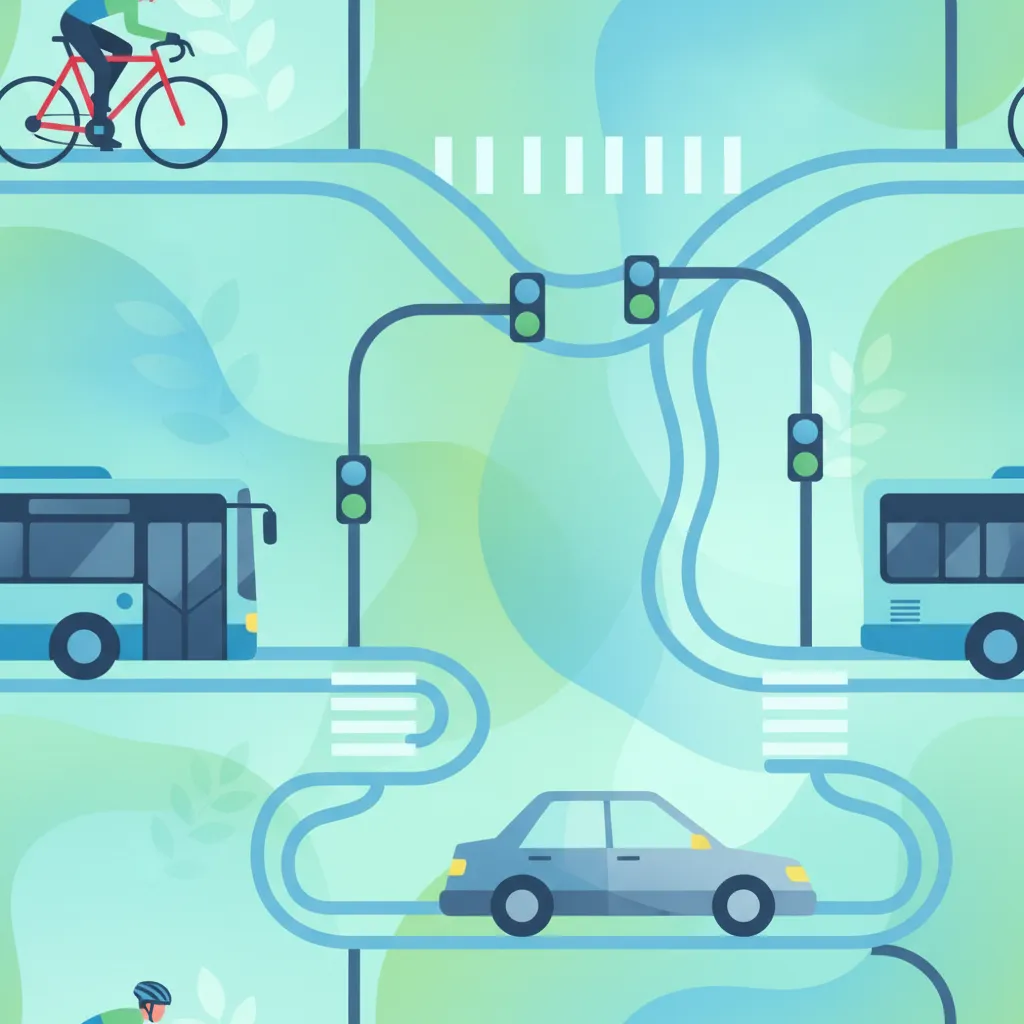
This lesson provides guidance on safely negotiating intersections and roundabouts on a motorcycle. It details the correct procedures for approach, lane selection, and yielding according to Swiss traffic regulations. Emphasis is placed on heightened awareness of other vehicles, cyclists, and pedestrians in these complex traffic environments.
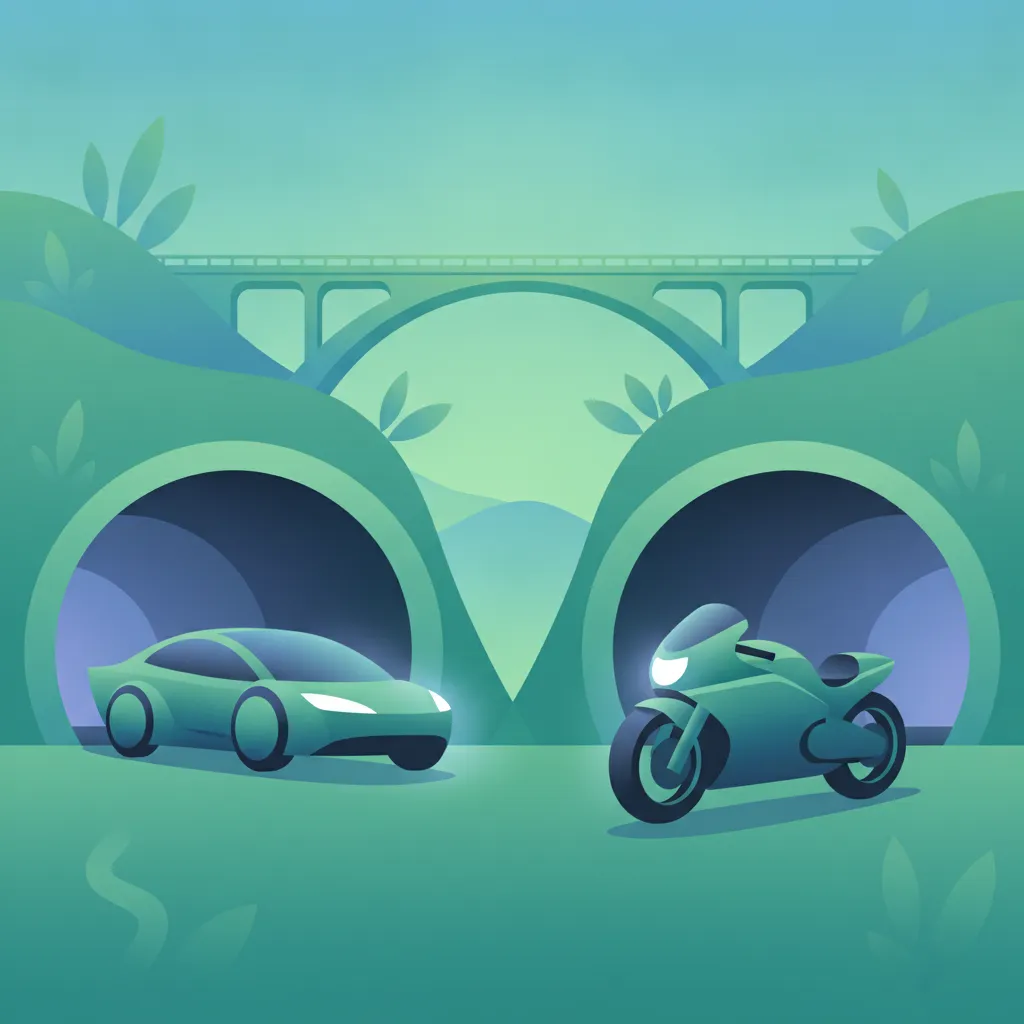
This lesson addresses the specific safety considerations for riding through tunnels and over bridges. It covers adapting to changes in light and temperature, being aware of tunnel emergency procedures, and anticipating the effects of crosswinds on bridges. Maintaining a steady speed and predictable path is emphasized for safety in these structures.
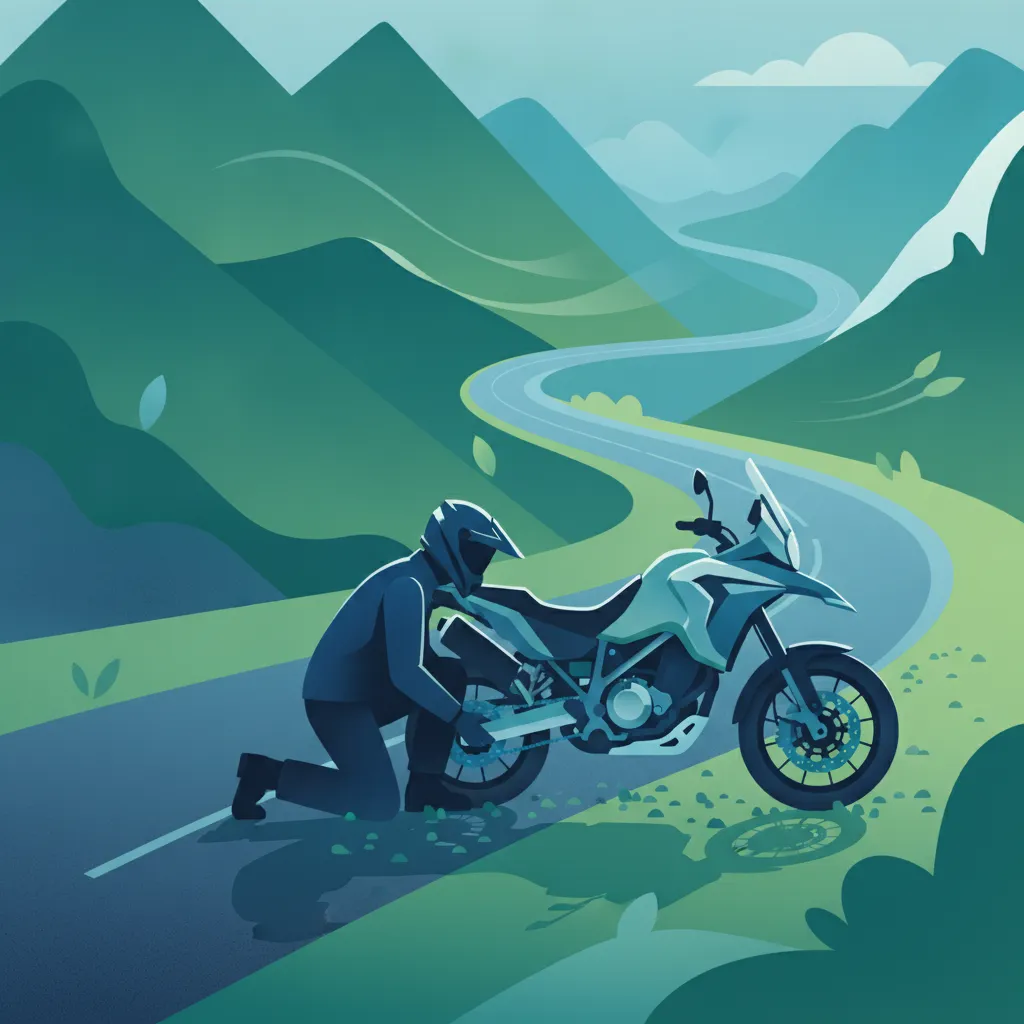
This lesson explores the necessary preparations and adjustments for riding throughout the year. It discusses the specific challenges of winter riding, such as cold temperatures and icy roads, and summer riding, like overheating and sun glare. The content emphasizes proactive planning, including checking weather forecasts and selecting appropriate seasonal gear.
Find clear answers to common questions learners have about Handling Hairpin Bends and Gradient Changes. Learn how the lesson is structured, which driving theory objectives it supports, and how it fits into the overall learning path of units and curriculum progression in Switzerland. These explanations help you understand key concepts, lesson flow, and exam focused study goals.
On steep descents, you should primarily use both brakes, but with a focus on the front brake for stopping power. However, dragging the rear brake lightly can help stabilize the motorcycle at very low speeds during a tight hairpin turn.
Stalling on uphill hairpins is often caused by being in too high a gear for the required power, or failing to maintain sufficient throttle input. Ensure you downshift early before entering the turn to keep the engine in the optimal power band.
A passenger significantly increases the weight at the rear, which can make the front end feel lighter and less stable during cornering and acceleration. You must brake earlier, take turns more gradually, and allow extra space to account for the increased stopping distance.
The biggest risk is encountering oncoming traffic, such as buses or motorhomes, that may cross into your lane in tight bends. Always adopt a road position that maximizes your view around the corner and prepare to adjust your line if the path is obstructed.
Pinpoint specific Swiss traffic rules, road signs, or driving situations you need to master. Use the practice search to start a focused revision session now and build confidence for your official driving theory exam.