
This lesson guides you through the critical skills of emergency braking and control during cornering for your Swiss motorcycle licence. Understanding how to manage your braking force under pressure is essential for your safety and success in the category A and A1 theory exam.
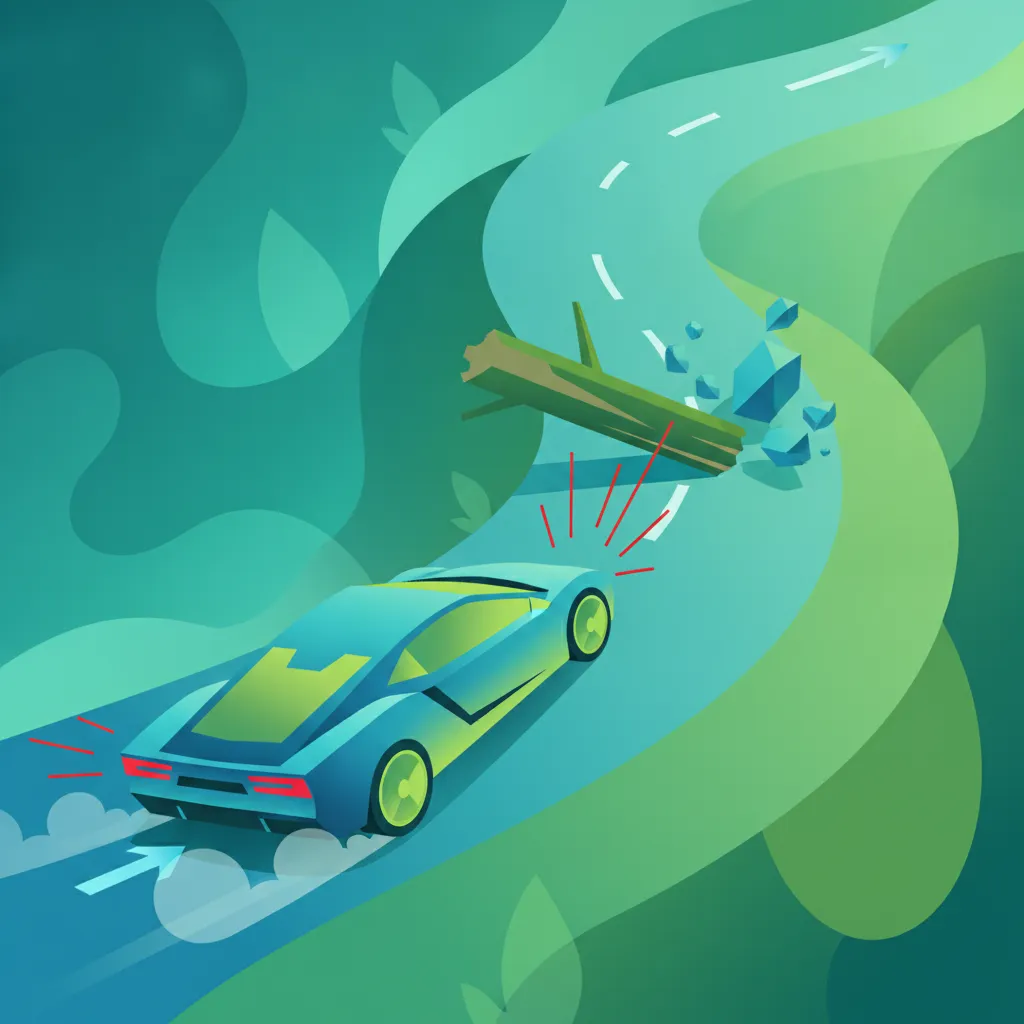
Lesson content overview
Navigating the roads on a motorcycle offers unparalleled freedom, but it also demands a high level of skill and preparedness. Among the most critical skills a motorcyclist must master is emergency braking. The ability to stop quickly and safely, whether in a straight line or while negotiating a bend, can be the difference between avoiding a hazard and being involved in a collision. This lesson delves into the techniques, physics, and best practices for performing effective emergency stops and managing braking in various situations, especially relevant for the Swiss Motorcycle Licence Theory Course for Categories A, A1.
We will explore the fundamental principles that govern how a motorcycle reacts under heavy braking, including weight transfer and tire traction. Understanding these concepts is crucial for applying maximum braking force without losing control. From controlled stops on dry pavement to delicate maneuvers in a lean, mastering these techniques will equip you with the confidence and ability to react effectively to unexpected situations on Swiss roads.
Effective braking on a motorcycle is a delicate dance between physics and rider skill. Two core principles dictate how your bike behaves under deceleration: weight transfer and traction. Grasping these concepts is fundamental to performing safe and efficient emergency stops.
When you apply the brakes, your motorcycle's momentum doesn't just disappear; it shifts. As your speed decreases, the motorcycle's weight "transfers" forward, pushing down on the front wheel and lifting weight off the rear wheel. This dynamic load transfer is critical because the tire carrying more weight gains more traction and can thus exert more stopping force.
Practical Meaning: This forward weight transfer explains why the front brake is so much more effective than the rear brake for stopping a motorcycle quickly. The increased load on the front tire allows it to generate a much greater braking force before reaching its traction limit. Conversely, over-reliance on the rear brake alone will quickly lead to rear wheel lock-up due to its reduced load.
Common Mistakes: A frequent error is overusing the front brake without understanding its limits, which can lead to a front wheel lock-up. Equally, relying solely on the rear brake in an emergency situation means you are not using the motorcycle's full stopping potential and will significantly increase your stopping distance.
The traction circle is a powerful conceptual tool for understanding tire grip. Imagine a circle around each tire. Any force applied to that tire—whether for braking, accelerating, or cornering—uses up a portion of its available grip. The total combined force must always remain within the boundary of this circle to maintain traction. Exceed the circle, and the tire will slip.
Practical Meaning: The traction circle guides riders on how much brake force can be safely applied to each wheel without exceeding its grip limit. As weight transfers forward under braking, the front wheel's traction circle effectively grows (it can handle more force), while the rear wheel's traction circle shrinks (it can handle less force). This reinforces the need for a front brake bias during heavy braking.
Associated Rules: When braking heavily in a straight line, the majority of your braking force should come from the front brake (often 70-90% on dry pavement), with the rear brake providing supplementary stopping power and stability. The precise balance changes dynamically with speed, road conditions, and lean angle.
Brake modulation is the art of applying just enough brake pressure to achieve maximum deceleration without exceeding the tires' grip limits and causing a skid. It's a nuanced skill that requires sensitivity and practice.
Practical Meaning: Good brake modulation allows the rider to constantly feel for the threshold of wheel lock-up. It's about finding that sweet spot where you're braking as hard as possible without losing control. This is especially vital during emergency stops or when braking on unpredictable surfaces.
Common Mistakes: The most common mistake is to "panic brake" by abruptly applying full brake pressure. This often leads to immediate wheel lock-up, particularly with the front brake, resulting in a loss of steering and potentially a fall. Even with ABS, an abrupt input can unsettle the bike.
An emergency stop is the full application of brakes to reduce speed as quickly as possible, typically in response to an unexpected hazard. When traveling in a straight line, your motorcycle offers the most stable platform for maximum braking force.
Identify the hazard and focus on your stopping point or escape route.
Immediately apply both front and rear brakes progressively and firmly. Squeeze the front lever strongly and press the rear pedal.
As speed reduces, the front brake will become even more effective; continue to increase front brake pressure until just before lock-up (threshold braking).
Keep your body centered and maintain a straight line of travel.
Once stopped, release the brakes smoothly and prepare to move off or assess the situation.
Threshold Braking: This advanced technique involves applying the brakes just to the point where a wheel is on the verge of locking up, maximizing deceleration. With practice, riders can feel this threshold and maintain optimal braking force. ABS systems automatically manage threshold braking, preventing actual wheel lock.
Common Mistakes:
Braking while a motorcycle is leaned into a turn, often called braking in a lean or lean braking, is a complex maneuver that requires precise control. The challenge arises because when a motorcycle is leaned, a significant portion of the tire's traction is already being used for cornering force. This leaves less available grip for braking.
Associated Rules: It is generally recommended to avoid applying significant front brake while the motorcycle is leaned more than approximately 30 degrees. At high lean angles, the risk of a front wheel lock and subsequent crash is very high.
Common Mistakes:
Trail braking is a refined technique that involves gradually releasing the brakes as you enter and progress through a corner. It's not about emergency stopping in a lean, but rather about fine-tuning your speed and line.
Practical Meaning: Trail braking helps you:
Associated Rules: When trail braking, the front brake usage must be reduced proportionally to the lean angle. The rear brake can often be maintained longer or used more consistently as it has less impact on the motorcycle's steering geometry and is less prone to locking under light lean.
Common Mistakes:
The Anti-lock Braking System (ABS) is a crucial safety feature on many modern motorcycles, significantly enhancing control during emergency stops, especially on slippery or inconsistent surfaces.
When a rider applies the brakes forcefully enough to cause a wheel to start locking up, ABS sensors detect the impending lock. The system then rapidly releases and reapplies brake pressure many times per second (much faster than a human can). This pulsed application prevents the wheel from fully locking, allowing the tire to maintain traction and enabling the rider to retain steering control.
Practical Meaning: ABS provides a significant safety margin by allowing riders to apply maximum brake force in an emergency without the fear of a sudden skid. It is particularly beneficial on wet roads, gravel, or other low-traction surfaces where wheel lock-up is a greater risk.
Associated Rules: For motorcycles equipped with ABS, it is mandatory to keep the system engaged during emergency braking. Disabling ABS (if your bike allows it) before an emergency stop significantly increases the risk of wheel lock and loss of control, especially for riders without advanced threshold braking skills.
Common Mistakes:
Effective braking isn't a one-size-fits-all skill. Various factors, including weather, road surface, and the motorcycle's state, demand adjustments to your braking technique.
When riding near pedestrians, cyclists, or other vulnerable road users, anticipate the need for an emergency brake. Ensure your braking technique is controlled and does not endanger them (e.g., avoiding a sudden front lock that could lead to a loss of control and impact). Maintain extra safe following distances and be prepared to stop.
While the physics of braking are universal, local regulations and recommended practices guide their application. For the Swiss Motorcycle Licence Theory Course (Categories A, A1), understanding these directives is essential for safe and legal riding.
Swiss traffic regulations, like best practices worldwide, emphasize the need to use both front and rear brakes during an emergency stop to achieve the shortest possible stopping distance. Relying on only one brake significantly compromises your ability to stop effectively and safely. The front brake provides the majority of stopping power due to weight transfer, while the rear brake adds crucial stability and additional stopping force.
For motorcycles equipped with an Anti-lock Braking System (ABS), the system must remain engaged when an emergency stop is required. ABS is a safety feature designed to prevent wheel lock-up and maintain steering control, especially under hard braking or on slippery surfaces. Disabling ABS, if an option, is contrary to safe practice and can increase accident risk.
While not a direct legal requirement, the practice of reducing speed before entering a curve to avoid heavy braking while heavily leaned is a fundamental best practice. This is often achieved through trail braking techniques. Reducing speed prior to a bend lessens the necessary lean angle for a given speed, thereby increasing the tire's available traction for emergency maneuvers should an unforeseen obstacle appear mid-corner.
At very low speeds (e.g., below 30 km/h), the weight transfer during braking is less pronounced. In these scenarios, the rear brake can be used more heavily and effectively to prevent front wheel lock-up, which can be very destabilizing at slow speeds. This is particularly useful in urban traffic, parking lots, or stop-and-go situations.
It is a critical safety principle that riders must not apply significant front brake while the motorcycle is leaned beyond approximately 30 degrees in a turn. High lean angles severely reduce the front tire's contact patch available for braking, making a front wheel lock almost inevitable and usually leading to a crash. During heavy leans, any necessary braking should be minimal and predominantly from the rear brake.
Understanding common errors is as important as learning the correct techniques. By recognizing these pitfalls, you can actively work to avoid them and improve your overall braking safety.
Full Front Brake in a Sharp Turn:
Rear Brake Only Emergency Stop:
Late Braking Before a Curve:
Disabling ABS in Wet Conditions:
Abrupt Release of Brakes:
Mastering emergency braking and braking in bends is a cornerstone of safe and confident motorcycle riding, particularly for the varied terrain and traffic conditions encountered in Switzerland. The principles of weight transfer and the traction circle are your guides to understanding how to best apply your brakes. Brake modulation is the skill that translates this understanding into controlled deceleration, whether you are performing a full emergency stop or gently trail braking into a sweeping alpine turn.
Always remember to adapt your technique to the prevailing conditions—be it wet pavement, loose gravel, or carrying a passenger. Modern technologies like ABS provide an invaluable safety net, but they are aids, not replacements, for sound riding judgment and practiced skill. Regular practice of these techniques in a safe environment will build the muscle memory and confidence required to react effectively and instinctively when it matters most, ensuring you are well-prepared for your Swiss Motorcycle Licence Theory Course for Categories A, A1 and for countless safe journeys ahead.
This lesson covers the essential physics and techniques for motorcycle emergency braking, starting with weight transfer and the traction circle as foundational concepts for understanding how to maximize stopping power without losing control. It details proper progressive brake application for straight-line emergency stops, where the front brake provides the majority of stopping force due to dynamic load transfer, and explains how ABS assists by automatically modulating pressure to prevent lock-up. The lesson then addresses the more complex scenario of braking while leaned, emphasizing that significant front brake use becomes dangerous beyond approximately 30 degrees of lean angle, requiring a rear-brake priority approach. Trail braking techniques are also covered for fine-tuning corner entry speed, and the content concludes with guidance on adapting braking technique to various conditions including wet roads, ice, gravel, and heavy loads, all framed within Swiss Category A and A1 motorcycle theory requirements.
A short set of high-value points that capture the most important learning from this lesson.
Weight transfer during braking shifts load from rear to front wheel, making the front brake the primary stopping force (70-90% of braking power on dry surfaces).
The traction circle concept shows that tire grip is shared between braking, acceleration, and cornering forces—exceeding this limit causes wheel lock-up.
Progressive brake application allows smooth weight transfer and maximizes available traction, while abrupt inputs cause immediate wheel lock.
ABS automatically modulates brake pressure to prevent lock-up, but riders must still apply firm, progressive pressure to engage the system effectively.
Trail braking allows controlled speed adjustment during corner entry by gradually releasing front brake pressure as lean angle increases.
Explore all units and lessons included in this driving theory course.
Front brake bias: apply front brake smoothly and firmly (70-90% of stopping force), rear brake provides stability and supplementary stopping power.
In a lean angle beyond approximately 30 degrees, significantly reduce front brake pressure and prioritize rear brake to avoid front wheel lock-up.
On wet or icy surfaces, reduce overall braking force and apply brakes much more progressively; ice requires very gentle braking with rear brake emphasis.
For heavy loads or passengers, increase following distance as stopping distance increases and the rear brake becomes relatively more effective.
Always aim to complete primary braking while upright before entering a curve to preserve tire grip for cornering forces.
Grabbing the front brake abruptly or excessively while heavily leaned causes front wheel lock and almost guaranteed loss of control (low-side crash).
Relying solely on the rear brake dramatically increases stopping distance and commonly causes rear wheel lock with fishtailing or high-side crashes.
Entering corners at excessive speed and then braking heavily while leaned compromises tire grip and forces the bike to run wide.
Disabling ABS on wet or slippery surfaces removes a critical safety net, making wheel lock-up and loss of control much more likely.
Releasing brakes abruptly after hard braking can cause the motorcycle to lurch forward or unsettle the chassis mid-corner.
Lesson content overview
A short set of high-value points that capture the most important learning from this lesson.
Weight transfer during braking shifts load from rear to front wheel, making the front brake the primary stopping force (70-90% of braking power on dry surfaces).
The traction circle concept shows that tire grip is shared between braking, acceleration, and cornering forces—exceeding this limit causes wheel lock-up.
Progressive brake application allows smooth weight transfer and maximizes available traction, while abrupt inputs cause immediate wheel lock.
ABS automatically modulates brake pressure to prevent lock-up, but riders must still apply firm, progressive pressure to engage the system effectively.
Trail braking allows controlled speed adjustment during corner entry by gradually releasing front brake pressure as lean angle increases.
Explore all units and lessons included in this driving theory course.
Front brake bias: apply front brake smoothly and firmly (70-90% of stopping force), rear brake provides stability and supplementary stopping power.
In a lean angle beyond approximately 30 degrees, significantly reduce front brake pressure and prioritize rear brake to avoid front wheel lock-up.
On wet or icy surfaces, reduce overall braking force and apply brakes much more progressively; ice requires very gentle braking with rear brake emphasis.
For heavy loads or passengers, increase following distance as stopping distance increases and the rear brake becomes relatively more effective.
Always aim to complete primary braking while upright before entering a curve to preserve tire grip for cornering forces.
Grabbing the front brake abruptly or excessively while heavily leaned causes front wheel lock and almost guaranteed loss of control (low-side crash).
Relying solely on the rear brake dramatically increases stopping distance and commonly causes rear wheel lock with fishtailing or high-side crashes.
Entering corners at excessive speed and then braking heavily while leaned compromises tire grip and forces the bike to run wide.
Disabling ABS on wet or slippery surfaces removes a critical safety net, making wheel lock-up and loss of control much more likely.
Releasing brakes abruptly after hard braking can cause the motorcycle to lurch forward or unsettle the chassis mid-corner.
Explore search topics learners often look for when studying Emergency Braking Techniques and Braking in Bends. These topics reflect common questions about road rules, driving situations, safety guidance, and lesson level theory preparation for learners in Switzerland.
Browse additional driving theory lessons that cover connected traffic rules, road signs, and common driving situations related to this topic. Improve your understanding of how different rules interact across everyday traffic scenarios.
Learn to master braking while leaned in corners for Swiss motorcycle theory. This lesson covers trail braking and safe speed management in bends, crucial for Category A and A1 riders.

This lesson provides specialized techniques for safely handling hairpin turns and steep gradients. It teaches riders how to manage speed on approach, select the correct line through the bend, and use both brakes and engine braking on descents. Proper throttle control for maintaining momentum on uphill climbs is also covered.

This lesson focuses on adapting braking techniques for low-traction surfaces like wet or icy roads. It explains the need for gentle, progressive brake application to prevent wheel lock-up and maintain control. Learners will understand how to scan the road ahead for potential hazards and adjust their braking strategy accordingly.

This lesson focuses on the critical relationship between corner entry speed, line selection, and rider body position. It teaches the standard 'outside-in-outside' line for maximizing visibility and stability through a corner. Proper body positioning is explained as a way to assist the motorcycle in leaning and maintaining traction throughout the turn.

This lesson focuses on driving on mountain roads, addressing steep gradients, hairpin bends, and altitude-related challenges. You will learn proper techniques for climbing ascents and using engine braking on descents. The content also covers the use of snow chains, recognizing avalanche risks, and interpreting mountain road signs for safe alpine navigation.
This lesson provides guidance on safely negotiating intersections and roundabouts on a motorcycle. It details the correct procedures for approach, lane selection, and yielding according to Swiss traffic regulations. Emphasis is placed on heightened awareness of other vehicles, cyclists, and pedestrians in these complex traffic environments.

This lesson explores the typical features of rural and alpine roads, such as narrow lanes, sharp bends, and significant elevation changes. It discusses the need for heightened awareness due to limited sight distances and the potential for unexpected hazards like wildlife or agricultural vehicles. Riders will learn to adapt their speed and positioning for these challenging conditions.

This lesson provides guidance on safely navigating roundabouts and tram lanes, common features in Swiss cities. It covers the rules for yielding, lane positioning within the roundabout, and signaling intentions upon exiting. Special attention is given to the hazards of crossing slippery tram tracks and sharing the road with public transport.
This lesson outlines the specific rules and skills required for riding on high-speed Swiss motorways. It covers the correct procedures for entering and exiting, merging with traffic, maintaining appropriate speed, and conducting safe overtaking maneuvers. Emphasis is placed on using mirrors and signals effectively to integrate safely into the flow of traffic.

This lesson focuses on the control systems that translate rider inputs into action, covering throttle management, brake lever application, and clutch control. It details the process of shifting gears, explaining the typical patterns for upshifting and downshifting. Proper coordination of these controls is emphasized as essential for safe and efficient maneuvering in traffic.

Driving in the Alps requires a high level of skill and vehicle sympathy. This lesson covers techniques for climbing steep gradients by selecting the correct gear to maintain momentum without straining the engine. It reiterates the critical importance of using low gears and auxiliary brakes for descending, to ensure the service brakes remain cool and effective for the entire descent.
Understand common braking errors and how to adapt techniques for different weather and road conditions, essential for Swiss motorcycle theory (Categories A, A1) and road safety.
This lesson focuses on adapting braking techniques for low-traction surfaces like wet or icy roads. It explains the need for gentle, progressive brake application to prevent wheel lock-up and maintain control. Learners will understand how to scan the road ahead for potential hazards and adjust their braking strategy accordingly.

This lesson details how adverse weather conditions like rain, fog, and snow affect motorcycle safety. It explains how wet surfaces reduce tyre grip, requiring smoother control inputs and longer braking distances. Strategies for managing reduced visibility in fog and the extreme hazards of riding on snow and ice are also covered.

This lesson provides essential strategies for riding in adverse weather like rain and fog. It explains how to increase following distances, reduce speed, and use lights effectively to enhance visibility. The content also addresses the loss of traction on wet roads and the importance of smooth control inputs for braking, accelerating, and steering.

This lesson explores the necessary preparations and adjustments for riding throughout the year. It discusses the specific challenges of winter riding, such as cold temperatures and icy roads, and summer riding, like overheating and sun glare. The content emphasizes proactive planning, including checking weather forecasts and selecting appropriate seasonal gear.

This lesson focuses on identifying and managing specific road surface hazards that can compromise traction. It provides techniques for safely crossing slippery tram rails and painted markings, navigating uneven cobblestones, and maintaining control on loose gravel. The core skill is learning to scan the road ahead and adjust riding style proactively.

Wet or icy roads drastically reduce tyre grip and can double or triple braking distances. This lesson stresses the importance of significantly reducing overall speed and increasing following distances in such conditions. It advises on using brakes with extreme care to avoid skidding and explains how the vehicle's retarder should be used with caution as it can cause the drive wheels to lock up on slippery surfaces.
This lesson provides clear, actionable steps for managing a motorcycle breakdown safely. It covers moving the vehicle to a safe location, making yourself visible to other traffic with hazard lights and reflective gear, and contacting breakdown services. Following a proper protocol minimizes risk in a vulnerable situation.
This lesson focuses on the control systems that translate rider inputs into action, covering throttle management, brake lever application, and clutch control. It details the process of shifting gears, explaining the typical patterns for upshifting and downshifting. Proper coordination of these controls is emphasized as essential for safe and efficient maneuvering in traffic.

This lesson teaches riders how to identify and manage different road surfaces that can affect tyre traction. It covers the challenges posed by wet pavement, loose gravel, cobblestones, and slippery tram rails. Learners will understand how to adjust their inputs for throttle, brakes, and steering to maintain grip and control in these conditions.
This lesson explores the typical features of rural and alpine roads, such as narrow lanes, sharp bends, and significant elevation changes. It discusses the need for heightened awareness due to limited sight distances and the potential for unexpected hazards like wildlife or agricultural vehicles. Riders will learn to adapt their speed and positioning for these challenging conditions.
Find clear answers to common questions learners have about Emergency Braking Techniques and Braking in Bends. Learn how the lesson is structured, which driving theory objectives it supports, and how it fits into the overall learning path of units and curriculum progression in Switzerland. These explanations help you understand key concepts, lesson flow, and exam focused study goals.
Yes, for maximum stopping power in a straight line, you should use both the front and rear brakes simultaneously. The front brake provides the majority of the stopping force, while the rear brake helps stabilize the bike.
Braking in a bend increases the load on the front tyre and can cause the motorcycle to stand up or lose grip, especially if applied too abruptly. Ideally, you should complete your heavy braking before entering the turn.
Yes, the theory exam often features scenarios where you must calculate or identify the correct response regarding stopping distances based on speed, surface conditions, and vehicle type.
The most common mistake is failing to apply enough pressure to the front brake due to fear of locking the wheel, or slamming the rear brake which can lead to a skid. Practice and smooth, firm inputs are key.
Pinpoint specific Swiss traffic rules, road signs, or driving situations you need to master. Use the practice search to start a focused revision session now and build confidence for your official driving theory exam.