
This lesson provides essential knowledge on how to interpret traffic lights, pedestrian signals, and tram signals in Switzerland. Understanding these signals is a foundational skill for Category M riders to safely navigate complex, signal-controlled intersections. You will learn the exact meaning of every light phase and how to safely interact with trams and pedestrians in traffic.
Lesson content overview
As a rider preparing for your Swiss Category M driving license, mastering the intricacies of traffic lights, pedestrian signals, and tram signals is fundamental for safe and efficient navigation on Swiss roads. These signal systems are designed to regulate the flow of traffic, prevent conflicts at intersections, and protect all road users, especially vulnerable ones like pedestrians and moped riders. This comprehensive lesson will guide you through the operation, meaning, and critical priority rules associated with these essential road controls, ensuring you can interpret them correctly and react safely in any situation.
Understanding these signals is crucial for correctly determining right-of-way and contributing to a smooth traffic flow. It builds upon your knowledge of general road signs, markings, and basic priority rules, linking directly to how you will navigate complex intersections and mixed traffic environments in later stages of your learning.
Traffic light systems are a primary method of managing complex intersections, providing a clear and universal language for road users. They dictate mutually exclusive movements, significantly reducing potential conflict points between vehicles, pedestrians, and trams. This control is based on established legal right-of-way, ensuring predictable behavior from all road users.
The underlying logic is to create synchronized, safe passages for different traffic streams, whether vehicular, pedestrian, or rail-based. Moped riders, due to their smaller size and agility, must pay particular attention to these signals, as they are often positioned within mixed traffic and alongside larger vehicles. Correct interpretation protects you and others, ensuring you can react promptly and appropriately to changes in traffic conditions.
Traffic lights for vehicles typically consist of a vertical arrangement of three distinct lights: red, amber, and green. Each colour, whether steady or flashing, conveys a precise instruction that all drivers, including moped riders, must obey. Failure to comply can lead to serious accidents and legal consequences.
A steady red light means you must stop your moped immediately and completely. You are legally required to stop before the designated stop line painted on the road, or if no line is present, before the intersection itself, ensuring you do not impede pedestrian crossings or block cross-traffic. This signal is an absolute stop command, similar to a stop sign, and you must remain stationary until the light changes.
Ignoring a steady red light is one of the most dangerous traffic violations and can result in severe penalties, including fines and license suspension, in addition to the high risk of collision.
When a traffic light turns steady amber (yellow), it indicates a transition phase. If you are approaching the intersection and can stop safely before the stop line, you must do so. However, if you are already so close to the stop line that an abrupt stop would be dangerous (e.g., risking a rear-end collision from a vehicle behind you), you may proceed through the intersection with caution. The primary purpose of the amber light is to give traffic time to clear the intersection safely before the opposing traffic receives a green light.
For moped riders, this means exercising sound judgment. Always be prepared to stop, but also be aware of your surroundings and the traffic conditions to avoid sudden braking.
A steady green light signals that you may proceed through the intersection. While it grants you the right-of-way to move forward or turn (unless signs indicate otherwise), it is not an absolute permission to speed through. You must always proceed with caution, especially checking for any pedestrians who may still be crossing or other vehicles completing their turns.
A white line painted across the lane, indicating the point before which vehicles must stop when required by a traffic light or stop sign.
Even with a green light, drivers are obligated to yield to pedestrians who have an active walk signal. This is a crucial point of potential misunderstanding and a significant safety consideration for moped riders, who must be especially vigilant for pedestrians.
A flashing amber light indicates that the traffic light system is operating in a cautionary mode, or that it is temporarily out of service. When encountering a flashing amber light, you must treat the intersection as if it were uncontrolled, meaning you must proceed with extreme caution and be prepared to stop. The key rule is to yield the right-of-way to any traffic that is already in the intersection, and most importantly, to pedestrians who may have a walk signal.
This signal demands heightened awareness from moped riders. You must carefully assess the situation, reduce your speed significantly, and look for other vehicles or pedestrians before proceeding. Do not assume you have the right-of-way; instead, assume you must yield unless clearly indicated otherwise.
A flashing red light for vehicles is a stronger signal than flashing amber. It means you must stop completely at the stop line, just as you would for a steady red light or a stop sign. However, unlike a stop sign where you might proceed after stopping and ensuring the way is clear, with a flashing red light, you must remain stopped until the light changes to green. This signal is often used at railway crossings or in situations where specific safety protocols require a full stop until a defined safe passage is granted.
Always maintain a safe following distance when approaching traffic lights. This gives you sufficient time to react to sudden changes and prevents dangerous braking maneuvers, especially on a moped.
Pedestrian signals are specifically designed to provide clear instructions to people on foot, ensuring their safety at crossings. These signals typically feature symbols of a walking figure or a hand. Moped riders must be aware of these signals because they dictate when you must yield to pedestrians, even if your own vehicle light is green.
A steady green walking figure indicates that pedestrians may safely start crossing the road. When this signal is active, pedestrians have the absolute right-of-way. As a moped rider, you must stop and wait for all pedestrians to clear the crossing before proceeding, regardless of the colour of your own traffic light. This rule prioritizes the safety of vulnerable road users above all else.
A steady red hand symbol signifies that pedestrians must not start crossing the road. This signal is a firm instruction to wait until the green walking figure appears. Pedestrians who attempt to cross against a red hand symbol are not only violating traffic rules but are also putting themselves in grave danger. Moped riders should be aware that if a pedestrian's light is red, they generally do not have the right-of-way, but you should still proceed cautiously.
In some rare instances, you might encounter a flashing red hand symbol. This signal typically means that pedestrians who have already begun crossing when the green walking figure was displayed should complete their crossing quickly and safely. However, any pedestrians who have not yet entered the crossing must not start. As a moped rider, this reinforces the need to exercise extreme caution and be prepared for pedestrians who may still be clearing the intersection.
Trams operate on fixed tracks and have unique movement patterns, necessitating dedicated signals to ensure their safe integration into urban traffic flow. Tram signals coordinate tram movements with other road users and pedestrian crossings, preventing collisions that can be severe due to a tram's mass and limited maneuverability.
Tram signals often use distinct white light patterns instead of the conventional red, amber, and green colours, though the meaning is analogous:
A green tram signal (often a vertical white bar or arrow) means the tram has the right-of-way and may proceed. When a tram has a green signal, all other road traffic, including mopeds and pedestrians, must stop. This is a critical priority rule: a tram's green signal overrides any other green lights or permissions for vehicles or pedestrians. You must wait completely clear of the tram tracks until the tram has passed.
An amber tram signal (often a diagonal white bar or flashing vertical bar) indicates that the tram must prepare to stop. This is a transitional phase, much like a vehicle's amber light. Pedestrians and vehicles should remain cautious. Pedestrians may potentially cross the tram tracks if the tram has already stopped, but it is always safest to wait for a red tram signal.
A red tram signal (often a horizontal white bar) means the tram must stop. When the tram signal is red, other road users, including pedestrians, may proceed if their respective signals allow it and the tracks are clear. Pedestrians, in particular, may cross the tram tracks during a red tram signal, provided there is no tram present or approaching. Moped riders should ensure their path is clear before proceeding, as tram tracks themselves can be a hazard.
Understanding the individual signals is only part of the equation; knowing how they interact and which holds priority is paramount for safe driving. Swiss traffic law establishes clear hierarchies to prevent confusion and conflict.
One of the most vital rules for moped riders is to always yield to pedestrians who have an active walk signal, regardless of what your vehicle's traffic light indicates. If your traffic light is green but pedestrians at the crossing also have a green walking figure, they have the right-of-way. You must stop your moped before the crossing and allow them to pass safely. This rule is designed to protect vulnerable road users and is strictly enforced.
At intersections with tram tracks, the tram's green signal takes absolute priority over all other traffic, including moped traffic. Even if your traffic light is green, if a tram signal also displays green, you must stop and allow the tram to proceed. Never attempt to cross tram tracks or an intersection if a tram has a green signal or is actively approaching with its dedicated right-of-way. Trams have significant mass and cannot stop quickly or deviate from their tracks, making collisions extremely dangerous.
When traffic lights are flashing amber, the intersection effectively becomes an uncontrolled intersection, and general priority rules apply (e.g., right-of-way to the right, unless signs indicate otherwise). However, the priority of pedestrians with an active walk signal or a tram with a green signal always overrides the caution implied by a flashing amber light for vehicles. Always remember that flashing amber for vehicles means caution and yield to others who have the right-of-way.
Always be particularly vigilant in mixed traffic zones where trams, vehicles, pedestrians, and cyclists share the road. The interplay of various signals requires your full attention.
Understanding and respecting traffic signals is a cornerstone of responsible driving. Violations not only carry legal penalties but significantly increase the risk of accidents. Here are some common mistakes and how to avoid them:
Your approach to traffic signals should adapt to various conditions to ensure maximum safety.
By consistently applying these principles, you contribute not only to your own safety but also to the safety and smooth flow of traffic for everyone on Swiss roads.
This lesson covers the complete Swiss traffic signal system for Category M riders, including the meaning of steady and flashing vehicle lights, pedestrian signals, and tram signals. Key principles include mandatory stops on red, cautious judgment on amber, and the absolute priority of pedestrians with walk signals and trams with green signals over vehicle movements. Flashing signals transform intersections into uncontrolled situations where general priority rules apply, yet pedestrian and tram signals always retain precedence. Understanding these signal hierarchies and stop line requirements is essential for safe urban riding and passing the Swiss Category M theory exam.
A short set of high-value points that capture the most important learning from this lesson.
Red light means mandatory complete stop before the stop line, and you must remain stopped until green.
Steady amber requires stopping if you can do so safely; if you are too close to stop safely, proceed with caution to clear the intersection.
Flashing amber means treat the intersection as uncontrolled: proceed with extreme caution and yield to all traffic with right-of-way.
Pedestrians with an active walk signal have absolute priority regardless of your vehicle light colour.
A tram's green signal gives the tram absolute priority over all other traffic, including your green vehicle light.
Explore all units and lessons included in this driving theory course.
Flashing red requires a complete stop at the stop line and you must remain stopped until the light changes to steady green.
Tram signals use white bars: vertical = go, diagonal = prepare to stop, horizontal = stop.
Even with a green vehicle light, you must yield to pedestrians who are already crossing or starting to cross with a walk signal.
Always stop before the stop line, not beyond it or within the pedestrian crossing area.
Flashing amber converts the intersection to uncontrolled priority rules; tram and pedestrian signals still take precedence over your caution.
Misinterpreting flashing amber as permission to proceed; it means caution and yield, not free passage.
Proceeding on green without checking for pedestrians still clearing the crossing or entering with a walk signal.
Entering the intersection on amber when stopping safely was possible, risking a violation and unsafe situation.
Crossing tram tracks when a tram signal shows green, due to a tram's inability to stop or swerve.
Stopping past the stop line, which can obstruct pedestrian crossings and block visibility for other road users.
Lesson content overview
A short set of high-value points that capture the most important learning from this lesson.
Red light means mandatory complete stop before the stop line, and you must remain stopped until green.
Steady amber requires stopping if you can do so safely; if you are too close to stop safely, proceed with caution to clear the intersection.
Flashing amber means treat the intersection as uncontrolled: proceed with extreme caution and yield to all traffic with right-of-way.
Pedestrians with an active walk signal have absolute priority regardless of your vehicle light colour.
A tram's green signal gives the tram absolute priority over all other traffic, including your green vehicle light.
Explore all units and lessons included in this driving theory course.
Flashing red requires a complete stop at the stop line and you must remain stopped until the light changes to steady green.
Tram signals use white bars: vertical = go, diagonal = prepare to stop, horizontal = stop.
Even with a green vehicle light, you must yield to pedestrians who are already crossing or starting to cross with a walk signal.
Always stop before the stop line, not beyond it or within the pedestrian crossing area.
Flashing amber converts the intersection to uncontrolled priority rules; tram and pedestrian signals still take precedence over your caution.
Misinterpreting flashing amber as permission to proceed; it means caution and yield, not free passage.
Proceeding on green without checking for pedestrians still clearing the crossing or entering with a walk signal.
Entering the intersection on amber when stopping safely was possible, risking a violation and unsafe situation.
Crossing tram tracks when a tram signal shows green, due to a tram's inability to stop or swerve.
Stopping past the stop line, which can obstruct pedestrian crossings and block visibility for other road users.
Explore search topics learners often look for when studying Traffic Lights, Pedestrian Signals, and Tram Signals. These topics reflect common questions about road rules, driving situations, safety guidance, and lesson level theory preparation for learners in Switzerland.
Browse additional driving theory lessons that cover connected traffic rules, road signs, and common driving situations related to this topic. Improve your understanding of how different rules interact across everyday traffic scenarios.
Understand advanced Swiss traffic light sequences, priority rules at complex intersections, and how they interact with pedestrian and tram signals. Essential theory for safe navigation in busy urban environments.
This lesson explores the priority given to public transport vehicles, especially trams and buses, in Swiss traffic. It explains how to recognize dedicated public transport lanes and the requirement to yield to trams at intersections. The content also covers procedures when a bus is stopping for passengers and how to ensure safe interactions.

This lesson focuses on the rules governing interactions with public transport vehicles like buses and trams. It explains the priority given to these vehicles at stops and the use of dedicated lanes. Additionally, the content covers tram track crossing procedures and correct vehicle positioning near public transport stops to ensure safety.
This lesson explores how traffic lights dictate priority at intersections, superseding general priority rules. It explains the meanings of red, amber, and green signals and the required actions for each. Emphasis is placed on understanding green light right-of-way and the cautionary role of the amber phase for navigating signal-controlled junctions safely.
Sharing road space with trams presents unique challenges, including different priority rules and physical hazards like tracks. This lesson covers the Swiss regulations regarding tram priority at junctions and stops. It also provides practical advice on crossing tram tracks safely and maintaining awareness of tram movements.
This lesson explores pedestrian right-of-way at various crossings, including zebra crossings and pedestrian islands. It emphasizes the need for drivers to reduce speed, anticipate pedestrian movement, and stop safely when required. The content also covers special regulations that apply in school zones, such as reduced speed limits and heightened vigilance.
Many Swiss cities use systems that give buses priority at traffic lights to improve punctuality. This lesson explains how these systems detect an approaching bus and alter the signal phasing. You will learn to recognize and correctly respond to the special white light signals that grant this priority.
This lesson provides guidance on safely navigating roundabouts and tram lanes, common features in Swiss cities. It covers the rules for yielding, lane positioning within the roundabout, and signaling intentions upon exiting. Special attention is given to the hazards of crossing slippery tram tracks and sharing the road with public transport.
Bus lanes are a key tool for improving service reliability, but they come with specific rules. This lesson covers how to correctly interpret bus lane signs and markings. It also explains the regulations for entering and leaving the lane to make turns or avoid obstructions, and the priority rules associated with them.
This lesson examines the concept of Vortritt (priority) and Rechtsvortritt, the right-hand rule used at uncontrolled intersections. It explains how these rules determine which vehicle has the right-of-way and the hierarchy of priority signs. You will learn to apply these rules in typical scenarios like four-way stops and T-intersections without traffic signals.
This lesson explains the fundamental rules of priority that govern traffic flow at Swiss intersections. It details the concept of 'Rechtsvortritt' at unmarked junctions and how priority signs alter this default rule. The specific procedures for entering, navigating, and exiting roundabouts are also covered to ensure predictable and safe maneuvers.
Learn about frequent errors moped riders make when interpreting vehicle, pedestrian, and tram signals in Switzerland. Understand hazardous situations and how to avoid them to ensure road safety.
This lesson explores how traffic lights dictate priority at intersections, superseding general priority rules. It explains the meanings of red, amber, and green signals and the required actions for each. Emphasis is placed on understanding green light right-of-way and the cautionary role of the amber phase for navigating signal-controlled junctions safely.
Many Swiss cities use systems that give buses priority at traffic lights to improve punctuality. This lesson explains how these systems detect an approaching bus and alter the signal phasing. You will learn to recognize and correctly respond to the special white light signals that grant this priority.
This lesson explores pedestrian right-of-way at various crossings, including zebra crossings and pedestrian islands. It emphasizes the need for drivers to reduce speed, anticipate pedestrian movement, and stop safely when required. The content also covers special regulations that apply in school zones, such as reduced speed limits and heightened vigilance.
This lesson provides guidance on safely navigating roundabouts and tram lanes, common features in Swiss cities. It covers the rules for yielding, lane positioning within the roundabout, and signaling intentions upon exiting. Special attention is given to the hazards of crossing slippery tram tracks and sharing the road with public transport.
This lesson focuses on the variety of painted markings on Swiss roads and their legal significance. Learners will understand the difference between solid and broken lines, the rules for stop lines, and their obligations at a zebra crossing (Fußgängerstreifen). Correct interpretation of these markings is essential for proper lane positioning and safe interaction with all road users.
Sharing road space with trams presents unique challenges, including different priority rules and physical hazards like tracks. This lesson covers the Swiss regulations regarding tram priority at junctions and stops. It also provides practical advice on crossing tram tracks safely and maintaining awareness of tram movements.

This lesson examines the different lighting systems on a vehicle, including headlamps, fog lights, and turn signals. It explains the appropriate use of low-beam and high-beam headlights and the conditions for activating fog lights. Understanding proper lighting usage improves visibility and safety, especially in low-light or adverse weather conditions.
This lesson explores the priority given to public transport vehicles, especially trams and buses, in Swiss traffic. It explains how to recognize dedicated public transport lanes and the requirement to yield to trams at intersections. The content also covers procedures when a bus is stopping for passengers and how to ensure safe interactions.
This lesson focuses on the rules governing interactions with public transport vehicles like buses and trams. It explains the priority given to these vehicles at stops and the use of dedicated lanes. Additionally, the content covers tram track crossing procedures and correct vehicle positioning near public transport stops to ensure safety.
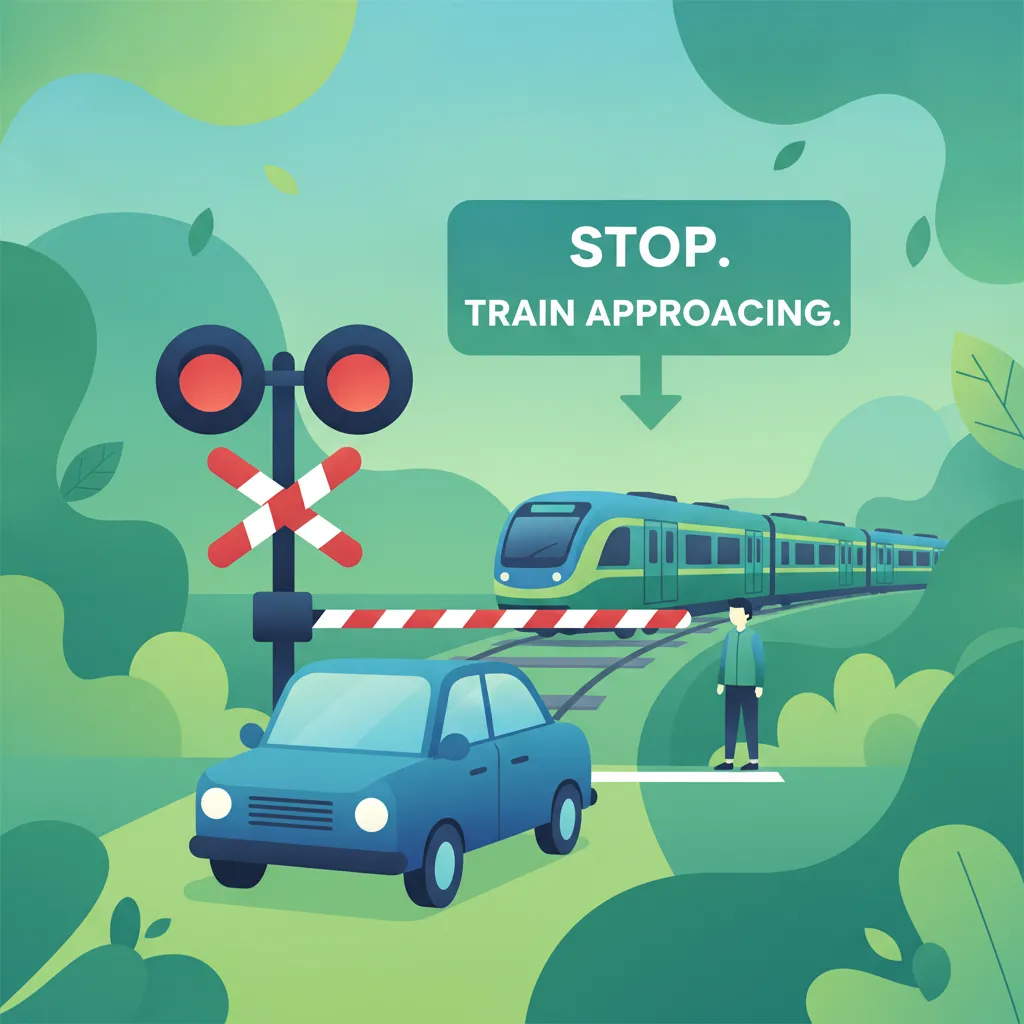
This lesson examines railway crossings, focusing on the signals, barriers, and safety procedures required for safe passage. It explains the different types of level crossings, the meaning of flashing lights and audible warnings, and the required driver actions. You will learn to interpret warning signs and integrate these safety measures into your driving behavior.
Find clear answers to common questions learners have about Traffic Lights, Pedestrian Signals, and Tram Signals. Learn how the lesson is structured, which driving theory objectives it supports, and how it fits into the overall learning path of units and curriculum progression in Switzerland. These explanations help you understand key concepts, lesson flow, and exam focused study goals.
A flashing amber light typically indicates that you must proceed with caution and follow the priority rules as if the intersection were not signalized. Look for other signs or road markings that dictate right-of-way.
Yes, trams generally have priority, and you must follow their specific signals. Even when a traffic light is green for you, always observe tram signals and tracks to ensure you do not block their path.
No, you must wait until the light turns green or a specific directional arrow signal permits your movement. Turning right on red is not permitted in the Swiss system.
Even if your light is green, if a pedestrian has already entered a zebra crossing, you must allow them to finish crossing safely. Always remain observant for pedestrians at signalized junctions.
Pinpoint specific Swiss traffic rules, road signs, or driving situations you need to master. Use the practice search to start a focused revision session now and build confidence for your official driving theory exam.