
This lesson guides you through the fundamental road signs you must recognize to ride safely in Switzerland. By understanding the specific shapes, colors, and symbols of the Swiss traffic system, you will gain the knowledge required to navigate roads confidently as a Category M rider.

Lesson content overview
Navigating Swiss roads safely and legally as a rider of a Category M vehicle (moped or e-bike) hinges critically on understanding and obeying traffic signs. These signs are the universal language of the road, providing vital information, warnings, and legal directives to ensure smooth traffic flow and prevent accidents. This lesson introduces the fundamental traffic signs that directly impact small vehicle riders, explaining their classification, visual characteristics, and the correct interpretation of their meanings within the context of the Swiss driving license theory course for Category M.
Road signs are standardized visual devices that communicate essential information to all road users. For Category M riders, comprehending these signs is not just about passing an exam; it's about making instant, correct decisions on the road that safeguard personal safety and the safety of others. Every sign serves a specific purpose, from setting speed limits to indicating mandatory turns or warning of upcoming hazards.
The design of Swiss road signs adheres to international conventions, primarily the Vienna Convention on Road Signs and Signals. This standardization ensures that the meaning of a sign is largely consistent across different countries and road types, reducing confusion and cognitive load for drivers and riders. Recognizing the distinct shapes, colors, and symbols is crucial for rapidly interpreting the directives they convey.
Understanding the fundamental principles behind road signage helps in anticipating and correctly interpreting their messages. These principles are especially important for Category M riders, who often share the road with larger, faster vehicles and vulnerable road users.
The principle of standardization dictates that all road signs follow internationally agreed-upon shapes, colors, and symbols. This uniformity is vital because it guarantees consistent interpretation regardless of where you are riding. For Category M riders, this means that once you learn the categories and their associated visual cues, you can apply this knowledge across various road environments within Switzerland and beyond. Recognizing a red circle as a prohibition or a blue circle as a mandatory action becomes an instinctive part of safe riding.
Road signs are meticulously designed for optimal visibility. Factors such as high-contrast colors, appropriate size, and the use of reflective materials ensure that signs are detectable at varying speeds and in different lighting conditions. This design intent is crucial for Category M riders, who might operate smaller vehicles with less protective shielding. You must be able to detect signs from a sufficient distance to process their information and adjust your speed or trajectory accordingly, especially when riding at typical Category M speeds where reaction time is paramount.
Every road sign in Switzerland encodes a legal obligation or prohibition that road users must comply with. Whether it's a speed limit, a mandatory turn, or a prohibition on entry, these signs are not merely suggestions; they are enforceable rules. For Category M riders, non-compliance can lead to significant legal penalties, including fines and demerit points, and most importantly, it drastically increases the risk of accidents. Adhering to these legally binding instructions is a cornerstone of responsible road participation.
Traffic signs are broadly categorized by their function, which is often reflected in their shape and color. For Category M riders, understanding these classifications allows for immediate recognition of the type of information being conveyed and the appropriate response.
Regulatory signs are arguably the most critical category, as they prescribe specific legal rules that road users must follow. These signs dictate actions such as speed limits, overtaking prohibitions, and parking restrictions. Disobeying a regulatory sign is a direct violation of traffic law and can have serious consequences.
Regulatory signs are typically circular with a red border, indicating a prohibition, or blue, indicating a mandatory instruction. They directly dictate how a rider must act or what they must refrain from doing.
For Category M riders, specific regulatory signs are particularly relevant:
Assuming speed limits are advisory rather than enforceable is a common and dangerous misunderstanding. All posted speed limits are legally binding.
Warning signs serve to alert road users to potential hazards or changes in road conditions ahead, prompting them to exercise caution and adjust their behavior. While they do not impose a mandatory action in the same way regulatory signs do, ignoring a warning sign can lead to dangerous situations and may be considered negligence in the event of an accident.
These signs are almost universally triangular, with a red border, a white or yellow background, and a black symbol depicting the nature of the hazard.
Key warning signs for Category M riders include:
Warning signs prompt you to prepare for upcoming conditions. Always adjust your speed and increase vigilance, even if the danger doesn't seem immediate.
Mandatory signs compel road users to follow a prescribed action or direction. Like regulatory signs, non-compliance with a mandatory sign is a legal violation. These signs ensure predictable traffic flow and prevent conflicts, especially at intersections or in complex road layouts.
Mandatory signs are typically circular with a blue background and a white symbol or arrow.
Examples particularly relevant for Category M riders include:
Always interpret mandatory signs as directives, not recommendations. Failing to follow them can lead to dangerous situations and legal penalties.
The uniform use of shapes and colors in road signage is a fundamental aspect of their effectiveness. This visual language allows riders to quickly categorize a sign's meaning even before fully reading its symbols or text.
This consistent coding reduces the cognitive effort required to process signs, allowing riders to react more quickly and safely.
Understanding speed limits is paramount for Category M riders. While general speed limits apply to all vehicles, certain distinctions and strict adherence are crucial for mopeds and e-bikes. Speed is a primary factor in accident severity, and lower speeds are essential for better control and shorter stopping distances, especially for smaller, lighter vehicles.
Always verify current speed limits and local regulations, as they can occasionally change or have specific temporary applications.
It is critical for Category M riders to understand that exceeding speed limits not only results in fines and potential license suspension but also dramatically increases braking distances and reduces reaction time, significantly heightening accident risk.
Priority rules dictate which vehicle has the right-of-way at an intersection or merge point. Road signs play a crucial role in establishing and communicating these rules, preventing collisions by clarifying who must yield. Understanding priority signs is fundamental for safe navigation, especially at intersections where mopeds and e-bikes interact with various other traffic types.
Always make eye contact with other road users at intersections, even if you have priority. This ensures mutual understanding and enhances safety.
When encountering a priority sign, Category M riders must:
Misinterpreting priority signs is a leading cause of collisions at intersections. Always ride defensively, assuming that other road users might not correctly observe priority rules.
Despite clear signage, certain violations and misunderstandings are common among road users, particularly new riders. Being aware of these can help Category M riders avoid dangerous situations and legal penalties.
Legal consequences for violating road signs, especially speed limits or priority rules, can range from significant fines to driving license withdrawal, in addition to the severe risks to safety.
Road signs provide static rules, but riding conditions are dynamic. Safe Category M riding requires not only obeying signs but also adapting your behavior based on prevailing circumstances.
By internalizing these principles and applying them diligently, Category M riders can significantly enhance their safety and competence on Swiss roads.
This lesson establishes the foundational system for understanding Swiss road signs as a Category M rider, teaching that signs are classified by shape and color into regulatory, warning, and mandatory categories. Regulatory signs (red-bordered circles) impose legal obligations like speed limits and overtaking prohibitions, while warning signs (red-bordered triangles) alert riders to hazards requiring adjusted behavior. Mandatory signs (blue circles) prescribe specific actions such as directional requirements. The lesson emphasizes that Category M riders face specific speed restrictions, cannot use motorways, and must correctly interpret priority signs at intersections to prevent collisions. Understanding sign meaning, applying contextual judgment for weather and road conditions, and recognizing common violations completes the essential knowledge for safe and legal moped or e-bike operation in Switzerland.
A short set of high-value points that capture the most important learning from this lesson.
Swiss road signs use three primary categories: regulatory (red border circle), warning (red triangle), and mandatory (blue circle), each communicating different safety directives
Regulatory signs are legally binding; obeying speed limits, Stop signs, and prohibition signs is mandatory regardless of traffic volume or road conditions
Category M vehicles (mopeds and e-bikes) must adhere to specific speed limits: 30 km/h in residential zones, 50 km/h urban, 80 km/h on primary roads, with mopeds limited to 45 km/h construction speed
Priority signs (Stop octagon, Give Way triangle, Priority Road yellow diamond) establish right-of-way rules that must be correctly interpreted at every intersection
Safe riding requires adapting sign interpretation to weather, lighting, and road conditions, not just mechanically obeying posted limits
Explore all units and lessons included in this driving theory course.
Red circle = prohibition (don't do), Blue circle = mandatory action (must do), Red triangle = warning (be cautious)
The Stop sign (B3) always requires a complete halt; the Give Way sign (B4) requires yielding but not necessarily stopping
Speed limits are always legally enforceable regardless of how few vehicles are present
Warning signs prompt preparation and vigilance; they do not impose mandatory stops but require speed adjustment and attention
Mopeds and e-bikes are generally prohibited from motorways regardless of posted speed limits
Assuming speed limit signs are advisory rather than legally binding requirements
Confusing warning signs with mandatory signs and either overreacting with unnecessary braking or ignoring hazards
Misinterpreting priority signs, particularly confusing Give Way (yield) with Stop (full halt required)
Ignoring temporary or conditional signs, such as yellow-background construction zone limits
Failing to adjust speed below posted limits when conditions warrant, such as adverse weather or poor visibility
Lesson content overview
A short set of high-value points that capture the most important learning from this lesson.
Swiss road signs use three primary categories: regulatory (red border circle), warning (red triangle), and mandatory (blue circle), each communicating different safety directives
Regulatory signs are legally binding; obeying speed limits, Stop signs, and prohibition signs is mandatory regardless of traffic volume or road conditions
Category M vehicles (mopeds and e-bikes) must adhere to specific speed limits: 30 km/h in residential zones, 50 km/h urban, 80 km/h on primary roads, with mopeds limited to 45 km/h construction speed
Priority signs (Stop octagon, Give Way triangle, Priority Road yellow diamond) establish right-of-way rules that must be correctly interpreted at every intersection
Safe riding requires adapting sign interpretation to weather, lighting, and road conditions, not just mechanically obeying posted limits
Explore all units and lessons included in this driving theory course.
Red circle = prohibition (don't do), Blue circle = mandatory action (must do), Red triangle = warning (be cautious)
The Stop sign (B3) always requires a complete halt; the Give Way sign (B4) requires yielding but not necessarily stopping
Speed limits are always legally enforceable regardless of how few vehicles are present
Warning signs prompt preparation and vigilance; they do not impose mandatory stops but require speed adjustment and attention
Mopeds and e-bikes are generally prohibited from motorways regardless of posted speed limits
Assuming speed limit signs are advisory rather than legally binding requirements
Confusing warning signs with mandatory signs and either overreacting with unnecessary braking or ignoring hazards
Misinterpreting priority signs, particularly confusing Give Way (yield) with Stop (full halt required)
Ignoring temporary or conditional signs, such as yellow-background construction zone limits
Failing to adjust speed below posted limits when conditions warrant, such as adverse weather or poor visibility
Explore search topics learners often look for when studying Essential Road Signs for Small Vehicle Riders. These topics reflect common questions about road rules, driving situations, safety guidance, and lesson level theory preparation for learners in Switzerland.
Browse additional driving theory lessons that cover connected traffic rules, road signs, and common driving situations related to this topic. Improve your understanding of how different rules interact across everyday traffic scenarios.
Understand the distinct meanings and legal implications of regulatory, warning, and mandatory road signs in Switzerland. This lesson details the shapes, colors, and symbols crucial for Category M riders to interpret traffic directives correctly and safely.
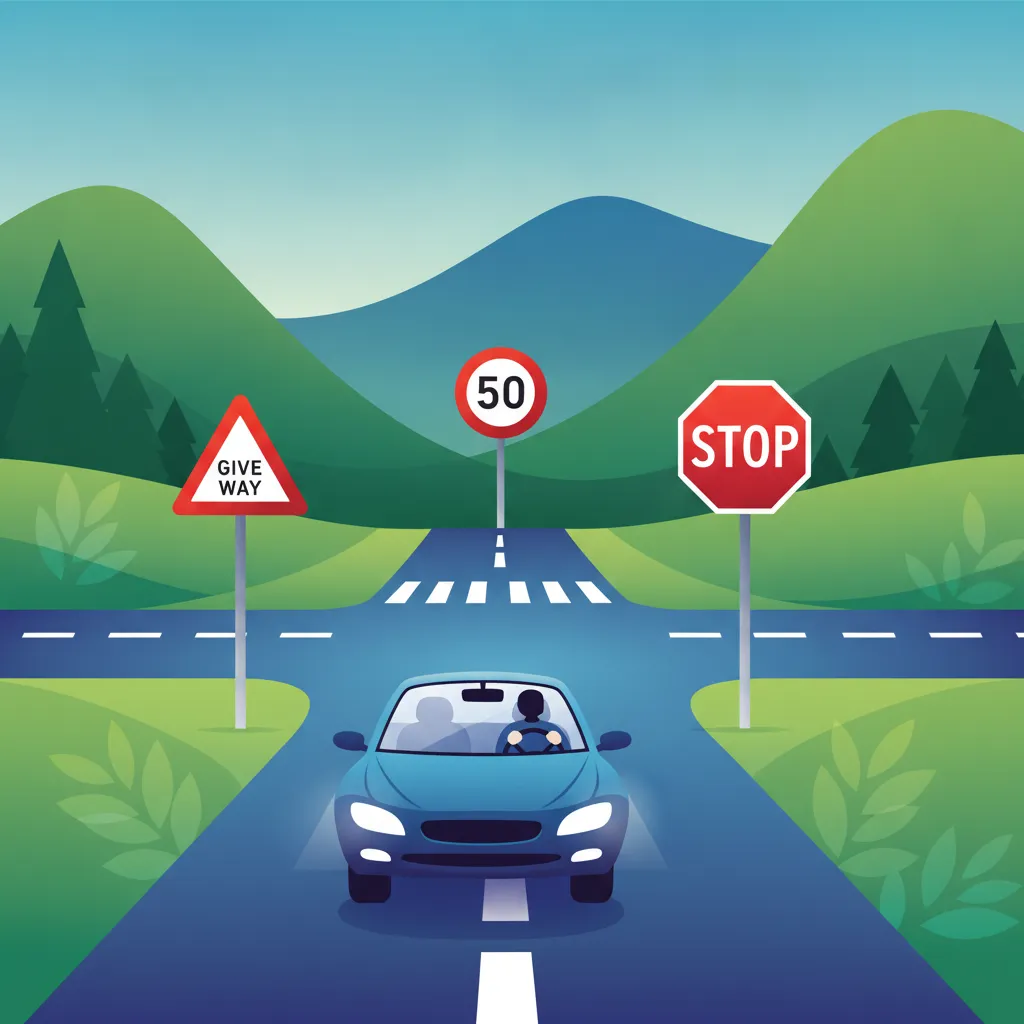
This lesson explores the category of regulatory signs, which dictate permissible and prohibited actions for drivers. It covers speed limit signs, entry restrictions, and mandatory direction signs, explaining their legal significance. Emphasis is placed on recognizing the shapes and colours that distinguish these critical signs within the Swiss traffic system.

This lesson focuses on warning signs that alert drivers to potential hazards ahead, such as curves, steep descents, and roadwork zones. You will understand how these signs prompt anticipatory driving behavior, allowing for adjustments in speed and position. The content also discusses the typical placement of warning signs to help you react safely to changing conditions.

This lesson focuses on the variety of painted markings on Swiss roads and their legal significance. Learners will understand the difference between solid and broken lines, the rules for stop lines, and their obligations at a zebra crossing (Fußgängerstreifen). Correct interpretation of these markings is essential for proper lane positioning and safe interaction with all road users.
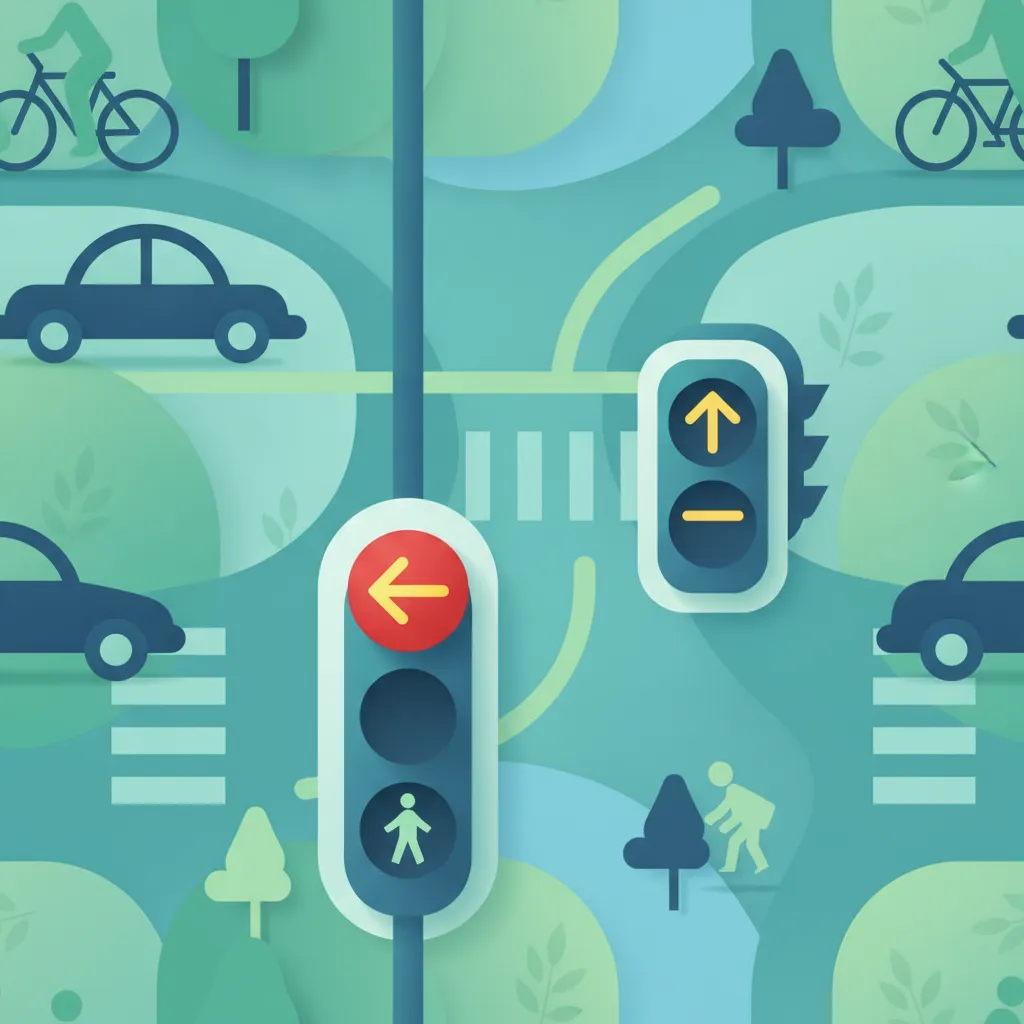
This lesson details the operation of traffic light systems in Switzerland. It explains the sequence and meaning of red, amber, and green lights, including flashing amber signals. The content also covers specific signals for pedestrians and the priority rules associated with tram signals to ensure safe interaction at controlled intersections.
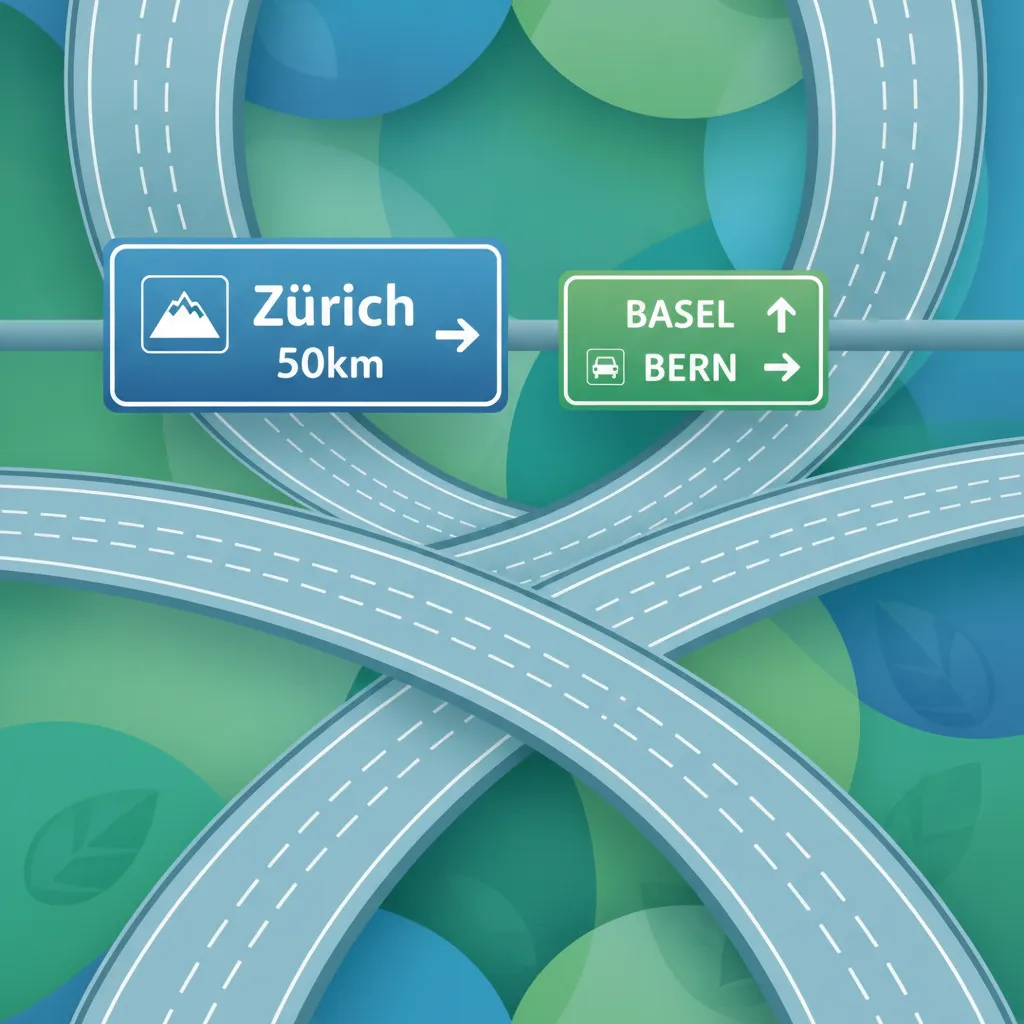
This lesson examines informational signs that provide route guidance, destination distances, and tourist information. It explains how direction signs, distance markers, and service area signs assist drivers in planning routes and making informed decisions. Understanding the logic of informational signage ensures efficient and safe navigation through the Swiss road network.
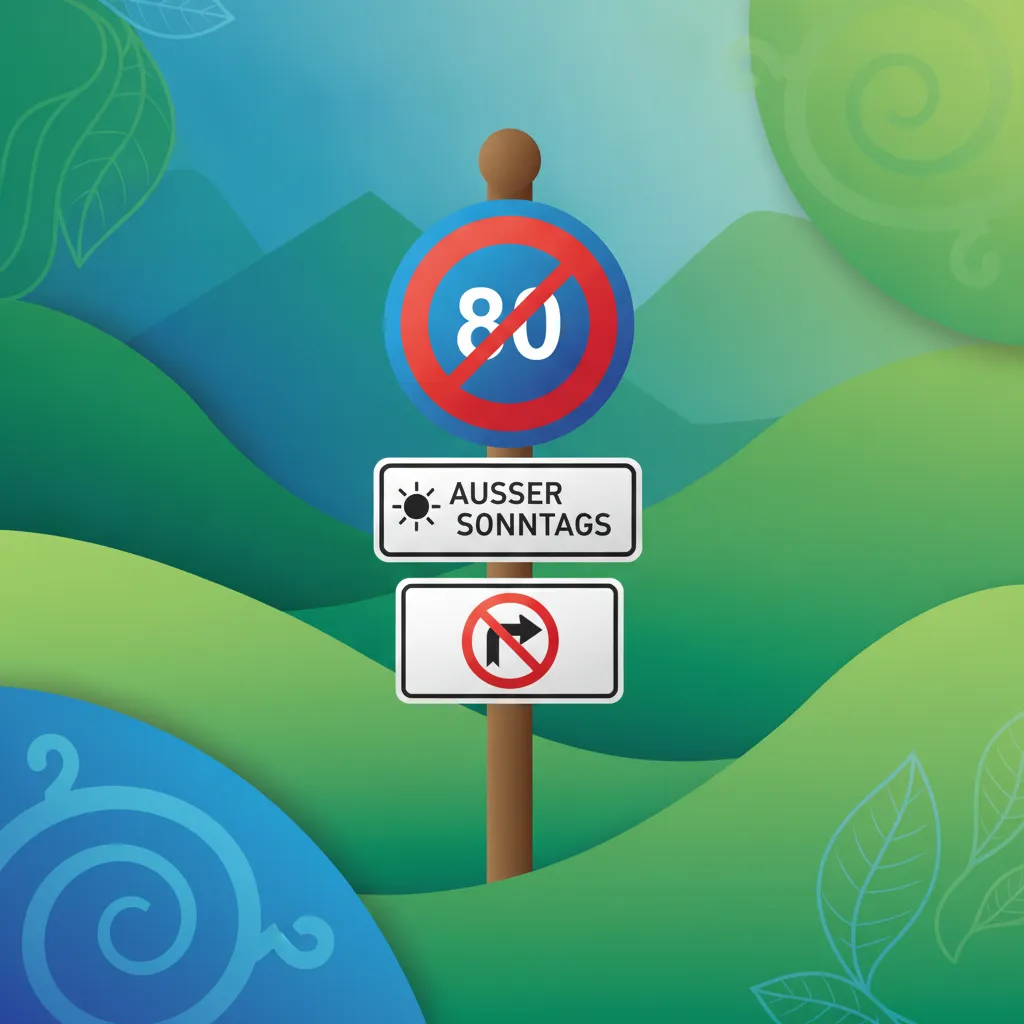
This lesson delves into supplementary signs that modify or clarify the meaning of primary traffic signs. You will learn to interpret signs indicating time restrictions, vehicle-specific limitations, and lane-specific instructions. The content also highlights how these signs interact with main regulatory signs to convey precise, context-sensitive traffic rules.

This lesson explores the requirements for maintaining vehicle roadworthiness, including regular technical inspections (MFK) and compliance with emission standards. It outlines the inspection criteria, such as brake performance, steering condition, and lighting system functionality. Understanding these inspections helps ensure safety and compliance with Swiss regulations.
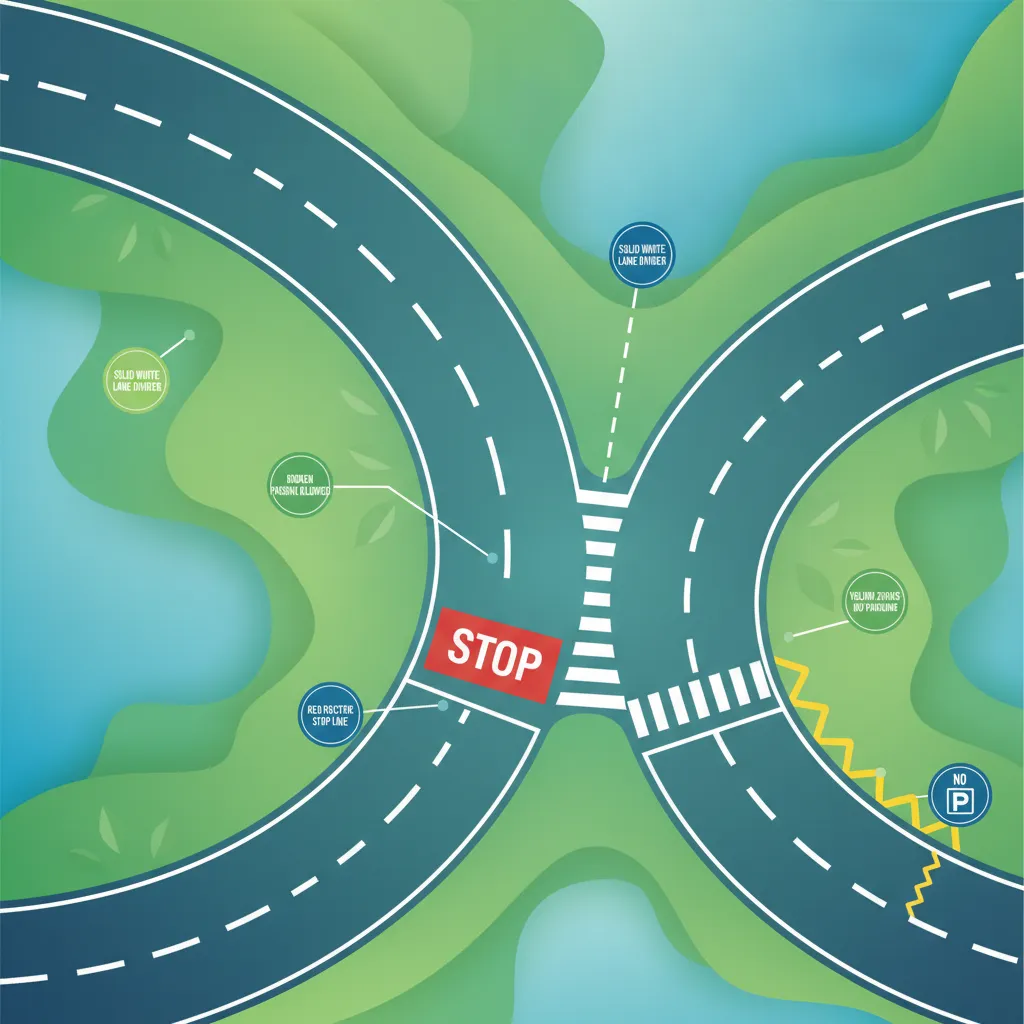
This lesson covers the various road surface markings that dictate lane usage, turning movements, and pedestrian zones. It explains the significance of solid versus broken lines, directional arrows, and specific markings for bike lanes. Understanding these markings is crucial for maintaining lane discipline and ensuring safe interactions in complex traffic environments.
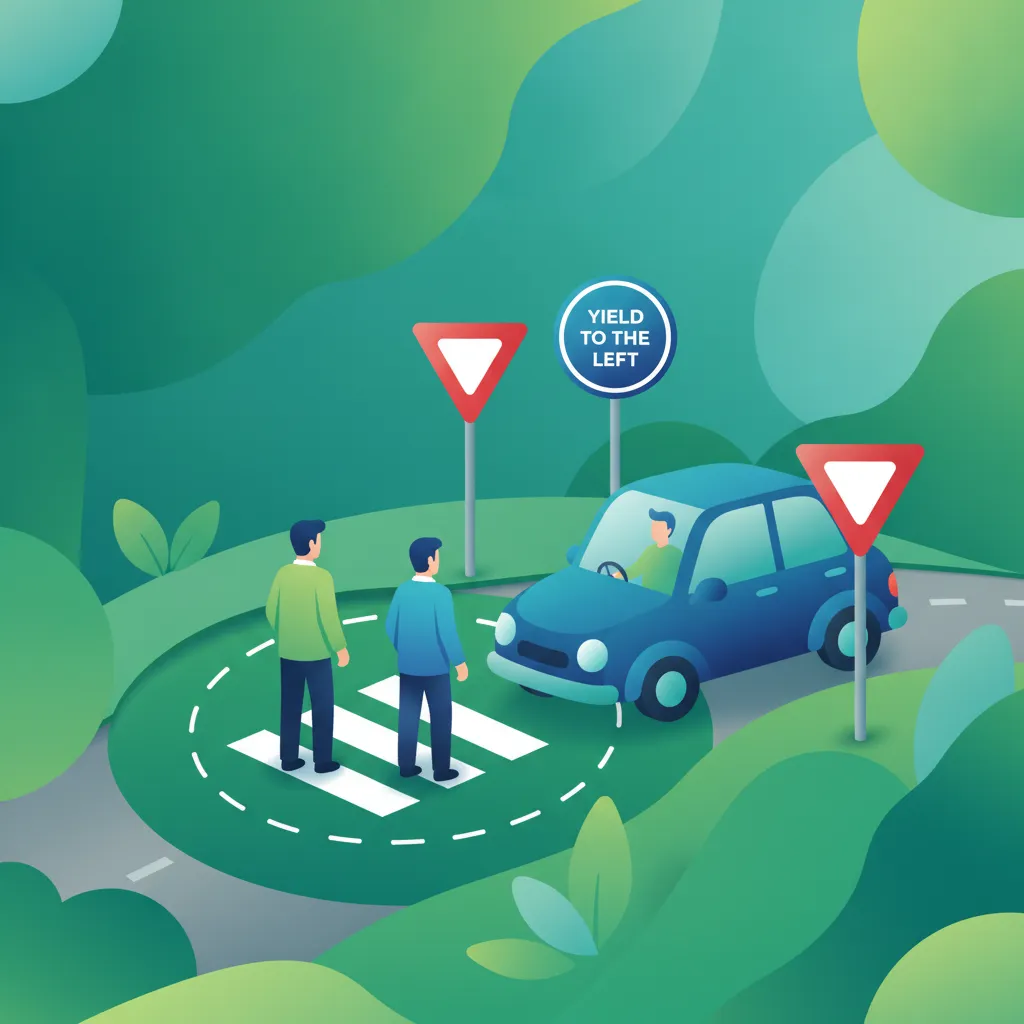
This lesson focuses specifically on the rules and techniques for navigating roundabouts. It clarifies that traffic already in the roundabout has priority and explains how to choose the correct lane on approach based on your intended exit. Proper signaling procedure for entering and, most importantly, exiting the roundabout is also detailed.

Motorway driving requires constant concentration due to high speeds. This lesson emphasizes the importance of staying in the right-hand lane unless overtaking and the specific restrictions on lorry overtaking in Switzerland. It reinforces the need for a following distance of at least four seconds to compensate for the vehicle's long stopping distance and provides guidance on safely merging and exiting.
Learn how to correctly apply Swiss road sign meanings in real-world driving situations and identify common errors Category M riders make. This lesson focuses on avoiding misunderstandings of speed limits, priority, and conditional signage for safer navigation.
This lesson details the operation of traffic light systems in Switzerland. It explains the sequence and meaning of red, amber, and green lights, including flashing amber signals. The content also covers specific signals for pedestrians and the priority rules associated with tram signals to ensure safe interaction at controlled intersections.
This lesson delves into supplementary signs that modify or clarify the meaning of primary traffic signs. You will learn to interpret signs indicating time restrictions, vehicle-specific limitations, and lane-specific instructions. The content also highlights how these signs interact with main regulatory signs to convey precise, context-sensitive traffic rules.
This lesson focuses on the variety of painted markings on Swiss roads and their legal significance. Learners will understand the difference between solid and broken lines, the rules for stop lines, and their obligations at a zebra crossing (Fußgängerstreifen). Correct interpretation of these markings is essential for proper lane positioning and safe interaction with all road users.
This lesson explores the category of regulatory signs, which dictate permissible and prohibited actions for drivers. It covers speed limit signs, entry restrictions, and mandatory direction signs, explaining their legal significance. Emphasis is placed on recognizing the shapes and colours that distinguish these critical signs within the Swiss traffic system.
This lesson examines informational signs that provide route guidance, destination distances, and tourist information. It explains how direction signs, distance markers, and service area signs assist drivers in planning routes and making informed decisions. Understanding the logic of informational signage ensures efficient and safe navigation through the Swiss road network.
This lesson covers the various road surface markings that dictate lane usage, turning movements, and pedestrian zones. It explains the significance of solid versus broken lines, directional arrows, and specific markings for bike lanes. Understanding these markings is crucial for maintaining lane discipline and ensuring safe interactions in complex traffic environments.
This lesson focuses on warning signs that alert drivers to potential hazards ahead, such as curves, steep descents, and roadwork zones. You will understand how these signs prompt anticipatory driving behavior, allowing for adjustments in speed and position. The content also discusses the typical placement of warning signs to help you react safely to changing conditions.
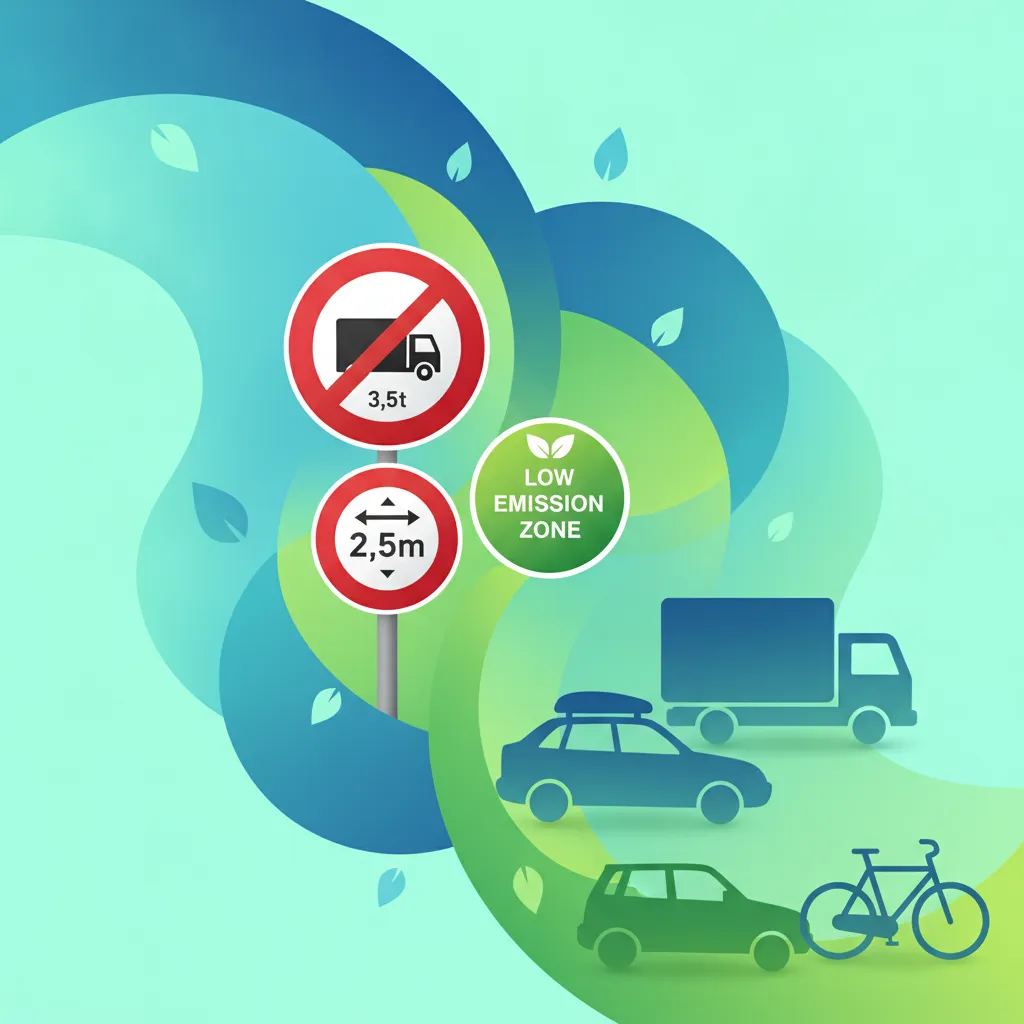
Many urban areas have restrictions to manage traffic and protect infrastructure. This lesson teaches drivers to identify and interpret traffic signs that prohibit access based on gross vehicle weight, axle load, height, or width. It also covers the growing prevalence of environmental or low-emission zones, which may restrict entry for older, more polluting vehicles.
This lesson focuses specifically on the rules and techniques for navigating roundabouts. It clarifies that traffic already in the roundabout has priority and explains how to choose the correct lane on approach based on your intended exit. Proper signaling procedure for entering and, most importantly, exiting the roundabout is also detailed.

This lesson explores the typical features of rural and alpine roads, such as narrow lanes, sharp bends, and significant elevation changes. It discusses the need for heightened awareness due to limited sight distances and the potential for unexpected hazards like wildlife or agricultural vehicles. Riders will learn to adapt their speed and positioning for these challenging conditions.
Find clear answers to common questions learners have about Essential Road Signs for Small Vehicle Riders. Learn how the lesson is structured, which driving theory objectives it supports, and how it fits into the overall learning path of units and curriculum progression in Switzerland. These explanations help you understand key concepts, lesson flow, and exam focused study goals.
In Switzerland, warning signs are typically triangular with a white background and red border. Regulatory signs, such as prohibitions, are usually circular with a red border, while mandatory signs are circular with a blue background.
Generally, yes. Category M covers various small powered vehicles, and you must obey all signs that apply to motor vehicles unless a specific sign indicates an exception for cycles or e-bikes.
The exam often tests your ability to identify signs quickly. Knowing that a red border indicates a prohibition helps you eliminate wrong answers immediately, even if you are unsure of the specific icon inside.
Yes, look for signs indicating entry prohibitions for motor vehicles or signs restricting access to specific lanes. These are common sources of questions in the Category M theory exam.
Pinpoint specific Swiss traffic rules, road signs, or driving situations you need to master. Use the practice search to start a focused revision session now and build confidence for your official driving theory exam.