
Communication is key to safety when riding a moped or e-bike on Swiss roads. This lesson teaches you when and how to use electronic turn indicators and essential hand signals to clearly signal your intentions to other drivers and cyclists.
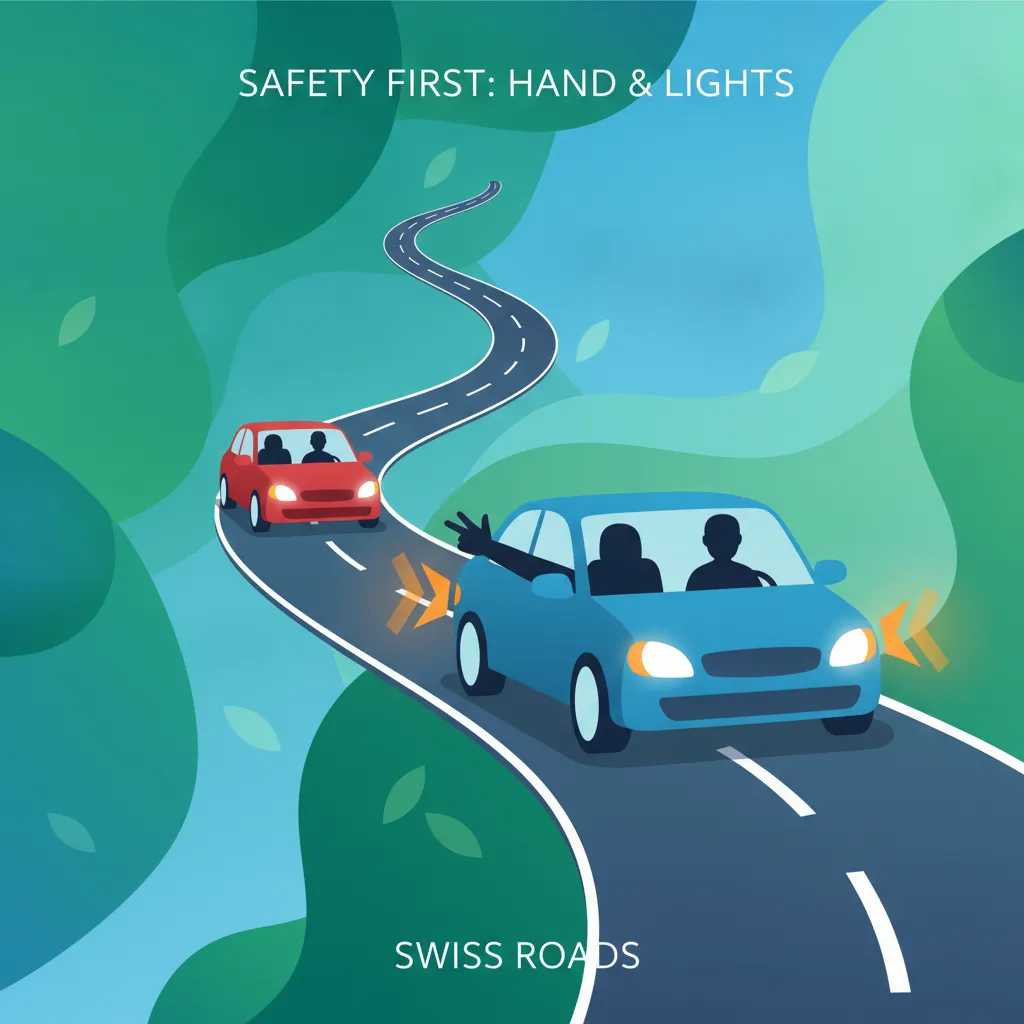
Lesson content overview
Effective communication is paramount for safety on the road, especially for riders of mopeds, e-bikes, and light motorcycles (Category M vehicles). As a crucial part of your Swiss Category M driving license theory course, this lesson will equip you with the knowledge and skills to communicate your intentions clearly to other road users. Understanding and correctly applying electronic turn indicators and hand signals reduces misunderstandings, prevents collisions, and ensures a smoother flow of traffic for everyone.
Clear signaling is not merely a courtesy; it is a fundamental legal requirement under Swiss traffic law (SVG). Mastering these communication methods is essential for passing your exam and, more importantly, for safe and confident riding.
Communication on the road is the exchange of intent between road users, primarily achieved through visual signals like lights and hand gestures. For mopeds and light motorcycles, this visual component is critical. It allows other drivers, pedestrians, and cyclists to anticipate your actions — whether you intend to turn, change lanes, or slow down.
Human perception has limits in terms of visibility and reaction time. Standardized signals allow all road users to interpret your intentions uniformly and early enough to adjust their own speed, position, or trajectory safely. This lesson builds upon the principles of observation and visibility, adding the active layer of intentional signaling. It provides a vital foundation for navigating complex scenarios like intersections and roundabouts, where clear communication can prevent dangerous situations.
Several core principles underpin effective communication for riders:
Clear Intent: Always convey your intended maneuver (turn, lane change, stop) unambiguously to surrounding traffic. This reduces uncertainty and allows others to react appropriately.
Timely Signaling: Begin your signal with sufficient lead time before the maneuver, taking into account your speed and the road context. This provides adequate reaction time for other road users.
Standardized Signal Forms: Utilize electronic turn indicators and specific hand signals in their defined ways. Uniform interpretation across all road users is crucial to avoid confusion.
Visibility of Signal: Ensure your signals are clearly visible (e.g., lights are clean, arm position is unobstructed). Avoid covering signals with clothing, backpacks, or other accessories.
Complementary Use: Hand signals serve as an essential supplement to electronic indicators, particularly if indicators are non-functional or when riding with a passenger. This provides redundancy in your communication.
Legal Obligation: Swiss law mandates the use of turn indicators before any turn or lane change. If indicators are off or broken, hand signals become mandatory. Non-compliance can lead to fines and safety risks.
Electronic turn indicators are built-in electrical devices on your moped or light motorcycle that emit flashing amber lights to signal an intended change of direction or lane. They are your primary means of communicating turns and lane changes.
Always remember to check your indicators are working before you start your journey. A quick visual check can prevent issues on the road.
A vehicle function that flashes all turn lights simultaneously, used when the vehicle is stationary and poses a danger or obstruction to other traffic.
Hazard warning lights are designed to alert other road users to a stationary vehicle that might pose a danger, such as a breakdown on the shoulder of the road. They are not to be used while the vehicle is in motion, as this can confuse other drivers about your intentions.
Never use hazard warning lights while moving. This can mislead other road users into thinking you are stopping or that your vehicle is broken down, creating a dangerous situation.
The correct use of electronic indicators involves two critical phases: activation and cancellation.
Riders often make mistakes when using electronic indicators. The most common include:
Hand signals are physical gestures performed by the rider using arm extensions to indicate intended actions. They are a vital secondary communication method, used especially when electronic indicators are unavailable, non-functional, or as a supplementary cue to enhance visibility.
Hand signals are critical for several reasons:
To signal a left turn, extend your left arm horizontally straight out from your body, ensuring your palm faces forward. Keep your arm rigid and clear of any obstructions.
To signal a right turn, extend your left arm vertically upwards at a right angle, with your forearm pointing towards the sky. Ensure your palm faces forward.
To signal an intention to stop or decelerate, extend your left arm vertically downwards, pointing towards the ground. Your palm should face backward (towards the following traffic).
In Switzerland, all hand signals for Category M vehicles must be performed with the left arm. This standardization ensures uniform interpretation by all road users. Using the right arm for signals can lead to confusion and potential accidents, as it deviates from the universally understood standard.
Always use your left arm for all hand signals (left turn, right turn, stop/decelerate). Using the right arm is incorrect and can be dangerously misleading.
The timing of your signals is just as important as the signal itself. Activating a signal too late gives other road users insufficient time to react, potentially leading to dangerous situations.
Under Swiss traffic law, signals must be activated with sufficient lead distance:
Hand signals also have specific lead distance requirements:
These distances apply regardless of your current speed, providing a consistent minimum for others to anticipate your actions.
While minimum lead distances are legally defined, good riding practice often involves adjusting these distances based on context:
A signal, no matter how correctly given, is useless if it cannot be seen. Riders must actively ensure their signals are clearly visible to other road users.
Several factors can influence how well your signals are perceived:
Adhering to signaling regulations is not just about safety; it's a legal obligation for all road users in Switzerland, including Category M riders. The Swiss Road Traffic Act (SVG) outlines these requirements to ensure a standardized approach to communication.
The primary regulation governing signaling is Article 38 of the Swiss Road Traffic Act (SVG). This article stipulates:
Failure to comply with signaling regulations can lead to:
Always prioritize clear and timely signaling. It's an investment in your safety and the safety of everyone else on the road.
Even experienced riders can sometimes make mistakes or encounter challenging situations where signaling requires extra attention.
Certain road scenarios require specific signaling considerations:
Understanding the rationale behind signaling rules reinforces their importance. These rules are built on principles of human perception, reaction, and behavior in dynamic environments.
The average driver's reaction time is approximately 1.5 seconds (this includes perception, decision, and initiation of action). At 30 km/h, a vehicle travels roughly 12.5 meters per second. This means that a driver needs about 19 meters just to react. The regulated lead distances (30 m, 50 m) provide a crucial safety margin, allowing other road users not just to react, but also to process your signal and make an informed decision about their own actions (e.g., slowing down, changing lane position).
Consistent and correct signaling makes driver behavior predictable. When every road user adheres to standardized signals, others can anticipate actions with greater certainty. This reduces cognitive load, stress, and hesitation for all participants, leading to smoother traffic flow and significantly fewer unexpected maneuvers that could lead to accidents.
The principle of redundancy, where multiple systems are in place to achieve the same goal, is a cornerstone of safety. By having both electronic indicators and mandatory hand signals, the system ensures that communication of intent persists even if one method fails. This dual approach provides a robust safety net, particularly for vulnerable road users like moped and e-bike riders.
This lesson covers the essential communication methods for Category M riders in Switzerland, focusing on electronic turn indicators and mandatory hand signals. Key rules include using the left arm for all hand signals (horizontal for left turn, vertical up for right turn, vertical down for stopping) and adhering to specific lead distances: 30 metres for urban areas and 50 metres for higher-speed roads when using electronic indicators. Hand signals require 30 metres before turning and 20 metres before stopping. Swiss law (SVG Article 38) makes turn indicator use mandatory before any turn or lane change, with hand signals becoming obligatory when indicators are non-functional. Proper signaling timing, visibility maintenance, and indicator cancellation practices are critical for both exam success and real-world safety.
A short set of high-value points that capture the most important learning from this lesson.
All hand signals for Category M vehicles must be performed with the left arm only — left turn is horizontal, right turn is vertical up, and stop/decelerate is vertical down.
Electronic turn indicators must be activated before initiating any turn or lane change and must remain on until the maneuver is fully completed.
Lead distances for electronic indicators are 30 metres in urban areas (up to 30 km/h) and 50 metres on higher-speed roads.
Hand signals become mandatory when electronic indicators are non-functional or broken, not merely optional.
Hazard warning lights may only be used when stationary and posing danger to other traffic, never while moving.
Explore all units and lessons included in this driving theory course.
Left arm horizontal = left turn; left arm vertical up = right turn; left arm vertical down = stop or decelerate.
For hand signals, turn signals require 30 metres lead distance, while stopping signals require 20 metres.
Article 38 of the Swiss Road Traffic Act (SVG) mandates turn indicator use before any turn or lane change.
Always ensure hand signals are unobstructed by clothing, backpacks, or passengers.
In roundabouts, signal right before your intended exit, not upon entry (unless taking the first exit).
Using the right arm instead of the left arm for hand signals, which deviates from the Swiss standard and causes confusion.
Canceling the indicator before the maneuver is fully completed, misleading drivers behind about your intentions.
Activating hazard warning lights while the vehicle is still in motion, creating dangerous ambiguity.
Failing to signal at all before a lane change on a straight road, leaving other users unable to anticipate the maneuver.
Relying solely on electronic indicators without knowing hand signals, which are mandatory when indicators fail.
Lesson content overview
A short set of high-value points that capture the most important learning from this lesson.
All hand signals for Category M vehicles must be performed with the left arm only — left turn is horizontal, right turn is vertical up, and stop/decelerate is vertical down.
Electronic turn indicators must be activated before initiating any turn or lane change and must remain on until the maneuver is fully completed.
Lead distances for electronic indicators are 30 metres in urban areas (up to 30 km/h) and 50 metres on higher-speed roads.
Hand signals become mandatory when electronic indicators are non-functional or broken, not merely optional.
Hazard warning lights may only be used when stationary and posing danger to other traffic, never while moving.
Explore all units and lessons included in this driving theory course.
Left arm horizontal = left turn; left arm vertical up = right turn; left arm vertical down = stop or decelerate.
For hand signals, turn signals require 30 metres lead distance, while stopping signals require 20 metres.
Article 38 of the Swiss Road Traffic Act (SVG) mandates turn indicator use before any turn or lane change.
Always ensure hand signals are unobstructed by clothing, backpacks, or passengers.
In roundabouts, signal right before your intended exit, not upon entry (unless taking the first exit).
Using the right arm instead of the left arm for hand signals, which deviates from the Swiss standard and causes confusion.
Canceling the indicator before the maneuver is fully completed, misleading drivers behind about your intentions.
Activating hazard warning lights while the vehicle is still in motion, creating dangerous ambiguity.
Failing to signal at all before a lane change on a straight road, leaving other users unable to anticipate the maneuver.
Relying solely on electronic indicators without knowing hand signals, which are mandatory when indicators fail.
Explore search topics learners often look for when studying Hand Signals, Indicator Usage, and Communication. These topics reflect common questions about road rules, driving situations, safety guidance, and lesson level theory preparation for learners in Switzerland.
Browse additional driving theory lessons that cover connected traffic rules, road signs, and common driving situations related to this topic. Improve your understanding of how different rules interact across everyday traffic scenarios.
Deepen your understanding of signaling in Swiss traffic. Learn about advanced communication techniques, handling complex scenarios, and ensuring legal compliance with electronic indicators and hand signals for Category M.

This lesson introduces the fundamental traffic signs that directly impact small vehicle riders. It covers the classification of signs into regulatory, warning, and mandatory categories, explaining how their shape and color indicate their function. Learners will be able to recognize and correctly interpret speed limits, priority signs, and other key information vital for safe navigation.
This lesson details the operation of traffic light systems in Switzerland. It explains the sequence and meaning of red, amber, and green lights, including flashing amber signals. The content also covers specific signals for pedestrians and the priority rules associated with tram signals to ensure safe interaction at controlled intersections.

This lesson focuses on the interaction between motor vehicles and cyclists, including e-bikes. You will learn the importance of respecting cyclist priority and maintaining a safe overtaking distance. The content also addresses specific Swiss regulations concerning e-bike speed limits, cyclist lane markings, and appropriate behavior when passing cyclists.

This lesson focuses on the concept of conspicuity, or how easily a rider can be seen by others. It explains the legal requirements for vehicle lights and reflectors in Switzerland and the benefits of wearing bright or reflective clothing. Learners will understand how to maximize their visibility during the day, at night, and in poor weather conditions.
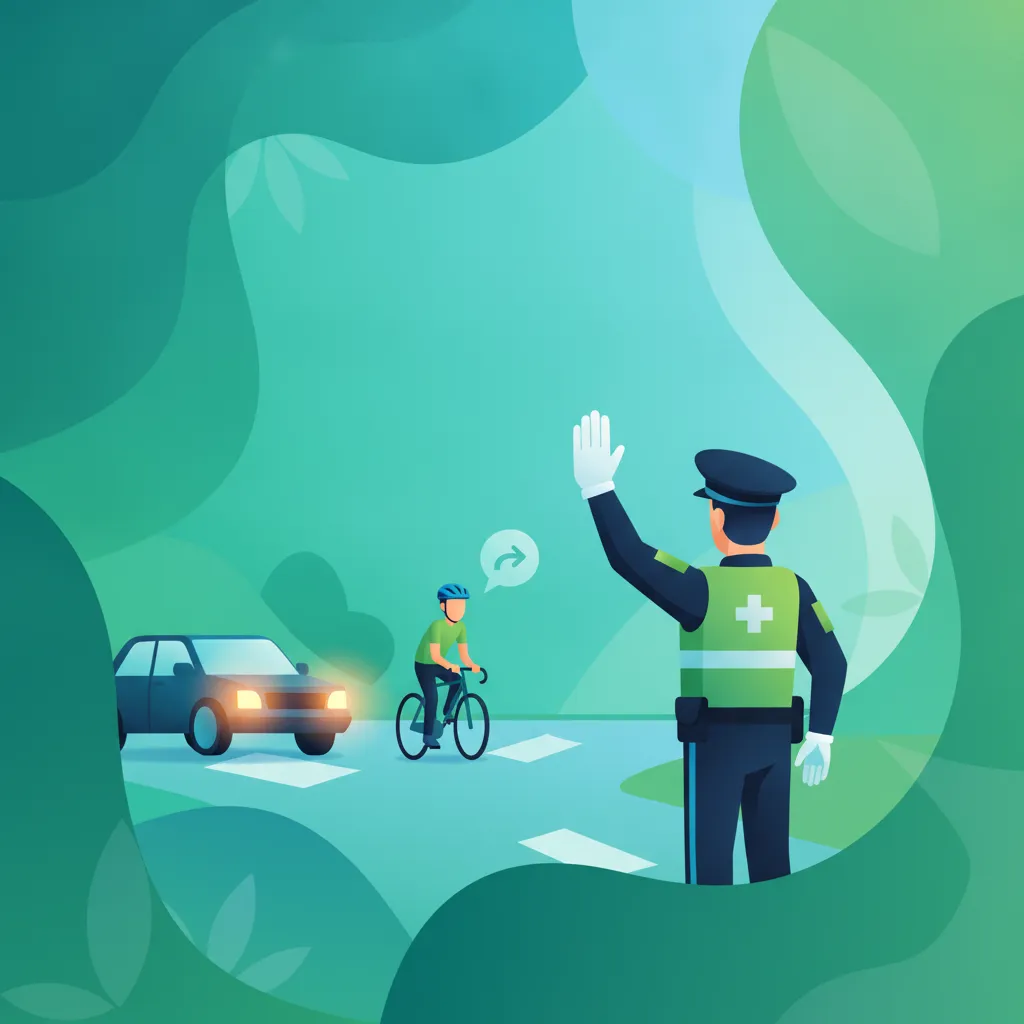
This lesson covers the standard hand signals and the correct use of a motorcycle's lighting system to communicate intentions. It explains the importance of signaling clearly and in a timely manner before turning, changing lanes, or stopping. Effective communication is a key factor in preventing misunderstandings and potential conflicts with other road users.

This lesson focuses on the variety of painted markings on Swiss roads and their legal significance. Learners will understand the difference between solid and broken lines, the rules for stop lines, and their obligations at a zebra crossing (Fußgängerstreifen). Correct interpretation of these markings is essential for proper lane positioning and safe interaction with all road users.
This lesson outlines the specific rules and skills required for riding on high-speed Swiss motorways. It covers the correct procedures for entering and exiting, merging with traffic, maintaining appropriate speed, and conducting safe overtaking maneuvers. Emphasis is placed on using mirrors and signals effectively to integrate safely into the flow of traffic.

This lesson details the fundamental responsibilities and safe habits every new rider must adopt. It covers legal obligations such as wearing a helmet and using lights, as well as the importance of developing a defensive mindset. The content emphasizes anticipating potential hazards and making responsible decisions to ensure safety for oneself and other road users.
This lesson focuses specifically on the rules and techniques for navigating roundabouts. It clarifies that traffic already in the roundabout has priority and explains how to choose the correct lane on approach based on your intended exit. Proper signaling procedure for entering and, most importantly, exiting the roundabout is also detailed.

This lesson explores the complexities of riding in busy urban areas with a mix of traffic types. It covers strategies for safely navigating alongside buses, trams, cyclists, and pedestrians. Key topics include respecting designated lanes, anticipating the movements of vulnerable road users, and maintaining heightened situational awareness.
Master how to make your signals (electronic and hand) visible to other road users. Understand safe interaction principles with different traffic participants as taught in Swiss Category M theory.
This lesson covers the standard hand signals and the correct use of a motorcycle's lighting system to communicate intentions. It explains the importance of signaling clearly and in a timely manner before turning, changing lanes, or stopping. Effective communication is a key factor in preventing misunderstandings and potential conflicts with other road users.

This lesson explains the strategic importance of road positioning. It details how to select a lane position that makes you most visible to drivers ahead and behind, and helps you avoid the blind spots of larger vehicles. Proper positioning also allows for an escape route and a better line of sight through turns.
Find clear answers to common questions learners have about Hand Signals, Indicator Usage, and Communication. Learn how the lesson is structured, which driving theory objectives it supports, and how it fits into the overall learning path of units and curriculum progression in Switzerland. These explanations help you understand key concepts, lesson flow, and exam focused study goals.
You must use hand signals if your vehicle is not equipped with electronic indicators, if they are malfunctioning, or in specific high-visibility situations where manual signals provide an additional layer of clarity to other road users.
You must signal in sufficient time for other road users to react safely. In Swiss traffic, this means signaling well before you reach the intersection or point where you intend to maneuver, but not so early that it creates confusion about which exit or turn you are taking.
Yes. Even if your lane is marked for one direction, you are still legally required to signal your intention. This helps other road users, especially pedestrians and cyclists, anticipate your movement.
Failure to signal properly is a common source of point deductions in driving tests. It is viewed as an inability to communicate safely with other traffic, which is a core safety competency in the Swiss driving framework.
Pinpoint specific Swiss traffic rules, road signs, or driving situations you need to master. Use the practice search to start a focused revision session now and build confidence for your official driving theory exam.