
This lesson explores the significant influence of crosswinds on heavy goods vehicles with high sides, such as lorries and trailers. You will learn essential techniques to maintain vehicle stability on exposed roads, bridges, and during overtaking maneuvers, directly preparing you for the safety requirements of the Swiss category C and C1 theory exam.

Lesson content overview
Driving a heavy goods vehicle (HGV), especially those with a tall side profile, presents unique challenges when faced with strong crosswinds and adverse weather conditions. This lesson, part of the Official Swiss Driving Theory Course for Category C & C1 Goods Vehicles, will equip you with the essential knowledge and techniques to maintain control, ensure safety, and comply with Swiss traffic regulations under such circumstances. Understanding how external forces like wind interact with your vehicle's dynamics is paramount for preventing accidents and ensuring the safe transport of goods.
High-sided vehicles, such as box trucks, refrigerated trailers, and container lorries, are particularly susceptible to lateral forces from wind. Their substantial side surface area acts like a sail, catching the wind and converting its energy into a sideward push. This phenomenon, known as aerodynamic lateral force, can significantly affect vehicle stability and control, especially on exposed road sections.
The design of many heavy goods vehicles, characterized by their significant height and flat, often smooth sides, makes them inherently more vulnerable to wind. Unlike passenger cars, HGVs present a large "sail area" to crosswinds. This large surface area, combined with a potentially high center of gravity, means that even moderate winds can exert considerable force, pushing the vehicle sideways, making it drift, or in extreme cases, causing it to overturn. The greater the side profile, the greater the force exerted by the wind.
To effectively counter the effects of wind, it's crucial to understand the underlying physics. Wind generates pressure on any surface it encounters, and this pressure is not constant.
Aerodynamic lateral force is the sideward pressure exerted on a vehicle's side profile by wind, blowing perpendicular to the direction of travel. This force is proportional to the square of the wind speed and the vehicle's exposed side area. This means that a small increase in wind speed can lead to a disproportionately larger increase in lateral force. For example, doubling the wind speed quadruples the force. This force attempts to push the vehicle off its intended path.
Wind conditions are rarely uniform. Drivers must contend with various types of wind:
These variations demand constant vigilance and adaptation from the driver.
Vehicle lateral stability refers to the ability of a vehicle to resist sideward motion and maintain its intended path. Strong crosswinds directly challenge this stability. When a crosswind acts on a high-sided vehicle, it creates a turning moment around the vehicle's center of gravity, tending to push it sideways and, in severe cases, attempting to roll it over. The higher the vehicle's center of gravity and the larger its side profile, the more pronounced this effect will be.
The center of gravity (CG) is the average location of the weight of an object. For high-sided vehicles, the CG is typically higher than for passenger cars. When a lateral force, such as a strong crosswind, acts on a vehicle, it creates a leverage effect around the tires. A higher center of gravity amplifies this leverage, increasing the risk of the vehicle tilting excessively or even rolling over. Proper load distribution is crucial to keep the CG as low and central as possible, thus enhancing stability.
Certain road sections significantly amplify the danger posed by crosswinds due to the lack of natural windbreaks. Identifying these "exposed road sections" is a critical part of proactive safety.
Exposed road sections are segments of road lacking natural windbreaks, making vehicles more vulnerable to wind impact.
Exiting a tunnel or passing through a deep road cut can also pose a sudden wind hazard. Inside a tunnel, there is usually no crosswind. Upon exiting, a driver can be abruptly hit by a strong crosswind, requiring immediate steering correction. Similarly, driving past a deep road cut or through a series of road tunnels with open sections can create unexpected wind exposure zones. This sudden transition demands heightened alertness.
Overtaking another large, high-sided vehicle in windy conditions significantly increases the risk. As you draw alongside another lorry, the combined side profiles of both vehicles create a larger area for the wind to act upon. This can result in a magnified lateral push, making it difficult to maintain lane discipline and potentially causing both vehicles to drift towards each other or into adjacent lanes. Furthermore, the turbulence created by the lead vehicle can also destabilize your HGV.
Effective driving in strong winds requires specific techniques and a proactive mindset to maintain control and safety.
Speed reduction is the most effective way to mitigate the impact of crosswinds. As aerodynamic lateral force increases with the square of wind speed, even a small reduction in vehicle speed can significantly decrease the force exerted by the wind. Lower speeds also provide the driver with more time to react to sudden gusts and make precise steering corrections.
On exposed sections such as bridges and viaducts, Swiss regulations mandate speed reductions when crosswinds exceed an advisory threshold (typically 30 km/h). Always adhere to local signage indicating wind warnings. Ignoring these warnings can lead to loss of control and severe penalties.
When encountering strong winds, think of your HGV as a sailboat. To reduce the force of the wind, you must reduce your "sail" (by reducing speed) and steer directly into the force.
Maintaining a firm grip on the steering wheel is crucial for immediate and precise corrective responses to sudden gusts. A light grip can lead to delayed reactions or oversteering when a gust hits. Keep both hands on the wheel, ideally at the "quarter to three" or "ten to two" positions, to ensure maximum control and leverage. Be prepared for the steering wheel to be tugged in your hands and for the need to apply continuous counter-steering.
Lane discipline — maintaining your vehicle within its designated lane boundaries — becomes even more critical in windy conditions. Crosswinds will inevitably cause some degree of lateral drift. The key is to make continuous, small, and gentle steering corrections to counteract this drift, rather than waiting for a significant deviation before making a large, abrupt correction. Abrupt corrections can lead to oversteer, causing the vehicle to swerve dangerously. Be particularly aware of your position relative to lane markings and adjacent traffic.
Swiss regulations explicitly restrict overtaking other high-sided vehicles on bridges or viaducts when strong crosswinds are present. Even on other exposed sections, it is generally advised to avoid overtaking any vehicle if strong winds are active. If you must overtake a smaller vehicle on an open road, do so quickly and efficiently, being prepared for sudden wind changes as you clear the other vehicle. Consider the wind direction and force before initiating any overtaking manoeuvre.
Adverse weather conditions like rain, snow, or fog often accompany strong winds and further complicate driving. Reduced visibility means you have less time to perceive hazards and react. In these conditions, combine all standard adverse weather driving practices (reduced speed, increased following distance, proper lighting) with the techniques for managing crosswinds. The combined effect of poor visibility and wind dramatically increases risk, necessitating even greater caution and speed reduction.
The way your HGV is loaded significantly influences its stability and susceptibility to wind effects. Proper load management is a foundational element of safe driving in windy conditions.
Load distribution involves the careful placement of cargo to maintain the vehicle's optimal center of gravity and ensure even weight distribution over the axles. An unevenly distributed load, especially one that is high and to one side, will increase the vehicle's vulnerability to lateral forces. When possible, keep heavier items low and centered to lower the overall center of gravity, thereby increasing stability against roll-over.
Load securing is the process of properly fastening cargo to prevent movement during transport. In strong winds, unsecured or poorly secured cargo can shift. Even a slight shift can alter the vehicle's center of gravity, making it unpredictably unstable and amplifying the effects of crosswinds. This can lead to loss of control or, in extreme cases, rollover. Always perform thorough load checks before departure and during rest stops on long journeys.
Before embarking on a journey, especially if strong winds are forecast, always conduct a meticulous pre-trip inspection. Pay particular attention to:
An unloaded high-sided vehicle can sometimes be more susceptible to crosswinds than a fully loaded one, as it has less mass to resist the lateral force, even if its center of gravity is lower. Always consider the vehicle's current load state.
Compliance with Swiss traffic law (Swiss Road Traffic Act – SVG, and Road Traffic Regulations – VRV) is mandatory and designed to ensure safety.
Swiss regulations require drivers of heavy goods vehicles to reduce speed on exposed road sections when crosswinds reach advisory thresholds. These thresholds and specific warnings are often indicated by wind advisory signs. Ignoring these signs and maintaining cruising speed is a violation and highly dangerous. Always be prepared to reduce speed significantly, sometimes by 30 km/h or more, depending on the intensity of the wind and specific signage.
The VRV specifically states that overtaking other high-sided vehicles is prohibited on bridges or viaducts when strong crosswinds are present. This rule aims to prevent the combined wind load effects that can lead to simultaneous loss of control for both vehicles. Even where not explicitly prohibited by signage, it is always safer to avoid overtaking any vehicle on exposed sections during strong winds.
Maintaining lane discipline is a continuous legal obligation. Any deviation from the lane due to wind is considered dangerous behaviour. Drivers are expected to make necessary steering corrections to keep their vehicle within its lane boundaries. Failure to do so can result in fines and, more importantly, put other road users at risk.
In rare emergency situations, such as experiencing an unexpected loss of control due to extremely strong crosswinds or needing to stop abruptly because of wind, the activation of hazard warning lights is permitted to warn following traffic. However, these lights should generally not be used while the vehicle is moving, as they can confuse other drivers about the vehicle's status. Their use is reserved for genuine emergency warnings.
It is essential for all professional drivers to be familiar with the latest specific articles within the Swiss Road Traffic Act (SVG) and Road Traffic Regulations (VRV) that govern these situations. These regulations often provide precise details on wind speed thresholds, specific signage requirements, and the legal consequences of non-compliance.
Understanding common mistakes and how to adapt to different conditions is key to safe operation.
Driving strategies must adapt based on current conditions:
| Condition | Variation | Reasoning |
|---|---|---|
| Wind Speed | Low (<15 km/h): No speed reduction required. | Insufficient lateral force to significantly affect vehicle dynamics. |
| Moderate (15‑30 km/h): Reduce speed by 10‑20% on exposed sections. | Partial force; speed reduction mitigates drift and maintains control. | |
| High (>30 km/h): Mandatory speed reduction (up to 30%); overtaking prohibited on bridges. | Strong forces; high risk of lane drift and rollover. Significant speed reduction is imperative. | |
| Road Type | Motorway: Maintain lane discipline, reduce speed on exposed stretches, avoid overtaking in wind. | High speeds naturally increase wind drag; lane discipline critical for multi-lane traffic. |
| Mountain Pass: Anticipate side winds in curves; keep speed low. | Curvature can amplify wind impact; sudden gusts are common in varied terrain. | |
| Bridge/Viaduct: Mandatory speed reduction; no overtaking in wind. | No natural windbreaks; exposure to wind is maximized. These are designated high-risk zones. | |
| Vehicle Load | Fully loaded: Greater mass may reduce drift but increases inertia; still requires speed reduction. | Mass offers some stability, but increased inertia makes control harder to regain once lost. |
| Partially loaded/Unbalanced: Heightened risk; more sensitive to wind. | A higher or unevenly distributed center of gravity makes the vehicle more prone to tilting and drift. | |
| Weather Visibility | Fog/Snow: Reduced visibility adds need for slower speed and heightened lane discipline. | Driver cannot clearly see lane markings or judge distances; reaction time is severely impacted. |
| Clear sun: No additional visual constraints, but wind remains a factor. | Visibility is high, but the physical impact of wind on the vehicle remains unchanged and demands attention. |
When driving in windy conditions, be especially cautious around vulnerable road users such as pedestrians, cyclists, and motorcyclists. Your vehicle's drift, even if minor, could unexpectedly push you closer to them. Avoid abrupt steering corrections that could endanger them. Remember that sudden gusts can also affect two-wheeled vehicles significantly, causing them to swerve. Maintain ample space around all other road users.
Let's look at how these principles apply in real-world driving situations for Category C & C1 drivers.
Scenario: You are driving a fully loaded refrigerated trailer (a high-sided vehicle) on a Swiss motorway. You see a wind advisory sign for a long bridge ahead, indicating strong crosswinds.
Correct Action: You immediately reduce your speed significantly, perhaps from 80 km/h to 60 km/h, well before reaching the bridge. You grip the steering wheel firmly with both hands, focusing intently on maintaining your lane position. You decide against overtaking the other lorry ahead, even if it's slower, and ensure ample space around your vehicle. As you cross the bridge, you make continuous, gentle steering adjustments to counteract the lateral push from the wind.
Incorrect Action: You maintain your cruising speed, thinking the mass of your loaded trailer will provide sufficient stability. You attempt to overtake another high-sided vehicle already on the bridge. A sudden gust hits both vehicles, causing you to drift significantly and forcing the other lorry into an emergency swerve, narrowly avoiding a collision.
Scenario: You are driving a box truck through a winding Swiss mountain pass. The weather is clear, but intermittent, strong gusts are forecast, particularly in open sections between curves.
Correct Action: You anticipate wind exposure in open stretches and on high ground. You reduce your speed before entering curves and maintain a lower, steady speed throughout the pass, especially when moving from sheltered to exposed areas. You keep a firm grip on the steering wheel, ready to make quick, precise corrections for sudden gusts without oversteering.
Incorrect Action: You try to maintain a consistent speed, accelerating out of sheltered areas and through curves. A gust hits unexpectedly as you exit a curve, causing your truck to drift towards the cliff edge. You overcorrect the steering, causing the vehicle to fishtail dangerously before regaining control.
Scenario: You are driving a semi-trailer that is only partially loaded, making it more susceptible to wind. You need to cross a long, exposed section of road during a strong wind warning.
Correct Action: Recognizing that a partially loaded vehicle can be more vulnerable, you reduce your speed even more aggressively than with a full load. You double-check your load securing at the last rest area to ensure no cargo shift has occurred. You focus intensely on maintaining lane discipline and being ready for greater vehicle movement from gusts.
Incorrect Action: You assume that a lighter load means less inertia, so you can maintain a higher speed. You overlook checking your load securing. A strong gust causes the lighter trailer to be pushed significantly sideways. Simultaneously, an unsecured pallet shifts, further destabilizing the trailer and making it incredibly difficult to control.
Scenario: You are driving a Category C lorry on a dry viaduct with a moderate crosswind. You are approaching a slower-moving agricultural vehicle.
Correct Action: Even though the wind is only moderate, you recall the regulation advising against overtaking other high-sided vehicles on viaducts in strong winds. To prioritize safety, you decide to wait until after the viaduct to overtake, maintaining a safe following distance and strict lane discipline in the interim.
Incorrect Action: You decide the wind isn't strong enough to be a concern for your vehicle and begin to overtake the agricultural vehicle. As you pull alongside, the combined wind effect causes your lorry to drift unexpectedly, forcing you to make an emergency steering correction that could have led to a collision.
Mastering driving high-sided vehicles in crosswinds and adverse weather is a crucial skill for all Category C & C1 drivers. Remember these core principles:
By integrating these practices, you will significantly enhance your safety and the safety of others on the road, ensuring professional and responsible heavy goods vehicle operation in challenging conditions.
This lesson explains how crosswinds create aerodynamic lateral forces on high-sided vehicles, with force increasing exponentially with wind speed due to the square relationship. High-sided vehicles with large side profiles and high centers of gravity are particularly vulnerable, especially on exposed road sections like bridges, viaducts, and mountain passes where natural windbreaks are absent. Effective countermeasures include significant speed reduction, maintaining firm steering control with both hands, and adhering to Swiss regulations regarding mandatory speed adjustments and overtaking restrictions on exposed sections. Proper load distribution keeping cargo low and centered, combined with thorough pre-trip checks for load security, is essential for maintaining vehicle stability when encountering strong winds or sudden gusts.
A short set of high-value points that capture the most important learning from this lesson.
Aerodynamic lateral force on a vehicle increases with the square of wind speed, meaning doubling wind speed quadruples the force acting on your vehicle
High-sided vehicles like box trucks, refrigerated trailers, and container lorries are inherently vulnerable because their large side profile acts like a sail catching crosswinds
Speed reduction is the most effective strategy for mitigating crosswind impact, as slower speeds create less force and give drivers more reaction time
Bridges, viaducts, mountain passes, open fields, and tunnel exits are designated high-risk zones where wind exposure is maximized and requires heightened vigilance
Overtaking other high-sided vehicles on exposed sections during strong winds is prohibited or strongly advised against due to the combined wind load effect
Explore all units and lessons included in this driving theory course.
Force from wind is proportional to (wind speed)², so even small increases in wind speed cause disproportionately larger lateral forces on your vehicle
Keep both hands on the steering wheel at 'quarter to three' or 'ten to two' positions and make continuous small corrections rather than waiting for significant drift
Swiss regulations require speed reduction on exposed roads when crosswinds reach advisory thresholds, typically 30 km/h, and prohibit overtaking high-sided vehicles on bridges and viaducts in strong winds
An unloaded high-sided vehicle can be MORE susceptible to crosswinds than a fully loaded one due to less mass resisting the lateral force
Always ensure heavier cargo is placed low and centered to lower the vehicle's center of gravity and reduce rollover risk in crosswinds
Maintaining cruising speed when wind advisory signs are present, believing vehicle mass alone provides sufficient stability
Attempting to overtake other high-sided vehicles on bridges or viaducts, creating a dangerous combined wind load effect on both vehicles
Using automatic cruise control in windy conditions, which prevents the driver from actively adjusting speed in response to sudden gusts
Making delayed or excessive steering corrections instead of continuous small adjustments, which can cause dangerous swerving or fishtailing
Failing to check load security before departure; even slight cargo shifts can dramatically alter center of gravity and vehicle stability
Lesson content overview
A short set of high-value points that capture the most important learning from this lesson.
Aerodynamic lateral force on a vehicle increases with the square of wind speed, meaning doubling wind speed quadruples the force acting on your vehicle
High-sided vehicles like box trucks, refrigerated trailers, and container lorries are inherently vulnerable because their large side profile acts like a sail catching crosswinds
Speed reduction is the most effective strategy for mitigating crosswind impact, as slower speeds create less force and give drivers more reaction time
Bridges, viaducts, mountain passes, open fields, and tunnel exits are designated high-risk zones where wind exposure is maximized and requires heightened vigilance
Overtaking other high-sided vehicles on exposed sections during strong winds is prohibited or strongly advised against due to the combined wind load effect
Explore all units and lessons included in this driving theory course.
Force from wind is proportional to (wind speed)², so even small increases in wind speed cause disproportionately larger lateral forces on your vehicle
Keep both hands on the steering wheel at 'quarter to three' or 'ten to two' positions and make continuous small corrections rather than waiting for significant drift
Swiss regulations require speed reduction on exposed roads when crosswinds reach advisory thresholds, typically 30 km/h, and prohibit overtaking high-sided vehicles on bridges and viaducts in strong winds
An unloaded high-sided vehicle can be MORE susceptible to crosswinds than a fully loaded one due to less mass resisting the lateral force
Always ensure heavier cargo is placed low and centered to lower the vehicle's center of gravity and reduce rollover risk in crosswinds
Maintaining cruising speed when wind advisory signs are present, believing vehicle mass alone provides sufficient stability
Attempting to overtake other high-sided vehicles on bridges or viaducts, creating a dangerous combined wind load effect on both vehicles
Using automatic cruise control in windy conditions, which prevents the driver from actively adjusting speed in response to sudden gusts
Making delayed or excessive steering corrections instead of continuous small adjustments, which can cause dangerous swerving or fishtailing
Failing to check load security before departure; even slight cargo shifts can dramatically alter center of gravity and vehicle stability
Explore search topics learners often look for when studying Impact of Crosswinds and Adverse Weather on High-Sided Vehicles. These topics reflect common questions about road rules, driving situations, safety guidance, and lesson level theory preparation for learners in Switzerland.
Browse additional driving theory lessons that cover connected traffic rules, road signs, and common driving situations related to this topic. Improve your understanding of how different rules interact across everyday traffic scenarios.
Understand the specific risks of crosswinds and adverse weather for high-sided vehicles in Switzerland. Learn essential techniques for maintaining control, understanding regulations on bridges and exposed roads, and ensuring safety.

Wet or icy roads drastically reduce tyre grip and can double or triple braking distances. This lesson stresses the importance of significantly reducing overall speed and increasing following distances in such conditions. It advises on using brakes with extreme care to avoid skidding and explains how the vehicle's retarder should be used with caution as it can cause the drive wheels to lock up on slippery surfaces.

Driving in the Alps requires a high level of skill and vehicle sympathy. This lesson covers techniques for climbing steep gradients by selecting the correct gear to maintain momentum without straining the engine. It reiterates the critical importance of using low gears and auxiliary brakes for descending, to ensure the service brakes remain cool and effective for the entire descent.
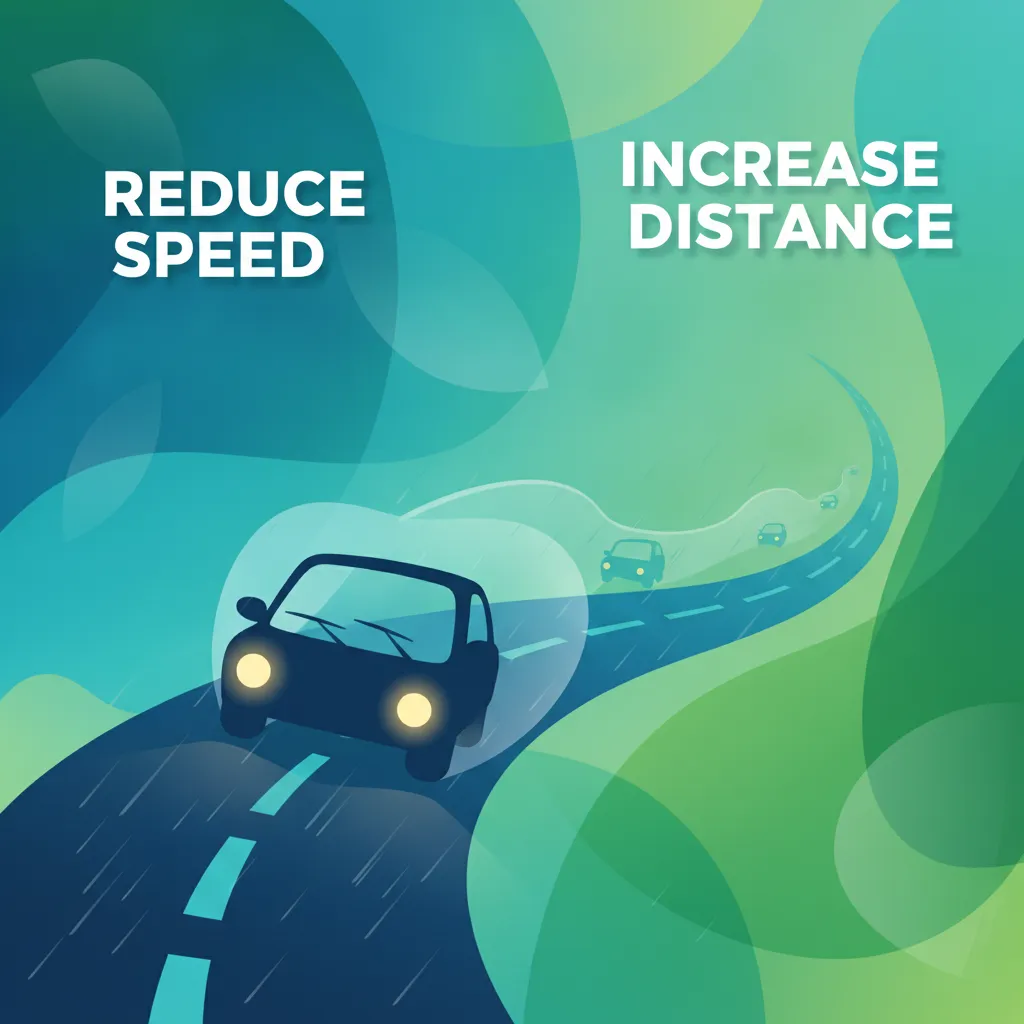
Weather has a profound impact on vehicle handling and visibility. This lesson teaches you how to reduce speed, increase following distances, and use controls smoothly to maintain traction in poor conditions. It also covers the legal requirements and practical application of snow chains in winter.

This lesson examines the impact of various weather conditions on driving safety. It explains how to adjust speed in low visibility and the risks of aquaplaning in heavy rain. The content also covers using snow chains in snowy conditions, handling icy surfaces, and dealing with strong winds, particularly on bridges and open roads.

Motorway driving requires constant concentration due to high speeds. This lesson emphasizes the importance of staying in the right-hand lane unless overtaking and the specific restrictions on lorry overtaking in Switzerland. It reinforces the need for a following distance of at least four seconds to compensate for the vehicle's long stopping distance and provides guidance on safely merging and exiting.

Overloading is a serious offence with severe safety and legal ramifications. This lesson details how excess weight drastically increases braking distances, puts extreme stress on tyres leading to blowouts, and negatively affects steering and overall stability. Furthermore, it discusses the substantial fines, potential license withdrawal, and driver liability that result from violating Swiss weight regulations.
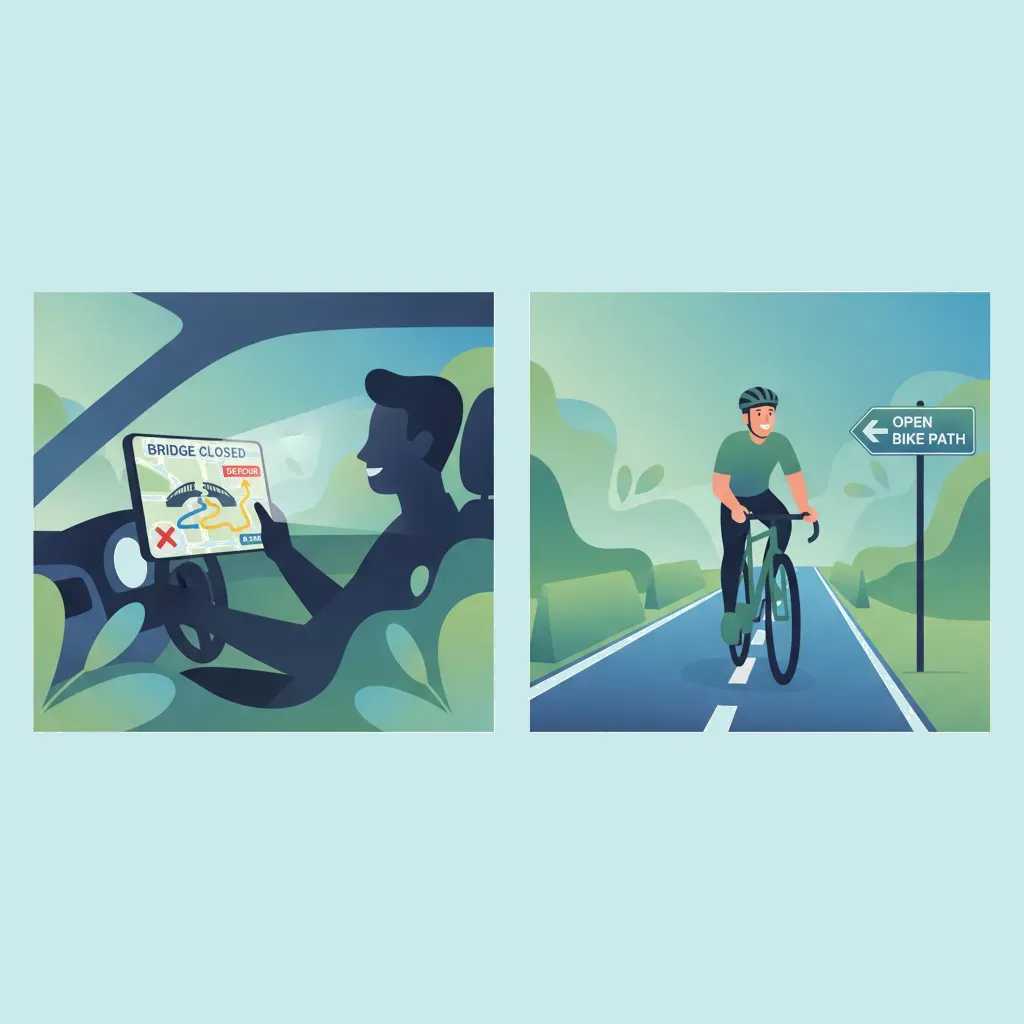
Unlike cars, heavy vehicles cannot travel on every road. This lesson stresses the importance of using HGV-specific satellite navigation systems or carefully checking maps to plan routes that avoid low bridges, weak bridges, and roads with weight or width restrictions. Proper planning saves time, fuel, and prevents dangerous situations or costly damage.

Construction sites and industrial areas are non-public roads with their own set of rules and hazards. This lesson covers the need to follow site-specific safety instructions, be aware of moving plant machinery and personnel on the ground, and assess ground conditions. It highlights that reversing is often required and should be done with a signaller wherever possible.

Driving a large vehicle on mountain passes is a demanding skill. This lesson covers selecting the correct gear for both ascents and descents to maintain control and avoid overheating the brakes. It also explains the specific priority rules that apply on mountain roads and the importance of being aware of sudden weather changes.

Rural roads present challenges like narrow lanes, poor surfaces, sharp bends, and limited visibility. This lesson teaches drivers how to position their large vehicle to maximize space and visibility, anticipate oncoming traffic at blind corners, and be aware of specific rural hazards. These hazards include slow-moving agricultural vehicles, animals on the road, and concealed farm entrances.
Explore how load distribution, vehicle height, and weather conditions like crosswinds impact the stability of high-sided vehicles. Learn about the center of gravity, rollover risk, and critical driving techniques for Swiss C & C1 drivers.

Heavy vehicles, especially those with a high centre ofgravity, are susceptible to rolling over. This lesson examines the primary causes, including excessive speed on bends or roundabouts, sudden steering manoeuvres, and the 'sloshing' effect of liquid loads in tankers. It reinforces that maintaining a sensible speed and driving smoothly are the best ways to mitigate this serious risk.

Buses have a high centre of gravity, making them susceptible to rollover forces. This lesson explains how factors like passenger load, luggage placement, and speed affect vehicle stability. Understanding these principles is essential for safe cornering, navigating roundabouts, and handling the vehicle in strong crosswinds.
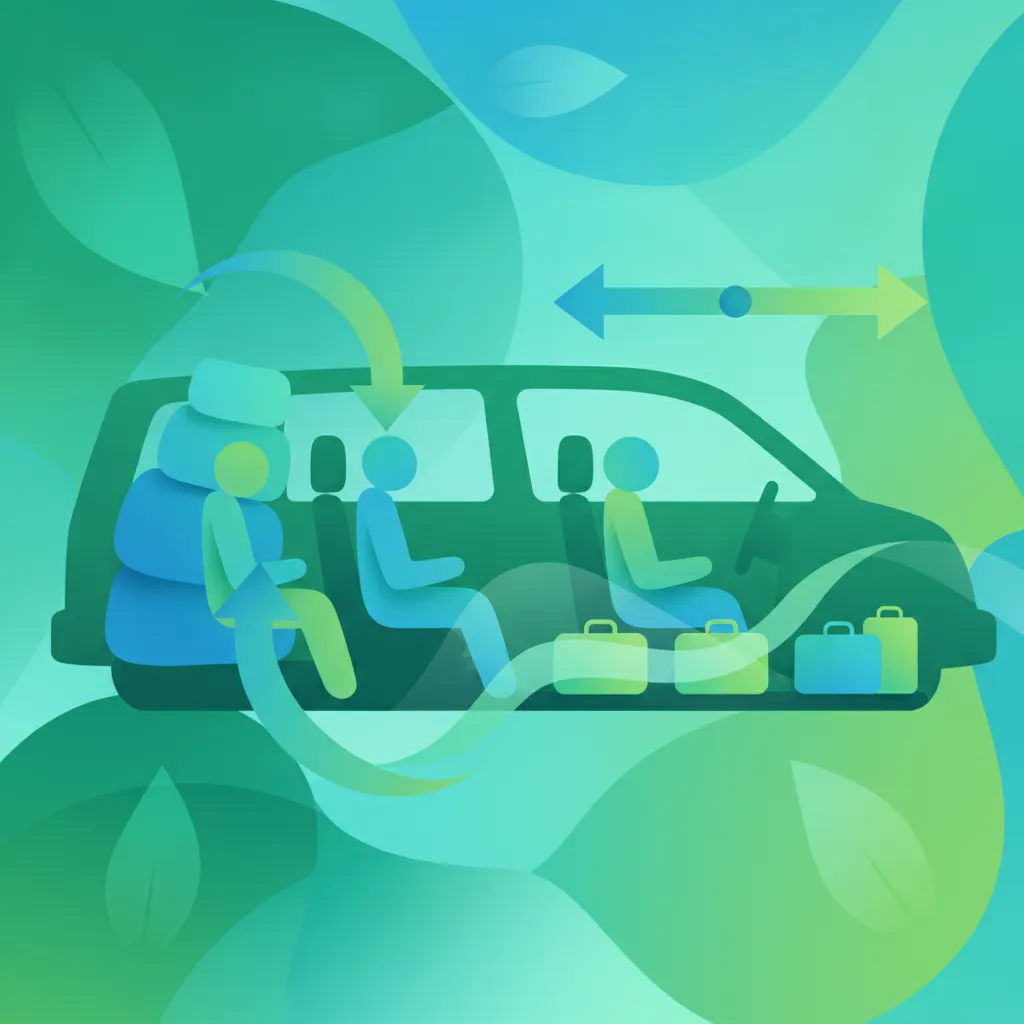
Correct load distribution is essential for safe handling and braking. This lesson explains that loads should be placed as low as possible and distributed evenly to maintain a low centre of gravity and comply with axle weight limits. A high or poorly positioned centre of gravity dramatically increases the risk of rollover, especially when cornering or in an emergency manoeuvre.
Find clear answers to common questions learners have about Impact of Crosswinds and Adverse Weather on High-Sided Vehicles. Learn how the lesson is structured, which driving theory objectives it supports, and how it fits into the overall learning path of units and curriculum progression in Switzerland. These explanations help you understand key concepts, lesson flow, and exam focused study goals.
High-sided vehicles present a large surface area for wind to push against. This lateral force can cause the vehicle to drift out of its lane or, in extreme gusts, risk tipping over, especially when the vehicle is lightly loaded.
Immediately reduce your speed and maintain a firm, two-handed grip on the steering wheel. Avoid making sudden steering corrections, which can destabilize the vehicle, and try to steer into the gust gently to maintain your lane position.
Yes, exposed sections such as bridges, viaducts, mountain pass crests, and tunnel exits are high-risk areas. Always be extra cautious when leaving the shelter of a tunnel as you will hit a crosswind unexpectedly.
Generally, yes. A fully loaded vehicle has a lower center of gravity and more mass, making it less likely to be pushed off course compared to an empty or partially loaded high-sided trailer. However, you must still adapt your speed regardless of the load.
Pinpoint specific Swiss traffic rules, road signs, or driving situations you need to master. Use the practice search to start a focused revision session now and build confidence for your official driving theory exam.