
This lesson explores the specific requirements for navigating motorways safely while driving heavy goods vehicles. You will learn to manage lane discipline, adhere to overtaking restrictions, and maintain the critical following distances necessary for large vehicle braking performance.

Lesson content overview
Motorway driving presents a unique set of challenges and responsibilities for operators of heavy goods vehicles in Switzerland. The high speeds, combined with the substantial mass and dimensions of Category C and C1 vehicles, necessitate a constant high level of concentration and strict adherence to specific traffic regulations. This lesson, part of the Official Swiss Driving Theory Course for Category C & C1 Goods Vehicles, will delve into the critical aspects of lane discipline, proper overtaking procedures, and maintaining safe following distances to ensure both your safety and that of other road users.
Understanding these principles is not merely about compliance; it's fundamental to mitigating the inherent risks associated with heavy vehicle operation on high-speed roads. Non-compliance significantly increases the likelihood of serious collisions and can trigger dangerous chain reactions. Therefore, mastering these concepts is paramount for professional drivers.
Operating heavy goods vehicles, such as lorries, on motorways demands a specialized skillset and profound understanding of vehicle dynamics. Unlike passenger cars, large vehicles exhibit different braking characteristics, acceleration rates, and susceptibility to environmental factors. These distinctions fundamentally influence safe driving practices on high-speed thoroughfares.
Heavy goods vehicles (HGVs) possess significantly greater kinetic energy due to their mass, meaning they require much longer distances to stop, especially from motorway speeds. Their larger physical footprint also impacts lane usage, visibility, and maneuverability. Crosswinds can exert considerable force on high-sided vehicles, potentially affecting stability and demanding greater driver control.
The Swiss traffic code (Verkehrsrecht) specifically addresses these challenges, implementing rules designed to harmonize traffic flow and protect all road users. By integrating strict lane discipline, cautious overtaking practices, and ample following distances, heavy vehicle operators contribute to a safer, more predictable motorway environment for everyone. This lesson builds upon foundational knowledge of heavy vehicle braking systems, load distribution, and blind spot management, all of which are essential for safe motorway operation.
Lane discipline refers to the systematic practice of maintaining an appropriate lane position and executing lane changes according to traffic regulations. For heavy goods vehicles on Swiss motorways, this primarily means adhering to the right-hand lane as the default driving position. This practice is crucial for maintaining efficient traffic flow and enhancing overall road safety.
The right-hand lane is designated as the primary lane for most traffic, and specifically for heavy goods vehicles, on Swiss motorways. This regulation serves multiple purposes. Firstly, it keeps the left-hand lanes free for faster-moving traffic and for vehicles undertaking overtaking maneuvers. This separation of traffic types, by speed and maneuver, significantly reduces the number of lane changes required by all drivers, thereby improving traffic flow and reducing the potential for conflicts.
For heavy vehicles, consistently staying in the right lane minimizes their exposure to sudden braking or evasive actions that might be necessary if they were occupying faster lanes. Given the longer stopping distances and reduced agility of lorries, avoiding such situations is a key safety strategy. It also supports the legal intent of Swiss traffic law, which mandates this practice to create a structured and predictable motorway environment.
Heavy goods vehicles are permitted to use the left-hand lane exclusively for overtaking slower vehicles. Once the overtaking maneuver is safely completed, the driver must return to the right-hand lane as soon as it is safe to do so. This rule prevents lorries from occupying the overtaking lane for extended periods, which could impede faster traffic and lead to unnecessary congestion or aggressive driving from other motorists.
A common misunderstanding among some drivers is the belief that heavy vehicles may maintain position in the left lane to gain a speed advantage or because they are traveling at the speed limit. This is incorrect. Even if a lorry is traveling at its maximum permissible speed, it must return to the right lane after overtaking. This ensures that the left lane remains a clear conduit for all traffic that needs to travel at higher speeds or perform overtaking maneuvers.
Always check your mirrors and blind spots meticulously before initiating any lane change, especially when moving into the left lane for overtaking. Heavy vehicles have significant blind spots, and failing to check these areas can lead to dangerous situations.
Overtaking on motorways involves passing a vehicle traveling in the same direction by moving into a lane to its left. For heavy goods vehicles in Switzerland, this maneuver is subject to specific, strict regulations due to the inherent risks associated with their size and performance. These rules are designed to prevent dangerous situations and ensure smooth traffic flow.
Lorries may only overtake another vehicle where explicit road signs permit it and where specific overtaking lanes are designated. These zones are typically found on sections of the motorway with adequate visibility and space, often indicated by specific signage that temporarily allows heavier vehicles to use a left lane for passing.
When overtaking is permitted, it must be executed safely and efficiently. The driver must ensure there is sufficient space both in front of the vehicle being overtaken and in the lane to which they intend to return. Proper signaling and speed adjustment are critical. After completing the pass, the lorry must return to the right-hand lane promptly and safely, not lingering in the overtaking lane.
Swiss regulations impose significant restrictions on lorry overtaking in certain areas, primarily to enhance safety in high-risk zones. Overtaking is strictly prohibited for lorries on motorways in the following situations:
Attempting to overtake in these prohibited zones is not only illegal but extremely dangerous. It significantly increases the risk of head-on collisions, side-swipes, and multi-vehicle incidents, often leading to severe penalties. Adherence to these restrictions is a non-negotiable aspect of professional driving.
Maintaining an adequate following distance is perhaps one of the most critical safety practices for heavy goods vehicle operators on motorways. Due to their extended stopping distances, lorries require significantly more space than passenger cars to react to hazards and brake safely. The four-second rule is the mandatory minimum guideline for heavy vehicles under normal conditions in Switzerland.
The four-second rule dictates that you should maintain a gap of at least four seconds between your heavy vehicle and the vehicle directly in front of you. This isn't a fixed distance in metres, but a time interval that inherently adjusts with speed. To apply this rule:
Choose a fixed point on the road ahead, such as a bridge, sign, or specific road marking.
When the rear of the vehicle in front passes that fixed point, begin counting "one thousand and one, one thousand and two, one thousand and three, one thousand and four."
If the front of your vehicle reaches the fixed point before you finish counting "one thousand and four," you are following too closely and need to increase your distance.
This time-based measurement accounts for both the driver's reaction time (the time it takes to perceive a hazard and decide to act, typically around 1.5 seconds) and the substantial braking distance required by heavy vehicles. For instance, at 100 km/h, a four-second gap translates to approximately 111 metres. This distance provides a crucial buffer zone, allowing sufficient time to react and apply brakes without risking a rear-end collision.
The energy an object possesses due to its motion. For heavy goods vehicles, high mass and speed result in significantly higher kinetic energy, requiring much greater force and distance to stop.
The four-second rule represents the minimum following distance under ideal, normal driving conditions. However, various factors necessitate increasing this gap to ensure continued safety:
Never rely solely on a fixed meter distance for following distance. The four-second rule automatically adjusts for your current speed, providing a safer and more adaptable measure, especially for heavy vehicles.
Entering and leaving motorways are critical maneuvers that require precision, good judgment, and proactive planning, especially when operating heavy goods vehicles. Smooth merging and exiting reduce speed differentials in traffic flow and prevent sudden braking or abrupt lane changes, which are particularly hazardous for large vehicles.
Merging onto a motorway involves transitioning from an on-ramp or acceleration lane into the main flow of traffic. This procedure requires careful observation and precise execution:
Assess Traffic Flow: As you enter the acceleration lane, observe the speed and density of traffic in the right-hand motorway lane using your mirrors. Identify a suitable gap.
Accelerate to Match Speed: Use the entire length of the acceleration lane to build up speed, aiming to match the speed of the traffic in the right-hand lane. Heavy vehicles will naturally take longer to accelerate, so maximize the use of the available lane.
Signal Early: Activate your right turn signal well in advance to indicate your intention to merge. This gives other drivers ample time to react and potentially create space for you.
Yield to Motorway Traffic: Vehicles already on the motorway have priority. You must yield to them, adjusting your speed or even stopping at the end of the acceleration lane if absolutely necessary (though this should be avoided if possible by proper speed management).
Merge Smoothly: When a safe gap appears and your speed matches the traffic, steer smoothly into the right-hand lane. Avoid sudden movements that could surprise other drivers.
Merging at a speed significantly lower than the motorway traffic is extremely dangerous for heavy vehicles. It forces other drivers to brake or swerve abruptly, creating a high risk of collision.
Exiting a motorway requires advanced planning and a systematic approach to ensure a smooth and safe departure. Heavy goods vehicles need even more preparation due to their longer braking distances and reduced maneuverability.
Plan Your Exit: Identify your exit well in advance and prepare to move to the right-hand lane as early as possible. Do not wait until the last moment.
Signal at Least 200m in Advance: Activate your right turn signal at least 200 metres (or even earlier, up to 500 metres if traffic conditions allow) before the exit ramp begins. This clear indication prevents sudden, late lane changes.
Move to the Right Lane: Securely move into the right-hand lane, if you are not already in it, well before the exit. Avoid weaving across multiple lanes just before the off-ramp.
Maintain Safe Speed: Do not brake on the main motorway lanes. Maintain your speed until you are fully on the exit ramp (deceleration lane), then begin to reduce speed as appropriate for the ramp's curve and speed limit.
Use Mirrors and Blind Spot Checks: Even when exiting, be aware of other vehicles, especially those also trying to exit or vehicles that might be on your left.
Changing lanes too late or signaling insufficiently far in advance can create hazardous situations, forcing other drivers to take evasive action. Heavy vehicles should prioritize early and predictable movements.
High-sided heavy goods vehicles are particularly susceptible to the effects of crosswinds, which can significantly impact vehicle stability and control. Understanding these effects and adopting appropriate driving strategies is crucial for safe motorway operation.
Crosswinds are lateral (sideways) wind forces that push against the side of a vehicle. For lorries, especially those with tall trailers or empty containers, the large surface area acts like a sail, catching the wind. This can result in:
These effects are often more pronounced on elevated motorway sections, bridges, or when emerging from sheltered areas (like tunnels or behind buildings) into open stretches, where wind shear can be sudden and strong.
To manage the risks posed by crosswinds, heavy goods vehicle operators should implement the following practices:
By adopting these proactive measures, heavy goods vehicle drivers can significantly reduce the risks associated with crosswinds, enhancing their stability and safety on motorways.
Operating heavy goods vehicles on Swiss motorways is governed by a precise set of regulations designed to ensure safety, efficiency, and environmental protection. Adherence to these laws, particularly those concerning lane usage, overtaking, and following distances, is not optional but mandatory.
Drivers of heavy goods vehicles must be thoroughly familiar with these regulations. Ignorance of the law is not a defence, and violations can lead to significant fines, license points, or even license revocation, in addition to increasing accident risk. Regular review of the latest Swiss road traffic regulations is highly recommended to stay current with any updates or amendments.
Despite comprehensive training, certain mistakes are more common among heavy goods vehicle drivers on motorways, often due to oversight, misjudgment, or complacency. Recognizing and actively avoiding these errors is vital for maintaining safety and compliance.
These errors are not only regulatory infractions but also significantly elevate the risk of accidents. Conscious attention to these common pitfalls can dramatically improve safety outcomes for heavy goods vehicle operators.
Safe motorway driving for heavy goods vehicles is underpinned by a combination of physical principles, human factors, and legal mandates. A deeper understanding of these interdependencies empowers drivers to make more informed and safer decisions.
By internalizing these insights, heavy goods vehicle operators can transcend mere rule-following and develop a proactive, safety-first mindset critical for professional motorway driving.
Safe motorway operation for heavy goods vehicles in Switzerland requires strict adherence to lane discipline, with lorries staying in the right-hand lane and only using the left lane for overtaking. Specific overtaking restrictions apply in tunnels, near exits, and where signs prohibit it. The four-second rule provides the minimum safe following distance, accounting for the substantial braking distances of heavy vehicles and human reaction time. Drivers must plan lane changes early, adjust following distances for weather and load conditions, and remain vigilant about crosswind effects on high-sided vehicles. Internalizing these principles reduces accident risk and ensures compliance with Swiss traffic law for professional drivers.
A short set of high-value points that capture the most important learning from this lesson.
Heavy goods vehicles must use the right-hand lane as their default position, only moving left to overtake
Overtaking is strictly prohibited for lorries in tunnels, near exits and on-ramps, and where signs forbid it
The four-second following distance is mandatory under normal conditions, accounting for heavy vehicle braking lag and driver reaction time
Merging requires using the full acceleration lane to match motorway speed before entering traffic
Crosswinds significantly affect high-sided vehicles, requiring speed reduction and preference for the right-hand lane
Explore all units and lessons included in this driving theory course.
Following distance must increase to at least six seconds in rain or fog, and eight seconds in snow or ice
Heavy vehicles have substantially longer stopping distances due to their mass and kinetic energy
A lorry must return to the right lane immediately after overtaking, regardless of speed
Signal at least 200 metres before exiting to allow other drivers time to react
Crosswind effects are strongest on bridges, elevated sections, and when emerging from tunnels
Remaining in the left-hand lane without actively overtaking, obstructing faster traffic
Attempting to overtake in prohibited zones such as tunnels or near motorway exits
Following too closely with less than the required four-second gap
Entering the motorway at too low a speed, forcing other vehicles to brake
Failing to perform thorough blind spot checks before any lane change
Lesson content overview
A short set of high-value points that capture the most important learning from this lesson.
Heavy goods vehicles must use the right-hand lane as their default position, only moving left to overtake
Overtaking is strictly prohibited for lorries in tunnels, near exits and on-ramps, and where signs forbid it
The four-second following distance is mandatory under normal conditions, accounting for heavy vehicle braking lag and driver reaction time
Merging requires using the full acceleration lane to match motorway speed before entering traffic
Crosswinds significantly affect high-sided vehicles, requiring speed reduction and preference for the right-hand lane
Explore all units and lessons included in this driving theory course.
Following distance must increase to at least six seconds in rain or fog, and eight seconds in snow or ice
Heavy vehicles have substantially longer stopping distances due to their mass and kinetic energy
A lorry must return to the right lane immediately after overtaking, regardless of speed
Signal at least 200 metres before exiting to allow other drivers time to react
Crosswind effects are strongest on bridges, elevated sections, and when emerging from tunnels
Remaining in the left-hand lane without actively overtaking, obstructing faster traffic
Attempting to overtake in prohibited zones such as tunnels or near motorway exits
Following too closely with less than the required four-second gap
Entering the motorway at too low a speed, forcing other vehicles to brake
Failing to perform thorough blind spot checks before any lane change
Explore search topics learners often look for when studying Motorway Driving: Lane Discipline, Overtaking, and Following Distances. These topics reflect common questions about road rules, driving situations, safety guidance, and lesson level theory preparation for learners in Switzerland.
Browse additional driving theory lessons that cover connected traffic rules, road signs, and common driving situations related to this topic. Improve your understanding of how different rules interact across everyday traffic scenarios.
Explore realistic scenarios and advanced strategies for navigating challenging situations on Swiss motorways. Understand how to handle complex traffic flows, adverse conditions, and potential hazards specific to heavy vehicles on highways.

Rural roads present challenges like narrow lanes, poor surfaces, sharp bends, and limited visibility. This lesson teaches drivers how to position their large vehicle to maximize space and visibility, anticipate oncoming traffic at blind corners, and be aware of specific rural hazards. These hazards include slow-moving agricultural vehicles, animals on the road, and concealed farm entrances.

Motorway driving involves high speeds and requires constant concentration. This lesson covers correct lane discipline, safe procedures for joining and leaving the motorway, and techniques for overtaking other large vehicles. Maintaining appropriate speed and a safe following distance is emphasized throughout.

Urban driving requires heightened awareness and careful planning. This lesson covers the challenges of narrow streets, heavy traffic, and the need to identify designated loading and unloading zones. It emphasizes the importance of planning routes in advance to account for time-based access restrictions and to avoid unsuitable roads.

Driving in the Alps requires a high level of skill and vehicle sympathy. This lesson covers techniques for climbing steep gradients by selecting the correct gear to maintain momentum without straining the engine. It reiterates the critical importance of using low gears and auxiliary brakes for descending, to ensure the service brakes remain cool and effective for the entire descent.

Unlike cars, heavy vehicles cannot travel on every road. This lesson stresses the importance of using HGV-specific satellite navigation systems or carefully checking maps to plan routes that avoid low bridges, weak bridges, and roads with weight or width restrictions. Proper planning saves time, fuel, and prevents dangerous situations or costly damage.

Driving a large vehicle on mountain passes is a demanding skill. This lesson covers selecting the correct gear for both ascents and descents to maintain control and avoid overheating the brakes. It also explains the specific priority rules that apply on mountain roads and the importance of being aware of sudden weather changes.

Despite the complex mirror systems, large areas around a truck remain hidden from the driver's view. This lesson maps out these significant blind spots: directly in front, behind, and along both sides of the vehicle. It teaches drivers to be constantly aware of these 'no-zones' and to anticipate that smaller vehicles, cyclists, or pedestrians may be hidden within them, especially before changing lanes or turning.

Turning a long vehicle requires careful planning and execution. This lesson covers the correct procedure: approach, observation, signalling, and positioning the vehicle correctly to allow for the trailer's off-tracking without mounting the kerb. It also highlights the need for constant mirror checks throughout the turn to monitor for cyclists or other vulnerable road users who may enter the danger zone.

Tunnels are enclosed environments where incidents can quickly escalate. This lesson outlines the specific rules for tunnel driving: remove sunglasses, turn on dipped headlights, maintain a safe following distance, and tune the radio to the indicated frequency. It also covers the critical emergency procedures to follow in the event of a fire or breakdown inside a tunnel.

Construction sites and industrial areas are non-public roads with their own set of rules and hazards. This lesson covers the need to follow site-specific safety instructions, be aware of moving plant machinery and personnel on the ground, and assess ground conditions. It highlights that reversing is often required and should be done with a signaller wherever possible.
Learn about the most frequent errors heavy goods vehicle drivers make on Swiss motorways. This lesson helps identify and understand potential pitfalls related to lane discipline, overtaking, and distances to ensure safer driving.
Despite the complex mirror systems, large areas around a truck remain hidden from the driver's view. This lesson maps out these significant blind spots: directly in front, behind, and along both sides of the vehicle. It teaches drivers to be constantly aware of these 'no-zones' and to anticipate that smaller vehicles, cyclists, or pedestrians may be hidden within them, especially before changing lanes or turning.
Unlike cars, heavy vehicles cannot travel on every road. This lesson stresses the importance of using HGV-specific satellite navigation systems or carefully checking maps to plan routes that avoid low bridges, weak bridges, and roads with weight or width restrictions. Proper planning saves time, fuel, and prevents dangerous situations or costly damage.

Overloading is a serious offence with severe safety and legal ramifications. This lesson details how excess weight drastically increases braking distances, puts extreme stress on tyres leading to blowouts, and negatively affects steering and overall stability. Furthermore, it discusses the substantial fines, potential license withdrawal, and driver liability that result from violating Swiss weight regulations.

The driver is legally responsible for the roadworthiness of their vehicle at the start of and during every journey. This lesson outlines the formal process for reporting any identified defects to the transport manager or maintenance staff. It stresses the critical rule that a vehicle with a known safety-critical defect must not be driven until it has been professionally repaired and declared safe.
Motorway driving involves high speeds and requires constant concentration. This lesson covers correct lane discipline, safe procedures for joining and leaving the motorway, and techniques for overtaking other large vehicles. Maintaining appropriate speed and a safe following distance is emphasized throughout.
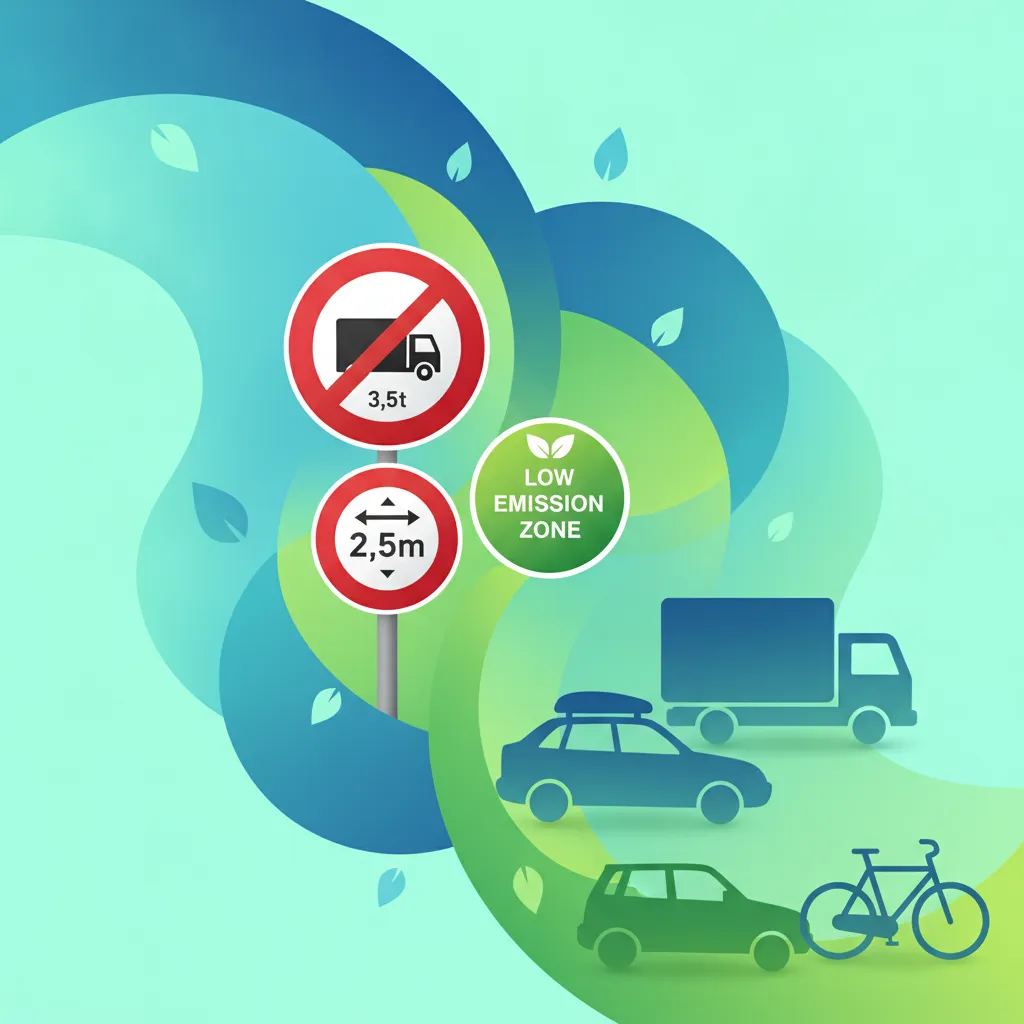
Many urban areas have restrictions to manage traffic and protect infrastructure. This lesson teaches drivers to identify and interpret traffic signs that prohibit access based on gross vehicle weight, axle load, height, or width. It also covers the growing prevalence of environmental or low-emission zones, which may restrict entry for older, more polluting vehicles.
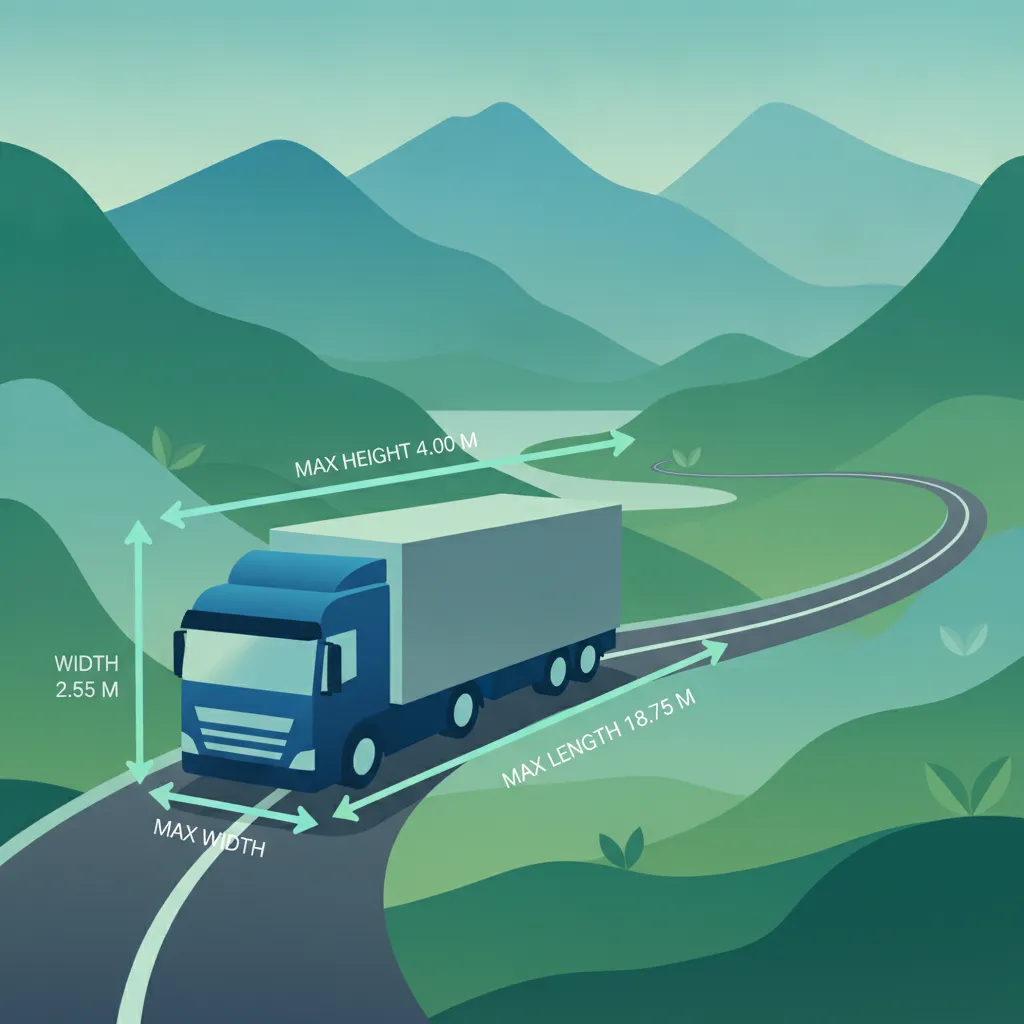
Swiss law strictly regulates the maximum dimensions of commercial vehicles to ensure they can safely navigate the infrastructure. This lesson specifies the standard limits for vehicle height (4.0m), width (2.55m), and length for various lorry and trailer combinations. Adhering to these dimensions is crucial for avoiding collisions with bridges, tunnels, and other structures, and for navigating narrow roads.

Pedestrians, cyclists, motorcyclists, and e-scooter riders are extremely vulnerable in any interaction with a heavy vehicle. This lesson instills a defensive mindset, teaching drivers to be hyper-aware of VRUs, especially near junctions, crossings, and cycle lanes. It focuses on anticipation and giving VRUs extra space, as they can be unpredictable and are often hidden in blind spots.

For professional drivers, traffic violations can have career-altering consequences beyond standard fines. This lesson details the heightened penalties for infringements such as speeding, overloading, insecure loads, and violations of driving time regulations. It outlines the process of warnings, license suspension or withdrawal, and potential criminal liability, emphasizing the importance of strict legal compliance in the transport industry.
Turning a long vehicle requires careful planning and execution. This lesson covers the correct procedure: approach, observation, signalling, and positioning the vehicle correctly to allow for the trailer's off-tracking without mounting the kerb. It also highlights the need for constant mirror checks throughout the turn to monitor for cyclists or other vulnerable road users who may enter the danger zone.
Find clear answers to common questions learners have about Motorway Driving: Lane Discipline, Overtaking, and Following Distances. Learn how the lesson is structured, which driving theory objectives it supports, and how it fits into the overall learning path of units and curriculum progression in Switzerland. These explanations help you understand key concepts, lesson flow, and exam focused study goals.
Yes, heavy goods vehicles are frequently subject to specific overtaking bans, especially on motorways with three or more lanes or during peak traffic. Always pay close attention to mandatory signage, as ignoring these restrictions is a common cause of exam failure.
Due to their high gross vehicle mass, heavy goods vehicles require significantly longer distances to stop than passenger cars. The four-second rule accounts for both the driver's reaction time and the mechanical lag of compressed-air braking systems, which is critical for road safety.
Generally, heavy goods vehicles must remain in the right-hand lane. You may only use other lanes when necessary to overtake, provided that overtaking is not explicitly prohibited by signs or road markings, and you must return to the right lane immediately after the maneuver.
Always respect the speed limits indicated for your specific vehicle category and load status. On Swiss motorways, these limits are lower than those for passenger cars, and you must monitor your speedometer closely to ensure compliance regardless of the flow of other traffic.
Pinpoint specific Swiss traffic rules, road signs, or driving situations you need to master. Use the practice search to start a focused revision session now and build confidence for your official driving theory exam.