
Driving a large goods vehicle on narrow rural and cantonal roads requires advanced spatial awareness and anticipation. This lesson builds on your vehicle handling skills, teaching you how to manage restricted lanes, blind corners, and typical rural hazards effectively to ensure safety for all road users.

Lesson content overview
Operating a Category C or C1 goods vehicle on Switzerland's narrow rural and cantonal roads presents a unique set of challenges compared to driving on wider motorways. These roads are often characterized by limited width, varying surface quality, frequent sharp bends, and obstructed views. This lesson, part of your Official Swiss Driving Theory Course for Category C & C1 Goods Vehicles, focuses on mastering the specific techniques and safety protocols necessary to navigate these environments safely and efficiently.
Success on these roads depends on a driver's ability to precisely position their large vehicle, anticipate potential hazards at blind corners, and recognize the unique risks posed by slow-moving agricultural vehicles, unexpected animal crossings, and concealed farm entrances. By understanding vehicle dynamics, road geometry, and local regulations, you can mitigate risks and ensure the safety of yourself, your cargo, and other road users.
Rural and cantonal roads in Switzerland are integral to local commerce and daily life, yet their design often predates modern heavy goods vehicles. This leads to distinct challenges for Category C and C1 drivers, which must be carefully managed.
The physical characteristics of these roads can vary significantly. While some cantonal roads might offer a standard lane width of around 3 to 3.5 metres, many rural routes, especially those leading to farms or smaller villages, can be as narrow as 2.5 metres. This limited width often means minimal clearance for a vehicle that can be up to 2.55 metres wide, excluding mirrors. Furthermore, shoulders are frequently absent or very narrow, leaving little margin for error.
Another prevalent feature is the presence of numerous blind corners and sharp curves, often compounded by vegetation or terrain that obstructs the line of sight. These blind spots make anticipating oncoming traffic a critical skill. Narrow bridges, sometimes only wide enough for a single vehicle, also demand heightened awareness and precise control.
The overall dimensions of your heavy goods vehicle, including any attached trailer, are paramount when navigating narrow roads. It is not just the body width but also the width including mirrors that determines the actual space required. A Category C vehicle with a maximum width of 2.55 metres will have very little room to spare on a 3-metre-wide lane, demanding central and precise positioning.
Front and rear overhangs also play a significant role. The front overhang is the distance from the front axle to the very front of the vehicle, while the rear overhang is the distance from the rear axle to the vehicle's rear end. These overhangs are particularly important on sharp bends, as they determine how much of the vehicle swings outside the main wheel track. Misjudging these can lead to clipping road edges, signage, or even roadside infrastructure.
Understanding your vehicle's specific dimensions and turning circle is fundamental. Neglecting mirror width, for example, is a common mistake that can lead to collisions with fixed objects or oncoming traffic, especially when passing through constricted areas or around curves. Always consider the outermost points of your vehicle.
Blind corners are curved sections of road where the driver's line of sight is obstructed, making it impossible to see oncoming traffic or hazards until the last moment. These are particularly dangerous for heavy goods vehicles due to their longer stopping distances and reduced maneuverability.
Visibility management is the practice of positioning your vehicle to maximize your line of sight, especially at blind corners. This involves not only looking ahead but also being acutely aware of your vehicle's sight rectangle – the area directly visible forward, aided by properly adjusted mirrors.
The protocol for yielding at blind corners is critical. If you cannot clearly see far enough ahead to confirm the absence of oncoming traffic, you must slow down and be prepared to stop. The expectation is to stop before the point of obstruction (the "blind corner line") and proceed only when a safe distance from any approaching vehicles is confirmed. Overtaking on a blind corner is strictly prohibited due to the severe risk of head-on collisions.
Correct lateral positioning of your heavy goods vehicle within the lane is essential for maximizing clearance and visibility, especially on narrow rural and cantonal roads. This is known as clearance positioning.
On sufficiently wide roads, a central position is generally ideal. However, on narrow roads or at blind corners, a slight offset positioning may be necessary. For Swiss right-hand traffic, this means shifting the vehicle slightly to the right side of your lane before entering a left-hand blind curve. This allows you to gain an earlier view around the bend, increasing your sight rectangle and providing more time to react to oncoming traffic.
It is crucial to maintain sufficient clearance from the road edge. Driving too close to the edge increases the risk of hitting curbs, falling into ditches, or damaging tires and suspension. This is even more critical for high-sided vehicles, where loss of stability on uneven edges can lead to rollovers. Always adjust your positioning dynamically based on the road's curvature, width, and any perceived hazards.
Rural roads harbor hazards not commonly found in urban or motorway environments. Drivers of heavy goods vehicles must be particularly vigilant for these unique risks:
Adapting your speed to the prevailing road conditions, width, visibility, and presence of hazards is paramount for safety on rural roads. While posted speed limits (often 50 km/h on cantonal and rural roads) provide a maximum, it is frequently necessary to drive slower, especially with a heavy goods vehicle.
Following distance must also be increased for heavy goods vehicles. Due to their greater mass, these vehicles require significantly longer braking distances than passenger cars. A minimum following distance of 2-3 seconds is generally recommended, but this should be extended in adverse conditions or when following slow-moving agricultural machinery.
Overtaking on narrow rural roads is a high-risk maneuver. It should only be attempted on straight, wide sections of road where visibility is absolutely clear and sufficient to complete the maneuver safely before encountering any oncoming traffic. Overtaking is strictly prohibited on blind corners, narrow bridges, and in areas with restricted visibility or "no overtaking" signage. Always check your blind spots thoroughly before committing to an overtake.
Adherence to specific Swiss road regulations is crucial for heavy goods vehicle drivers on rural and cantonal roads. These rules are designed to prevent collisions and ensure orderly traffic flow.
Safe driving on rural and cantonal roads is not static; it requires continuous adaptation to changing conditions. For heavy goods vehicle drivers, this means integrating an understanding of external factors and vehicle dynamics into every decision.
The load your heavy goods vehicle carries and whether it is towing a trailer profoundly affect its handling characteristics on narrow roads.
Rural roads are not exclusive to vehicles. Heavy goods vehicle drivers must be highly aware of vulnerable road users (VRUs) who may be present.
In the event of a breakdown or a sudden hazard requiring an emergency stop on a narrow rural road, your actions are critical to prevent further accidents.
React Safely: Bring the vehicle to a controlled stop, prioritizing the safety of all road users.
Positioning: Pull over as far to the right as safely possible. If a designated lay-by or wide shoulder is available, use it. Never stop in the middle of a narrow lane or on a single-lane bridge unless absolutely unavoidable.
Activate Hazard Lights: Immediately activate your hazard warning lights to signal to other drivers that your vehicle is stationary and may be an obstruction.
Assess Safety: If it is safe to do so, exit the vehicle from the passenger side and move to a safe location away from the roadway.
Deploy Warning Triangle (if applicable): If conditions permit and it is safe, place a warning triangle a suitable distance behind your vehicle to further alert oncoming traffic.
Driving heavy goods vehicles on narrow rural roads boils down to a few core safety principles:
By integrating these principles, you adopt a proactive safety mindset essential for driving Category C and C1 vehicles on Switzerland's narrow rural and cantonal roads.
Understanding theory is vital, but applying it to real-world situations reinforces safe driving habits. Consider these common scenarios:
You are driving a Category C vehicle on a narrow cantonal road. Ahead, you see a sign indicating a narrow bridge, and you observe an oncoming passenger car already on the bridge.
Correct Behavior: You would immediately reduce your speed and prepare to stop before entering the bridge. Since the oncoming vehicle is already on the single-lane bridge, it has the right-of-way. You wait for it to clear the bridge safely before proceeding.
Incorrect Behavior: You maintain your speed, assuming the smaller car will yield or that there's enough space, forcing the oncoming vehicle to brake sharply or risk a collision.
You encounter a tractor traveling at 20 km/h on a winding rural road with sporadic straight sections.
Correct Behavior: You assess the road ahead for a long, straight section with absolutely clear visibility and no "no overtaking" signs or solid center lines. You ensure there is no oncoming traffic and that you can safely complete the maneuver and return to your lane with ample space before the next bend or obstruction. You check your mirrors and blind spots thoroughly before moving out to overtake.
Incorrect Behavior: You attempt to overtake on a slight curve because you are impatient, misjudging the speed of a distant oncoming vehicle or failing to see a hidden farm entrance beyond the curve.
You are driving past a field with grazing cattle, and a few cows suddenly step onto the road from an unmarked farm gate.
Correct Behavior: You immediately reduce your speed, sound your horn briefly if necessary to alert the animals, and prepare to stop safely. You wait patiently for the animals to move off the road before slowly proceeding, scanning for more animals.
Incorrect Behavior: You try to swerve around the animals at speed, risking a collision with other vehicles or losing control of your heavy vehicle on the soft road shoulder.
To deepen your understanding and ensure mastery of these critical skills, explore related topics and engage in practice questions.
Driving Category C and C1 vehicles on narrow Swiss rural and cantonal roads demands precise lateral positioning, with offset positioning to the right before left-hand blind curves to maximize sight distance. Drivers must stop before obstructed sight lines at blind corners and yield to agricultural vehicles unable to pull aside, while adhering to strict overtaking prohibitions on curves, bridges, and restricted-visibility sections. Speed adaptation is critical—always drive slowly enough to stop within the visible clear distance, and extend following distances significantly due to the increased mass and stopping distances of heavy goods vehicles. Beyond standard hazards, be alert for animals, unmarked farm entrances, and vulnerable road users, and adjust your approach for weather, road surface, and load conditions.
A short set of high-value points that capture the most important learning from this lesson.
Offset positioning to the right before left-hand blind curves improves sight distance by enlarging your sight rectangle.
Always stop before the point of obstruction at blind corners if you cannot confirm the road is clear ahead.
Account for mirror width when assessing clearance on narrow roads; your vehicle's actual width includes mirrors.
Yield the right-of-way to agricultural vehicles on narrow roads as they cannot maneuver easily.
Reduce speed below posted limits when conditions (visibility, surface, weather) demand it, especially with a loaded vehicle.
Explore all units and lessons included in this driving theory course.
Front and rear overhangs determine how much of your vehicle swings outside the wheel track on sharp bends.
A minimum following distance of 2–3 seconds is recommended but must be extended with heavy loads or adverse conditions.
Overtaking is prohibited on blind corners, narrow bridges, and anywhere visibility is restricted.
High-sided vehicles have a higher center of gravity, making them more prone to rollovers on uneven edges or sharp bends entered too fast.
Emergency protocol on a narrow road: pull right, activate hazard lights, exit from the passenger side, and deploy a warning triangle if safe.
Failing to adjust mirror width when judging clearance, causing collisions with roadside objects or oncoming traffic.
Attempting to overtake on slight curves because distant oncoming traffic appears far enough away.
Stopping in the middle of a lane or on a bridge rather than pulling over as far as safely possible during an emergency.
Not accounting for increased stopping distance when the vehicle is fully loaded or towing a trailer.
Driving too close to the road edge on narrow sections, risking tire damage, suspension impact, or loss of stability on uneven shoulders.
Lesson content overview
A short set of high-value points that capture the most important learning from this lesson.
Offset positioning to the right before left-hand blind curves improves sight distance by enlarging your sight rectangle.
Always stop before the point of obstruction at blind corners if you cannot confirm the road is clear ahead.
Account for mirror width when assessing clearance on narrow roads; your vehicle's actual width includes mirrors.
Yield the right-of-way to agricultural vehicles on narrow roads as they cannot maneuver easily.
Reduce speed below posted limits when conditions (visibility, surface, weather) demand it, especially with a loaded vehicle.
Explore all units and lessons included in this driving theory course.
Front and rear overhangs determine how much of your vehicle swings outside the wheel track on sharp bends.
A minimum following distance of 2–3 seconds is recommended but must be extended with heavy loads or adverse conditions.
Overtaking is prohibited on blind corners, narrow bridges, and anywhere visibility is restricted.
High-sided vehicles have a higher center of gravity, making them more prone to rollovers on uneven edges or sharp bends entered too fast.
Emergency protocol on a narrow road: pull right, activate hazard lights, exit from the passenger side, and deploy a warning triangle if safe.
Failing to adjust mirror width when judging clearance, causing collisions with roadside objects or oncoming traffic.
Attempting to overtake on slight curves because distant oncoming traffic appears far enough away.
Stopping in the middle of a lane or on a bridge rather than pulling over as far as safely possible during an emergency.
Not accounting for increased stopping distance when the vehicle is fully loaded or towing a trailer.
Driving too close to the road edge on narrow sections, risking tire damage, suspension impact, or loss of stability on uneven shoulders.
Explore search topics learners often look for when studying Driving on Narrow Rural and Cantonal Roads. These topics reflect common questions about road rules, driving situations, safety guidance, and lesson level theory preparation for learners in Switzerland.
Browse additional driving theory lessons that cover connected traffic rules, road signs, and common driving situations related to this topic. Improve your understanding of how different rules interact across everyday traffic scenarios.
Learn essential techniques for safely navigating narrow Swiss rural and cantonal roads with heavy goods vehicles. Understand critical hazards like blind corners and farm entrances, and master effective vehicle positioning for maximum safety and visibility.
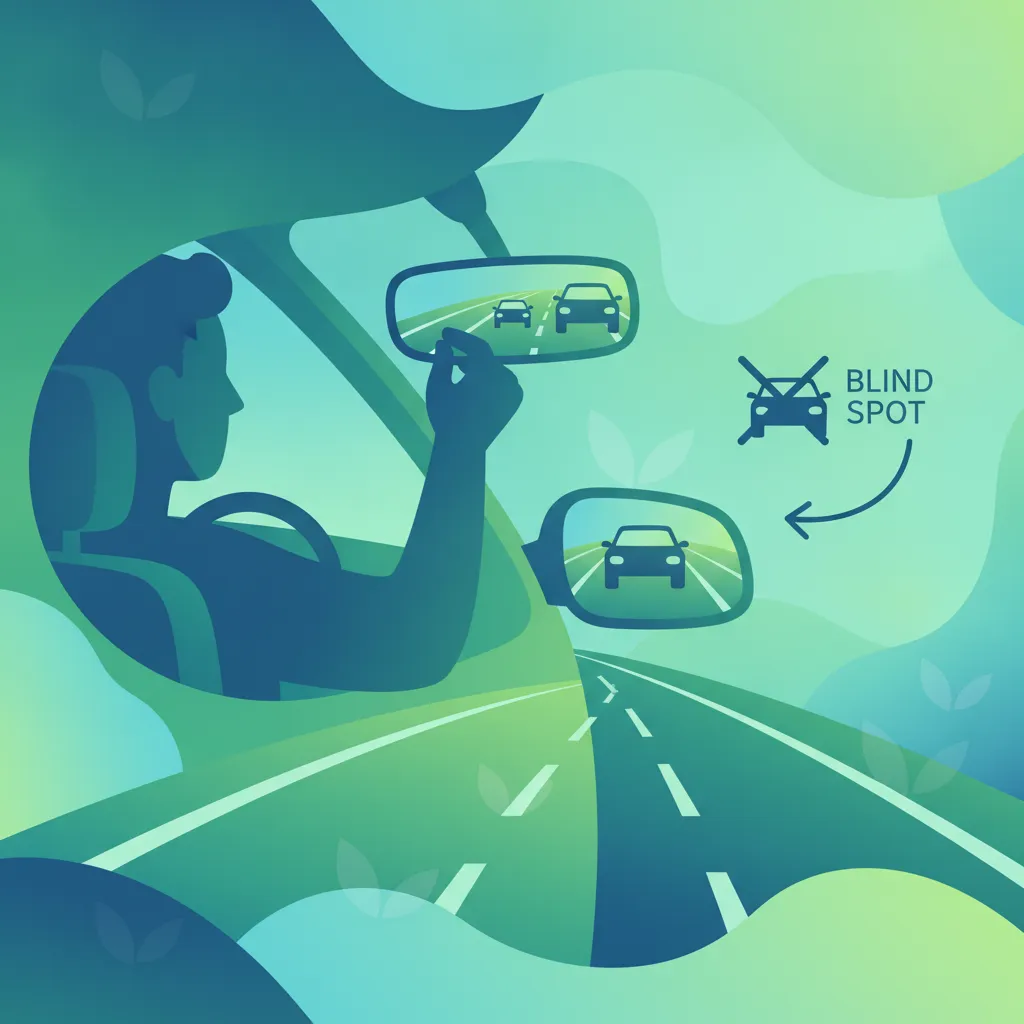
Despite the complex mirror systems, large areas around a truck remain hidden from the driver's view. This lesson maps out these significant blind spots: directly in front, behind, and along both sides of the vehicle. It teaches drivers to be constantly aware of these 'no-zones' and to anticipate that smaller vehicles, cyclists, or pedestrians may be hidden within them, especially before changing lanes or turning.

Rural driving requires a different mindset from urban driving. This lesson covers how to position your vehicle on narrow roads, how to use passing places effectively, and how to anticipate hazards like slow-moving farm machinery, animals, and concealed junctions. Managing vehicle width and height is a key focus.
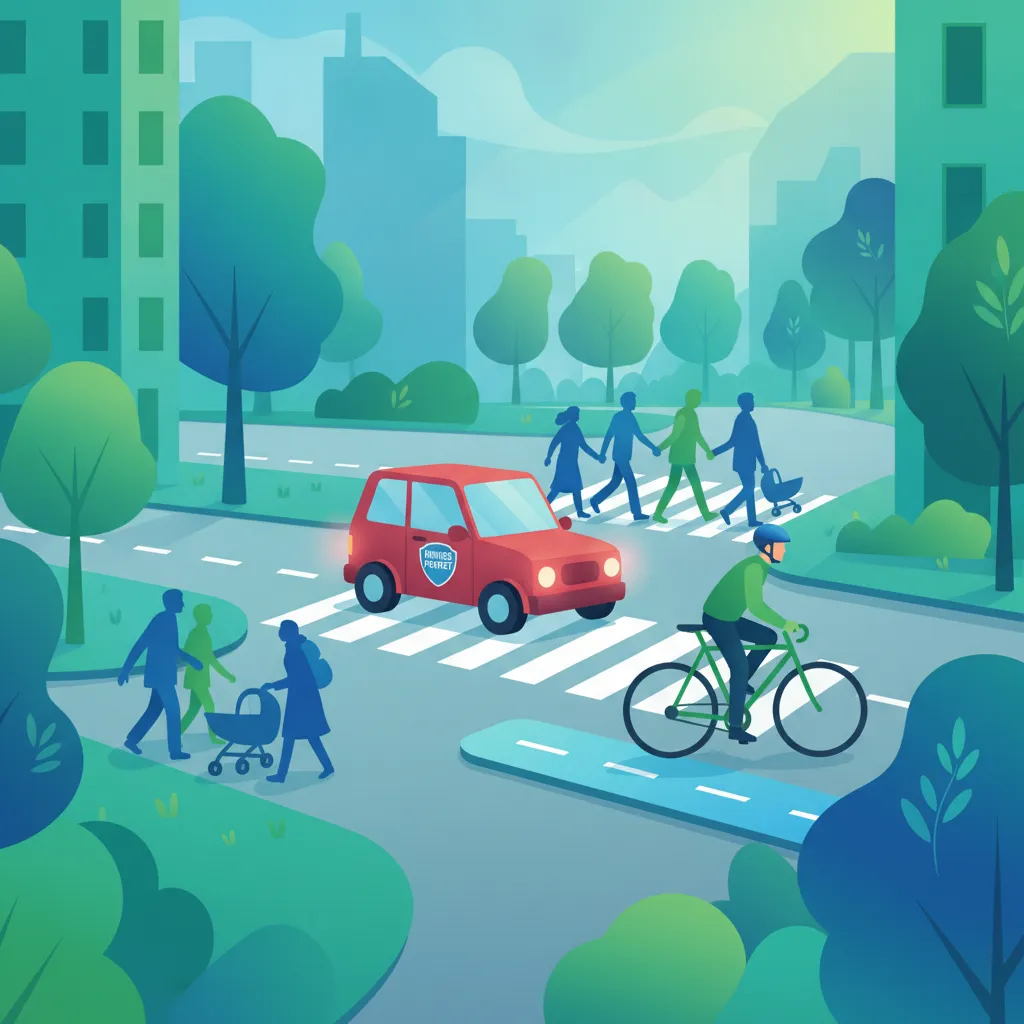
Pedestrians, cyclists, motorcyclists, and e-scooter riders are extremely vulnerable in any interaction with a heavy vehicle. This lesson instills a defensive mindset, teaching drivers to be hyper-aware of VRUs, especially near junctions, crossings, and cycle lanes. It focuses on anticipation and giving VRUs extra space, as they can be unpredictable and are often hidden in blind spots.
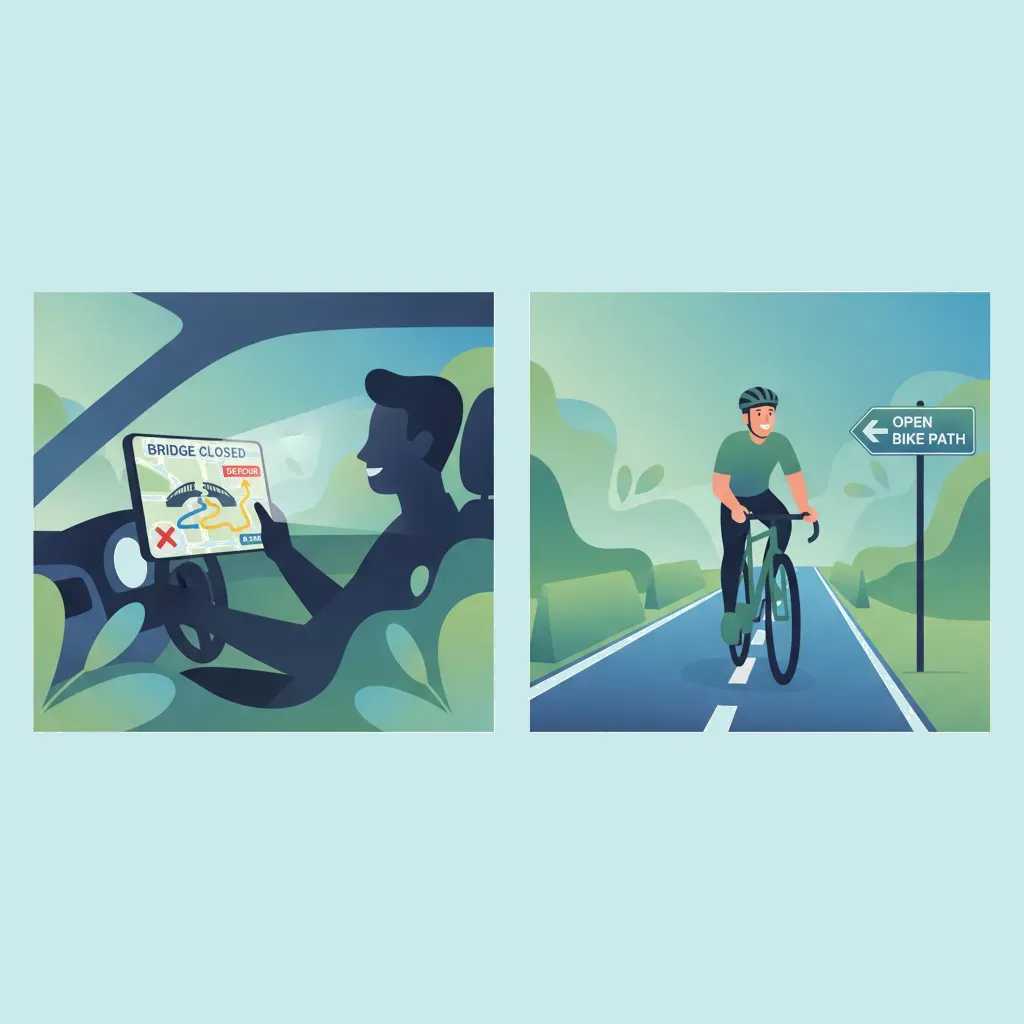
Unlike cars, heavy vehicles cannot travel on every road. This lesson stresses the importance of using HGV-specific satellite navigation systems or carefully checking maps to plan routes that avoid low bridges, weak bridges, and roads with weight or width restrictions. Proper planning saves time, fuel, and prevents dangerous situations or costly damage.
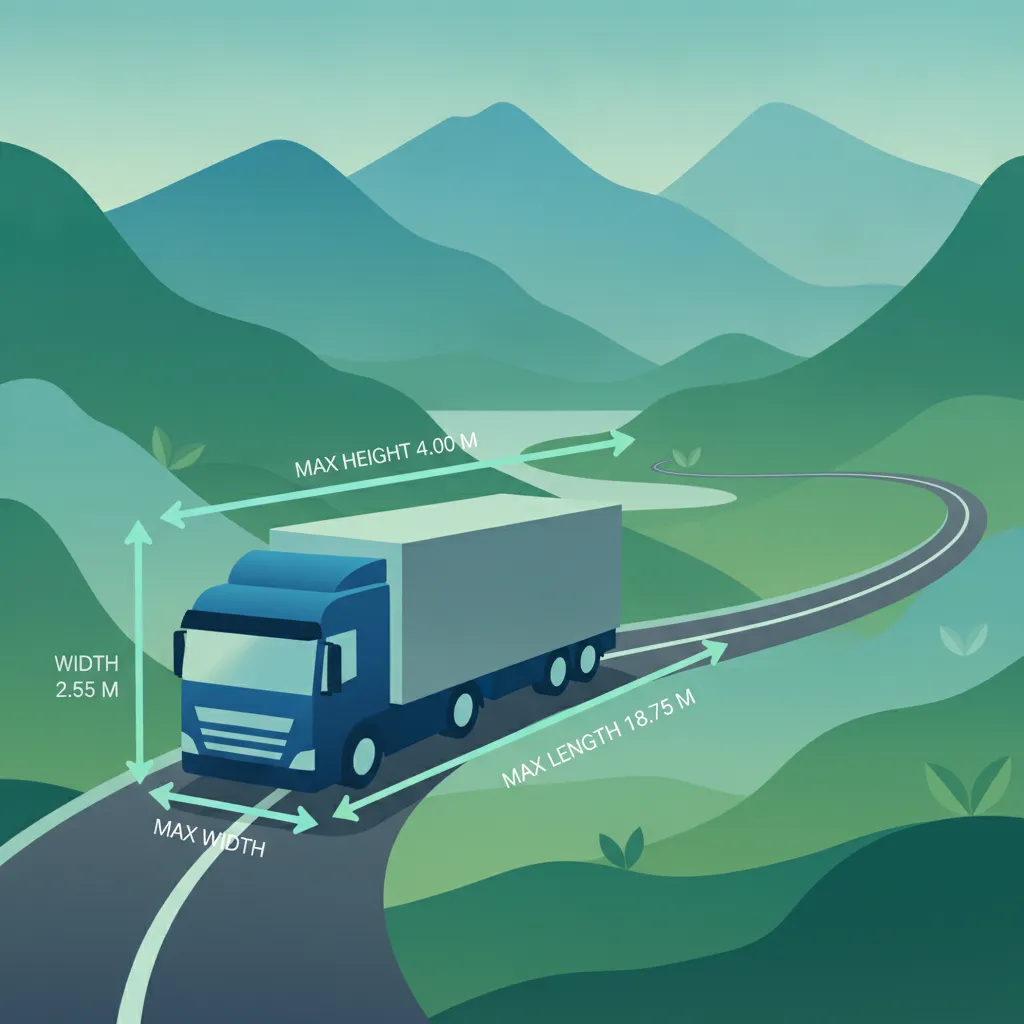
Swiss law strictly regulates the maximum dimensions of commercial vehicles to ensure they can safely navigate the infrastructure. This lesson specifies the standard limits for vehicle height (4.0m), width (2.55m), and length for various lorry and trailer combinations. Adhering to these dimensions is crucial for avoiding collisions with bridges, tunnels, and other structures, and for navigating narrow roads.

Turning a long vehicle requires careful planning and execution. This lesson covers the correct procedure: approach, observation, signalling, and positioning the vehicle correctly to allow for the trailer's off-tracking without mounting the kerb. It also highlights the need for constant mirror checks throughout the turn to monitor for cyclists or other vulnerable road users who may enter the danger zone.

Urban driving requires heightened awareness and careful planning. This lesson covers the challenges of narrow streets, heavy traffic, and the need to identify designated loading and unloading zones. It emphasizes the importance of planning routes in advance to account for time-based access restrictions and to avoid unsuitable roads.

This lesson focuses on safe interaction with large vehicles. It highlights the significant blind spots (or 'no-zones') around trucks and buses and teaches riders how to position themselves to remain visible. The content also provides guidance on overtaking large vehicles safely and anticipating their wide turning radius at intersections.

Heavy goods vehicles are fitted with specific safety structures to mitigate the severity of collisions with smaller vehicles and vulnerable road users. This lesson explains the function of the rear underrun bar, which prevents cars from going underneath the truck in a rear-end collision. It also covers side guards, which are designed to stop cyclists and pedestrians from falling under the vehicle's wheels during a side impact.

Construction sites and industrial areas are non-public roads with their own set of rules and hazards. This lesson covers the need to follow site-specific safety instructions, be aware of moving plant machinery and personnel on the ground, and assess ground conditions. It highlights that reversing is often required and should be done with a signaller wherever possible.
Explore how to safely drive heavy goods vehicles on rural and cantonal roads under diverse conditions. This lesson covers adapting to weather, varied road surfaces, and safely interacting with vulnerable road users and agricultural vehicles.
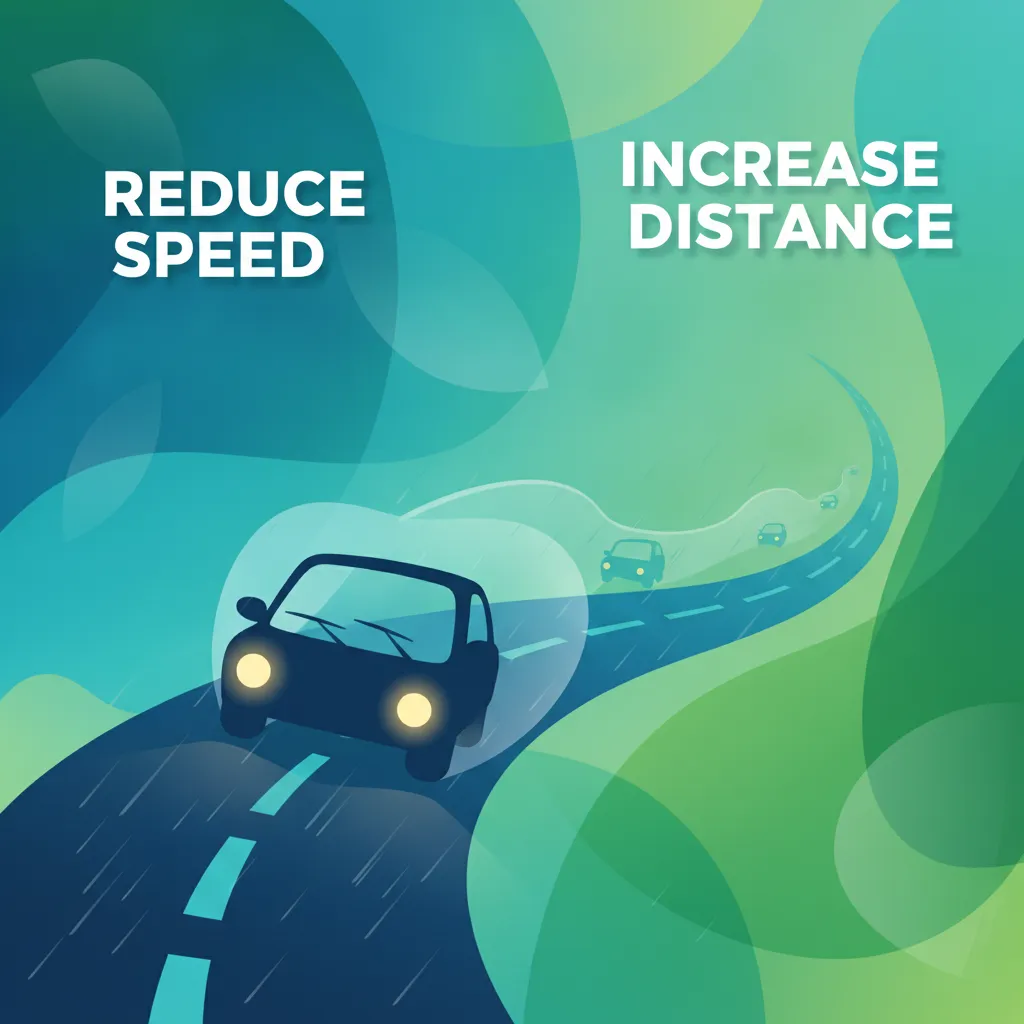
Weather has a profound impact on vehicle handling and visibility. This lesson teaches you how to reduce speed, increase following distances, and use controls smoothly to maintain traction in poor conditions. It also covers the legal requirements and practical application of snow chains in winter.

Wet or icy roads drastically reduce tyre grip and can double or triple braking distances. This lesson stresses the importance of significantly reducing overall speed and increasing following distances in such conditions. It advises on using brakes with extreme care to avoid skidding and explains how the vehicle's retarder should be used with caution as it can cause the drive wheels to lock up on slippery surfaces.
Rural driving requires a different mindset from urban driving. This lesson covers how to position your vehicle on narrow roads, how to use passing places effectively, and how to anticipate hazards like slow-moving farm machinery, animals, and concealed junctions. Managing vehicle width and height is a key focus.

Driving in the Alps requires a high level of skill and vehicle sympathy. This lesson covers techniques for climbing steep gradients by selecting the correct gear to maintain momentum without straining the engine. It reiterates the critical importance of using low gears and auxiliary brakes for descending, to ensure the service brakes remain cool and effective for the entire descent.
Swiss law strictly regulates the maximum dimensions of commercial vehicles to ensure they can safely navigate the infrastructure. This lesson specifies the standard limits for vehicle height (4.0m), width (2.55m), and length for various lorry and trailer combinations. Adhering to these dimensions is crucial for avoiding collisions with bridges, tunnels, and other structures, and for navigating narrow roads.
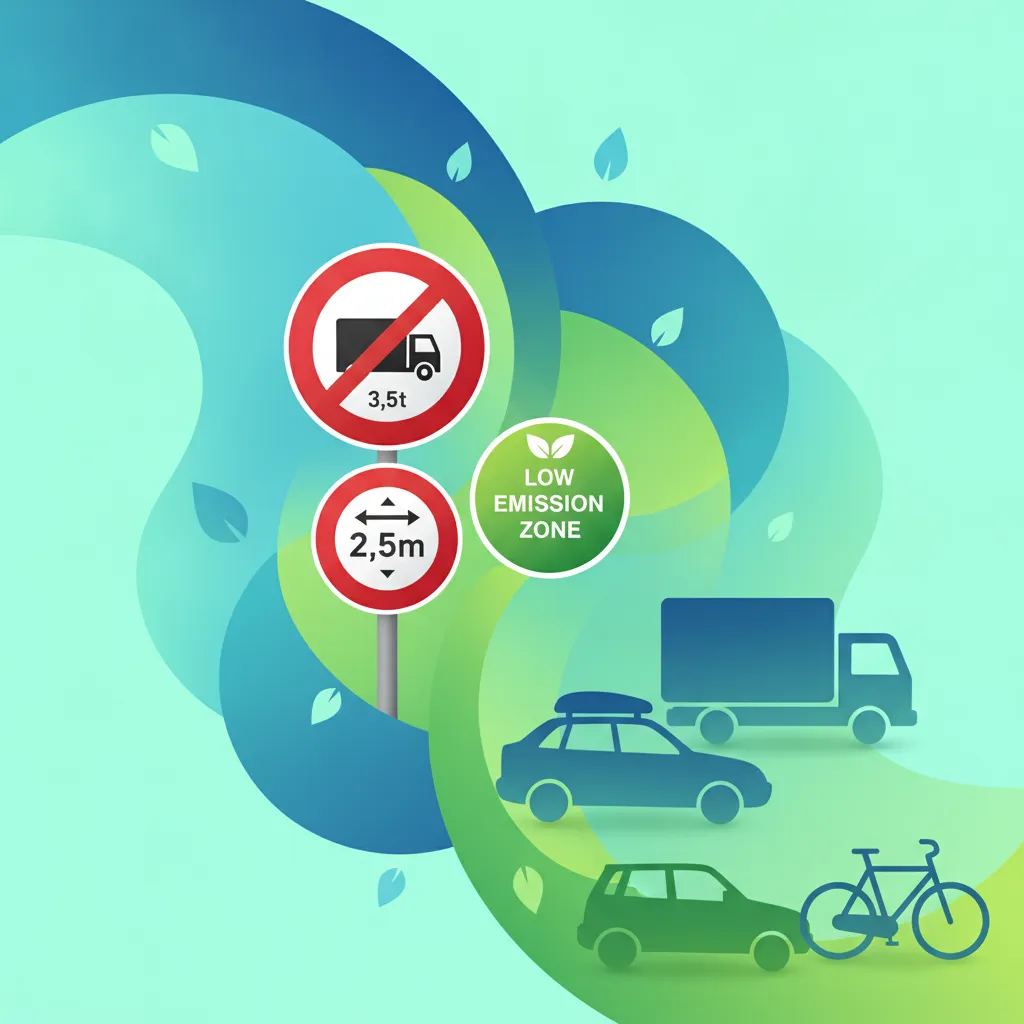
Many urban areas have restrictions to manage traffic and protect infrastructure. This lesson teaches drivers to identify and interpret traffic signs that prohibit access based on gross vehicle weight, axle load, height, or width. It also covers the growing prevalence of environmental or low-emission zones, which may restrict entry for older, more polluting vehicles.
Pedestrians, cyclists, motorcyclists, and e-scooter riders are extremely vulnerable in any interaction with a heavy vehicle. This lesson instills a defensive mindset, teaching drivers to be hyper-aware of VRUs, especially near junctions, crossings, and cycle lanes. It focuses on anticipation and giving VRUs extra space, as they can be unpredictable and are often hidden in blind spots.

Motorway driving requires constant concentration due to high speeds. This lesson emphasizes the importance of staying in the right-hand lane unless overtaking and the specific restrictions on lorry overtaking in Switzerland. It reinforces the need for a following distance of at least four seconds to compensate for the vehicle's long stopping distance and provides guidance on safely merging and exiting.
Unlike cars, heavy vehicles cannot travel on every road. This lesson stresses the importance of using HGV-specific satellite navigation systems or carefully checking maps to plan routes that avoid low bridges, weak bridges, and roads with weight or width restrictions. Proper planning saves time, fuel, and prevents dangerous situations or costly damage.

This lesson examines the impact of various weather conditions on driving safety. It explains how to adjust speed in low visibility and the risks of aquaplaning in heavy rain. The content also covers using snow chains in snowy conditions, handling icy surfaces, and dealing with strong winds, particularly on bridges and open roads.
Find clear answers to common questions learners have about Driving on Narrow Rural and Cantonal Roads. Learn how the lesson is structured, which driving theory objectives it supports, and how it fits into the overall learning path of units and curriculum progression in Switzerland. These explanations help you understand key concepts, lesson flow, and exam focused study goals.
The primary risks are limited lane width and poor visibility at bends. You must position your vehicle carefully to avoid clipping the verge or intruding into the path of oncoming traffic, especially on narrow cantonal roads where space is restricted.
Slow down early and increase your following distance. Only attempt to pass if you have a clear, unrestricted view of the road ahead, ensuring you have sufficient space to manoeuvre your wide vehicle without endangering the tractor driver or oncoming traffic.
While standard speed limits apply, you must adjust your speed according to road conditions, your vehicle's mass, and visibility. For heavy vehicles, maintaining a speed that allows for a full stop within your visible distance is critical on winding rural routes.
Due to your vehicle's length and width, you may need to position yourself slightly differently to maintain lane discipline. However, never cross the centre line unless absolutely necessary and safe; always anticipate that oncoming traffic may be cutting the corner.
Pinpoint specific Swiss traffic rules, road signs, or driving situations you need to master. Use the practice search to start a focused revision session now and build confidence for your official driving theory exam.