
This lesson guides you through the specialized regulations and safety protocols for driving heavy goods vehicles through tunnels and galleries in Switzerland. As part of your Category C and C1 preparation, you will learn how to adjust your driving behavior for these enclosed environments to ensure the safety of yourself and other road users.
Lesson content overview
Driving through tunnels and galleries presents a unique set of challenges and demands specific rules and techniques, particularly for operators of heavy goods vehicles in the Official Swiss Driving Theory Course for Category C & C1. These confined environments intensify risks associated with visibility, traffic flow, and emergency response, making diligent adherence to safety protocols paramount. Understanding these requirements ensures not only personal safety but also the safety of other road users and the prevention of major incidents.
This lesson outlines the crucial preparations, in-tunnel conduct, and emergency procedures essential for safely operating Category C or C1 goods vehicles within Swiss tunnels and galleries. From specific lighting requirements to maintaining appropriate following distances and knowing how to act in an emergency, mastering these elements is fundamental to responsible heavy vehicle operation.
Tunnels, by their very nature, are enclosed spaces with limited ventilation, artificial lighting, and restricted escape routes. For heavy goods vehicles, these characteristics amplify potential hazards. The increased mass and dimensions of Category C and C1 vehicles lead to longer braking distances and require greater maneuvering space, making precise adherence to safety rules even more critical. Incidents such as breakdowns, fires, or collisions can escalate rapidly in tunnels, turning minor issues into major emergencies with severe consequences.
The primary safety rationale behind specialized tunnel rules is to mitigate these inherent risks. Enhanced visibility protocols reduce the likelihood of collisions, while strict communication guidelines ensure timely dissemination of crucial safety information. Emergency procedures are designed to provide a coordinated response, minimizing panic and facilitating effective rescue operations. This comprehensive approach is vital for maintaining a safe flow of traffic and protecting lives within these challenging environments.
Proper preparation is the first line of defense against tunnel-related hazards. Before your heavy goods vehicle even enters the tunnel portal, specific checks and adjustments must be made to ensure optimal visibility, communication, and driver readiness. Neglecting these initial steps can significantly increase the risk of an incident.
One of the most critical safety rules for tunnel driving is the mandatory activation of dipped headlights (also known as low beams) upon entry, regardless of the time of day or external lighting conditions. While daylight outside may be bright, the sudden transition into a tunnel's artificial lighting can create a temporary loss of vision, a phenomenon known as "black hole effect" or "white wall effect." Dipped headlights ensure that your vehicle is clearly visible to others and that you have adequate illumination of the road ahead, including markings, signage, and other vehicles.
High beams, while providing greater illumination, are strictly prohibited in tunnels as they can cause severe glare for oncoming and preceding traffic, significantly impairing other drivers' vision and increasing the risk of head-on or rear-end collisions. Modern vehicles with automatic lighting systems may sometimes fail to switch to dipped beams or may activate high beams prematurely. Therefore, heavy vehicle drivers must manually verify that their dipped beams are active before entering and throughout their passage through any tunnel.
Effective communication is paramount in a confined tunnel environment. Many longer tunnels in Switzerland are equipped with dedicated radio frequencies to broadcast essential safety announcements, incident alerts, and emergency instructions. Drivers of heavy goods vehicles are required to tune their radio to the designated tunnel frequency, which is often 89.2 MHz in Switzerland.
This practice ensures that you receive real-time updates regarding traffic conditions, potential hazards, or instructions for evacuation in the event of an emergency. Neglecting to tune in, or having the radio set to loud music, means you could miss critical warnings that affect your safety and the safety of others. Ensure the radio volume is audible without being distracting.
The sudden change in light levels when entering a tunnel from bright daylight, or exiting into bright daylight, can severely affect vision. To counteract this, all drivers are mandated to remove sunglasses or any variable-transmission (electrochromic) lenses before entering a tunnel. These types of lenses reduce the amount of light reaching your eyes, impairing your ability to see clearly in the tunnel's comparatively darker environment.
Wearing sunglasses inside a tunnel can make it difficult to discern road markings, detect obstacles, or react to sudden changes in traffic ahead. For optimal visual acuity, heavy goods vehicle operators should ensure they have clear vision, using prescription glasses if necessary, but entirely without tint or shading while inside the tunnel.
Once inside the tunnel, maintaining situational awareness and controlling your vehicle's position relative to others is crucial. The enclosed nature of tunnels means that errors in judgment regarding speed and distance can have severe, cascading consequences.
A fundamental rule for heavy goods vehicle safety in tunnels is to maintain an increased following distance. Unlike open roads where a two-second rule is generally applied, tunnels often require a gap of at least double the normal safe distance – typically four seconds or more. This extended distance is vital for several reasons.
Heavy goods vehicles have significantly longer braking distances than passenger cars, especially when fully loaded. In a tunnel, there are limited opportunities for evasive maneuvers; you cannot simply swerve into another lane or onto a shoulder that may not exist. A larger gap provides additional reaction time to respond to sudden stops, breakdowns, or accidents ahead, greatly reducing the risk of a rear-end collision. Maintaining this distance requires careful management of speed and gear selection, especially when navigating ascents or descents within the tunnel.
While a speed limit will always be posted, simply adhering to it might not always be sufficient for safe tunnel travel. Factors such as traffic density, visibility conditions (e.g., presence of fog or smoke), and the specific characteristics of your heavy vehicle (e.g., maximum permissible speed with a certain load) must influence your actual driving speed. Reduce your speed well in advance if you anticipate congestion or observe any signs of trouble ahead. Consistent speed, without sudden acceleration or braking, contributes to a smoother traffic flow and reduces the likelihood of chain reactions.
Despite all precautions, emergencies can still occur. Knowing the correct procedures for a breakdown, fire, or accident inside a tunnel is paramount for minimizing danger and ensuring the safety of all involved. Heavy goods vehicle drivers, due to the size and potential hazard of their vehicles and loads, have an even greater responsibility to act decisively and correctly.
If your heavy goods vehicle breaks down or becomes immobilized within a tunnel, your immediate actions are critical to prevent further incidents.
Move to the Safety Lane (if possible): If your vehicle is still mobile, even for a short distance, attempt to steer it into a designated safety lane, emergency bay, or as far to the right as possible, away from the flow of traffic.
Activate Hazard Warning Lights: Immediately switch on your vehicle's hazard warning lights to make your stationary vehicle highly visible to other drivers.
Inform Tunnel Control: Use your tuned radio (89.2 MHz) to inform tunnel control about your breakdown, providing your exact location if possible (look for distance markers or emergency phone points). If radio communication is not possible, use an emergency telephone, often located in marked niches along the tunnel walls.
Stay with Your Vehicle (if safe): Unless there is an immediate danger (e.g., fire), it is generally safer to stay with your vehicle, especially if it's a heavy goods vehicle, as it provides a visible point for rescue services. If you must exit, do so carefully and move to a safe waiting area.
Place Warning Triangle (if safe): If it is safe to do so, place a warning triangle a suitable distance behind your vehicle to further alert oncoming traffic. However, prioritize your safety over placing the triangle if traffic is heavy or visibility is poor.
A fire inside a tunnel is one of the most dangerous situations due to smoke accumulation, limited escape routes, and rapid spread. Every second counts.
Stop and Secure Vehicle: If you notice smoke or fire in your vehicle or in front of you, stop your heavy goods vehicle as far to the right as possible or in an emergency bay. Turn off the engine and activate hazard warning lights.
Assess and Use Fire Extinguisher: If the fire is small and can be safely contained, use your onboard fire extinguisher. Heavy goods vehicles are legally required to carry appropriate extinguishing agents.
Activate Tunnel Fire Alarm: Pull the nearest manual fire alarm, usually located in emergency niches along the tunnel walls. This action alerts tunnel control and activates ventilation and traffic management systems.
Evacuate Immediately: If the fire is too large to manage, if there is significant smoke, or if instructed by tunnel control, evacuate your vehicle and move towards the nearest emergency exit. Follow illuminated signage that directs you to a safe passage away from the danger zone.
Inform Tunnel Control: If possible and safe, use the emergency telephone or your radio to provide details to tunnel control.
In the event of an accident involving your heavy goods vehicle within a tunnel, prompt and correct actions are crucial to prevent further collisions and facilitate rescue.
Secure the Scene: Immediately activate your hazard warning lights. If your vehicle is involved and still mobile, try to move it to a safety lane or emergency bay if possible. If not, leave it where it is and ensure it is visible.
Assess for Injuries and Render Aid: Check for injuries to yourself and others. Provide first aid if you are trained and it is safe to do so.
Alert Authorities/Tunnel Control: Use an emergency telephone or your radio (89.2 MHz) to report the accident to tunnel control and emergency services. Provide accurate details of the location and nature of the incident.
Place Warning Triangle: If safe, position a warning triangle a sufficient distance behind the accident scene to alert approaching traffic.
Evacuate if Necessary: If there is a risk of fire, explosion, or other immediate danger, evacuate all occupants through the nearest emergency exit, following marked routes.
Understanding common mistakes is key to avoiding them. Many tunnel-related incidents stem from a lapse in basic safety adherence or underestimation of the unique environment.
Tunnel driving rules are generally constant, but external and internal factors can necessitate further adaptations to ensure safety.
Operating heavy goods vehicles through tunnels and galleries demands a heightened level of awareness and strict adherence to specific safety protocols. These measures are designed to counteract the unique risks posed by confined spaces, limited visibility, and the potential for rapid escalation of incidents.
Key takeaways for professional drivers in the Official Swiss Driving Theory Course for Category C & C1 include:
By integrating these rules and techniques into your driving routine, you contribute significantly to road safety, minimizing risks for yourself and all other road users within the tunnel environment.
Driving heavy goods vehicles through Swiss tunnels requires strict adherence to visibility, communication, and spacing protocols. Dipped headlights must be active at all times, the tunnel radio (89.2 MHz) must be monitored for real-time updates, and all sunglasses must be removed before entry to ensure clear vision. Heavy vehicle operators must maintain at least a four-second following distance to account for longer braking requirements, and in emergencies—whether breakdown, fire, or accident—immediate activation of hazard lights combined with prompt communication to tunnel control via radio or emergency telephone is critical for preventing secondary incidents and ensuring safe evacuation.
A short set of high-value points that capture the most important learning from this lesson.
Always activate dipped headlights before entering any tunnel, regardless of external lighting conditions, to ensure visibility and prevent the black hole effect.
Tune your radio to 89.2 MHz upon entering Swiss tunnels to receive real-time safety announcements and emergency instructions.
Maintain a minimum four-second following distance in tunnels, accounting for the longer braking distances of heavy goods vehicles.
Remove all sunglasses and tinted lenses before entering tunnels to ensure unfiltered vision in reduced light conditions.
In any tunnel emergency, immediately activate hazard warning lights and contact tunnel control via radio or emergency telephone.
Explore all units and lessons included in this driving theory course.
High beams are prohibited in tunnels due to the severe glare they cause other drivers; always verify dipped beam setting manually.
The safety lane or emergency bay should be your first choice if your vehicle breaks down; avoid stopping in the travel lane.
Fire extinguishers are legally required in heavy goods vehicles and must be used immediately for small, manageable fires before evacuating.
Emergency exits in Swiss tunnels are clearly marked; familiarize yourself with their locations before entering.
Vehicle load directly affects braking distance—heavier loads require significantly greater following distances and slower speeds.
Using high beams in tunnels due to automatic lighting systems that fail to switch modes or activate high beams prematurely.
Failing to tune into the tunnel radio frequency, resulting in missed critical safety warnings and emergency instructions.
Entering tunnels wearing sunglasses or electrochromic lenses, which severely impair vision in the darker tunnel environment.
Underestimating stopping distance for heavy goods vehicles and maintaining insufficient following distance, risking rear-end collisions.
Panicking and ignoring emergency exit signage during a crisis; regular familiarity with exit locations is essential for calm, correct action.
Lesson content overview
A short set of high-value points that capture the most important learning from this lesson.
Always activate dipped headlights before entering any tunnel, regardless of external lighting conditions, to ensure visibility and prevent the black hole effect.
Tune your radio to 89.2 MHz upon entering Swiss tunnels to receive real-time safety announcements and emergency instructions.
Maintain a minimum four-second following distance in tunnels, accounting for the longer braking distances of heavy goods vehicles.
Remove all sunglasses and tinted lenses before entering tunnels to ensure unfiltered vision in reduced light conditions.
In any tunnel emergency, immediately activate hazard warning lights and contact tunnel control via radio or emergency telephone.
Explore all units and lessons included in this driving theory course.
High beams are prohibited in tunnels due to the severe glare they cause other drivers; always verify dipped beam setting manually.
The safety lane or emergency bay should be your first choice if your vehicle breaks down; avoid stopping in the travel lane.
Fire extinguishers are legally required in heavy goods vehicles and must be used immediately for small, manageable fires before evacuating.
Emergency exits in Swiss tunnels are clearly marked; familiarize yourself with their locations before entering.
Vehicle load directly affects braking distance—heavier loads require significantly greater following distances and slower speeds.
Using high beams in tunnels due to automatic lighting systems that fail to switch modes or activate high beams prematurely.
Failing to tune into the tunnel radio frequency, resulting in missed critical safety warnings and emergency instructions.
Entering tunnels wearing sunglasses or electrochromic lenses, which severely impair vision in the darker tunnel environment.
Underestimating stopping distance for heavy goods vehicles and maintaining insufficient following distance, risking rear-end collisions.
Panicking and ignoring emergency exit signage during a crisis; regular familiarity with exit locations is essential for calm, correct action.
Explore search topics learners often look for when studying Rules and Techniques for Driving in Tunnels and Galleries. These topics reflect common questions about road rules, driving situations, safety guidance, and lesson level theory preparation for learners in Switzerland.
Browse additional driving theory lessons that cover connected traffic rules, road signs, and common driving situations related to this topic. Improve your understanding of how different rules interact across everyday traffic scenarios.
Learn critical actions for breakdowns, fires, and accidents in Swiss tunnels. Essential knowledge for Category C and C1 drivers to ensure safety and proper response in confined emergency situations.
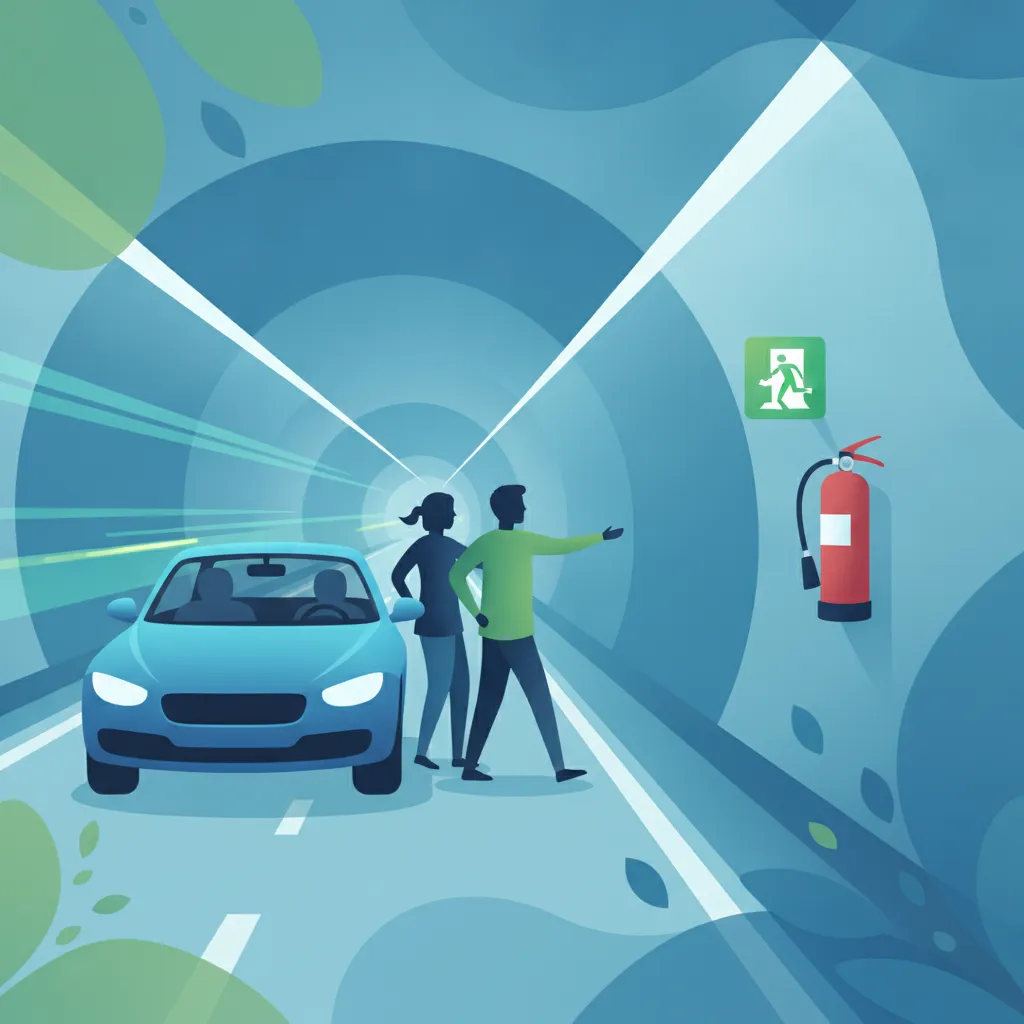
This lesson focuses on safety protocols specific to tunnel driving, explaining how to interpret tunnel signage and maintain appropriate speed. It covers how to respond to emergencies such as fires or breakdowns inside a tunnel. The content also details the location and use of emergency exits, the role of ventilation systems, and driver responsibilities.

Tunnels are enclosed environments with unique risks. This lesson covers the mandatory pre-entry checks, such as removing sunglasses and turning on dipped headlights. It explains the importance of maintaining a greater following distance and outlines the critical emergency procedures in case of a breakdown or fire inside a tunnel.

After stopping for an emergency, making the scene safe is the top priority. This lesson details the procedure: activate hazard warning lights, put on high-visibility clothing before exiting the cab, and place the warning triangle at the correct distance behind the vehicle (at least 100m on motorways). This warns approaching traffic and creates a safer environment for the driver and emergency responders.

A tyre blowout or engine failure can be a frightening experience. This lesson provides a clear action plan: maintain a firm grip on the steering wheel, avoid harsh braking, signal, and move the vehicle to a safe location like the hard shoulder if possible. It then covers the essential safety steps of activating hazard lights, placing the warning triangle, and waiting in a safe place away from the vehicle.
This lesson explores the rules for driving on motorways and navigating tunnels. It covers entry and exit procedures, lane discipline, minimum speed requirements, and overtaking protocols on high-speed roads. For tunnels, the content explains speed limits, lighting, emergency exits, and ventilation requirements for safe travel.
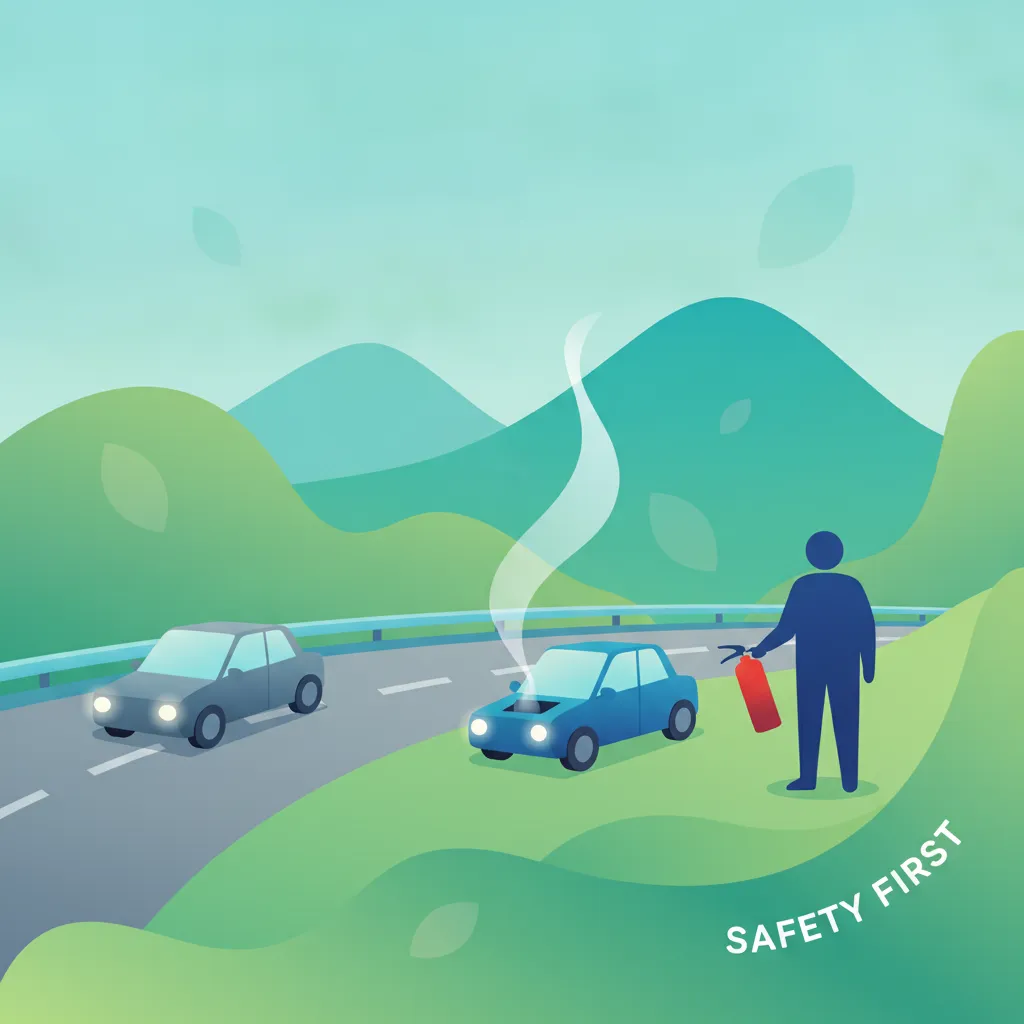
Vehicle fires can start from overheated brakes, tyres, or electrical faults. This lesson covers preventative checks and the immediate actions to take if a fire is detected: stop safely, shut off the engine, and call the emergency services. It provides guidance on using the on-board fire extinguisher for small, accessible fires but stresses that personal safety is paramount and the driver should not take unreasonable risks.
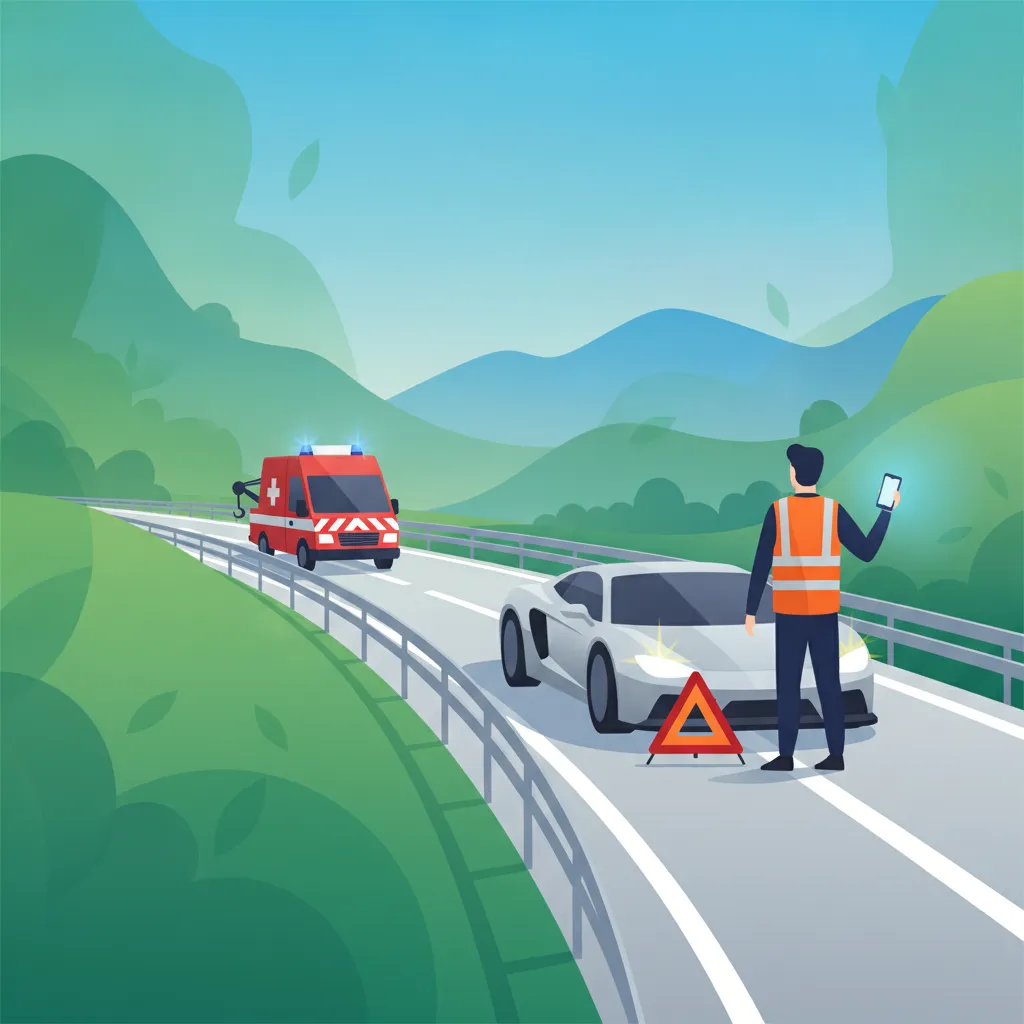
A breakdown can be a dangerous situation, especially on a busy road or motorway. This lesson provides a clear, sequential guide to follow. It includes pulling over to a safe location, activating hazard lights, placing the warning triangle, ensuring passenger safety, and contacting the appropriate services for assistance.

Driving in the Alps requires a high level of skill and vehicle sympathy. This lesson covers techniques for climbing steep gradients by selecting the correct gear to maintain momentum without straining the engine. It reiterates the critical importance of using low gears and auxiliary brakes for descending, to ensure the service brakes remain cool and effective for the entire descent.

Losing part of a load on the road creates an immediate and serious hazard for other drivers. This lesson outlines the driver's responsibilities: stop in a safe place, assess the situation from a safe distance, and immediately alert the police. The driver's primary role is to warn other road users and not to attempt to retrieve the load from a live carriageway.
Understand essential rules for driving heavy vehicles in tunnels, including correct headlight usage, maintaining safe following distances, and utilizing tunnel radio frequencies for critical safety information.

This lesson examines the different lighting systems on a vehicle, including headlamps, fog lights, and turn signals. It explains the appropriate use of low-beam and high-beam headlights and the conditions for activating fog lights. Understanding proper lighting usage improves visibility and safety, especially in low-light or adverse weather conditions.

Proper visibility is paramount for the safety of large vehicles, especially at night or in poor weather. This lesson covers the full range of required lights, including headlights, indicators, brake lights, and side and rear marker lights. It also explains the function of reflectors and the mandatory high-visibility conspicuity markings that outline the vehicle's shape to other drivers.
Tunnels are enclosed environments with unique risks. This lesson covers the mandatory pre-entry checks, such as removing sunglasses and turning on dipped headlights. It explains the importance of maintaining a greater following distance and outlines the critical emergency procedures in case of a breakdown or fire inside a tunnel.
This lesson focuses on safety protocols specific to tunnel driving, explaining how to interpret tunnel signage and maintain appropriate speed. It covers how to respond to emergencies such as fires or breakdowns inside a tunnel. The content also details the location and use of emergency exits, the role of ventilation systems, and driver responsibilities.
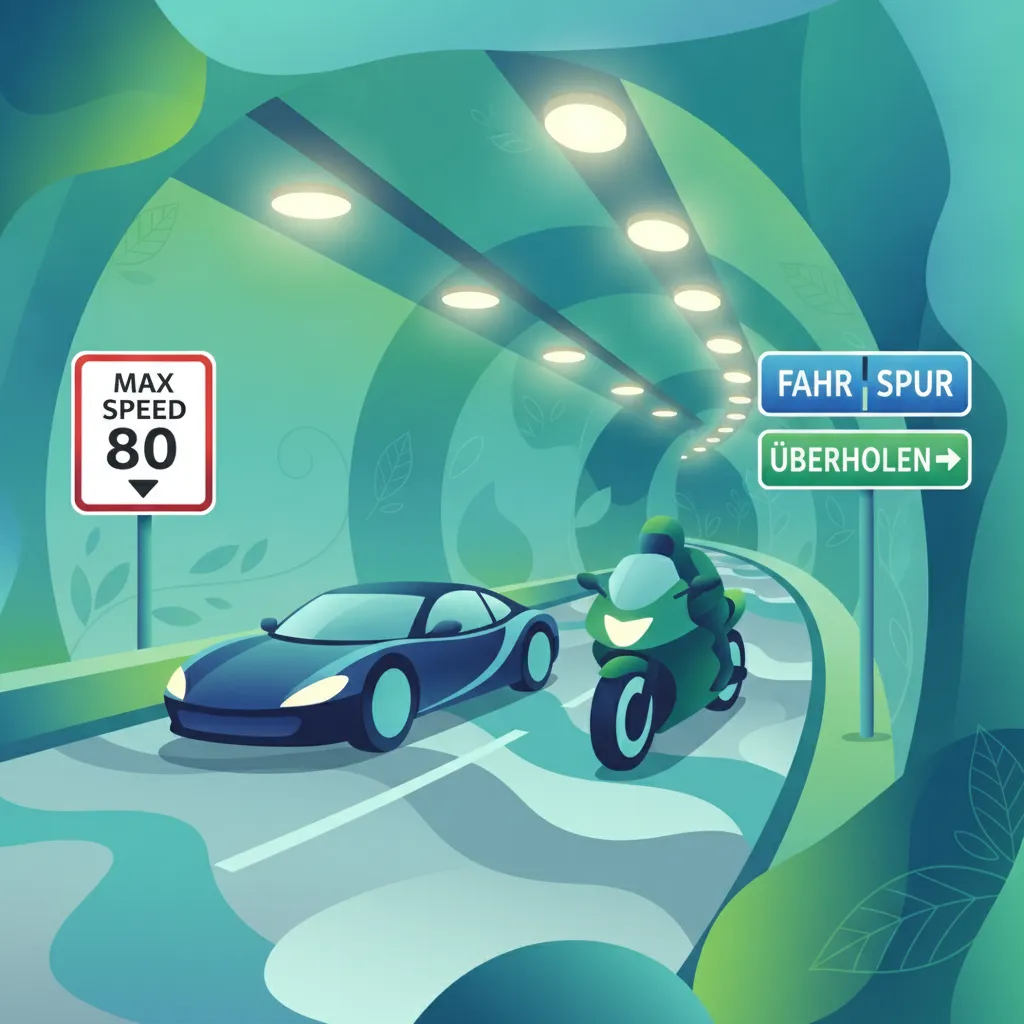
This lesson explores the rules for driving on motorways and navigating tunnels. It covers entry and exit procedures, lane discipline, minimum speed requirements, and overtaking protocols on high-speed roads. For tunnels, the content explains speed limits, lighting, emergency exits, and ventilation requirements for safe travel.
This lesson focuses on techniques and equipment designed to increase a motorcyclist's visibility to others. It explains the strategic use of reflective materials, high-visibility clothing, and the mandatory use of daytime running lights. Understanding how to enhance conspicuity is a critical component of proactive self-protection on the road.
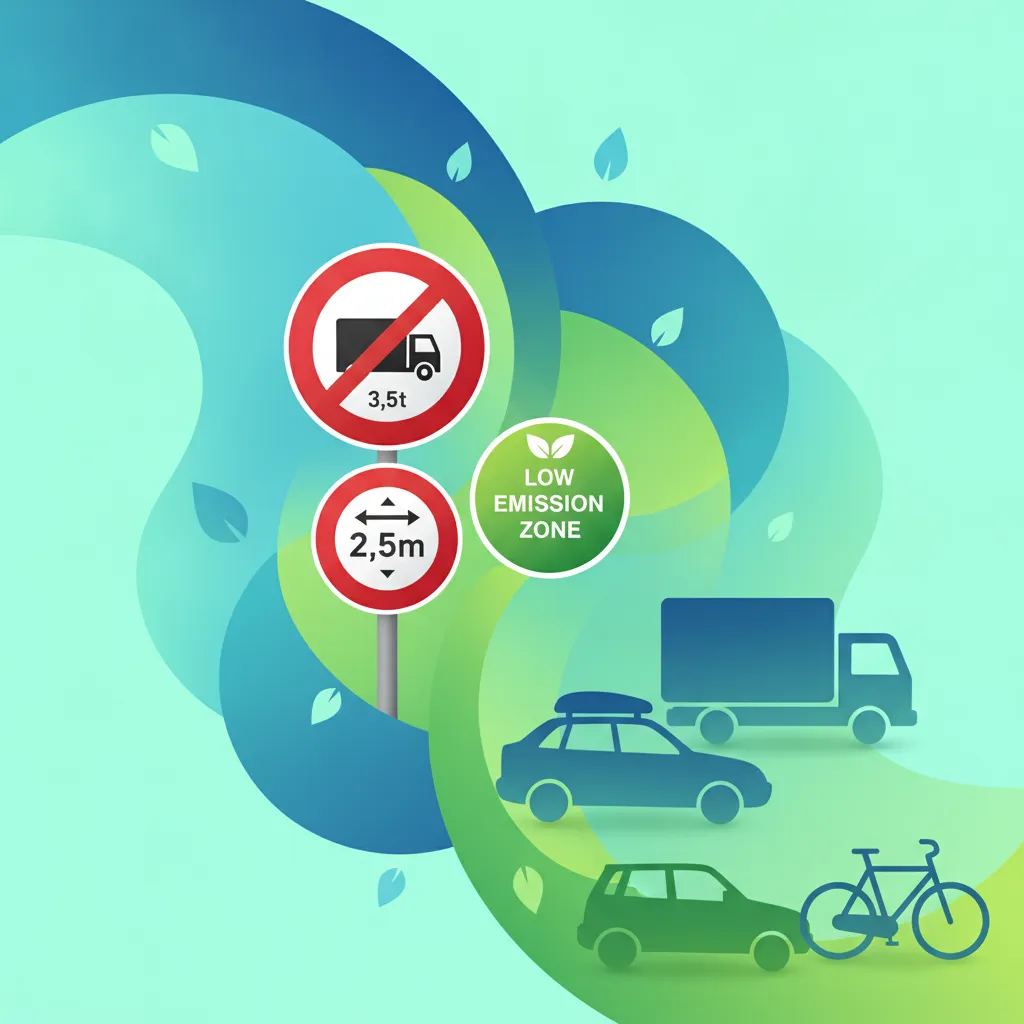
Many urban areas have restrictions to manage traffic and protect infrastructure. This lesson teaches drivers to identify and interpret traffic signs that prohibit access based on gross vehicle weight, axle load, height, or width. It also covers the growing prevalence of environmental or low-emission zones, which may restrict entry for older, more polluting vehicles.

Being seen and being able to see are critical for safety. This lesson covers the systematic check of all exterior lights, including headlights, brake lights, and indicators. It also emphasizes the importance of ensuring all mirrors and camera lenses are clean, undamaged, and properly adjusted for maximum visibility.

This lesson introduces the core behaviour rules governing safe communication, focusing on the use of signals, mirrors, and eye contact. It emphasizes the importance of timely indicator usage and the correct procedure for checking mirrors and blind spots. The content also covers non-verbal communication cues that help convey intent and foster predictable traffic flow.

This lesson focuses on the concept of conspicuity, or how easily a rider can be seen by others. It explains the legal requirements for vehicle lights and reflectors in Switzerland and the benefits of wearing bright or reflective clothing. Learners will understand how to maximize their visibility during the day, at night, and in poor weather conditions.
Find clear answers to common questions learners have about Rules and Techniques for Driving in Tunnels and Galleries. Learn how the lesson is structured, which driving theory objectives it supports, and how it fits into the overall learning path of units and curriculum progression in Switzerland. These explanations help you understand key concepts, lesson flow, and exam focused study goals.
Even in well-lit tunnels, the transition from bright daylight to artificial lighting can significantly reduce your visual perception. Removing sunglasses ensures your eyes adapt more quickly to the change, helping you spot hazards or slow-moving vehicles immediately.
Switch on your hazard lights immediately, stop as close to the right-hand wall or in a breakdown bay as possible, and turn off the engine. Stay in the vehicle if it is safe, or move to an emergency exit area, and use the provided emergency phones to alert tunnel control.
General speed limits apply unless indicated otherwise by traffic signs. However, heavy vehicle drivers are expected to maintain a significantly increased following distance to account for the longer braking distances inherent to Category C and C1 vehicles.
In many Swiss tunnels, the radio frequency is reserved for emergency broadcasts. In the event of an incident or closure, tunnel authorities can override your radio signal to give clear, real-time instructions that could be vital for your safety.
Pinpoint specific Swiss traffic rules, road signs, or driving situations you need to master. Use the practice search to start a focused revision session now and build confidence for your official driving theory exam.