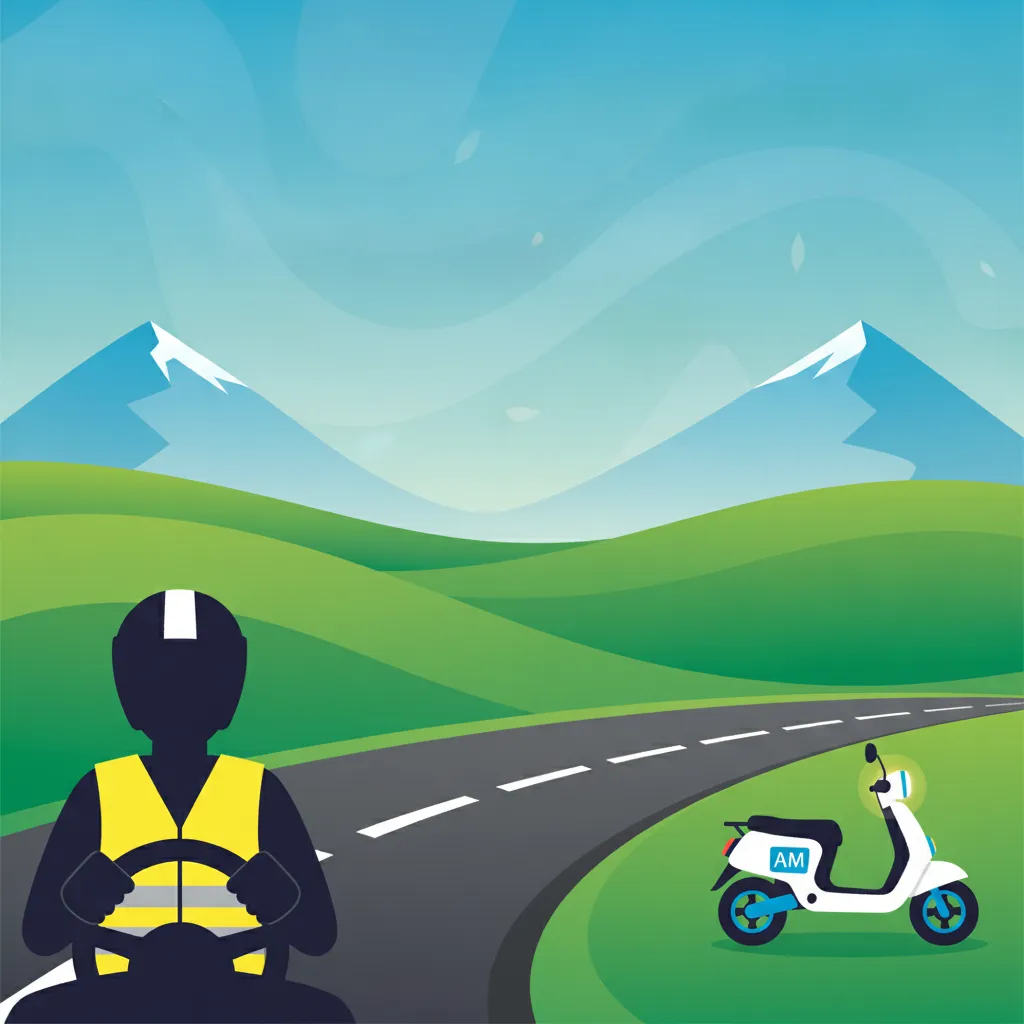
This lesson introduces the foundation of your Category M journey, explaining the significance of the AM-style course within the Swiss legal framework. You will gain a clear overview of the licensing process, including your responsibilities as a rider and how this theory content prepares you for the official exam.
Lesson content overview
Embarking on the journey to obtain a Swiss driving license for mopeds and e-bikes begins with a clear understanding of the regulatory framework. This lesson clarifies the "AM-Style Course" designation, its role within the Swiss legal context, and how it aligns with the official Category M examination. It serves as the foundational knowledge for all aspiring moped and e-bike riders in Switzerland, ensuring a safe and compliant pathway to obtaining your driving permission.
The AM-Style Course is a formal, standardized theoretical training program specifically designed for individuals seeking a Category M driving license in Switzerland. It is a fundamental prerequisite, recognized and mandated by Swiss authorities, including the Federal Roads Office (FEDRO). This course provides the essential theoretical knowledge required for safe and responsible operation of low-speed two-wheel vehicles on public roads.
The primary purpose of the AM-Style Course is to equip learners with a comprehensive understanding of Swiss traffic laws, road signs, priority rules, and safe riding practices tailored to mopeds and e-bikes. It covers crucial aspects such as vehicle control, hazard perception, and risk management within a theoretical framework. By completing this course, future riders gain a foundational knowledge base that significantly reduces accident risk, particularly for inexperienced individuals.
The scope of the AM-Style Course is strictly theoretical. It focuses on the principles and regulations governing road use, rather than practical riding skills. Practical experience is gained separately under supervision, which is discussed later in this lesson. This structured approach ensures that learners first grasp the rules before applying them on the road.
A critical aspect of the AM-Style Course is its direct alignment with the official Category M theory examination. The curriculum of the course is meticulously crafted to cover all topics and concepts that will be tested in the mandatory theory exam. This direct correlation means that successful completion of the AM-Style Course is the primary method of preparation for the theoretical test, ensuring that learners are fully equipped to achieve a passing score.
The theory examination serves as a gatekeeper, verifying that candidates have internalized the necessary theoretical knowledge for safe riding. Without successfully passing this exam, individuals cannot progress towards obtaining their full Category M license. Therefore, engaging thoroughly with the AM-Style Course content is not just a formality, but a crucial step towards legitimate and safe moped operation.
The Category M license is a specific classification within the Swiss driving license system that authorizes individuals to operate certain low-speed two-wheel motor vehicles. This category distinguishes mopeds and certain types of e-bikes from higher-speed motorcycles (Category A) or cars (Category B), establishing tailored age and competency thresholds.
A Category M license permits the operation of two-wheel motor vehicles with a maximum speed of 45 km/h. For gasoline engines, this typically means a cylinder capacity up to 50 cm³. For electric motors, the maximum continuous rated power is up to 500 W, with electric assistance generally limited to a maximum speed of 25 km/h. Vehicles that exceed these technical limits are classified under different license categories, such as Category A1 for light motorcycles.
Obtaining a Category M license grants the holder the legal entitlement to ride approved mopeds and e-bikes on public roads without supervision, provided all other traffic laws are observed. It is vital for riders to understand these specifications to ensure their vehicle complies with their license category, avoiding potential legal complications.
To obtain a Category M license in Switzerland, specific age restrictions apply. The minimum age to acquire an AM-style license, which is typical for mopeds and the focus of this course, is generally 14 years. This age threshold is set to align licensing with maturity and safety considerations appropriate for low-speed vehicles.
It is important to note that higher-speed motorcycles (e.g., A1-style licenses for vehicles exceeding M category limits) typically have a minimum age of 16 years. These age requirements are strictly enforced to promote road safety and ensure that riders possess a sufficient level of responsibility and cognitive development before operating vehicles on public roads.
The Lernfahrausweis, often translated as a "learner's permit" or "provisional license," is a crucial document in the Swiss Category M licensing process. It provides a legal framework for individuals to begin practical moped driving under controlled conditions, bridging the gap between theoretical knowledge and independent riding.
Eligibility for a Lernfahrausweis is directly linked to the successful completion of the AM-Style Course. Once a learner has finished the course and received certification, they can apply for this provisional authorization. The application process typically involves submitting the course completion certificate along with other required documents to the cantonal driving licensing office.
Complete the mandatory AM-Style theoretical training course at a certified institution.
Submit an application form to your cantonal Road Traffic Office (Strassenverkehrsamt).
Include your course completion certificate, proof of identity, and an eye test certificate.
Pay the required administrative fees.
Receive your Lernfahrausweis, which legally permits supervised practice.
The Lernfahrausweis is a provisional authorization, meaning it does not confer full driving rights. Its primary purpose is to allow practical training while ensuring safety through supervised operation, thereby facilitating the development of necessary practical skills before the theory examination.
Holders of a Lernfahrausweis are subject to specific restrictions designed to maximize safety during the learning phase. These typically include:
These restrictions are crucial for providing a safe and effective learning environment, allowing new riders to build confidence and skills without undue pressure or risk.
Once the Lernfahrausweis is issued, there is a mandatory minimum holding period before the learner is eligible to take the Category M theory examination. This period is typically three months. The rationale behind this rule is to provide sufficient time for practical experience and the consolidation of theoretical knowledge through real-world application.
This minimum period ensures that learners gain adequate on-road exposure, allowing them to better understand and apply the traffic rules and safety principles learned in the AM-Style Course. Attempting to schedule the theory exam before this period has elapsed will result in the application being rejected by the licensing authority.
The pathway to obtaining a full Swiss Category M driving license is structured and requires adherence to specific sequential steps. Understanding this process is vital for efficient and compliant licensure.
The licensing process for Category M can be summarized into a clear sequence of mandatory steps:
Complete the AM-Style Course: This theoretical training is the very first step and a prerequisite for all subsequent stages.
Apply for and Receive the Lernfahrausweis: After completing the course and meeting age requirements, learners obtain their provisional permit.
Begin Supervised Practical Training: The Lernfahrausweis allows learners to practice riding mopeds under the supervision of a qualified adult for the minimum required period.
Take and Pass the Category M Theory Examination: After fulfilling the minimum holding period for the Lernfahrausweis, learners can register for and must pass the theory test.
Receive the Category M Driving License: Upon passing the theory examination (and any other requirements, such as a practical assessment if applicable), the full Category M license is issued.
This structured progression ensures that theoretical knowledge is acquired before practical application, and supervised practice solidifies skills before independent riding. Skipping any of these mandatory steps will lead to delays or legal penalties.
The Category M theory examination is a critical checkpoint in the licensing process. It is a written test that directly assesses the knowledge acquired during the AM-Style Course. Topics covered include traffic regulations, road signs, priority rules, vehicle technical requirements, and safe riding practices specific to mopeds and e-bikes.
To prepare effectively for the theory examination, thoroughly review all materials from the AM-Style Course. Many resources, including official study guides and practice questions, are available to help you consolidate your knowledge and identify areas for further study.
A minimum passing score, typically 90 out of 100 points, is required to demonstrate proficiency. Passing this examination validates that candidates possess the fundamental theoretical understanding necessary to operate a moped or e-bike safely and responsibly on Swiss roads. Failure to pass means the candidate cannot proceed to obtain their full license and must re-take the exam.
Navigating the Swiss Category M licensing process can present several challenges if rules are not fully understood. Awareness of common misunderstandings and potential violations is crucial for a smooth and compliant experience.
One of the most frequent violations is attempting to ride a moped on public roads without the appropriate legal authorization.
Operating a moped or e-bike on public roads without a valid Lernfahrausweis (learner's permit) or a full Category M license.
Another common mistake is misinterpreting the scope of other license categories.
Operating a moped that does not conform to the technical limits of Category M is a serious violation.
The supervision requirement for Lernfahrausweis holders is strict and must be followed meticulously.
Similarly, neglecting safety equipment can have severe consequences.
Safe moped riding extends beyond just knowing the rules; it involves adapting to various environmental and traffic conditions. Learners must develop an acute awareness of these factors to minimize risks.
Weather conditions can significantly affect moped handling and safety. Learners, especially those with a Lernfahrausweis, should exercise extreme caution or avoid riding altogether in adverse conditions.
Learners should avoid riding in heavy rain, fog, or icy conditions. These environments present heightened risks due to reduced traction and visibility, which can be overwhelming for inexperienced riders.
Moped riders are considered vulnerable road users. Understanding how to interact safely with others in various traffic environments is paramount.
Safety equipment and legal protections are non-negotiable for all moped riders, especially learners.
The Swiss Category M license is required for operating mopeds and certain e-bikes with a maximum speed of 45 km/h. The licensing process begins with completing the official AM-Style Course, which aligns directly with the theory examination content. After completing the course, learners apply for a Lernfahrausweis (learner's permit) to begin supervised practical riding under strict restrictions including qualified adult supervision, no night riding, no passengers, and mandatory display of the L-Schild. A minimum three-month holding period must elapse before the theory examination can be taken, which tests knowledge of traffic laws, road signs, priority rules, and safe riding practices specific to mopeds and e-bikes.
A short set of high-value points that capture the most important learning from this lesson.
Category M license permits operation of two-wheel vehicles up to 45 km/h, with gasoline engines limited to 50 cm³ or electric motors up to 500W
The minimum age to obtain an AM-style license for mopeds and e-bikes in Switzerland is 14 years
The licensing pathway follows a mandatory sequence: AM-Style Course → Lernfahrausweis → supervised practice → theory examination → full Category M license
A qualified supervisor must hold a valid Category A or B license, be at least 21 years old, and have held that license for a minimum of three years
The Lernfahrausweis must be held for a minimum period of three months before the theory examination can be taken
Explore all units and lessons included in this driving theory course.
Display the blue L-Schild (L-plate) on your moped whenever riding with a learner's permit
Learners with Lernfahrausweis are prohibited from riding at night, carrying passengers, and using motorways or high-speed roads
A Category B (car) license does NOT automatically permit moped operation; a separate Category M license is required
Protective helmet (certified), gloves, and appropriate clothing are mandatory safety equipment in Switzerland
The theory examination requires a minimum passing score of approximately 90 out of 100 points
Riding unsupervised after completing only the AM-Style Course, before obtaining the Lernfahrausweis
Assuming that holding a car license (Category B) automatically authorizes moped operation without a Category M license
Modifying a moped to exceed 45 km/h or operating a vehicle with specs beyond Category M limits, which reclassifies it under a higher category
Using a supervisor who does not meet qualification criteria (wrong license category, too young, or insufficient driving experience)
Attempting to take the theory examination before completing the mandatory minimum holding period for the Lernfahrausweis
Lesson content overview
A short set of high-value points that capture the most important learning from this lesson.
Category M license permits operation of two-wheel vehicles up to 45 km/h, with gasoline engines limited to 50 cm³ or electric motors up to 500W
The minimum age to obtain an AM-style license for mopeds and e-bikes in Switzerland is 14 years
The licensing pathway follows a mandatory sequence: AM-Style Course → Lernfahrausweis → supervised practice → theory examination → full Category M license
A qualified supervisor must hold a valid Category A or B license, be at least 21 years old, and have held that license for a minimum of three years
The Lernfahrausweis must be held for a minimum period of three months before the theory examination can be taken
Explore all units and lessons included in this driving theory course.
Display the blue L-Schild (L-plate) on your moped whenever riding with a learner's permit
Learners with Lernfahrausweis are prohibited from riding at night, carrying passengers, and using motorways or high-speed roads
A Category B (car) license does NOT automatically permit moped operation; a separate Category M license is required
Protective helmet (certified), gloves, and appropriate clothing are mandatory safety equipment in Switzerland
The theory examination requires a minimum passing score of approximately 90 out of 100 points
Riding unsupervised after completing only the AM-Style Course, before obtaining the Lernfahrausweis
Assuming that holding a car license (Category B) automatically authorizes moped operation without a Category M license
Modifying a moped to exceed 45 km/h or operating a vehicle with specs beyond Category M limits, which reclassifies it under a higher category
Using a supervisor who does not meet qualification criteria (wrong license category, too young, or insufficient driving experience)
Attempting to take the theory examination before completing the mandatory minimum holding period for the Lernfahrausweis
Explore search topics learners often look for when studying The AM-Style Course in the Swiss Context. These topics reflect common questions about road rules, driving situations, safety guidance, and lesson level theory preparation for learners in Switzerland.
Browse additional driving theory lessons that cover connected traffic rules, road signs, and common driving situations related to this topic. Improve your understanding of how different rules interact across everyday traffic scenarios.
Understand the complete pathway to obtaining your Swiss Category M license. This lesson covers the AM-style course, Lernfahrausweis, and all mandatory steps for moped and e-bike riders.
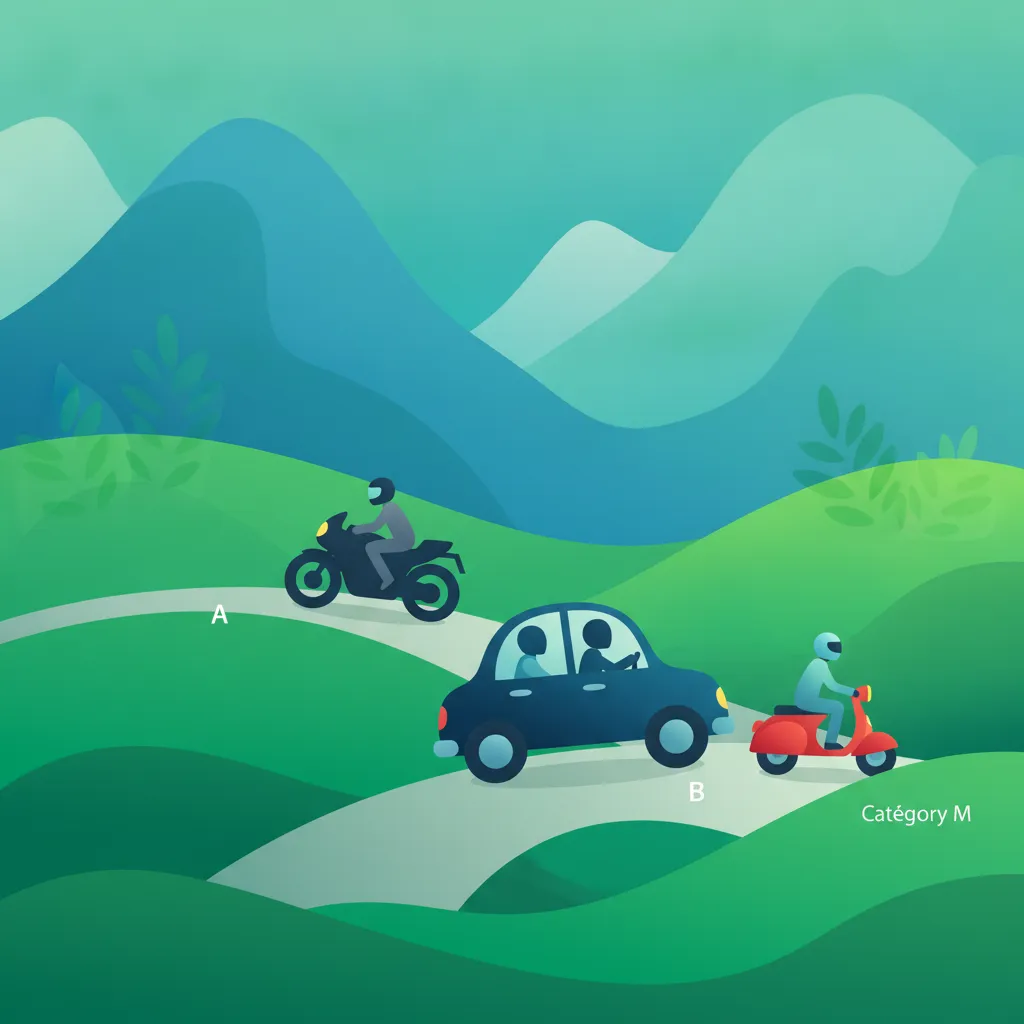
This lesson defines the scope of Switzerland's Category M license by comparing it to other vehicle categories. It details the specific criteria for vehicles, such as maximum speed and engine power, that fall under this classification. Understanding these distinctions is crucial for knowing your legal entitlements and limitations as a Category M license holder.

This lesson focuses on the Lernfahrausweis, the Swiss provisional permit required for learning to ride a small powered vehicle. It explains the application process, minimum age requirements, and the specific rules and limitations that apply to a learner rider. Learners will understand the legal framework that governs the learning phase before they can obtain their full driving license.
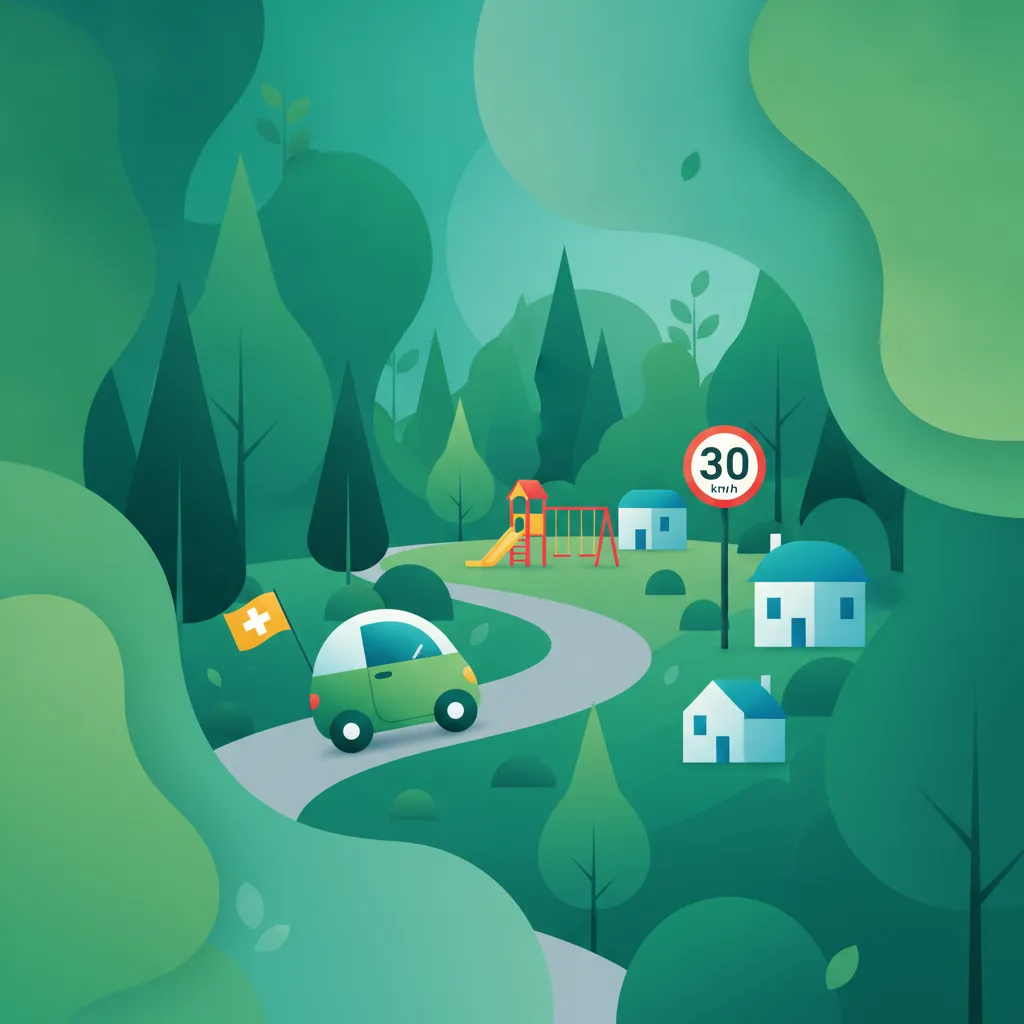
This lesson details the maximum legal speed limits applicable to Category M vehicles in Switzerland. It explains how to identify speed limits through signage and differentiates between built-up areas, rural roads, and motorways where permitted. The content stresses that the legal limit is a maximum, and riders must always adapt their speed to traffic, weather, and road conditions.
This lesson details the Swiss motorcycle licence categories, explaining the technical criteria that define A1 and A licences, such as engine capacity and power output. It outlines the statutory age thresholds and the progressive training path required for riders. Understanding this regulatory framework provides a clear foundation for what is legally permitted for each licence type.
This lesson introduces the fundamental traffic signs that directly impact small vehicle riders. It covers the classification of signs into regulatory, warning, and mandatory categories, explaining how their shape and color indicate their function. Learners will be able to recognize and correctly interpret speed limits, priority signs, and other key information vital for safe navigation.
This lesson outlines the legal repercussions for breaking traffic laws in Switzerland. It details the system of fines and administrative measures, including the potential for license withdrawal for serious offenses. The content also explains a rider's legal duties after being involved in an accident, including reporting and insurance obligations.

This lesson details the fundamental responsibilities and safe habits every new rider must adopt. It covers legal obligations such as wearing a helmet and using lights, as well as the importance of developing a defensive mindset. The content emphasizes anticipating potential hazards and making responsible decisions to ensure safety for oneself and other road users.
This lesson emphasizes the rider's responsibility for ensuring their vehicle is in safe, roadworthy condition. It outlines a simple pre-ride inspection routine covering key safety components like tyres, brakes, lights, and controls. Regular maintenance is presented as a critical component of overall rider safety.
This lesson details the types and functions of personal protective equipment (PPE) for riders. It explains Swiss legal requirements for helmets and the safety standards to look for. The content also covers the benefits of wearing protective jackets, pants, gloves, and footwear to guard against impact and abrasion injuries.
This lesson provides a practical guide for handling a vehicle breakdown. It covers the immediate steps to take, such as moving the vehicle off the road if possible and making it visible to other traffic using hazard lights. The content also explains how to contact breakdown services and what information to provide to them.
Learn about key Swiss traffic rules for mopeds and identify common misunderstandings and potential violations. This lesson focuses on safe operation and risk avoidance for new riders.

This lesson identifies and analyzes high-risk behaviors that contribute to a majority of accidents involving small vehicles. It explains the severe consequences of riding while distracted, fatigued, or under the influence of alcohol or drugs. The content aims to build a rider's awareness of these dangers and reinforce a responsible and defensive mindset.
This lesson details the fundamental responsibilities and safe habits every new rider must adopt. It covers legal obligations such as wearing a helmet and using lights, as well as the importance of developing a defensive mindset. The content emphasizes anticipating potential hazards and making responsible decisions to ensure safety for oneself and other road users.
This lesson explains the strategic importance of road positioning. It details how to select a lane position that makes you most visible to drivers ahead and behind, and helps you avoid the blind spots of larger vehicles. Proper positioning also allows for an escape route and a better line of sight through turns.
This lesson details the types and functions of personal protective equipment (PPE) for riders. It explains Swiss legal requirements for helmets and the safety standards to look for. The content also covers the benefits of wearing protective jackets, pants, gloves, and footwear to guard against impact and abrasion injuries.
This lesson provides essential strategies for riding in adverse weather like rain and fog. It explains how to increase following distances, reduce speed, and use lights effectively to enhance visibility. The content also addresses the loss of traction on wet roads and the importance of smooth control inputs for braking, accelerating, and steering.

This lesson teaches riders how to establish and maintain a safe following distance from the vehicle ahead. It introduces the 'two-second rule' as a simple and effective method for gauging a safe gap in ideal conditions. The content also explains why this distance must be increased in wet weather, at night, or when visibility is poor.

This lesson focuses on the significant risks of riding in winter conditions. It explains how to spot potential icy patches, such as black ice, and the need for extremely gentle and deliberate control inputs. The importance of proper winter tyres and dressing warmly to prevent distraction and fatigue from the cold is also emphasized.
This lesson provides a practical guide for handling a vehicle breakdown. It covers the immediate steps to take, such as moving the vehicle off the road if possible and making it visible to other traffic using hazard lights. The content also explains how to contact breakdown services and what information to provide to them.
This lesson emphasizes the rider's responsibility for ensuring their vehicle is in safe, roadworthy condition. It outlines a simple pre-ride inspection routine covering key safety components like tyres, brakes, lights, and controls. Regular maintenance is presented as a critical component of overall rider safety.
This lesson outlines the legal repercussions for breaking traffic laws in Switzerland. It details the system of fines and administrative measures, including the potential for license withdrawal for serious offenses. The content also explains a rider's legal duties after being involved in an accident, including reporting and insurance obligations.
Find clear answers to common questions learners have about The AM-Style Course in the Swiss Context. Learn how the lesson is structured, which driving theory objectives it supports, and how it fits into the overall learning path of units and curriculum progression in Switzerland. These explanations help you understand key concepts, lesson flow, and exam focused study goals.
The AM-style course provides the necessary theoretical foundation for safe vehicle operation, covering traffic laws, priority rules, and risk management specific to mopeds and e-bikes in Switzerland.
Yes, the Lernfahrausweis (learner's permit) is the official document that authorizes you to learn to ride under defined legal conditions in Switzerland, serving as the first step in your licensing journey.
Yes, since many high-speed e-bikes fall under the same regulatory framework as mopeds in Switzerland, the theory covers essential safety rules for both vehicle types.
Category M is specific to small powered vehicles like mopeds and e-bikes, focusing on lower-speed urban traffic dynamics, whereas other categories like B or A cover more complex vehicle mechanics and higher-speed roads.
Pinpoint specific Swiss traffic rules, road signs, or driving situations you need to master. Use the practice search to start a focused revision session now and build confidence for your official driving theory exam.