
This lesson provides an essential overview of the legal landscape for Category M riders in Switzerland. You will learn how to navigate potential traffic violations, the severity of administrative measures, and your critical obligations if you are ever involved in a road traffic accident.
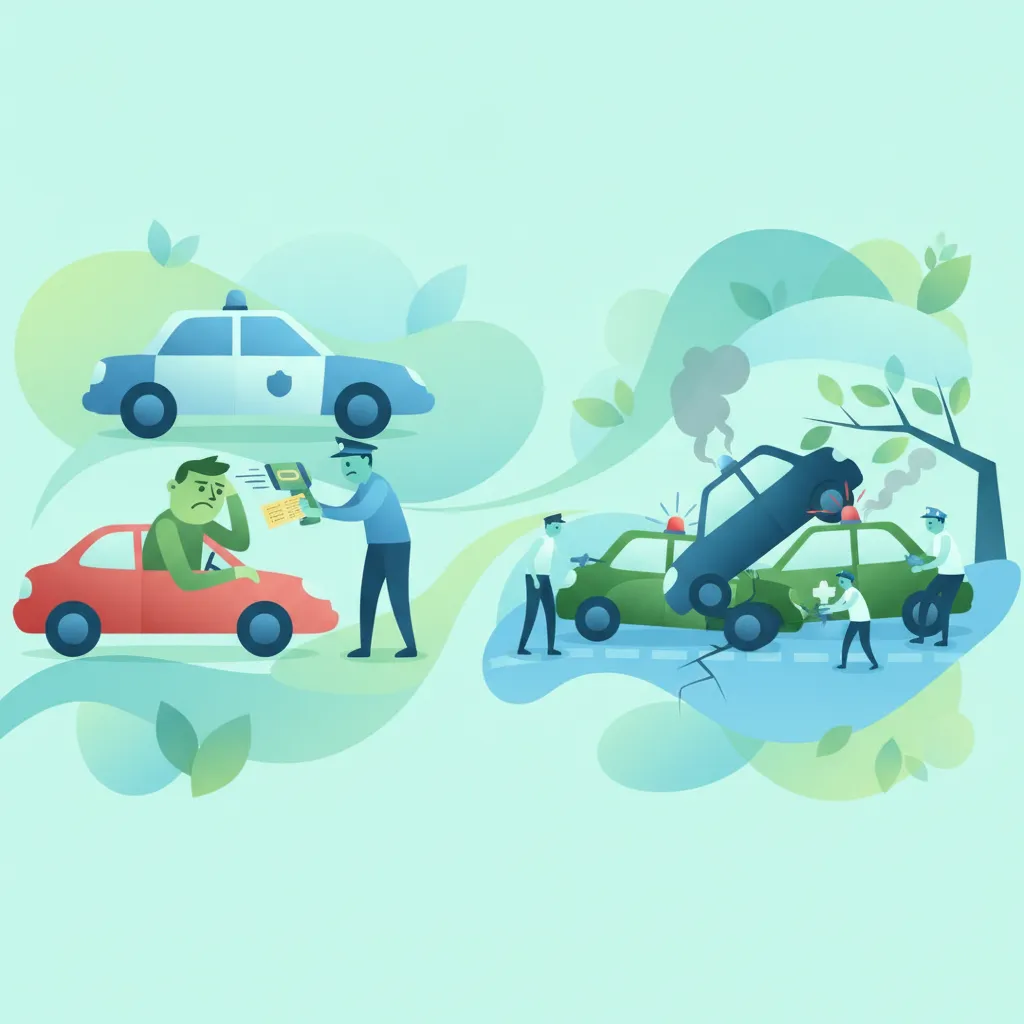
Lesson content overview
Operating a moped (Category M vehicle) in Switzerland comes with significant responsibilities. Understanding the legal consequences of traffic violations and accidents is paramount for every rider. This lesson explains the structured system of penalties, administrative measures, and your crucial legal obligations following an incident, ensuring you can navigate the roads safely and responsibly.
Swiss traffic law is designed to ensure road safety, deter dangerous behavior, and provide a framework for accountability and compensation in case of incidents. For Category M riders, this involves a graduated system of sanctions that vary based on the severity of the offense. These consequences range from monetary fines for minor infractions to severe administrative measures and even criminal penalties for serious violations or accidents.
The aim is not just punishment, but also deterrence and the promotion of safe riding habits. By knowing the potential repercussions, riders can make informed decisions, minimize risks, and fulfill their duties in various traffic situations.
Fines are the most common form of penalty for minor to moderate traffic violations in Switzerland. These financial sanctions are a direct consequence of breaking specific traffic rules, such as speeding, improper parking, or failing to wear a helmet. The amount of the fine is typically proportionate to the seriousness of the offense and its potential danger.
Fines are categorized based on the severity of the infraction:
When a rider receives a ticket, it specifies the amount to be paid and the deadline, usually between 30 and 60 days. It is crucial to pay fines promptly, as non-payment can lead to additional fees, enforcement measures like wage garnishment, or even more severe administrative actions down the line.
Even seemingly small fines can accumulate. Repeated minor offenses may lead to an official warning, point entries in your driving record, or even administrative measures like license suspension, underscoring the importance of consistent compliance.
Beyond financial penalties, administrative measures are regulatory actions taken by authorities that can restrict or remove a rider's driving privileges or vehicle usage. These measures are typically imposed for more serious or repeated traffic violations.
One of the most significant administrative measures is the suspension or withdrawal of your driving license.
In certain serious cases, authorities can impose a Verkehrssperre, a registration block on your vehicle. This measure prevents a moped from being registered or re-registered, effectively making it illegal to operate the vehicle on public roads. It can be a consequence of severe technical defects, non-payment of significant fines, or serious violations linked to the vehicle itself.
For specific violations, especially those demonstrating a lack of awareness or skill, riders may be mandated to attend driver education or remedial courses. These courses aim to improve safety knowledge, correct dangerous behaviors, and reinforce responsible riding practices. Failure to attend these compulsory courses can lead to further administrative penalties, including extended license suspensions.
Non-monetary regulatory actions, such as license suspension, vehicle registration blocks, or mandatory training, imposed to enforce compliance with traffic laws and improve road safety.
While many traffic violations result in fines or administrative measures, severe offenses are classified as criminal acts under Swiss law and carry criminal penalties. These consequences are far more serious and can have lasting impacts beyond just losing your driving privileges.
Criminal penalties apply to violations that are deemed to pose a significant threat to public safety or result in serious harm. These can include:
A conviction for a criminal traffic offense leads to a criminal record, which can have implications for future employment, travel, and other aspects of life. These penalties are governed by the Swiss Criminal Code (StGB) and specific provisions within traffic law, emphasizing the state's interest in protecting public safety and holding individuals accountable for highly dangerous actions.
Being involved in a traffic accident, regardless of its severity, triggers specific legal duties for every rider in Switzerland. These duties are crucial for ensuring proper legal processing, liability assessment, and fair insurance claims.
You have a legal obligation to report an accident under certain circumstances:
Never leave the scene of an accident where injuries have occurred or significant property damage has been sustained without fulfilling your reporting duties. This could be considered a "hit-and-run" and lead to severe criminal penalties.
Stop Immediately and Secure the Scene: Ensure your safety and the safety of others.
Check for Injuries: Provide first aid if necessary and call emergency services (144 for ambulance, 117 for police) if anyone is injured.
Exchange Information: Get names, addresses, phone numbers, vehicle registration numbers, and insurance details from all parties involved and any witnesses.
Document the Accident: Take photos, make a sketch, and note down all relevant details (date, time, location, weather conditions, road surface, damage).
Notify Police (if required): Call 117 if there are injuries, fatalities, or significant property damage (above CHF 1,000).
Contact Your Insurance Company: Report the accident to your liability insurance provider as soon as possible, ideally within 24 hours.
Thorough documentation is vital for insurance claims and legal proceedings. After an accident, you should record the following:
In Switzerland, it is legally mandatory for all Category M mopeds to have valid liability insurance. This insurance is fundamental for protecting third parties who might suffer damages as a result of an accident caused by the moped rider.
Your mandatory liability insurance must cover:
The primary purpose of this insurance is to ensure that victims of accidents are compensated for their losses, even if the responsible party cannot pay out of pocket.
You must carry valid proof of your liability insurance at all times when operating your Category M vehicle. This is usually in the form of an insurance certificate or card. Police can request to see this proof during routine checks or after an accident.
Failure to have valid liability insurance or to carry proof of it while riding carries severe consequences:
Mandatory insurance coverage that financially protects third parties against damages (bodily injury, death, or property damage) caused by the insured rider.
While a comprehensive "points system" (Verkehrsrechtliche Punkte) similar to those in other countries isn't uniformly applied to all Category M riders in the same way it is for car drivers, severe traffic offenses committed by anyone holding a driving license in Switzerland can still lead to entries in a central driving record. These entries act as demerit points and can accumulate, influencing future sanctions.
Specific severe violations, even those committed on a moped, can result in "points" or entries in your official driver's record. The accumulation of these entries can trigger a graduated system of administrative measures:
Always verify the specific point values for Category M violations, as these can be updated by cantonal or federal authorities.
For example, a serious offense like reckless overtaking might add entries to your record that contribute to a threshold, eventually leading to a license suspension if a certain number of entries are reached. It is crucial for all license holders, including moped riders, to be aware that their driving conduct is officially recorded and can have long-term consequences for their driving privileges.
Understanding specific violations and their typical consequences can help Category M riders avoid legal trouble. Here are some common infractions and what they entail:
The legal consequences for traffic violations and accidents are not always static; they can be influenced by various contextual factors. Swiss law often considers these conditions when determining the severity of penalties.
These conditional variations highlight the principle of proportionality, where the severity of the penalty corresponds to the risk created and the actual harm caused by the violation, taking into account all surrounding circumstances.
Understanding the legal consequences of traffic violations and accidents is a fundamental aspect of responsible moped riding in Switzerland. The graduated system of fines, administrative measures, and criminal penalties serves as a powerful deterrent against risky behavior, while mandatory reporting and insurance obligations ensure accountability and fair compensation for victims.
By adhering to traffic laws, maintaining valid insurance, knowing your duties after an accident, and understanding how the Swiss points system operates, you not only protect yourself from severe legal repercussions but also contribute significantly to the safety of all road users. Ride safely, ride legally.
This lesson covers the complete legal framework for Category M riders in Switzerland, detailing how violations progress from fines (CHF 80 for helmet violations) through administrative measures (license suspension, vehicle registration blocks) to criminal penalties (up to 3 years imprisonment for DUI causing injury). Learners must understand mandatory accident reporting duties—when police notification is required (injuries or damage exceeding CHF 1,000), how to document scenes properly, and the necessity of carrying valid liability insurance. The Swiss driving record system records serious infractions that accumulate and can trigger graduated sanctions, making consistent compliance essential for maintaining riding privileges.
A short set of high-value points that capture the most important learning from this lesson.
Swiss traffic law applies a graduated system: fines for minor infractions, administrative measures for serious violations, and criminal penalties for dangerous offenses like DUI causing injury
Police notification is mandatory when anyone is injured or killed, or when property damage exceeds CHF 1,000, even if only your own vehicle is damaged
Driving under the influence (BAC above 0.5‰) results in immediate minimum 3-month license suspension and potential criminal prosecution if an accident occurs
All Category M mopeds must carry valid mandatory liability insurance at all times, covering bodily injury, death, and property damage to third parties
Serious traffic violations create entries on your official driving record that can accumulate and eventually trigger license suspension or withdrawal
Explore all units and lessons included in this driving theory course.
The CHF 1,000 property damage threshold triggers mandatory police notification for accidents
Riding without a helmet incurs an immediate fine of CHF 80, with repeated offenses leading to additional administrative measures
Blood alcohol concentration limit of 0.5‰ applies to all Category M riders in Switzerland
Always exchange full details (names, addresses, vehicle plates, insurance information) with all parties involved in any collision
Leaving an accident scene where injuries occurred without fulfilling reporting duties constitutes a hit-and-run with severe criminal consequences
Assuming police notification is optional for minor collisions; the CHF 1,000 threshold is easily reached even in low-speed impacts
Failing to document accidents thoroughly; without photos, sketches, and witness details, insurance claims become difficult to prove
Not carrying proof of insurance; police can impound your moped on the spot if you cannot produce valid documentation
Believing that favorable weather or road conditions excuse speeding violations; contextual factors can actually increase penalties if they contributed to an accident
Underestimating accumulation of minor offenses; repeated violations lead to warnings, point entries, and eventually license suspension even if each individual offense seems minor
Lesson content overview
A short set of high-value points that capture the most important learning from this lesson.
Swiss traffic law applies a graduated system: fines for minor infractions, administrative measures for serious violations, and criminal penalties for dangerous offenses like DUI causing injury
Police notification is mandatory when anyone is injured or killed, or when property damage exceeds CHF 1,000, even if only your own vehicle is damaged
Driving under the influence (BAC above 0.5‰) results in immediate minimum 3-month license suspension and potential criminal prosecution if an accident occurs
All Category M mopeds must carry valid mandatory liability insurance at all times, covering bodily injury, death, and property damage to third parties
Serious traffic violations create entries on your official driving record that can accumulate and eventually trigger license suspension or withdrawal
Explore all units and lessons included in this driving theory course.
The CHF 1,000 property damage threshold triggers mandatory police notification for accidents
Riding without a helmet incurs an immediate fine of CHF 80, with repeated offenses leading to additional administrative measures
Blood alcohol concentration limit of 0.5‰ applies to all Category M riders in Switzerland
Always exchange full details (names, addresses, vehicle plates, insurance information) with all parties involved in any collision
Leaving an accident scene where injuries occurred without fulfilling reporting duties constitutes a hit-and-run with severe criminal consequences
Assuming police notification is optional for minor collisions; the CHF 1,000 threshold is easily reached even in low-speed impacts
Failing to document accidents thoroughly; without photos, sketches, and witness details, insurance claims become difficult to prove
Not carrying proof of insurance; police can impound your moped on the spot if you cannot produce valid documentation
Believing that favorable weather or road conditions excuse speeding violations; contextual factors can actually increase penalties if they contributed to an accident
Underestimating accumulation of minor offenses; repeated violations lead to warnings, point entries, and eventually license suspension even if each individual offense seems minor
Explore search topics learners often look for when studying Legal Consequences of Traffic Violations and Accidents. These topics reflect common questions about road rules, driving situations, safety guidance, and lesson level theory preparation for learners in Switzerland.
Browse additional driving theory lessons that cover connected traffic rules, road signs, and common driving situations related to this topic. Improve your understanding of how different rules interact across everyday traffic scenarios.
Understand the financial and administrative penalties for traffic violations in Switzerland for Category M riders. Learn your legal responsibilities after an accident, including reporting and insurance obligations, according to Swiss road law.
This lesson outlines the legal and administrative repercussions of committing traffic violations or being involved in an accident. It covers the system of fines, licence points, and potential licence revocation under Swiss law. Understanding these consequences reinforces the importance of lawful and responsible riding.

This lesson explains the Swiss penalty points system, detailing how points are assigned for various traffic violations. You will understand the thresholds for point accumulation and the legal consequences, such as licence suspension. The content also covers fine structures and the administrative process for point assessment for all driver license types.
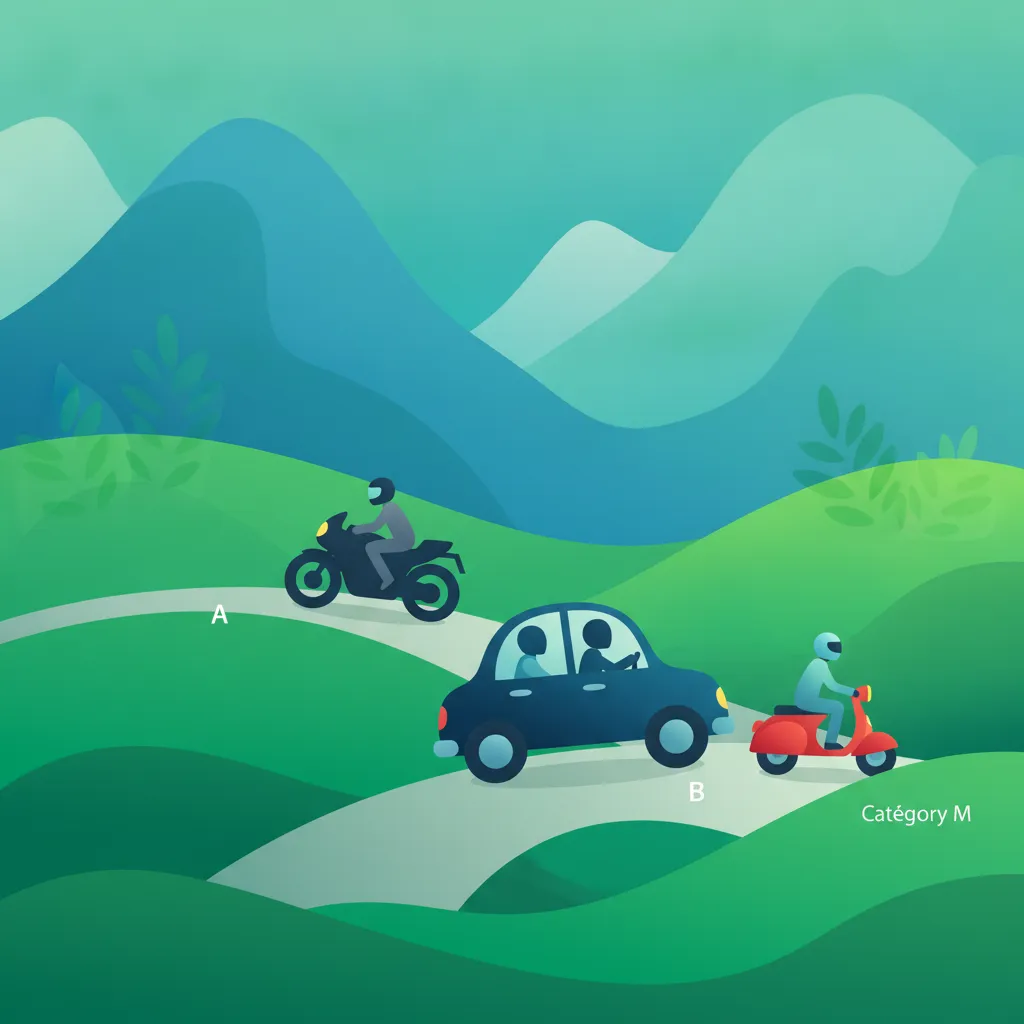
This lesson defines the scope of Switzerland's Category M license by comparing it to other vehicle categories. It details the specific criteria for vehicles, such as maximum speed and engine power, that fall under this classification. Understanding these distinctions is crucial for knowing your legal entitlements and limitations as a Category M license holder.
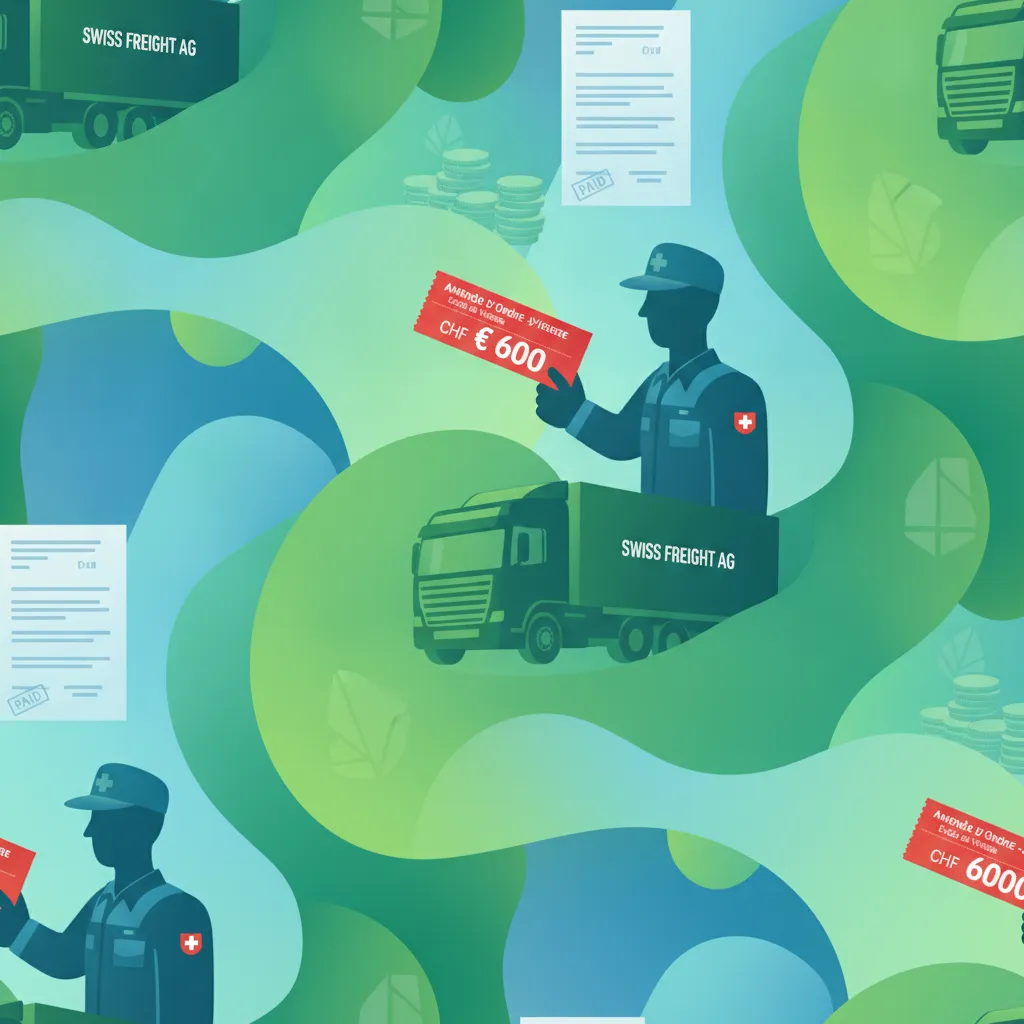
For professional drivers, traffic violations can have career-altering consequences beyond standard fines. This lesson details the heightened penalties for infringements such as speeding, overloading, insecure loads, and violations of driving time regulations. It outlines the process of warnings, license suspension or withdrawal, and potential criminal liability, emphasizing the importance of strict legal compliance in the transport industry.

This lesson clarifies the legal requirements for reporting traffic incidents in Switzerland. It provides guidance on how to interact with police and emergency personnel, providing clear and accurate information. Understanding these procedures helps ensure the incident is documented correctly for legal and insurance purposes.
This lesson details the operation of traffic light systems in Switzerland. It explains the sequence and meaning of red, amber, and green lights, including flashing amber signals. The content also covers specific signals for pedestrians and the priority rules associated with tram signals to ensure safe interaction at controlled intersections.
This lesson details the maximum legal speed limits applicable to Category M vehicles in Switzerland. It explains how to identify speed limits through signage and differentiates between built-up areas, rural roads, and motorways where permitted. The content stresses that the legal limit is a maximum, and riders must always adapt their speed to traffic, weather, and road conditions.
This lesson introduces the fundamental traffic signs that directly impact small vehicle riders. It covers the classification of signs into regulatory, warning, and mandatory categories, explaining how their shape and color indicate their function. Learners will be able to recognize and correctly interpret speed limits, priority signs, and other key information vital for safe navigation.

This lesson identifies and analyzes high-risk behaviors that contribute to a majority of accidents involving small vehicles. It explains the severe consequences of riding while distracted, fatigued, or under the influence of alcohol or drugs. The content aims to build a rider's awareness of these dangers and reinforce a responsible and defensive mindset.
This lesson emphasizes the broad responsibilities of holding a driver's licence in Switzerland, including adherence to traffic laws and maintaining vehicle roadworthiness. It covers legal obligations related to insurance, registration, and reporting accidents, as well as the consequences of violations. The content reinforces the duty of care drivers owe to all other road users.
Explore the criminal consequences for severe traffic violations in Switzerland, including misdemeanors and felonies. Understand potential jail time, significant fines, and long-term impacts on your driving record and life.
This lesson outlines the legal and administrative repercussions of committing traffic violations or being involved in an accident. It covers the system of fines, licence points, and potential licence revocation under Swiss law. Understanding these consequences reinforces the importance of lawful and responsible riding.
This lesson explains the Swiss penalty points system, detailing how points are assigned for various traffic violations. You will understand the thresholds for point accumulation and the legal consequences, such as licence suspension. The content also covers fine structures and the administrative process for point assessment for all driver license types.
For professional drivers, traffic violations can have career-altering consequences beyond standard fines. This lesson details the heightened penalties for infringements such as speeding, overloading, insecure loads, and violations of driving time regulations. It outlines the process of warnings, license suspension or withdrawal, and potential criminal liability, emphasizing the importance of strict legal compliance in the transport industry.
This lesson identifies and analyzes high-risk behaviors that contribute to a majority of accidents involving small vehicles. It explains the severe consequences of riding while distracted, fatigued, or under the influence of alcohol or drugs. The content aims to build a rider's awareness of these dangers and reinforce a responsible and defensive mindset.
This lesson details the maximum legal speed limits applicable to Category M vehicles in Switzerland. It explains how to identify speed limits through signage and differentiates between built-up areas, rural roads, and motorways where permitted. The content stresses that the legal limit is a maximum, and riders must always adapt their speed to traffic, weather, and road conditions.
This lesson explores the various methods of speed enforcement in Switzerland, including speed cameras and police checks. It explains the legal consequences of speeding, such as fines, penalty points, and possible licence suspension. Understanding enforcement mechanisms helps drivers maintain compliance with the law and avoid legal repercussions.
Explore the probationary phase that follows the acquisition of a Category B licence, including the specific restrictions imposed on new drivers. This lesson outlines the zero tolerance policy for alcohol and the potential consequences of infractions during this period. It also discusses the process for remedial training and the conditions for full licence renewal.
Overloading is a serious offence with severe safety and legal ramifications. This lesson details how excess weight drastically increases braking distances, puts extreme stress on tyres leading to blowouts, and negatively affects steering and overall stability. Furthermore, it discusses the substantial fines, potential license withdrawal, and driver liability that result from violating Swiss weight regulations.
Find clear answers to common questions learners have about Legal Consequences of Traffic Violations and Accidents. Learn how the lesson is structured, which driving theory objectives it supports, and how it fits into the overall learning path of units and curriculum progression in Switzerland. These explanations help you understand key concepts, lesson flow, and exam focused study goals.
Serious offenses in Switzerland can lead to significant fines and the administrative withdrawal of your learner's permit or driving license. The severity depends on the nature of the violation and whether it resulted in a hazard to others.
If you are involved in an accident, you must stop immediately. You are generally required to report the accident to the police if there is personal injury or significant property damage, or if the other party's identity is unclear.
Swiss law treats traffic violations seriously across all categories. Accumulating multiple violations can lead to a longer license suspension period, which will delay your ability to ride or obtain a full license.
You must try to locate the owner of the vehicle. If you cannot find them, you are legally obligated to report the damage to the nearest police station immediately to avoid a charge of fleeing the scene.
Pinpoint specific Swiss traffic rules, road signs, or driving situations you need to master. Use the practice search to start a focused revision session now and build confidence for your official driving theory exam.