
This lesson provides a vital guide for managing vehicle breakdowns and emergencies while operating a moped or e-bike in Switzerland. You will learn the exact steps to ensure your personal safety and warn other road users, which is essential for your Category M theory exam and real-world riding confidence.
Lesson content overview
Operating a Category M moped in Switzerland comes with the responsibility of knowing how to react safely and effectively in unforeseen circumstances. A vehicle breakdown or roadside emergency can be a stressful and dangerous situation, particularly for vulnerable road users like moped riders. This comprehensive guide outlines the essential steps and legal requirements to manage such incidents, ensuring your safety and that of other road users.
A breakdown occurs when your moped becomes unable to continue its journey due to mechanical or technical failure. Your immediate response to a breakdown is critical. The primary goals are to prevent secondary accidents, protect yourself and your vehicle, and alert other drivers to the hazard your stationary moped poses. Understanding these procedures is not only a matter of personal safety but also a legal obligation under Swiss traffic law.
For moped riders, a breakdown presents unique challenges due to the vehicle's smaller size and the rider's direct exposure to traffic. A stationary moped can be harder for other drivers to spot, especially at higher speeds or in poor visibility, significantly increasing the risk of a collision. Proper management minimizes these risks, ensuring that you create a safe zone around your vehicle and communicate effectively with approaching traffic and emergency services. This knowledge is fundamental for passing your Swiss Category M driving license theory course and for safe riding practice.
When your moped suddenly stops or becomes unridable, your first actions are crucial for personal safety and preventing further incidents. These steps focus on safely bringing your vehicle to a halt and securing your immediate surroundings.
The moment you realize your moped is breaking down, your priority is to bring it to a controlled and safe stop. Look for the safest possible location to pull over. This might be a designated shoulder, an emergency lane, or as far to the right side of the road as possible. Avoid stopping suddenly in the middle of a lane, especially on busy roads or blind corners. Use your turn signals if you can, to indicate your intention to move over.
Once stopped, turn off your engine if it's still running. If possible, push your moped completely off the roadway onto a shoulder or pavement. Even a small part of your moped protruding into the traffic lane can create a significant hazard. If moving the moped is not possible, position it as far to the side of the lane as you safely can.
Always prioritize finding a location that allows you to be out of the main flow of traffic. Every metre you can move your moped away from the lane reduces the risk to yourself and others.
After safely stopping your moped, the next critical step is to exit the immediate vicinity of the vehicle and traffic. This means getting yourself to a safe spot away from the roadway. If you have stopped on the side of a road, step off your moped onto the shoulder or sidewalk. On multi-lane roads or motorways, exit your moped on the side furthest from the flow of traffic, if safe to do so. This usually means exiting to the right.
Avoid standing between your moped and oncoming traffic. Always put as much distance as possible between yourself and moving vehicles. If you have passengers, ensure they also move to a safe location.
Once your moped is safely stopped and you are in a secure position, your next task is to make your stationary vehicle as visible as possible to approaching traffic. This involves activating your hazard warning lights and correctly placing a warning triangle.
Hazard warning lights, often called "hazard beacons," are flashing amber lights on your vehicle that indicate it is stationary or presents a hazard. You must switch these on immediately after stopping your moped and before exiting the vehicle. These lights are designed to grab the attention of other drivers from a distance, signaling a potential obstruction or danger ahead.
Activatable flashing amber lights on a vehicle, used to signal that the vehicle is stationary, broken down, or presents a hazard to other road users.
Delaying the activation of these lights or using regular headlights instead is a common mistake and significantly compromises safety. Hazard lights are specifically designed for this purpose and are legally mandated in breakdown situations under Swiss Road Traffic Regulation (VRV).
A warning triangle is a portable, reflective device placed on the road behind a stopped vehicle to alert approaching drivers of a stationary hazard. The correct placement of this triangle is crucial for providing sufficient warning and allowing other drivers ample time to react.
Your warning triangle should be clearly visible and positioned so that it does not obstruct traffic flow. It must be placed in a way that allows other road users to see it from an appropriate distance, giving them enough time to reduce speed or change lanes.
Swiss regulations specify precise distances for placing a warning triangle, which vary depending on the type of road:
Never place the warning triangle too close to your moped or directly in the traffic lane where it could become an additional obstruction or a hazard itself.
Once your immediate safety and visibility measures are in place, the next step is to seek professional assistance. This involves contacting breakdown services or, if the situation warrants, emergency services.
When you contact roadside assistance, having accurate and concise information ready will help them locate you quickly and prepare for the type of help you need. Be ready to provide:
A professional service that provides help to stranded motorists, including repairs, towing, or fuel delivery, to get their vehicle operational or safely removed from the road.
Providing vague location details is a common mistake that can significantly delay assistance, prolonging your exposure to risk on the roadside.
Even with hazard lights and warning triangles, it's important to be aware of how other drivers perceive and react to your stationary moped. While you should remain in a safe location, you can still play a role in managing interactions:
Swiss law mandates that a stopped vehicle must not obstruct traffic and must be adequately signposted. Your actions and positioning are critical to fulfilling this obligation.
The choice of where to stop your moped is a critical decision that directly impacts safety and reduces obstruction.
Optimal vehicle positioning minimizes obstruction and facilitates safe exit from the vehicle.
Stopping in the middle of a lane or in an otherwise hazardous position is a major contributor to secondary accidents and is a direct violation of Swiss traffic regulations.
Understanding your legal obligations during a breakdown is as important as knowing the practical steps. Swiss traffic law places clear responsibilities on drivers to manage breakdown situations safely.
Under Swiss Road Traffic Regulation (VRV), drivers have a duty of care to act reasonably to avoid harming others. This legal obligation extends to how you manage a breakdown. You are legally required to take measures that prevent your stationary vehicle from creating additional hazards for other road users.
A legal obligation under Swiss traffic law for drivers to take measures that prevent the creation of additional hazards after a breakdown, ensuring the safety of all road users.
Failure to adhere to these rules can result in fines, penalties, or even liability in the event of a secondary accident. The rationale behind these laws is to enhance visibility, prevent collisions, and ensure prompt assistance, thereby upholding broader road safety objectives.
Disregarding the regulations for managing a breakdown can lead to legal consequences. Common violations include:
Always remember that your actions during a breakdown are subject to Swiss traffic law, and non-compliance can have serious consequences.
Breakdowns don't always happen on clear, sunny days. Your response needs to adapt to varying environmental and traffic conditions to remain effective.
Weather conditions like fog, heavy rain, or darkness significantly reduce visibility, making a stationary moped even harder to spot.
The road type dictates specific procedural adjustments:
Mopeds have specific characteristics that affect breakdown management:
Always carry a reflective vest in your moped's storage or backpack. It's a small item that can make a huge difference in an emergency.
Beyond simply following rules, understanding the underlying safety principles reinforces why certain actions are necessary during a breakdown.
A stationary vehicle is an unexpected visual hazard for other drivers. The core principle of breakdown management is to maximize the distance at which this hazard can be perceived. Hazard lights and reflective triangles dramatically extend this visual range, especially in low-light or adverse weather conditions.
Drivers need 2-3 seconds to perceive an obstacle, process the information, and begin braking or maneuvering. The prescribed distances for warning triangles (45m, 100m, 150m) are calculated to provide sufficient space for this crucial reaction time, given typical road speeds. Without adequate warning, approaching drivers may not have enough time to react, leading to sudden braking or swerving, which can cause multi-vehicle collisions.
The most dangerous aspect of a breakdown is often not the initial mechanical failure, but the risk of a secondary accident. An improperly managed stationary vehicle creates a significant and unpredictable obstacle. By making your moped highly visible, moving it out of the traffic flow, and positioning warning devices correctly, you systematically reduce the likelihood of another vehicle colliding with yours or with the accident scene. Consistent use of hazard signals and predictable actions from the stranded driver also reduce the cognitive load and stress on other road users.
Applying these rules in context helps solidify understanding.
Setting: You are riding your moped on a residential street in a Swiss city during the daytime when your engine suddenly sputters and dies. The street has parked cars on both sides, but a small gap is available ahead.
Action:
Reasoning: This approach prioritizes moving the moped out of traffic, making it visible, and ensuring the rider's personal safety while correctly following urban warning triangle rules.
Setting: You are riding your moped on the emergency lane of a Swiss motorway when it experiences a mechanical failure. Heavy fog reduces visibility significantly.
Action:
Reasoning: High-speed environments like motorways and reduced visibility demand maximum caution and extended warning distances. Moving behind the safety barrier is crucial for personal safety.
Effectively managing a moped breakdown or roadside emergency is a vital skill for any rider preparing for their Swiss Category M driving license. The principles are clear: stop safely, make your vehicle visible, ensure your personal safety, and communicate accurately. By adhering to Swiss traffic laws, utilizing hazard warning lights and warning triangles correctly, and adapting your actions to different conditions, you can significantly reduce risks and ensure a swift resolution to an unexpected event. Your proactive and responsible actions not only protect you but contribute to the overall safety of Swiss roads for everyone.
This lesson covers the essential procedures for managing moped breakdowns in Switzerland, emphasizing safety, visibility, and legal compliance. The key actions are: stop safely off the roadway, activate hazard lights immediately, place a warning triangle at the correct distance for your road type, and exit the vehicle on the safe side. Learners must understand Swiss VRV duty of care obligations, which require preventing secondary accidents by making the stationary vehicle visible to other traffic. The lesson provides specific distances (45m urban, 100m non-urban/motorway) and practical scenarios demonstrating correct responses in different conditions, from urban streets to foggy motorways.
A short set of high-value points that capture the most important learning from this lesson.
Move your moped off the roadway or as far to the right as possible, then activate hazard warning lights immediately
Warning triangle placement distances are 45m on urban roads, 100m on non-urban roads and motorways, and up to 150m in poor visibility conditions
Exit your moped on the side furthest from traffic and move to a safe location away from the roadway before calling for assistance
Always provide precise location information including street name, kilometer marker, or GPS coordinates when contacting breakdown services
Under Swiss VRV, drivers have a legal duty of care to prevent their stationary vehicle from creating additional hazards for other road users
Explore all units and lessons included in this driving theory course.
Hazard warning lights must be activated before exiting your moped, not after
Never remain in your vehicle on a motorway shoulder; exit and move behind the safety barrier
On motorways, consider placing a second warning triangle further back in fog, heavy rain, or darkness
Provide your moped's make, model, color, and registration number when calling roadside assistance
Mopeds are smaller and less visible than cars, making correct use of hazard lights and warning triangles even more critical
Failing to activate hazard warning lights immediately, or using regular headlights instead
Placing the warning triangle too close to the moped rather than at the mandated distance
Stopping in the middle of a lane or in a blind spot instead of pulling onto a shoulder or as far right as possible
Providing vague location information when calling for assistance, which delays help and prolongs roadside exposure
Attempting unsafe repairs or standing between the moped and oncoming traffic
Lesson content overview
A short set of high-value points that capture the most important learning from this lesson.
Move your moped off the roadway or as far to the right as possible, then activate hazard warning lights immediately
Warning triangle placement distances are 45m on urban roads, 100m on non-urban roads and motorways, and up to 150m in poor visibility conditions
Exit your moped on the side furthest from traffic and move to a safe location away from the roadway before calling for assistance
Always provide precise location information including street name, kilometer marker, or GPS coordinates when contacting breakdown services
Under Swiss VRV, drivers have a legal duty of care to prevent their stationary vehicle from creating additional hazards for other road users
Explore all units and lessons included in this driving theory course.
Hazard warning lights must be activated before exiting your moped, not after
Never remain in your vehicle on a motorway shoulder; exit and move behind the safety barrier
On motorways, consider placing a second warning triangle further back in fog, heavy rain, or darkness
Provide your moped's make, model, color, and registration number when calling roadside assistance
Mopeds are smaller and less visible than cars, making correct use of hazard lights and warning triangles even more critical
Failing to activate hazard warning lights immediately, or using regular headlights instead
Placing the warning triangle too close to the moped rather than at the mandated distance
Stopping in the middle of a lane or in a blind spot instead of pulling onto a shoulder or as far right as possible
Providing vague location information when calling for assistance, which delays help and prolongs roadside exposure
Attempting unsafe repairs or standing between the moped and oncoming traffic
Explore search topics learners often look for when studying Managing Breakdowns and Road-side Emergencies. These topics reflect common questions about road rules, driving situations, safety guidance, and lesson level theory preparation for learners in Switzerland.
Browse additional driving theory lessons that cover connected traffic rules, road signs, and common driving situations related to this topic. Improve your understanding of how different rules interact across everyday traffic scenarios.
Learn essential steps for managing moped breakdowns on Swiss roads. Understand how to ensure vehicle visibility, use hazard lights, and place warning triangles correctly to alert other drivers and stay safe.
This lesson focuses on warning signs that alert drivers to potential hazards ahead, such as curves, steep descents, and roadwork zones. You will understand how these signs prompt anticipatory driving behavior, allowing for adjustments in speed and position. The content also discusses the typical placement of warning signs to help you react safely to changing conditions.
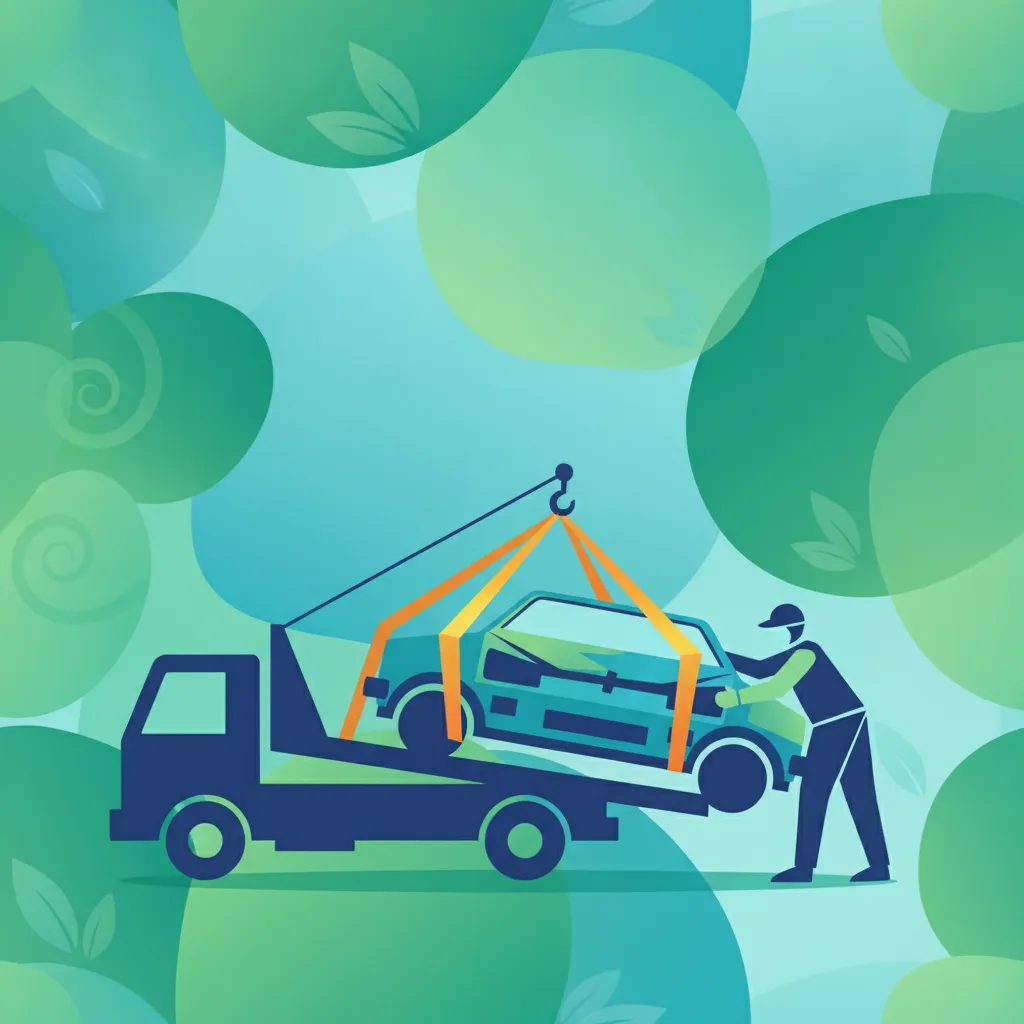
After stopping for an emergency, making the scene safe is the top priority. This lesson details the procedure: activate hazard warning lights, put on high-visibility clothing before exiting the cab, and place the warning triangle at the correct distance behind the vehicle (at least 100m on motorways). This warns approaching traffic and creates a safer environment for the driver and emergency responders.
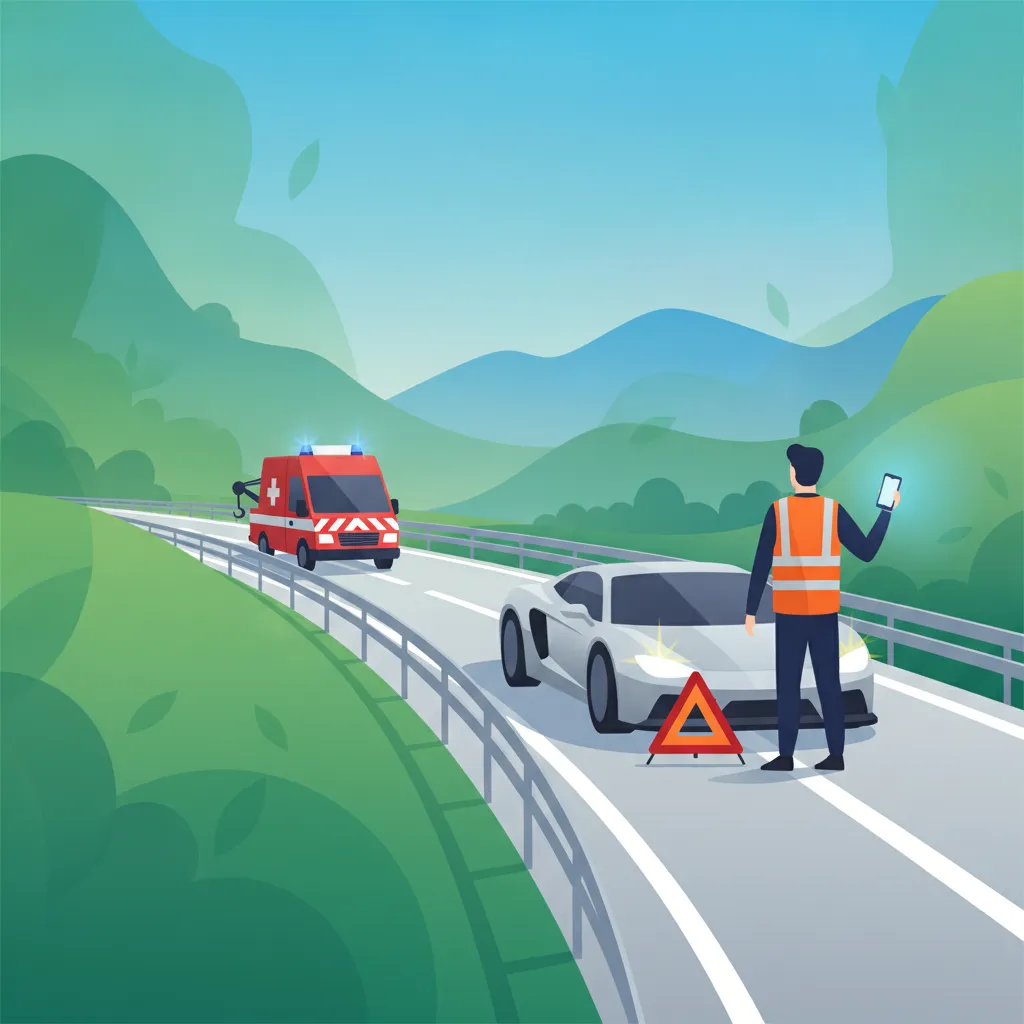
A breakdown can be a dangerous situation, especially on a busy road or motorway. This lesson provides a clear, sequential guide to follow. It includes pulling over to a safe location, activating hazard lights, placing the warning triangle, ensuring passenger safety, and contacting the appropriate services for assistance.
This lesson introduces defensive driving principles, focusing on hazard anticipation, continuous scanning, and proactive positioning. You will learn how to anticipate potential hazards by observing traffic patterns and maintaining situational awareness. Emphasis is placed on proactive speed management to avoid dangerous situations before they arise.

This lesson examines the different lighting systems on a vehicle, including headlamps, fog lights, and turn signals. It explains the appropriate use of low-beam and high-beam headlights and the conditions for activating fog lights. Understanding proper lighting usage improves visibility and safety, especially in low-light or adverse weather conditions.
This lesson provides essential strategies for riding in adverse weather like rain and fog. It explains how to increase following distances, reduce speed, and use lights effectively to enhance visibility. The content also addresses the loss of traction on wet roads and the importance of smooth control inputs for braking, accelerating, and steering.
This lesson examines the impact of weather and visibility on driving safety and speed selection. It covers how fog, rain, snow, and darkness affect visibility and reaction times, providing guidelines on adjusting speed. It also includes strategies for improving visibility, such as proper headlamp use, to ensure you can adapt to varying weather conditions.

Proper visibility is paramount for the safety of large vehicles, especially at night or in poor weather. This lesson covers the full range of required lights, including headlights, indicators, brake lights, and side and rear marker lights. It also explains the function of reflectors and the mandatory high-visibility conspicuity markings that outline the vehicle's shape to other drivers.
This lesson explores the requirements for maintaining vehicle roadworthiness, including regular technical inspections (MFK) and compliance with emission standards. It outlines the inspection criteria, such as brake performance, steering condition, and lighting system functionality. Understanding these inspections helps ensure safety and compliance with Swiss regulations.
This lesson focuses on safe reversing techniques, emphasizing the use of mirrors, rearview cameras, and checking rear visibility. You will learn to control reversing speed and safely reverse around corners or in narrow spaces. The content also outlines the necessary safety checks to perform before and during any reversing maneuver to prevent accidents.
Understand the legal requirements and duties of care for Category M riders in Switzerland during breakdowns and roadside emergencies. Learn about penalties for violations and how to contact assistance effectively.
This lesson outlines the legal repercussions for breaking traffic laws in Switzerland. It details the system of fines and administrative measures, including the potential for license withdrawal for serious offenses. The content also explains a rider's legal duties after being involved in an accident, including reporting and insurance obligations.
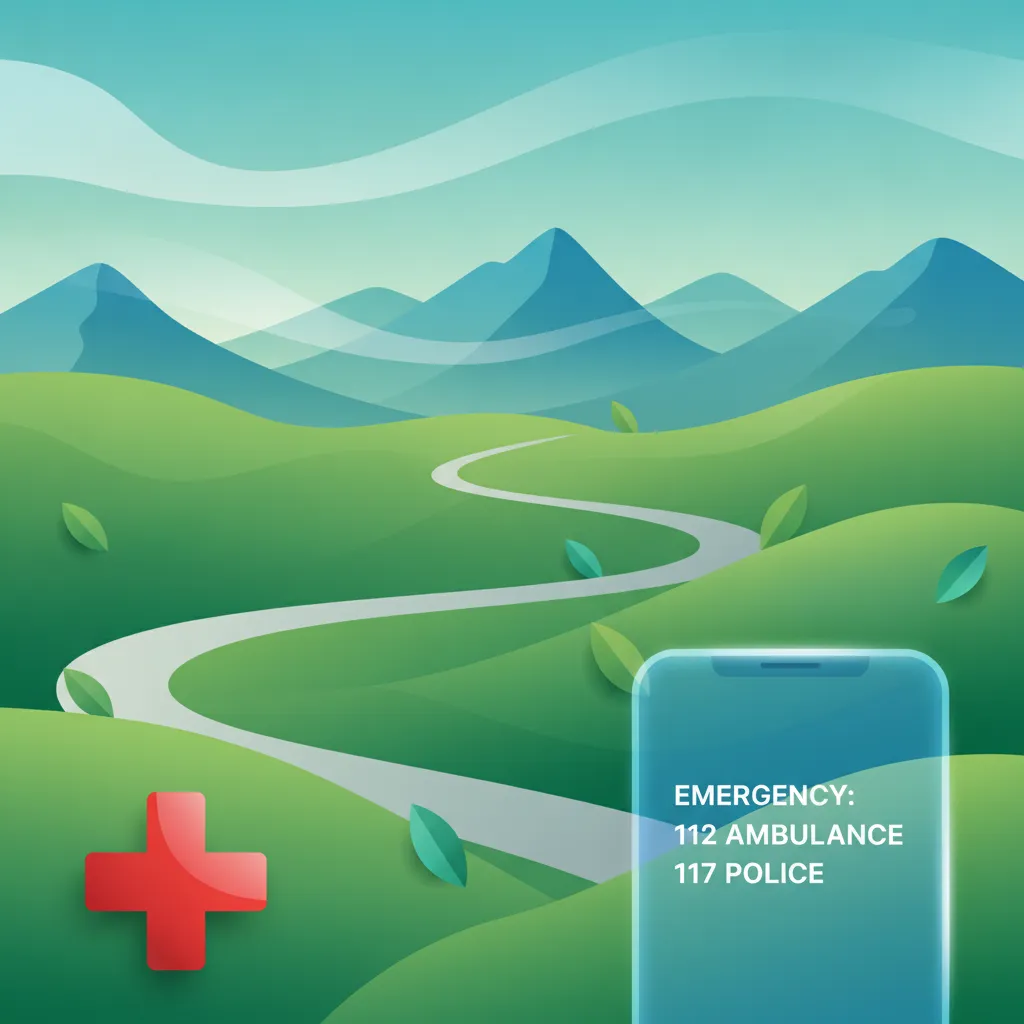
This lesson equips riders with essential knowledge for responding to an accident. It covers how to secure the scene to prevent further incidents, assess any casualties, and provide basic first aid. Crucially, it explains the difference between the general emergency number (112) and the medical emergency number (144) and what information to give the operator.
This lesson clarifies the legal requirements for reporting traffic incidents in Switzerland. It provides guidance on how to interact with police and emergency personnel, providing clear and accurate information. Understanding these procedures helps ensure the incident is documented correctly for legal and insurance purposes.
This lesson covers essential first aid skills and the procedures for reporting accidents in Switzerland. It details the use of emergency numbers 112 and 144, the correct placement of warning triangles, and the use of high-visibility vests. The content outlines the steps for securing an accident scene, providing assistance, and coordinating with emergency services.
This lesson provides clear, actionable steps for managing a motorcycle breakdown safely. It covers moving the vehicle to a safe location, making yourself visible to other traffic with hazard lights and reflective gear, and contacting breakdown services. Following a proper protocol minimizes risk in a vulnerable situation.
This lesson provides a structured guide for managing the scene of a road traffic accident. It covers the internationally recognized priorities: assess for danger, make the scene safe, send for help by calling emergency services (112), and provide first aid to the injured if trained to do so. It also details the legal requirement to stop and exchange information after being involved in a collision.
This lesson details the fundamental responsibilities and safe habits every new rider must adopt. It covers legal obligations such as wearing a helmet and using lights, as well as the importance of developing a defensive mindset. The content emphasizes anticipating potential hazards and making responsible decisions to ensure safety for oneself and other road users.
This lesson equips riders with essential first-aid knowledge and procedures for managing an accident scene. It covers how to secure the area to prevent further incidents, assess injuries, and provide basic care like controlling bleeding. The steps for effectively communicating with emergency services are also detailed.
This lesson details the types and functions of personal protective equipment (PPE) for riders. It explains Swiss legal requirements for helmets and the safety standards to look for. The content also covers the benefits of wearing protective jackets, pants, gloves, and footwear to guard against impact and abrasion injuries.

This lesson identifies and analyzes high-risk behaviors that contribute to a majority of accidents involving small vehicles. It explains the severe consequences of riding while distracted, fatigued, or under the influence of alcohol or drugs. The content aims to build a rider's awareness of these dangers and reinforce a responsible and defensive mindset.
Find clear answers to common questions learners have about Managing Breakdowns and Road-side Emergencies. Learn how the lesson is structured, which driving theory objectives it supports, and how it fits into the overall learning path of units and curriculum progression in Switzerland. These explanations help you understand key concepts, lesson flow, and exam focused study goals.
Move your vehicle to the safest possible location off the main road, such as the shoulder or a parking bay, and immediately turn on your hazard lights to warn other drivers.
While not always legally mandated for moped riders in all situations, it is highly recommended to wear high-visibility gear to ensure you remain visible to oncoming traffic, especially at night or in poor weather.
If you are on a motorway, use the emergency SOS phones or call the appropriate emergency breakdown service. Never attempt to walk along a busy motorway yourself.
You should call these numbers immediately if there is an injury, if the vehicle is in a position that poses a significant threat to other road users, or if you are in immediate danger.
Pinpoint specific Swiss traffic rules, road signs, or driving situations you need to master. Use the practice search to start a focused revision session now and build confidence for your official driving theory exam.