
This lesson guides you through the correct procedures for entering, navigating, and exiting roundabouts safely. Mastering these rules is a fundamental requirement for the Swiss Category M theory exam and ensures you can handle one of the most common intersections with confidence.
Lesson content overview
Navigating roundabouts efficiently and safely is a crucial skill for all road users, particularly for Category M (moped) riders in Switzerland. These circular intersections are designed to improve traffic flow and reduce the severity of collisions compared to traditional cross-intersections. However, they require a clear understanding of specific rules regarding priority, lane discipline, and signaling. This comprehensive lesson will equip you with the knowledge needed to approach, enter, circulate, and exit Swiss roundabouts confidently and correctly, ensuring your safety and the smooth flow of traffic.
A roundabout is a type of circular intersection where traffic flows in one direction around a central island. Unlike intersections with traffic lights, roundabouts promote continuous movement and eliminate left turns across opposing traffic, which are common causes of serious accidents. For Category M riders, this continuous flow can be particularly beneficial, reducing the need for sudden stops and starts, which can be challenging on a moped.
The primary goal of roundabout design is to enhance road safety by lowering speeds and reducing conflict points. By requiring drivers to yield upon entry and circulate at a reduced speed, potential collisions become glancing blows rather than head-on or T-bone impacts. For moped riders, being predictable and visible within this environment is paramount, as you share the road with larger vehicles.
Mastering roundabouts hinges on three fundamental principles: yielding to circulating traffic, selecting the correct lane, and signaling your intentions clearly. Adhering to these principles ensures predictable behavior and contributes significantly to road safety.
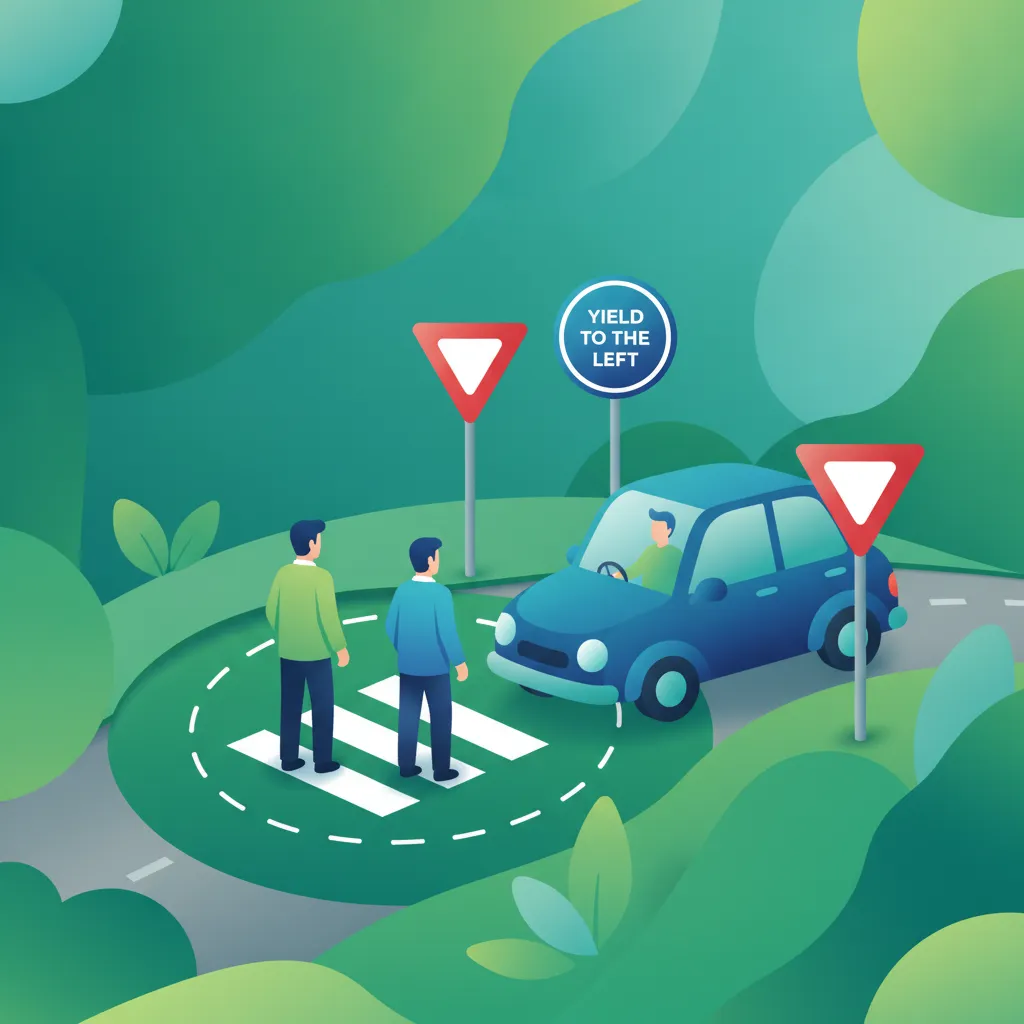
The most critical rule in Swiss roundabouts is to yield to vehicles already circulating within the roundabout. This means that any vehicle approaching a roundabout must give way to traffic coming from its left that is already inside the circular intersection. This rule differs from the general "right-of-way" rule often applied at traditional intersections where traffic from the right typically has priority.
The purpose of this yielding rule is to maintain a continuous, smooth flow of traffic within the roundabout and prevent entering vehicles from forcing circulating traffic to brake abruptly or swerve. As a moped rider, you must approach the roundabout at a controlled speed, be prepared to stop at the yield line, and scan for circulating traffic from your left. Only enter when there is a safe and sufficient gap in traffic.
Correct lane discipline begins before you even enter the roundabout. Your choice of entry lane should be determined by your intended exit. In single-lane roundabouts, this is straightforward; you simply follow the lane. However, in multi-lane roundabouts, selecting the appropriate lane on approach is crucial to avoid sudden lane changes within the roundabout itself, which are highly dangerous.
Lane markings, signs, and overhead gantries will typically guide you to the correct lane for your desired exit. Once inside a multi-lane roundabout, it is generally expected that you remain in your chosen lane throughout your circulation until you are ready to exit. Switching lanes within a roundabout creates unpredictable movements and increases the risk of collisions.
Effective signaling is vital for communicating your intentions to other road users, especially in roundabouts where actions need to be clear and unambiguous. The rules for signaling in Swiss roundabouts are specific:
Consistent and timely signaling ensures that everyone understands your next move, contributing to a safer and more efficient traffic flow.
Let's delve deeper into the specific actions and considerations for Category M riders when navigating roundabouts in Switzerland.
When you approach a roundabout, observe the road markings. You will typically see a broken yield line (or a solid stop line in some rare cases) and a yield sign. This is your point of decision.
Effective lane selection begins well before you reach the roundabout itself. Look for road signs and markings that indicate which lane to use for which exit.
Crucial Point: Once you have chosen your lane and entered the roundabout, do not change lanes unless specific markings (like a broken line indicating a merge point) explicitly permit it. Maintain your position to ensure predictability.
Misleading signaling is a common cause of confusion and accidents in roundabouts. Always remember:
Avoid signaling left upon entry or while circulating. This is a common error that can mislead other drivers into thinking you intend to continue circulating around the central island multiple times, potentially causing them to hesitate or make incorrect judgments about entering the roundabout.
Swiss roundabouts are clearly marked to guide drivers. Pay close attention to:
Ignoring these visual cues or misreading them can lead to incorrect lane choices, dangerous maneuvers, and potential collisions.
The general rules for roundabouts apply to all vehicles, including Category M mopeds. Here are the legally binding rules reiterated for clarity:
Yield to Circulating Traffic (Rule 1): All vehicles approaching a roundabout must give way to traffic already inside the roundabout (from the left). This is a non-negotiable legal requirement.
Select Correct Entry Lane (Rule 2): When approaching a multi-lane roundabout, choose the appropriate lane based on your intended exit.
Signal Right Before Exiting (Rule 3): You must activate your right turn signal just before the exit you plan to take.
No Signaling on Entry or While Circulating (Rule 4): Do not use your turn signals when entering the roundabout or while circulating within it (except for the exit signal).
Observe Speed Limits (Rule 5): Adhere to the specified speed limits for roundabouts, typically 30 km/h for mopeds.
Understanding common mistakes can help you prevent them. Category M riders should be particularly aware of these:
For moped riders, maintaining a central position within your chosen lane (not too close to the edge) can improve your visibility to larger vehicles, making it clearer where you intend to go.
Driving conditions are rarely constant. As a responsible Category M rider, you must adjust your approach to roundabouts based on environmental and situational factors.
The rules for roundabouts are not arbitrary; they are carefully designed based on principles of traffic engineering, road safety, and human psychology.
Roundabouts have been proven to reduce severe injuries by a significant margin compared to traditional intersections, making them a safer choice for urban and rural road networks alike. Understanding and respecting their rules is a direct contribution to this enhanced safety for everyone, including vulnerable moped riders.
Practicing roundabout navigation in light traffic can build confidence. Focus on one step at a time: approach, yield, enter, choose lane, circulate, signal, exit.
Swiss roundabouts require yielding to all circulating traffic from the left, a rule that differs from standard intersection priority. Proper lane selection must be determined before entry based on your intended exit: position left for the first exit, right for the last exit or U-turn. Signaling follows a strict three-phase rule: no signal on entry, no signal while circulating, and right signal only before your exit. As a Category M rider, maintaining visibility, adhering to speed limits (typically 30 km/h), and watching for vulnerable road users like pedestrians and cyclists are essential for safe navigation and exam success.
A short set of high-value points that capture the most important learning from this lesson.
Traffic already inside a roundabout always has priority; you must yield to vehicles approaching from your left
Choose your entry lane before entering based on your intended exit: left lane for first exit, right lane for last exit or U-turn
Activate your right turn signal just before the exit you plan to take, not upon entry
Never change lanes inside a roundabout; once committed to a lane, maintain it until you exit
Maintain reduced speeds (typically 30 km/h for mopeds) and central lane positioning for visibility
Explore all units and lessons included in this driving theory course.
Yield to circulating traffic from the left, not the standard right-of-way rule from traditional intersections
No turn signal on entry, no signal while circulating, right signal only before your exit
First exit = left lane on approach, last exit or U-turn = right lane on approach
Pedestrians and cyclists have equal rights at roundabouts and must be yielded to before exiting
Wet or foggy conditions require significantly reduced entry speed and increased vigilance for all users
Entering without yielding to circulating traffic, forcing vehicles already in the roundabout to brake
Signaling left upon entry or while circulating, which misleads other drivers about your intentions
Choosing the wrong entry lane and then attempting a dangerous lane change inside the roundabout
Exiting without signaling, surprising drivers waiting to enter or pedestrians crossing
Speeding through the roundabout instead of maintaining safe reduced speeds appropriate for mopeds
Lesson content overview
A short set of high-value points that capture the most important learning from this lesson.
Traffic already inside a roundabout always has priority; you must yield to vehicles approaching from your left
Choose your entry lane before entering based on your intended exit: left lane for first exit, right lane for last exit or U-turn
Activate your right turn signal just before the exit you plan to take, not upon entry
Never change lanes inside a roundabout; once committed to a lane, maintain it until you exit
Maintain reduced speeds (typically 30 km/h for mopeds) and central lane positioning for visibility
Explore all units and lessons included in this driving theory course.
Yield to circulating traffic from the left, not the standard right-of-way rule from traditional intersections
No turn signal on entry, no signal while circulating, right signal only before your exit
First exit = left lane on approach, last exit or U-turn = right lane on approach
Pedestrians and cyclists have equal rights at roundabouts and must be yielded to before exiting
Wet or foggy conditions require significantly reduced entry speed and increased vigilance for all users
Entering without yielding to circulating traffic, forcing vehicles already in the roundabout to brake
Signaling left upon entry or while circulating, which misleads other drivers about your intentions
Choosing the wrong entry lane and then attempting a dangerous lane change inside the roundabout
Exiting without signaling, surprising drivers waiting to enter or pedestrians crossing
Speeding through the roundabout instead of maintaining safe reduced speeds appropriate for mopeds
Explore search topics learners often look for when studying Rules for Roundabouts and Yielding. These topics reflect common questions about road rules, driving situations, safety guidance, and lesson level theory preparation for learners in Switzerland.
Browse additional driving theory lessons that cover connected traffic rules, road signs, and common driving situations related to this topic. Improve your understanding of how different rules interact across everyday traffic scenarios.
Understand the specific rules for multi-lane roundabouts in Switzerland. This lesson covers correct lane selection for various exits, yielding procedures, and safe maneuvering within complex circular intersections, crucial for Category M riders.
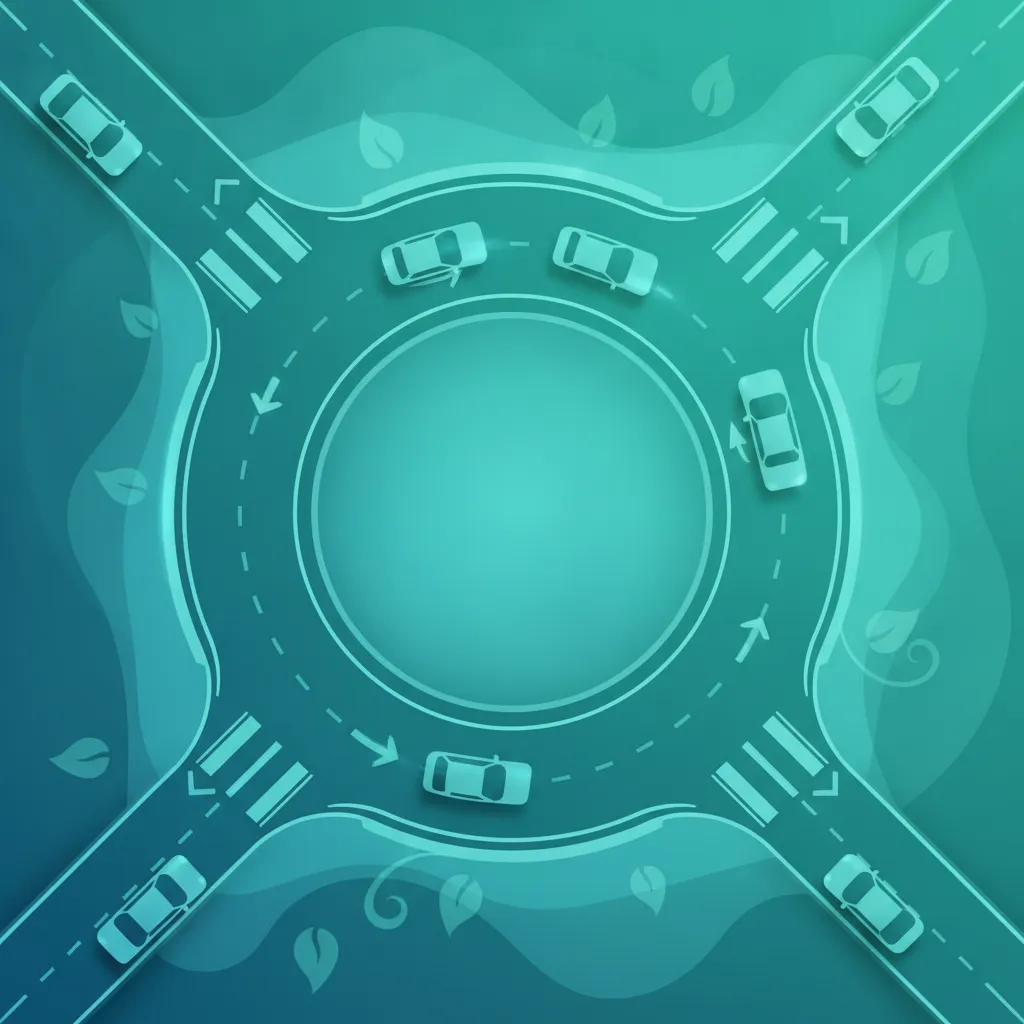
This lesson provides a detailed guide to navigating roundabouts, focusing on yielding to circulating traffic and correct lane usage. You will learn the priority principle that vehicles already in the roundabout have precedence over entering traffic. The content also covers multi-lane roundabout navigation and proper exit strategies for smooth, safe traversal.
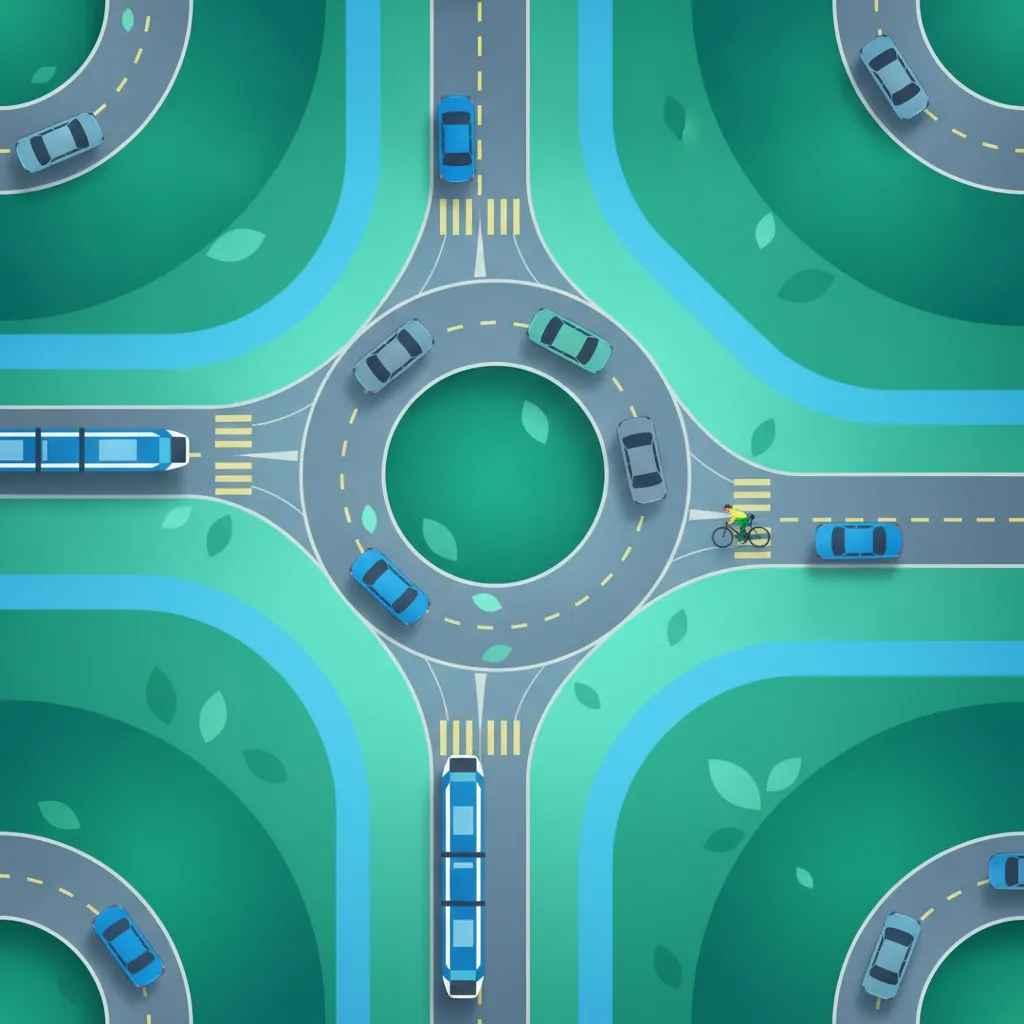
This lesson explains the fundamental rules of priority that govern traffic flow at Swiss intersections. It details the concept of 'Rechtsvortritt' at unmarked junctions and how priority signs alter this default rule. The specific procedures for entering, navigating, and exiting roundabouts are also covered to ensure predictable and safe maneuvers.
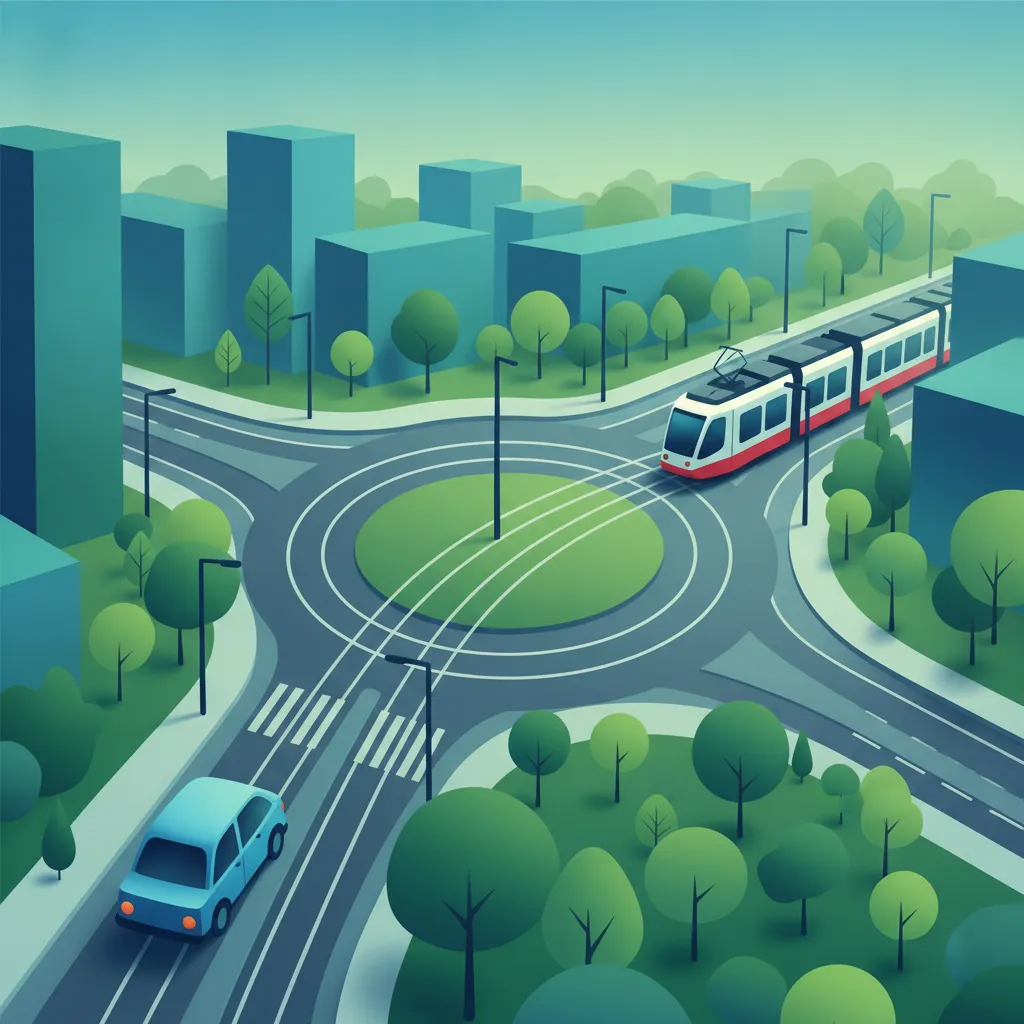
This lesson provides guidance on safely navigating roundabouts and tram lanes, common features in Swiss cities. It covers the rules for yielding, lane positioning within the roundabout, and signaling intentions upon exiting. Special attention is given to the hazards of crossing slippery tram tracks and sharing the road with public transport.
This lesson provides guidance on safely negotiating intersections and roundabouts on a motorcycle. It details the correct procedures for approach, lane selection, and yielding according to Swiss traffic regulations. Emphasis is placed on heightened awareness of other vehicles, cyclists, and pedestrians in these complex traffic environments.
This lesson provides a step-by-step guide to navigating intersections. It reinforces the priority rules, such as 'Rechtsvortritt', and the meaning of yield and stop signs. The content emphasizes the importance of a thorough visual scan on approach and correct positioning to ensure visibility and a safe passage.

This lesson details the specific priority rules governing Swiss intersections, including the concepts of 'Vortritt' and 'Rechtsvortritt'. It explains how to interpret road signs and markings to determine right-of-way in different situations. A clear understanding of these rules is essential for safe and legal navigation of intersections.
This lesson details the operation of traffic light systems in Switzerland. It explains the sequence and meaning of red, amber, and green lights, including flashing amber signals. The content also covers specific signals for pedestrians and the priority rules associated with tram signals to ensure safe interaction at controlled intersections.
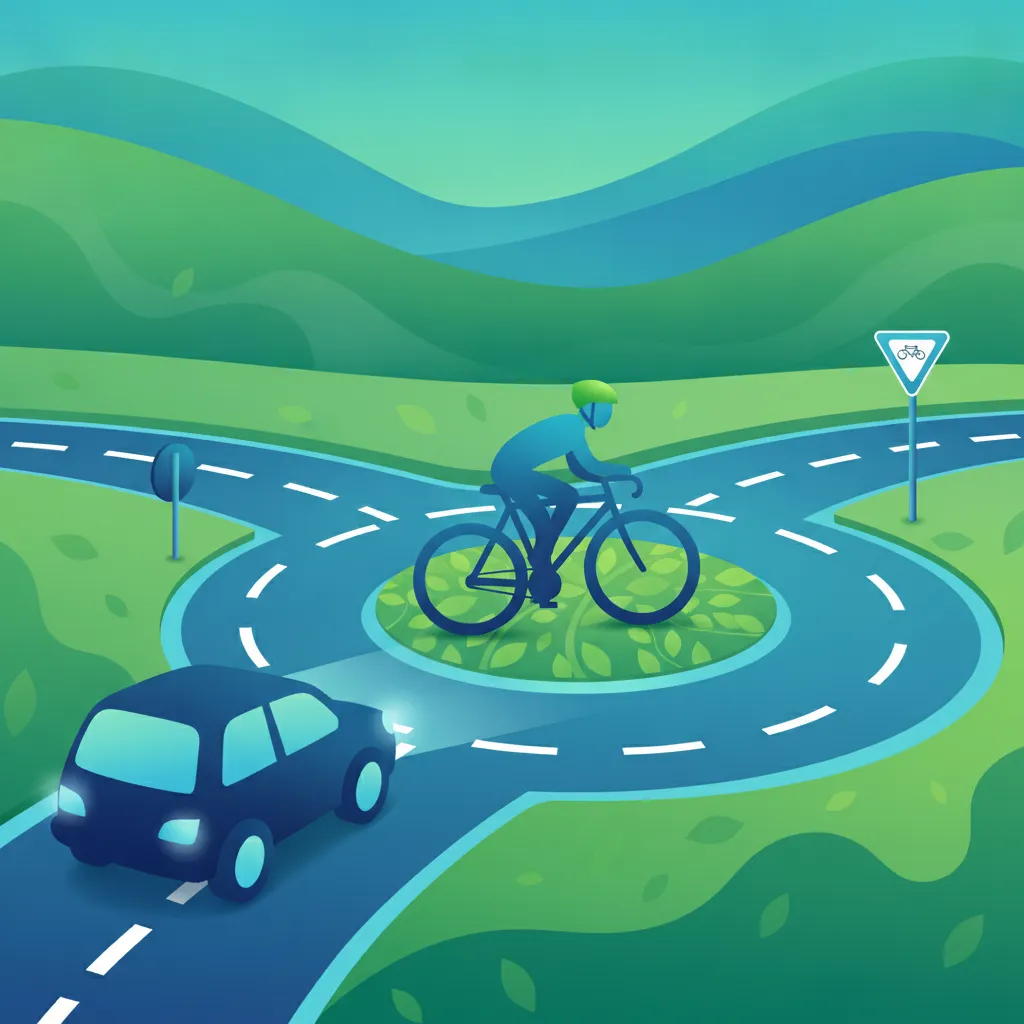
This lesson explores the correct procedures for turning at intersections and navigating roundabouts, focusing on lane selection and signaling. It covers the right-of-way rules for right and left turns and the importance of positioning the vehicle correctly before the turn. In roundabouts, the content emphasizes yielding to circulating traffic and selecting the correct exit lane.

This lesson explains the strategic importance of road positioning. It details how to select a lane position that makes you most visible to drivers ahead and behind, and helps you avoid the blind spots of larger vehicles. Proper positioning also allows for an escape route and a better line of sight through turns.
This lesson outlines the specific rules and skills required for riding on high-speed Swiss motorways. It covers the correct procedures for entering and exiting, merging with traffic, maintaining appropriate speed, and conducting safe overtaking maneuvers. Emphasis is placed on using mirrors and signals effectively to integrate safely into the flow of traffic.
Learn about frequent errors Category M riders make in Swiss roundabouts. This lesson focuses on avoiding issues like incorrect signaling, improper yielding, and poor lane discipline to ensure safer navigation.
This lesson provides a detailed guide to navigating roundabouts, focusing on yielding to circulating traffic and correct lane usage. You will learn the priority principle that vehicles already in the roundabout have precedence over entering traffic. The content also covers multi-lane roundabout navigation and proper exit strategies for smooth, safe traversal.
This lesson explains the fundamental rules of priority that govern traffic flow at Swiss intersections. It details the concept of 'Rechtsvortritt' at unmarked junctions and how priority signs alter this default rule. The specific procedures for entering, navigating, and exiting roundabouts are also covered to ensure predictable and safe maneuvers.
This lesson explores the correct procedures for turning at intersections and navigating roundabouts, focusing on lane selection and signaling. It covers the right-of-way rules for right and left turns and the importance of positioning the vehicle correctly before the turn. In roundabouts, the content emphasizes yielding to circulating traffic and selecting the correct exit lane.
This lesson provides guidance on safely negotiating intersections and roundabouts on a motorcycle. It details the correct procedures for approach, lane selection, and yielding according to Swiss traffic regulations. Emphasis is placed on heightened awareness of other vehicles, cyclists, and pedestrians in these complex traffic environments.
This lesson provides guidance on safely navigating roundabouts and tram lanes, common features in Swiss cities. It covers the rules for yielding, lane positioning within the roundabout, and signaling intentions upon exiting. Special attention is given to the hazards of crossing slippery tram tracks and sharing the road with public transport.

This lesson explores how traffic lights dictate priority at intersections, superseding general priority rules. It explains the meanings of red, amber, and green signals and the required actions for each. Emphasis is placed on understanding green light right-of-way and the cautionary role of the amber phase for navigating signal-controlled junctions safely.
This lesson focuses on the Kein Vortritt rule, which applies when a vehicle must yield to all other traffic. You will learn to recognize scenarios where this rule is in effect, such as at minor roads or when entering a main road. The content also discusses how priority signs and traffic signals override the default right-hand rule, clarifying when you must yield.
This lesson details the specific priority rules governing Swiss intersections, including the concepts of 'Vortritt' and 'Rechtsvortritt'. It explains how to interpret road signs and markings to determine right-of-way in different situations. A clear understanding of these rules is essential for safe and legal navigation of intersections.
This lesson examines the concept of Vortritt (priority) and Rechtsvortritt, the right-hand rule used at uncontrolled intersections. It explains how these rules determine which vehicle has the right-of-way and the hierarchy of priority signs. You will learn to apply these rules in typical scenarios like four-way stops and T-intersections without traffic signals.
This lesson provides a step-by-step guide to navigating intersections. It reinforces the priority rules, such as 'Rechtsvortritt', and the meaning of yield and stop signs. The content emphasizes the importance of a thorough visual scan on approach and correct positioning to ensure visibility and a safe passage.
Find clear answers to common questions learners have about Rules for Roundabouts and Yielding. Learn how the lesson is structured, which driving theory objectives it supports, and how it fits into the overall learning path of units and curriculum progression in Switzerland. These explanations help you understand key concepts, lesson flow, and exam focused study goals.
Yes, in the absence of other specific signage, vehicles already within the roundabout have the right of way. You must yield to them before entering.
You must signal your intent to exit the roundabout by using your right indicator before you reach the exit you intend to take. Signaling upon entry is generally not required unless you are changing lanes in a multi-lane roundabout.
Because mopeds are smaller, you must remain highly visible. Always position yourself clearly within your lane, avoid riding in the blind spots of larger vehicles, and ensure your movements are predictable to other road users.
You must prioritize pedestrians who are already on or waiting to step onto a zebra crossing at the exit of the roundabout. Always be prepared to stop smoothly.
Pinpoint specific Swiss traffic rules, road signs, or driving situations you need to master. Use the practice search to start a focused revision session now and build confidence for your official driving theory exam.