
This lesson teaches you the proactive observation skills required for the Swiss Category M licence. You will learn how to build a scanning routine that covers mirrors, blind spots, and the road ahead to identify potential hazards early. This foundation is essential for your safety and success in the official Swiss theory test.

Lesson content overview
Effective observation is the cornerstone of safe riding, especially for Category M (moped) riders who are more vulnerable on the road. This lesson delves into the critical techniques and strategies required to develop a systematic approach to scanning and observation. By consistently gathering accurate visual information about your surroundings, you can anticipate hazards, react promptly, and make informed decisions, ensuring your safety and the safety of others on Swiss roads.
As a moped rider, your ability to see and react to your environment is your primary defense against accidents. Effective observation is not merely "looking around"; it's a proactive, continuous process of acquiring and interpreting visual information. It underpins all safe riding practices, from maintaining appropriate following distances to executing flawless lane changes. Without a refined observation strategy, you risk late hazard detection, which drastically reduces your reaction time and increases the likelihood of a collision.
The principles discussed here build upon your understanding of basic traffic rules and road signs, providing the practical framework for applying that knowledge dynamically on the road. It also sets the stage for future lessons on vehicle visibility, road positioning, and communication, demonstrating how observation feeds into every aspect of safe riding.
To navigate traffic safely, moped riders must adopt a set of core observation principles. These techniques, when integrated into your riding habits, form a robust defense mechanism, allowing you to stay ahead of potential dangers.
Continuous scanning is the perpetual movement of your eyes and head to systematically gather information from your entire surroundings. It means never fixating on a single point for too long. Instead, your gaze should constantly sweep across the road ahead, to the sides, and to the rear, ensuring you maintain a comprehensive understanding of the evolving traffic situation. This prevents "tunnel vision," a common pitfall where riders focus only on the vehicle directly in front, missing crucial information from other directions.
Practice the "Scanning Sweep": Make it a habit to regularly sweep your vision: left-forward-right-forward-mirrors. This creates a mental map of your surroundings.
Mirrors are indispensable tools for monitoring traffic behind and to your immediate sides. They compensate for the blind spots that would otherwise prevent you from seeing vehicles approaching from the rear. Regular, quick mirror checks are fundamental to understanding the traffic flow around you, especially before performing any maneuver. On mopeds, external mirrors are mandatory and must be correctly adjusted to provide the best possible view.
Despite proper mirror adjustment, every vehicle has blind spots—areas around the vehicle that are not visible through the mirrors. For moped riders, these rear-quarter and side blind spots can hide entire vehicles, including other mopeds, bicycles, or even cars. The shoulder check is a quick, deliberate turn of the head to physically look into these blind spots just before changing lanes, turning, or overtaking. This direct visual confirmation is absolutely essential to prevent collisions.
Never rely solely on your mirrors when changing lanes or turning. A quick shoulder check is a mandatory verification of a clear blind spot.
The far-look, or scanning down the road, involves extending your gaze to a significant distance ahead of your moped. This technique allows you to anticipate upcoming road features such as intersections, roundabouts, curves, and potential hazards like parked cars or pedestrians well in advance. By looking far ahead, you gain valuable time to plan your actions, adjust your speed smoothly, and select the safest path, rather than reacting abruptly to immediate dangers.
Human vision comprises two main components: central vision and peripheral vision. Central vision provides detailed, focused perception, ideal for reading signs, checking mirrors, or identifying specific hazards. Peripheral vision, on the other hand, detects movement and provides a broader sense of your surroundings outside your direct line of sight. Effective observation combines both, using central vision for critical details while relying on peripheral vision to detect sudden movements or approaching objects that might require your immediate attention. This holistic approach expands your hazard detection capability significantly.
Developing a systematic scanning routine is crucial for comprehensive situational awareness. This involves understanding what to observe, how to observe it, and when to prioritize certain information.
Observation on the road can be categorized into two main types:
A skilled rider constantly surveys the scene, integrating both static and dynamic information to build a complete picture of their environment, anticipating changes and preparing for various scenarios.
A structured scanning routine ensures that you systematically cover all critical areas around your moped, minimizing the chances of overlooking a hazard. While the exact sequence can vary slightly, a common and effective pattern includes:
Far-Look: Scan far ahead down the road to identify upcoming intersections, curves, traffic lights, and potential hazards.
Mid-Range Scan: Look at the traffic and road conditions immediately in front of you, assessing following distances and immediate obstacles.
Left-Right Sweep: Quickly glance to your left and then to your right, checking for cross-traffic, pedestrians, or vehicles emerging from side roads. This should be done frequently, especially when approaching intersections.
Mirror Checks: Regularly check your rear-view and side mirrors to monitor traffic behind and beside you. This should be a quick glance, integrated seamlessly into your scanning.
Shoulder Check (when necessary): Before any lane change, turn, or overtaking maneuver, perform a quick turn of the head to verify that your blind spot is clear.
This routine should become an automatic habit, performed fluidly and continuously as you ride.
Blind spots are areas that are invisible to the rider using only mirrors. For mopeds, these typically include:
The most effective way to manage blind spots is through the shoulder check. This quick head turn directly reveals any hidden traffic. Always remember that a full 360-degree awareness requires more than just your mirrors; it requires active head movements.
Moped mirrors, usually two exterior side mirrors, must be correctly adjusted to provide the widest possible view of the traffic behind you. Before every ride, ensure your mirrors are clean, undamaged, and securely positioned. When adjusting, sit on your moped in your normal riding position. Each mirror should show a small sliver of your own moped on the inside edge, with the rest of the mirror reflecting the road behind you. This adjustment helps you gauge distance and position relative to your own vehicle.
Make mirror checks quick and frequent. You shouldn't stare into your mirrors, but rather glance, process the information, and return your focus to the road ahead.
The far-look is a proactive strategy. Instead of reacting to immediate dangers, you anticipate them. When you look far ahead (e.g., 10-15 seconds of travel time), you can spot:
This advanced warning allows for smoother braking, gear changes, and overall speed management, reducing stress and enhancing safety.
While your central vision is focused on specific points of interest (e.g., a sign, a mirror, an upcoming turn), your peripheral vision is constantly monitoring the broader environment. It helps you detect:
Train yourself to be aware of what your peripheral vision is telling you, even when your central vision is engaged. This dual awareness provides a richer, more complete picture of your surroundings.
In complex traffic situations, there can be an overwhelming amount of visual information. Visual prioritisation is the skill of quickly assessing and focusing your attention on the most relevant and urgent information first. For example, when approaching an intersection, your priority should be potential cross-traffic and pedestrians, followed by traffic signals, and then less critical information like roadside businesses. This ensures that you address the highest risks first, supporting quick and safe decision-making.
Swiss traffic regulations place a clear duty of care on all drivers, including moped riders, to ensure their decisions are based on sufficient information and to drive safely. Several rules directly relate to observation techniques:
Even experienced riders can fall prey to observation errors. Being aware of these common mistakes is the first step to correcting them:
The intensity and focus of your observation techniques must adapt to varying riding conditions.
When interacting with pedestrians, cyclists, or other mopeds, increase your scanning frequency and consciously look for subtle cues (e.g., a pedestrian looking to cross, a cyclist swerving). Vulnerable road users may be harder to see or make unpredictable movements. Always assume they might not see you and adjust your observation to detect their potential actions early.
The link between effective observation and rider safety is direct and undeniable.
Let's illustrate these techniques with practical examples for a Swiss Category M rider:
Urban Intersection with Pedestrians:
Overtaking a Parked Car on a Narrow Street:
Entering a Roundabout:
Mastering observation is a continuous journey that significantly enhances your safety as a moped rider in Switzerland. Here's a concise recap of the essential principles:
By diligently applying these observation and scanning techniques, you will develop a heightened sense of situational awareness, enabling you to navigate the roads safely, confidently, and responsibly as a Category M rider.
This lesson teaches the systematic observation skills essential for safe Category M riding in Switzerland, covering continuous scanning, mirror usage, blind spot management through shoulder checks, and the far-look technique for hazard anticipation. It establishes a structured routine combining far-look, mid-range scanning, left-right sweeps, mirror checks, and shoulder checks to maintain 360-degree awareness. The content addresses Swiss legal requirements regarding mirror use and speed adaptation to visibility, while also covering how to adapt scanning intensity for different conditions (weather, urban roads, motorways) and interact safely with vulnerable road users. By mastering these techniques, riders extend their reaction time, reduce stopping distance, and shift from reactive to proactive riding behavior.
A short set of high-value points that capture the most important learning from this lesson.
Effective observation is a continuous, proactive process of gathering visual information, not passive looking around.
A systematic scanning routine should include far-look, mid-range scan, left-right sweeps, mirror checks, and shoulder checks.
Mirrors alone cannot eliminate blind spots; a deliberate shoulder check is mandatory before changing lanes, turning, or overtaking.
The far-look technique extends your gaze 10-15 seconds ahead to anticipate hazards and plan reactions early.
Combine central vision for detailed tasks (signs, mirrors) with peripheral vision to detect movement and changes in your broader surroundings.
Explore all units and lessons included in this driving theory course.
Swiss Category M mopeds exceeding 25 km/h must be equipped with correctly adjusted functioning mirrors.
Under Swiss law (SVG Article 23), drivers must adapt speed to prevailing visibility conditions.
Blind spots on a moped include rear-quarter areas and small zones directly beside you that mirrors cannot fully cover.
Static observation assesses stationary elements (signs, parked cars, traffic lights), while dynamic observation monitors moving traffic.
Visual prioritisation means focusing on the highest-risk information first, such as cross-traffic at intersections.
Tunnel vision from fixating on the vehicle ahead, missing peripheral threats or approaching traffic from behind.
Skipping shoulder checks and relying solely on mirrors when changing lanes or turning, leaving blind spots unchecked.
Looking only at immediate traffic without extending gaze far ahead, which reduces available reaction time.
Making mirror checks too infrequently (recommended every 5-8 seconds or before any maneuver).
Riding with improperly adjusted mirrors that limit rear visibility and create larger effective blind spots.
Lesson content overview
A short set of high-value points that capture the most important learning from this lesson.
Effective observation is a continuous, proactive process of gathering visual information, not passive looking around.
A systematic scanning routine should include far-look, mid-range scan, left-right sweeps, mirror checks, and shoulder checks.
Mirrors alone cannot eliminate blind spots; a deliberate shoulder check is mandatory before changing lanes, turning, or overtaking.
The far-look technique extends your gaze 10-15 seconds ahead to anticipate hazards and plan reactions early.
Combine central vision for detailed tasks (signs, mirrors) with peripheral vision to detect movement and changes in your broader surroundings.
Explore all units and lessons included in this driving theory course.
Swiss Category M mopeds exceeding 25 km/h must be equipped with correctly adjusted functioning mirrors.
Under Swiss law (SVG Article 23), drivers must adapt speed to prevailing visibility conditions.
Blind spots on a moped include rear-quarter areas and small zones directly beside you that mirrors cannot fully cover.
Static observation assesses stationary elements (signs, parked cars, traffic lights), while dynamic observation monitors moving traffic.
Visual prioritisation means focusing on the highest-risk information first, such as cross-traffic at intersections.
Tunnel vision from fixating on the vehicle ahead, missing peripheral threats or approaching traffic from behind.
Skipping shoulder checks and relying solely on mirrors when changing lanes or turning, leaving blind spots unchecked.
Looking only at immediate traffic without extending gaze far ahead, which reduces available reaction time.
Making mirror checks too infrequently (recommended every 5-8 seconds or before any maneuver).
Riding with improperly adjusted mirrors that limit rear visibility and create larger effective blind spots.
Explore search topics learners often look for when studying Effective Observation Techniques and Scanning. These topics reflect common questions about road rules, driving situations, safety guidance, and lesson level theory preparation for learners in Switzerland.
Browse additional driving theory lessons that cover connected traffic rules, road signs, and common driving situations related to this topic. Improve your understanding of how different rules interact across everyday traffic scenarios.
Learn about critical blind spots for moped riders in Switzerland and master techniques like shoulder checks and mirror usage. Develop systematic scanning habits for enhanced road awareness and safety on Swiss roads.
This lesson teaches the correct techniques for positioning and using mirrors to maintain situational awareness. It emphasizes that mirrors alone are insufficient and must be supplemented with physical shoulder and head checks to cover blind spots. Combining these observation methods is essential for making safe lane changes and maneuvers in traffic.

This lesson explains the strategic importance of road positioning. It details how to select a lane position that makes you most visible to drivers ahead and behind, and helps you avoid the blind spots of larger vehicles. Proper positioning also allows for an escape route and a better line of sight through turns.

This lesson covers the systematic use of rearview and side mirrors, combined with head checks, to maintain full awareness of surrounding traffic. It emphasizes frequent observation to detect vehicles in blind spots, especially during lane changes and turns. The content also details the proper timing for head checks and the role of scanning techniques in preventing collisions.

This lesson focuses on mitigating the risk of collisions at intersections, particularly from vehicles turning across the rider's path. It teaches defensive strategies such as positioning for visibility, anticipating driver actions, and using head checks to be aware of surrounding traffic. Managing your own and others' blind spots is presented as a crucial survival skill.

This lesson outlines the principles of safe overtaking, emphasizing the importance of accurate judgment of speed and distance. It covers the necessary steps: checking mirrors, signaling, checking blind spots, executing the maneuver smoothly, and returning to the lane safely. The content is tailored to different road environments, from urban streets to rural roads.

This lesson explains strategic lane positioning to enhance visibility and safety in traffic. It covers how to choose a lane position that helps you see and be seen by other drivers, avoiding their blind spots. The content emphasizes maintaining a space cushion around the motorcycle to allow for reaction time and potential escape routes.

Buses and coaches have significant blind spots to the front, sides, and rear. This lesson maps out these 'no-zones' and teaches a continuous and active scanning process using all available mirrors and direct vision. The goal is to minimize the time any other road user spends undetected in a blind spot.
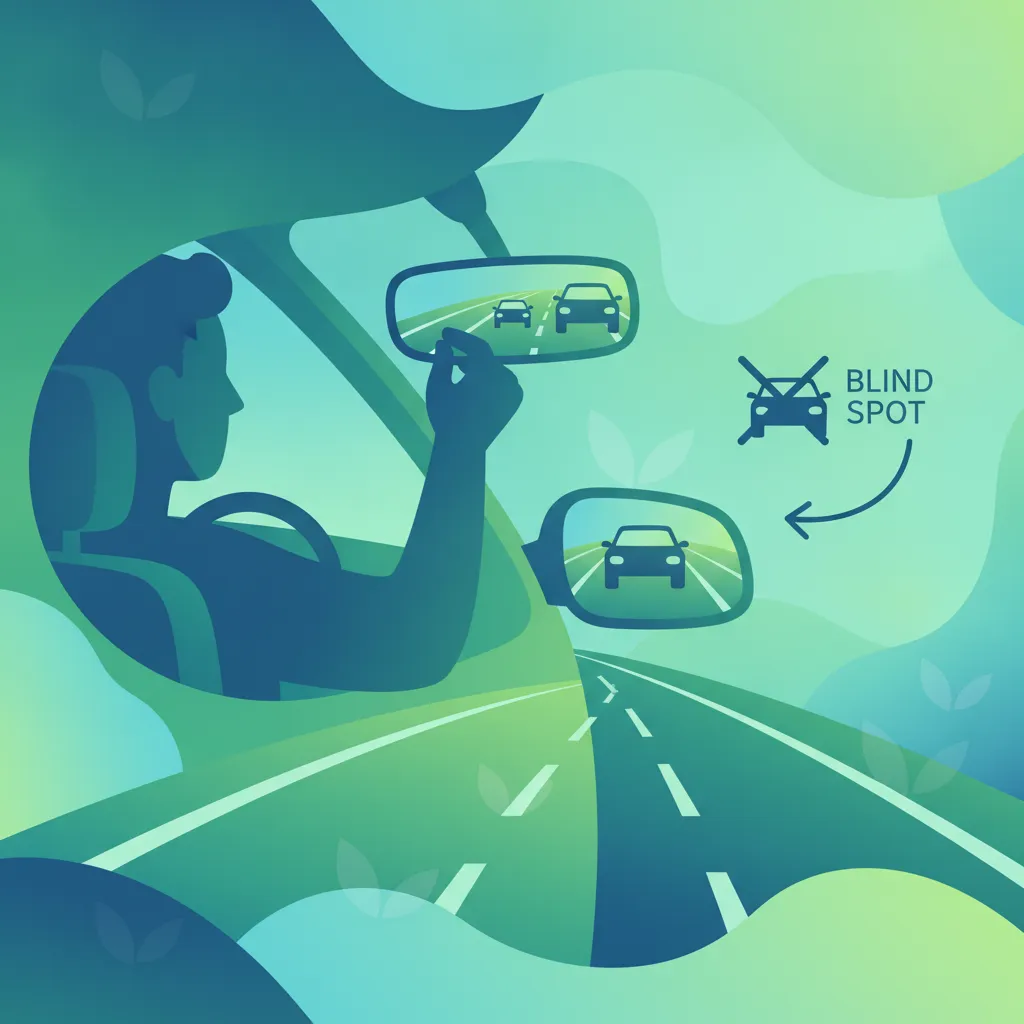
Despite the complex mirror systems, large areas around a truck remain hidden from the driver's view. This lesson maps out these significant blind spots: directly in front, behind, and along both sides of the vehicle. It teaches drivers to be constantly aware of these 'no-zones' and to anticipate that smaller vehicles, cyclists, or pedestrians may be hidden within them, especially before changing lanes or turning.

This lesson provides essential strategies for riding in adverse weather like rain and fog. It explains how to increase following distances, reduce speed, and use lights effectively to enhance visibility. The content also addresses the loss of traction on wet roads and the importance of smooth control inputs for braking, accelerating, and steering.

This lesson teaches riders how to establish and maintain a safe following distance from the vehicle ahead. It introduces the 'two-second rule' as a simple and effective method for gauging a safe gap in ideal conditions. The content also explains why this distance must be increased in wet weather, at night, or when visibility is poor.
Develop proactive hazard perception skills for Swiss Category M riders. This lesson covers techniques for scanning the road ahead, identifying potential dangers early, and understanding how to anticipate traffic flow to improve safety.

This lesson introduces defensive driving principles, focusing on hazard anticipation, continuous scanning, and proactive positioning. You will learn how to anticipate potential hazards by observing traffic patterns and maintaining situational awareness. Emphasis is placed on proactive speed management to avoid dangerous situations before they arise.
This lesson provides essential strategies for riding in adverse weather like rain and fog. It explains how to increase following distances, reduce speed, and use lights effectively to enhance visibility. The content also addresses the loss of traction on wet roads and the importance of smooth control inputs for braking, accelerating, and steering.

This lesson trains drivers to look beyond other vehicles and actively search for pedestrians, cyclists, and motorcyclists, especially those who may be distracted or unaware. It covers common behavioral patterns of different VRU groups. The goal is to see potential hazards developing early and create time and space to react safely.

This lesson focuses on warning signs that alert drivers to potential hazards ahead, such as curves, steep descents, and roadwork zones. You will understand how these signs prompt anticipatory driving behavior, allowing for adjustments in speed and position. The content also discusses the typical placement of warning signs to help you react safely to changing conditions.

This lesson focuses on identifying and managing specific road surface hazards that can compromise traction. It provides techniques for safely crossing slippery tram rails and painted markings, navigating uneven cobblestones, and maintaining control on loose gravel. The core skill is learning to scan the road ahead and adjust riding style proactively.
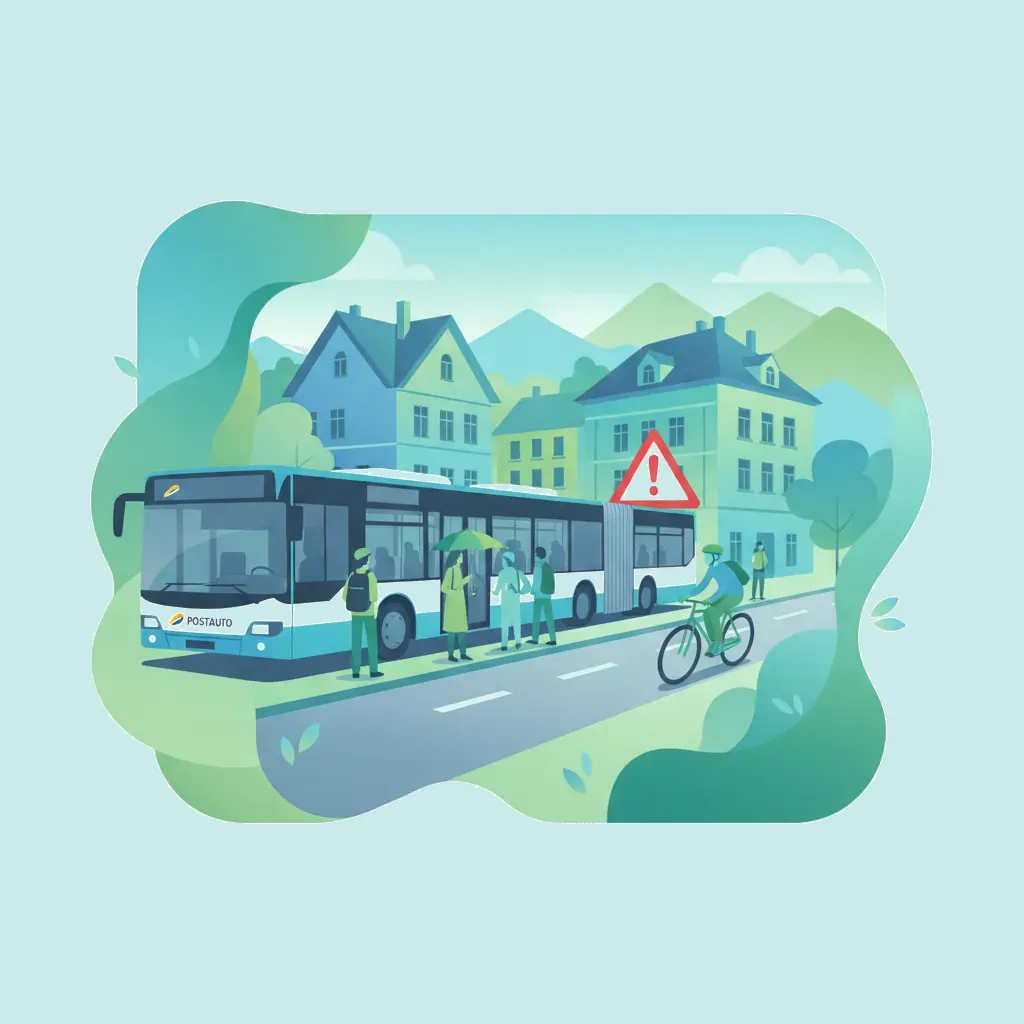
Bus stops are magnets for activity and potential hazards. This lesson trains you to anticipate dangers such as pedestrians running for the bus, cyclists passing on the inside, and cars attempting to overtake. Developing heightened situational awareness is key to preventing accidents in these busy environments.

This lesson focuses on general driving safety in areas with a high concentration of children. It stresses the importance of significantly reducing speed, being prepared for unexpected events, and scanning for children between parked cars. The driver must exhibit maximum vigilance in these high-risk environments at all times.
This lesson focuses on mitigating the risk of collisions at intersections, particularly from vehicles turning across the rider's path. It teaches defensive strategies such as positioning for visibility, anticipating driver actions, and using head checks to be aware of surrounding traffic. Managing your own and others' blind spots is presented as a crucial survival skill.

This lesson details the operation of traffic light systems in Switzerland. It explains the sequence and meaning of red, amber, and green lights, including flashing amber signals. The content also covers specific signals for pedestrians and the priority rules associated with tram signals to ensure safe interaction at controlled intersections.

This lesson details the fundamental responsibilities and safe habits every new rider must adopt. It covers legal obligations such as wearing a helmet and using lights, as well as the importance of developing a defensive mindset. The content emphasizes anticipating potential hazards and making responsible decisions to ensure safety for oneself and other road users.
Find clear answers to common questions learners have about Effective Observation Techniques and Scanning. Learn how the lesson is structured, which driving theory objectives it supports, and how it fits into the overall learning path of units and curriculum progression in Switzerland. These explanations help you understand key concepts, lesson flow, and exam focused study goals.
Mirrors have inherent blind spots that cannot show everything around you. A quick shoulder check is the only way to confirm that the lane is clear before changing direction or pulling away, which is a mandatory safety habit for the Category M exam.
You should focus your eyes well ahead of your current position, rather than looking just at the front wheel. Looking further ahead helps you identify traffic flow changes, intersections, and hazards early, giving you more time to respond safely.
Yes. When approaching a roundabout, you must scan for traffic already inside the circle and for cyclists or pedestrians entering or exiting. Consistent observation of all entry and exit points is critical for your safety and for answering theory questions correctly.
Many hazard perception questions in the Swiss exam feature scenarios where a failure to identify a hazard early leads to an accident. Developing a systematic scanning routine helps you identify these hazards instantly, which is key to picking the right answers.
Pinpoint specific Swiss traffic rules, road signs, or driving situations you need to master. Use the practice search to start a focused revision session now and build confidence for your official driving theory exam.