The G-1e sign is an intermediate distance marker, featuring two red stripes angled towards the road, indicating you are approaching a railway crossing on the left side. These posts are placed at regular intervals, similar to the G-1b sign on the right, to continuously inform drivers of their proximity to the tracks. They are particularly useful on multi-lane roads, ensuring that drivers in any lane receive clear countdown cues. Always pay attention to these signs as part of your preparation for the Polish driving theory test.
This G-1e sign, indicating two red stripes on the left, serves as a crucial intermediate distance marker before a railway crossing. Familiarize yourself with its meaning for effective theory test revision and safe driving on Polish roads.
The G-1e post features two red stripes sloping toward the road and is positioned on the left side. It mirrors the G-1b sign's function, providing a distance update to drivers on multi-lane roads. It ensures that regardless of which lane a driver is in, the progression toward the railway hazard is clearly communicated through the repetitive visual cues of the marker posts.
The intermediate distance marker placed on the left side of the road.
Get clear, practical answers to the most common questions about the G-1e - Two-Stripe Marker Post (Left Side) road sign. Learn how the sign works, what rules it represents, and how it affects real driving situations. This FAQ strengthens your understanding and supports accurate decision making for the Polish driving theory exam in Poland.
The G-1e sign is a two-stripe marker post placed on the left side of the road. It serves as an intermediate warning, indicating you are getting closer to a railway crossing. The two stripes signify you are at a specific distance from the tracks, acting as a countdown.
When you see the G-1e sign, you should be aware that a railway crossing is approaching on your left. It's a signal to prepare to stop. Check your surroundings, monitor adjacent lanes, and maintain a steady, safe speed that allows for a prompt stop if necessary, especially if crossing signals activate.
Both G-1b and G-1e are intermediate distance marker posts for railway crossings. The key difference is their placement: G-1b has stripes angled towards the road on the right side, while G-1e has stripes angled towards the road on the left side. They work together to provide a consistent warning regardless of your lane.
Yes, you must avoid speeding up to try and beat the train, as this is extremely dangerous and a common cause of fatal accidents. Also, do not get distracted by the posts themselves; they are guides, but your primary focus should be the railway crossing area and any active signals.
These posts are crucial for the theory exam because they are part of the safety system designed to prevent accidents at railway crossings. Understanding their purpose, placement, and the required driver behavior is essential for demonstrating safe driving knowledge and passing your Polish driving licence theory test.
A clear reference image of the G-1e - Two-Stripe Marker Post (Left Side) road sign used in Poland.

The G-1e - Two-Stripe Marker Post (Left Side) road sign may also be known by these alternative names or terms.
The G-1e - Two-Stripe Marker Post (Left Side) road sign is part of the Additional Railway Crossing Signs (G) category, which groups together signs with similar rules and functions.
Comparing related road signs like the G-1e marker post helps build strong recognition patterns, crucial for fewer mistakes during your theory test revision. This traffic sign comparison sharpens your recall of Polish road signs and ensures you confidently navigate road markings.

Prepare for tram signals ahead with the AT-1 warning sign.

Understand the AT-2 Tram-Activated Signal: Know when trams are coming!
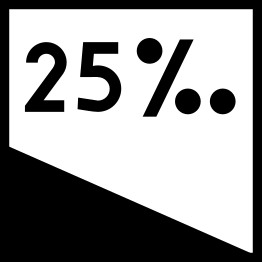
Understand the AT-3 Dangerous Tram Descent warning sign for trams.
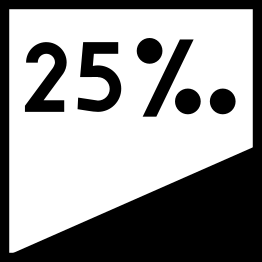
Warning: Steep Tram Ascent Ahead (AT-4)

Understand the AT-5 sign: Tram Collision Movement Warning for Turning Trams
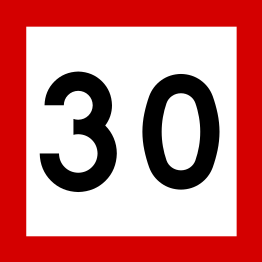
What the BT-1 Tram Speed Limit sign means and how to obey it.

BT-2: Tram Speed Limit Restriction Ends Here

BT-3 Tram Switch Lock: Don't Enter Until Clear!
After reviewing the full list of Polish road signs, explore specific sign categories for in-depth understanding. Challenge your knowledge with practice questions focused on sign recognition and interpretation to solidify your preparation for the driving theory exam.
Browse All Polish Road Signs