This unit equips you with crucial knowledge to handle emergency situations safely and effectively on Spanish roads. You'll learn procedures for vehicle breakdowns, fires, and incidents involving hazardous materials, ensuring you can protect yourself, other road users, and comply with all legal obligations. Mastering these skills is vital for professional truck driving and passing your DGT theory exam.
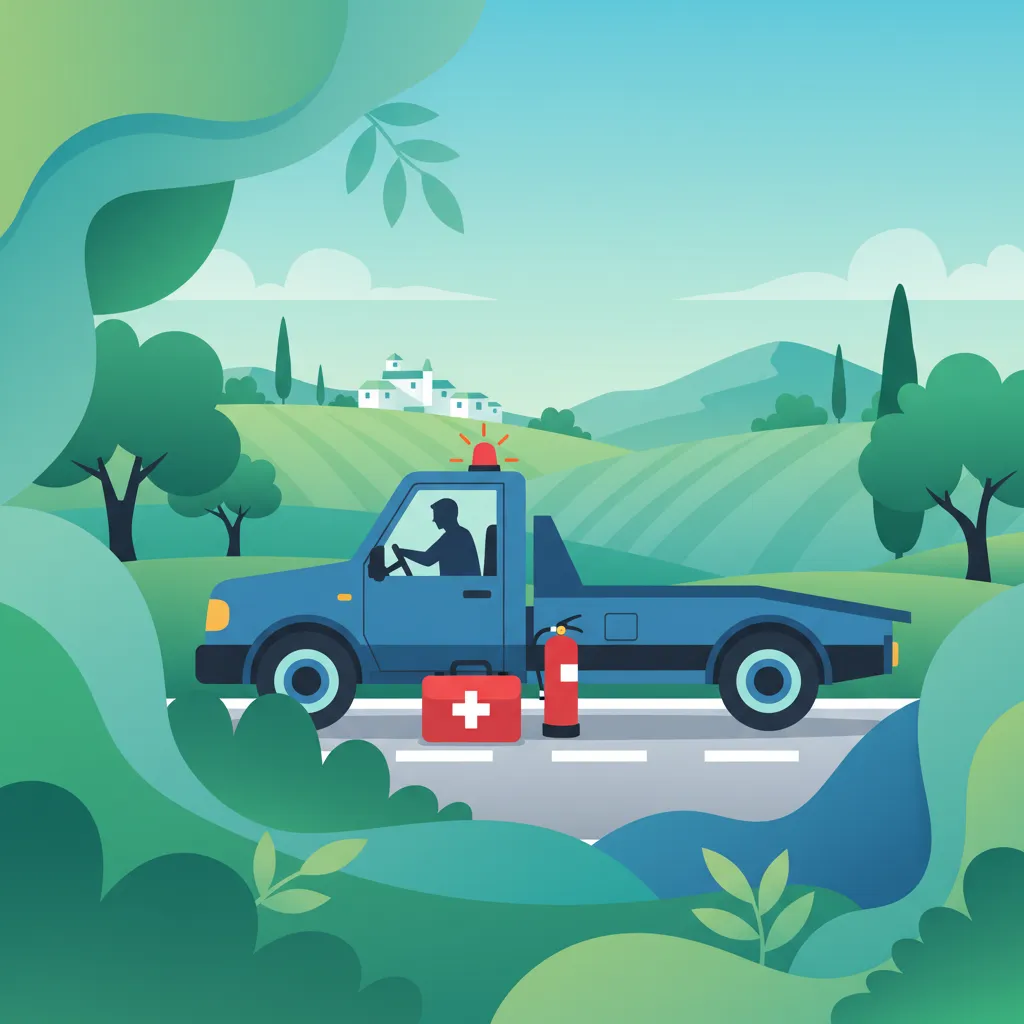
Browse all lessons that make up Emergency Situations. Each lesson focuses on specific topics, learning objectives, and core concepts, helping you build essential knowledge and follow a clear, structured progression toward your study goals in Spain.
This lesson provides a step-by-step guide on what to do when a vehicle breaks down on the road. It explains how to safely bring the truck to a stop, activate hazard warnings, and place reflective warning triangles as required by law. The content also covers the procedures for contacting roadside assistance and communicating the nature of the problem and the vehicle's location accurately.
This lesson addresses the procedures for responding to two critical emergencies: vehicle fires and hazardous material spills. It covers the different classes of fire and the correct use of a fire extinguisher. The content also explains the initial steps a driver should take in the event of a hazardous material leak, including isolating the area, notifying authorities, and following established safety protocols.
This lesson explains the driver's legal and ethical responsibilities when involved in or witnessing an accident. It covers the immediate priorities of protecting the scene from further incidents and providing aid to the injured within one's capabilities. The content details the legal requirements for exchanging information with other parties and reporting the accident to the police and DGT.
This lesson ensures drivers are familiar with the location and use of all legally required emergency equipment in their vehicle. This includes the first-aid kit, fire extinguisher, warning triangles, and high-visibility safety vest. The content stresses the importance of regularly checking that this equipment is present and in good condition, and it promotes the concept of mental safety drills to prepare for emergency responses.
Explore high-intent keywords and long-tail search topics learners use when researching Emergency Situations. These terms reflect how people search for reliable study materials, structured explanations, and unit-level theory preparation support in Spain.
Find clear answers to the most common questions learners ask about Emergency Situations. Understand how the unit is organized, what learning goals it supports, and how it contributes to your study progression with structured explanations and practical guidance tailored for learners in Spain.
After ensuring your safety, the first crucial step is to make your vehicle visible to other traffic. Turn on your hazard lights immediately and, if safe to do so, place your warning triangle at the appropriate distance behind your vehicle as per DGT regulations. Then, contact emergency roadside assistance and await their arrival in a safe location away from traffic.
In Spain, professional trucks must carry specific safety equipment. This typically includes at least one reflective warning triangle, a high-visibility vest for each occupant, a first-aid kit, and a fire extinguisher suitable for the vehicle's potential risks. It's essential to check the latest DGT regulations for the precise requirements based on your vehicle's category and load.
Your primary concern is your own safety and that of other road users. Do not approach a burning vehicle unless trained and equipped to do so. If possible and safe, alert emergency services immediately. If you are involved, focus on safely moving your own vehicle away from the immediate danger zone and securing your scene according to emergency protocols.
Hazardous material (Hazmat) incidents require extreme caution due to potential risks like toxic fumes, explosions, or environmental contamination. Never attempt to handle a Hazmat leak or spill yourself unless you are specifically trained and authorized. Your role is to immediately alert emergency services, providing as much detail as possible about the substance involved, and to keep other traffic at a safe distance.
Following an accident, you have a legal obligation to stop, assist any injured persons if safe to do so, and ensure the scene is secure. You must also report the incident to the DGT or Guardia Civil if there are injuries, significant damage, or if hazardous materials are involved. Failing to do so can result in penalties.
To prepare effectively, thoroughly review the procedures for breakdowns, fires, and hazmat incidents outlined in this unit. Pay close attention to the specific legal requirements and reporting procedures for Spain. Practicing with sample theory test questions focused on these scenarios will help solidify your understanding and improve your exam performance.
All included lessons
Lessons in Emergency Situations
See who benefits most from studying Emergency Situations. This overview explains how the unit supports different learning needs, what level of knowledge is helpful before starting, and how it fits into the overall study path in Spain.
This unit is essential for all candidates preparing for the Spanish Category C and C1 truck driving theory exam. It is particularly vital for professional drivers who need to confidently manage unexpected and hazardous situations on the road, ensuring compliance with DGT regulations and the safety of all involved.

Begin your preparation for the Spanish DGT driving licence exam today. Browse our full curriculum to find guided courses, detailed lessons on traffic legislation, road signs, and essential driving practices. Start learning systematically and confidently.
Explore DGT Theory Courses & CurriculumExplore all units and lessons included in this driving theory course.
Begin your preparation for the Spanish DGT driving licence exam today. Browse our full curriculum to find guided courses, detailed lessons on traffic legislation, road signs, and essential driving practices. Start learning systematically and confidently.
Explore DGT Theory Courses & Curriculum