
In this lesson from the 'Emergency Situations' unit of the Official DGT Theory Course for Spanish Truck Licences, you'll learn the critical steps to take if your C or C1 category truck breaks down. Understanding these procedures is vital for your safety and the safety of others on Spanish roads.
Lesson content overview
Driving a heavy vehicle, such as a Category C or C1 truck, demands a high level of responsibility and preparedness. Despite meticulous maintenance and careful driving, vehicle breakdowns can occur, posing significant risks to the driver, cargo, and other road users. This lesson provides a comprehensive, step-by-step guide for professional truck drivers on how to react safely and legally when a vehicle breaks down on the road in Spain. Understanding and applying these procedures is crucial for minimizing hazards, ensuring rapid assistance, and complying with the Spanish Reglamento General de Circulación (RGC) and Dirección General de Tráfico (DGT) guidelines.
A breakdown is more than just an inconvenience; it is an immediate emergency situation that requires precise and swift action. For a heavy goods vehicle, a stationary obstruction on the road, especially at speed, can have catastrophic consequences due to the immense kinetic energy and long stopping distances of following trucks.
Breakdowns inherently create a hazard. A disabled truck can suddenly appear as an unexpected obstacle, particularly in conditions of low visibility or high speed. The primary goal in any breakdown situation is to mitigate this risk, transforming a potential accident scene into a controlled incident awaiting resolution. This involves not only protecting yourself but also clearly warning others. The procedures outlined in this guide are designed to reduce the likelihood of secondary collisions, ensure the swift arrival of assistance, and safeguard the integrity of your cargo.
In Spain, the legal framework for handling roadside emergencies is primarily set forth in the Reglamento General de Circulación (RGC), supplemented by DGT guidelines and specific regulations for commercial vehicles. These laws are not merely bureaucratic; they are critical safety measures. Adherence to these regulations, such as mandatory warning triangle placement and reflective vest usage, is legally binding and failure to comply can lead to significant fines and increased liability in the event of an accident. Professional drivers, in particular, are expected to demonstrate a high standard of compliance.
The first and most critical step in a breakdown is to bring your vehicle to a safe, controlled stop. This often requires quick thinking and precise execution, especially with a heavily loaded truck.
When a breakdown occurs, your immediate priority is to reduce speed gradually and maintain control of the vehicle. Sudden braking can destabilize a heavy truck, especially if it is loaded, potentially causing the load to shift or even a jackknife situation. Use a combination of your service brakes, engine brake (retarder), and appropriate gear selection to decelerate smoothly. The goal is to bring the truck to a complete halt without creating further danger or damage. This controlled deceleration minimizes the risk of losing control and protects the integrity of your cargo.
Choosing where to stop is paramount. Whenever possible, steer your truck away from active traffic lanes. On motorways (autopistas/autovías) and dual carriageways, aim for the hard shoulder (arcén) or an emergency lane. If these are not available or it's unsafe to reach them, try to pull off onto a service road, a rest area, or as far to the right of the road as safely possible. Avoid stopping on bends, hill crests, or immediately after a blind spot where your vehicle would be an unexpected obstruction. Article 88 of the RGC explicitly obliges drivers to stop safely without obstructing traffic, emphasizing the importance of careful location selection.
Once your vehicle is stationary, the next crucial step is to make it as visible as possible to approaching traffic. This enhances your safety and the safety of others by providing early warning of the obstruction.
Immediately after bringing your truck to a complete halt, activate your hazard warning lights (luces de emergencia). These are the flashing amber lights on all corners of your vehicle, signaling to other drivers that your truck is stationary and poses a potential hazard. This action is mandated by Article 101 of the RGC. These lights should remain on continuously until the situation is resolved and assistance arrives. Do not switch them off, even if you assume traffic has noticed you; they are a constant, vital warning signal.
Reflective warning triangles (triángulos de preseñalización de peligro) are essential safety devices designed to alert approaching traffic to your disabled vehicle from a distance. For Category C and C1 trucks in Spain, you are required to carry a minimum of two such triangles. These must conform to UNE-EN 12899 standards, ensuring their visibility.
Don your high-visibility vest before exiting the vehicle.
Assess the road type and conditions: This determines the required placement distance.
On ordinary roads (carreteras convencionales): Place one triangle at least 30 meters behind the vehicle. It must be visible from a distance of at least 100 meters to approaching drivers.
On motorways (autopistas/autovías) and dual carriageways: Place one triangle at least 100 meters behind the vehicle in the same lane or hard shoulder. If possible, place a second triangle 100 meters further back on the opposite side of the carriageway, particularly if the breakdown creates a significant obstruction or risk.
Ensure stability: Position the triangle securely so it won't be dislodged by wind or passing traffic.
Article 90 of the RGC mandates these placement distances. Placing a triangle too close to the vehicle is a common mistake and renders it largely ineffective, denying following drivers sufficient reaction time.
Before you step out of your cab onto the road or hard shoulder, you must put on a high-visibility vest (chaleco reflectante). This vest, which must meet UNE-EN 11508 standards, makes you significantly more visible to other road users, especially in low light, adverse weather, or high-speed traffic environments. Article 101 of the RGC makes wearing this vest mandatory whenever a driver leaves a stationary vehicle on a public road to place warning devices or perform other tasks. Failing to wear it puts your personal safety at severe risk.
Once your vehicle is safely stopped and marked, your next step is to communicate the situation to the appropriate authorities or assistance providers. Effective communication is key to receiving timely help.
In Spain, the emergency telephone number is 112. You should call 112 if your breakdown poses an immediate danger to life, creates a severe traffic obstruction, involves hazardous materials, or if you are unsure about the safety of your situation. For non-life-threatening mechanical issues, you should contact your fleet's roadside assistance provider or your personal breakdown recovery service. Article 69 of the RGC obliges drivers to inform authorities if their vehicle becomes an obstacle on a public road, underscoring the legal requirement to report.
When you make the call, provide precise and accurate information. This includes:
Vague location descriptions, such as "somewhere near the river," can significantly delay assistance, prolonging the dangerous situation.
If your truck is transporting hazardous materials (as per ADR regulations), a breakdown carries additional risks. You must immediately inform emergency services (112) of the nature of the hazardous cargo, its UN number, and any associated risks (e.g., flammability, toxicity). Do not attempt to move or handle the cargo yourself unless specifically trained and equipped to do so. Your primary responsibility is to secure the vehicle and its immediate surroundings as much as possible, prevent spills if safe, and await expert assistance. ADR Regulation 11 specifically addresses securing cargo and reporting dangerous goods incidents.
Professional truck drivers are legally required to carry specific emergency equipment onboard their vehicles. Regular checks of this inventory are part of responsible driving and are verified during technical vehicle inspections (Inspección Técnica de Vehículos – ITV).
For Category C and C1 trucks in Spain, the mandatory emergency equipment includes:
Royal Decree 1215/1990 and DGT Order 1025/97 list the specific requirements for commercial vehicles.
Before every journey, it is good practice to perform a quick check of your emergency equipment. Ensure that:
These checks are not just for passing the ITV; they are fundamental for ensuring your readiness to handle an actual emergency.
Handling a truck breakdown is not a one-size-fits-all procedure. Various factors can influence the safest and most effective course of action.
The characteristics of your load significantly affect how you manage a breakdown:
Weather and light dramatically impact visibility and, consequently, the effectiveness of your warning signals:
The type of road also dictates specific actions:
Errors during a breakdown can escalate a minor inconvenience into a dangerous incident or legal problem. Awareness of these common pitfalls can help you avoid them.
Drivers frequently make mistakes that compromise safety or violate regulations:
Non-compliance with breakdown procedures in Spain can lead to various penalties:
The legal system enforces these rules strictly because they are directly linked to preventing accidents and protecting lives.
Every regulation and recommended procedure for breakdowns is rooted in fundamental principles of safety, physics, and human psychology.
Ultimately, the entire framework for handling vehicle breakdowns is geared towards preventing secondary incidents. A breakdown, while initially an isolated event, can quickly cascade into a multi-vehicle accident if not managed properly. As a professional truck driver, you have a direct responsibility to:
Your actions in the moments following a breakdown are therefore critical, not just for your own well-being, but for the safety and efficiency of the entire road network.
Remember these essential steps for managing a truck breakdown in Spain:
Stop Safely and Legally: Gradually reduce speed, move to the hard shoulder or furthest right possible, and ensure your vehicle is not obstructing traffic. Article 88 RGC.
Activate Hazard Lights: Immediately turn on your hazard warning lights (luces de emergencia) upon stopping. Article 101 RGC.
Wear High-Visibility Vest: Always don your reflective vest (chaleco reflectante) before exiting the cab onto the roadway. Article 101 RGC.
Place Warning Triangles: Position two warning triangles (triángulos de preseñalización de peligro) at legally mandated distances: at least 30 meters on ordinary roads, and at least 100 meters on motorways, visible from 100 meters. Article 90 RGC.
Communicate Clearly: Contact emergency services (112) or roadside assistance. Provide a precise location (kilometre marker, exit number) and a clear description of the problem and cargo status, especially if hazardous. Article 69 RGC.
Check Emergency Equipment: Ensure your truck carries all mandatory items (triangles, vest, fire extinguisher, first-aid kit, spare wheel/tools) and that they are functional. DGT Order 1025/97.
Adapt to Conditions: Adjust triangle placement and take extra precautions in adverse weather (fog, rain, snow), low light, or on different road types (motorways vs. urban).
Be Cargo Aware: Understand how your load affects stability and report any hazardous materials immediately. ADR Regulation 11.
Following these guidelines ensures that you are prepared for unexpected events, complying with Spanish law, and contributing to overall road safety for everyone.
This lesson covers the critical procedures for managing a Category C or C1 truck breakdown on Spanish roads, emphasizing safety and legal compliance with DGT regulations. Key steps include controlled stopping to the hard shoulder, immediate activation of hazard lights, proper deployment of warning triangles at legal distances (30m ordinary roads, 100m motorways), and mandatory use of high-visibility vests before exiting the vehicle. Drivers must carry specific emergency equipment including two triangles, fire extinguisher, and first-aid kit, and must communicate precise location and cargo information when contacting 112 or roadside assistance. The procedures vary by road type, weather conditions, and whether hazardous cargo is involved, with non-compliance resulting in fines, licence points, and increased liability in accidents.
A short set of high-value points that capture the most important learning from this lesson.
Bring the vehicle to a controlled stop using gradual deceleration, moving to the hard shoulder or furthest right position while avoiding sudden braking that could destabilize a loaded truck.
Activate hazard warning lights immediately upon stopping and keep them on continuously until the situation is resolved, as mandated by Article 101 of the RGC.
Always wear your high-visibility vest (chaleco reflectante) before exiting the cab on any public road, regardless of light conditions.
Place warning triangles at legally required distances: at least 30 meters behind on ordinary roads and at least 100 meters on motorways, visible from at least 100 meters to approaching drivers.
Provide precise location information (kilometre markers, exit numbers, GPS coordinates) when contacting emergency services or roadside assistance to avoid dangerous delays.
Explore all units and lessons included in this driving theory course.
Minimum two warning triangles conforming to UNE-EN 12899 standards are mandatory for Category C trucks, placed at 30m (ordinary roads) and 100m (motorways) behind the vehicle.
The high-visibility vest must meet UNE-EN 11508 standards and be accessible from within the cab; wearing it is legally required by Article 101 RGC whenever leaving a stationary vehicle on a public road.
On motorways, aim for the hard shoulder and place triangles at least 100 meters back; stay inside the vehicle if possible and exit from the passenger side if necessary.
When transporting hazardous materials under ADR regulations, immediately inform emergency services (112) of the cargo nature, UN number, and associated risks without attempting cargo handling yourself.
Mandatory onboard equipment includes two triangles, at least one high-visibility vest, fire extinguisher (Class B), first-aid kit, spare wheel, jack, and wheel-changing tools per Royal Decree 1215/1990 and DGT Order 1025/97.
Placing warning triangles too close to the vehicle (e.g., 5 meters instead of the required 30 or 100 meters), which denies following drivers sufficient reaction time.
Exiting the vehicle without wearing the high-visibility vest, particularly in low visibility conditions or heavy traffic where this poses severe personal safety risks.
Failing to activate hazard warning lights or switching them off prematurely, assuming other drivers have already noticed the stationary vehicle.
Providing vague location descriptions to emergency services (such as 'somewhere near the river') instead of precise kilometre markers or GPS coordinates, causing significant delays in assistance arrival.
Attempting on-road repairs on busy highways without proper protection, which is extremely dangerous and often legally prohibited.
Lesson content overview
A short set of high-value points that capture the most important learning from this lesson.
Bring the vehicle to a controlled stop using gradual deceleration, moving to the hard shoulder or furthest right position while avoiding sudden braking that could destabilize a loaded truck.
Activate hazard warning lights immediately upon stopping and keep them on continuously until the situation is resolved, as mandated by Article 101 of the RGC.
Always wear your high-visibility vest (chaleco reflectante) before exiting the cab on any public road, regardless of light conditions.
Place warning triangles at legally required distances: at least 30 meters behind on ordinary roads and at least 100 meters on motorways, visible from at least 100 meters to approaching drivers.
Provide precise location information (kilometre markers, exit numbers, GPS coordinates) when contacting emergency services or roadside assistance to avoid dangerous delays.
Explore all units and lessons included in this driving theory course.
Minimum two warning triangles conforming to UNE-EN 12899 standards are mandatory for Category C trucks, placed at 30m (ordinary roads) and 100m (motorways) behind the vehicle.
The high-visibility vest must meet UNE-EN 11508 standards and be accessible from within the cab; wearing it is legally required by Article 101 RGC whenever leaving a stationary vehicle on a public road.
On motorways, aim for the hard shoulder and place triangles at least 100 meters back; stay inside the vehicle if possible and exit from the passenger side if necessary.
When transporting hazardous materials under ADR regulations, immediately inform emergency services (112) of the cargo nature, UN number, and associated risks without attempting cargo handling yourself.
Mandatory onboard equipment includes two triangles, at least one high-visibility vest, fire extinguisher (Class B), first-aid kit, spare wheel, jack, and wheel-changing tools per Royal Decree 1215/1990 and DGT Order 1025/97.
Placing warning triangles too close to the vehicle (e.g., 5 meters instead of the required 30 or 100 meters), which denies following drivers sufficient reaction time.
Exiting the vehicle without wearing the high-visibility vest, particularly in low visibility conditions or heavy traffic where this poses severe personal safety risks.
Failing to activate hazard warning lights or switching them off prematurely, assuming other drivers have already noticed the stationary vehicle.
Providing vague location descriptions to emergency services (such as 'somewhere near the river') instead of precise kilometre markers or GPS coordinates, causing significant delays in assistance arrival.
Attempting on-road repairs on busy highways without proper protection, which is extremely dangerous and often legally prohibited.
Explore search topics learners often look for when studying Vehicle Breakdowns and Roadside Assistance. These topics reflect common questions about road rules, driving situations, safety guidance, and lesson level theory preparation for learners in Spain.
Browse additional driving theory lessons that cover connected traffic rules, road signs, and common driving situations related to this topic. Improve your understanding of how different rules interact across everyday traffic scenarios.
Learn essential DGT regulations and procedures for managing truck breakdowns safely. This guide covers controlled stopping, using warning signals, and contacting roadside assistance according to Spanish traffic law for Category C licence holders.
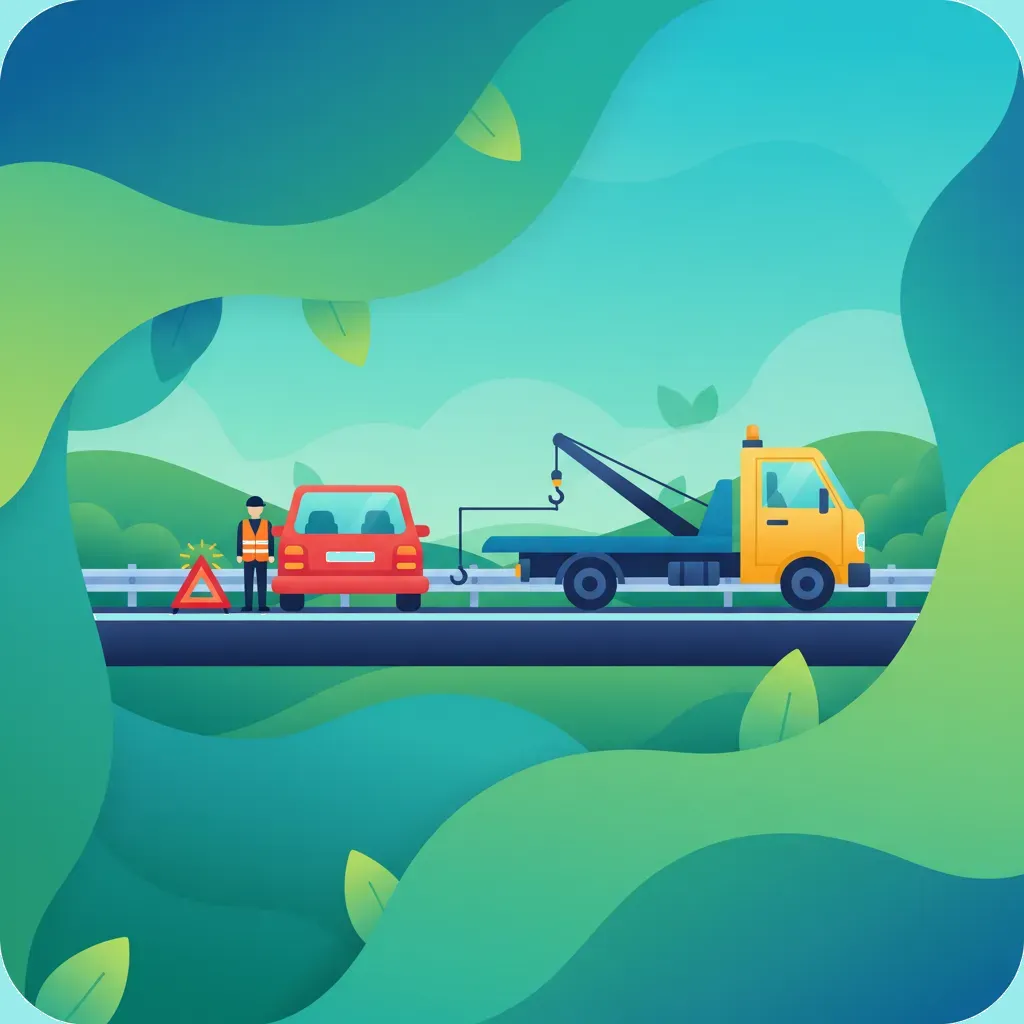
In this lesson, drivers learn the correct actions to take during a vehicle breakdown. It outlines steps for safely stopping on the hard shoulder, activating hazard lights, and deploying warning devices like the triangle or V16 light. The lesson covers DGT procedures for roadside emergencies, including wearing a high-visibility vest and contacting assistance safely.
This lesson outlines the correct and legally required procedures to follow in the event of a traffic incident or accident. It covers the driver's immediate responsibilities at the scene, including securing the area and contacting emergency services. The content details the process for documenting the incident and formally reporting it to the DGT and insurance companies as required by law.
This lesson provides a step-by-step guide to the licensing process for professional truck drivers in Spain. It covers the necessary administrative procedures, including the mandatory medical examination and psychotechnical tests required for eligibility. Learners will understand the full scope of documentation needed for the application, such as training certificates and identity verification, to ensure a smooth process.
This lesson covers the regulations and best practices regarding the use of rest areas and service stations during long-haul journeys. It reinforces the rules on mandatory rest periods to combat driver fatigue and explains how to plan routes to include necessary stops. The content also provides guidance on safe parking procedures within designated truck areas and using stops to perform quick vehicle safety checks.
This lesson provides a broad overview of the key traffic regulations in Spain that directly impact professional truck drivers. It details the rules of priority at intersections, the interpretation of different road markings, and the principles of correct lane discipline. Furthermore, it explains the specific speed limits applicable to heavy vehicles and the legal protocols for safe overtaking and signaling.
This lesson ensures drivers are familiar with the location and use of all legally required emergency equipment in their vehicle. This includes the first-aid kit, fire extinguisher, warning triangles, and high-visibility safety vest. The content stresses the importance of regularly checking that this equipment is present and in good condition, and it promotes the concept of mental safety drills to prepare for emergency responses.
This lesson provides specific instructions on how to safely navigate complex junctions such as roundabouts and intersections with a large vehicle. It explains the rules of priority, the correct lane to use based on the intended exit, and the importance of proper vehicle positioning to account for off-tracking. The content also covers clear signaling to communicate intentions to other road users for safe and efficient passage.

This lesson focuses on the core principles of defensive driving as they apply to operating a large truck. It explains the importance of managing the space around the vehicle to create a safety buffer and always having an 'escape route' in mind. The content emphasizes anticipating the actions of other road users and being prepared to react calmly and safely to unexpected situations.
This lesson introduces fundamental road safety principles applicable to all drivers, with a special emphasis on heavy vehicles. It covers defensive driving techniques, including the importance of anticipating potential hazards and managing speed appropriately for conditions. Learners will also study how to establish and maintain safe following distances and understand the hierarchy of road users to ensure safe interactions.
This lesson focuses on the principles of safe lane selection and overtaking on multi-lane roads and highways. It covers the importance of maintaining proper lane discipline and the legal protocols for executing a safe pass, including checking blind spots and ensuring sufficient speed differential. The content also stresses the need for clear signaling and judging adequate space before returning to the original lane.
Understand the critical legal requirements for making your disabled truck visible to other road users in Spain. This lesson details the correct use of hazard lights, warning triangles, and high-visibility vests as per RGC and DGT guidelines.
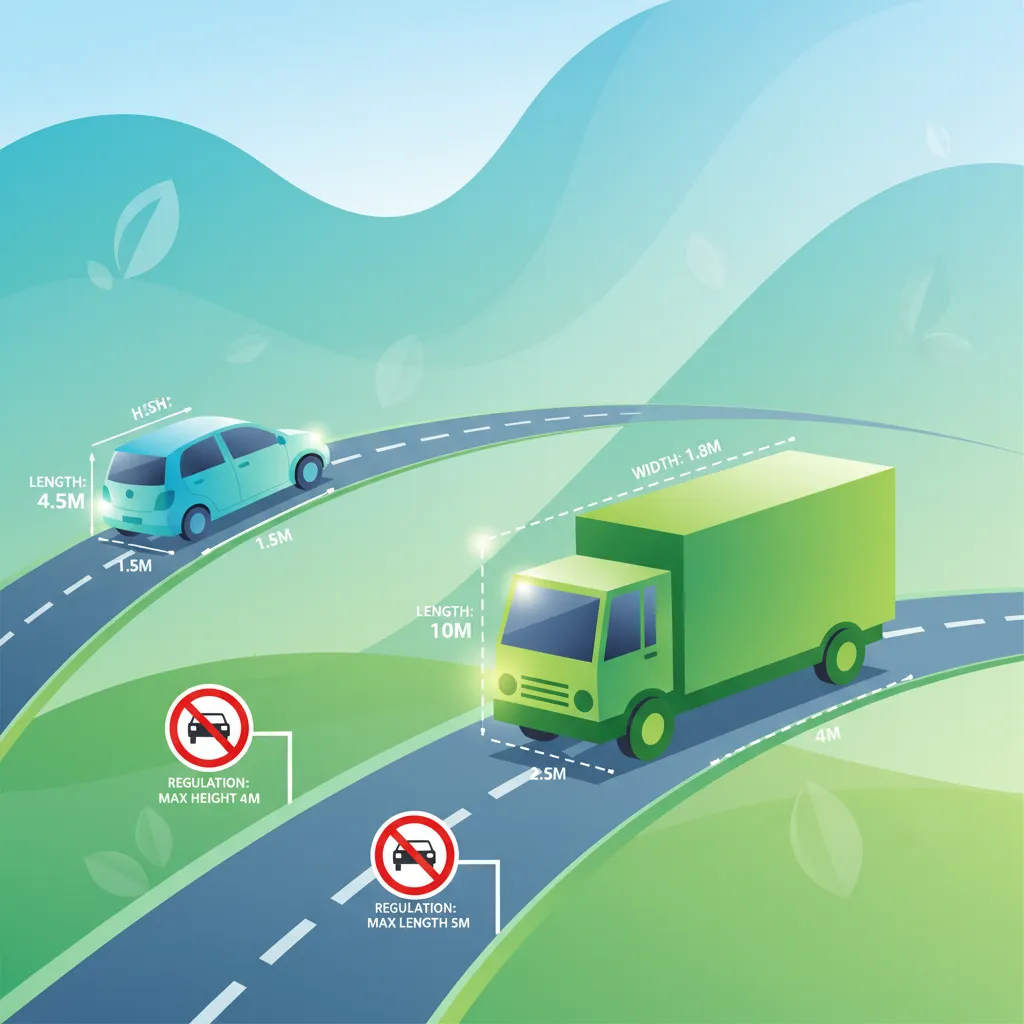
This lesson provides a detailed breakdown of the maximum permissible length, width, and height for heavy vehicles according to Spanish and EU regulations. It explains how these dimensions are measured and how they affect vehicle classification and route planning. The content emphasizes the critical importance of respecting clearance signs for bridges, tunnels, and other overhead structures to prevent accidents.
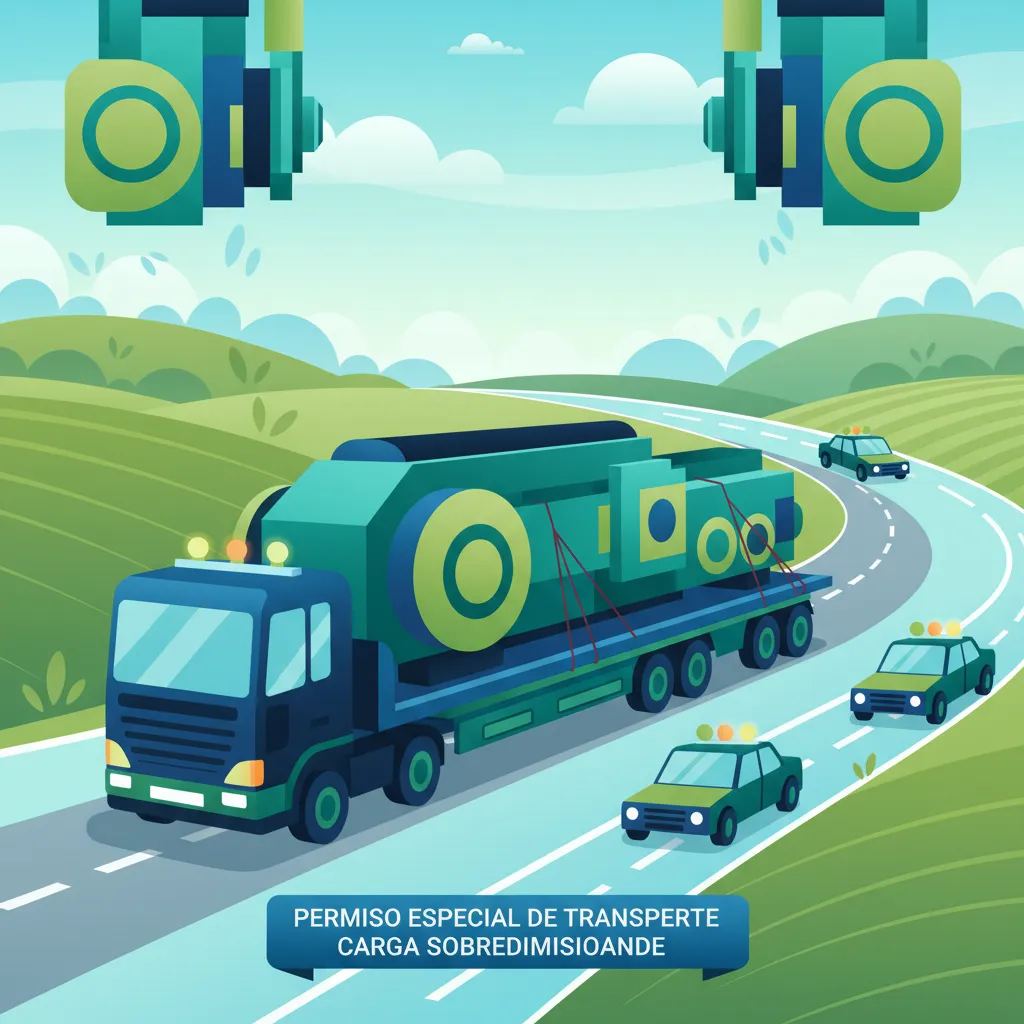
This lesson addresses the special regulations that apply to transporting loads that exceed standard legal dimensions or weight. It explains the process for obtaining the necessary special permits from the DGT and other authorities. The content also covers the requirements for route planning, the use of escort vehicles (pilot cars), and the mandatory signage and lighting for the vehicle.
This lesson provides a broad overview of the key traffic regulations in Spain that directly impact professional truck drivers. It details the rules of priority at intersections, the interpretation of different road markings, and the principles of correct lane discipline. Furthermore, it explains the specific speed limits applicable to heavy vehicles and the legal protocols for safe overtaking and signaling.
This lesson outlines the mandatory lighting and visibility equipment as per DGT regulations. It covers the correct use of headlights (low and high beams), taillights, and turn signals, ensuring the moped is visible to others, especially at night or in poor weather. The importance of wearing high-visibility or reflective clothing is also emphasized as a critical measure to enhance personal safety by making the rider more conspicuous.
This lesson ensures drivers are familiar with the location and use of all legally required emergency equipment in their vehicle. This includes the first-aid kit, fire extinguisher, warning triangles, and high-visibility safety vest. The content stresses the importance of regularly checking that this equipment is present and in good condition, and it promotes the concept of mental safety drills to prepare for emergency responses.

This lesson explains the specific legal framework governing truck operations on Spain's high-speed road network. It details the different speed limits for trucks on autovías versus autopistas and the regulations regarding which lanes heavy vehicles are permitted to use. Learners will also understand how to interpret specific highway signage relevant to commercial vehicles and any applicable toll regulations.
This lesson provides specific instructions on how to safely navigate complex junctions such as roundabouts and intersections with a large vehicle. It explains the rules of priority, the correct lane to use based on the intended exit, and the importance of proper vehicle positioning to account for off-tracking. The content also covers clear signaling to communicate intentions to other road users for safe and efficient passage.
This lesson details the legal framework for towing in Spain. It covers the concepts of maximum authorized mass, towing capacities of vehicles, and specific weight limits for different axle configurations. The content also explains the documentation and periodic technical inspection (ITV) requirements for trailers to ensure full legal compliance.
This lesson outlines the correct and legally required procedures to follow in the event of a traffic incident or accident. It covers the driver's immediate responsibilities at the scene, including securing the area and contacting emergency services. The content details the process for documenting the incident and formally reporting it to the DGT and insurance companies as required by law.
Find clear answers to common questions learners have about Vehicle Breakdowns and Roadside Assistance. Learn how the lesson is structured, which driving theory objectives it supports, and how it fits into the overall learning path of units and curriculum progression in Spain. These explanations help you understand key concepts, lesson flow, and exam focused study goals.
Your immediate priority is safety. If possible, steer the truck to the rightmost lane or shoulder, away from moving traffic. Turn on your hazard warning lights immediately to alert other drivers. Once safely stopped, assess the situation before exiting the vehicle.
According to DGT regulations, you must place two retro-reflective warning triangles. One should be placed 50 meters ahead of the vehicle on the carriageway and the second 50 meters behind, both visible from 100 meters. On dual carriageways or motorways, the rear triangle is mandatory, and the front one is optional but highly recommended.
You should call your breakdown service provider or emergency services if necessary. Be ready to provide your exact location (road number, kilometer marker, direction of travel), the truck's registration number, and a description of the problem. Stay on the line until they confirm they have all the necessary information.
Only exit your truck when you are certain it is safe to do so, preferably from the side away from traffic. If you are on a busy road or highway, it might be safer to remain inside the vehicle with your seatbelt on and wait for assistance, especially if exiting poses a significant risk.
It is essential to provide the highway number (e.g., A-7, AP-7), the nearest kilometer marker, and your direction of travel (e.g., direction Valencia). Mentioning any nearby landmarks or exit numbers can also help roadside assistance find you quickly and safely.
Use our powerful search functionality to pinpoint specific Spanish DGT driving theory practice sets. Filter by road sign categories, traffic law topics, or question difficulty to build custom study sessions and reinforce your knowledge precisely where it matters for your official exam.