
This unit covers the essential rules and techniques for safely operating heavy vehicles on Spain's high-speed highways, including autovías and autopistas. You will learn specific DGT regulations on speed, overtaking, merging, and maintaining safe distances, crucial for passing your Category C and C1 theory exams and ensuring safe high-speed transit.
Browse all lessons that make up Highway Driving & Overtaking. Each lesson focuses on specific topics, learning objectives, and core concepts, helping you build essential knowledge and follow a clear, structured progression toward your study goals in Spain.
This lesson explains the specific legal framework governing truck operations on Spain's high-speed road network. It details the different speed limits for trucks on autovías versus autopistas and the regulations regarding which lanes heavy vehicles are permitted to use. Learners will also understand how to interpret specific highway signage relevant to commercial vehicles and any applicable toll regulations.
This lesson focuses on the critical relationship between speed, following distance, and overall traffic safety on highways. It explains how to calculate a safe following distance based on speed and weather conditions, accounting for a truck's longer stopping distance. The content also teaches strategies for managing speed to adapt smoothly to changing traffic flow, enhancing both safety and fuel efficiency.
This lesson provides a detailed guide to performing safe and legal overtaking maneuvers on the highway. It places strong emphasis on the techniques for thoroughly checking the large blind spots around a truck before initiating a lane change. The content also covers judging the necessary speed differential and distance required to complete the pass and return to the lane safely.
This lesson covers the regulations and best practices regarding the use of rest areas and service stations during long-haul journeys. It reinforces the rules on mandatory rest periods to combat driver fatigue and explains how to plan routes to include necessary stops. The content also provides guidance on safe parking procedures within designated truck areas and using stops to perform quick vehicle safety checks.
Explore high-intent keywords and long-tail search topics learners use when researching Highway Driving & Overtaking. These terms reflect how people search for reliable study materials, structured explanations, and unit-level theory preparation support in Spain.
Find clear answers to the most common questions learners ask about Highway Driving & Overtaking. Understand how the unit is organized, what learning goals it supports, and how it contributes to your study progression with structured explanations and practical guidance tailored for learners in Spain.
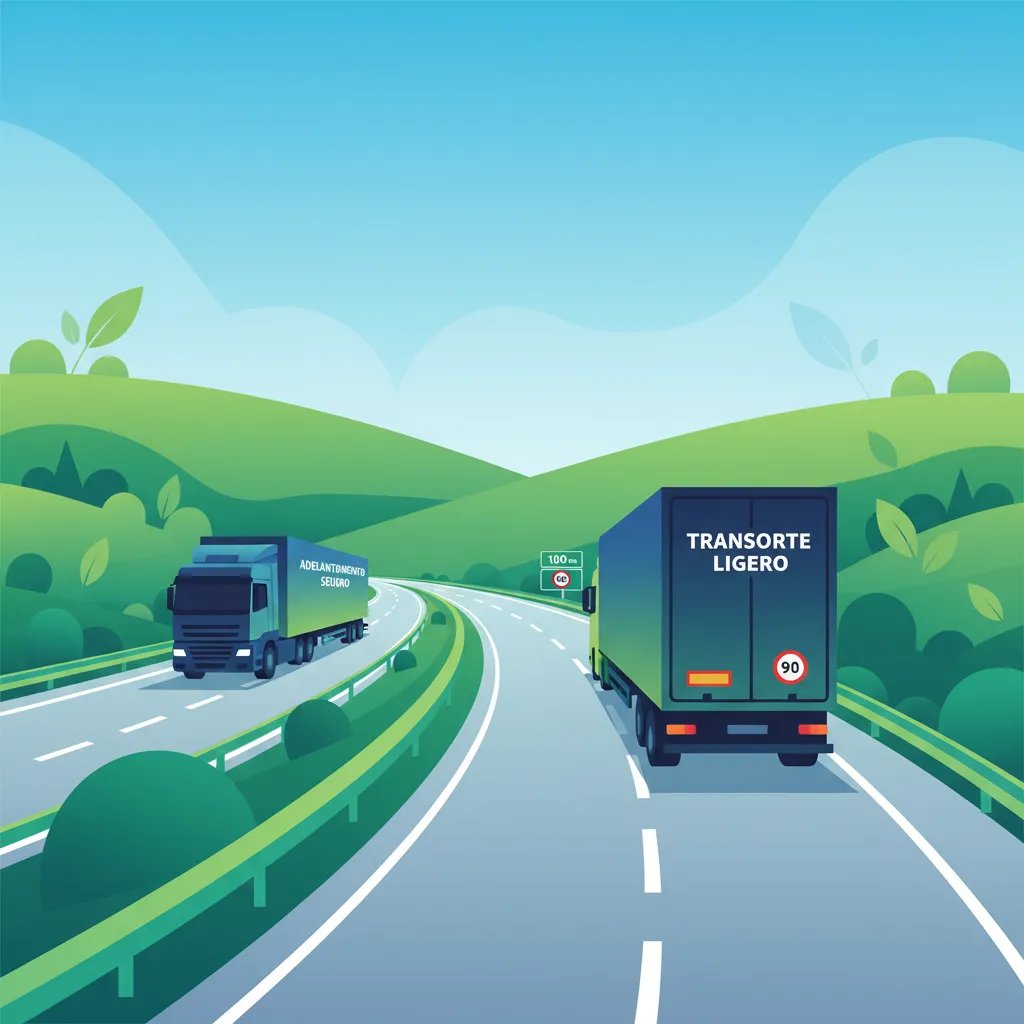
For trucks and articulated vehicles with a Maximum Authorised Mass (MAM) exceeding 3,500 kg, the general speed limit on autovías and autopistas in Spain is 90 km/h. For vans and light vehicles, the limit is 120 km/h. It's crucial to always check for variable speed limit signs and specific restrictions for your vehicle category.
Overtaking is only permitted on the left lane, provided it is safe to do so and does not impede traffic flow. Trucks must adhere to specific speed limits and ensure they do not exceed the speed limit of the vehicle they are overtaking. Overtaking is generally prohibited in conditions of reduced visibility or when it might endanger other road users.
Maintaining a safe following distance is critical at high speeds. For trucks, a common guideline is to maintain a distance of at least two seconds from the vehicle ahead. This allows ample time to react and brake safely, especially considering the longer stopping distances required for heavy vehicles. Always increase this distance in adverse weather conditions.
When merging, you must adjust your speed to match the flow of traffic on the highway. Use your turn signal, check your mirrors and blind spots, and accelerate in the acceleration lane to merge smoothly and safely into a gap in traffic. Be prepared to slow down or stop if necessary, but ideally, you should time your merge to avoid disrupting highway traffic.
Both autovías and autopistas are high-speed motorways where trucks can operate. Autopistas are typically toll roads, while autovías are generally toll-free, although some sections may have tolls. The driving rules, including speed limits and lane usage for trucks, are largely the same on both types of roads.
Trucks have significant blind spots, particularly to the sides and rear. Before overtaking, drivers must ensure they can see the vehicle they intend to pass in their mirrors and that the vehicle is not in a blind spot. After overtaking, they must ensure they have sufficient space to move back into the original lane without cutting off the passed vehicle, checking all mirrors and blind spots again.
All included lessons
Lessons in Highway Driving & Overtaking
See who benefits most from studying Highway Driving & Overtaking. This overview explains how the unit supports different learning needs, what level of knowledge is helpful before starting, and how it fits into the overall study path in Spain.
This unit is specifically designed for drivers preparing for the Spanish Category C and C1 truck driver theory exams. It is essential for those who need to understand the unique demands of driving large vehicles on high-speed roads like autovías and autopistas, ensuring they meet DGT requirements for professional drivers.

Begin your preparation for the Spanish DGT driving licence exam today. Browse our full curriculum to find guided courses, detailed lessons on traffic legislation, road signs, and essential driving practices. Start learning systematically and confidently.
Explore DGT Theory Courses & CurriculumExplore all units and lessons included in this driving theory course.
Begin your preparation for the Spanish DGT driving licence exam today. Browse our full curriculum to find guided courses, detailed lessons on traffic legislation, road signs, and essential driving practices. Start learning systematically and confidently.
Explore DGT Theory Courses & Curriculum