
When accidents happen, knowing what to do is crucial. This lesson covers your essential responsibilities at an accident scene, focusing on safety, assistance, and legal procedures as mandated by the DGT. It builds on previous safety knowledge and prepares you for critical situations tested in the C and C1 licence theory exams.
Lesson content overview
Being involved in or witnessing a traffic accident is a stressful and potentially dangerous situation. As a professional driver, particularly of Category C & C1 vehicles, your responsibilities extend beyond personal safety to include the immediate protection of the scene, providing aid to those in need, and fulfilling strict legal obligations. This lesson provides an in-depth guide to managing an accident scene effectively and lawfully, ensuring the safety of all parties and preventing further incidents.
The correct management of an accident scene is paramount. It not only helps to prevent secondary collisions and reduce the severity of injuries but also plays a crucial role in preserving evidence for legal and insurance purposes. Understanding and adhering to Spanish traffic statutes, such as the Reglamento General de Circulación and relevant DGT (Dirección General de Tráfico) regulations, is not merely an ethical imperative but a mandatory duty. Non-compliance can lead to severe fines, penalty points on your licence, and even criminal liability.
This comprehensive guide integrates safety protocols, legal requirements, and ethical considerations, providing you with the essential knowledge to act decisively and correctly in an emergency.
The absolute first priority after any traffic incident is to secure the area to prevent additional accidents and protect all involved parties. This initial phase, often referred to as "Protect" in common accident management mnemonics, is critical for mitigating further risks.
Immediately upon stopping your vehicle after an accident, or if you are the first to arrive at a scene, you must activate your vehicle's hazard warning lights. These lights signal to other road users that there is an obstruction, a breakdown, or an emergency ahead, providing them with crucial advanced warning. This simple action significantly reduces the risk of secondary collisions, especially on fast-moving roads or in poor visibility.
In addition to hazard lights, warning triangles are indispensable tools for marking an accident scene. These portable reflective devices must be placed at specific distances behind the stopped vehicle to alert approaching traffic. The exact placement distance varies depending on the type of road:
The purpose of these distances is to give other drivers ample time to react and adjust their speed. On two-way roads, an additional triangle should be placed in front of the vehicle if the accident scene extends beyond the vehicle, or if the vehicle itself is obstructing the road in both directions. Always ensure the triangles are visible from a minimum of 100 meters, taking into account road curvature and gradients.
Whenever possible and safe to do so, move your vehicle to the right side of the carriageway, or onto the hard shoulder, to clear the main traffic flow. This action helps to restore traffic movement and prevents your vehicle from becoming an additional hazard. However, if moving the vehicle might exacerbate injuries to occupants or compromise evidence, it is generally best to leave it in place until emergency services arrive. In such cases, focus solely on deploying warning devices and ensuring your own safety. For large vehicles like Category C and C1 trucks, carefully consider the vehicle's stability and potential for obstruction before attempting to move it.
Never attempt to move a severely damaged vehicle or one with critically injured occupants unless there is an immediate and overwhelming danger, such as a fire or explosion risk. Moving an injured person incorrectly can cause further, irreversible harm.
Once the immediate scene is secured, your next crucial obligation is to assess for injuries and provide assistance to anyone harmed in the accident. This is a fundamental legal and ethical duty under Spanish law, enshrined in Article 151 of the Reglamento General de Circulación.
If there are any injuries, no matter how minor they appear, or if there is a risk of fire, chemical spill, or other immediate danger, your first action must be to call the emergency services. In Spain, the universal emergency number is 112. Clearly state your location, the nature of the incident, and the number of people involved or injured. Provide as much detail as possible to help dispatchers send the appropriate resources (medical, fire, police).
While you are not expected to be a medical professional, you have a duty to provide basic first aid to injured persons within your capabilities and without endangering yourself. This might include:
As a professional truck driver, having basic first-aid training is highly recommended, as you are more likely to encounter serious incidents, particularly in remote areas.
It is mandatory to stay at the scene of an accident until police, medical personnel, or other authorized rescue personnel arrive. Leaving the scene without just cause, especially if there are injured parties, can be considered a serious offence, potentially leading to charges such as hit-and-run or neglect of duty. You may only leave if staying puts your own life in danger (e.g., vehicle fire, unstable hazardous material). Your presence may be vital for providing witness statements or assisting authorities.
After ensuring safety and attending to injuries, the next legal requirement is the intercambio de datos (exchange of information) with all other drivers and parties involved in the incident. This is essential for facilitating insurance claims and any subsequent legal investigations. Article 154 of the Reglamento General de Circulación specifically mandates this exchange.
You must provide and obtain the following information:
It is highly advisable to carry a pre-printed accident declaration form (often provided by insurance companies) in your vehicle. This standard form simplifies the process of collecting and exchanging all necessary information accurately.
Spanish law imposes clear obligations for formally reporting traffic accidents to the relevant authorities, either the police or the DGT, depending on the severity of the incident.
Immediate police notification is mandatory in the following circumstances:
For minor collisions that result only in material damage and no injuries, you are generally required to report the incident to the DGT. This declaration should typically be made within 24 hours of the accident. This can often be done via the DGT's online portal or by visiting a local Traffic Office.
Failure to report an accident within the statutory timeframe, even if it seems minor, can lead to fines and complications with insurance claims, potentially invalidating your coverage.
Maintaining the integrity of the accident site until authorities arrive is crucial for enabling an accurate investigation and reconstruction of events. This duty falls under general legal principles to not obstruct justice.
Unless absolutely necessary for safety reasons (e.g., preventing a fire or clearing a blocked tunnel), you should avoid moving any vehicles involved in the accident from their final resting positions. The placement of vehicles, their damage, and the debris scattered around the scene provide critical clues about the dynamics of the collision.
Skid marks left by tires, debris from the vehicles, and any other physical evidence on the road surface must be preserved. Do not clean up broken glass, vehicle parts, or other remnants of the crash. These elements help investigators determine vehicle speeds, braking points, and impact angles. If feasible and safe, you can take photographs of the scene from multiple angles before authorities arrive, but do not alter the physical evidence.
The only exception to moving vehicles is if they pose an immediate, unavoidable danger to others, and no alternative safety measure (like warning triangles) can adequately mitigate the risk. Even then, document the original position if possible.
If it is safe to do so and does not interfere with immediate safety priorities, consider taking photographs and notes. Document:
This proactive documentation can significantly aid in legal and insurance processes.
As a professional driver in Spain, your actions at an accident scene are governed by specific articles within the Reglamento General de Circulación (General Traffic Regulations) and other related laws. Understanding these is vital for compliance.
| Rule Reference | Obligation Statement | Applicability | Legal Status | Rationale & Implications |
|---|---|---|---|---|
| Article 84 RGTC | Activate hazard lights and place warning triangles after a breakdown or accident. | All road types. | Mandatory | Essential for alerting other road users and preventing secondary collisions. Failure results in fines and penalty points. |
| Article 151 RGTC | Provide assistance to injured persons without endangering oneself. | Any accident with injuries. | Mandatory | A fundamental moral and legal duty to preserve life and reduce suffering. Neglect can lead to severe legal penalties. |
| Article 154 RGTC | Exchange personal, vehicle, and insurance data with other involved parties. | All collisions involving damage or injury. | Mandatory | Facilitates insurance claims, legal accountability, and investigation. Refusal or false information is punishable. |
| Ley de Tráfico (General) | Report serious accidents to the police. | Accidents with injuries, fatalities, or significant property damage. | Mandatory | Ensures official documentation, investigation, and potential criminal proceedings. Call 112 immediately. |
| DGT Regulations | Declare minor accidents (no injuries, only material damage) to DGT within 24 hours. | Minor collisions without injuries. | Mandatory | For official record-keeping and insurance processes. Can be done online or at a Traffic Office. |
| Spanish Penal Code | Do not alter or obstruct an accident scene. | Immediately after accident until authorities deem fit. | Mandatory | Guarantees accurate reconstruction of events and evidence integrity. |
Failure to adhere to accident scene protocols carries significant legal consequences for drivers in Spain. Understanding these can help reinforce the importance of correct procedures.
Effective accident scene management often requires adapting standard procedures to specific environmental and situational factors. Professional truck drivers, operating larger vehicles in diverse conditions, must be particularly adept at these adaptations.
When pedestrians, cyclists, or motorcyclists are involved in an accident, their safety is the utmost priority due to their lack of protection.
The way an accident scene is managed has direct and significant consequences. Understanding these relationships underscores the importance of adherence to proper procedures.
Understanding the theory is crucial, but applying it in real-world scenarios is what truly prepares a professional driver.
Correct Behavior: The truck driver immediately activates hazard lights. After assessing that no one is injured, they safely move their truck and the passenger car to the hard shoulder. They place a warning triangle 30 meters behind their truck, ensuring it's visible. Both drivers then exchange personal, vehicle, and insurance information using a European Accident Statement form. Within 24 hours, the truck driver files an accident declaration online with the DGT. They avoid moving debris unless it's a direct hazard.
Incorrect Behavior: The truck driver, seeing no apparent injuries, simply exchanges a phone number with the other driver and drives off, believing it's too minor to report. They do not use hazard lights or warning triangles, leaving the slightly damaged vehicles partially in the lane, creating a new hazard for passing traffic.
Correct Behavior: The truck driver immediately stops, activates hazard lights, and ensures no further traffic movement endangers the pedestrian. They call 112, clearly stating the location, that a pedestrian is injured, and that it's an intersection. They place a warning triangle 10 meters behind their truck. While waiting for emergency services, they speak calmly to the pedestrian, ensuring they remain still and warm, but do not attempt to move them. They remain at the scene until police and paramedics arrive, providing a detailed statement.
Incorrect Behavior: The truck driver, panicked, tries to move their truck out of the intersection to clear traffic, inadvertently moving the pedestrian further. They hesitate to call 112, hoping the pedestrian will just get up. They neglect to place a warning triangle, causing confusion and further congestion for other drivers.
Correct Behavior: The truck driver immediately activates hazard lights. Recognizing the severity and potential for serious injuries, they call 112, providing the most accurate location possible (e.g., "Km marker 5 on the N-340, near the turn-off for [nearby village]"). They warn oncoming traffic by carefully placing a warning triangle 30 meters before the scene in each direction, using a high-visibility vest if available. They check for signs of fire and, if safe, approach the car to assess occupants, offering verbal reassurance without moving them, and wait for emergency services to arrive. They keep their truck's low-beam headlights on to illuminate the scene for rescuers.
Incorrect Behavior: The truck driver, overwhelmed, calls a friend for advice instead of 112. They neglect to place warning triangles, leading to another vehicle narrowly avoiding the crash scene. They attempt to pull an unconscious person from the car without assessing injuries, potentially causing more harm. They turn off their truck's lights to save battery, making the scene even darker and harder to spot.
As a professional truck driver, your role in accident scene management is critical for safety, legal compliance, and ethical conduct.
Secure the Scene: Immediately activate your vehicle's hazard lights. Place warning triangles at appropriate distances: 30 meters on motorways/dual carriageways, 15 meters on interurban roads, and 10 meters on urban roads. If safe, move vehicles to the hard shoulder or side of the road to clear traffic.
Assist the Injured: Call emergency services (112) without delay if there are any injuries or significant dangers (e.g., fire, hazardous materials). Provide basic first aid within your capabilities and without endangering yourself, but do not move seriously injured persons unless their life is in immediate threat.
Exchange Information: With all involved parties, mandatorily exchange personal details (name, address, DNI/NIE), vehicle details (registration, make, model), and insurance details (company, policy number). Take photographs if safe and possible.
Report to Authorities:
Preserve Evidence: Do not move vehicles from their final resting positions or alter any physical evidence (skid marks, debris) unless absolutely necessary for safety. This helps investigators accurately reconstruct the incident.
Remain on Scene: Stay at the accident site until police, medical, or rescue personnel have arrived and relieved you, or unless your personal safety is at severe risk.
By following these procedures, you not only fulfill your legal duties under Spanish traffic law (e.g., Articles 84, 151, 154 of the Reglamento General de Circulación) but also contribute significantly to the safety and well-being of others, minimizing further harm and ensuring a smoother resolution to the incident. Your preparedness and responsible actions can make a profound difference in emergency situations.
This lesson covers the complete procedure for managing a road traffic accident in Spain, emphasizing safety first through hazard lights and warning triangle placement at road-specific distances. It establishes the driver's legal duty to assist injured persons by calling 112 and providing basic first aid without unnecessary movement. The mandatory information exchange requires personal, vehicle, and insurance details under Article 154. Reporting to authorities depends on severity: police notification for injuries or significant damage, and a DGT declaration within 24 hours for minor material-damage-only incidents. Scene preservation is critical—vehicles and evidence should remain undisturbed until authorities arrive, and drivers must stay at the scene unless personal safety is at risk.
A short set of high-value points that capture the most important learning from this lesson.
Safety and scene protection come first: activate hazard lights immediately and place warning triangles at appropriate distances (30m motorway, 15m interurban, 10m urban).
The duty of assistance is mandatory under Article 151: you must provide basic first aid within your capabilities and call 112 for any injuries without delay.
Information exchange (intercambio de datos) is legally required with all parties: share name, address, DNI/NIE, vehicle registration, and insurance details.
Reporting obligations differ by severity: notify police immediately for injuries or significant damage, report minor material-damage-only accidents to DGT within 24 hours.
Preserve the accident scene: do not move vehicles or alter evidence (skid marks, debris) unless absolutely necessary for safety.
Explore all units and lessons included in this driving theory course.
Warning triangle distances: 30m on autopistas/autovías, 15m on interurban roads, 10m on urban roads.
Article 151 of the Reglamento General de Circulación mandates assistance to injured persons without endangering yourself.
Call 112 for any injuries, regardless of how minor they appear.
The exchange of information under Article 154 must include full name, address, DNI/NIE, vehicle registration plate, make/model, and insurance policy details.
Minor accidents with only material damage must be reported to the DGT within 24 hours.
Neglecting to place warning triangles or activate hazard lights, creating risk of secondary collisions.
Leaving the accident scene without providing assistance or exchanging information, which constitutes omisión de socorro.
Moving seriously injured persons unnecessarily, which can worsen spinal injuries or internal bleeding.
Failing to report a minor accident to the DGT within the required 24-hour timeframe.
Providing false or incomplete personal and insurance information during the data exchange.
Lesson content overview
A short set of high-value points that capture the most important learning from this lesson.
Safety and scene protection come first: activate hazard lights immediately and place warning triangles at appropriate distances (30m motorway, 15m interurban, 10m urban).
The duty of assistance is mandatory under Article 151: you must provide basic first aid within your capabilities and call 112 for any injuries without delay.
Information exchange (intercambio de datos) is legally required with all parties: share name, address, DNI/NIE, vehicle registration, and insurance details.
Reporting obligations differ by severity: notify police immediately for injuries or significant damage, report minor material-damage-only accidents to DGT within 24 hours.
Preserve the accident scene: do not move vehicles or alter evidence (skid marks, debris) unless absolutely necessary for safety.
Explore all units and lessons included in this driving theory course.
Warning triangle distances: 30m on autopistas/autovías, 15m on interurban roads, 10m on urban roads.
Article 151 of the Reglamento General de Circulación mandates assistance to injured persons without endangering yourself.
Call 112 for any injuries, regardless of how minor they appear.
The exchange of information under Article 154 must include full name, address, DNI/NIE, vehicle registration plate, make/model, and insurance policy details.
Minor accidents with only material damage must be reported to the DGT within 24 hours.
Neglecting to place warning triangles or activate hazard lights, creating risk of secondary collisions.
Leaving the accident scene without providing assistance or exchanging information, which constitutes omisión de socorro.
Moving seriously injured persons unnecessarily, which can worsen spinal injuries or internal bleeding.
Failing to report a minor accident to the DGT within the required 24-hour timeframe.
Providing false or incomplete personal and insurance information during the data exchange.
Explore search topics learners often look for when studying Accident Scene Management and Legal Obligations. These topics reflect common questions about road rules, driving situations, safety guidance, and lesson level theory preparation for learners in Spain.
Browse additional driving theory lessons that cover connected traffic rules, road signs, and common driving situations related to this topic. Improve your understanding of how different rules interact across everyday traffic scenarios.
Understand your mandatory legal and ethical duties when involved in or witnessing a traffic accident in Spain. This lesson details scene protection, aid to the injured, information exchange, and reporting requirements to the DGT and police.
This lesson outlines the correct and legally required procedures to follow in the event of a traffic incident or accident. It covers the driver's immediate responsibilities at the scene, including securing the area and contacting emergency services. The content details the process for documenting the incident and formally reporting it to the DGT and insurance companies as required by law.
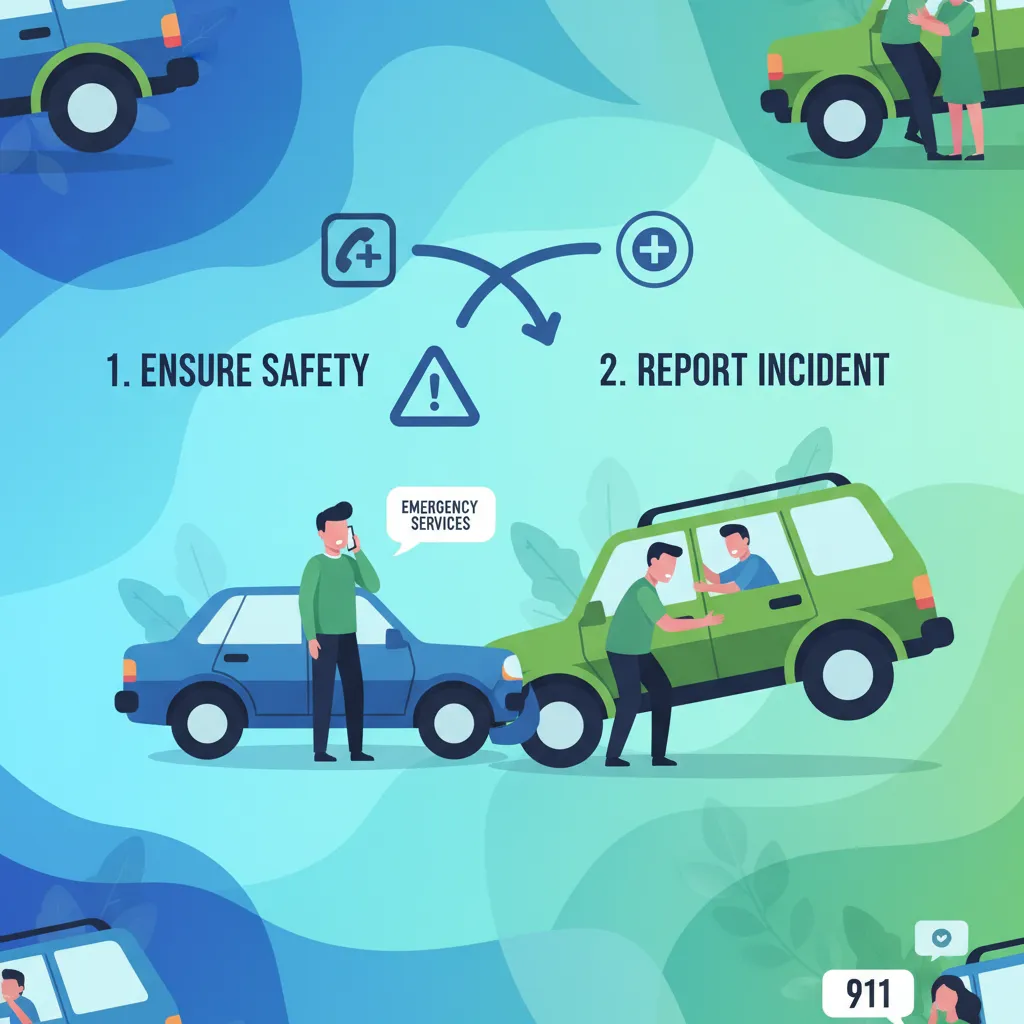
This lesson outlines the comprehensive steps required to safely manage an accident scene, including securing the area and providing immediate aid to any injured parties. Learners will be taught the legal reporting requirements, how to properly notify the DGT, and the specific documentation needed for insurance claims. The module also covers the process for collecting witness statements and interacting effectively with responding police authorities.
This lesson provides guidance on responding to a road accident, following the 'Protect, Alert, Assist' protocol. It details the steps for securing the scene, notifying emergency services, and providing basic aid if necessary. The content covers the legal responsibilities of the driver, including completing an accident report form (parte amistoso) and exchanging insurance information.

This lesson explains the importance of fostering a proactive safety culture within the transport industry. It outlines the official procedures for reporting accidents and incidents to the DGT and other relevant authorities. Learners will understand how to accurately document an incident, their legal obligations at an accident scene, and how risk assessment and preventive measures contribute to overall road safety.

This lesson details the formal and legal obligations for reporting a traffic accident to the authorities. It clarifies the circumstances under which police must be called to the scene and the procedures for completing the official European Accident Statement form ('parte amistoso'). Understanding these responsibilities ensures that the rider complies with Spanish law and that the incident is properly documented for insurance and liability purposes.
Learn to effectively manage accident scenes in various conditions and specific scenarios, with a focus on protecting vulnerable road users like pedestrians and cyclists. Essential theory for professional drivers in Spain.
This lesson outlines the correct and legally required procedures to follow in the event of a traffic incident or accident. It covers the driver's immediate responsibilities at the scene, including securing the area and contacting emergency services. The content details the process for documenting the incident and formally reporting it to the DGT and insurance companies as required by law.
This lesson outlines the comprehensive steps required to safely manage an accident scene, including securing the area and providing immediate aid to any injured parties. Learners will be taught the legal reporting requirements, how to properly notify the DGT, and the specific documentation needed for insurance claims. The module also covers the process for collecting witness statements and interacting effectively with responding police authorities.
This lesson provides guidance on responding to a road accident, following the 'Protect, Alert, Assist' protocol. It details the steps for securing the scene, notifying emergency services, and providing basic aid if necessary. The content covers the legal responsibilities of the driver, including completing an accident report form (parte amistoso) and exchanging insurance information.

This lesson focuses on the core principles of defensive driving as they apply to operating a large truck. It explains the importance of managing the space around the vehicle to create a safety buffer and always having an 'escape route' in mind. The content emphasizes anticipating the actions of other road users and being prepared to react calmly and safely to unexpected situations.

This lesson addresses the procedures for responding to two critical emergencies: vehicle fires and hazardous material spills. It covers the different classes of fire and the correct use of a fire extinguisher. The content also explains the initial steps a driver should take in the event of a hazardous material leak, including isolating the area, notifying authorities, and following established safety protocols.
This lesson introduces fundamental road safety principles applicable to all drivers, with a special emphasis on heavy vehicles. It covers defensive driving techniques, including the importance of anticipating potential hazards and managing speed appropriately for conditions. Learners will also study how to establish and maintain safe following distances and understand the hierarchy of road users to ensure safe interactions.
This lesson provides a step-by-step guide on what to do when a vehicle breaks down on the road. It explains how to safely bring the truck to a stop, activate hazard warnings, and place reflective warning triangles as required by law. The content also covers the procedures for contacting roadside assistance and communicating the nature of the problem and the vehicle's location accurately.

This lesson focuses on the critical skill of safely interacting with vulnerable road users, such as pedestrians and cyclists, in an urban setting. It highlights the extensive blind spots around a truck and teaches drivers to be extra vigilant, especially at intersections and crosswalks. The content covers the legal requirements for yielding and the importance of making eye contact to confirm intentions.
This lesson explains the importance of fostering a proactive safety culture within the transport industry. It outlines the official procedures for reporting accidents and incidents to the DGT and other relevant authorities. Learners will understand how to accurately document an incident, their legal obligations at an accident scene, and how risk assessment and preventive measures contribute to overall road safety.
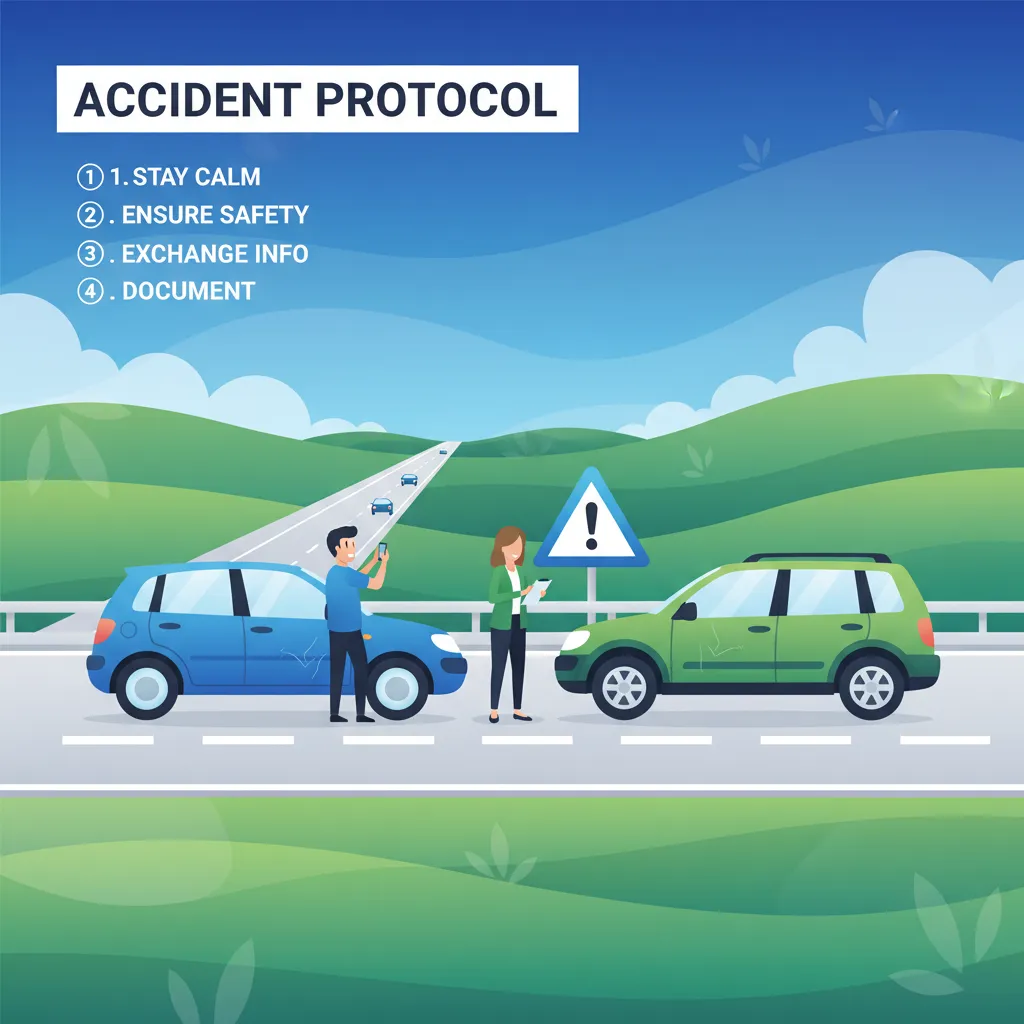
This lesson provides a clear checklist of actions to take in the immediate aftermath of a traffic accident. It prioritizes safety by explaining how to secure the scene and check for injuries before anything else. The content guides learners on the legal requirement to exchange information with other parties involved and the importance of documenting the scene with photos and collecting witness details for insurance and legal purposes.
Find clear answers to common questions learners have about Accident Scene Management and Legal Obligations. Learn how the lesson is structured, which driving theory objectives it supports, and how it fits into the overall learning path of units and curriculum progression in Spain. These explanations help you understand key concepts, lesson flow, and exam focused study goals.
Your immediate priorities are safety and assistance. First, ensure your own safety and that of your vehicle. Then, secure the accident scene to prevent further incidents, and finally, provide appropriate aid to any injured persons without putting yourself at further risk.
You must exchange your name, address, contact details, and vehicle insurance information. It is also advisable to note down the other party's details, including their vehicle registration number and a description of their vehicle. Always do this calmly and safely, away from moving traffic if possible.
You are legally obligated to report accidents involving injuries or significant damage to the Guardia Civil or Policía Local. For minor accidents without injuries where parties agree, a European accident statement can often suffice, but involving authorities is recommended if there's any doubt or dispute. Serious accidents always require immediate reporting.
In Spain, if the accident involves no injuries and both parties agree on the circumstances, you may move vehicles to a safe location to clear traffic, provided you document the scene (photos) beforehand. However, if there are injuries or disagreement, do not move the vehicles and wait for the authorities.
Accidents involving hazardous materials require immediate and specific protocols. You must ensure the scene is safe, alert emergency services immediately, providing them with the ADR classification of the materials. Do not approach the vehicle if it poses an immediate danger, and keep others clear of the area.
Use our powerful search functionality to pinpoint specific Spanish DGT driving theory practice sets. Filter by road sign categories, traffic law topics, or question difficulty to build custom study sessions and reinforce your knowledge precisely where it matters for your official exam.