
This unit delves into the critical control and safety systems of modern heavy trucks, focusing on air brake operation and electronic aids like ABS and ESC. Understanding these systems is vital for safe operation and passing your Spanish Category C/C1 driving theory exam. Prepare to interpret complex dashboard indicators and ensure your vehicle is in optimal working condition.
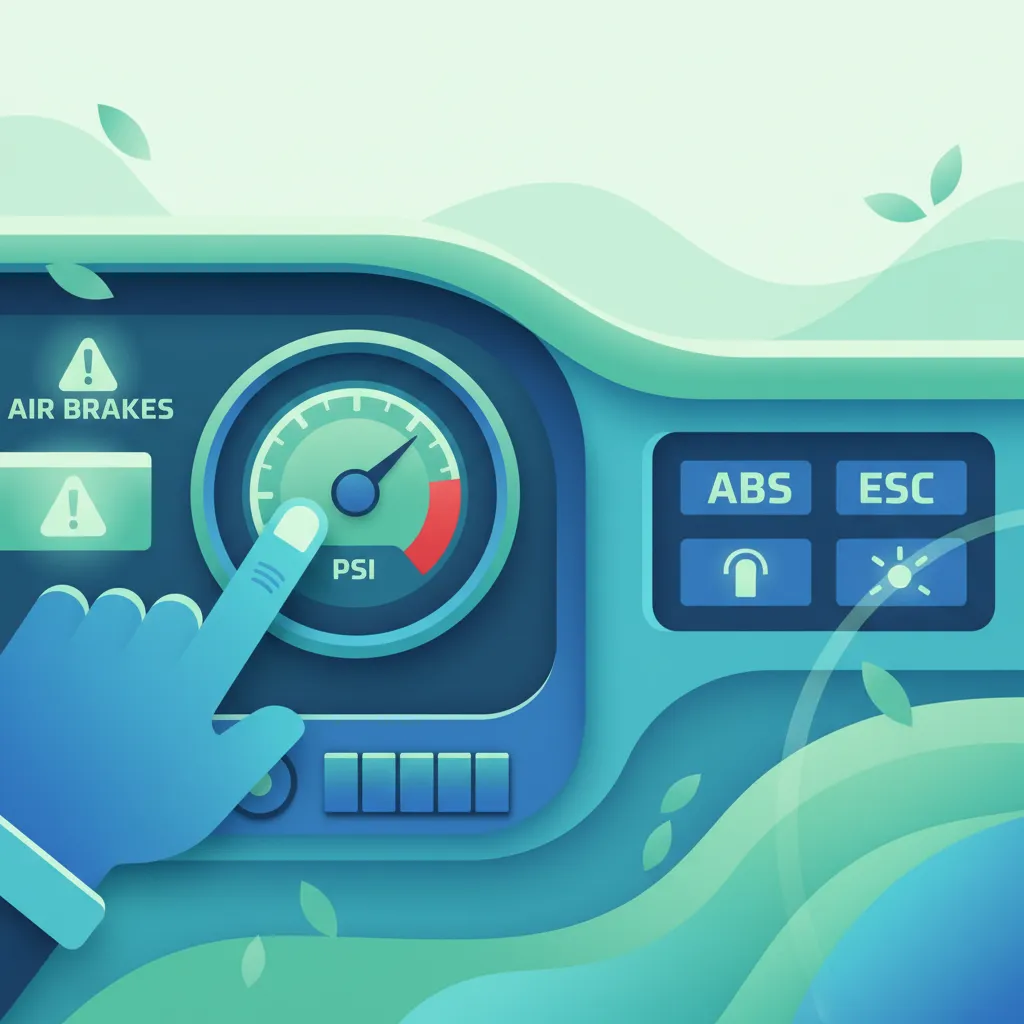
Browse all lessons that make up Controls & Systems (Air Brakes, etc.). Each lesson focuses on specific topics, learning objectives, and core concepts, helping you build essential knowledge and follow a clear, structured progression toward your study goals in Spain.
This lesson explains the fundamental principles of air brake systems used in heavy vehicles. It details the functions of each major component, including the air compressor, reservoirs (air tanks), control valves, and brake chambers. Learners will understand how compressed air is used to apply braking force and the importance of maintaining adequate air pressure for safe operation.
This lesson covers the importance of proper air brake maintenance for ensuring optimal stopping power and safety. It explains the process of checking and adjusting slack adjusters to compensate for brake lining wear. Learners will understand how to perform routine pre-trip inspections, including checking for air leaks and ensuring the system is balanced for even braking performance.
This lesson provides a comparative overview of hydraulic and pneumatic (air) braking systems. It explains the fundamental differences in how each system generates and transmits force, one using liquid and the other using compressed air. The content highlights why pneumatic systems are standard for heavy trucks due to their power and reliability over long vehicle combinations.
This lesson teaches drivers how to correctly interpret the various indicator lights and warning messages on a truck's dashboard. It covers common alerts related to the engine, braking system (ABS), and electronic stability control (ESC). Understanding these warnings is crucial for early fault detection, enabling drivers to take appropriate action and ensure the vehicle remains safe to operate.
Explore high-intent keywords and long-tail search topics learners use when researching Controls & Systems (Air Brakes, etc.). These terms reflect how people search for reliable study materials, structured explanations, and unit-level theory preparation support in Spain.
Find clear answers to the most common questions learners ask about Controls & Systems (Air Brakes, etc.). Understand how the unit is organized, what learning goals it supports, and how it contributes to your study progression with structured explanations and practical guidance tailored for learners in Spain.
The primary components of an air brake system include the air compressor, air tanks, brake pedals, foot valves, brake chambers, slack adjusters, and brake drums or discs. The compressor generates air pressure, which is stored in tanks. When the driver presses the brake pedal, air is released through valves to the brake chambers, applying force to the wheels.
Brake balancing ensures that all wheels receive the correct amount of braking force simultaneously. Proper adjustment of slack adjusters and maintenance of brake components are crucial. Uneven braking can lead to instability, poor stopping distances, and increased wear on certain components, making it a critical topic for the theory exam.
Air brakes use compressed air to force brake pads against the rotors or drums, primarily found in heavy vehicles due to their power and reliability. Hydraulic brakes use brake fluid to transmit pressure, common in lighter vehicles like cars. Air brakes are essential for the stopping power required by large trucks.
The Anti-lock Braking System (ABS) warning light indicates that the system is functioning normally during startup checks or that there is a fault. If the light stays on after starting the engine, it suggests a malfunction in the ABS. While ABS prevents wheel lock-up during heavy braking, it's crucial to understand that a fault doesn't disable all braking capability but compromises the anti-lock function.
Electronic Stability Control (ESC) helps prevent skidding and loss of control, especially in adverse conditions or during sudden maneuvers. It works by automatically applying individual brakes and reducing engine power to help keep the truck on its intended path. Understanding its function is vital for safe driving and is increasingly covered in theory exams.
If a warning light related to the brakes illuminates while driving, it indicates a potential issue that needs immediate attention. Depending on the light, it might signify low air pressure, a system malfunction, or an imminent failure. It is crucial to reduce speed, find a safe place to stop, and have the system inspected by a qualified mechanic. Do not continue driving if the warning suggests a critical brake fault.
All included lessons
Lessons in Controls & Systems (Air Brakes, etc.)
See who benefits most from studying Controls & Systems (Air Brakes, etc.). This overview explains how the unit supports different learning needs, what level of knowledge is helpful before starting, and how it fits into the overall study path in Spain.
This unit is designed for individuals pursuing their Spanish Category C or C1 truck driving licence. It is particularly beneficial for those who need a thorough understanding of complex vehicle systems beyond standard passenger car knowledge, and for anyone needing to refresh their memory on these critical components for the DGT theory test.

Begin your preparation for the Spanish DGT driving licence exam today. Browse our full curriculum to find guided courses, detailed lessons on traffic legislation, road signs, and essential driving practices. Start learning systematically and confidently.
Explore DGT Theory Courses & CurriculumExplore all units and lessons included in this driving theory course.
Begin your preparation for the Spanish DGT driving licence exam today. Browse our full curriculum to find guided courses, detailed lessons on traffic legislation, road signs, and essential driving practices. Start learning systematically and confidently.
Explore DGT Theory Courses & Curriculum