
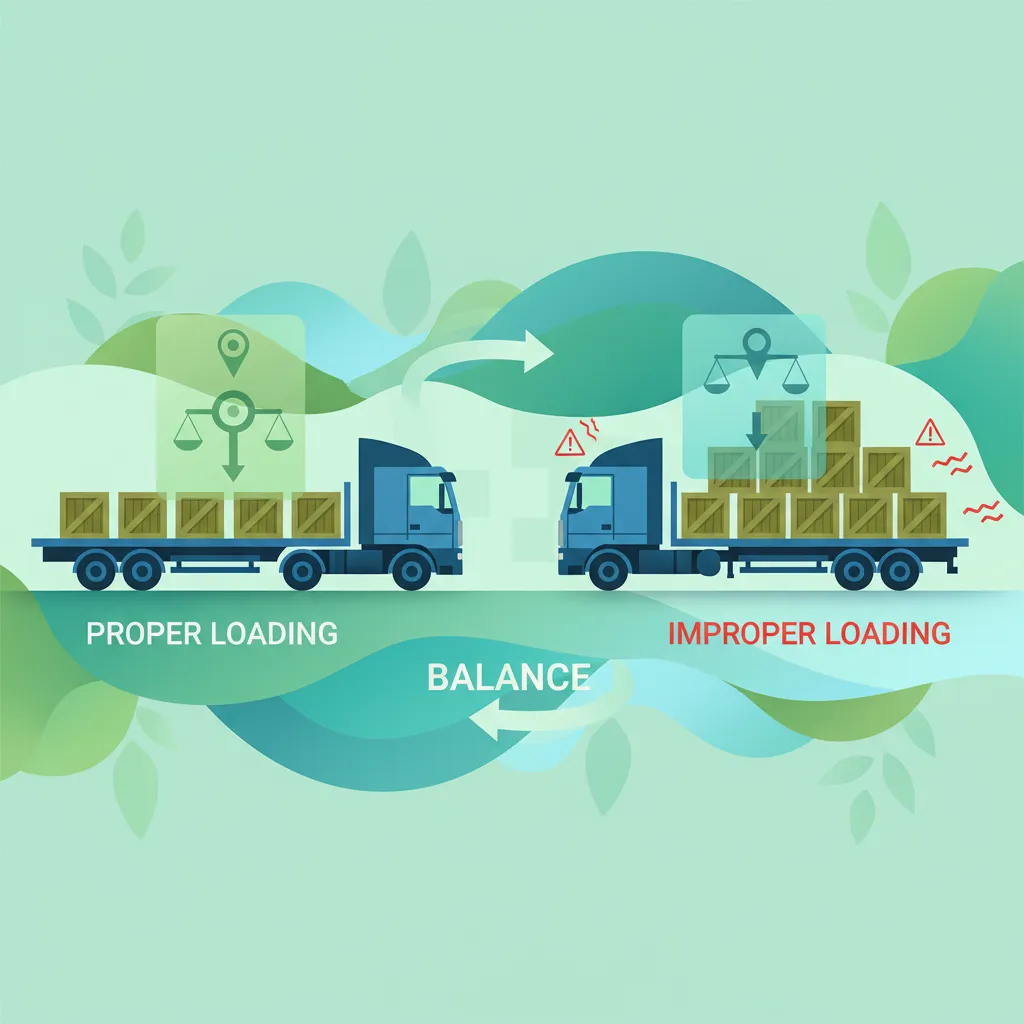
Properly managing your truck's load is crucial for safety and stability on Spanish roads. This unit delves into the physics of load distribution, the impact on handling and braking, and the legal requirements for securing cargo. Mastering these principles is vital for passing your DGT Category C and C1 theory exam and for safe professional driving.
Browse all lessons that make up Load Management & Stability. Each lesson focuses on specific topics, learning objectives, and core concepts, helping you build essential knowledge and follow a clear, structured progression toward your study goals in Spain.
This lesson explains the physical concept of the center of gravity and its critical importance in heavy vehicle stability. It details how the placement and distribution of cargo can raise or lower the center of gravity, affecting rollover risk and handling. The content also covers factors that contribute to vehicle sway and the principles of load balancing to maintain control during turns and maneuvers.
This lesson covers the legal requirements and practical techniques for securing cargo on a commercial vehicle. It details the various types of approved securement equipment, such as straps, chains, and blocking materials. Learners will understand the DGT regulations regarding the number and strength of tie-downs required for different types and weights of cargo to ensure it remains stable.
This lesson explores the direct relationship between a vehicle's load and its braking and acceleration performance. It explains how increased mass significantly increases the vehicle's inertia, resulting in longer stopping distances and slower acceleration. Understanding these physical principles helps drivers adjust their driving style, such as increasing following distances, to compensate for the effects of a heavy load.
This lesson addresses the special regulations that apply to transporting loads that exceed standard legal dimensions or weight. It explains the process for obtaining the necessary special permits from the DGT and other authorities. The content also covers the requirements for route planning, the use of escort vehicles (pilot cars), and the mandatory signage and lighting for the vehicle.
Explore high-intent keywords and long-tail search topics learners use when researching Load Management & Stability. These terms reflect how people search for reliable study materials, structured explanations, and unit-level theory preparation support in Spain.
Find clear answers to the most common questions learners ask about Load Management & Stability. Understand how the unit is organized, what learning goals it supports, and how it contributes to your study progression with structured explanations and practical guidance tailored for learners in Spain.
The center of gravity (CG) directly influences your truck's stability. A high or off-centre CG can make the vehicle more prone to tipping, especially during turns or sudden maneuvers. Understanding how load placement affects the CG is critical for maintaining control and preventing accidents on Spanish roads.
Spanish DGT regulations require cargo to be secured in a way that it cannot shift, fall, or obscure vision. This includes using appropriate tie-downs, nets, or bracing systems depending on the cargo type. Failure to secure loads properly can result in significant fines and pose serious safety risks.
An unbalanced load, particularly if it shifts forward during braking, can increase the braking distance and strain the braking system. Conversely, a load that shifts backward can affect steering control. Proper load distribution ensures more even braking and predictable handling.
Yes, the DGT has specific regulations for loads that exceed standard width, height, or length limits. These often require special permits, escorts, and adherence to designated routes and times to ensure public safety. This unit covers the general principles and directs you to the relevant DGT requirements.
Sway control refers to measures taken to prevent or minimize lateral movement or 'swaying' of the vehicle. Proper load distribution, ensuring the CG is low and central, significantly contributes to sway control. It's crucial for maintaining stability, especially on high-speed roads or in windy conditions.
While not the primary factor, a poorly secured load that causes unnecessary drag or forces the driver to make constant steering corrections can indirectly impact fuel efficiency. More importantly, it severely compromises safety and stability, which are the core focus of this unit.
All included lessons
Lessons in Load Management & Stability
See who benefits most from studying Load Management & Stability. This overview explains how the unit supports different learning needs, what level of knowledge is helpful before starting, and how it fits into the overall study path in Spain.
This unit is essential for all drivers preparing for the Spanish DGT Category C and C1 truck driving theory exams. It is particularly beneficial for those new to professional truck driving who need to understand the fundamental physics and legal aspects of carrying loads safely and efficiently on Spanish roads.

Begin your preparation for the Spanish DGT driving licence exam today. Browse our full curriculum to find guided courses, detailed lessons on traffic legislation, road signs, and essential driving practices. Start learning systematically and confidently.
Explore DGT Theory Courses & CurriculumExplore all units and lessons included in this driving theory course.
Begin your preparation for the Spanish DGT driving licence exam today. Browse our full curriculum to find guided courses, detailed lessons on traffic legislation, road signs, and essential driving practices. Start learning systematically and confidently.
Explore DGT Theory Courses & Curriculum