
This lesson provides a detailed guide on executing safe reversing manoeuvres and the critical safety checks required under Swiss traffic law. Mastering these skills is essential for your Category B exam and ensures you can handle restricted spaces with confidence. You will learn to integrate proper observation techniques with vehicle control to prevent accidents.

Lesson content overview
Reversing a vehicle is one of the most challenging manoeuvres a driver faces, primarily due to limited visibility and the complex coordination required. This lesson, part of your Comprehensive Swiss Driving Theory Course for Category B License, equips you with the fundamental knowledge and best practices to execute reversing manoeuvres safely and confidently on Swiss roads. By understanding the techniques and adhering to crucial safety checks, you can significantly reduce the risk of accidents, property damage, and injury to vulnerable road users.
Reversing is inherently a high-risk activity because drivers' natural forward-facing vision is compromised. Even with modern vehicle technology, a driver's field of view is significantly reduced when moving backward, making it easy to miss obstacles, pedestrians, or other vehicles.
The primary challenge in reversing stems from restricted rear visibility and the tendency for drivers to concentrate only on the point they are reversing into, rather than continuously scanning their entire surroundings. This tunnel vision can lead to overlooking critical hazards, such as children playing behind the vehicle, low-lying barriers, or approaching cyclists. Statistics show that a significant number of accidents occur during reversing manoeuvres, highlighting the critical need for systematic training and disciplined execution.
Never assume a path is clear without thoroughly checking. Blind spots can conceal unexpected obstacles, especially vulnerable road users who may be harder to spot.
This lesson builds upon essential skills covered in earlier sections, particularly those related to observation, positioning, turning, and lane changes (Lesson 6). A strong understanding of your vehicle's dimensions and how to adjust mirrors is also crucial, drawing on knowledge from vehicle technology (Lesson 8). Mastering safe reversing techniques provides a solid foundation for more complex manoeuvres such as parallel parking and three-point turns, which you will encounter later in the curriculum (Lesson 9.5).
Effective reversing is not just about moving backward; it’s a systematic process that combines continuous observation, precise vehicle control, and adherence to safety protocols.
The combined visual information a driver can obtain about the area behind their vehicle, using side mirrors, the interior rear-view mirror, a rear-view camera (if equipped), and direct observation by turning the head.
Optimal rear visibility is the cornerstone of safe reversing. Due to the limited field of view when moving backward, drivers must actively seek out visual information from all available sources. This ensures that any potential hazards, such as pedestrians, cyclists, or static obstacles, are identified and addressed before they become a collision risk. Relying on a single source of information, such as only the rear-view mirror or only the camera, is insufficient and dangerous.
Maintaining a low, controlled speed is paramount when reversing. This allows you sufficient time to react to unexpected situations and to stop the vehicle promptly if an obstacle suddenly appears. In urban and residential areas, a reversing speed of typically no more than 10 km/h is recommended, and often even slower in very confined or busy spaces. The objective is to move at a pace that enables you to stop instantly and safely.
When reversing, aim for a speed where you could comfortably step out and walk alongside your vehicle without being outpaced. This helps maintain a safe reaction window.
A systematic method of continuously checking all sources of rear visibility—mirrors, rear-view camera, and direct head turns—multiple times throughout a reversing manoeuvre.
Scanning is a structured approach to combat the limitations of rear visibility. It involves a repetitive sequence of checking all mirrors (left, right, and interior), glancing at the rear-view camera display (if available), and performing direct head turns to look out the rear window and side windows. This routine helps to cover blind spots and ensures you have the most up-to-date information about your surroundings. Never assume that a single check before you start moving is adequate; obstacles can appear or move into your path during the manoeuvre.
Steering while reversing can feel counter-intuitive at first because the rear of the vehicle moves in the opposite direction to how you turn the steering wheel when moving forward. For instance, turning the steering wheel to the left will cause the rear of the vehicle to swing to the right. Smooth, small, and continuous adjustments to the steering wheel are crucial. Over-steering or making sudden, large movements can quickly lead to loss of control or an unintended collision path. Always use both hands on the steering wheel for maximum precision and control.
Before initiating any reverse manoeuvre, a series of mandatory safety checks must be performed. These checks ensure that both the vehicle and its immediate environment are safe for backward movement. Neglecting these can lead to hazardous situations, such as unsecured items shifting or failing to notice a child near the vehicle.
Seatbelt Check: Confirm that all occupants, including yourself, are properly secured with seatbelts.
Mirror and Camera Check: Ensure all mirrors (side and interior) are clean, correctly adjusted, and provide an unobstructed view. If equipped, verify your rear-view camera lens is clear.
Load Check: Confirm that any cargo or luggage is securely fastened and does not obstruct your rear window or mirrors.
Surroundings Check: Perform a thorough visual inspection of the area immediately behind and around your vehicle. Look for pedestrians, children, cyclists, pets, and any static obstacles that might be in your path.
Signal Check: If reversing onto a public road or in a situation where other road users need to be alerted, prepare to use your turn indicators or hazard lights appropriately.
Modern vehicles are often equipped with technologies designed to assist with reversing, but these are aids, not replacements for careful driving and observation.
Mirrors are your primary tools for rear visibility.
Both types of mirrors must be frequently checked and kept clean and unobstructed to provide a clear view at all times.
An electronic device that captures a wide-angle image of the area directly behind the vehicle and displays it on a screen on the dashboard when reverse gear is engaged.
Rear-view cameras offer a valuable supplementary view, particularly in tight spaces or for spotting low-lying obstacles that might be out of sight in mirrors. Many cameras come with dynamic guidelines that project your vehicle's probable trajectory, assisting with precise positioning. However, it is crucial to remember that cameras:
Therefore, a rear-view camera should always be used in conjunction with your mirrors and direct head turns. Over-reliance on the camera alone is a common mistake that can lead to collisions.
Systematic checks are not a one-time event; they are continuous throughout the reversing process.
As detailed in the StepList above, before even moving an inch, you must ensure your vehicle, its occupants, and the surrounding environment are safe. This includes:
The mandatory process of properly fastening all cargo and ensuring passengers are seated and restrained to prevent movement during any vehicle operation, especially reversing.
Unsecured loads pose significant risks. During reversing, especially if sudden braking is required, unsecured items can shift, causing:
Swiss traffic law mandates that loads must be securely fastened (SVG Art. 84). Similarly, all passengers must be correctly restrained (SVG Art. 44) before the vehicle moves.
The flashing amber lights on a vehicle that indicate a temporary hazard, used to warn other road users when the vehicle is stationary or moving at a very low speed due to a specific situation.
In certain situations, activating your hazard lights (also known as hazard warning signals) can be a valuable safety measure while reversing. This is particularly true when:
Using hazard lights alerts other drivers to your presence and unusual movement, reducing the risk of a collision. However, they should not be used as a substitute for turn signals when reversing onto a road, where a specific direction indicator is required. Misuse of hazard lights on a busy road can confuse other road users.
Adhering to Swiss traffic law is essential for safe and legal reversing. Several articles from the Swiss Road Traffic Act (SVG) directly apply to these manoeuvres.
The following regulations are critical for legal and safe reversing in Switzerland. Familiarize yourself with these articles as part of your Category B license preparation.
A fundamental principle of Swiss traffic law is that a vehicle performing a special manoeuvre, such as reversing, generally has to yield to other road users who are proceeding normally. This means:
When reversing from a private property or a parking space onto a public road, activating the appropriate turn indicator (e.g., the left indicator if you intend to reverse left onto the road) is crucial. This signals your intended direction to other road users and helps them anticipate your movement, thereby preventing confusion and potential accidents.
Understanding common pitfalls can help you develop safer reversing habits.
Safe reversing requires flexibility and adaptation to varying environmental and situational factors.
Reversing with a trailer is a highly complex skill that requires practice beyond the scope of a basic theory lesson. Key considerations include:
Pedestrians, cyclists, and especially children are particularly vulnerable during reversing manoeuvres because they are often less visible and may move unpredictably.
Mastering reversing techniques is not just about passing an exam; it's about developing a critical safety skill for your daily driving life. By consistently applying systematic scanning, maintaining strict speed control, making smooth steering adjustments, and performing comprehensive safety checks, you can confidently navigate any reversing situation. Remember that technology is an aid, not a substitute for active driver awareness. Adhering to Swiss traffic regulations for reversing ensures not only your safety but also the safety of all other road users. This systematic approach will make you a more responsible and skilled driver on Swiss roads, minimizing risks and preventing accidents.
This lesson covers the essential techniques and safety protocols for executing reversing maneuvers safely on Swiss roads, emphasizing that reversing is high-risk due to severely limited visibility. Learners must master a systematic, continuous observation process combining mirrors, rear-view cameras, and direct head turns while maintaining a controlled low speed. The lesson includes specific Swiss traffic law requirements (SVG articles), detailed pre-reversing safety checklists covering seatbelts, load securing, and surroundings checks, and guidance on adapting techniques for adverse weather, slopes, and urban environments with vulnerable road users.
A short set of high-value points that capture the most important learning from this lesson.
Reversing requires continuous systematic scanning using all mirrors, camera, and direct head turns—not a single initial check
Maintain low speed (typically 10 km/h or slower) to allow instant reaction to unexpected hazards
Technology aids like rear-view cameras supplement but never replace manual observation techniques
Swiss law mandates yielding priority to all other road users during reversing maneuvers
Always secure loads and confirm passengers are belted before any reversing maneuver
Explore all units and lessons included in this driving theory course.
SVG Art. 71 requires safe positioning before reversing; Art. 56 mandates giving way to all other traffic; Art. 57 requires appropriate signals when reversing onto public roads
When turning the steering wheel left while reversing, the rear swings right—the opposite of forward driving
Mirrors must be clean and unobstructed at all times; cameras can be affected by dirt, rain, and low light
Unsecured loads can shift during reversing, blocking visibility or affecting vehicle stability
Hazard lights warn others of slow movement but do not replace turn indicators when reversing onto a road
Relying solely on the rear-view camera without checking mirrors or performing direct head turns, missing objects outside the camera's narrow field of view
Reversing too quickly in confined spaces, reducing reaction time and increasing stopping distance
Performing only a single quick check before starting, then failing to continue scanning throughout the entire maneuver
Driving with loose cargo that shifts and obstructs rear visibility during the reversing maneuver
Using hazard lights instead of turn indicators when reversing onto a public road, causing confusion for other road users
Lesson content overview
A short set of high-value points that capture the most important learning from this lesson.
Reversing requires continuous systematic scanning using all mirrors, camera, and direct head turns—not a single initial check
Maintain low speed (typically 10 km/h or slower) to allow instant reaction to unexpected hazards
Technology aids like rear-view cameras supplement but never replace manual observation techniques
Swiss law mandates yielding priority to all other road users during reversing maneuvers
Always secure loads and confirm passengers are belted before any reversing maneuver
Explore all units and lessons included in this driving theory course.
SVG Art. 71 requires safe positioning before reversing; Art. 56 mandates giving way to all other traffic; Art. 57 requires appropriate signals when reversing onto public roads
When turning the steering wheel left while reversing, the rear swings right—the opposite of forward driving
Mirrors must be clean and unobstructed at all times; cameras can be affected by dirt, rain, and low light
Unsecured loads can shift during reversing, blocking visibility or affecting vehicle stability
Hazard lights warn others of slow movement but do not replace turn indicators when reversing onto a road
Relying solely on the rear-view camera without checking mirrors or performing direct head turns, missing objects outside the camera's narrow field of view
Reversing too quickly in confined spaces, reducing reaction time and increasing stopping distance
Performing only a single quick check before starting, then failing to continue scanning throughout the entire maneuver
Driving with loose cargo that shifts and obstructs rear visibility during the reversing maneuver
Using hazard lights instead of turn indicators when reversing onto a public road, causing confusion for other road users
Explore search topics learners often look for when studying Reversing Techniques and Safety Checks. These topics reflect common questions about road rules, driving situations, safety guidance, and lesson level theory preparation for learners in Switzerland.
Browse additional driving theory lessons that cover connected traffic rules, road signs, and common driving situations related to this topic. Improve your understanding of how different rules interact across everyday traffic scenarios.
Learn how to adapt your reversing techniques for adverse weather like rain, snow, fog, and low light. This lesson covers navigating slopes and tricky terrains, ensuring safe manoeuvres in all Swiss environments.

This lesson examines the impact of various weather conditions on driving safety. It explains how to adjust speed in low visibility and the risks of aquaplaning in heavy rain. The content also covers using snow chains in snowy conditions, handling icy surfaces, and dealing with strong winds, particularly on bridges and open roads.

Wet or icy roads drastically reduce tyre grip and can double or triple braking distances. This lesson stresses the importance of significantly reducing overall speed and increasing following distances in such conditions. It advises on using brakes with extreme care to avoid skidding and explains how the vehicle's retarder should be used with caution as it can cause the drive wheels to lock up on slippery surfaces.

This lesson examines the impact of weather and visibility on driving safety and speed selection. It covers how fog, rain, snow, and darkness affect visibility and reaction times, providing guidelines on adjusting speed. It also includes strategies for improving visibility, such as proper headlamp use, to ensure you can adapt to varying weather conditions.
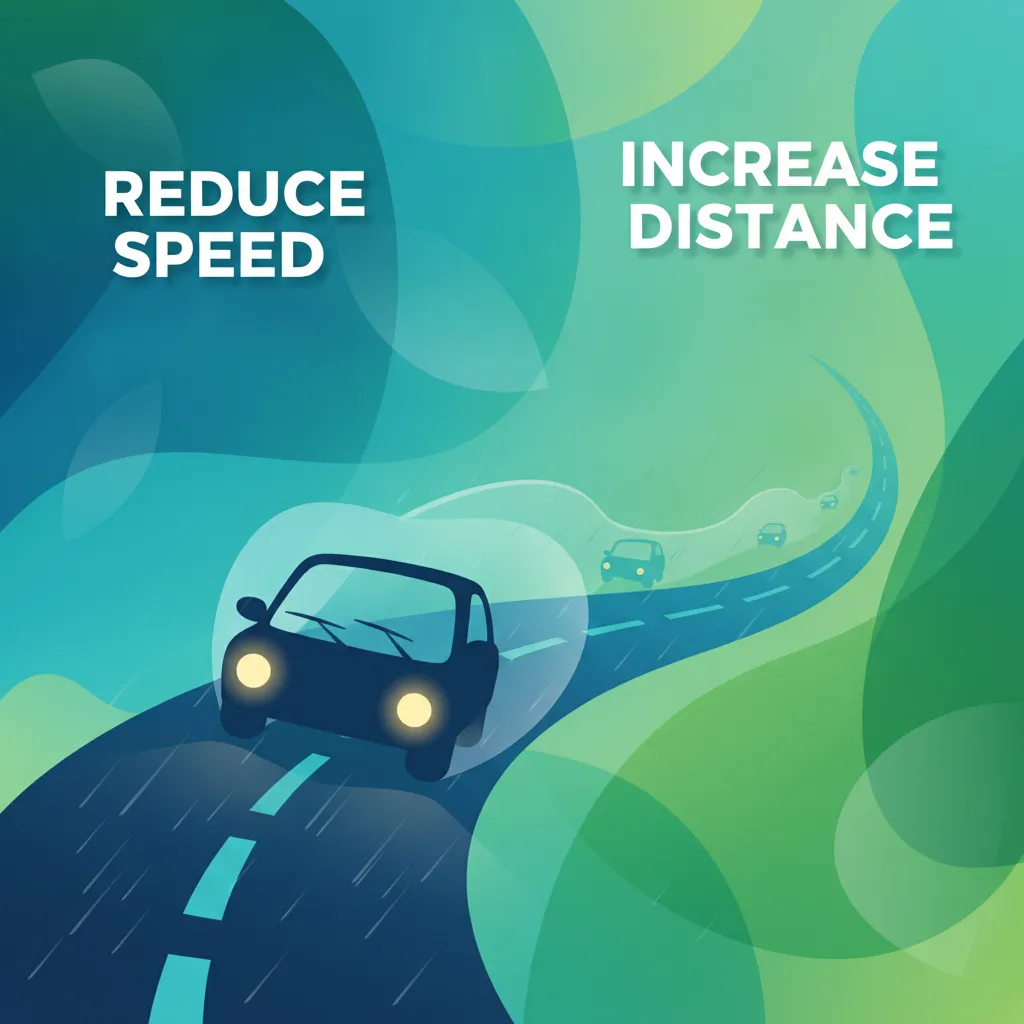
Weather has a profound impact on vehicle handling and visibility. This lesson teaches you how to reduce speed, increase following distances, and use controls smoothly to maintain traction in poor conditions. It also covers the legal requirements and practical application of snow chains in winter.

This lesson focuses on driving on mountain roads, addressing steep gradients, hairpin bends, and altitude-related challenges. You will learn proper techniques for climbing ascents and using engine braking on descents. The content also covers the use of snow chains, recognizing avalanche risks, and interpreting mountain road signs for safe alpine navigation.

This lesson introduces defensive driving principles, focusing on hazard anticipation, continuous scanning, and proactive positioning. You will learn how to anticipate potential hazards by observing traffic patterns and maintaining situational awareness. Emphasis is placed on proactive speed management to avoid dangerous situations before they arise.

This lesson details how adverse weather conditions like rain, fog, and snow affect motorcycle safety. It explains how wet surfaces reduce tyre grip, requiring smoother control inputs and longer braking distances. Strategies for managing reduced visibility in fog and the extreme hazards of riding on snow and ice are also covered.
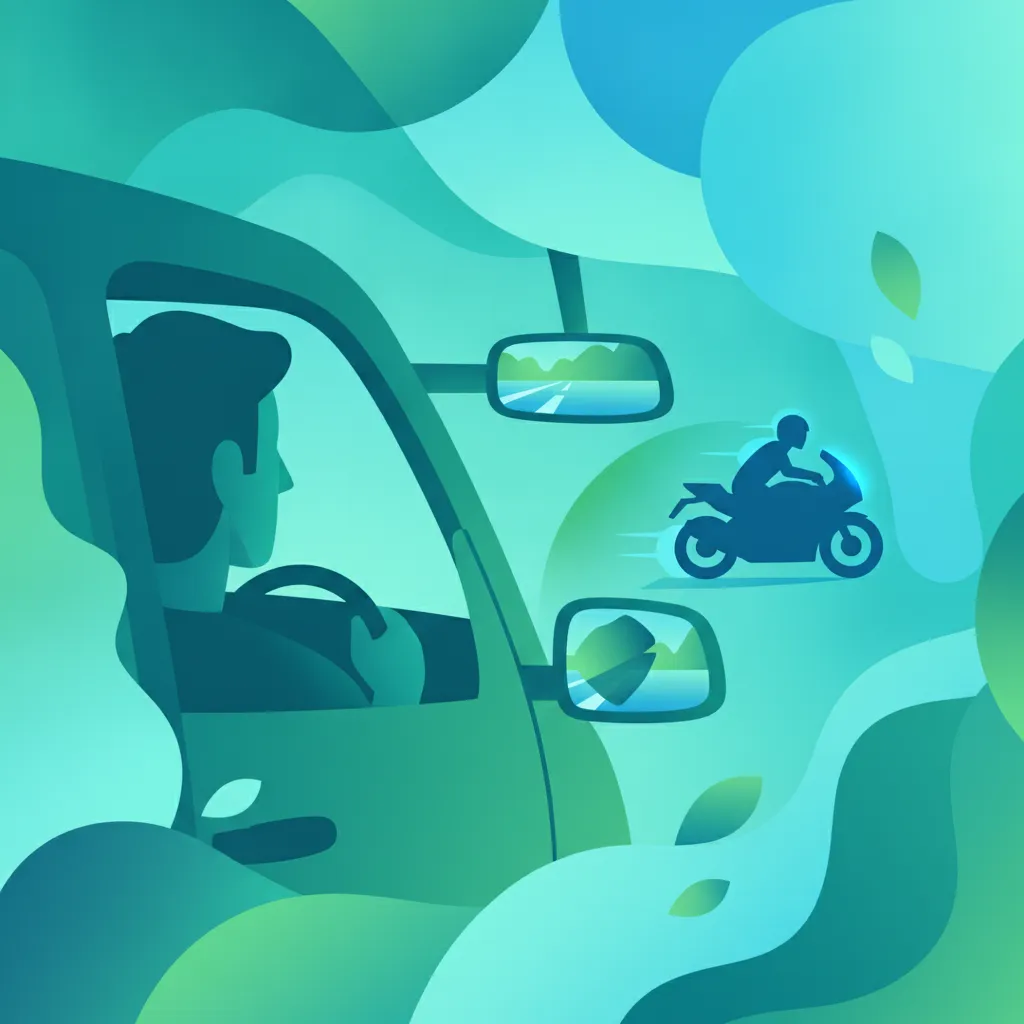
This lesson covers the systematic use of rearview and side mirrors, combined with head checks, to maintain full awareness of surrounding traffic. It emphasizes frequent observation to detect vehicles in blind spots, especially during lane changes and turns. The content also details the proper timing for head checks and the role of scanning techniques in preventing collisions.

This lesson focuses on adapting braking techniques for low-traction surfaces like wet or icy roads. It explains the need for gentle, progressive brake application to prevent wheel lock-up and maintain control. Learners will understand how to scan the road ahead for potential hazards and adjust their braking strategy accordingly.

Reversing is the most dangerous manoeuvre a large vehicle can perform and should be avoided whenever possible. This lesson details a safe system of work for when reversing is unavoidable. It covers the importance of a 360-degree check before starting, the use of a banksman, and how to interpret standard hand signals.
Identify and learn to prevent frequent errors during reversing manoeuvres, such as over-reliance on technology, poor speed control, and inadequate scanning. Essential for safe driving and passing your theory exam.

This lesson examines the rules governing overtaking, including permitted zones, prohibited areas, and appropriate distances. It outlines the proper execution of overtaking maneuvers, including signaling and checking mirrors and blind spots. The content also discusses specific Swiss regulations, such as overtaking on the right in congested traffic, and the need for caution.
Reversing is the most dangerous manoeuvre a large vehicle can perform and should be avoided whenever possible. This lesson details a safe system of work for when reversing is unavoidable. It covers the importance of a 360-degree check before starting, the use of a banksman, and how to interpret standard hand signals.

Reversing a heavy vehicle is inherently dangerous due to severely restricted visibility. This lesson outlines a safe-reversing protocol, which includes a thorough check of the area behind the vehicle before starting and using a competent banksman (signaller) whenever possible. It covers the standardized hand signals used for communication and emphasizes moving at a slow, walking pace.
This lesson covers the systematic use of rearview and side mirrors, combined with head checks, to maintain full awareness of surrounding traffic. It emphasizes frequent observation to detect vehicles in blind spots, especially during lane changes and turns. The content also details the proper timing for head checks and the role of scanning techniques in preventing collisions.

Gain insight into the two-stage examination process for the Swiss Category B licence, covering both the theory exam and the practical driving test. This lesson outlines the question format, passing score thresholds, and the nature of the practical assessment. Administrative aspects such as registration procedures, test locations, and retake policies are also addressed.

Relying solely on the service brakes on a long downhill stretch can lead to overheating and complete brake failure (brake fade). This lesson explains the function of auxiliary brakes like retarders. You will learn how and when to engage them to maintain a safe, controlled speed, preserving the main brakes for when they are truly needed.
This lesson introduces defensive driving principles, focusing on hazard anticipation, continuous scanning, and proactive positioning. You will learn how to anticipate potential hazards by observing traffic patterns and maintaining situational awareness. Emphasis is placed on proactive speed management to avoid dangerous situations before they arise.
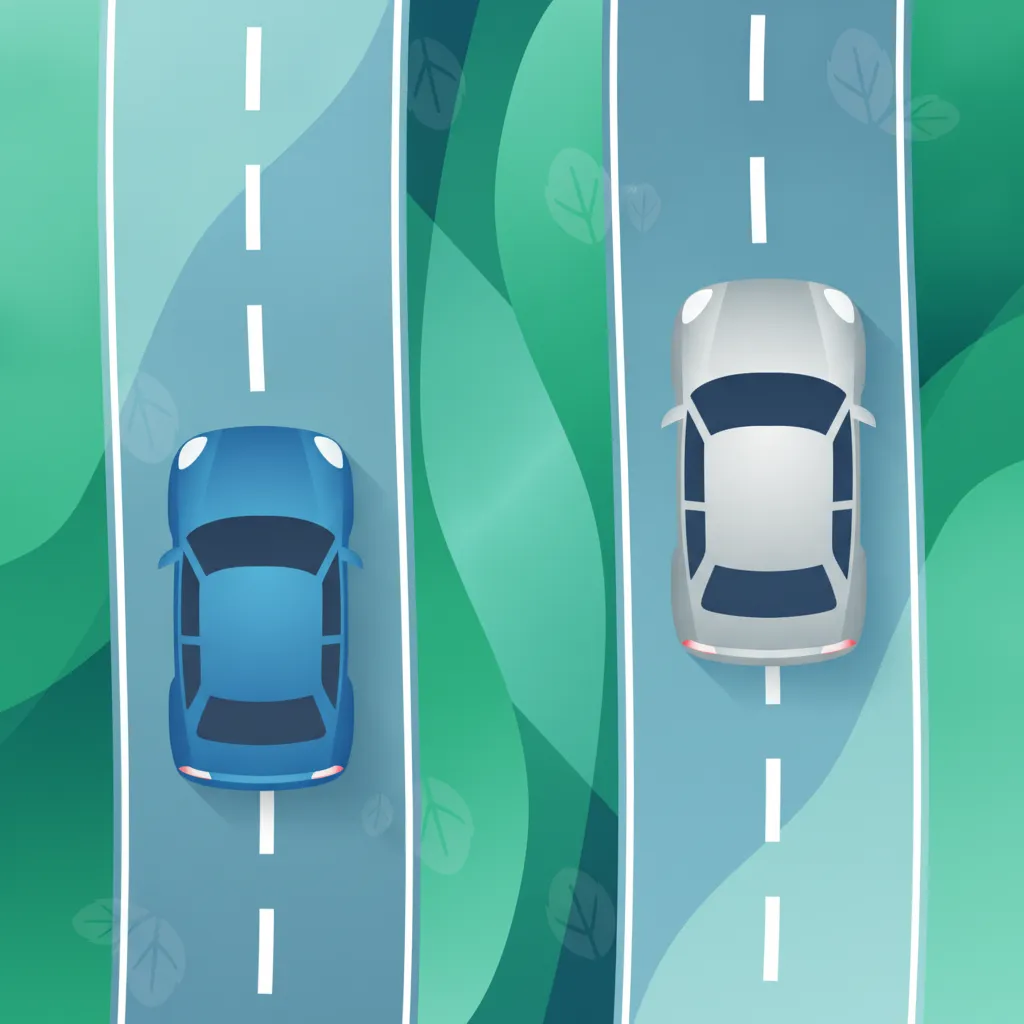
This lesson focuses on maintaining proper vehicle positioning within the lane, aligning correctly, and respecting road markings. You will understand how correct positioning contributes to safe overtaking and smooth turning. The content also discusses adjustments required in different scenarios, such as narrow roads and multi-lane highways, to maintain optimal lane discipline.

This lesson focuses on calculating total stopping distance, incorporating perception-reaction distance and the vehicle's braking distance. You will also learn to determine an appropriate following gap based on speed, visibility, and road conditions. The content emphasizes maintaining a safe distance to avoid collisions, especially in adverse weather.

This lesson outlines the principles of safe overtaking, emphasizing the importance of accurate judgment of speed and distance. It covers the necessary steps: checking mirrors, signaling, checking blind spots, executing the maneuver smoothly, and returning to the lane safely. The content is tailored to different road environments, from urban streets to rural roads.
Find clear answers to common questions learners have about Reversing Techniques and Safety Checks. Learn how the lesson is structured, which driving theory objectives it supports, and how it fits into the overall learning path of units and curriculum progression in Switzerland. These explanations help you understand key concepts, lesson flow, and exam focused study goals.
In Switzerland, hazard lights are primarily used to warn others of an emergency or a sudden obstruction. They are not required for standard reversing manoeuvres; instead, focus on clear signalling if your intention affects other road users and constant observation of your surroundings.
The most common error is failing to perform a 360-degree check before moving. Many students rely solely on cameras or mirrors; however, Swiss examiners expect you to physically check blind spots to ensure the area is clear of vulnerable road users like cyclists.
No, reversing is strictly prohibited on motorways in Switzerland under any circumstances. Doing so is a major legal violation that would lead to immediate failure in both theory and practice exams.
Because visibility is naturally more restricted when moving backward, lower speeds provide you with more time to react to unexpected hazards or changing conditions. Maintaining a 'walking pace' is the golden rule for safety.
Pinpoint specific Swiss traffic rules, road signs, or driving situations you need to master. Use the practice search to start a focused revision session now and build confidence for your official driving theory exam.