
This lesson guides you through the unique challenges of driving on Swiss mountain roads, including managing steep gradients and navigating hairpin bends. You will learn to apply essential engine braking techniques, interpret specific alpine road signs, and prepare for seasonal hazards like snow, ice, and avalanches, ensuring you are fully ready for the practical and theoretical demands of the Swiss Category B exam.
Lesson content overview
Driving in Switzerland's stunning mountainous regions offers breathtaking views but also presents unique challenges for drivers. This lesson, part of the Comprehensive Swiss Driving Theory Course for Category B License, equips you with the essential knowledge and techniques to safely navigate steep gradients, hairpin bends, and alpine conditions. Mastering these skills is crucial for preventing accidents, ensuring vehicle control, and complying with Swiss traffic regulations in high-altitude environments.
Mountain roads are characterized by their varied terrain, often involving significant changes in elevation, sharp turns, and exposure to unpredictable weather. Drivers must adapt their standard driving practices to account for these specific conditions.
A gradient refers to the slope of a road, indicating how steep an incline or decline is. It is typically expressed as a percentage, representing the vertical rise or fall over a horizontal distance. For instance, a 10% gradient means the road rises or falls 10 metres for every 100 metres travelled horizontally.
Understanding gradients is fundamental to mountain driving.
Incorrectly assessing a gradient can lead to loss of control, engine strain on ascents, or dangerous speeds on descents. Always anticipate changes in gradient and adjust your driving accordingly.
At higher altitudes, the air density decreases significantly. This reduction in oxygen affects your vehicle's performance in several ways:
When driving at high altitudes, anticipate that your vehicle will accelerate slower and may require longer stopping distances. Adjust your speed and increase your following distance accordingly.
Hairpin bends, also known as switchbacks, are extremely sharp, almost 180-degree turns commonly found on steep mountain roads. They are designed to allow roads to gain or lose elevation over a short horizontal distance. These bends require significant speed reduction and precise steering.
When approaching a hairpin bend:
Hairpin bends often have specific speed limits posted, which must be strictly obeyed. The reduced visibility around the bend also necessitates caution and readiness to stop for unforeseen obstacles or oncoming traffic.
Safe mountain driving relies on mastering specific techniques that manage speed, maintain traction, and preserve vehicle components.
Engine braking is a critical technique for controlling your speed on long or steep descents without over-relying on your service (foot) brakes. It involves downshifting to a lower gear, which uses the engine's compression resistance to slow the vehicle. This prevents your brakes from overheating and experiencing brake fade.
Why Engine Braking is Crucial:
As you begin a descent, assess the gradient and choose a gear that would be appropriate if you were climbing the same gradient. For steep descents, this might be 2nd or 3rd gear.
Take your foot off the accelerator. The engine will naturally resist the vehicle's forward motion.
Allow the engine to maintain a steady, safe speed. If the vehicle starts to pick up too much speed, apply light, intermittent pressure to the foot brake to bring the speed down, then release the brake and let the engine take over again. Avoid continuous braking.
If your vehicle has an automatic transmission, many modern vehicles offer a "manual" mode or "low gear" selections (L, 1, 2) that mimic engine braking. Consult your vehicle's manual.
Never rely solely on your foot brakes for extended periods on steep descents. This can lead to dangerous brake fade and loss of control.
Effective speed control is paramount on mountain roads. This involves not only adhering to posted speed limits but also adapting your speed to the actual conditions of the road, weather, and visibility.
Many mountain roads are narrow, often only wide enough for one vehicle at a time, especially around bends or at specific pinch points. In such situations, clear rules govern who has priority to ensure safe passage.
When encountering traffic on narrow mountain roads, make eye contact if possible and use hand signals to communicate your intentions. Patience and courtesy are key to safe navigation.
Switzerland's mountain regions have specific road signs and regulations designed to enhance safety in alpine environments. Understanding these is vital.
Snow chains are traction devices fitted to tires to significantly improve grip on snow-covered or icy roads. Their use is not always optional; under specific conditions, they become mandatory.
Pull over to a safe, level spot away from traffic.
Consult your vehicle manual for specific instructions regarding your vehicle type (front-wheel, rear-wheel, or all-wheel drive) and your chain manufacturer’s instructions.
Lay the chain out flat, ensuring there are no twists.
Drape the chain over the top of the tire, starting from the inside.
Connect the inner and outer loops as per instructions, then drive forward or backward a short distance to allow the chain to settle.
Tighten the chain securely, ensuring it's centred on the tire and fits snugly. Some chains have self-tensioning mechanisms.
Drive a short distance (e.g., 50-100 metres) and then stop to re-check and re-tighten the chains if necessary.
Mountainous regions are susceptible to avalanches, which are rapid flows of snow down a slope. Avalanche zones are areas identified as having a risk of such occurrences.
Never attempt to bypass road closure signs or barriers, even if the road appears clear. The danger of an avalanche can be invisible and sudden.
Mountain weather can change rapidly and drastically. Driving conditions can vary from dry asphalt to icy patches within minutes or a few kilometres.
Snow and Ice: These are the most challenging conditions.
Rain: Wet roads also reduce traction.
Fog: Reduces visibility significantly.
The weight of your vehicle and any attached trailers significantly impacts driving dynamics, especially on mountain roads.
Before embarking on a mountain journey with a heavy load or trailer, ensure your vehicle is in top mechanical condition, especially your brakes and tires. Distribute the load evenly and secure it properly.
Mountain roads are popular with hikers and cyclists, who are particularly vulnerable due to the terrain and narrow roads.
Successful and safe mountain driving is a blend of understanding the physics, respecting the environment, and adhering to regulations.
These principles, combined with a thorough understanding of Swiss traffic signs and regulations, will enable you to navigate the challenging yet rewarding alpine landscapes safely and confidently.
Mountain driving in Switzerland requires mastering engine braking to prevent brake fade on descents, selecting gears appropriate to gradient steepness, and understanding that uphill traffic has priority on narrow roads. Snow chains are legally mandatory when signs indicate, with a 50 km/h speed limit when fitted, and must be removed on clear surfaces. Altitude reduces engine power and brake cooling efficiency, demanding lower speeds and greater following distances. Hairpin bends require early deceleration and low-gear navigation, while adverse conditions like snow, ice, fog, and rain demand progressively gentler inputs and significantly increased stopping distances.
A short set of high-value points that capture the most important learning from this lesson.
Engine braking is the primary technique for controlling speed on descents, preventing dangerous brake fade from continuous foot braking
Uphill traffic has priority on narrow mountain roads where passing is impossible due to momentum and restart requirements
Snow chains become mandatory when specifically indicated by road signs, and must be removed once conditions improve to avoid tire damage
Gradient percentage directly indicates road steepness and should guide gear selection for both ascents and descents
Altitude reduces engine power and can affect brake cooling, requiring adjusted driving techniques and increased following distances
Explore all units and lessons included in this driving theory course.
Descend in the same gear you would use to climb the same slope for optimal engine braking
When snow chains are compulsory, a 50 km/h maximum speed limit applies and chains must be removed on clear roads
Never rely solely on foot brakes on steep descents; use engine braking with light, intermittent brake assistance if needed
Hairpin bends require reducing speed early, selecting low gear, and accelerating gently only after passing the apex
Avalanche road closures must be obeyed without exception, even if conditions appear safe
Fitting snow chains incorrectly or only on non-drive wheels, reducing their effectiveness
Braking continuously through long descents instead of using engine braking, risking brake fade
Attempting to bypass or ignore road closure signs and barriers in avalanche zones
Using insufficiently low gears on steep ascents, causing engine strain and momentum loss
Forgetting that altitude significantly reduces engine power, leading to misjudged acceleration ability
Lesson content overview
A short set of high-value points that capture the most important learning from this lesson.
Engine braking is the primary technique for controlling speed on descents, preventing dangerous brake fade from continuous foot braking
Uphill traffic has priority on narrow mountain roads where passing is impossible due to momentum and restart requirements
Snow chains become mandatory when specifically indicated by road signs, and must be removed once conditions improve to avoid tire damage
Gradient percentage directly indicates road steepness and should guide gear selection for both ascents and descents
Altitude reduces engine power and can affect brake cooling, requiring adjusted driving techniques and increased following distances
Explore all units and lessons included in this driving theory course.
Descend in the same gear you would use to climb the same slope for optimal engine braking
When snow chains are compulsory, a 50 km/h maximum speed limit applies and chains must be removed on clear roads
Never rely solely on foot brakes on steep descents; use engine braking with light, intermittent brake assistance if needed
Hairpin bends require reducing speed early, selecting low gear, and accelerating gently only after passing the apex
Avalanche road closures must be obeyed without exception, even if conditions appear safe
Fitting snow chains incorrectly or only on non-drive wheels, reducing their effectiveness
Braking continuously through long descents instead of using engine braking, risking brake fade
Attempting to bypass or ignore road closure signs and barriers in avalanche zones
Using insufficiently low gears on steep ascents, causing engine strain and momentum loss
Forgetting that altitude significantly reduces engine power, leading to misjudged acceleration ability
Explore search topics learners often look for when studying Mountain Road Driving and Alpine Conditions. These topics reflect common questions about road rules, driving situations, safety guidance, and lesson level theory preparation for learners in Switzerland.
Browse additional driving theory lessons that cover connected traffic rules, road signs, and common driving situations related to this topic. Improve your understanding of how different rules interact across everyday traffic scenarios.
Learn advanced strategies for navigating challenging mountain roads in Switzerland. This lesson covers effective engine braking, priority rules on narrow alpine passes, and adapting to severe weather like snow and ice. Essential for safe driving in alpine conditions and your theory exam.
Driving in the Alps requires a high level of skill and vehicle sympathy. This lesson covers techniques for climbing steep gradients by selecting the correct gear to maintain momentum without straining the engine. It reiterates the critical importance of using low gears and auxiliary brakes for descending, to ensure the service brakes remain cool and effective for the entire descent.
Driving a large vehicle on mountain passes is a demanding skill. This lesson covers selecting the correct gear for both ascents and descents to maintain control and avoid overheating the brakes. It also explains the specific priority rules that apply on mountain roads and the importance of being aware of sudden weather changes.
Controlling a heavy vehicle on a steep downhill grade requires a specific technique to avoid disaster. This lesson teaches the golden rule: select a low gear before starting the descent, one that is low enough to control the speed with minimal use of the service brakes. It explains how to effectively combine this with the engine brake or retarder to maintain a safe, steady speed and keep the service brakes cool and ready for an emergency.
Wet or icy roads drastically reduce tyre grip and can double or triple braking distances. This lesson stresses the importance of significantly reducing overall speed and increasing following distances in such conditions. It advises on using brakes with extreme care to avoid skidding and explains how the vehicle's retarder should be used with caution as it can cause the drive wheels to lock up on slippery surfaces.
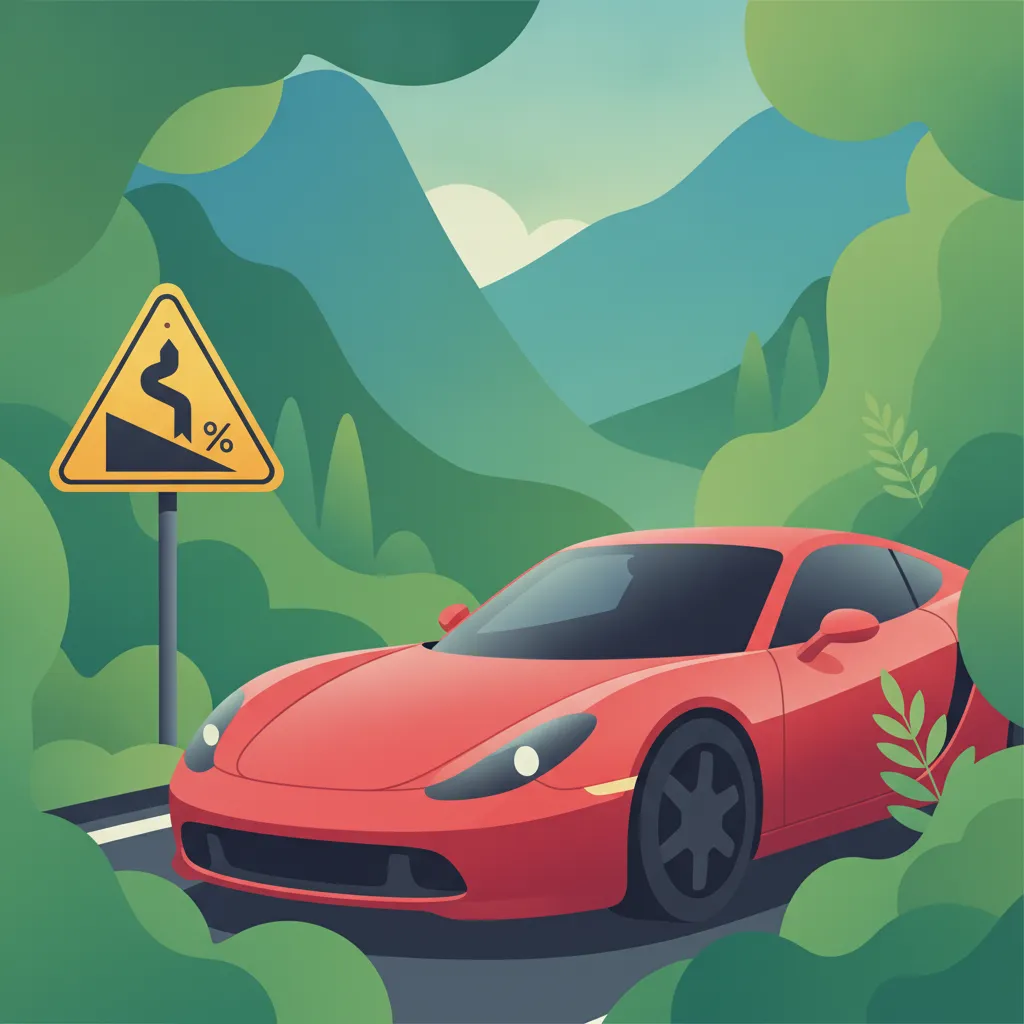
This lesson provides specialized techniques for safely handling hairpin turns and steep gradients. It teaches riders how to manage speed on approach, select the correct line through the bend, and use both brakes and engine braking on descents. Proper throttle control for maintaining momentum on uphill climbs is also covered.
This lesson introduces defensive driving principles, focusing on hazard anticipation, continuous scanning, and proactive positioning. You will learn how to anticipate potential hazards by observing traffic patterns and maintaining situational awareness. Emphasis is placed on proactive speed management to avoid dangerous situations before they arise.
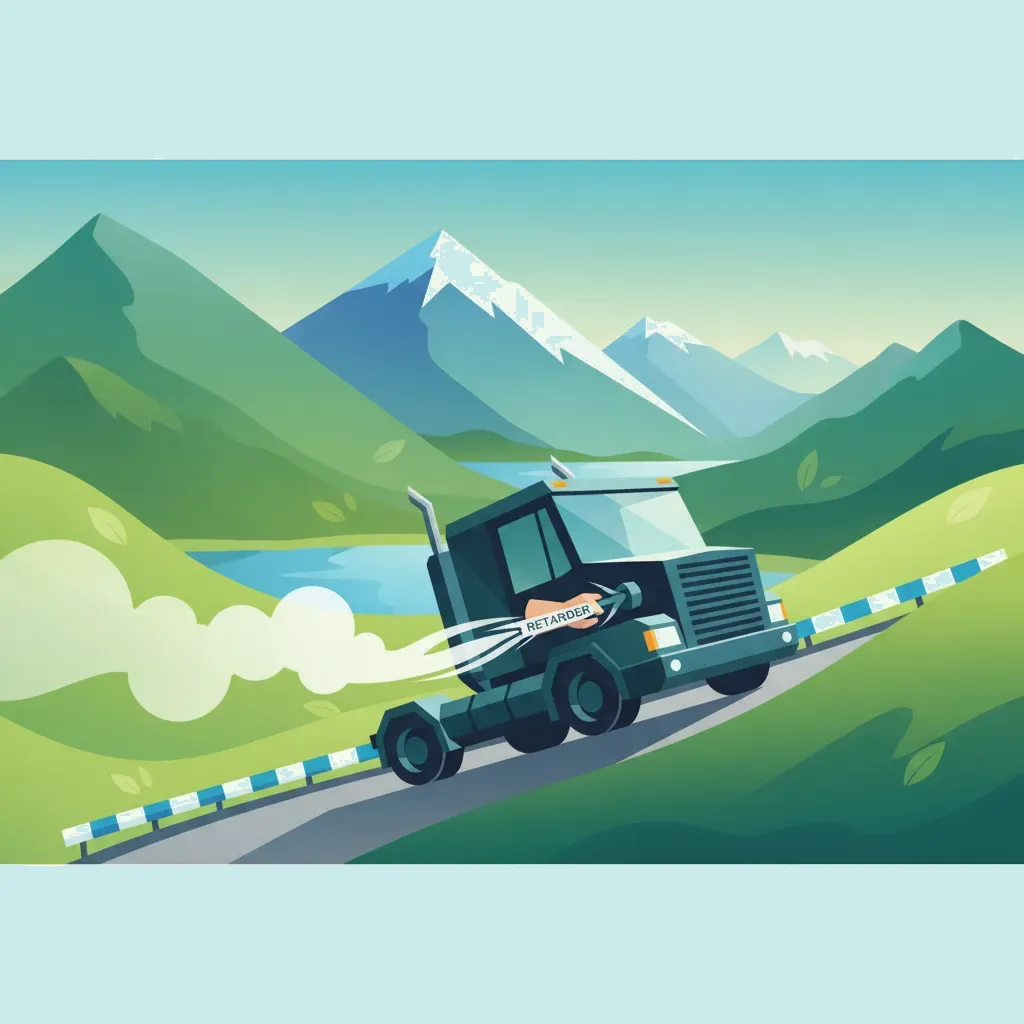
Relying solely on the service brakes on a long downhill stretch can lead to overheating and complete brake failure (brake fade). This lesson explains the function of auxiliary brakes like retarders. You will learn how and when to engage them to maintain a safe, controlled speed, preserving the main brakes for when they are truly needed.

This lesson explores the typical features of rural and alpine roads, such as narrow lanes, sharp bends, and significant elevation changes. It discusses the need for heightened awareness due to limited sight distances and the potential for unexpected hazards like wildlife or agricultural vehicles. Riders will learn to adapt their speed and positioning for these challenging conditions.
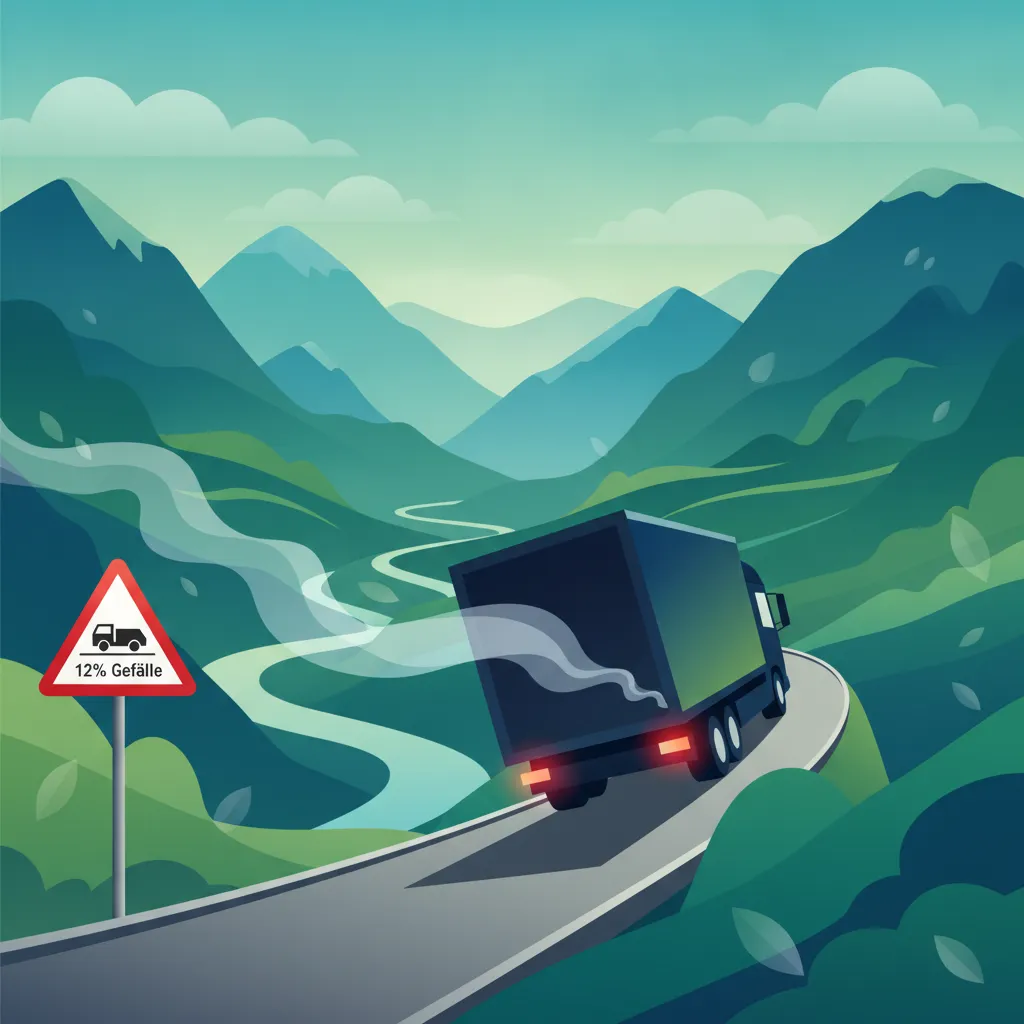
To prevent the service brakes from overheating and failing on long downhill gradients, heavy vehicles are equipped with endurance (or auxiliary) braking systems. This lesson explains the function of engine brakes (which alter valve timing) and retarders (which use hydrodynamic or electromagnetic force). These systems allow the driver to maintain a safe, controlled speed without relying solely on the service brakes.
This lesson provides instruction on how to perform an emergency stop safely and effectively. It covers techniques for applying maximum braking force without losing control, both in a straight line and while in a lean. Understanding how to manage traction and stability during a sudden stop is a vital skill for avoiding hazards.
Gain a thorough understanding of the specific road signs and hazards encountered on alpine routes in Switzerland. This lesson details mandatory snow chain regulations, avalanche zone awareness, and interpreting signs for steep ascents and descents to ensure safe navigation.
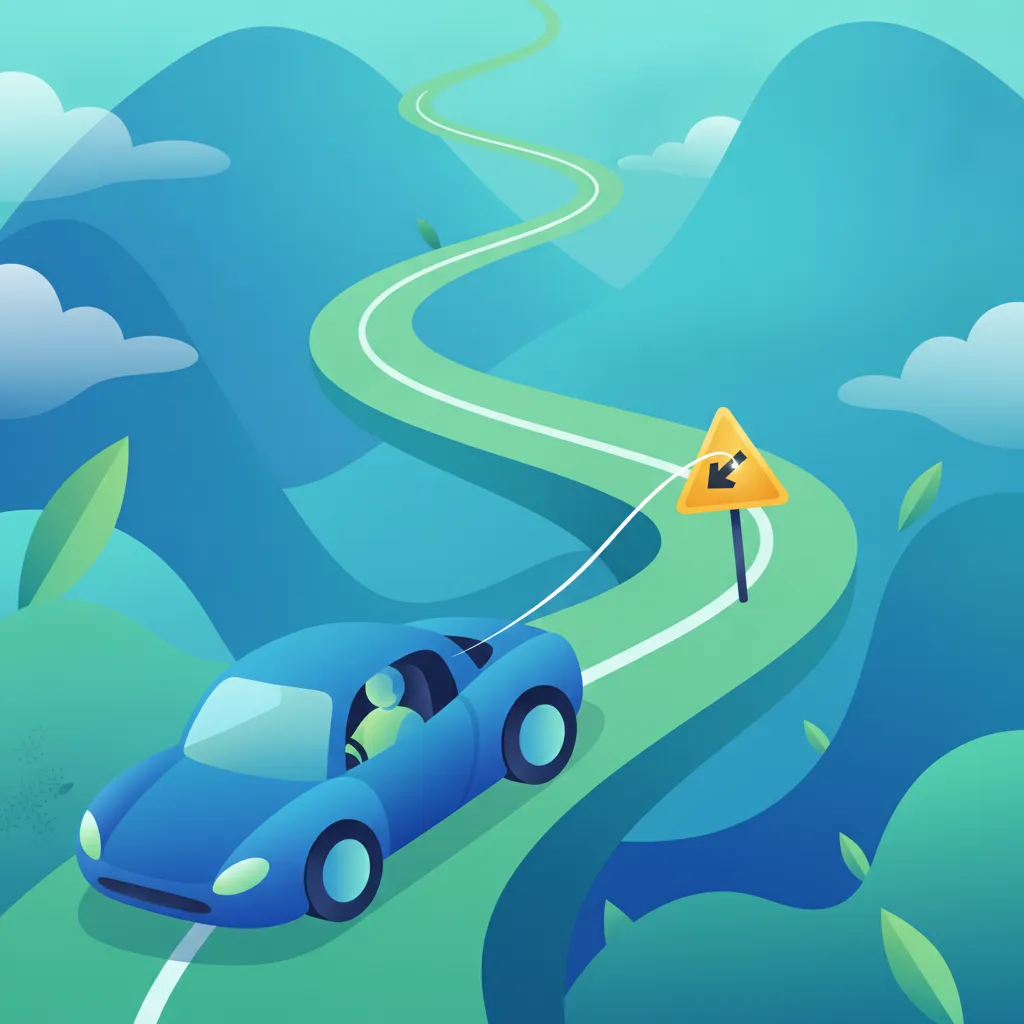
This lesson focuses on warning signs that alert drivers to potential hazards ahead, such as curves, steep descents, and roadwork zones. You will understand how these signs prompt anticipatory driving behavior, allowing for adjustments in speed and position. The content also discusses the typical placement of warning signs to help you react safely to changing conditions.
This lesson explores the typical features of rural and alpine roads, such as narrow lanes, sharp bends, and significant elevation changes. It discusses the need for heightened awareness due to limited sight distances and the potential for unexpected hazards like wildlife or agricultural vehicles. Riders will learn to adapt their speed and positioning for these challenging conditions.
This lesson focuses on identifying and managing specific road surface hazards that can compromise traction. It provides techniques for safely crossing slippery tram rails and painted markings, navigating uneven cobblestones, and maintaining control on loose gravel. The core skill is learning to scan the road ahead and adjust riding style proactively.
Driving in the Alps requires a high level of skill and vehicle sympathy. This lesson covers techniques for climbing steep gradients by selecting the correct gear to maintain momentum without straining the engine. It reiterates the critical importance of using low gears and auxiliary brakes for descending, to ensure the service brakes remain cool and effective for the entire descent.
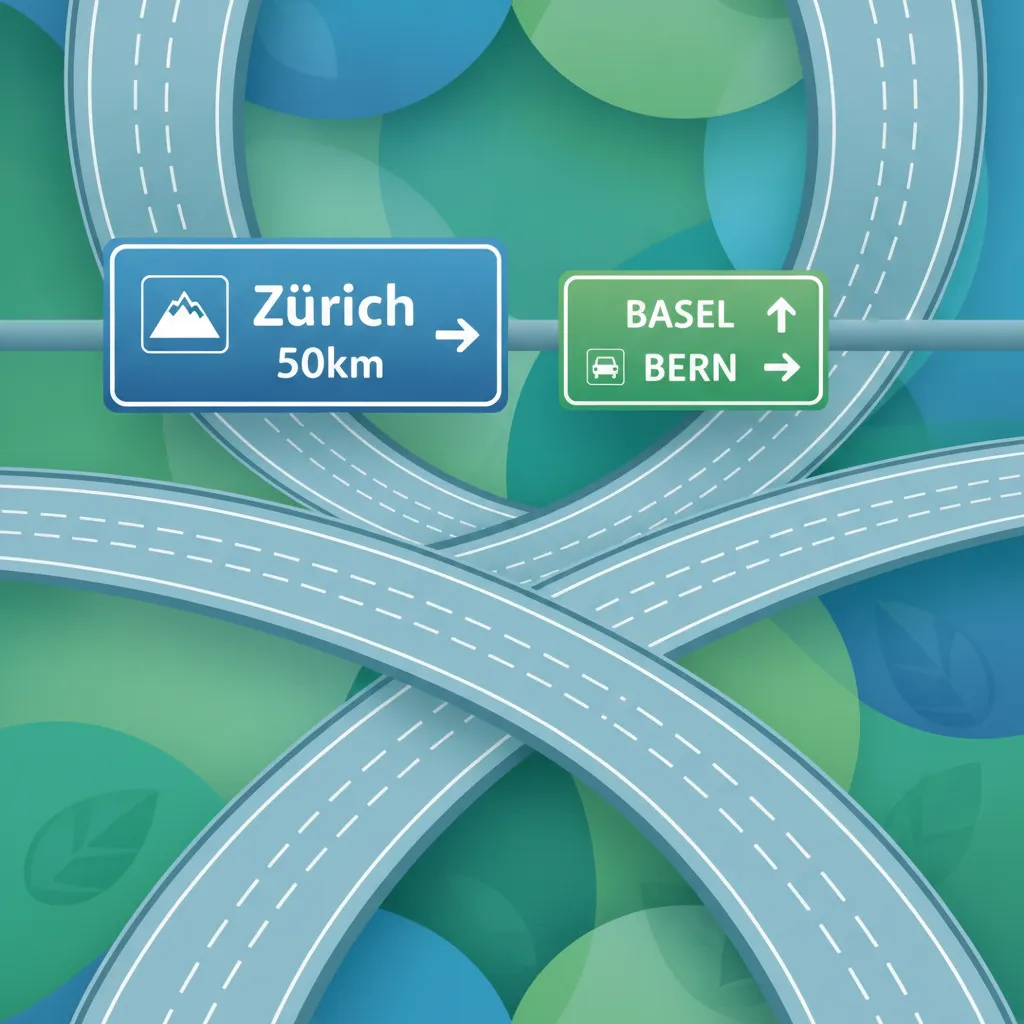
This lesson examines informational signs that provide route guidance, destination distances, and tourist information. It explains how direction signs, distance markers, and service area signs assist drivers in planning routes and making informed decisions. Understanding the logic of informational signage ensures efficient and safe navigation through the Swiss road network.
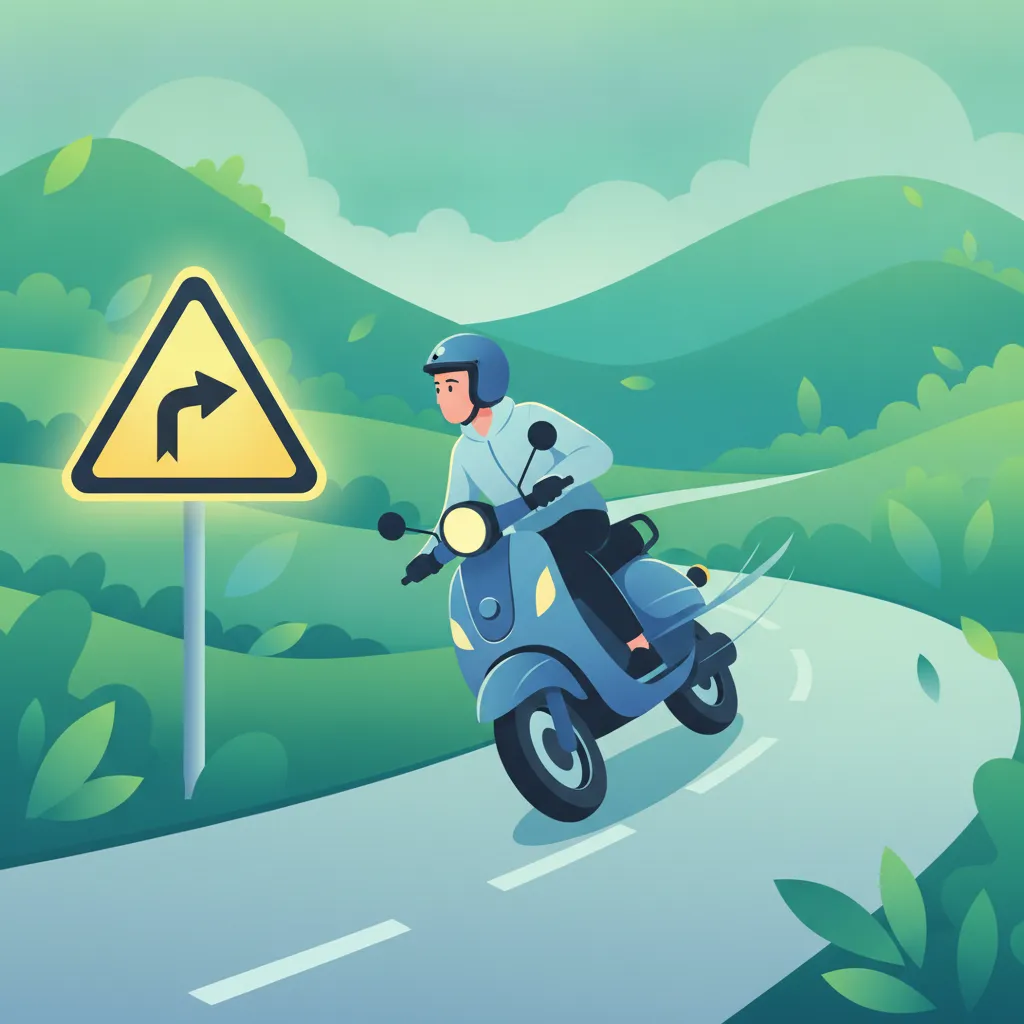
This lesson introduces the fundamental traffic signs that directly impact small vehicle riders. It covers the classification of signs into regulatory, warning, and mandatory categories, explaining how their shape and color indicate their function. Learners will be able to recognize and correctly interpret speed limits, priority signs, and other key information vital for safe navigation.
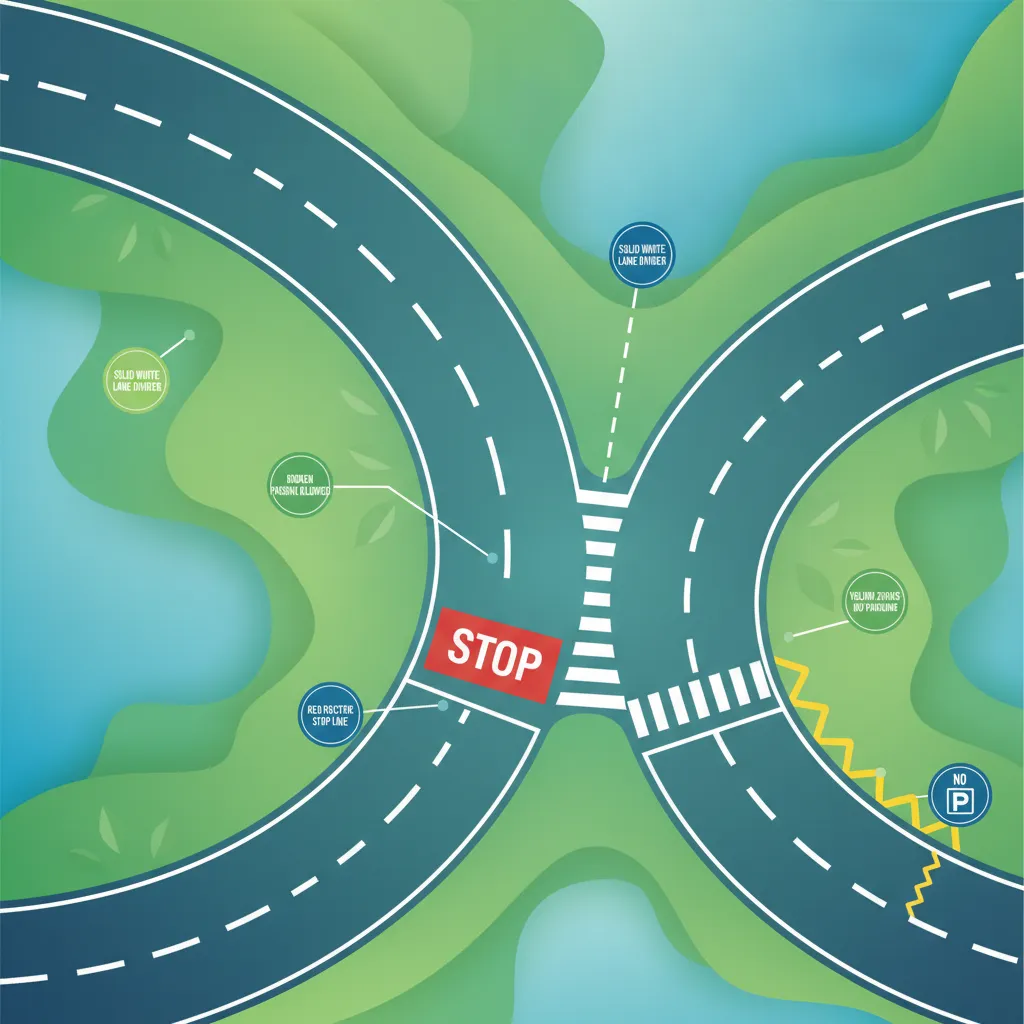
This lesson covers the various road surface markings that dictate lane usage, turning movements, and pedestrian zones. It explains the significance of solid versus broken lines, directional arrows, and specific markings for bike lanes. Understanding these markings is crucial for maintaining lane discipline and ensuring safe interactions in complex traffic environments.

This lesson examines the impact of various weather conditions on driving safety. It explains how to adjust speed in low visibility and the risks of aquaplaning in heavy rain. The content also covers using snow chains in snowy conditions, handling icy surfaces, and dealing with strong winds, particularly on bridges and open roads.
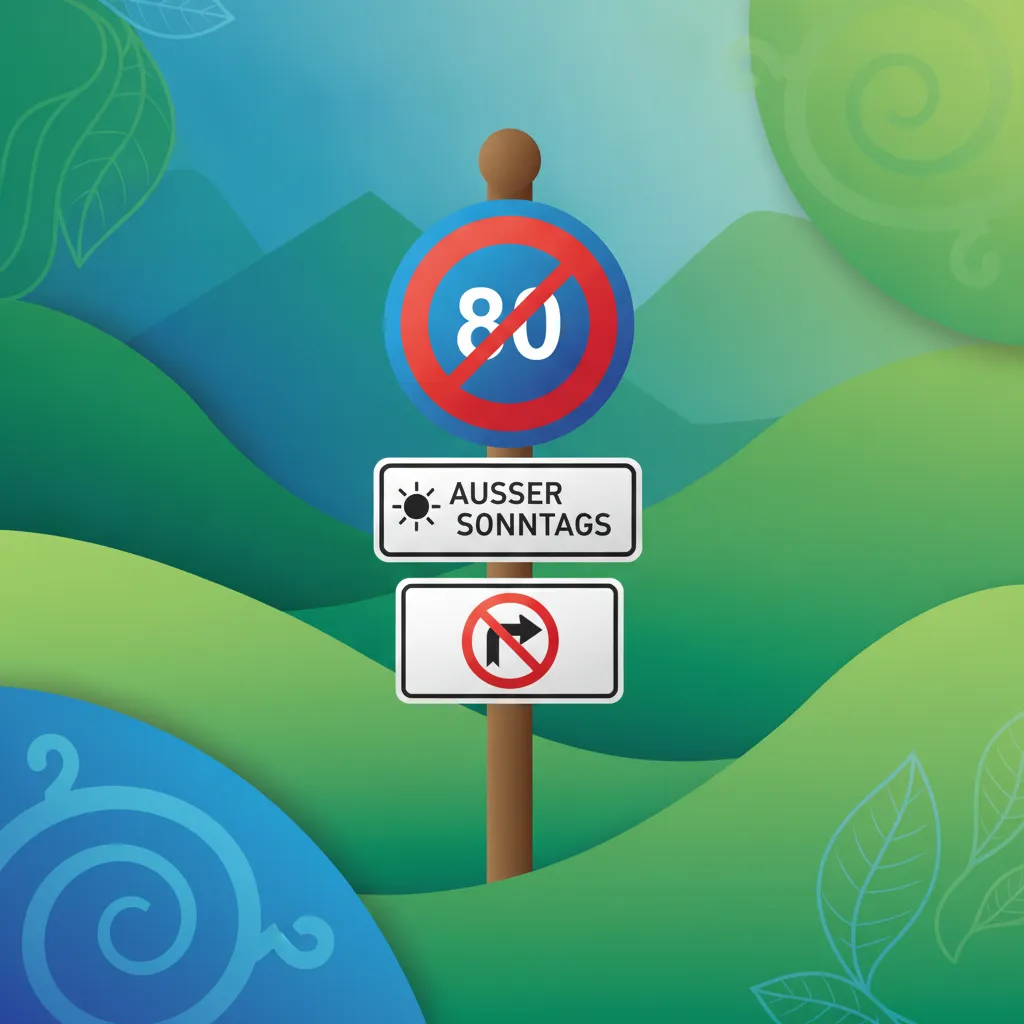
This lesson delves into supplementary signs that modify or clarify the meaning of primary traffic signs. You will learn to interpret signs indicating time restrictions, vehicle-specific limitations, and lane-specific instructions. The content also highlights how these signs interact with main regulatory signs to convey precise, context-sensitive traffic rules.
This lesson introduces defensive driving principles, focusing on hazard anticipation, continuous scanning, and proactive positioning. You will learn how to anticipate potential hazards by observing traffic patterns and maintaining situational awareness. Emphasis is placed on proactive speed management to avoid dangerous situations before they arise.
Find clear answers to common questions learners have about Mountain Road Driving and Alpine Conditions. Learn how the lesson is structured, which driving theory objectives it supports, and how it fits into the overall learning path of units and curriculum progression in Switzerland. These explanations help you understand key concepts, lesson flow, and exam focused study goals.
Engine braking uses the resistance of the engine to control your speed, which prevents your wheel brakes from overheating and failing (brake fade) on long, steep descents. In the Swiss theory exam, you must demonstrate understanding of shifting to a lower gear to maintain a safe, constant speed.
You must use snow chains when road signs indicate their necessity, usually marked by a blue circular sign with a white tyre chain symbol. Failing to fit them when required can lead to fines and is considered a severe safety risk in alpine conditions.
As a general rule in Switzerland, the vehicle driving uphill has priority over the vehicle driving downhill on narrow mountain roads where passing is impossible. The vehicle heading downhill should stop at a suitable passing place to allow the ascending vehicle to pass.
Approach the bend with reduced speed, keep well to the right within your lane, and stay alert for oncoming traffic that may be cutting the corner. Use your horn briefly if visibility is restricted, as is customary on narrow, winding Swiss alpine routes.
Pinpoint specific Swiss traffic rules, road signs, or driving situations you need to master. Use the practice search to start a focused revision session now and build confidence for your official driving theory exam.