
This lesson explores the critical safety and legal repercussions of exceeding vehicle mass limits. It builds on your knowledge of weight definitions to ensure you understand why professional adherence to load regulations is vital for your Category C or C1 licence.

Lesson content overview
Operating heavy goods vehicles (HGVs) in Switzerland, whether for a Category C or C1 driving license, comes with significant responsibilities, particularly concerning vehicle mass and load distribution. Overloading and incorrect loading are not merely minor infractions; they are serious offenses with profound safety, mechanical, and legal ramifications. This lesson delves into the critical dangers posed by excess weight and improper cargo placement, detailing how these issues drastically increase braking distances, stress vehicle components to their limits, and negatively affect overall stability and steering. Furthermore, it explores the substantial fines, potential license withdrawal, and personal liability drivers face when violating Swiss weight regulations.
The proper management of vehicle weight and load distribution is paramount for safe and legal heavy goods vehicle operation. Physics dictates that greater mass leads to increased inertia, extending stopping distances and placing immense stress on the vehicle's suspension, brakes, and tyres. Legally, Switzerland enforces precise limits to protect its road infrastructure, ensure the safety of all road users, and maintain fair competition within the transport industry. Non-compliance jeopardizes lives and can lead to severe penalties, reinforcing the necessity for strict adherence to all load regulations.
Several fundamental principles govern the safe and legal loading of heavy goods vehicles. Understanding these concepts is essential for any professional driver operating in Switzerland.
The highest total weight allowed for a vehicle or vehicle combination (e.g., truck and trailer), as defined by the vehicle's type approval certificate and Swiss traffic law. It ensures the vehicle operates within safe limits, preventing structural damage and maintaining control.
Exceeding the MPM directly impacts a vehicle's ability to brake effectively, navigate safely, and avoid mechanical failures. It is a strict legal limit that must never be surpassed.
The maximum weight that each individual axle or axle group may bear, stipulated by specific regulations and the vehicle's construction. This limit is crucial for protecting tyres, suspension components, and the road surface itself from excessive wear and damage.
Improper load distribution can lead to an axle being overloaded even if the total vehicle mass is within limits. This can cause dangerous situations like tyre blowouts or suspension failure.
The theoretical point where the entire mass of the vehicle and its load is considered to be concentrated. The CoG's vertical and longitudinal position significantly influences vehicle stability, handling characteristics, and the risk of rollover.
Effective CoG management is vital for maintaining control, especially when cornering, braking, or driving on uneven terrain and slopes. An incorrectly positioned CoG can make a vehicle dangerously unstable.
The maximum weight of cargo a vehicle can safely carry, calculated by subtracting the vehicle's tare weight (unladen weight) from its Gross Vehicle Weight (GVW).
Understanding payload capacity is fundamental for preventing overloading. Drivers must know their vehicle's specific limits to avoid compromising safety and legality.
The personal and professional responsibility of the driver to ensure full compliance with all load regulations. This legal obligation holds the driver accountable for road safety and adherence to the law.
Ignorance of load regulations is not a valid defense. Drivers are expected to know and follow all rules, and violations can lead to severe personal and professional consequences.
Overloading a heavy goods vehicle compromises its fundamental operational safety, creating hazardous conditions for the driver and other road users.
One of the most immediate and dangerous consequences of overloading is the drastic increase in braking distance. The greater the mass of a vehicle, the greater its inertia, meaning more force and distance are required to bring it to a stop.
An HGV with a payload just 2 tonnes above its legal limit can experience at least a 20% increase in braking distance, turning a safe stop into a potential collision.
Tyres are engineered to carry specific loads, indicated by their 'load index'. Exceeding this index, whether through static (stationary) or dynamic (during cornering, braking) overload, places immense strain on the tyre structure.
For example, if a tyre rated for 2,000 kg is consistently loaded with 2,500 kg, the risk of a blowout escalates dramatically, particularly during prolonged journeys or at higher motorway speeds.
Improper weight distribution and excessive total mass significantly degrade a vehicle's handling characteristics, making it less predictable and harder to control.
Loading a container too far forward on a semi-trailer, for instance, can drastically increase the load on the tractor unit's front axle, impairing steering response and potentially causing brake overheating due to an imbalance of braking forces.
Beyond the immediate safety risks, operating an overloaded or improperly loaded HGV in Switzerland carries severe legal and financial repercussions for both the driver and the transport operator.
Swiss law is stringent on vehicle mass and load security. Violations can lead to a range of administrative and criminal sanctions.
For example, exceeding the Gross Vehicle Weight (GVW) by just 10% can result in a fine of several hundred to a few thousand Swiss Francs and a temporary suspension of the driving license, depending on the canton and specific circumstances.
Drivers bear significant personal responsibility when operating heavy goods vehicles. This extends to ensuring the vehicle is correctly loaded.
In the aftermath of a load-related accident, the driver might be held personally liable for damages that exceed insurance coverage, leading to devastating financial and professional consequences.
Operating a vehicle consistently beyond its design limits accelerates the wear and tear on numerous critical components, leading to increased maintenance costs and a reduced vehicle lifespan.
For instance, an overloaded HGV descending a long, steep mountain pass will place an extreme burden on its braking system, increasing the risk of severe brake fade and potential system failure.
Adherence to specific articles within Swiss road traffic law is non-negotiable for HGV drivers. These regulations explicitly define the limits and responsibilities concerning vehicle loading.
| Regulation | Rule Statement | Applicability | Rationale | Correct/Incorrect Example |
|---|---|---|---|---|
| VRV Art. 49 | Vehicles must not exceed the permitted total weight as indicated on their registration plate and type approval. | All HGVs on public roads. | Prevents overload-related accidents, road damage, and ensures vehicle stability. | Correct: Driver checks GVW/GCM on documents before loading. Incorrect: Loading beyond the vehicle's maximum permissible mass. |
| VRV Art. 52 | The load centre (Mittelachslast) must be within limits specified on the type approval certificate. | Vehicles equipped with load-centred design. | Ensures vehicle stability, safe handling, and even weight distribution across axles. | Correct: Positioning cargo carefully using load distribution diagrams. Incorrect: Placing a heavy pallet too far forward, exceeding front axle load limits. |
| VRV Art. 54 | Axle loads must not exceed the maximum load per axle indicated on the vehicle’s data plate and regulations. | All vehicles with multiple axles. | Prevents tyre overload, suspension failure, and excessive road surface damage. | Correct: Distributing weight uniformly across all axles. Incorrect: Concentrating all heavy cargo over a single rear axle, even if total weight is fine. |
| Road Traffic Act (RSA) Art. 90 | Operating a vehicle dangerously, including due to excessive load, is punishable by fine or imprisonment. | Any driver causing endangerment to others. | Protects public safety by deterring hazardous vehicle operation. | Correct: Reducing speed and adjusting load when approaching a steep downhill section. Incorrect: Driving an overloaded vehicle at high speed in adverse weather. |
| Insurance Code Art. 3 | Insurers may decline claims if the driver knowingly or grossly negligently exceeded legal load limits. | Applicable to all vehicle accident claims. | Encourages strict compliance with safety regulations to prevent fraudulent or negligent claims. | Correct: Maintaining accurate load documentation and adherence to limits. Incorrect: Failing to report an known overload after an accident. |
| Technical Inspection Ordinance (TIO) Art. 8 | Overloaded vehicles found during inspections must pass a special re-inspection before being allowed back on the roads. | Vehicles discovered in violation during official spot checks or accidents. | Verifies compliance and ensures roadworthiness before further operation. | Correct: Rectifying the load and presenting the vehicle for re-inspection. Incorrect: Attempting to operate the vehicle after failing an overload inspection. |
Understanding typical scenarios of non-compliance can help drivers proactively avoid them.
| Violation | Why It’s Wrong | Correct Behavior | Consequence |
|---|---|---|---|
| Exceeding Gross Vehicle Weight (GVW) by a small percentage. | Compromises overall vehicle dynamics, especially braking performance and tyre load capacity. | Always calculate payload accurately; remove excess cargo or use a vehicle with a higher GVW. | Fine, potential license point, and increased accident risk. |
| Loading cargo too far forward, shifting CoG ahead of front axle. | Increases steering effort, reduces stability, and causes premature wear on front brakes and suspension. | Position cargo within specified load centre limits, using load distribution diagrams. | Potential accident; driver liability for damages; increased component wear. |
| Ignoring axle load limits, overloading a single axle. | Leads to increased tyre failure risk, accelerated wear on the specific axle, and potential axle breakage. | Distribute weight evenly according to the vehicle's axle load chart; utilize axle load sensors if available. | Significant penalty, mandatory vehicle inspection, and risk of mechanical failure. |
| Overloading tyres beyond their load index, assuming higher pressure compensates. | Causes tyre overheating, blowouts, and sudden loss of control. Higher pressure alone does not increase load capacity. | Use tyres with an appropriate load rating; never exceed the manufacturer's specified load index. | Fines and potential denial of insurance claims if an accident occurs. |
| Loading a trailer with an unbalanced heavy load on one side. | Causes dangerous trailer sway, increased rollover risk, particularly on slopes or during sharp turns. | Secure the load symmetrically within the trailer; use proper load-securing equipment and check lateral balance. | High accident risk; driver may face criminal charges in case of injury or death. |
| Using a temporary overload permit beyond its authorised period. | Illegal operation as the permit's conditions (e.g., route, time) are no longer valid, nullifying safety guarantees. | Ensure the permit's validity; renew it or adjust the load to comply with standard limits. | Fine and possible vehicle impoundment. |
| Failing to inform the employer/fleet manager of an overload. | Breach of professional duty; endangers fleet compliance and legal standing of the company. | Immediately report overload incidents to the employer; adjust operational plans. | Employer may initiate disciplinary action; driver liable for consequences. |
| Relying on automatic load-balancing systems without manual verification. | Automated systems can fail or be improperly calibrated, leading to undetected overload. | Perform manual checks of axle loads before departure, even with automated systems. | Potential overload and penalties if not verified, leading to unverified risk. |
| Operating an overloaded vehicle in mountainous terrain. | Greatly increases the risk of brake fade, loss of control, and mechanical strain on the drivetrain. | Reduce payload to within limits for the terrain; utilize engine brake effectively; ensure auxiliary braking systems are functional. | High accident risk; extreme legal liability; severe mechanical damage. |
| Operating an overloaded vehicle in adverse weather (wet/icy). | Significantly reduces tyre grip and drastically increases stopping distances, making evasive actions difficult. | Adjust speed significantly, increase following distance, and consider if unloading is necessary before travel. | High accident risk; possible license suspension; severe consequences for other road users. |
The risks associated with overloading are not static; they are amplified or altered by various environmental and operational factors.
Understanding these core relationships reinforces the importance of diligent load management:
These scenarios highlight practical applications of the principles discussed and demonstrate the potential consequences of non-compliance.
These principles and the detailed implications form the essential knowledge base for safely and legally operating heavy goods vehicles in Switzerland, safeguarding both the driver's career and the lives of all road users.
This lesson covers the critical safety and legal consequences of overloading heavy goods vehicles for Swiss Category C and C1 drivers. Excess weight significantly increases braking distances due to physics—the greater the mass, the greater the inertia—and puts extreme stress on tyres, brakes, suspension, and steering systems. Swiss law strictly enforces weight limits through VRV Articles 49, 52, and 54, with violations carrying substantial fines, potential license suspension, vehicle impoundment, and possible criminal charges under RSA Art. 90. Drivers are personally liable for ensuring load compliance, and insurance claims may be denied if an overloaded vehicle is involved in an accident. Proper load management, including correct weight distribution and axle load monitoring, is essential for safe vehicle operation, component longevity, and professional compliance.
A short set of high-value points that capture the most important learning from this lesson.
Overloading drastically increases braking distance because greater mass means greater inertia, requiring more force and distance to stop the vehicle.
Tyre load index must never be exceeded; increasing tyre pressure alone cannot compensate for overloading and does not increase load capacity.
Incorrect load distribution compromises vehicle stability and steering response regardless of whether total vehicle mass is within limits.
Drivers bear personal legal liability for ensuring their vehicle is correctly loaded and within all weight regulations.
Insurance companies may deny claims if an accident occurs while a vehicle is knowingly operated in violation of load limits.
Explore all units and lessons included in this driving theory course.
Maximum Permissible Mass (MPM) is the total weight limit; Axle Load Limit (Achslast) is the limit for each individual axle—both must be respected.
The load centre (Mittelachslast) must be within limits specified on the vehicle's type approval certificate to maintain stability.
Swiss VRV Art. 49 prohibits exceeding permitted total weight; VRV Art. 52 governs load centre limits; VRV Art. 54 governs axle load limits.
A high centre of gravity (tall cargo) increases rollover risk, especially during cornering or on slopes.
Even a small overload of 2 tonnes above the legal limit can increase braking distance by at least 20%, turning a safe stop into a potential collision.
Believing that advanced braking systems like ABS fully compensate for overloading—they cannot overcome the fundamental physics of increased inertia.
Assuming that increasing tyre pressure can compensate for exceeding a tyre's load index—pressure has no effect on rated load capacity.
Thinking that only total vehicle weight matters and that load distribution is irrelevant as long as the GVW is within limits.
Assuming that the employer or loading operator bears sole responsibility for overload, absolving the driver of personal liability under Swiss law.
Assuming that occasional or minor overloading has no significant long-term impact on vehicle components and maintenance costs.
Lesson content overview
A short set of high-value points that capture the most important learning from this lesson.
Overloading drastically increases braking distance because greater mass means greater inertia, requiring more force and distance to stop the vehicle.
Tyre load index must never be exceeded; increasing tyre pressure alone cannot compensate for overloading and does not increase load capacity.
Incorrect load distribution compromises vehicle stability and steering response regardless of whether total vehicle mass is within limits.
Drivers bear personal legal liability for ensuring their vehicle is correctly loaded and within all weight regulations.
Insurance companies may deny claims if an accident occurs while a vehicle is knowingly operated in violation of load limits.
Explore all units and lessons included in this driving theory course.
Maximum Permissible Mass (MPM) is the total weight limit; Axle Load Limit (Achslast) is the limit for each individual axle—both must be respected.
The load centre (Mittelachslast) must be within limits specified on the vehicle's type approval certificate to maintain stability.
Swiss VRV Art. 49 prohibits exceeding permitted total weight; VRV Art. 52 governs load centre limits; VRV Art. 54 governs axle load limits.
A high centre of gravity (tall cargo) increases rollover risk, especially during cornering or on slopes.
Even a small overload of 2 tonnes above the legal limit can increase braking distance by at least 20%, turning a safe stop into a potential collision.
Believing that advanced braking systems like ABS fully compensate for overloading—they cannot overcome the fundamental physics of increased inertia.
Assuming that increasing tyre pressure can compensate for exceeding a tyre's load index—pressure has no effect on rated load capacity.
Thinking that only total vehicle weight matters and that load distribution is irrelevant as long as the GVW is within limits.
Assuming that the employer or loading operator bears sole responsibility for overload, absolving the driver of personal liability under Swiss law.
Assuming that occasional or minor overloading has no significant long-term impact on vehicle components and maintenance costs.
Explore search topics learners often look for when studying Consequences of Overloading and Incorrect Loading. These topics reflect common questions about road rules, driving situations, safety guidance, and lesson level theory preparation for learners in Switzerland.
Browse additional driving theory lessons that cover connected traffic rules, road signs, and common driving situations related to this topic. Improve your understanding of how different rules interact across everyday traffic scenarios.
Understand the severe legal consequences in Switzerland for overloading heavy goods vehicles. This lesson details fines, license suspension, and driver liability according to Swiss traffic law and the Road Traffic Act.

For professional drivers, traffic violations can have career-altering consequences beyond standard fines. This lesson details the heightened penalties for infringements such as speeding, overloading, insecure loads, and violations of driving time regulations. It outlines the process of warnings, license suspension or withdrawal, and potential criminal liability, emphasizing the importance of strict legal compliance in the transport industry.

Swiss law strictly regulates the maximum dimensions of commercial vehicles to ensure they can safely navigate the infrastructure. This lesson specifies the standard limits for vehicle height (4.0m), width (2.55m), and length for various lorry and trailer combinations. Adhering to these dimensions is crucial for avoiding collisions with bridges, tunnels, and other structures, and for navigating narrow roads.

Transporting loads that are wider, longer, taller, or heavier than standard regulations allow requires special authorization. This lesson explains the concept of exceptional transport and the legal requirement to obtain a special permit from the relevant cantonal authorities. It highlights that such operations require careful route planning, often mandating specific times of travel and sometimes the use of escort vehicles.

The total weight of a vehicle is supported by its axles, and Swiss regulations set strict limits on the load each axle can bear. This lesson explains how to correctly distribute a load to comply with maximum axle load (Achslast) limits, which is vital for vehicle stability, steering control, and braking efficiency. Incorrect distribution can lead to dangerous handling characteristics and cause significant damage to road surfaces.

While others may have loaded the vehicle, the driver holds the final legal responsibility for the security of the load once on the public highway. This lesson clarifies this crucial point of law, explaining that the driver must inspect the load and its securing arrangements before departure and re-check them during the journey. The consequences of a load shifting or falling can be catastrophic and result in severe legal penalties for the driver.

Operating a heavy goods vehicle involves a significant responsibility for the safety of all road users. This lesson emphasizes the professional driver's enhanced duty of care due to the vehicle's size, mass, and potential impact in a collision. It covers the importance of a professional attitude, constant vigilance, and adherence to all traffic regulations to prevent incidents and maintain a high standard of road safety.
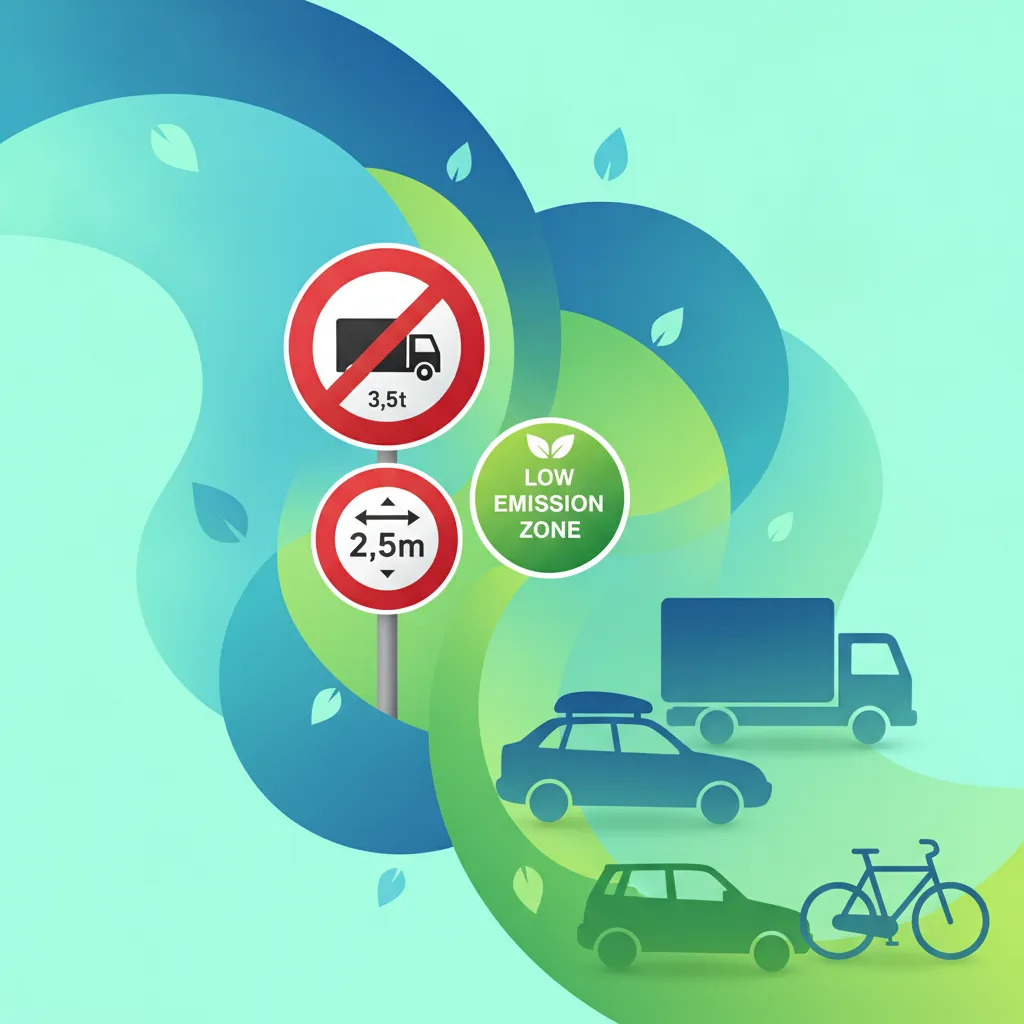
Many urban areas have restrictions to manage traffic and protect infrastructure. This lesson teaches drivers to identify and interpret traffic signs that prohibit access based on gross vehicle weight, axle load, height, or width. It also covers the growing prevalence of environmental or low-emission zones, which may restrict entry for older, more polluting vehicles.

This lesson outlines the mandatory documentation required during any professional transport journey in Switzerland. Drivers must be able to present the vehicle registration document ('Fahrzeugausweis'), their valid driving license, and the OACP qualification card upon request. It also touches upon transport-specific documents like consignment notes, which are crucial for legal compliance during roadside inspections by authorities.
Explore how overloading heavy goods vehicles critically affects braking distance, tyre safety, and overall vehicle stability. Learn about the physics and practical dangers that arise from exceeding weight limits on Swiss roads.
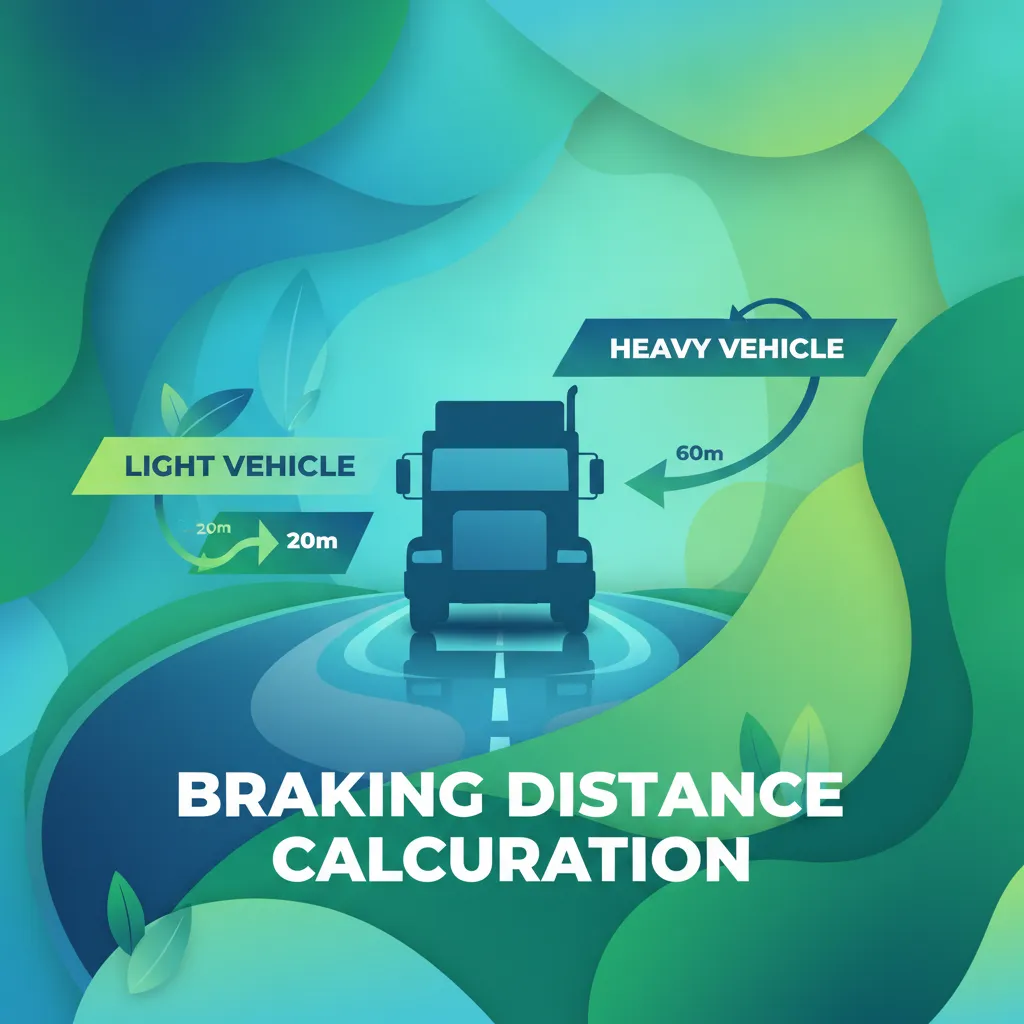
The immense mass of a loaded truck means its braking distance is far greater than that of a car. This lesson breaks down total stopping distance into reaction distance and braking distance, explaining how speed, weight, and road conditions have an exponential effect. It reinforces the necessity of maintaining a significantly larger following distance to ensure enough space to stop safely in an emergency.

Heavy vehicles, especially those with a high centre ofgravity, are susceptible to rolling over. This lesson examines the primary causes, including excessive speed on bends or roundabouts, sudden steering manoeuvres, and the 'sloshing' effect of liquid loads in tankers. It reinforces that maintaining a sensible speed and driving smoothly are the best ways to mitigate this serious risk.
Find clear answers to common questions learners have about Consequences of Overloading and Incorrect Loading. Learn how the lesson is structured, which driving theory objectives it supports, and how it fits into the overall learning path of units and curriculum progression in Switzerland. These explanations help you understand key concepts, lesson flow, and exam focused study goals.
Overloading significantly alters the handling characteristics of a heavy vehicle. It causes longer braking distances and puts excessive stress on suspension and tyres, which can lead to catastrophic failure even on short journeys.
In addition to hefty fines, you may be prohibited from continuing your journey until the load is corrected. For professional drivers, repeated or severe violations can lead to the suspension or revocation of your driving license.
Yes, as the operator, you are legally responsible for ensuring the vehicle is within its permissible gross vehicle mass and that the load is distributed correctly before you depart.
Excessive weight forces the braking system to work much harder to slow the vehicle, especially on descents. This creates extreme heat, leading to brake fade where the braking performance significantly drops, making it dangerous to stop.
Pinpoint specific Swiss traffic rules, road signs, or driving situations you need to master. Use the practice search to start a focused revision session now and build confidence for your official driving theory exam.