
This lesson establishes the essential professional mindset required for operating Category C and C1 vehicles on Swiss roads. It explores your heightened legal duty of care and the importance of constant vigilance to ensure the safety of all road users.

Lesson content overview
Operating a heavy goods vehicle (HGV) in Switzerland, whether it's a Category C, C1, C1E, or CE vehicle, entails a profound level of responsibility. The sheer size, mass, and kinetic energy of these vehicles mean that potential incidents can have far more severe consequences than those involving standard passenger cars. This lesson details the heightened duty of care professional drivers must exercise, emphasizing the critical importance of a professional attitude, constant vigilance, and strict adherence to all traffic and commercial regulations to ensure road safety for everyone.
The concept of "duty of care" is a fundamental legal and ethical obligation for all drivers, requiring them to take reasonable steps to avoid causing harm to others. For professional drivers of heavy goods vehicles in Switzerland, this duty is significantly enhanced. The elevated risk associated with vehicle size and mass mandates a higher standard of vigilance, compliance, and professionalism compared to private drivers. This isn't merely a suggestion; it's a legal expectation rooted in Swiss law, particularly the Swiss Road Traffic Act (SVG) and Commercial Vehicle Regulations (COSE).
The underlying logic for this enhanced duty is multi-faceted. From a safety perspective, larger vehicles require longer stopping distances, have more extensive blind spots, and carry immense kinetic energy, leading to potentially catastrophic outcomes in collisions. Legally, Swiss legislation imposes stricter requirements on professional drivers regarding vehicle documentation, tachograph use, and driving time regulations. Ethically, professional drivers represent their employers and the entire transport industry, requiring them to uphold public trust through responsible conduct. Prioritizing safety over speed or convenience is always paramount.
What is Kinetic Energy? Kinetic energy is the energy an object possesses due to its motion. For heavy goods vehicles, even at moderate speeds, this energy is immense due to their mass. This means a truck traveling at 80 km/h has significantly more destructive potential than a car at the same speed, requiring much greater stopping distances and cautious handling.
This lesson lays the groundwork for subsequent topics in the Official Swiss Driving Theory Course for Category C & C1 Goods Vehicles, such as understanding vehicle dimensions, braking systems, and load securing.
A professional attitude is indispensable for anyone operating a heavy goods vehicle. It encompasses a disciplined, reliable, and safety-focused mindset that permeates all aspects of a driver's duties. This attitude is crucial for improving decision-making, minimizing errors caused by fatigue or complacency, and ultimately enhancing road safety.
Professionalism in driving extends beyond merely adhering to rules; it involves proactive behavior and a commitment to upholding the highest standards. This includes behavioural professionalism, such as punctuality, courteous interactions with other road users, and maintaining a presentable appearance, as well as operational professionalism, which involves strict adherence to safe driving practices, speed limits, and expert vehicle handling.
For instance, a truly professional driver will always plan routes meticulously to avoid unnecessary risks, prioritize safety over meeting tight deadlines, and never engage in reckless behavior. The use of mobile phones while driving is strictly prohibited under Article 61 of the Swiss Road Traffic Act (SVG), reflecting the critical need to eliminate distractions. While possessing a professional license is a prerequisite, the actual professional attitude must be continuously cultivated through conscious effort and discipline.
A mindset characterized by discipline, reliability, and an unwavering focus on safety, manifesting in behavior such as punctuality, respect for regulations, and the avoidance of reckless conduct.
Constant vigilance is the continuous, active monitoring and assessment of all relevant dynamics while driving a heavy goods vehicle. This includes keeping a close watch on surrounding traffic, the vehicle’s condition and performance, the driver’s own fitness, and environmental factors like weather and road conditions. This ongoing observation is vital for early detection of hazards and significantly reduces reaction time, enabling timely and appropriate corrective actions.
Vigilance can be broken down into several subcategories:
Relying solely on automated safety systems, such as collision warning systems, without active monitoring is a common misunderstanding. These systems are aids, not replacements for human vigilance. For example, when descending a steep mountain pass, adjusting speed and engaging engine braking demonstrates constant vigilance and proactive risk management, rather than solely relying on the vehicle's service brakes.
Blind Spots are Critical: Due to their size, heavy goods vehicles have significant blind spots, often referred to as "No-Zones." These areas exist directly in front, behind, and on both sides of the truck, particularly alongside the cab. Failing to check these zones meticulously during lane changes or turns is a major cause of collisions.
Strict adherence to all statutory obligations is a non-negotiable aspect of professional driving in Switzerland. This includes meticulously following rules regarding vehicle documentation, tachograph usage, load limits, speed limits, and driving and rest times. Compliance is legally mandated to protect all road users and ensure fairness within the transport industry. Failure to comply can lead to severe penalties, including fines, license suspension, or even criminal liability.
An electronic or digital device that automatically records driving time, speed, distance, and other work periods, mandatory for professional drivers of vehicles over 3.5 tonnes.
Digital Tachographs: While digital tachographs automate much of the recording process, drivers are still responsible for ensuring the data is correct, that their driver card is inserted, and for manually selecting activity modes (e.g., 'rest', 'other work') when necessary. The technology aids compliance but doesn't replace driver accountability.
A high standard of road safety for professional drivers means a commitment to exceeding minimum legal requirements, particularly given the significantly larger kinetic energy of heavy vehicles. This involves adopting defensive driving techniques and maintaining generous safety margins under all circumstances.
Defensive driving is a proactive approach where drivers anticipate potential hazards and take preventative action to avoid them. For heavy goods vehicle operators, this is paramount. It includes:
Failing to uphold the enhanced duty of care and comply with regulations can lead to serious consequences. Understanding common violations helps drivers prevent them:
Professional driving is rarely static; conditions constantly change, demanding adaptive behavior. The enhanced duty of care requires drivers to adjust their driving strategies based on various factors:
Understanding the direct cause-and-effect relationships inherent in professional driving reinforces the rationale behind every rule and best practice.
Operating heavy goods vehicles requires an enhanced duty of care, demanding much stricter adherence to traffic laws, load securing standards, tachograph usage, and driving time regulations than for private vehicles. This is due to the inherent risks associated with vehicle size and mass.
An unwavering professional attitude combined with constant vigilance is paramount for safe operation. This means conducting regular pre-trip checks, maintaining continuous situational awareness, and proactively anticipating hazards. Every decision made on the road must prioritize safety above all else.
Compliance with regulations, including specific speed limits, minimum safe following distances, and mandated driving and rest periods, is not merely a legal requirement but a fundamental safety measure. Drivers must also understand and adapt their behavior to conditional variations such as weather, road type, vehicle state, and the presence of vulnerable road users.
Recognizing the cause-and-effect relationships between actions and outcomes promotes safer decision-making and reinforces the importance of every rule. Mastery of these principles provides the essential foundational knowledge for all subsequent topics in heavy vehicle operation, from advanced braking systems and load distribution to navigating complex road situations and handling emergencies. These responsibilities are the bedrock of being a competent and safe professional driver in Switzerland.
This lesson establishes the heightened duty of care required for Swiss Category C and C1 professional drivers under the Swiss Road Traffic Act (SVG) and Commercial Vehicle Regulations (COSE). Professional drivers must cultivate a safety-first mindset, maintain constant vigilance through visual, instrument, and self-monitoring, and strictly comply with regulations covering driving times (max 9 hours daily), tachograph usage, load securing, and HGV-specific speed limits (80 km/h on motorways). Defensive driving techniques including space management, hazard anticipation, and adjusted following distances are essential due to HGVs' significant blind spots, kinetic energy, and longer stopping distances. The content bridges legal compliance with proactive safety practices, emphasizing that professional conduct protects all road users.
A short set of high-value points that capture the most important learning from this lesson.
Professional HGV drivers in Switzerland operate under an enhanced duty of care due to vehicle size, mass, and kinetic energy compared to standard passenger vehicles.
A professional driver attitude means prioritizing safety over schedules, strictly complying with regulations, and continuously maintaining vigilance.
Constant vigilance includes visual vigilance (mirror checks every 5-8 seconds), instrument vigilance, and self-vigilance regarding fatigue and fitness.
Strict compliance with Swiss regulations covers documentation, tachograph usage, driving time limits, load securing, and specific HGV speed limits.
Defensive driving for HGVs requires anticipating hazards, maintaining generous following distances (3-4 seconds recommended), and adjusting speed for conditions.
Explore all units and lessons included in this driving theory course.
On Swiss motorways, Category C and C1 vehicles are typically limited to 80 km/h, lower than passenger car limits.
Maximum daily driving time is 9 hours (extendable to 10 hours twice weekly), with a mandatory 45-minute break after 4.5 hours of driving.
Heavy goods vehicles have significant blind spots ("No-Zones") on all sides requiring thorough mirror checks and head turns before maneuvers.
Tachographs are mandatory for vehicles over 3.5 tonnes and must be activated with the driver card inserted before each shift.
Due to their kinetic energy, HGVs require significantly longer stopping distances; the two-second rule is a minimum, not a target.
Exceeding maximum driving hours without taking required breaks, increasing fatigue-related accident risk.
Insufficient following distance behind other vehicles, which is dangerous due to HGVs' extended braking distances.
Over-relying on automated safety systems (collision warning) instead of maintaining active driver vigilance.
Improper use of braking systems on descents by neglecting engine braking, leading to brake fade and loss of control.
Failure to check blind spots thoroughly before lane changes or turns, resulting in collisions with hidden vehicles.
Lesson content overview
A short set of high-value points that capture the most important learning from this lesson.
Professional HGV drivers in Switzerland operate under an enhanced duty of care due to vehicle size, mass, and kinetic energy compared to standard passenger vehicles.
A professional driver attitude means prioritizing safety over schedules, strictly complying with regulations, and continuously maintaining vigilance.
Constant vigilance includes visual vigilance (mirror checks every 5-8 seconds), instrument vigilance, and self-vigilance regarding fatigue and fitness.
Strict compliance with Swiss regulations covers documentation, tachograph usage, driving time limits, load securing, and specific HGV speed limits.
Defensive driving for HGVs requires anticipating hazards, maintaining generous following distances (3-4 seconds recommended), and adjusting speed for conditions.
Explore all units and lessons included in this driving theory course.
On Swiss motorways, Category C and C1 vehicles are typically limited to 80 km/h, lower than passenger car limits.
Maximum daily driving time is 9 hours (extendable to 10 hours twice weekly), with a mandatory 45-minute break after 4.5 hours of driving.
Heavy goods vehicles have significant blind spots ("No-Zones") on all sides requiring thorough mirror checks and head turns before maneuvers.
Tachographs are mandatory for vehicles over 3.5 tonnes and must be activated with the driver card inserted before each shift.
Due to their kinetic energy, HGVs require significantly longer stopping distances; the two-second rule is a minimum, not a target.
Exceeding maximum driving hours without taking required breaks, increasing fatigue-related accident risk.
Insufficient following distance behind other vehicles, which is dangerous due to HGVs' extended braking distances.
Over-relying on automated safety systems (collision warning) instead of maintaining active driver vigilance.
Improper use of braking systems on descents by neglecting engine braking, leading to brake fade and loss of control.
Failure to check blind spots thoroughly before lane changes or turns, resulting in collisions with hidden vehicles.
Explore search topics learners often look for when studying Professional Driver Responsibilities and Duty of Care. These topics reflect common questions about road rules, driving situations, safety guidance, and lesson level theory preparation for learners in Switzerland.
Browse additional driving theory lessons that cover connected traffic rules, road signs, and common driving situations related to this topic. Improve your understanding of how different rules interact across everyday traffic scenarios.
Understand the specific legal duties and obligations for professional HGV drivers in Switzerland. This lesson covers essential regulations, compliance requirements, and legal consequences relevant to the Swiss driving theory exam for professional categories.

This lesson outlines the mandatory documentation required during any professional transport journey in Switzerland. Drivers must be able to present the vehicle registration document ('Fahrzeugausweis'), their valid driving license, and the OACP qualification card upon request. It also touches upon transport-specific documents like consignment notes, which are crucial for legal compliance during roadside inspections by authorities.

For professional drivers, traffic violations can have career-altering consequences beyond standard fines. This lesson details the heightened penalties for infringements such as speeding, overloading, insecure loads, and violations of driving time regulations. It outlines the process of warnings, license suspension or withdrawal, and potential criminal liability, emphasizing the importance of strict legal compliance in the transport industry.

The driver is legally responsible for the roadworthiness of their vehicle at the start of and during every journey. This lesson outlines the formal process for reporting any identified defects to the transport manager or maintenance staff. It stresses the critical rule that a vehicle with a known safety-critical defect must not be driven until it has been professionally repaired and declared safe.

This lesson details the specific documents that must be present in the vehicle and on the driver's person during service. It covers the driving license, OACP card, vehicle registration, and tachograph records. You will learn the importance of ensuring all paperwork is current and correct to ensure legal compliance at all times.

Unlike cars, heavy vehicles cannot travel on every road. This lesson stresses the importance of using HGV-specific satellite navigation systems or carefully checking maps to plan routes that avoid low bridges, weak bridges, and roads with weight or width restrictions. Proper planning saves time, fuel, and prevents dangerous situations or costly damage.
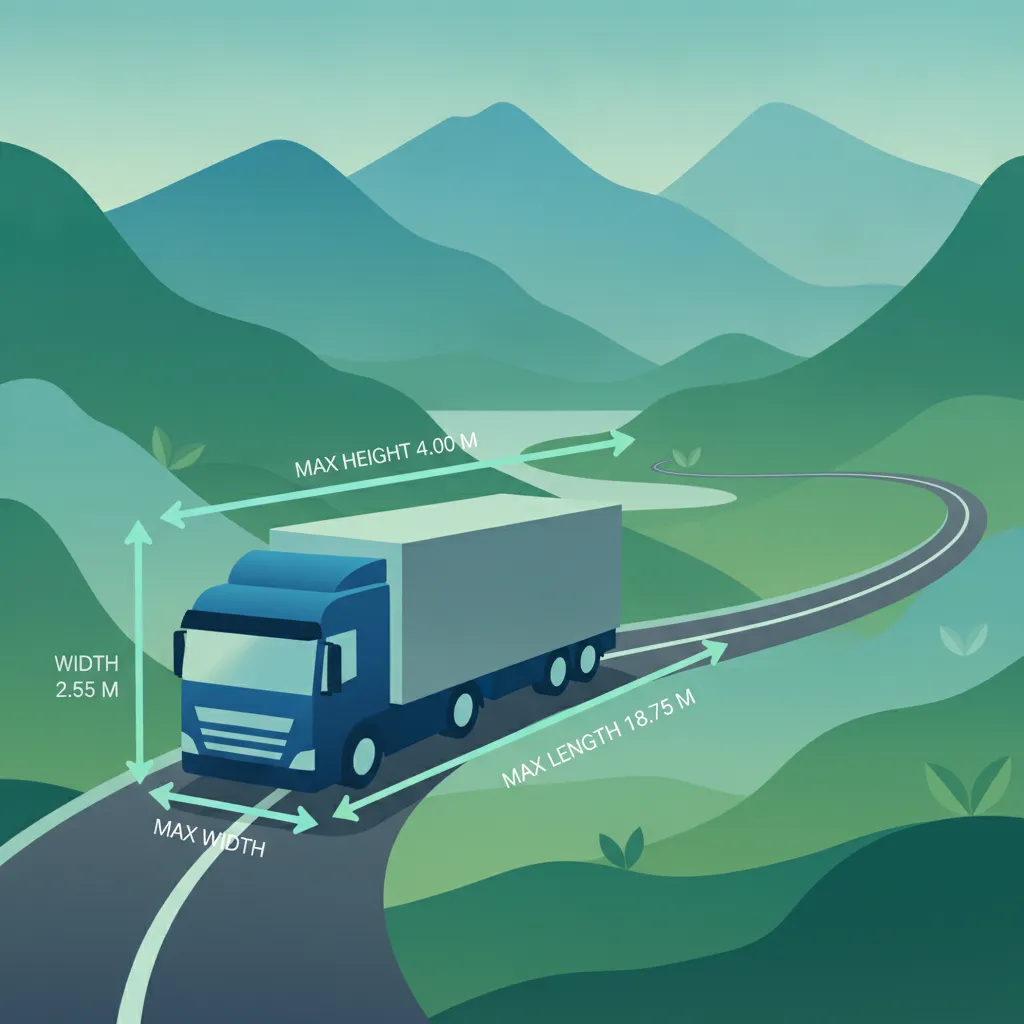
Swiss law strictly regulates the maximum dimensions of commercial vehicles to ensure they can safely navigate the infrastructure. This lesson specifies the standard limits for vehicle height (4.0m), width (2.55m), and length for various lorry and trailer combinations. Adhering to these dimensions is crucial for avoiding collisions with bridges, tunnels, and other structures, and for navigating narrow roads.

Proper visibility is paramount for the safety of large vehicles, especially at night or in poor weather. This lesson covers the full range of required lights, including headlights, indicators, brake lights, and side and rear marker lights. It also explains the function of reflectors and the mandatory high-visibility conspicuity markings that outline the vehicle's shape to other drivers.

While others may have loaded the vehicle, the driver holds the final legal responsibility for the security of the load once on the public highway. This lesson clarifies this crucial point of law, explaining that the driver must inspect the load and its securing arrangements before departure and re-check them during the journey. The consequences of a load shifting or falling can be catastrophic and result in severe legal penalties for the driver.

Motorway driving requires constant concentration due to high speeds. This lesson emphasizes the importance of staying in the right-hand lane unless overtaking and the specific restrictions on lorry overtaking in Switzerland. It reinforces the need for a following distance of at least four seconds to compensate for the vehicle's long stopping distance and provides guidance on safely merging and exiting.
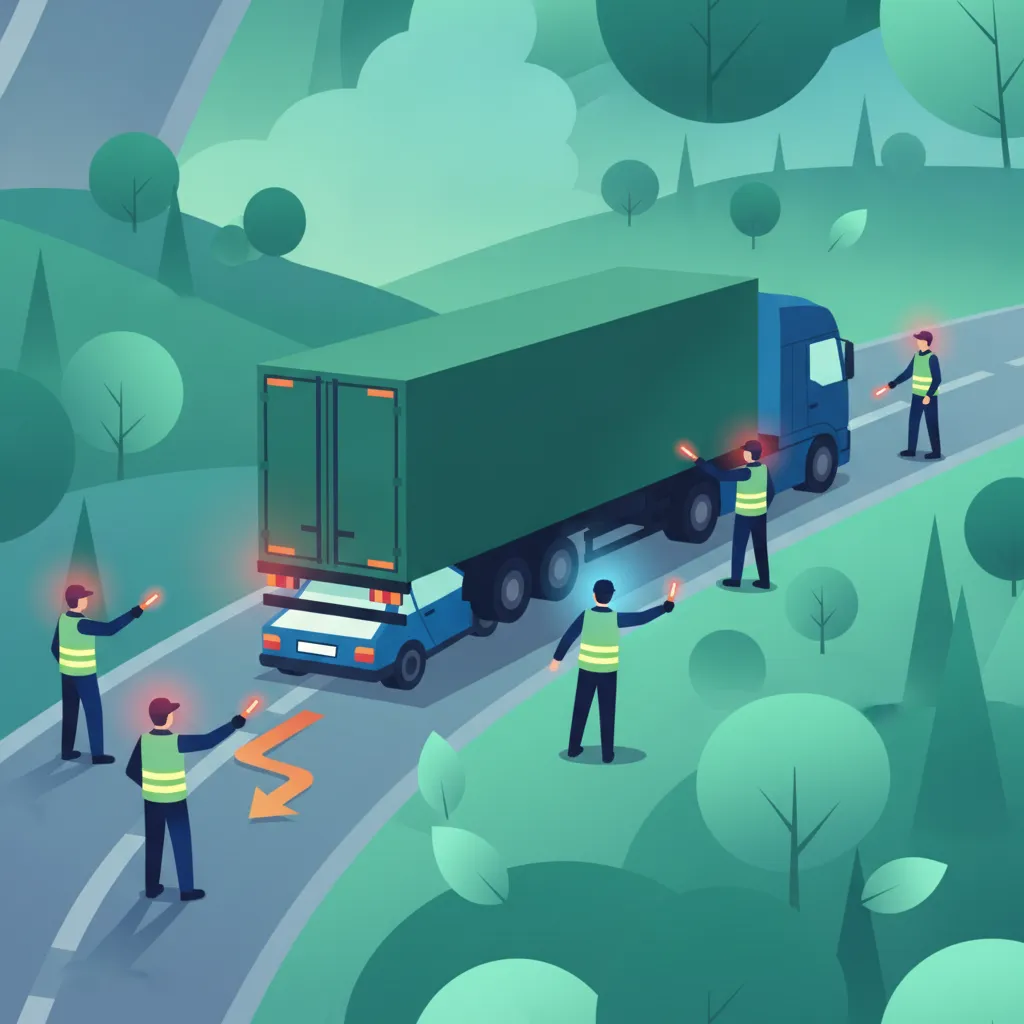
This lesson provides a structured guide for managing the scene of a road traffic accident. It covers the internationally recognized priorities: assess for danger, make the scene safe, send for help by calling emergency services (112), and provide first aid to the injured if trained to do so. It also details the legal requirement to stop and exchange information after being involved in a collision.
Explore the critical importance of a professional attitude, constant vigilance, and a proactive safety culture for heavy goods vehicle operators in Switzerland. Learn how these elements contribute to preventing incidents and ensuring road safety.

Despite the complex mirror systems, large areas around a truck remain hidden from the driver's view. This lesson maps out these significant blind spots: directly in front, behind, and along both sides of the vehicle. It teaches drivers to be constantly aware of these 'no-zones' and to anticipate that smaller vehicles, cyclists, or pedestrians may be hidden within them, especially before changing lanes or turning.

Pedestrians, cyclists, motorcyclists, and e-scooter riders are extremely vulnerable in any interaction with a heavy vehicle. This lesson instills a defensive mindset, teaching drivers to be hyper-aware of VRUs, especially near junctions, crossings, and cycle lanes. It focuses on anticipation and giving VRUs extra space, as they can be unpredictable and are often hidden in blind spots.

Losing part of a load on the road creates an immediate and serious hazard for other drivers. This lesson outlines the driver's responsibilities: stop in a safe place, assess the situation from a safe distance, and immediately alert the police. The driver's primary role is to warn other road users and not to attempt to retrieve the load from a live carriageway.
While others may have loaded the vehicle, the driver holds the final legal responsibility for the security of the load once on the public highway. This lesson clarifies this crucial point of law, explaining that the driver must inspect the load and its securing arrangements before departure and re-check them during the journey. The consequences of a load shifting or falling can be catastrophic and result in severe legal penalties for the driver.
The driver is legally responsible for the roadworthiness of their vehicle at the start of and during every journey. This lesson outlines the formal process for reporting any identified defects to the transport manager or maintenance staff. It stresses the critical rule that a vehicle with a known safety-critical defect must not be driven until it has been professionally repaired and declared safe.
This lesson provides a structured guide for managing the scene of a road traffic accident. It covers the internationally recognized priorities: assess for danger, make the scene safe, send for help by calling emergency services (112), and provide first aid to the injured if trained to do so. It also details the legal requirement to stop and exchange information after being involved in a collision.
Unlike cars, heavy vehicles cannot travel on every road. This lesson stresses the importance of using HGV-specific satellite navigation systems or carefully checking maps to plan routes that avoid low bridges, weak bridges, and roads with weight or width restrictions. Proper planning saves time, fuel, and prevents dangerous situations or costly damage.

After stopping for an emergency, making the scene safe is the top priority. This lesson details the procedure: activate hazard warning lights, put on high-visibility clothing before exiting the cab, and place the warning triangle at the correct distance behind the vehicle (at least 100m on motorways). This warns approaching traffic and creates a safer environment for the driver and emergency responders.

Construction sites and industrial areas are non-public roads with their own set of rules and hazards. This lesson covers the need to follow site-specific safety instructions, be aware of moving plant machinery and personnel on the ground, and assess ground conditions. It highlights that reversing is often required and should be done with a signaller wherever possible.
Motorway driving requires constant concentration due to high speeds. This lesson emphasizes the importance of staying in the right-hand lane unless overtaking and the specific restrictions on lorry overtaking in Switzerland. It reinforces the need for a following distance of at least four seconds to compensate for the vehicle's long stopping distance and provides guidance on safely merging and exiting.
Find clear answers to common questions learners have about Professional Driver Responsibilities and Duty of Care. Learn how the lesson is structured, which driving theory objectives it supports, and how it fits into the overall learning path of units and curriculum progression in Switzerland. These explanations help you understand key concepts, lesson flow, and exam focused study goals.
Because Category C and C1 vehicles have significantly higher mass and dimensions, the potential for damage and severe injury in a collision is far greater. Therefore, drivers are held to a higher standard of vigilance and anticipation.
Yes, understanding your responsibilities as a professional is a core component of the theory. You will face questions that test your ability to prioritize safety and exhibit appropriate professional judgment in complex traffic situations.
No, it extends beyond simple compliance. It involves proactive observation, managing the specific dynamics of your heavy vehicle, and consistently acting to prevent hazardous situations before they escalate.
While this lesson focuses on the core theoretical safety requirements for your license, it serves as a foundation for the further professional development and specific responsibilities required by the OACP (Certificate of Professional Competence).
Pinpoint specific Swiss traffic rules, road signs, or driving situations you need to master. Use the practice search to start a focused revision session now and build confidence for your official driving theory exam.