
This lesson explores the serious legal and professional implications of traffic infringements for those operating heavy goods vehicles. It serves as a vital conclusion to the introductory unit on the professional framework, ensuring you understand the weight of your responsibility before moving on to vehicle mechanics and load safety.

Lesson content overview
Operating heavy goods vehicles (HGVs) in Switzerland as a professional driver carries significant responsibilities. Beyond the general traffic laws applicable to all road users, drivers holding Category C or C1 licenses are subject to a stricter set of regulations and face heightened penalties for infringements. This is due to the inherent risks associated with larger, heavier vehicles, which have greater potential for causing severe damage and injury. Understanding these enhanced legal consequences is not merely a formality; it is essential for maintaining your driving license, ensuring your employability, safeguarding your financial stability, and upholding public safety standards.
This lesson, part of the Official Swiss Driving Theory Course for Category C & C1 Goods Vehicles, will outline the specific legal framework governing violations for professional drivers. We will explore the various types of penalties, from warnings to criminal charges, and detail how infringements related to speeding, overloading, insecure loads, and driving time regulations are handled under Swiss law.
The legal system acknowledges that professional drivers are entrusted with a higher duty of care. This elevated responsibility stems from several factors:
Consequently, the penalties for professional drivers are designed to be more deterrent and often more severe than those for private vehicle operators, reflecting the increased societal expectation of diligence and compliance.
Swiss law employs a graduated penalty system (Bußgeldsystem) for traffic infringements, meaning sanctions escalate in severity based on the nature, gravity, and recurrence of violations. This system aims to provide proportional responses, encouraging compliance while allowing corrective measures for minor infractions before more severe consequences are imposed. For professional drivers, this system is particularly stringent, with higher thresholds for penalties.
A cornerstone of professional driving law is the concept of professional responsibility. This implies a heightened duty of care that extends beyond basic driving competence to include meticulous vehicle maintenance, adherence to complex loading regulations, and strict management of driving and rest times. Violations often trigger additional penalties, such as mandatory retraining or even employment-related consequences, underscoring the critical importance of continuous vigilance.
Overloading a heavy goods vehicle is viewed with zero tolerance under Swiss law. Exceeding maximum permissible masses—for the vehicle, trailer, or individual axles—compromises vehicle handling, braking efficiency, and accelerates wear on road infrastructure. The law reflects the amplified danger, making overloading a serious offense with potentially severe consequences, including immediate vehicle impoundment.
Most traffic violations initially fall under administrative law, leading to structured penalties designed to correct behavior without immediate criminal proceedings.
A warning notice is a formal written notification issued by authorities for minor infractions. It serves as an official reprimand without immediate financial penalties or infringement points. Warning notices act as a first line of enforcement, signaling that behavior needs to be corrected.
While a warning might seem innocuous, it is formally recorded. Repeated warnings, especially for similar offenses within a defined period, will quickly escalate to formal fines and infringement points. For instance, a driver slightly exceeding the speed limit by 7 km/h on a motorway might receive a warning for a first offense. A second such offense within 12 months could automatically convert into a fine and points.
Formal fines are monetary penalties imposed for traffic violations, with amounts ranging from minor sums for lesser infractions to substantial figures for serious offenses. The severity of the offense and, crucially, the status of the driver (professional vs. private) dictate the fine amount. For professional drivers, fines are often significantly higher than for private motorists, sometimes doubled or tripled, reflecting the increased risk and professional responsibility.
Categories of Fines:
For example, a professional driver caught driving 15 km/h over the limit on an urban road might receive a fine of CHF 200, whereas a private driver might pay CHF 80. Repeated offenses consistently lead to escalated fines.
The infringement points system is a crucial mechanism for tracking driver offenses and identifying habitual non-compliance. Each qualified offense is assigned a specific number of points, which accumulate on a driver’s record. For professional drivers, points typically accumulate from a zero-point baseline.
The accumulation of points directly impacts a driver's licensing status. For example, accumulating 4 points within a two-year period might trigger a provisional license suspension, while more points lead to longer suspensions or even withdrawal. Points can be removed from a driver's record after a set period (e.g., 12 months) of successful driving without further offenses, but this requires sustained compliance. It's a common misunderstanding to believe points only affect fines; their primary impact is on driving privileges.
Beyond fines and points, professional drivers face the risk of losing their driving privileges entirely, either temporarily or permanently, depending on the severity and frequency of their infringements.
License suspension refers to the temporary withdrawal of a professional driver's right to operate a vehicle. This action is ordered by authorities or courts and can range in duration from 30 days to several months. The length of the suspension is directly correlated with the gravity of the offense, the number of accumulated infringement points, and any prior history of violations.
Triggers for Suspension:
Upon the conclusion of a suspension period, a driver may be required to undergo a medical fitness review or participate in re-education courses before their license is fully reinstated.
License withdrawal represents the permanent removal of a professional driving license. This is the most severe administrative penalty and is typically reserved for gross or repeated infractions that demonstrate a profound disregard for road safety and legal compliance.
Common Triggers for License Withdrawal:
Reinstatement after a license withdrawal is an arduous process, often requiring a comprehensive re-qualification course, psychological evaluations, and a lengthy waiting period during which the driver must demonstrate exemplary conduct. In some extreme cases, particularly those involving criminal liability, the withdrawal may be permanent, effectively ending a professional driving career.
While many traffic violations result in administrative penalties, certain serious offenses cross the threshold into criminal law, leading to prosecution, substantial fines, and even imprisonment. Criminal liability (strafrechtliche Verantwortung) is reserved for actions deemed grossly negligent or reckless, demonstrating a clear disregard for public safety.
Offenses Leading to Criminal Liability:
Criminal proceedings are initiated by a prosecutor and culminate in a court verdict. A conviction can entail significant fines, imprisonment, and permanent revocation of the professional driving license, with far-reaching implications for a driver's personal and professional life.
Several areas of regulation are particularly stringent for professional drivers, reflecting the specific risks associated with HGV operation.
The tachograph is an indispensable tool for monitoring and enforcing driving time, rest periods, and vehicle usage. Its mandatory use is enshrined in Swiss law (Swiss Road Traffic Act (SVG) – Article 80) for most HGVs over 3.5 tonnes.
Key Obligations:
Violations of driving time regulations (Driving Hours Ordinance – Article 4) are serious. Exceeding the daily driving time of 9 hours (or 10 hours twice a week) or failing to take mandatory rest periods directly contributes to driver fatigue, a major cause of HGV accidents. Consequences range from immediate fines and infringement points to license suspension and, in cases of deliberate falsification or repeated severe breaches, criminal liability.
Ensuring cargo is safely fixed, weighted, and distributed is a paramount responsibility for professional drivers. The Swiss Road Traffic Regulations (VRV – Article 57) detail stringent requirements for load securing to prevent cargo shift, overloading, and related accidents.
Key Elements of Load Securing:
Non-compliance with load securing requirements can have devastating consequences. An unsecured load can shift during braking or cornering, causing loss of control, endangering other road users, and leading to significant property damage. Penalties include heavy fines, infringement points, vehicle impoundment until the load is properly secured, and criminal prosecution if an accident occurs due to an unsecured load.
Operating an HGV that exceeds its maximum permissible mass, gross vehicle weight (GVW), or individual axle loads is a serious offense (VRV – Article 55). Overloading severely compromises a vehicle’s handling, increases braking distances, and places undue stress on tires and structural components. It also contributes to accelerated wear and tear on road infrastructure.
Consequences of Overloading:
Speed limits (SVG – Article 71) are critical for all drivers, but for HGVs, exceeding them is considered more dangerous due to their mass and braking characteristics. Fines are typically higher, and points accumulate faster for professional drivers.
Furthermore, maintaining vehicle roadworthiness is non-negotiable (Vehicle Inspection Ordinance – Article 3). Operating a vehicle with known, significant defects (e.g., faulty brakes, severely worn tires, inoperative lights) is a direct safety hazard and results in immediate fines, points, and potential vehicle seizure until repairs are completed. Repeated failures in roadworthiness can lead to license suspension or withdrawal.
The severity of an infringement's consequence can vary based on the context in which it occurs. Authorities consider several conditional factors:
Proactive compliance is the best defense against legal consequences. Professional drivers should adopt the following practices:
For professional drivers in Switzerland, understanding the specific legal consequences of infringements is paramount. The system is designed with a graduated penalty system that escalates from warnings and fines to infringement points, license suspension, and ultimately license withdrawal. Critical areas like driving time regulations and tachograph usage are strictly enforced, with violations potentially leading to criminal liability. Similarly, overloading and inadequate load securing carry severe penalties, including vehicle impoundment and criminal charges if an accident occurs. Speeding for HGVs attracts higher fines due to the increased danger. Repeated offenses significantly accelerate the severity of penalties. By adhering to all regulations and adopting proactive safety measures, professional drivers can maintain their licenses, secure their careers, and contribute to safer Swiss roads.
This lesson covers the comprehensive legal framework governing traffic infringements for Swiss Category C and C1 professional drivers. The graduated penalty system escalates from formal warnings through fines and infringement points to license suspension or permanent withdrawal, with professional drivers subject to significantly higher penalties than private motorists for equivalent offenses. Critical regulatory areas include tachograph compliance and driving time regulations, load securing requirements, overloading prohibitions, and vehicle roadworthiness standards. Contextual factors such as weather conditions, road type, and interaction with vulnerable road users can increase penalty severity. Criminal liability applies to gross negligence including falsification of records, severe overloading causing accidents, and reckless endangerment. Proactive compliance through pre-trip inspections, accurate record-keeping, and defensive driving practices is essential for maintaining driving privileges and professional career viability.
A short set of high-value points that capture the most important learning from this lesson.
Swiss law applies a graduated penalty system for professional drivers that escalates from warnings to fines, infringement points, license suspension, and ultimately license withdrawal.
Professional drivers face significantly higher fines than private motorists for identical offenses, reflecting their elevated duty of care.
Infringement points accumulate from zero and directly impact licensing status, with certain thresholds triggering automatic suspension.
Criminal liability applies to gross negligence offenses including falsifying tachograph records, severe overloading causing accidents, and reckless endangerment.
Repeated minor offenses can escalate faster than single serious violations due to the recorded warning and fine history.
Explore all units and lessons included in this driving theory course.
Tachograph must be fully operational and correctly calibrated; tampering or falsification can lead to criminal charges under Swiss Criminal Code Article 299.
Load securing violations can result in immediate vehicle impoundment until cargo is properly secured, regardless of other penalties.
Overloading applies to vehicle GVW, axle loads, and individual wheel loads; verify at certified weighbridges before long journeys.
License suspension for serious professional infringements often applies to the entire professional license, not just the specific category involved.
Driving time limits are 9 hours daily (or 10 hours twice weekly) with mandatory rest periods enforced via tachograph records.
Assuming a warning notice has no lasting consequences; warnings are formally recorded and trigger escalation for subsequent similar offenses.
Believing suspension only affects the specific vehicle category where the offense occurred; serious professional violations often affect the entire license.
Thinking infringement points only impact fines; their primary consequence is progressive impact on driving privileges leading to suspension.
Assuming empty HGVs are exempt from overloading rules; axle load limits and vehicle stability rules apply regardless of load status.
Underestimating the severity of tachograph violations; even minor discrepancies can accumulate points and trigger license review.
Lesson content overview
A short set of high-value points that capture the most important learning from this lesson.
Swiss law applies a graduated penalty system for professional drivers that escalates from warnings to fines, infringement points, license suspension, and ultimately license withdrawal.
Professional drivers face significantly higher fines than private motorists for identical offenses, reflecting their elevated duty of care.
Infringement points accumulate from zero and directly impact licensing status, with certain thresholds triggering automatic suspension.
Criminal liability applies to gross negligence offenses including falsifying tachograph records, severe overloading causing accidents, and reckless endangerment.
Repeated minor offenses can escalate faster than single serious violations due to the recorded warning and fine history.
Explore all units and lessons included in this driving theory course.
Tachograph must be fully operational and correctly calibrated; tampering or falsification can lead to criminal charges under Swiss Criminal Code Article 299.
Load securing violations can result in immediate vehicle impoundment until cargo is properly secured, regardless of other penalties.
Overloading applies to vehicle GVW, axle loads, and individual wheel loads; verify at certified weighbridges before long journeys.
License suspension for serious professional infringements often applies to the entire professional license, not just the specific category involved.
Driving time limits are 9 hours daily (or 10 hours twice weekly) with mandatory rest periods enforced via tachograph records.
Assuming a warning notice has no lasting consequences; warnings are formally recorded and trigger escalation for subsequent similar offenses.
Believing suspension only affects the specific vehicle category where the offense occurred; serious professional violations often affect the entire license.
Thinking infringement points only impact fines; their primary consequence is progressive impact on driving privileges leading to suspension.
Assuming empty HGVs are exempt from overloading rules; axle load limits and vehicle stability rules apply regardless of load status.
Underestimating the severity of tachograph violations; even minor discrepancies can accumulate points and trigger license review.
Explore search topics learners often look for when studying Legal Consequences of Infringements for Professional Drivers. These topics reflect common questions about road rules, driving situations, safety guidance, and lesson level theory preparation for learners in Switzerland.
Browse additional driving theory lessons that cover connected traffic rules, road signs, and common driving situations related to this topic. Improve your understanding of how different rules interact across everyday traffic scenarios.
Explore the severe consequences of traffic infringements for Swiss Category C and C1 professional drivers. Understand the processes of license suspension and permanent withdrawal, and the specific triggers for these actions under Swiss traffic law.

For professional drivers, the rules regarding intoxicating substances are extremely strict. This lesson explains the severe effects of alcohol and illegal drugs on driving ability and the serious legal consequences of being caught under their influence. It also highlights the importance of checking with a doctor or pharmacist whether any prescribed or over-the-counter medication can cause drowsiness or otherwise impair driving.

This lesson outlines the mandatory documentation required during any professional transport journey in Switzerland. Drivers must be able to present the vehicle registration document ('Fahrzeugausweis'), their valid driving license, and the OACP qualification card upon request. It also touches upon transport-specific documents like consignment notes, which are crucial for legal compliance during roadside inspections by authorities.

Overloading is a serious offence with severe safety and legal ramifications. This lesson details how excess weight drastically increases braking distances, puts extreme stress on tyres leading to blowouts, and negatively affects steering and overall stability. Furthermore, it discusses the substantial fines, potential license withdrawal, and driver liability that result from violating Swiss weight regulations.
Explore the probationary phase that follows the acquisition of a Category B licence, including the specific restrictions imposed on new drivers. This lesson outlines the zero tolerance policy for alcohol and the potential consequences of infractions during this period. It also discusses the process for remedial training and the conditions for full licence renewal.

This lesson explains the Swiss penalty points system, detailing how points are assigned for various traffic violations. You will understand the thresholds for point accumulation and the legal consequences, such as licence suspension. The content also covers fine structures and the administrative process for point assessment for all driver license types.

This lesson provides a clear definition of the Swiss heavy goods vehicle license categories. It details the weight limits and vehicle configurations for Category C (lorries over 3.5t) and C1 (lorries from 3.5t to 7.5t). Furthermore, it explains how categories CE and C1E grant the entitlement to tow heavy trailers, forming articulated vehicles or road trains, which is crucial for professional transport operations.
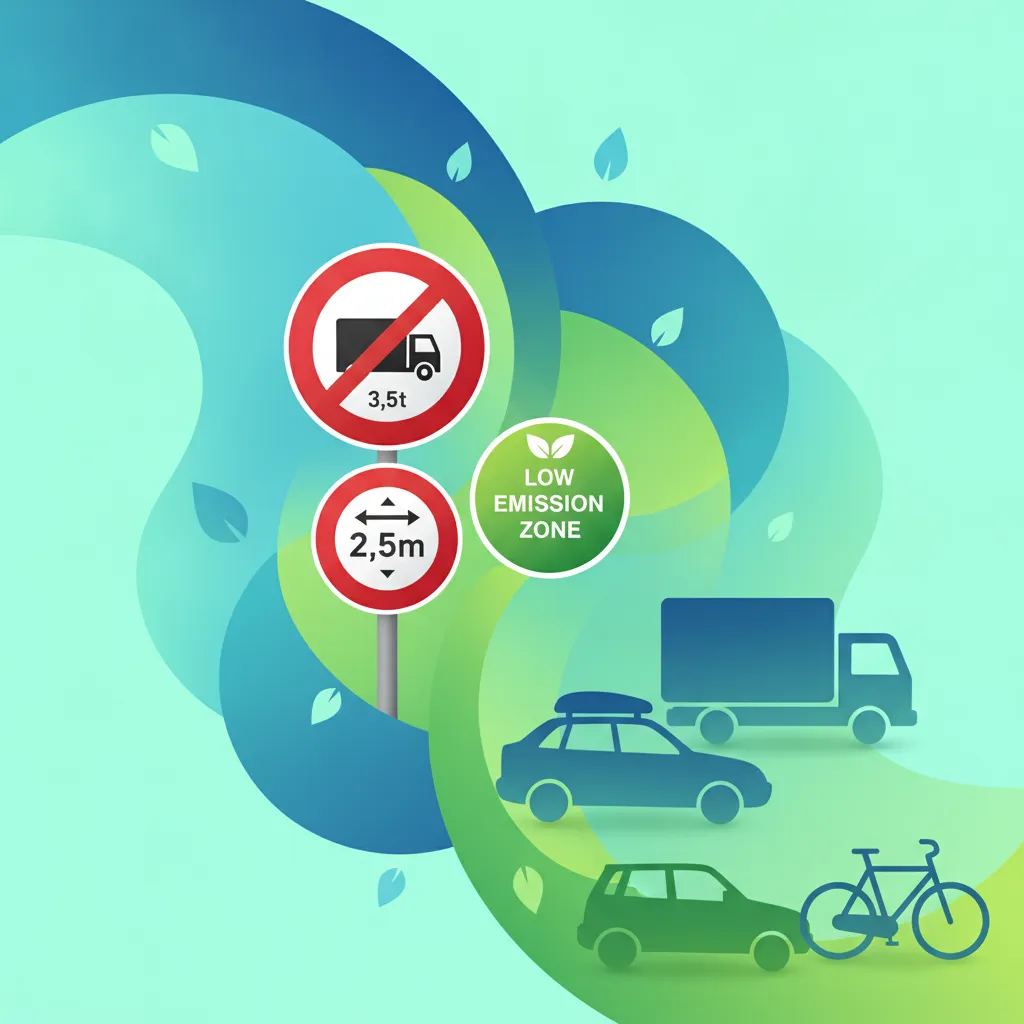
Many urban areas have restrictions to manage traffic and protect infrastructure. This lesson teaches drivers to identify and interpret traffic signs that prohibit access based on gross vehicle weight, axle load, height, or width. It also covers the growing prevalence of environmental or low-emission zones, which may restrict entry for older, more polluting vehicles.

Fatigue is a major cause of accidents in the transport industry. This lesson teaches drivers to identify the early warning signs of tiredness, such as frequent yawning, heavy eyelids, and difficulty concentrating. It emphasizes that the only effective cure for fatigue is sleep and reinforces the legal and personal responsibility to take required breaks and never drive while tired.
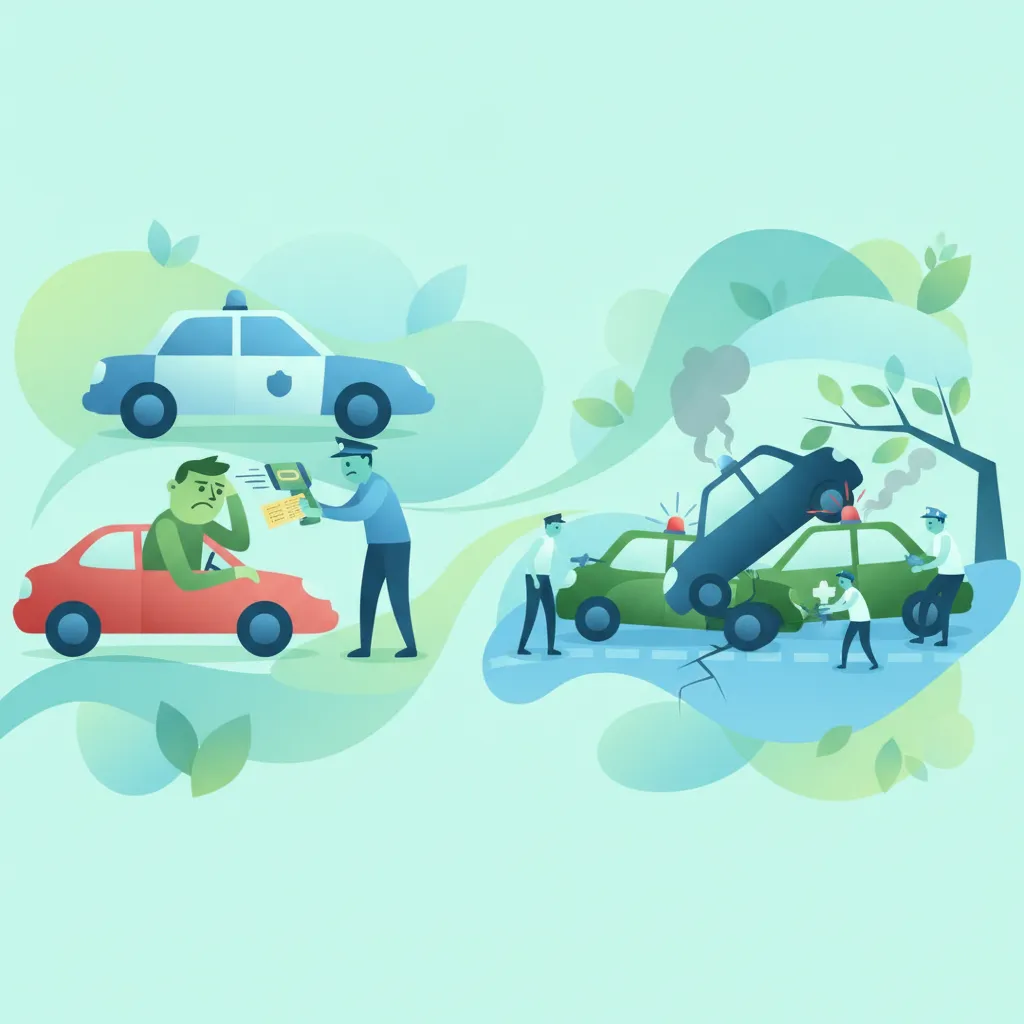
This lesson outlines the legal repercussions for breaking traffic laws in Switzerland. It details the system of fines and administrative measures, including the potential for license withdrawal for serious offenses. The content also explains a rider's legal duties after being involved in an accident, including reporting and insurance obligations.

Motorway driving requires constant concentration due to high speeds. This lesson emphasizes the importance of staying in the right-hand lane unless overtaking and the specific restrictions on lorry overtaking in Switzerland. It reinforces the need for a following distance of at least four seconds to compensate for the vehicle's long stopping distance and provides guidance on safely merging and exiting.
Learn about the stringent legal penalties for tachograph violations, exceeding weight limits, and improper load securing for Swiss professional HGV drivers. Understand how these specific infringements impact your license and career.
Overloading is a serious offence with severe safety and legal ramifications. This lesson details how excess weight drastically increases braking distances, puts extreme stress on tyres leading to blowouts, and negatively affects steering and overall stability. Furthermore, it discusses the substantial fines, potential license withdrawal, and driver liability that result from violating Swiss weight regulations.

The tachograph is a critical tool for ensuring road safety by enforcing regulations on driving hours and rest periods. This lesson explains the basic function of both analogue and digital tachographs and the use of the driver card. It provides a theoretical summary of the core principles of the Swiss Chauffeur Ordinance (ARV) regarding maximum driving times and minimum rest requirements to combat fatigue.

Operating a heavy goods vehicle involves a significant responsibility for the safety of all road users. This lesson emphasizes the professional driver's enhanced duty of care due to the vehicle's size, mass, and potential impact in a collision. It covers the importance of a professional attitude, constant vigilance, and adherence to all traffic regulations to prevent incidents and maintain a high standard of road safety.

While others may have loaded the vehicle, the driver holds the final legal responsibility for the security of the load once on the public highway. This lesson clarifies this crucial point of law, explaining that the driver must inspect the load and its securing arrangements before departure and re-check them during the journey. The consequences of a load shifting or falling can be catastrophic and result in severe legal penalties for the driver.

The driver is legally responsible for the roadworthiness of their vehicle at the start of and during every journey. This lesson outlines the formal process for reporting any identified defects to the transport manager or maintenance staff. It stresses the critical rule that a vehicle with a known safety-critical defect must not be driven until it has been professionally repaired and declared safe.

Unlike cars, heavy vehicles cannot travel on every road. This lesson stresses the importance of using HGV-specific satellite navigation systems or carefully checking maps to plan routes that avoid low bridges, weak bridges, and roads with weight or width restrictions. Proper planning saves time, fuel, and prevents dangerous situations or costly damage.
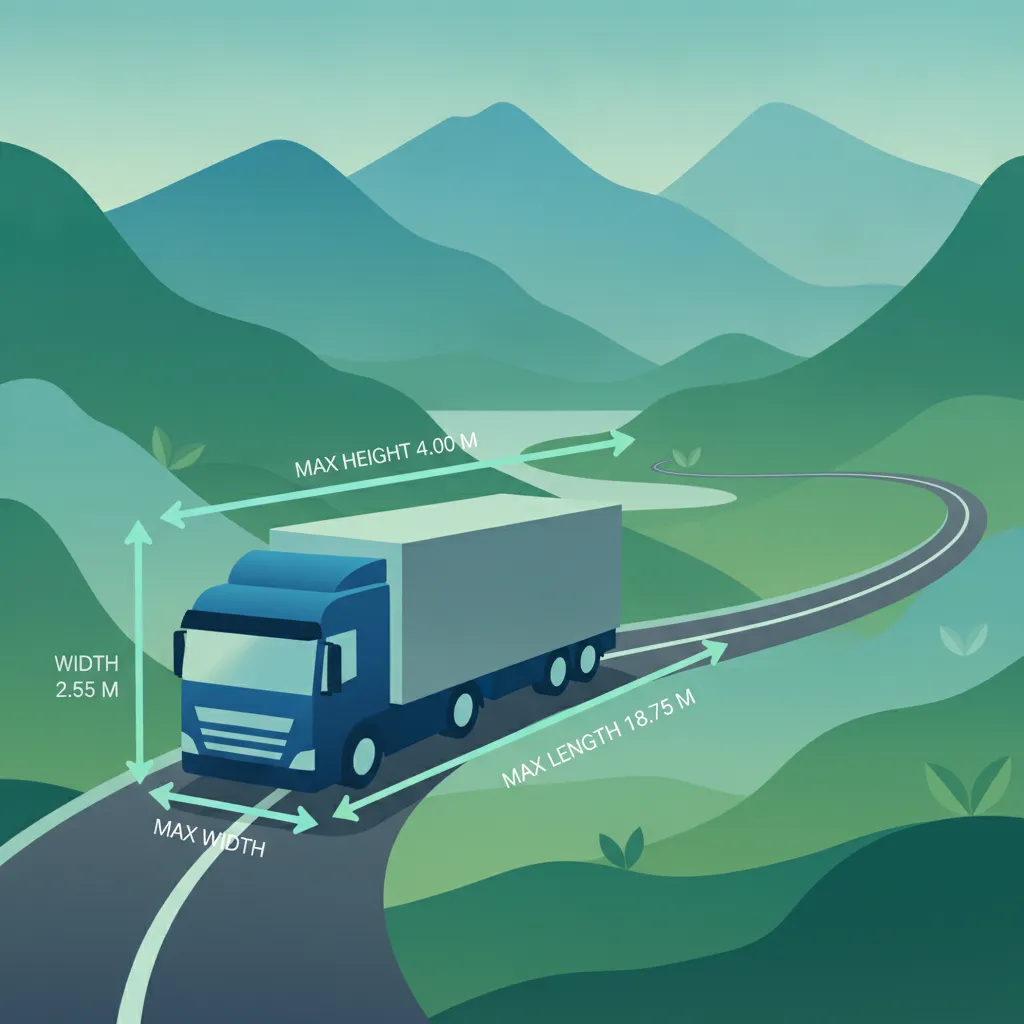
Swiss law strictly regulates the maximum dimensions of commercial vehicles to ensure they can safely navigate the infrastructure. This lesson specifies the standard limits for vehicle height (4.0m), width (2.55m), and length for various lorry and trailer combinations. Adhering to these dimensions is crucial for avoiding collisions with bridges, tunnels, and other structures, and for navigating narrow roads.
This lesson outlines the mandatory documentation required during any professional transport journey in Switzerland. Drivers must be able to present the vehicle registration document ('Fahrzeugausweis'), their valid driving license, and the OACP qualification card upon request. It also touches upon transport-specific documents like consignment notes, which are crucial for legal compliance during roadside inspections by authorities.

This lesson details the specific documents that must be present in the vehicle and on the driver's person during service. It covers the driving license, OACP card, vehicle registration, and tachograph records. You will learn the importance of ensuring all paperwork is current and correct to ensure legal compliance at all times.

Transporting loads that are wider, longer, taller, or heavier than standard regulations allow requires special authorization. This lesson explains the concept of exceptional transport and the legal requirement to obtain a special permit from the relevant cantonal authorities. It highlights that such operations require careful route planning, often mandating specific times of travel and sometimes the use of escort vehicles.
Find clear answers to common questions learners have about Legal Consequences of Infringements for Professional Drivers. Learn how the lesson is structured, which driving theory objectives it supports, and how it fits into the overall learning path of units and curriculum progression in Switzerland. These explanations help you understand key concepts, lesson flow, and exam focused study goals.
Yes. Professional drivers are held to a higher standard of care. Because their vehicle poses a greater risk, infringements related to speed, weight, or driving hours are often treated with increased severity, including longer license withdrawal periods.
Yes. While the driver is responsible for safe operation, Swiss law also holds the employer or operator accountable for ensuring the vehicle is roadworthy and that driving time regulations are followed. Multiple parties can be held liable in a single incident.
An insecure load is considered a serious traffic violation. It can result in heavy fines and, if it causes a danger to others, can lead to immediate license suspension and criminal proceedings.
Yes. Your driving record is unified. Serious traffic violations committed while driving a private vehicle can lead to the withdrawal of your professional license categories, potentially impacting your ability to work.
Pinpoint specific Swiss traffic rules, road signs, or driving situations you need to master. Use the practice search to start a focused revision session now and build confidence for your official driving theory exam.