
This lesson establishes the foundation of your riding journey by outlining the essential legal duties and safety habits required for all Category M riders. You will explore how to cultivate a defensive mindset, ensuring you are prepared for both the Swiss theory exam and real-world road challenges.

Lesson content overview
Embarking on your journey as a Category M rider in Switzerland, whether on a moped or an e-bike, comes with a fundamental set of responsibilities and habits crucial for your safety and the safety of others. This lesson serves as your foundational guide, outlining the essential duties you must adopt from your very first ride. These principles are not merely suggestions; they are legal obligations and the bedrock of responsible road behavior, significantly influencing accident rates and your personal liability.
Understanding and internalizing these initial responsibilities will equip you with a defensive riding mindset, enabling you to anticipate potential hazards and make informed decisions on the road. The insights gained here are vital for navigating the complexities of Swiss traffic and will form the basis for more advanced riding skills covered in subsequent modules of your Swiss Driving License Theory Course for Category M (Mopeds).
The early development of safe riding habits is paramount for Category M riders. During the initial learning phase, new riders experience a higher cognitive load, meaning they are processing a vast amount of new information while simultaneously controlling their vehicle. Establishing good habits from the outset reduces this mental burden over time and builds muscle memory for critical safety actions.
These habits are directly linked to preventing accidents and mitigating injuries. Proactive measures, such as wearing the correct protective equipment and ensuring your vehicle is visible, are critical components of preventive safety. They minimize the likelihood of incidents and reduce the severity of consequences if an accident does occur.
At the core of safe Category M riding are several key principles that integrate legal requirements with practical safety strategies. These include the mandatory use of protective gear, correct lighting usage, adherence to learning permit restrictions, cultivation of a defensive riding mindset, and consistent vehicle maintenance checks. Each principle plays a distinct role in ensuring your safety and compliance with Swiss traffic laws.
This lesson will delve into each of these areas, providing detailed explanations and practical guidance. By understanding the "why" behind each rule and habit, you will be better prepared not only to pass your theory exam but also to ride confidently and responsibly on Swiss roads.
One of the most critical safety measures for any Category M rider is the use of appropriate protective headwear. In Switzerland, wearing a certified helmet is not just recommended; it is a legal obligation for all moped and e-bike riders. This section details the specific standards and practical considerations for helmet use.
All Category M riders must wear a helmet that conforms to established safety standards. In Switzerland, the SN EN 1078 standard is primarily relevant for helmets used on mopeds and e-bikes. This standard ensures that helmets offer a sufficient level of protection against impact.
A European safety standard specifying requirements and test methods for helmets used by pedal cyclists, skateboarders, and roller skaters. It is also applied to helmets for mopeds and fast e-bikes in Switzerland.
The legal mandate for helmet use applies to every ride, regardless of the speed, road type, or ambient conditions. This means that from the moment you begin riding until you bring your vehicle to a complete stop, your helmet must be securely fastened on your head. Failure to comply with this regulation not only puts you at severe risk of head injury in a fall or collision but also results in legal penalties, including fines and potential demerit points on your driving record.
Selecting the correct helmet is crucial. It must fit snugly but comfortably, covering your forehead without obstructing your vision. The chin strap must be securely fastened to prevent the helmet from coming off during an impact. Helmets come in various styles, including full-face, modular, and open-face designs, each offering different levels of protection and features. For moped and fast e-bike riders, a helmet offering substantial protection, ideally a full-face or modular type, is highly recommended.
Regular maintenance of your helmet is also vital. Inspect it for any signs of damage, such as cracks, dents, or frayed straps. A helmet that has sustained a severe impact, even if it appears undamaged externally, must be replaced immediately. The internal protective materials may be compromised and will not offer adequate protection in a subsequent incident. Storing your helmet properly, away from direct sunlight and extreme temperatures, helps prolong its lifespan.
Always replace your helmet after any significant impact, even if visible damage is minimal. The internal structure designed to absorb impact can be compromised.
Beyond protecting yourself, ensuring that you are seen by other road users is equally important. Proper lighting is a fundamental aspect of road safety for Category M riders, significantly reducing the risk of collisions, especially in low-light conditions. Swiss law strictly mandates when and how vehicle lights must be used.
The Swiss Ordinance on Road Traffic Regulations (ORV) Art. 38 Paragraph 2 specifies that front (headlight) and rear (tail light) illumination must be active from sunset to sunrise. This obligation also extends to periods of reduced visibility, which includes riding in fog, heavy rain, snow, or within tunnels, regardless of the time of day.
The standard headlight setting for normal driving, providing sufficient illumination without dazzling oncoming drivers or pedestrians. It is also known as low beam.
Your vehicle must be equipped with at least one white headlight at the front and at least one red tail light at the rear. These lights must be clearly visible and functional. Non-compliance with lighting requirements can lead to fines and, more importantly, drastically increases your risk of being involved in an accident, as other drivers may not see you until it's too late.
The active use of your lights is crucial for your visibility.
It's a common misunderstanding that lights are only necessary in complete darkness or that daytime riding never requires them. While daytime running lights are becoming more common, always err on the side of caution. If there's any doubt about your visibility, switch your lights on. Hazard warning lights, however, should only be used when your vehicle is stationary and poses a danger to traffic, not while moving to indicate a slow pace.
Never use hazard warning lights while moving. These are intended only for stationary vehicles that present a hazard. Using them while riding can confuse other road users.
For new riders, the Lernfahrausweis (learning permit) is your provisional gateway to independent riding. This permit comes with specific restrictions designed to provide a safe, controlled environment for you to acquire and practice your riding skills before obtaining your full Category M license. Understanding and strictly adhering to these rules is paramount.
The Swiss provisional learning permit that allows new drivers to practice riding under specific restrictions, including speed limits and, for younger learners, accompaniment requirements.
While holding a Lernfahrausweis for Category M, your maximum permitted speed is legally capped at 45 km/h. This restriction applies universally across all road types, whether you are riding on a quiet residential street, a busy urban road, or even a highway section where mopeds are permitted. This speed limitation is a crucial safety measure for several reasons:
Exceeding the 45 km/h limit is a violation of your Lernfahrausweis conditions and can lead to significant penalties, including fines, demerit points, or even the suspension or revocation of your learning permit.
For learner drivers under the age of 18, an additional restriction applies: you must be accompanied by a qualified supervising driver. This accompanying person must be at least 23 years old, hold a valid full driving license for Category A (motorcycles) or B (cars) for a minimum of three years, and be capable of safely intervening if necessary.
The purpose of this accompaniment is to provide immediate feedback, guidance, and supervision during the crucial initial learning phase. The supervising driver acts as a mentor, helping you interpret traffic situations, refine your riding technique, and reinforcing safe habits.
The accompaniment rule for learners under 18 means the supervising adult must be a passenger if the moped has a passenger seat. If not, riding must occur in a context where supervision is still feasible, such as a designated training area, or in some cases, the accompanying person follows on another vehicle, ensuring they can still intervene. Clarify specific local interpretation.
This rule is mandatory throughout your learning period until you obtain your full Category M license or reach the age of 18 (at which point the accompaniment requirement generally lifts, though the speed limit remains until the full license is granted). Riding unaccompanied when required is a serious violation that can lead to penalties and potentially invalidate your learning permit.
Beyond legal compliance, cultivating a defensive riding mindset is perhaps the most powerful tool a Category M rider can possess. This is a continuous mental approach that prioritizes safety over speed or convenience, always anticipating potential hazards and preparing for the unexpected. It's a proactive strategy to minimize risks on the road.
A proactive approach to driving or riding that involves anticipating hazards, recognizing potential risks, and taking appropriate actions to avoid accidents, prioritizing safety over asserting right of way.
A core component of defensive riding is hazard perception. This involves constantly scanning your environment, not just directly in front of you, but also to your sides, behind you, and far ahead. You should be actively looking for potential dangers such as:
Once a potential hazard is identified, the next step is risk assessment. This means quickly evaluating the likelihood and severity of the hazard. For example, a ball rolling into the street immediately suggests a child might follow, elevating the risk significantly. By anticipating these scenarios, you can adjust your speed, position, or prepare to brake or swerve, giving yourself precious extra seconds to react safely.
Maintaining an adequate following distance is a cornerstone of defensive riding. This space cushion provides you with crucial reaction time and braking distance, allowing you to respond safely if the vehicle in front suddenly stops or slows down. A common guideline is the "two-second rule" in good conditions: choose a fixed point ahead (e.g., a signpost), and when the vehicle in front passes it, you should count "one thousand one, one thousand two." If you reach the point before finishing the count, you are following too closely. Increase this distance in adverse weather, poor visibility, or heavy traffic.
Furthermore, a defensive rider is always prepared to proactively yield, even when they technically have the right of way. For instance, if another driver appears to be misjudging your speed or is clearly not yielding to you at an intersection, it is safer to slow down or stop to avoid a collision rather than insisting on your right of way. Prioritizing safety over legal entitlement is a hallmark of a responsible rider.
In wet conditions, increase your following distance to at least four seconds, as braking distances are significantly longer.
A responsible Category M rider understands that vehicle roadworthiness is a shared responsibility. While regular servicing by a qualified mechanic is essential, performing quick pre-ride checks before every journey is your immediate duty. These routine inspections ensure that critical components are functioning correctly, minimizing the risk of mechanical failure during your ride.
A comprehensive pre-ride check doesn't have to take long, but it should cover the most vital parts of your moped or e-bike.
Brakes: Squeeze both the front and rear brake levers. They should feel firm, not spongy, and engage smoothly. Ensure the brake lights (both front and rear) activate correctly when the brakes are applied.
Tires: Visually inspect both tires for proper inflation. They should not look flat or bulging. Check for any cuts, cracks, or embedded objects. Ensure there is adequate tread depth.
Lights: Turn on all lights – headlight (dipped beam), tail light, and turn signals. Walk around the vehicle to confirm they are all working correctly and are clean. Check the horn's functionality.
Fluids (for mopeds): If applicable, check the fuel level, oil level, and any other fluid reservoirs (e.g., brake fluid). Ensure there are no visible leaks under the vehicle.
Chain/Belt (for mopeds/e-bikes): Check for proper tension and lubrication.
Mirrors: Ensure mirrors are clean, securely positioned, and adjusted to give you a clear view behind.
These routine checks are simple but incredibly effective at identifying potential issues before they become dangerous problems on the road. For instance, a non-functional brake light could lead to a rear-end collision, while under-inflated tires can compromise handling and increase the risk of a blowout.
Neglecting pre-ride checks and general vehicle maintenance can have severe consequences. A vehicle that is not in optimal working order is considered unroadworthy, and operating such a vehicle is illegal in Switzerland. If you are involved in an accident and it's determined that a mechanical fault contributed to the incident, you could face legal penalties, fines, and even have your insurance coverage denied due to negligent behavior.
The condition of a vehicle that meets all statutory equipment and functional standards, making it safe and legal to operate on public roads.
Beyond the legal and financial ramifications, poor maintenance directly impacts your safety. A sudden brake failure, a tire blowout, or a loss of lights at night can lead to serious accidents, endangering yourself and other road users. Consistent care for your moped or e-bike is an integral part of your first-rider responsibilities.
Understanding the rules is one thing; consistently applying them is another. Many new Category M riders inadvertently commit common violations due to oversight or misunderstanding. Being aware of these pitfalls and adopting best practices can help you avoid penalties and significantly enhance your safety.
Safe riding isn't just about following fixed rules; it's also about adapting your behavior to constantly changing conditions. The principles of first-rider responsibility remain constant, but their application varies depending on the environment and specific circumstances.
Every rule and safe habit discussed in this lesson has a direct, logical connection to your safety and the safety of others. Understanding these cause-and-effect relationships reinforces the importance of adopting these practices.
This lesson, "First-Rider Responsibilities and Safe Habits," is a cornerstone of your Swiss Category M Driving License Theory Course. The principles discussed here are fundamental and directly connect to both prerequisite knowledge and subsequent, more advanced topics.
Understanding abstract concepts is important, but applying them to real-world scenarios solidifies your knowledge. Here are a few practical examples demonstrating the application of first-rider responsibilities.
To successfully navigate your journey as a Category M rider in Switzerland, embrace these core responsibilities and safe habits from day one:
This lesson establishes the foundational responsibilities for Swiss Category M riders, combining mandatory legal requirements with practical safety habits. Key legal obligations include wearing an SN EN 1078-certified helmet at all times, activating headlights and tail lights during reduced visibility per ORV Art. 38 Paragraph 2, and adhering to the 45 km/h speed limit for Lernfahrausweis holders. Learners under 18 must ride with a qualified accompanying driver. Beyond compliance, the lesson teaches defensive riding—anticipating hazards and maintaining safe following distances—and emphasizes pre-ride vehicle inspections to ensure roadworthiness. Understanding the logical connection between each rule and its safety outcome helps learners internalize responsible riding practices.
A short set of high-value points that capture the most important learning from this lesson.
Wearing a certified helmet (SN EN 1078) is a legal requirement for all Category M riders from the moment they start moving until they are completely stopped
Front and rear lights must be activated from sunset to sunrise and during any reduced visibility, including rain, fog, and tunnels, regardless of ambient lighting
Learners holding a Lernfahrausweis must not exceed 45 km/h on any road type until they obtain their full Category M license
Defensive riding means continuously scanning for hazards, assessing risks, and prioritizing safety over asserting right of way
Pre-ride checks of brakes, tires, lights, and fluids are mandatory to ensure your vehicle remains roadworthy and legal to operate
Explore all units and lessons included in this driving theory course.
SN EN 1078 is the Swiss helmet standard for mopeds and e-bikes; replace any helmet after a significant impact even if damage appears minimal
ORV Art. 38 Paragraph 2 mandates lighting from sunset to sunrise and during reduced visibility; dipped beam is the correct setting for normal driving
The 45 km/h speed limit applies universally on all road types while holding a Lernfahrausweis, including permitted highway sections
Learners under 18 must be accompanied by a driver at least 23 years old with Category A or B license held for minimum 3 years
The two-second following distance rule should increase to at least four seconds in wet conditions due to longer braking distances
Removing the helmet after starting the ride, believing it is only required for high-speed or long-distance travel
Riding without lights in fog, rain, or tunnels assuming streetlights or daylight are sufficient for visibility
Exceeding 45 km/h on quieter roads or believing the speed limit only applies to monitored areas
Skipping pre-ride checks and operating with non-functional brake lights, under-inflated tires, or other defects
Using hazard warning lights while moving instead of only when stationary, which confuses other road users
Lesson content overview
A short set of high-value points that capture the most important learning from this lesson.
Wearing a certified helmet (SN EN 1078) is a legal requirement for all Category M riders from the moment they start moving until they are completely stopped
Front and rear lights must be activated from sunset to sunrise and during any reduced visibility, including rain, fog, and tunnels, regardless of ambient lighting
Learners holding a Lernfahrausweis must not exceed 45 km/h on any road type until they obtain their full Category M license
Defensive riding means continuously scanning for hazards, assessing risks, and prioritizing safety over asserting right of way
Pre-ride checks of brakes, tires, lights, and fluids are mandatory to ensure your vehicle remains roadworthy and legal to operate
Explore all units and lessons included in this driving theory course.
SN EN 1078 is the Swiss helmet standard for mopeds and e-bikes; replace any helmet after a significant impact even if damage appears minimal
ORV Art. 38 Paragraph 2 mandates lighting from sunset to sunrise and during reduced visibility; dipped beam is the correct setting for normal driving
The 45 km/h speed limit applies universally on all road types while holding a Lernfahrausweis, including permitted highway sections
Learners under 18 must be accompanied by a driver at least 23 years old with Category A or B license held for minimum 3 years
The two-second following distance rule should increase to at least four seconds in wet conditions due to longer braking distances
Removing the helmet after starting the ride, believing it is only required for high-speed or long-distance travel
Riding without lights in fog, rain, or tunnels assuming streetlights or daylight are sufficient for visibility
Exceeding 45 km/h on quieter roads or believing the speed limit only applies to monitored areas
Skipping pre-ride checks and operating with non-functional brake lights, under-inflated tires, or other defects
Using hazard warning lights while moving instead of only when stationary, which confuses other road users
Explore search topics learners often look for when studying First-Rider Responsibilities and Safe Habits. These topics reflect common questions about road rules, driving situations, safety guidance, and lesson level theory preparation for learners in Switzerland.
Browse additional driving theory lessons that cover connected traffic rules, road signs, and common driving situations related to this topic. Improve your understanding of how different rules interact across everyday traffic scenarios.
Understand the mandatory protective gear, lighting requirements, and legal speed limits for Category M riders in Switzerland. Master the foundational rules to ensure roadworthiness and legal compliance on Swiss roads.
This lesson details the types and functions of personal protective equipment (PPE) for riders. It explains Swiss legal requirements for helmets and the safety standards to look for. The content also covers the benefits of wearing protective jackets, pants, gloves, and footwear to guard against impact and abrasion injuries.

This lesson emphasizes the rider's responsibility for ensuring their vehicle is in safe, roadworthy condition. It outlines a simple pre-ride inspection routine covering key safety components like tyres, brakes, lights, and controls. Regular maintenance is presented as a critical component of overall rider safety.
This lesson introduces the fundamental traffic signs that directly impact small vehicle riders. It covers the classification of signs into regulatory, warning, and mandatory categories, explaining how their shape and color indicate their function. Learners will be able to recognize and correctly interpret speed limits, priority signs, and other key information vital for safe navigation.

This lesson focuses on the significant risks of riding in winter conditions. It explains how to spot potential icy patches, such as black ice, and the need for extremely gentle and deliberate control inputs. The importance of proper winter tyres and dressing warmly to prevent distraction and fatigue from the cold is also emphasized.
This lesson details the maximum legal speed limits applicable to Category M vehicles in Switzerland. It explains how to identify speed limits through signage and differentiates between built-up areas, rural roads, and motorways where permitted. The content stresses that the legal limit is a maximum, and riders must always adapt their speed to traffic, weather, and road conditions.
This lesson provides a practical guide for handling a vehicle breakdown. It covers the immediate steps to take, such as moving the vehicle off the road if possible and making it visible to other traffic using hazard lights. The content also explains how to contact breakdown services and what information to provide to them.
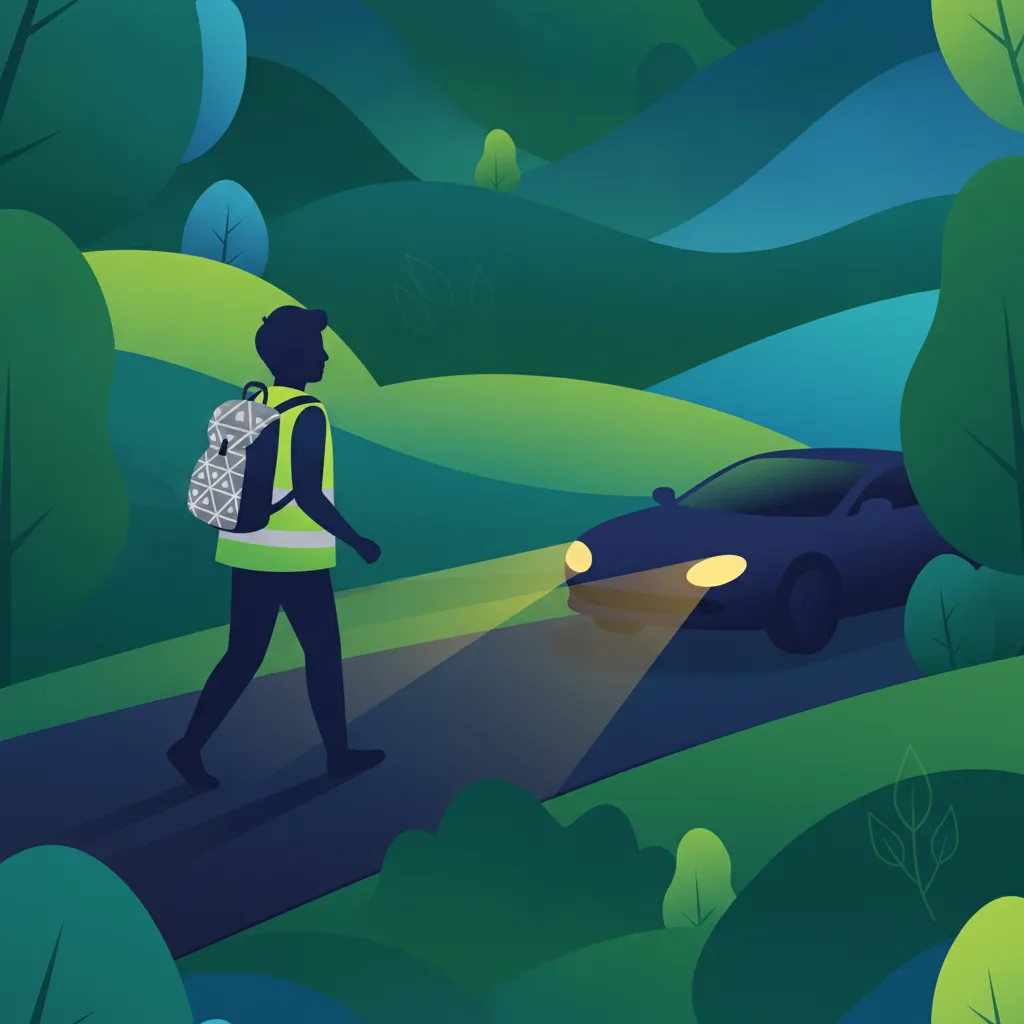
This lesson focuses on the concept of conspicuity, or how easily a rider can be seen by others. It explains the legal requirements for vehicle lights and reflectors in Switzerland and the benefits of wearing bright or reflective clothing. Learners will understand how to maximize their visibility during the day, at night, and in poor weather conditions.
This lesson outlines the legal repercussions for breaking traffic laws in Switzerland. It details the system of fines and administrative measures, including the potential for license withdrawal for serious offenses. The content also explains a rider's legal duties after being involved in an accident, including reporting and insurance obligations.
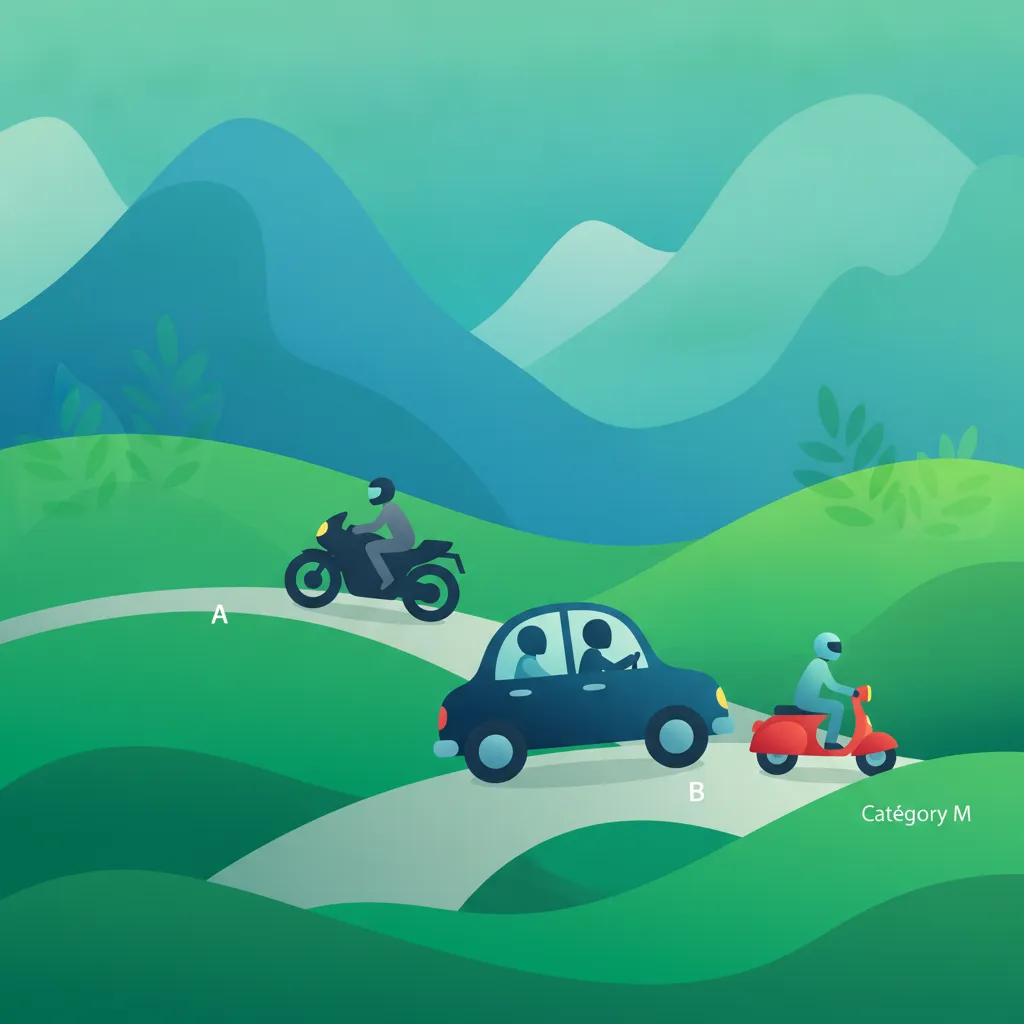
This lesson defines the scope of Switzerland's Category M license by comparing it to other vehicle categories. It details the specific criteria for vehicles, such as maximum speed and engine power, that fall under this classification. Understanding these distinctions is crucial for knowing your legal entitlements and limitations as a Category M license holder.

This lesson identifies and analyzes high-risk behaviors that contribute to a majority of accidents involving small vehicles. It explains the severe consequences of riding while distracted, fatigued, or under the influence of alcohol or drugs. The content aims to build a rider's awareness of these dangers and reinforce a responsible and defensive mindset.
Develop a defensive riding approach by learning hazard perception, safe following distances, and essential pre-ride vehicle checks. Ensure your moped or e-bike is always roadworthy for safe operation in Switzerland.
This lesson emphasizes the rider's responsibility for ensuring their vehicle is in safe, roadworthy condition. It outlines a simple pre-ride inspection routine covering key safety components like tyres, brakes, lights, and controls. Regular maintenance is presented as a critical component of overall rider safety.
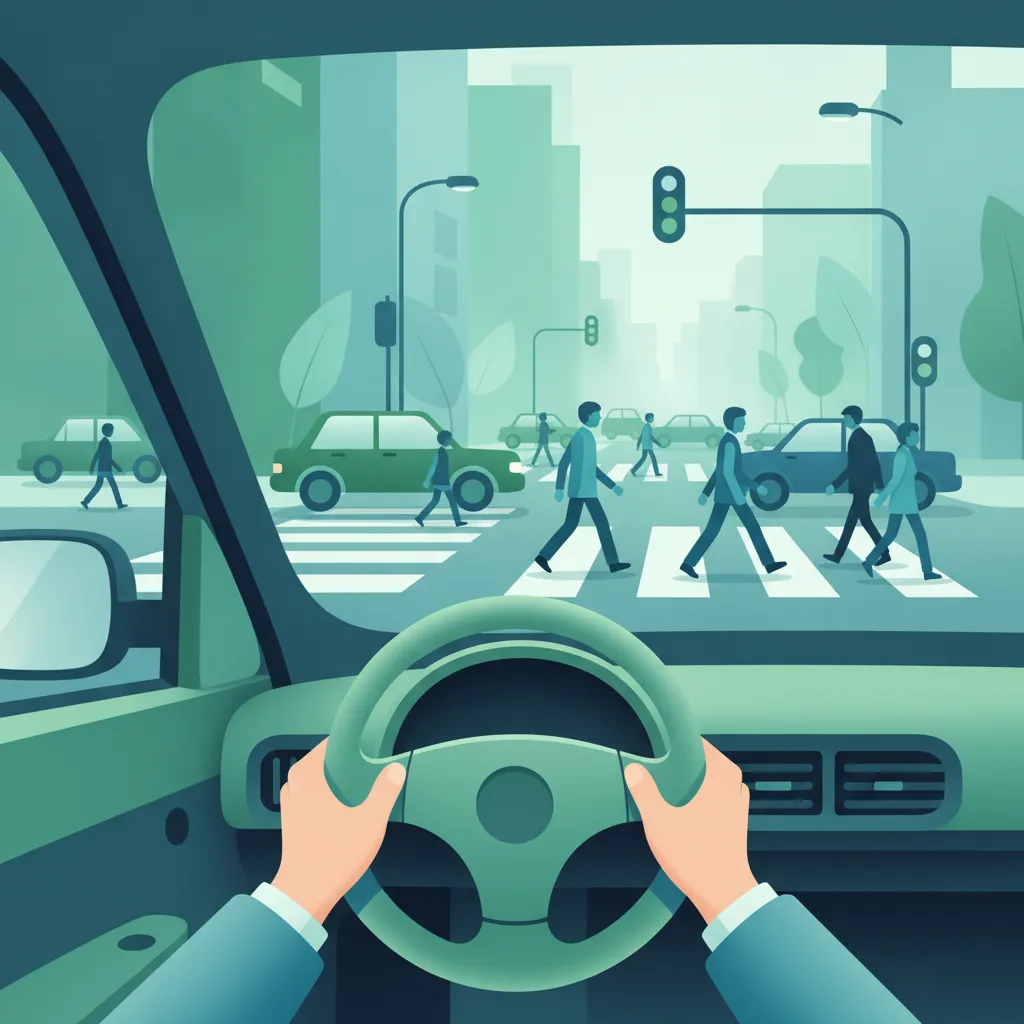
This lesson teaches the principles of active observation, a crucial skill for rider safety. It covers how to develop a scanning routine that includes checking mirrors, blind spots via shoulder checks, and looking far ahead down the road. These techniques allow a rider to identify potential conflicts early and create more time to react safely.
This lesson identifies and analyzes high-risk behaviors that contribute to a majority of accidents involving small vehicles. It explains the severe consequences of riding while distracted, fatigued, or under the influence of alcohol or drugs. The content aims to build a rider's awareness of these dangers and reinforce a responsible and defensive mindset.
This lesson details the types and functions of personal protective equipment (PPE) for riders. It explains Swiss legal requirements for helmets and the safety standards to look for. The content also covers the benefits of wearing protective jackets, pants, gloves, and footwear to guard against impact and abrasion injuries.
This lesson focuses on the significant risks of riding in winter conditions. It explains how to spot potential icy patches, such as black ice, and the need for extremely gentle and deliberate control inputs. The importance of proper winter tyres and dressing warmly to prevent distraction and fatigue from the cold is also emphasized.

This lesson explains the strategic importance of road positioning. It details how to select a lane position that makes you most visible to drivers ahead and behind, and helps you avoid the blind spots of larger vehicles. Proper positioning also allows for an escape route and a better line of sight through turns.

This lesson provides essential strategies for riding in adverse weather like rain and fog. It explains how to increase following distances, reduce speed, and use lights effectively to enhance visibility. The content also addresses the loss of traction on wet roads and the importance of smooth control inputs for braking, accelerating, and steering.
This lesson introduces the fundamental traffic signs that directly impact small vehicle riders. It covers the classification of signs into regulatory, warning, and mandatory categories, explaining how their shape and color indicate their function. Learners will be able to recognize and correctly interpret speed limits, priority signs, and other key information vital for safe navigation.

This lesson teaches riders how to establish and maintain a safe following distance from the vehicle ahead. It introduces the 'two-second rule' as a simple and effective method for gauging a safe gap in ideal conditions. The content also explains why this distance must be increased in wet weather, at night, or when visibility is poor.
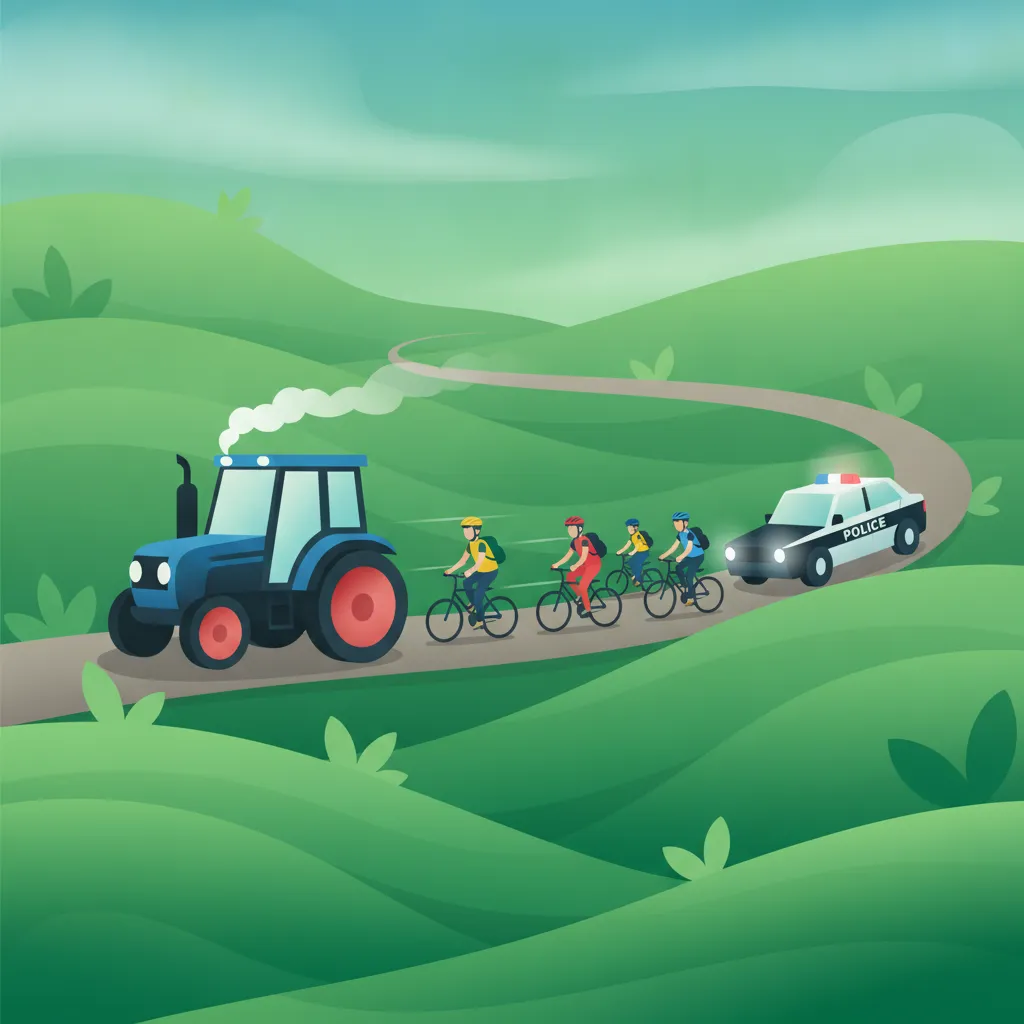
This lesson focuses on strategies for safely interacting with non-standard traffic common on rural roads. It covers how to anticipate the behaviour of slow-moving farm equipment and tourist vehicles, and the legal requirement to yield to emergency services. The importance of patience and safe passing opportunities is stressed.
Find clear answers to common questions learners have about First-Rider Responsibilities and Safe Habits. Learn how the lesson is structured, which driving theory objectives it supports, and how it fits into the overall learning path of units and curriculum progression in Switzerland. These explanations help you understand key concepts, lesson flow, and exam focused study goals.
Yes, wearing an approved helmet is legally required for all riders of Category M vehicles, including e-bikes and mopeds, to ensure your safety and comply with Swiss law.
A defensive mindset means constantly anticipating the mistakes of other road users, keeping a safe distance, and never assuming others have seen you or will follow the rules.
Yes, failure to follow safety regulations, such as riding without lights at night or neglecting protective gear, can lead to fines, license points, or even license suspension under Swiss traffic law.
Performing a quick pre-ride check—tires, brakes, lights, and mirrors—is a vital habit that prevents mechanical failure and ensures you are visible and in control at all times.
Pinpoint specific Swiss traffic rules, road signs, or driving situations you need to master. Use the practice search to start a focused revision session now and build confidence for your official driving theory exam.