
This lesson guides you through the essential speed limits applicable across different road types in Belgium, including built-up areas, rural roads, and motorways. Understanding these limits is fundamental to passing your Category B theory exam and ensuring you drive safely and lawfully on Belgian roads. You will learn to recognize relevant signs and understand when and why you must adapt your speed to local conditions.
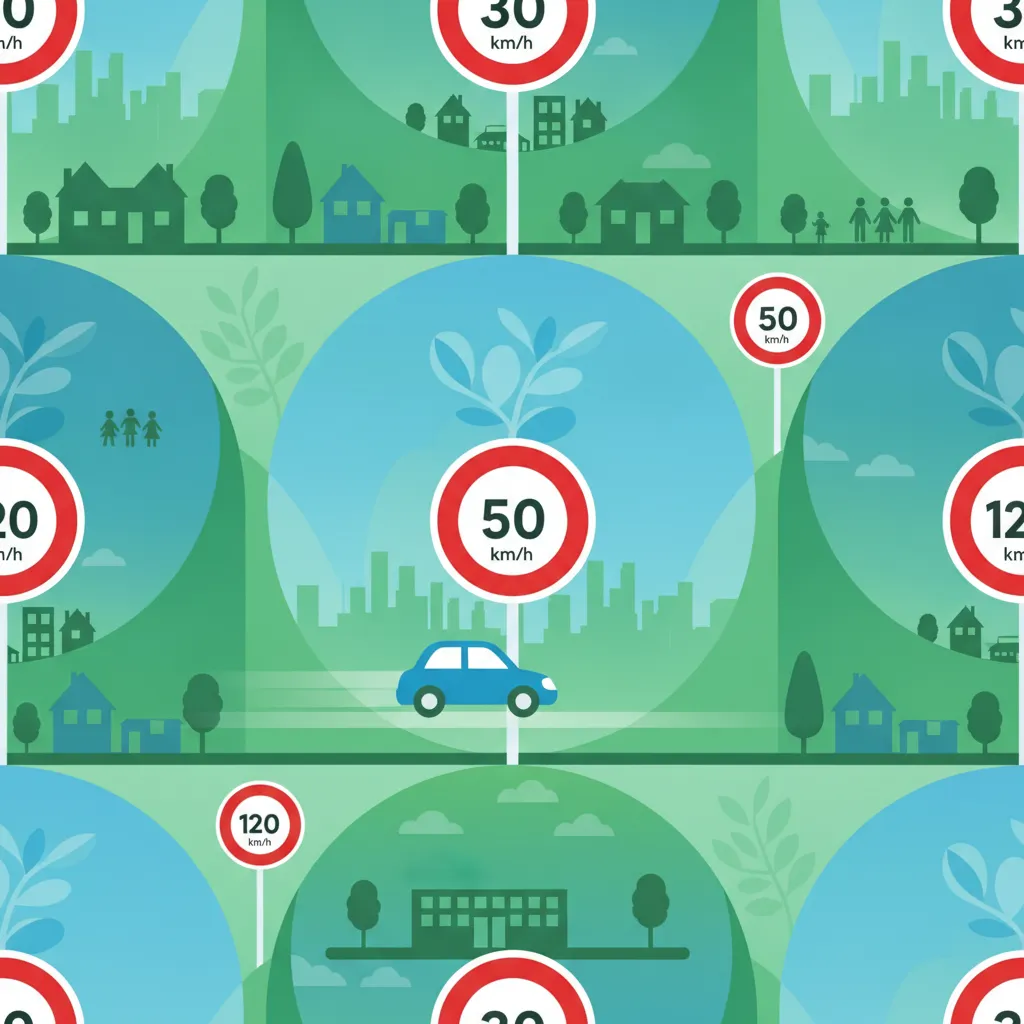
Lesson content overview
Belgian speed limits follow a clear hierarchy from 20 km/h in residential zones to higher limits on motorways. Built-up areas default to 50 km/h, with Zone 30 and residential zones providing additional protection in high-risk areas where vulnerable road users are present. Speed limits are maximum limits only—conditions like rain, fog, or heavy traffic always require further speed reduction to maintain safety. Variable speed limits on motorways are dynamically adjusted and legally binding, requiring immediate compliance. Understanding the difference between posted and default limits, and knowing how stopping distance increases with speed, is essential for both safe driving and exam success.
A short set of high-value points that capture the most important learning from this lesson.
Built-up areas in Belgium (agglomeraties) have a default speed limit of 50 km/h, which applies from the entry sign until the exit sign.
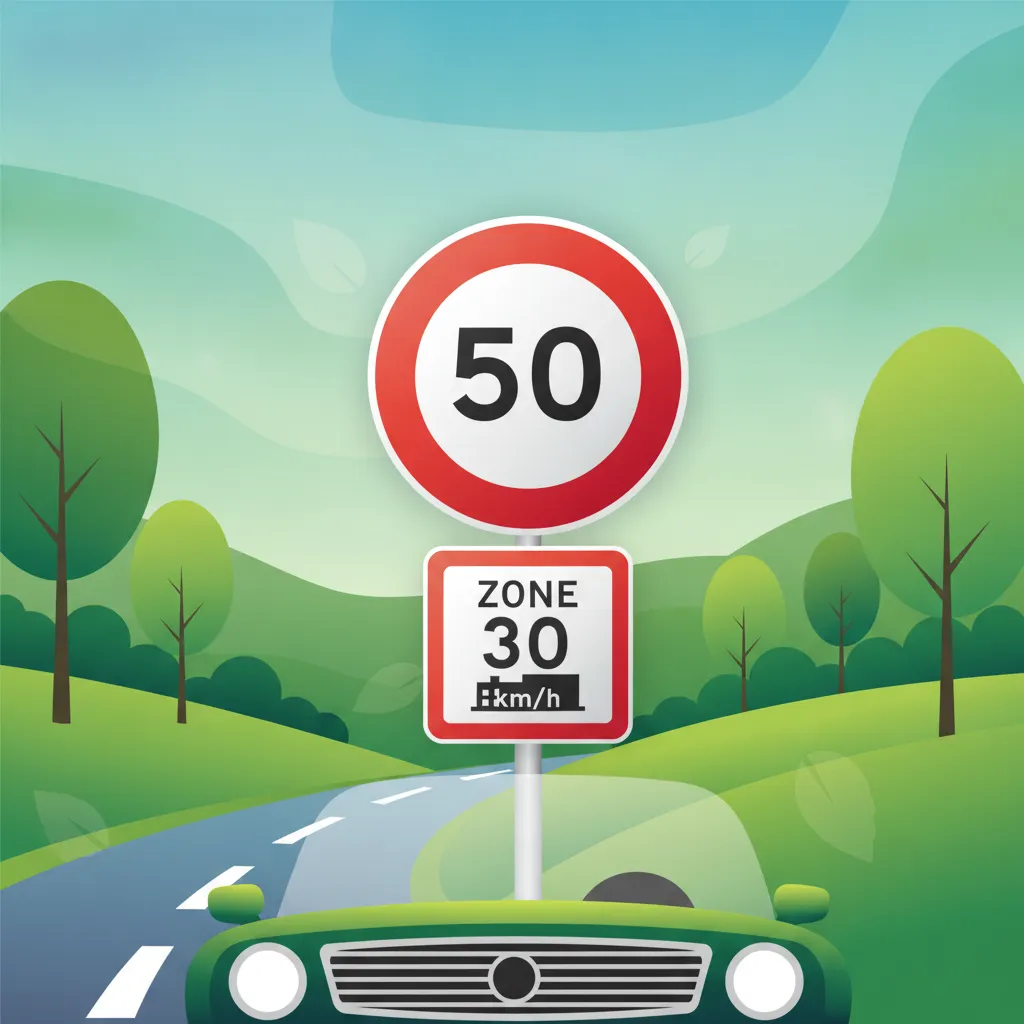
Zone 30 and residential zones (F4a) provide additional protection with limits of 30 km/h and 20 km/h respectively, where pedestrians have priority.
Variable speed limits displayed on electronic signs are legally binding and must be obeyed immediately—they override static default limits.
Speed limits are maximum limits only; you must reduce speed below the posted limit when weather, visibility, or traffic conditions require it.
Stopping distance increases exponentially with speed—doubling your speed quadruples your braking distance.
Explore all units and lessons included in this driving theory course.
Agglomeratie is the Belgian term for built-up area with default 50 km/h limit when no sign is present.
Variable speed limits on electronic gantries are mandatory and enforceable regardless of the static road limit.
Driving below 70 km/h on motorways without valid reason is also prohibited—there's a minimum as well as maximum.
School zone restrictions may be time-limited; always check supplementary signs for hours of application.
When passing an 'End of Maximum Speed Limit' sign (C44), you revert to the default limit for that road type.
Assuming default limits don't apply when no sign is visible—built-up area rules are always in effect.
Ignoring variable speed limit changes on electronic signs and continuing at the static posted limit.
Failing to reduce speed in poor weather conditions despite being below the posted speed limit.
Not recognizing that school zone restrictions may be time-limited and ignoring supplementary time signs.
Confusing Zone 30 with residential zones—each has distinct signage and speed requirements.
Lesson content overview
A short set of high-value points that capture the most important learning from this lesson.
Built-up areas in Belgium (agglomeraties) have a default speed limit of 50 km/h, which applies from the entry sign until the exit sign.
Zone 30 and residential zones (F4a) provide additional protection with limits of 30 km/h and 20 km/h respectively, where pedestrians have priority.
Variable speed limits displayed on electronic signs are legally binding and must be obeyed immediately—they override static default limits.
Speed limits are maximum limits only; you must reduce speed below the posted limit when weather, visibility, or traffic conditions require it.
Stopping distance increases exponentially with speed—doubling your speed quadruples your braking distance.
Explore all units and lessons included in this driving theory course.
Agglomeratie is the Belgian term for built-up area with default 50 km/h limit when no sign is present.
Variable speed limits on electronic gantries are mandatory and enforceable regardless of the static road limit.
Driving below 70 km/h on motorways without valid reason is also prohibited—there's a minimum as well as maximum.
School zone restrictions may be time-limited; always check supplementary signs for hours of application.
When passing an 'End of Maximum Speed Limit' sign (C44), you revert to the default limit for that road type.
Assuming default limits don't apply when no sign is visible—built-up area rules are always in effect.
Ignoring variable speed limit changes on electronic signs and continuing at the static posted limit.
Failing to reduce speed in poor weather conditions despite being below the posted speed limit.
Not recognizing that school zone restrictions may be time-limited and ignoring supplementary time signs.
Confusing Zone 30 with residential zones—each has distinct signage and speed requirements.
Explore search topics learners often look for when studying Speed Limits in Different Zones. These topics reflect common questions about road rules, driving situations, safety guidance, and lesson level theory preparation for learners in Belgium.
Browse additional driving theory lessons that cover connected traffic rules, road signs, and common driving situations related to this topic. Improve your understanding of how different rules interact across everyday traffic scenarios.
Understand the default and posted speed limits in Belgium for urban, rural, and motorway driving. Learn about special zones like residential areas and Zone 30, and how to interpret speed limit signs correctly for safe driving.
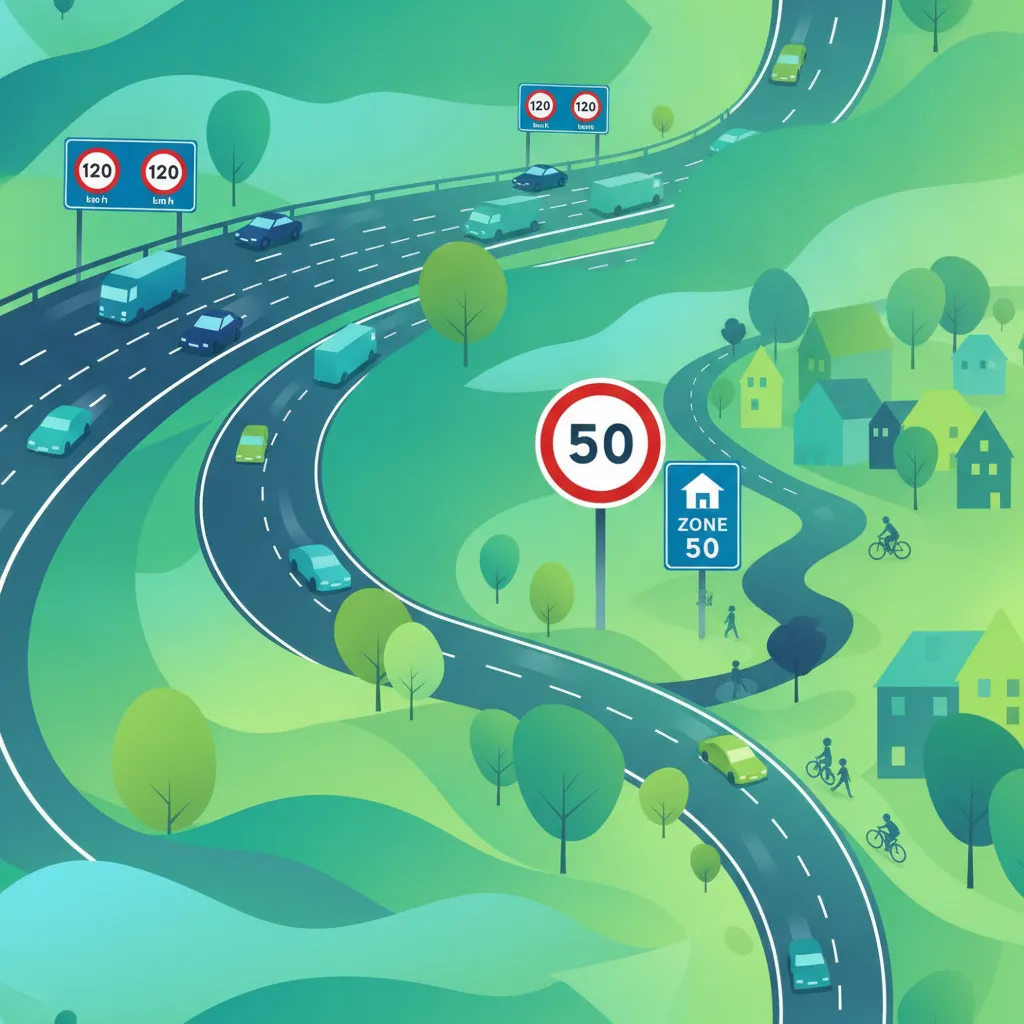
This lesson details the various legal speed limits applicable in Belgium, including those for urban, residential, and school zones. It explains the underlying safety rationale for these limits, linking speed to the severity of accidents and the time available to react to hazards. Learners will understand the difference between the maximum legal speed and a safe, appropriate speed for the prevailing conditions.
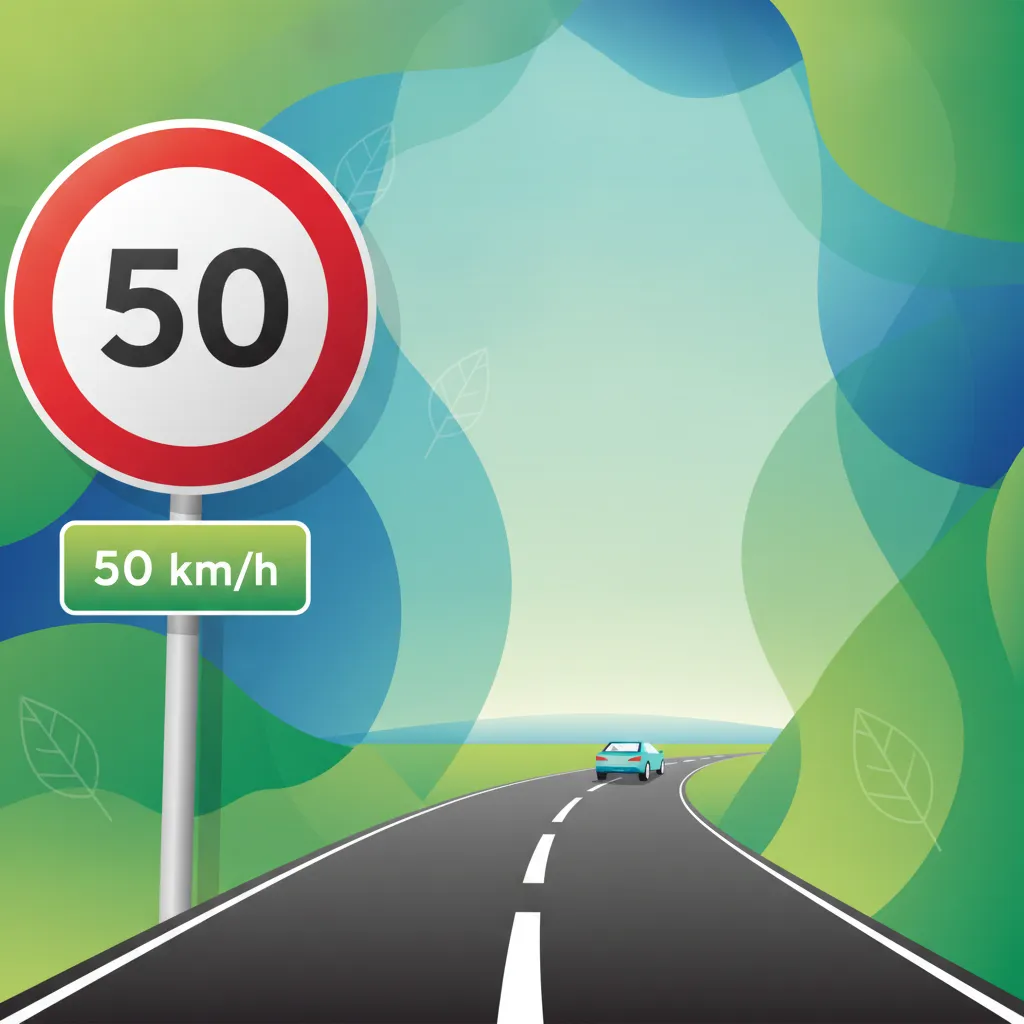
This lesson covers the principles of effective speed management, which involves more than just adhering to the posted limit. It explains how to choose a speed that is appropriate for the prevailing traffic, road, and weather conditions. The content details the legal speed limits for different types of roads in Belgium and the severe consequences of speeding.
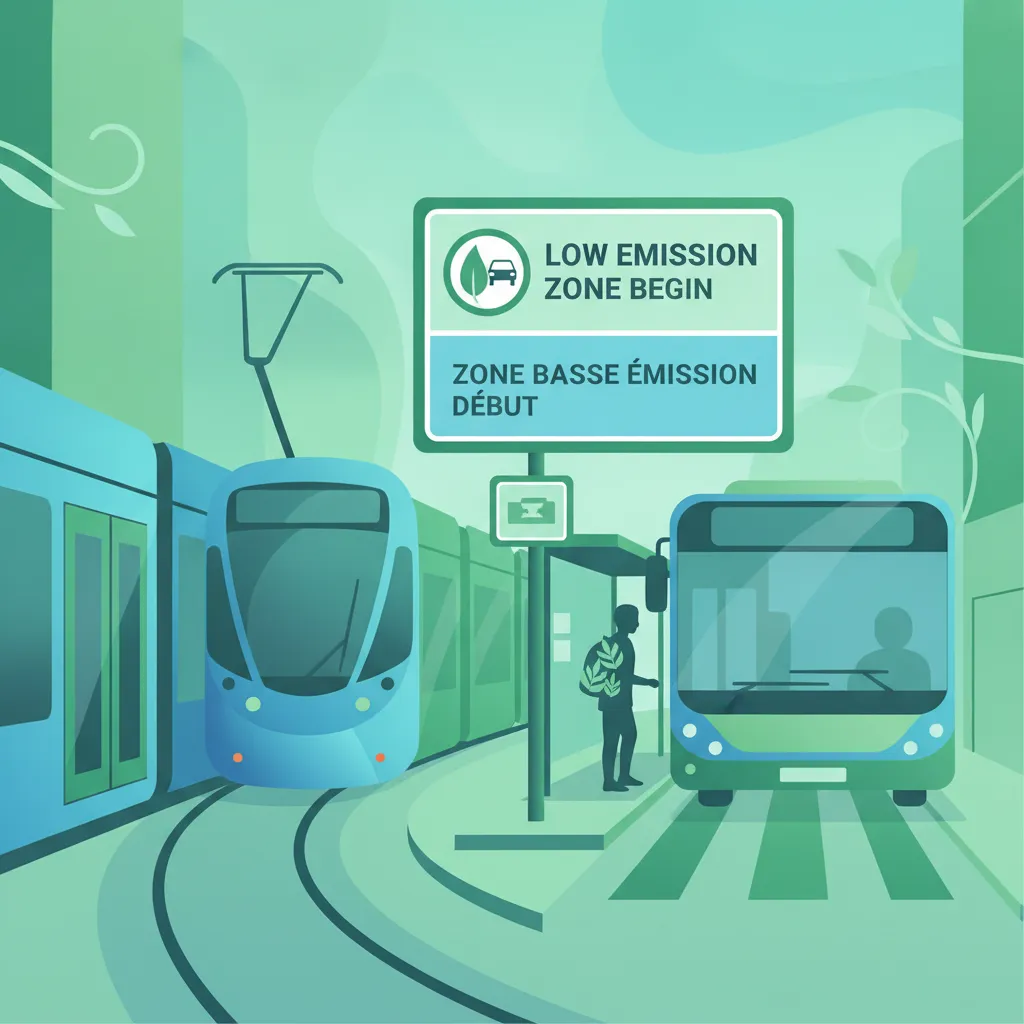
This lesson addresses unique traffic environments and special zones commonly found in Belgian urban areas. It clarifies the specific regulations concerning tramways, including where trams have absolute priority, and the conditions under which motorcycles may use bus lanes. The lesson also explains how to identify and comply with restrictions in low-emission zones.
This lesson covers the specific challenges of driving on motorways, rural roads, and navigating roadworks. Learners will review lane discipline on high-speed roads and identify hazards common to rural roads, such as sharp bends and wildlife. It also explains the importance of adjusting speed and following temporary signage in construction zones.

This lesson focuses on the rules governing pedestrian crossings, including marked zebra crossings and signal-controlled crossings. Special attention is given to school zones and residential areas where pedestrian activity is high. Learners will understand how to recognize and respect pedestrian priority in various crossing scenarios to ensure their safety.

The focus of this lesson is on maintaining proper lane discipline, especially on motorways and other high-speed roads. Learners will explore the rules for changing lanes, overtaking, and positioning in the correct lane based on speed and traffic flow. Emphasis is placed on safe merging techniques and adherence to all lane markings for fluid traffic movement.
In this lesson, learners explore the full range of regulatory signs used throughout Belgium to enforce traffic laws. It covers signs that prescribe actions, such as stop and give way, as well as those that restrict actions, like speed limits and overtaking bans. Understanding these signs enables drivers to comply accurately with enforced traffic regulations.

This lesson focuses on the legal duties and responsibilities that an AM vehicle operator must uphold on Belgian roads. It covers critical rules such as adhering to speed limits, correctly applying right-of-way principles, and following regulations for overtaking other vehicles. The lesson also explains the system of fines and penalty points for traffic violations, emphasizing the legal consequences of non-compliance to foster responsible driving habits.
Learn why simply following the maximum speed limit isn't enough. Discover how weather, visibility, road surface, and traffic density impact safe driving speeds in Belgium and when to reduce your speed proactively.

This lesson focuses on driving safely in adverse weather like rain, fog, and low sun glare, which affects road friction and visibility. It provides guidelines on speed adaptation, maintaining a safe following distance, and the proper use of vehicle equipment like lights and wipers. Learners will understand how to reduce risks like hydroplaning and skidding.
This lesson covers the specific challenges of driving on motorways, rural roads, and navigating roadworks. Learners will review lane discipline on high-speed roads and identify hazards common to rural roads, such as sharp bends and wildlife. It also explains the importance of adjusting speed and following temporary signage in construction zones.
This lesson covers the principles of effective speed management, which involves more than just adhering to the posted limit. It explains how to choose a speed that is appropriate for the prevailing traffic, road, and weather conditions. The content details the legal speed limits for different types of roads in Belgium and the severe consequences of speeding.
This lesson details the various legal speed limits applicable in Belgium, including those for urban, residential, and school zones. It explains the underlying safety rationale for these limits, linking speed to the severity of accidents and the time available to react to hazards. Learners will understand the difference between the maximum legal speed and a safe, appropriate speed for the prevailing conditions.

This lesson teaches riders how to modify their technique and preparation in response to various weather conditions beyond just rain. It covers how to handle strong crosswinds, the effects of extreme heat on both the rider and the motorcycle, and the precautions for riding in cold temperatures. The focus is on proactive adaptation to ensure safety and comfort regardless of the weather.

This lesson provides crucial advice for riding in rainy conditions, a frequent occurrence in Belgium. It explains how water on the road surface dramatically reduces tire grip, extends stopping distances, and creates a risk of hydroplaning. Riders will learn how to adjust their speed, increase following distances, and manage reduced visibility from rain and road spray to maintain safety.

This lesson details the specific precautions and techniques required for riding in rain and fog. It explains how water on the road affects tyre grip and braking distances, and how to avoid aquaplaning. You will learn the correct use of lights to be seen in low visibility and how to adjust your speed and following distance accordingly.
Find clear answers to common questions learners have about Speed Limits in Different Zones. Learn how the lesson is structured, which driving theory objectives it supports, and how it fits into the overall learning path of units and curriculum progression in Belgium. These explanations help you understand key concepts, lesson flow, and exam focused study goals.
In Belgium, the standard speed limit in built-up areas is 50 km/h, unless specific signage indicates otherwise. Always watch for signs indicating a different limit or the start of a residential zone (woonerf), where the limit is much lower.
No, the speed limit is the maximum allowed speed under ideal conditions. You are legally required to adapt your speed to current road, weather, and traffic conditions, such as rain, fog, or heavy traffic, even if it means driving well below the limit.
Generally yes, but look out for electronic gantries or variable speed limit signs. These can lower the limit due to congestion or accidents, and these limits are mandatory for all drivers.
In a recognized residential zone (woonerf), the maximum speed limit is 20 km/h. Pedestrians have priority and may use the full width of the road, so you must drive with extreme caution.
Ready to focus your Belgian driving theory revision? Utilize our powerful search tool to pinpoint exact topics, road signs, or difficulty levels. Engage with practice questions that directly address your learning needs and solidify your understanding of Belgian traffic laws for your upcoming exam.