This lesson provides a comprehensive overview of the mandatory regulatory signs used across Belgium. You will learn how to identify, interpret, and respond to various signs that dictate legal traffic actions. Mastering these signs is a vital step in your Category B training and essential for success in your upcoming theory examination.
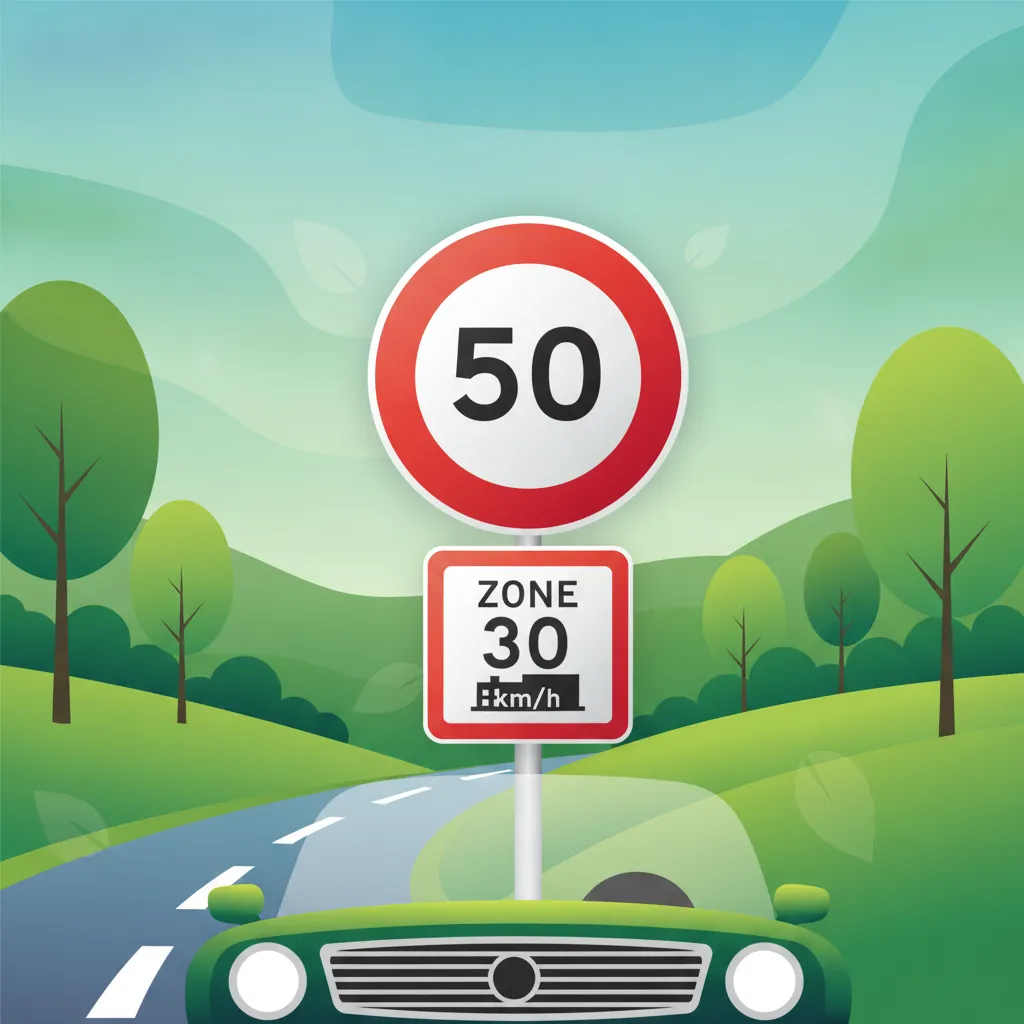
Lesson content overview
Welcome to this comprehensive lesson on regulatory signs, a crucial component of the Complete Theory Program for Belgian Category B Driving Licence. Understanding regulatory signs is fundamental for every driver in Belgium, as they dictate legal obligations and prohibitions on the road. These signs are not mere suggestions; they are legally binding instructions designed to ensure safety, manage traffic flow, and protect all road users.
This lesson will explore the full spectrum of regulatory signs encountered throughout Belgium. We will cover signs that mandate specific actions, such as stopping or giving way, as well as those that restrict actions, like speed limits or overtaking bans. By the end of this chapter, you will possess a thorough understanding of these signs, enabling you to comply accurately with enforced traffic regulations and navigate Belgian roads safely and confidently.
Regulatory signs are a category of traffic signs that convey legally binding instructions to road users. Unlike warning or informational signs, which offer guidance or notification, regulatory signs impose specific duties or prohibitions. Failing to comply with a regulatory sign is a traffic offense and can lead to penalties, fines, and even endanger yourself and others. These signs are easily recognizable, typically being circular with red borders (for prohibitions) or blue backgrounds (for mandatory instructions), though some key signs like "Stop" and "Give Way" have unique shapes and colors.
The primary purpose of regulatory signs is to maintain order, safety, and efficiency on Belgian roads. They are a direct extension of traffic law, ensuring that every driver operates within a defined framework of rules. From preventing head-on collisions through "No Entry" signs to managing urban congestion with "No Parking" restrictions, these signs address a wide array of traffic management needs. Their legal effectiveness means they must be strictly followed at all times, unless overridden by a higher authority (like a police officer) or a temporary, more specific sign. Their clarity and unambiguous interpretation are paramount for all road users to understand and adhere to uniform rules.
Belgian regulatory signs fall into several distinct categories, each serving a specific function to guide driver behavior. Familiarity with these categories and their general appearance will help you quickly interpret new signs on the road.
Prohibitory signs are designed to forbid certain actions or restrict the access of specific vehicle types. These signs are almost always circular with a red border, and a black symbol on a white background, or a red diagonal line across the symbol indicating prohibition.
These signs are critical for preventing vehicles from entering one-way streets in the wrong direction or accessing restricted areas. They ensure smooth traffic flow and prevent dangerous head-on situations.
A common variant is the "No Entry for All Vehicles" sign, which typically features a simple red circle with a horizontal white bar.
Some prohibitory signs are designed to restrict specific categories of vehicles from certain roads or areas, often due to road safety, structural integrity, or environmental concerns.
Other examples include signs prohibiting lorries, motorcycles, or bicycles, often displaying the silhouette of the prohibited vehicle type within the red-bordered circle. It's crucial for drivers of specific vehicle types to recognize these to avoid fines and potential hazards.
Mandatory signs, also known as prescriptive signs, dictate specific actions that drivers must take. These signs are typically circular with a blue background and a white symbol or arrow, clearly indicating the required maneuver or behavior.
These signs direct drivers to follow a prescribed route or turn in a specific direction. They are commonly found at intersections or before roundabouts to manage traffic flow and prevent last-minute lane changes.
Failure to follow these instructions can lead to confusion, accidents, or incorrect route choices.
Mandatory signs can also dictate which lane to use for certain movements or impose specific behavioral requirements, such as maintaining a minimum speed. These are essential for preventing congestion and ensuring safe progression through complex junctions. For example, a lane might be designated "straight ahead only" or "left turn only."
Beyond the general categories, several specific regulatory signs carry significant weight and are frequently encountered on Belgian roads. Understanding each in detail is critical for safe and lawful driving.
Speed limit signs are among the most common and critical regulatory signs, directly impacting road safety and traffic flow. They are absolute limits, not advisory suggestions.
Speed limits indicate the maximum permissible speed for all vehicles (unless specified otherwise) in kilometers per hour (km/h). They are displayed within a red-bordered circle with a white background.
It is important to remember that speed limits can change frequently, especially when transitioning between urban, rural, and motorway environments. Drivers must always adapt their speed to the posted limits and prevailing conditions, even if the limit seems low for the road type.
On some motorways or during specific conditions (e.g., roadworks, heavy traffic, adverse weather), variable speed limits may be displayed on electronic signs. These must be obeyed just as strictly as permanent signs. Temporary speed limits due to roadworks are also mandatory and often accompanied by orange markings or cones.
Always be vigilant for changes in speed limits, particularly when entering built-up areas, approaching roadworks, or observing electronic signs on motorways.
Overtaking restrictions are implemented in areas where visibility is limited, road geometry is complex, or where increased risk of head-on collisions exists. These signs are crucial for preventing dangerous maneuvers.
The standard "No Overtaking" sign prohibits all motor vehicles (except two-wheeled motorbikes and cycles) from overtaking other motor vehicles. This applies regardless of how clear the road may appear.
This sign is commonly found on single carriageways, through tunnels, on narrow bridges, or around sharp curves where sightlines are restricted.
Some signs may prohibit overtaking specifically for certain vehicle types, such as lorries over a certain weight. These are vital for heavy vehicle drivers to recognize and obey to ensure stability and safety.
The end of an overtaking restriction is indicated by a white circular sign with a black diagonal stripe.
These signs are fundamental for establishing right-of-way at intersections, dramatically reducing the risk of collisions.
The "Stop" sign (B5) is octagonal and red with a white border and the word "STOP" in white. It is one of the most important regulatory signs.
Drivers must come to a complete halt before the stop line, or if no line is present, before the intersection, and give way to all traffic on the intersecting road, regardless of direction. This complete stop ensures you have ample time to assess the traffic situation before proceeding safely.
The "Give Way" sign (B17) is an inverted red-bordered triangle with a white background. It signifies that drivers must yield to traffic on the intersecting road.
Unlike a Stop sign, a complete stop is not always required if the way is clear and you can proceed safely without obstructing traffic. However, you must be prepared to stop and yield to all vehicles with priority.
These signs are critical for managing urban space, ensuring access for emergency services, and maintaining traffic flow. It's vital to understand the subtle differences between "No Parking," "No Stopping," and "No Halting."
A "No Parking" sign (E1) is a blue circle with a red border and a single red diagonal line.
This sign prohibits long-term parking, but usually permits brief stops for loading/unloading goods or picking up/dropping off passengers, provided the driver remains with the vehicle and does not obstruct traffic.
A "No Stopping" sign (E3) is a blue circle with a red border and two intersecting red diagonal lines (an 'X').
This is a stricter prohibition than "No Parking." It means you cannot stop for any reason, not even briefly to drop off a passenger or load/unload goods, unless it's an emergency or traffic conditions (e.g., congestion, red light) force you to stop. "No Halting" is a related term sometimes used to convey a similar strict prohibition on stopping. Violations of these rules can lead to significant fines and even vehicle removal.
Always verify local parking regulations carefully. In Belgium, specific distances (e.g., from an intersection, pedestrian crossing, or fire hydrant) also have inherent parking/stopping prohibitions, even without a sign.
While speed limits define the maximum speed, minimum speed signs (C22) ensure that traffic does not move too slowly, which can be just as dangerous by causing obstructions and tailbacks.
These signs are blue circles with white numbers and are typically found on motorways or specific expressways where a steady flow of traffic is necessary. Drivers must not drive below the minimum speed unless external circumstances (like heavy traffic, adverse weather, or an obstruction) make it unavoidable.
The "No Entry" sign (C1), a red circle with a white bar, is a prohibitory sign indicating that vehicles are forbidden to enter the road or area in the direction the sign faces. It is crucial for one-way streets and restricted zones.
Ignoring this sign can lead to dangerous head-on collisions, especially on one-way streets, and carries severe penalties.
Regulatory signs are not always static; their interpretation and adherence can be influenced by various contextual factors.
Ignoring regulatory signs is not only illegal but also a significant contributor to road accidents. Common violations include:
Consequences range from significant fines and points on your licence to vehicle impoundment and, in severe cases, imprisonment or revocation of your driving licence.
Regulatory signs are designed based on extensive road safety research and accident data. Each sign addresses a specific hazard or traffic management need:
Adhering strictly to these signs is a fundamental responsibility of every driver, contributing directly to the safety of all road users.
Understanding regulatory signs is best cemented through practical application. Here are a few scenarios you might encounter:
Scenario 1: Entering a Built-Up Area You are driving on a rural road with a default speed limit of 70 km/h. As you approach a village, you see a sign.
Action: Immediately reduce your speed to a maximum of 50 km/h, as you are entering an urban zone where this limit typically applies, or as specifically indicated by the sign. Failing to do so can result in a fine for speeding.
Scenario 2: Approaching a Tunnel You are driving on a single carriageway and see this sign as you approach a tunnel entrance.
Action: Even if the road seems clear inside the tunnel, you must refrain from overtaking any vehicle until you pass the "End of No Overtaking" sign. Tunnels often have reduced visibility and limited escape routes, making overtaking extremely dangerous.
Scenario 3: Navigating a One-Way Street You are trying to reach a destination down a narrow street. At the entrance, you see this sign.
Action: You must not enter this street. It is a one-way street with traffic flowing in the opposite direction. Safely find an alternative route to your destination. Entering against a "No Entry" sign is a serious traffic offense and highly dangerous.
Scenario 4: Encountering a Complex Intersection You are approaching an intersection where you intend to turn left. You notice the lane you are in has this sign.
Action: You must turn left from this lane. You cannot proceed straight or turn right. If you wished to go straight or right, you should have chosen a different lane before reaching this sign.
Scenario 5: Parking in a City Centre You want to briefly stop to let a passenger out in a busy city street. You see this sign.
Action: You cannot stop here, even for a moment, to drop off your passenger. You must find an alternative, legal location to stop, drop off, and then park if needed.
Regulatory signs are the backbone of traffic law on Belgian roads. They provide clear, unambiguous instructions that are legally enforceable and designed to protect every road user. As a Category B licence holder, your ability to quickly recognize, understand, and comply with these signs is paramount for your safety, the safety of others, and for avoiding penalties.
By internalizing the meanings of prohibitory and mandatory signs, understanding speed limits and overtaking rules, and respecting parking regulations, you demonstrate a commitment to responsible driving. This knowledge not only helps you pass your theoretical exam but also equips you for a lifetime of safe and confident driving on Belgian roads.
Belgian regulatory signs are legally binding traffic instructions divided into prohibitory signs (red border, white background) and mandatory signs (blue background, white symbol). Key signs include Stop (octagonal), Give Way (inverted triangle), No Entry (red circle with white bar), speed limits (red bordered circle with number), and parking restrictions (blue circle with red diagonals). Understanding the visual characteristics and specific meanings of each sign category is essential for passing the Category B theory exam and driving safely on Belgian roads.
A short set of high-value points that capture the most important learning from this lesson.
Regulatory signs are legally binding instructions that must be obeyed; failure to comply is a traffic offense.
Prohibitory signs are circular with a red border and white background, while mandatory signs are circular with a blue background.
Speed limits are absolute maximums in km/h that can change frequently between urban, rural, and motorway environments.
Stop signs (B5) require a complete halt before the intersection, while Give Way signs (B17) require yielding but not necessarily stopping.
Regulatory signs override general default traffic rules and can be temporarily overridden only by police or a higher-authority sign.
Explore all units and lessons included in this driving theory course.
No Parking (E1 - single red diagonal) allows brief stops for loading/unloading; No Stopping (E3 - double red diagonal X) prohibits any stop whatsoever.
The Stop sign is octagonal and red with white border; the Give Way sign is an inverted red-bordered triangle.
No Overtaking (C41) prohibits passing all motor vehicles except two-wheeled motorcycles and cycles.
Minimum speed signs (C22) are blue circles requiring vehicles to maintain a minimum speed when conditions permit.
The End of Restriction signs (like C45) use a white circle with a black diagonal to cancel previous prohibitions.
Confusing No Parking with No Stopping and stopping briefly where only No Parking applies.
Rolling through a Stop sign instead of coming to a complete halt before proceeding.
Failing to adjust speed when approaching urban areas or roadworks after seeing speed limit signs.
Not recognizing that variable or temporary speed limits on electronic signs must be obeyed just like permanent signs.
Attempting to proceed straight when in a lane marked with a mandatory turn sign (like D4).
Lesson content overview
A short set of high-value points that capture the most important learning from this lesson.
Regulatory signs are legally binding instructions that must be obeyed; failure to comply is a traffic offense.
Prohibitory signs are circular with a red border and white background, while mandatory signs are circular with a blue background.
Speed limits are absolute maximums in km/h that can change frequently between urban, rural, and motorway environments.
Stop signs (B5) require a complete halt before the intersection, while Give Way signs (B17) require yielding but not necessarily stopping.
Regulatory signs override general default traffic rules and can be temporarily overridden only by police or a higher-authority sign.
Explore all units and lessons included in this driving theory course.
No Parking (E1 - single red diagonal) allows brief stops for loading/unloading; No Stopping (E3 - double red diagonal X) prohibits any stop whatsoever.
The Stop sign is octagonal and red with white border; the Give Way sign is an inverted red-bordered triangle.
No Overtaking (C41) prohibits passing all motor vehicles except two-wheeled motorcycles and cycles.
Minimum speed signs (C22) are blue circles requiring vehicles to maintain a minimum speed when conditions permit.
The End of Restriction signs (like C45) use a white circle with a black diagonal to cancel previous prohibitions.
Confusing No Parking with No Stopping and stopping briefly where only No Parking applies.
Rolling through a Stop sign instead of coming to a complete halt before proceeding.
Failing to adjust speed when approaching urban areas or roadworks after seeing speed limit signs.
Not recognizing that variable or temporary speed limits on electronic signs must be obeyed just like permanent signs.
Attempting to proceed straight when in a lane marked with a mandatory turn sign (like D4).
Explore search topics learners often look for when studying Regulatory Signs. These topics reflect common questions about road rules, driving situations, safety guidance, and lesson level theory preparation for learners in Belgium.
Browse additional driving theory lessons that cover connected traffic rules, road signs, and common driving situations related to this topic. Improve your understanding of how different rules interact across everyday traffic scenarios.
Understand the distinct meanings and legal implications of mandatory (blue, circular) and prohibitory (red, circular) regulatory signs in Belgium. Essential for correct interpretation of traffic laws and safe driving.
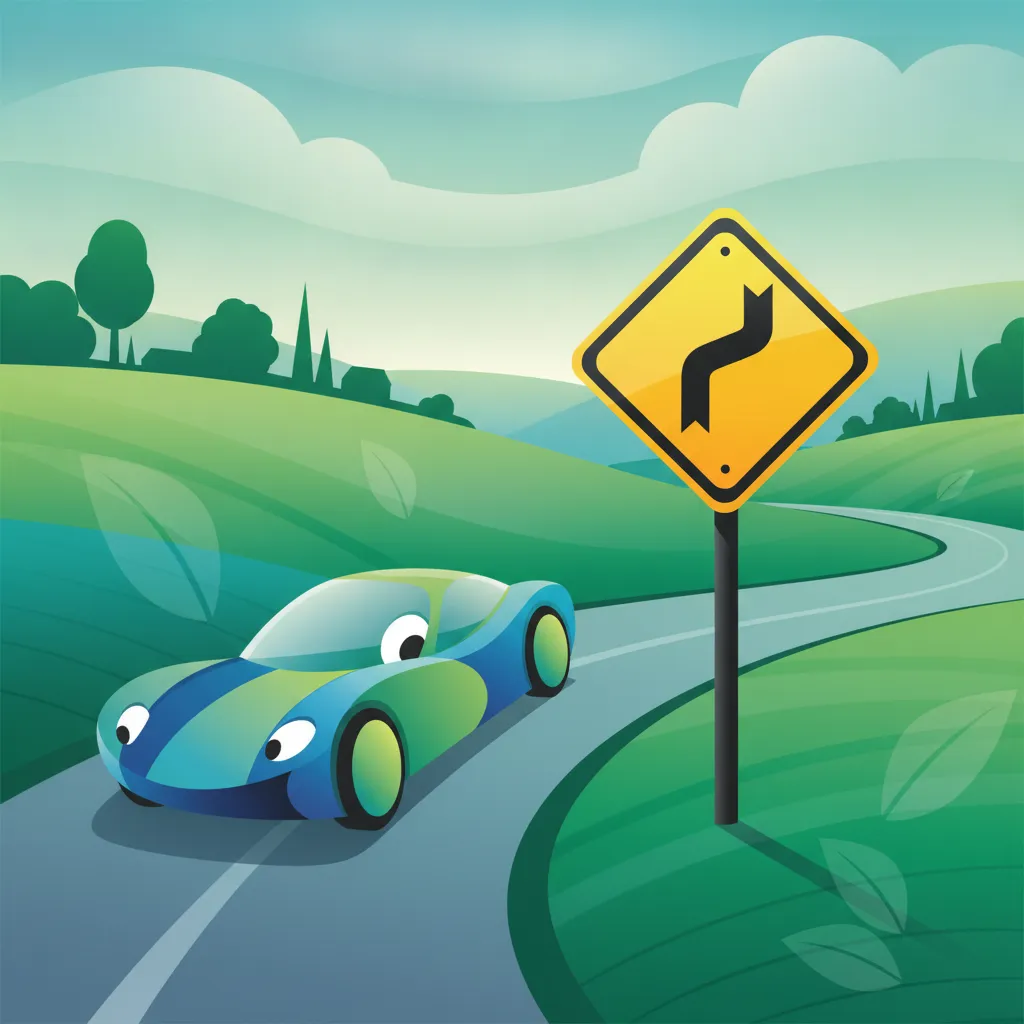
This lesson focuses on warning signs designed to alert drivers to potential hazards ahead. Topics include warnings for sharp curves, steep gradients, slippery surfaces, and zones with high pedestrian or wildlife activity. Learners will understand how to correctly interpret these signs and adjust their driving behavior to maintain safety on the road.
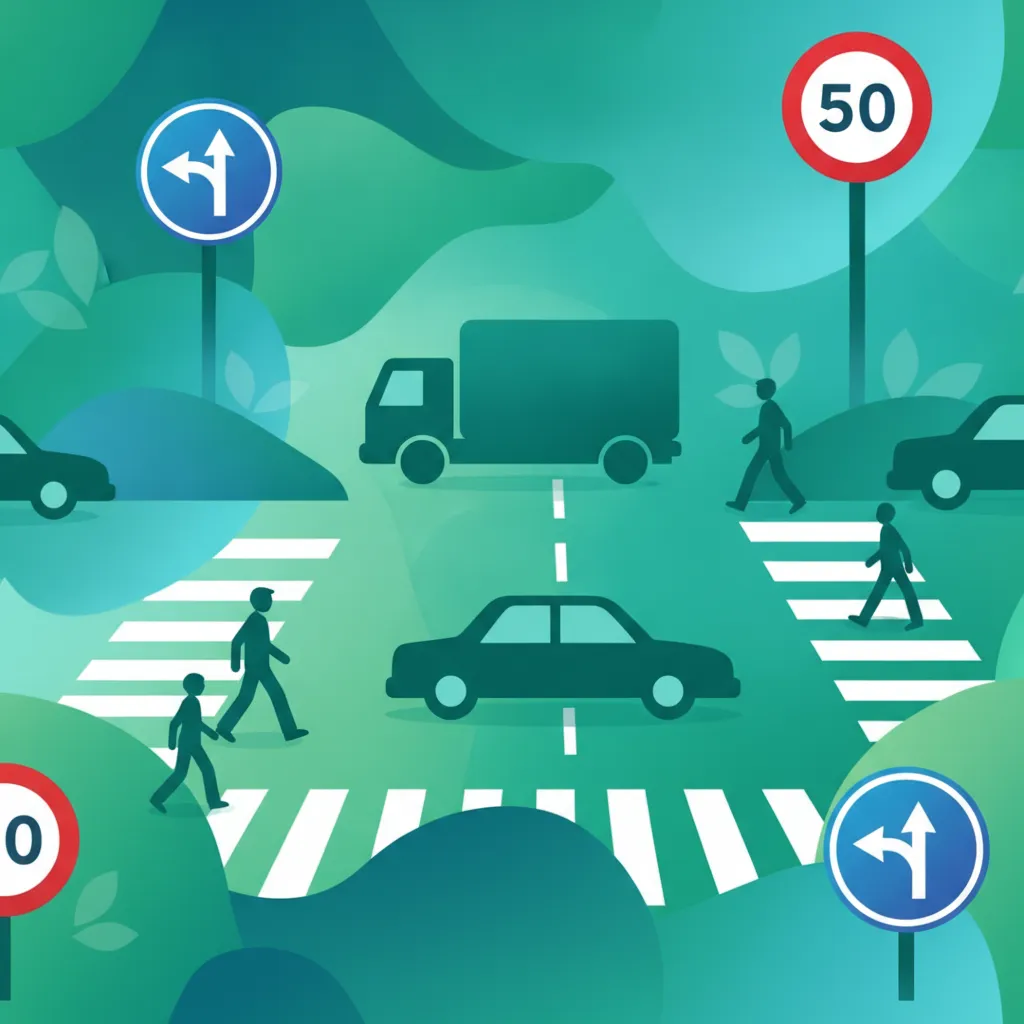
This lesson focuses on regulatory signs, which impose legal obligations and restrictions on road users. It explains the meaning of common signs such as speed limits, stop, yield, and no-entry, detailing how they apply to Category AM vehicles. Understanding these signs is fundamental for legal compliance and safe interaction with traffic, as they dictate required actions and prohibitions.
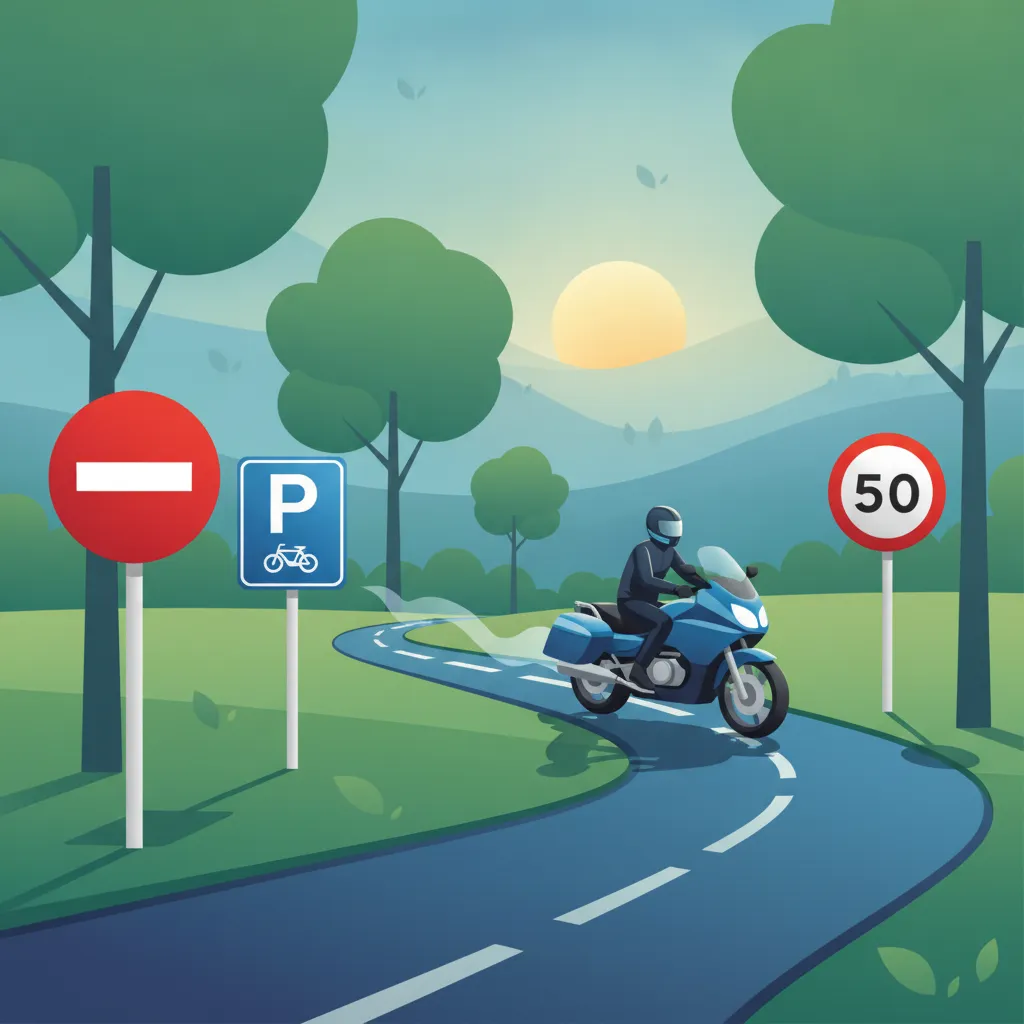
This lesson focuses on the correct identification and interpretation of regulatory and informative road signs that are particularly relevant to motorcyclists. It covers signs that dictate speed limits, prohibit overtaking, and indicate compulsory routes or turns. You will learn to recognize different sign categories based on their distinct shapes and colors as defined by Belgian traffic law.
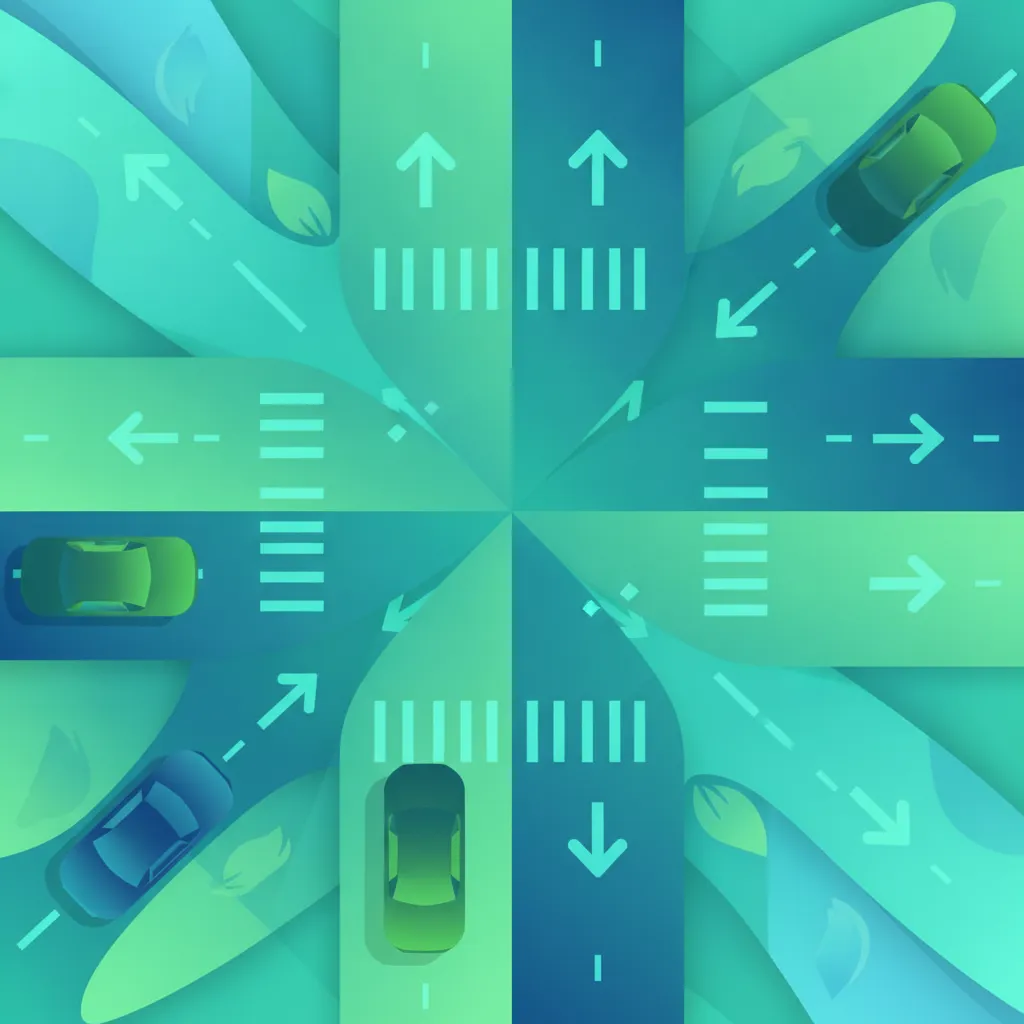
Directional symbols and arrows painted on the road surface guide drivers on permitted lane movements and turning directions. This lesson explains the interpretation of these arrows, covering rules for one-way streets, mandatory turns, and lane-specific instructions. Learners will understand how to comply with these symbols to navigate complex intersections safely and efficiently.
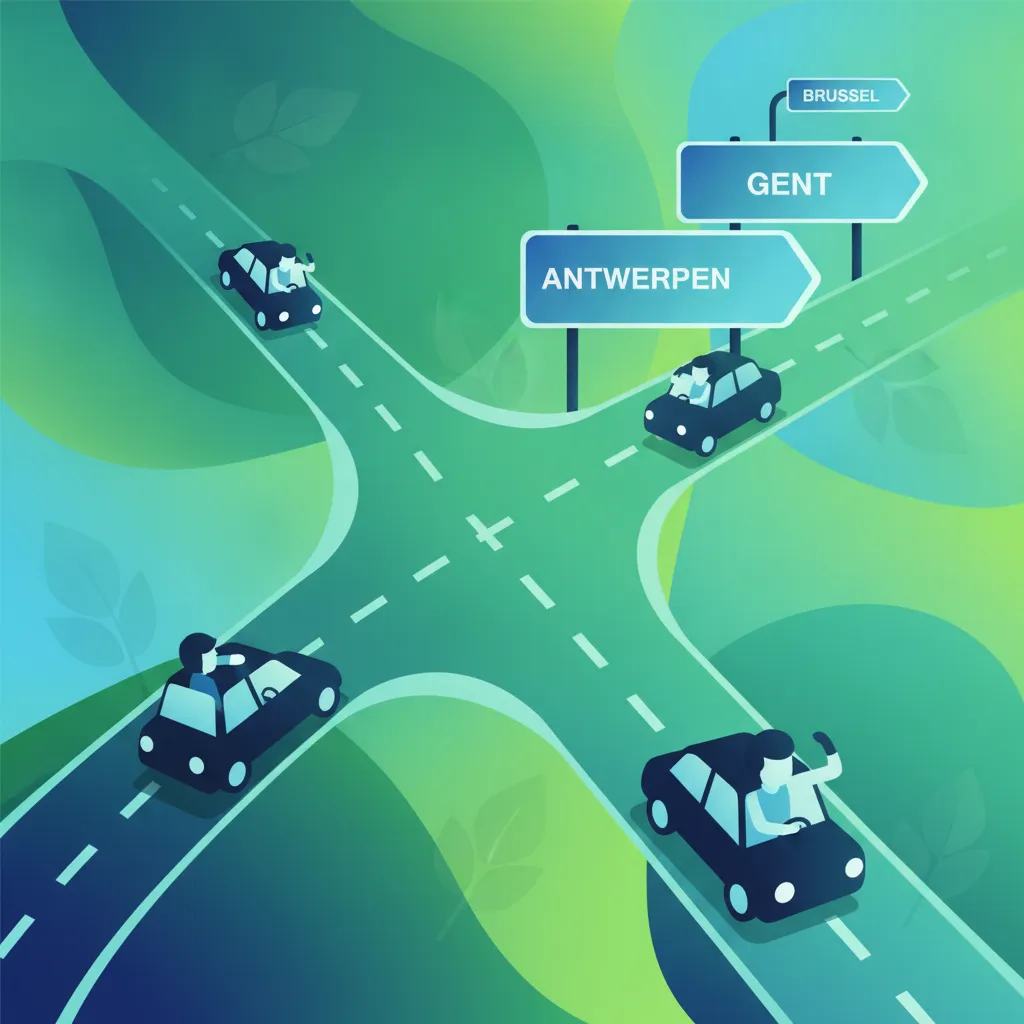
Information signs provide drivers with essential guidance about destinations, services, and the road layout. This lesson covers signs indicating distances, directions to towns, availability of services like fuel stations, and specific lane guidance. Learners will know how to read these signs to navigate efficiently and locate necessary facilities while driving.

This lesson details the proper use of all vehicle lights and signaling devices. It explains when to use low and high beams, fog lights, hazard lights, and turn signals to communicate effectively with other road users. Correct lighting usage improves visibility and safety, especially in adverse weather conditions and during hours of darkness.
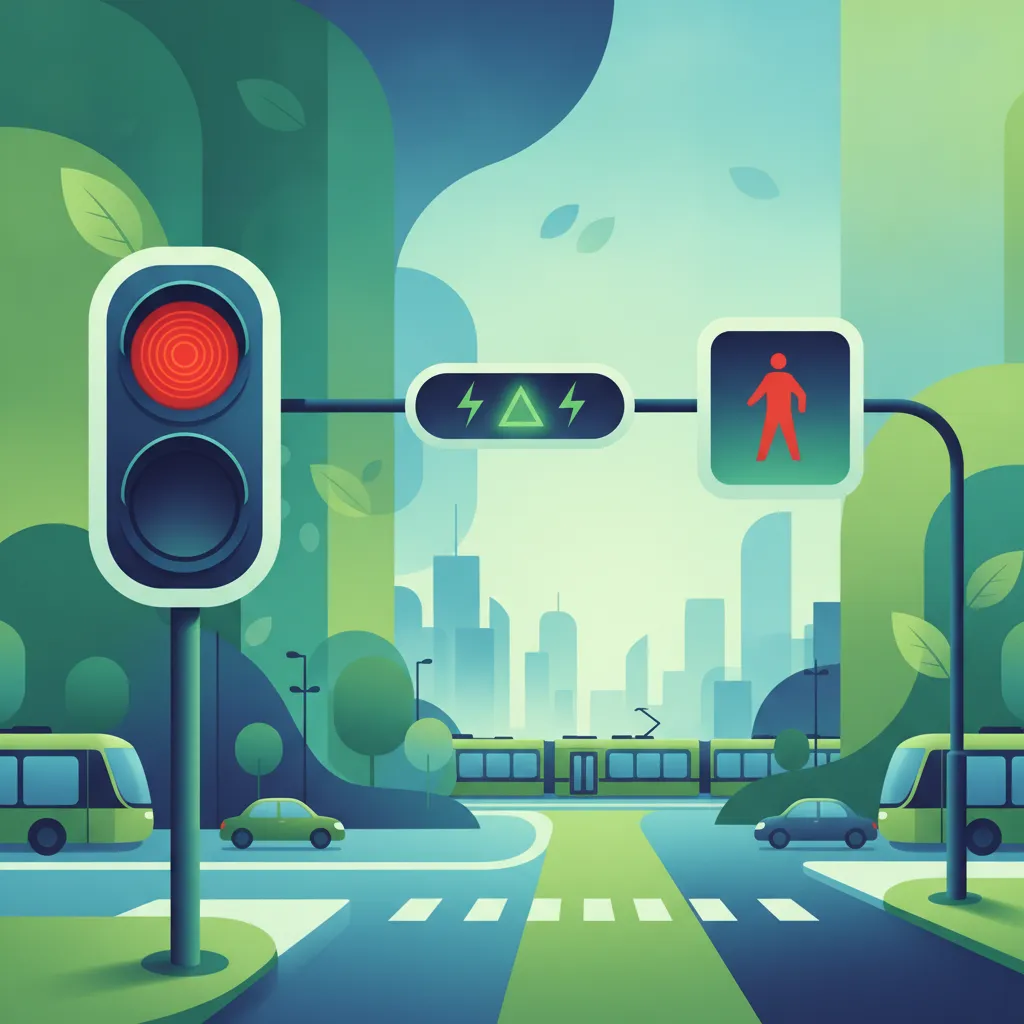
This lesson examines the operation of traffic light systems in Belgium, clarifying the meaning of red, amber, and green signals, including flashing lights and directional arrows. It details a motorcyclist's legal obligations when approaching and navigating signal-controlled intersections. The content also addresses specialized signals for pedestrians and trams that riders must recognize and respond to correctly.
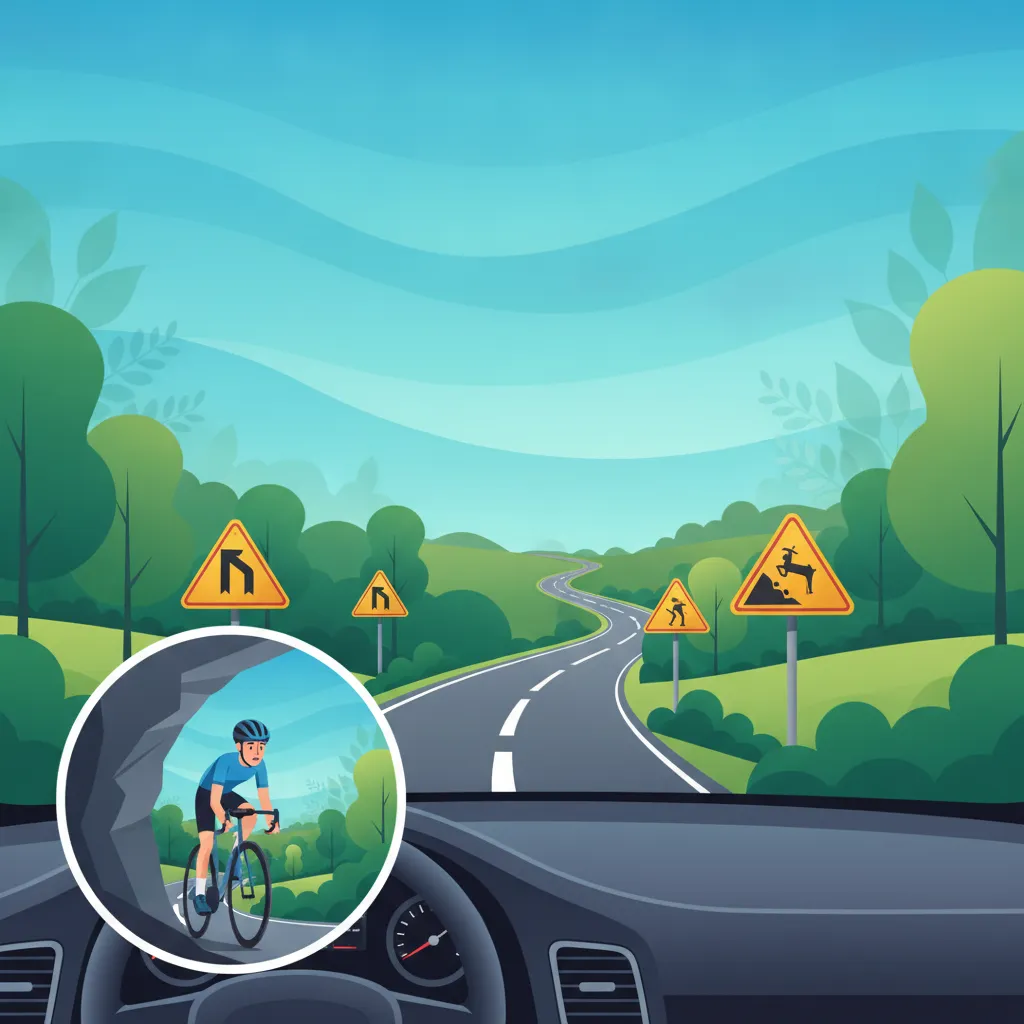
This lesson is dedicated to warning signs, which are designed to alert drivers to potential dangers ahead. It covers the interpretation of signs indicating sharp curves, steep gradients, slippery surfaces, and the presence of pedestrians or animals. By understanding these warnings, riders can anticipate potential hazards and adjust their speed and position proactively for safer travel.

This lesson introduces the various types of road surface markings and their specific legal meanings in Belgium. Topics include the rules for solid and broken lines, double lines, and special markings for pedestrian zones, bus lanes, and tramways. Understanding these markings is essential for maintaining correct lane discipline and executing safe overtaking maneuvers.

This lesson focuses on the rules governing pedestrian crossings, including marked zebra crossings and signal-controlled crossings. Special attention is given to school zones and residential areas where pedestrian activity is high. Learners will understand how to recognize and respect pedestrian priority in various crossing scenarios to ensure their safety.
Explore advanced scenarios and lesser-known applications of Belgian regulatory signs. Learn how to interpret signs in combination with road conditions, traffic flow, and specific vehicle restrictions for safer driving.
This lesson focuses on regulatory signs, which impose legal obligations and restrictions on road users. It explains the meaning of common signs such as speed limits, stop, yield, and no-entry, detailing how they apply to Category AM vehicles. Understanding these signs is fundamental for legal compliance and safe interaction with traffic, as they dictate required actions and prohibitions.
This lesson focuses on warning signs designed to alert drivers to potential hazards ahead. Topics include warnings for sharp curves, steep gradients, slippery surfaces, and zones with high pedestrian or wildlife activity. Learners will understand how to correctly interpret these signs and adjust their driving behavior to maintain safety on the road.
This lesson focuses on the correct identification and interpretation of regulatory and informative road signs that are particularly relevant to motorcyclists. It covers signs that dictate speed limits, prohibit overtaking, and indicate compulsory routes or turns. You will learn to recognize different sign categories based on their distinct shapes and colors as defined by Belgian traffic law.
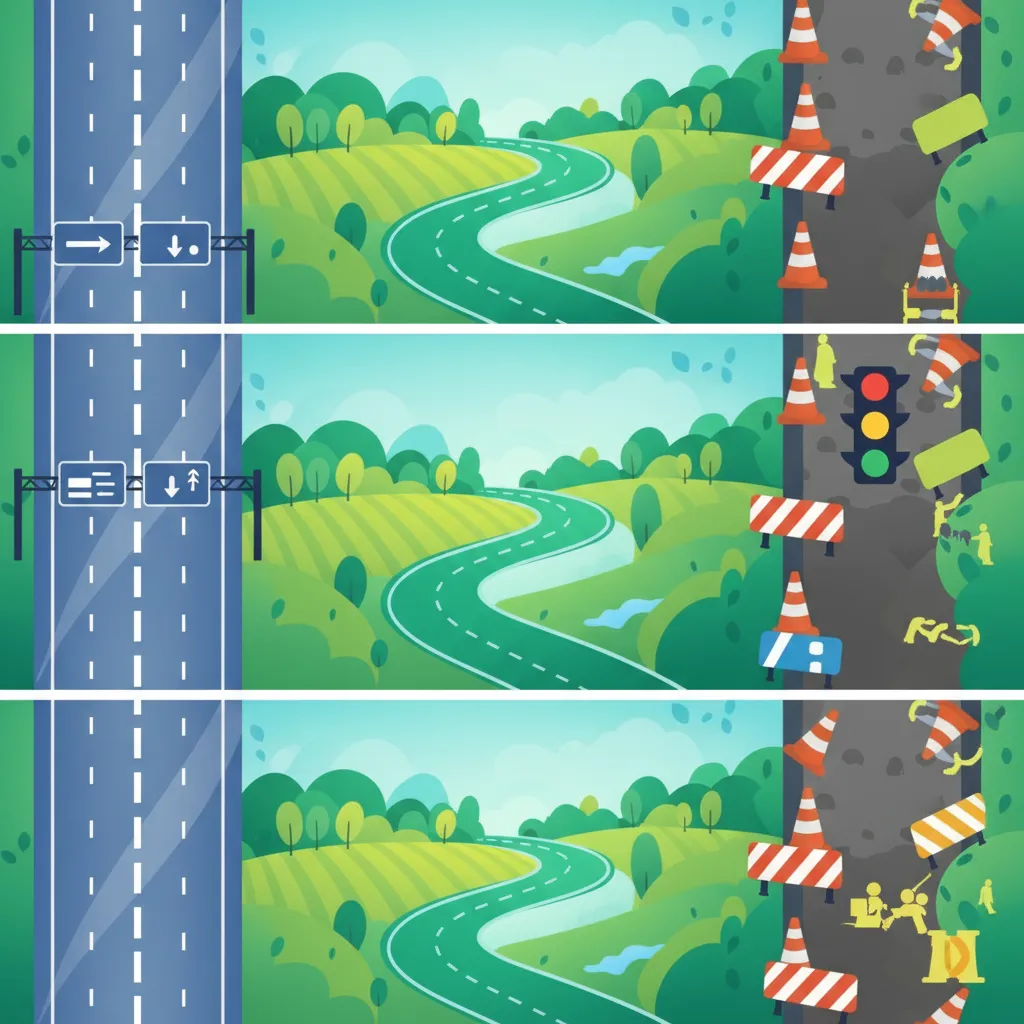
This lesson covers the specific challenges of driving on motorways, rural roads, and navigating roadworks. Learners will review lane discipline on high-speed roads and identify hazards common to rural roads, such as sharp bends and wildlife. It also explains the importance of adjusting speed and following temporary signage in construction zones.
Information signs provide drivers with essential guidance about destinations, services, and the road layout. This lesson covers signs indicating distances, directions to towns, availability of services like fuel stations, and specific lane guidance. Learners will know how to read these signs to navigate efficiently and locate necessary facilities while driving.
This lesson details the proper use of all vehicle lights and signaling devices. It explains when to use low and high beams, fog lights, hazard lights, and turn signals to communicate effectively with other road users. Correct lighting usage improves visibility and safety, especially in adverse weather conditions and during hours of darkness.
Directional symbols and arrows painted on the road surface guide drivers on permitted lane movements and turning directions. This lesson explains the interpretation of these arrows, covering rules for one-way streets, mandatory turns, and lane-specific instructions. Learners will understand how to comply with these symbols to navigate complex intersections safely and efficiently.
This lesson examines the operation of traffic light systems in Belgium, clarifying the meaning of red, amber, and green signals, including flashing lights and directional arrows. It details a motorcyclist's legal obligations when approaching and navigating signal-controlled intersections. The content also addresses specialized signals for pedestrians and trams that riders must recognize and respond to correctly.
This lesson is dedicated to warning signs, which are designed to alert drivers to potential dangers ahead. It covers the interpretation of signs indicating sharp curves, steep gradients, slippery surfaces, and the presence of pedestrians or animals. By understanding these warnings, riders can anticipate potential hazards and adjust their speed and position proactively for safer travel.
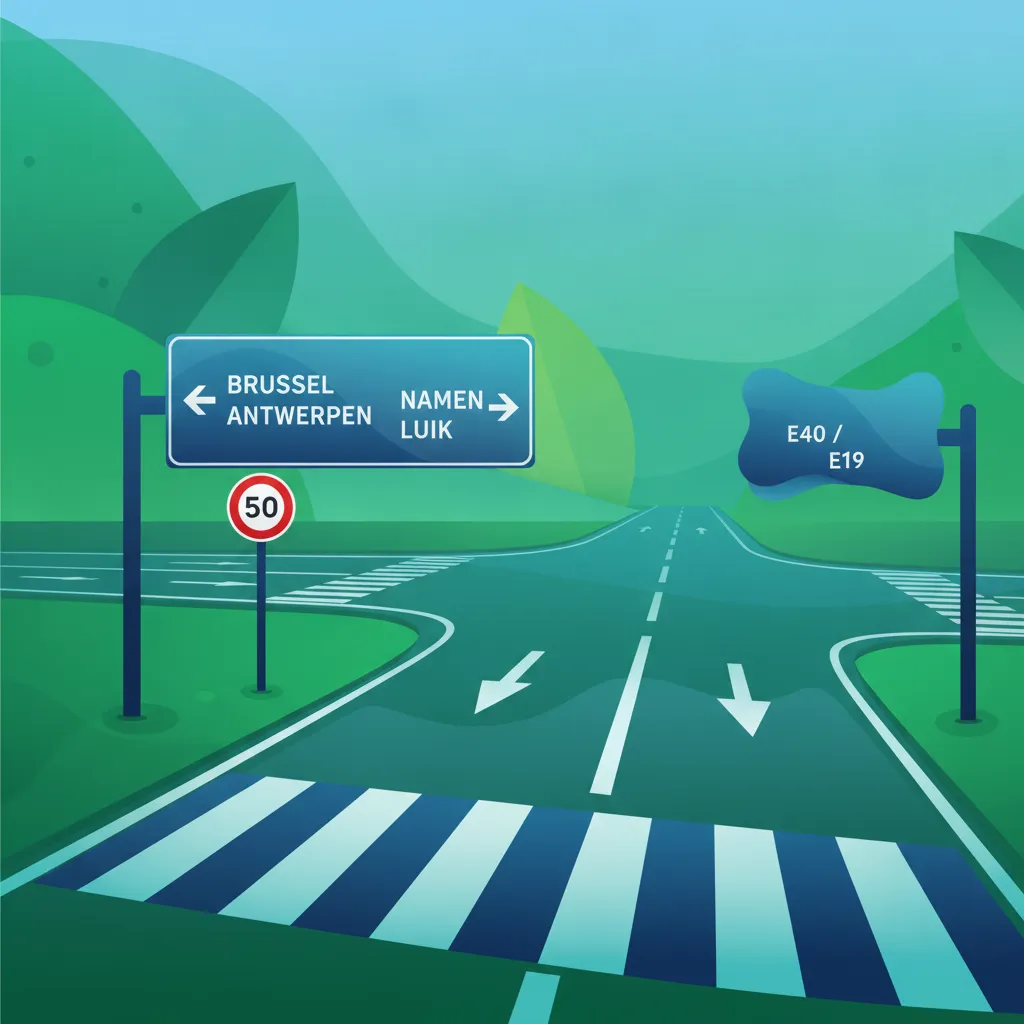
This lesson explains the role of information signs and road markings in guiding road users. It covers directional signs that help with navigation and markings that delineate lanes, pedestrian crossings, and zones for specific users like cyclists. Learners will understand how to use this information to maintain correct lane positioning and navigate their route efficiently and safely.
Find clear answers to common questions learners have about Regulatory Signs. Learn how the lesson is structured, which driving theory objectives it supports, and how it fits into the overall learning path of units and curriculum progression in Belgium. These explanations help you understand key concepts, lesson flow, and exam focused study goals.
Regulatory signs tell you what you must or must not do, such as speed limits or stop signs, and carry legal consequences if ignored. Warning signs indicate potential hazards ahead, such as a sharp curve or intersection, telling you to be cautious rather than prescribing a specific action.
Yes, in the Belgian traffic hierarchy, specific regulatory signs override general default rules. For example, if a sign indicates a speed limit, you must obey the sign even if the general rule for that road type suggests otherwise.
In Belgium, prohibition signs are generally circular with a red border and a white background, while mandatory instruction signs are typically circular with a blue background and white symbols. Remembering this colour coding is key to answering exam questions quickly.
End-of-restriction signs are typically white circular signs with a diagonal black line running across them. These indicate that the previous specific regulatory instruction, such as a speed limit or no-overtaking rule, no longer applies.
Ready to focus your Belgian driving theory revision? Utilize our powerful search tool to pinpoint exact topics, road signs, or difficulty levels. Engage with practice questions that directly address your learning needs and solidify your understanding of Belgian traffic laws for your upcoming exam.