
This lesson guides you through the essential speed limits applicable across different road types in Belgium, including built-up areas, rural roads, and motorways. Understanding these limits is fundamental to passing your Category B theory exam and ensuring you drive safely and lawfully on Belgian roads. You will learn to recognize relevant signs and understand when and why you must adapt your speed to local conditions.
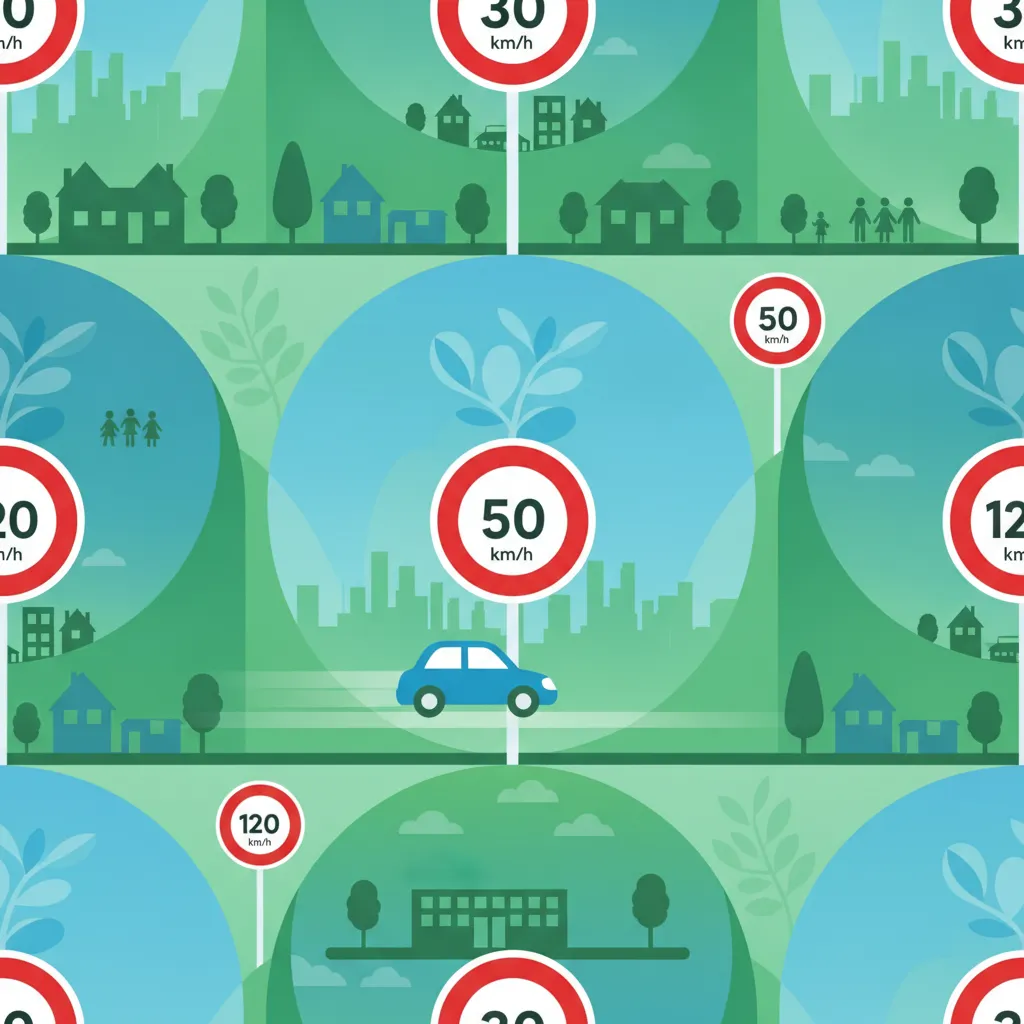
Lesson content overview
Driving safely and responsibly on Belgian roads requires a thorough understanding of speed limits and when to adjust your speed. Speed limits are not arbitrary numbers; they are carefully set to enhance road safety, manage traffic flow, reduce environmental impact, and minimize accident severity. This lesson will explore the specific speed limits applicable in various zones across Belgium, help you recognize relevant signage, and explain the crucial importance of adapting your speed to prevailing road and traffic conditions.
Adhering to speed limits is a fundamental aspect of safe driving. Speed directly influences your ability to react to hazards, the distance required to stop your vehicle, and the severity of potential collisions. Understanding these limits is not just about avoiding fines; it's about protecting yourself, your passengers, and all other road users.
Speed limits are established based on several factors, including the type of road, its design, typical traffic composition, the presence of pedestrians and cyclists, and historical accident data. In densely populated areas, lower speed limits reduce the risk of collisions involving vulnerable road users and provide drivers with more time to react to unexpected situations. On motorways, where traffic typically flows in one direction and pedestrian activity is absent, higher limits are permissible, but even there, excessive speed dramatically increases risk.
In Belgium, speed limits are legal requirements, not mere suggestions. Exceeding the posted or default speed limit is a serious traffic offense that carries significant penalties. These can range from monetary fines to driving licence suspension, and in severe cases, even court appearances. Beyond legal repercussions, speeding significantly increases your insurance premiums and, more critically, the likelihood and severity of an accident. Responsible drivers prioritize safety over speed.
Belgium employs a system of both default speed limits, which apply when no specific sign is present, and posted speed limits, which override the default. It is crucial for every driver to know both.
Even without explicit signage, certain speed limits apply by default based on the type of area or road you are driving on. These default limits are the foundation of Belgian speed regulations and must always be respected.
Always assume the default speed limit for the specific road type if no other speed limit sign is present. Ignorance of the default limit is not a valid excuse.
Speed limit signs are among the most common and critical traffic signs you will encounter. They are typically circular with a red border, indicating a prohibition, and display the maximum allowed speed in black numbers on a white background, followed by "km/h".
Understanding these signs is paramount, as they often override the default limits for specific stretches of road or zones.
Just as important as knowing where a speed limit begins is recognizing where it ends. An 'End of Maximum Speed Limit' sign indicates that the previously imposed specific speed limit is no longer in effect.
When you pass this sign, you revert to the default speed limit for the type of road you are on, unless a new speed limit sign is immediately encountered. There are also signs indicating the "End of all local prohibitions" (C45), which would similarly signal a return to default limits.
Speed limits vary significantly depending on the environment. Belgian traffic law categorizes roads into several types, each with its own standard speed regulations designed for the safety and efficiency of that particular zone.
In densely populated areas, where residential homes, shops, and other establishments are common, the risk to pedestrians, cyclists, and playing children is much higher. Therefore, speed limits are significantly lower.
In Belgium, built-up areas, known as 'agglomeraties', have a specific default speed limit designed to protect vulnerable road users. This limit applies from the entry sign for a built-up area and typically remains in effect until the exit sign.
It is imperative to maintain a heightened sense of awareness in these zones and be prepared for sudden stops or unexpected movements from pedestrians or parked vehicles.
To further enhance safety in specific urban environments, even lower speed limits can be imposed.
F4a): These are areas specifically designed for residents, often featuring shared spaces where pedestrians and vehicles mix. The speed limit in a residential zone is generally 20 km/h, and vehicles are expected to yield to pedestrians. Special rules regarding parking and traffic flow also apply.When entering a residential zone, be extra vigilant for children and other vulnerable road users who might assume vehicles will proceed at walking pace.
Outside built-up areas, the default speed limits are generally higher than in urban environments, reflecting the different road characteristics and lower pedestrian activity. However, even on rural roads, care must be taken due to winding paths, less predictable hazards (like farm vehicles or wildlife), and potentially poorer road surfaces.
The default speed limit on rural roads (outside built-up areas) in Belgium depends on the specific region (Flanders, Wallonia, or Brussels Capital Region) and whether the road has one or more lanes in your direction.
Always observe any posted signs, as these can override the default limits, for example, reducing speed around dangerous bends or intersections.
Certain non-motorway roads, often dual carriageways, are designated as expressways. While they resemble motorways, they are not always subject to the same strict regulations and may have specific speed limits, often higher than typical rural roads but lower than motorways. Always look for explicit signage.
Motorways are designed for high-speed traffic flow with minimal interruptions. They are characterized by multiple lanes, controlled access, and the absence of pedestrians or cyclists.
For passenger vehicles, Belgian motorways generally have the highest speed limits.
It is crucial to remember that this is a maximum limit. You are still required to adjust your speed downwards if conditions (weather, traffic, visibility) demand it.
While there's a maximum speed, there's also a minimum. Vehicles must be capable of reaching a speed of at least 70 km/h to be allowed on motorways. Driving significantly slower than the flow of traffic without a valid reason can be dangerous and is generally prohibited.
Areas around schools, playgrounds, and other places where children congregate are subject to special, often temporary, speed restrictions to ensure the safety of the most vulnerable road users.
Near schools, speed limits are typically reduced to 30 km/h, sometimes even 20 km/h, particularly during school pick-up and drop-off times. These zones are often clearly marked with additional signage, sometimes incorporating flashing lights or electronic displays.
Some school zone speed limits are only active during specific hours (e.g., 7 AM - 9 AM and 3 PM - 5 PM on weekdays). Pay close attention to any supplementary signs that specify the times or conditions under which the reduced speed limit applies. Ignoring these can have serious consequences.
Modern traffic management systems increasingly use variable speed limits to adapt to real-time conditions. These limits are not static and require drivers to pay continuous attention.
Variable speed limits are displayed on electronic signs or gantries above the road. These signs can change the posted limit based on factors like traffic congestion, weather conditions (rain, fog, ice), or roadworks ahead.
When you encounter a variable speed limit sign, you must immediately adjust your speed to the displayed limit. These dynamic limits are legally binding and are often enforced through advanced camera systems. They are put in place to maintain safety and optimize traffic flow during challenging periods.
Always obey the speed limit displayed on variable message signs. These limits are active and enforceable, even if the static default limit for the road is higher.
A fundamental principle of safe driving is that you must always be able to stop your vehicle within the distance you can see to be clear. This means that simply adhering to the posted speed limit is often not enough. You must actively reduce your speed below the maximum limit when conditions are less than ideal.
Numerous factors can necessitate a reduction in speed, even if you are below the maximum allowed limit.
Uneven, damaged, gravel, or oil-slicked road surfaces demand lower speeds. Potholes, loose chippings, or standing water can cause loss of control or damage to your vehicle if approached too quickly.
Heavy traffic or congestion necessitates lower speeds to maintain a safe following distance and allow for smooth braking. When approaching roadworks, accidents, or areas with increased pedestrian activity, reduce your speed proactively.
Your vehicle's condition (e.g., worn tires, faulty brakes) can impair its ability to handle high speeds safely. Likewise, a heavily loaded vehicle or one towing a trailer will require a longer stopping distance and handle differently, mandating a reduction in speed.
Understanding the rules is one thing; adhering to them is another. Many accidents and legal infractions stem from drivers misjudging their speed or deliberately exceeding limits.
Penalties for speeding in Belgium are tiered, increasing with the severity of the overspeeding and the zone in which it occurs (e.g., speeding in a 30 km/h zone is penalized more harshly than the same excess speed on a motorway). Fines are significant, and repeated offenses or very high speeds can lead to mandatory driving licence suspension, re-examination, or even imprisonment.
The relationship between speed, reaction time, and stopping distance is critical to understanding why speed limits are essential for safety.
Stopping distance is composed of two parts:
Combined, a higher initial speed drastically increases the total stopping distance, leaving less room for error and making it harder to avoid collisions.
Higher speeds give you less time to react to unexpected situations. Even a fraction of a second more reaction time, afforded by lower speeds, can be the difference between avoiding an accident and being involved in one. Furthermore, the kinetic energy involved in a collision increases with the square of the speed. This means a small increase in speed can lead to a disproportionately large increase in the force of impact, directly affecting the severity of injuries and damage.
Understanding and adhering to speed limits in different zones is a cornerstone of responsible driving in Belgium. Always be aware of the default speed limits for the road you are on, and vigilantly observe all posted speed limit signs, including variable and temporary ones. More importantly, always adjust your speed proactively downwards when weather, road conditions, visibility, or traffic density demand it, regardless of the posted maximum. By doing so, you contribute to safer roads for everyone, avoid legal penalties, and demonstrate responsible conduct behind the wheel.
Belgian speed limits follow a clear hierarchy from 20 km/h in residential zones to higher limits on motorways. Built-up areas default to 50 km/h, with Zone 30 and residential zones providing additional protection in high-risk areas where vulnerable road users are present. Speed limits are maximum limits only—conditions like rain, fog, or heavy traffic always require further speed reduction to maintain safety. Variable speed limits on motorways are dynamically adjusted and legally binding, requiring immediate compliance. Understanding the difference between posted and default limits, and knowing how stopping distance increases with speed, is essential for both safe driving and exam success.
A short set of high-value points that capture the most important learning from this lesson.
Built-up areas in Belgium (agglomeraties) have a default speed limit of 50 km/h, which applies from the entry sign until the exit sign.
Zone 30 and residential zones (F4a) provide additional protection with limits of 30 km/h and 20 km/h respectively, where pedestrians have priority.
Variable speed limits displayed on electronic signs are legally binding and must be obeyed immediately—they override static default limits.
Speed limits are maximum limits only; you must reduce speed below the posted limit when weather, visibility, or traffic conditions require it.
Stopping distance increases exponentially with speed—doubling your speed quadruples your braking distance.
Explore all units and lessons included in this driving theory course.
Agglomeratie is the Belgian term for built-up area with default 50 km/h limit when no sign is present.
Variable speed limits on electronic gantries are mandatory and enforceable regardless of the static road limit.
Driving below 70 km/h on motorways without valid reason is also prohibited—there's a minimum as well as maximum.
School zone restrictions may be time-limited; always check supplementary signs for hours of application.
When passing an 'End of Maximum Speed Limit' sign (C44), you revert to the default limit for that road type.
Assuming default limits don't apply when no sign is visible—built-up area rules are always in effect.
Ignoring variable speed limit changes on electronic signs and continuing at the static posted limit.
Failing to reduce speed in poor weather conditions despite being below the posted speed limit.
Not recognizing that school zone restrictions may be time-limited and ignoring supplementary time signs.
Confusing Zone 30 with residential zones—each has distinct signage and speed requirements.
Lesson content overview
A short set of high-value points that capture the most important learning from this lesson.
Built-up areas in Belgium (agglomeraties) have a default speed limit of 50 km/h, which applies from the entry sign until the exit sign.
Zone 30 and residential zones (F4a) provide additional protection with limits of 30 km/h and 20 km/h respectively, where pedestrians have priority.
Variable speed limits displayed on electronic signs are legally binding and must be obeyed immediately—they override static default limits.
Speed limits are maximum limits only; you must reduce speed below the posted limit when weather, visibility, or traffic conditions require it.
Stopping distance increases exponentially with speed—doubling your speed quadruples your braking distance.
Explore all units and lessons included in this driving theory course.
Agglomeratie is the Belgian term for built-up area with default 50 km/h limit when no sign is present.
Variable speed limits on electronic gantries are mandatory and enforceable regardless of the static road limit.
Driving below 70 km/h on motorways without valid reason is also prohibited—there's a minimum as well as maximum.
School zone restrictions may be time-limited; always check supplementary signs for hours of application.
When passing an 'End of Maximum Speed Limit' sign (C44), you revert to the default limit for that road type.
Assuming default limits don't apply when no sign is visible—built-up area rules are always in effect.
Ignoring variable speed limit changes on electronic signs and continuing at the static posted limit.
Failing to reduce speed in poor weather conditions despite being below the posted speed limit.
Not recognizing that school zone restrictions may be time-limited and ignoring supplementary time signs.
Confusing Zone 30 with residential zones—each has distinct signage and speed requirements.
Explore search topics learners often look for when studying Speed Limits in Different Zones. These topics reflect common questions about road rules, driving situations, safety guidance, and lesson level theory preparation for learners in Belgium.
Browse additional driving theory lessons that cover connected traffic rules, road signs, and common driving situations related to this topic. Improve your understanding of how different rules interact across everyday traffic scenarios.
Understand the default and posted speed limits in Belgium for urban, rural, and motorway driving. Learn about special zones like residential areas and Zone 30, and how to interpret speed limit signs correctly for safe driving.
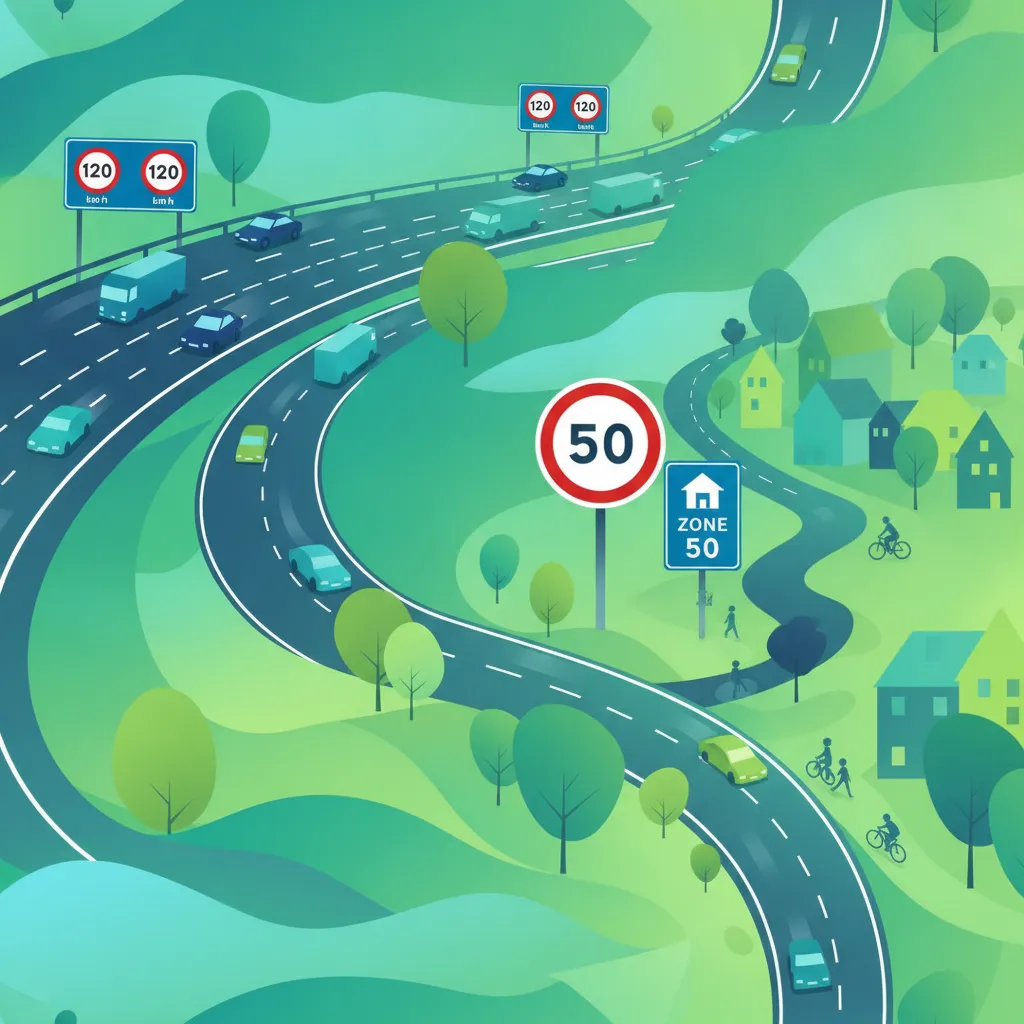
This lesson details the various legal speed limits applicable in Belgium, including those for urban, residential, and school zones. It explains the underlying safety rationale for these limits, linking speed to the severity of accidents and the time available to react to hazards. Learners will understand the difference between the maximum legal speed and a safe, appropriate speed for the prevailing conditions.
This lesson covers the principles of effective speed management, which involves more than just adhering to the posted limit. It explains how to choose a speed that is appropriate for the prevailing traffic, road, and weather conditions. The content details the legal speed limits for different types of roads in Belgium and the severe consequences of speeding.
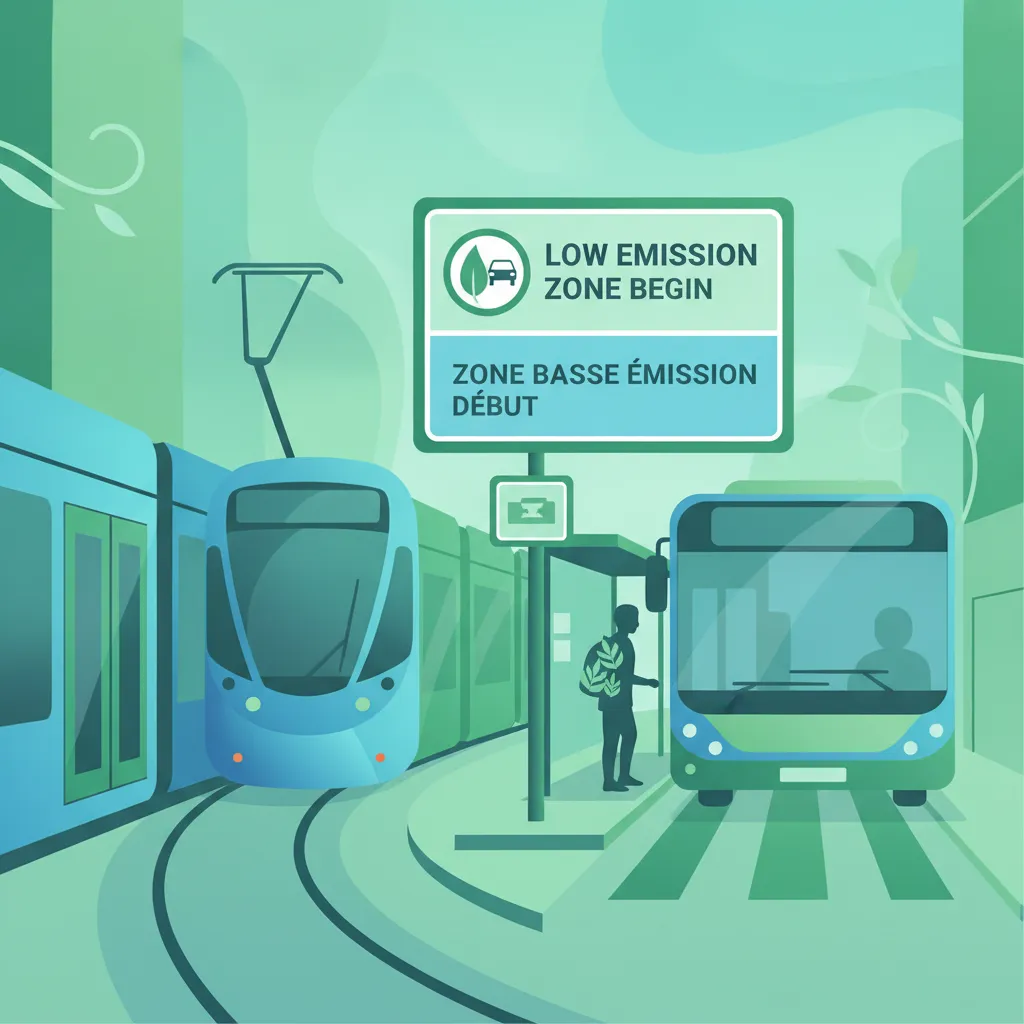
This lesson addresses unique traffic environments and special zones commonly found in Belgian urban areas. It clarifies the specific regulations concerning tramways, including where trams have absolute priority, and the conditions under which motorcycles may use bus lanes. The lesson also explains how to identify and comply with restrictions in low-emission zones.
This lesson covers the specific challenges of driving on motorways, rural roads, and navigating roadworks. Learners will review lane discipline on high-speed roads and identify hazards common to rural roads, such as sharp bends and wildlife. It also explains the importance of adjusting speed and following temporary signage in construction zones.

This lesson focuses on the rules governing pedestrian crossings, including marked zebra crossings and signal-controlled crossings. Special attention is given to school zones and residential areas where pedestrian activity is high. Learners will understand how to recognize and respect pedestrian priority in various crossing scenarios to ensure their safety.
The focus of this lesson is on maintaining proper lane discipline, especially on motorways and other high-speed roads. Learners will explore the rules for changing lanes, overtaking, and positioning in the correct lane based on speed and traffic flow. Emphasis is placed on safe merging techniques and adherence to all lane markings for fluid traffic movement.
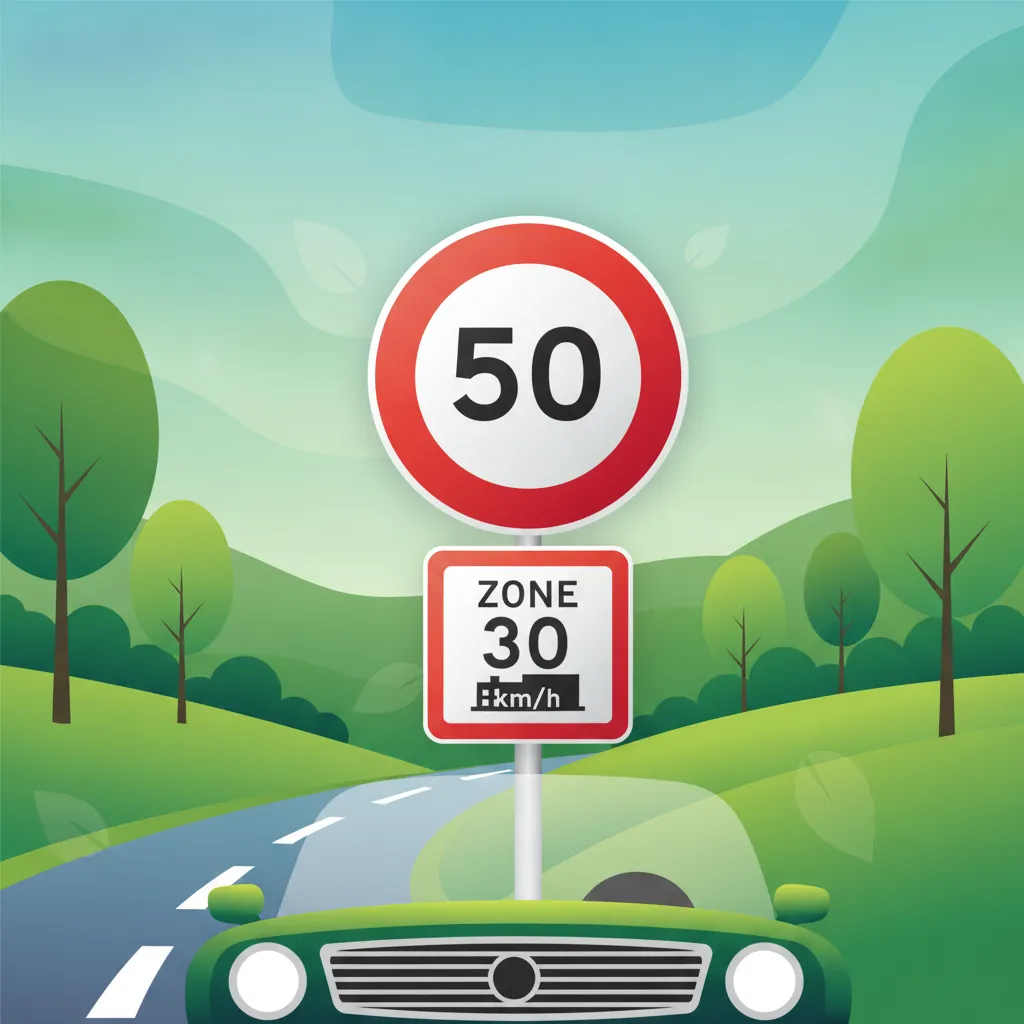
In this lesson, learners explore the full range of regulatory signs used throughout Belgium to enforce traffic laws. It covers signs that prescribe actions, such as stop and give way, as well as those that restrict actions, like speed limits and overtaking bans. Understanding these signs enables drivers to comply accurately with enforced traffic regulations.
This lesson focuses on the legal duties and responsibilities that an AM vehicle operator must uphold on Belgian roads. It covers critical rules such as adhering to speed limits, correctly applying right-of-way principles, and following regulations for overtaking other vehicles. The lesson also explains the system of fines and penalty points for traffic violations, emphasizing the legal consequences of non-compliance to foster responsible driving habits.
Learn why simply following the maximum speed limit isn't enough. Discover how weather, visibility, road surface, and traffic density impact safe driving speeds in Belgium and when to reduce your speed proactively.
This lesson focuses on driving safely in adverse weather like rain, fog, and low sun glare, which affects road friction and visibility. It provides guidelines on speed adaptation, maintaining a safe following distance, and the proper use of vehicle equipment like lights and wipers. Learners will understand how to reduce risks like hydroplaning and skidding.
This lesson covers the specific challenges of driving on motorways, rural roads, and navigating roadworks. Learners will review lane discipline on high-speed roads and identify hazards common to rural roads, such as sharp bends and wildlife. It also explains the importance of adjusting speed and following temporary signage in construction zones.
This lesson covers the principles of effective speed management, which involves more than just adhering to the posted limit. It explains how to choose a speed that is appropriate for the prevailing traffic, road, and weather conditions. The content details the legal speed limits for different types of roads in Belgium and the severe consequences of speeding.
This lesson details the various legal speed limits applicable in Belgium, including those for urban, residential, and school zones. It explains the underlying safety rationale for these limits, linking speed to the severity of accidents and the time available to react to hazards. Learners will understand the difference between the maximum legal speed and a safe, appropriate speed for the prevailing conditions.

This lesson teaches riders how to modify their technique and preparation in response to various weather conditions beyond just rain. It covers how to handle strong crosswinds, the effects of extreme heat on both the rider and the motorcycle, and the precautions for riding in cold temperatures. The focus is on proactive adaptation to ensure safety and comfort regardless of the weather.

This lesson provides crucial advice for riding in rainy conditions, a frequent occurrence in Belgium. It explains how water on the road surface dramatically reduces tire grip, extends stopping distances, and creates a risk of hydroplaning. Riders will learn how to adjust their speed, increase following distances, and manage reduced visibility from rain and road spray to maintain safety.

This lesson details the specific precautions and techniques required for riding in rain and fog. It explains how water on the road affects tyre grip and braking distances, and how to avoid aquaplaning. You will learn the correct use of lights to be seen in low visibility and how to adjust your speed and following distance accordingly.
Find clear answers to common questions learners have about Speed Limits in Different Zones. Learn how the lesson is structured, which driving theory objectives it supports, and how it fits into the overall learning path of units and curriculum progression in Belgium. These explanations help you understand key concepts, lesson flow, and exam focused study goals.
In Belgium, the standard speed limit in built-up areas is 50 km/h, unless specific signage indicates otherwise. Always watch for signs indicating a different limit or the start of a residential zone (woonerf), where the limit is much lower.
No, the speed limit is the maximum allowed speed under ideal conditions. You are legally required to adapt your speed to current road, weather, and traffic conditions, such as rain, fog, or heavy traffic, even if it means driving well below the limit.
Generally yes, but look out for electronic gantries or variable speed limit signs. These can lower the limit due to congestion or accidents, and these limits are mandatory for all drivers.
In a recognized residential zone (woonerf), the maximum speed limit is 20 km/h. Pedestrians have priority and may use the full width of the road, so you must drive with extreme caution.
Ready to focus your Belgian driving theory revision? Utilize our powerful search tool to pinpoint exact topics, road signs, or difficulty levels. Engage with practice questions that directly address your learning needs and solidify your understanding of Belgian traffic laws for your upcoming exam.