
This lesson provides a comprehensive guide to maintaining proper lane discipline on all road types, including motorways. You will learn the correct positioning for your vehicle, how to execute safe lane changes, and the fundamental rules governing overtaking and lane usage in Belgium. Mastering these skills is essential for both your theory exam and becoming a confident, safe driver on the road.
Lesson content overview
Mastering lane discipline is fundamental for safe and efficient driving, especially on Belgium's diverse road network, from urban streets to high-speed motorways. This lesson provides a comprehensive guide to understanding and applying the rules that govern lane usage, ensuring you contribute to a smooth traffic flow and minimize accident risks while navigating Belgian roads.
Effective lane discipline involves more than just staying within the lines; it's about making conscious decisions about your position on the road based on speed, traffic conditions, and legal requirements. For aspiring drivers seeking their Belgian Category B driving licence, a thorough grasp of these principles is not just advisable but essential for passing the theoretical exam and, more importantly, for becoming a responsible driver.
Proper lane usage is crucial for several reasons:
Several core principles underpin effective lane discipline on Belgian roads:
Road markings are visual cues painted on the road surface that guide drivers, define lane boundaries, and indicate specific rules for lane usage. Understanding these markings is paramount for safe lane discipline.
A solid white line on the road surface serves as a strict boundary.
A broken white line signifies that drivers may cross it, provided it is safe and legal to do so.
When two solid white lines run parallel to each other, it indicates an absolute prohibition on crossing either line. This applies to both directions of travel if the lines are in the centre of the road.
Beyond basic lane separation, road markings can designate specific lane uses:
Motorways (autosnelwegen/autoroutes) and other high-speed roads demand particularly strict lane discipline due to the higher speeds and increased potential for severe accidents.
On multi-lane motorways and high-speed roads in Belgium, the fundamental principle is to keep to the rightmost available lane unless you are actively overtaking another vehicle.
The lanes to the left of the rightmost lane are primarily designated for overtaking.
"Lane hogging" refers to the practice of driving in a middle or leftmost lane on a multi-lane road when the rightmost lane is clear. This is a common violation and can be frustrating and dangerous.
Overtaking is a manoeuvre that requires careful planning, good judgment, and strict adherence to regulations.
Overtaking is permitted only when:
Assess the Situation: Check your mirrors (rear-view and side mirrors) and blind spots. Ensure the lane you intend to move into is clear and that there are no vehicles rapidly approaching from behind.
Signal Your Intention: Use your indicator to signal your intention to change lanes well in advance.
Increase Speed: Accelerate smoothly to safely pass the vehicle you intend to overtake. Ensure you do not exceed the speed limit.
Execute the Lane Change: Move into the adjacent lane smoothly, maintaining a safe distance from the vehicle you are passing.
Pass the Vehicle: Continue accelerating until you have safely passed the other vehicle and can see it clearly in your rear-view mirror.
Signal to Return: Once clear, signal your intention to return to the rightmost lane.
Return to Lane: Smoothly move back into the rightmost lane, ensuring you do not cut off the overtaken vehicle.
Always maintain a safe following distance from the vehicle you are about to overtake, and ensure you have sufficient power to complete the manoeuvre efficiently. Never overtake if you have any doubt about its safety.
Beyond lane markings, overtaking is generally forbidden in the following situations:
Merging is the process of safely joining a stream of traffic, most commonly when entering a motorway from an acceleration lane. This manoeuvre requires careful attention to speed and positioning.
Acceleration lanes are specifically designed to allow vehicles to build up speed to match the flow of traffic on the main carriageway.
The most critical aspect of merging is to match the speed of the traffic already on the motorway.
While you are accelerating to merge, remember that vehicles already on the main carriageway have priority.
Stopping at the end of an acceleration lane is extremely dangerous and should be avoided at all costs. If no gap is available, continue along the hard shoulder (emergency lane) for a short distance if necessary and safe, while still searching for a merging opportunity.
Belgian traffic law (Code de la route/Wegcode) provides clear regulations regarding lane discipline, aiming to ensure safety and fluidity on the roads.
Violations of lane discipline rules in Belgium can lead to various penalties, depending on the severity and specific infraction. These can range from minor fines for not keeping right to more substantial fines and even driving licence points or temporary suspension for dangerous overtaking or illegal merging.
Understanding common errors is as important as knowing the rules, as it helps drivers proactively avoid dangerous situations.
As mentioned, "lane hogging" by driving slowly in a middle or leftmost lane when the right lane is clear is a significant disruption to traffic flow and a common cause of frustration and danger on Belgian motorways. It can lead to tailgating and risky overtaking manoeuvres by other drivers.
Lane discipline is not a static concept; it must be adapted to changing environmental and traffic conditions to ensure continued safety.
Lane discipline is a cornerstone of safe, efficient, and lawful driving on Belgian roads and motorways. By consistently applying the principles discussed – understanding road markings, adhering to the "keep right" rule, executing safe overtaking and merging manoeuvres, and adapting to changing conditions – you will significantly reduce risks for yourself and others. Developing impeccable lane discipline is a hallmark of a responsible driver and will serve you well beyond the theoretical exam, contributing to safer and smoother journeys across Belgium.
This lesson covers the essential principles of lane discipline on Belgian roads and motorways, including the right-hand rule requiring drivers to keep right unless overtaking. Learners must understand road markings: solid white lines prohibit crossing, broken lines permit it when safe, and double solid lines impose absolute prohibition. Safe overtaking requires proper mirror checks, blind spot verification, early signaling, and returning to the right lane after passing. Motorway-specific rules prohibit lane hogging and overtaking on the right in normal conditions, while merging requires using acceleration lanes fully to match traffic speed. Belgian traffic law enforces these rules with penalties for violations, making this knowledge essential for both the theory exam and safe driving practice.
A short set of high-value points that capture the most important learning from this lesson.
The right-hand rule requires drivers to keep to the rightmost lane unless actively overtaking, with left lanes reserved for faster traffic
Solid white lines prohibit crossing entirely, broken white lines permit lane changes when safe, and double solid lines mean absolute prohibition
Safe overtaking requires mirror checks, blind spot head-checks, early signaling, and returning to the right lane after passing
Overtaking on the right is generally prohibited on Belgian motorways except in specific slow-moving traffic situations
Lane hogging (driving in overtaking lanes unnecessarily) is a traffic violation that disrupts traffic flow and creates hazards
Explore all units and lessons included in this driving theory course.
Road markings are visual cues for lane boundaries and rules: solid = no crossing, broken = crossing permitted if safe, double solid = absolute no crossing
On multi-lane motorways, return to the rightmost lane as soon as it is safe after completing any overtaking manoeuvre
When merging onto motorways, use the full acceleration lane to match motorway traffic speed before joining
Never stop at the end of an acceleration lane as this creates dangerous speed differentials with fast-moving traffic
Adverse weather reduces visibility of lane markings and increases stopping distances, requiring extra caution during lane changes
Failing to check blind spots before changing lanes, which can hide vehicles not visible in mirrors
Driving too slowly in overtaking lanes when the right lane is clear, forcing others to overtake on the right
Merging onto motorways at significantly lower speeds than traffic flow, creating dangerous speed differentials
Not signaling early enough or at all before changing lanes, depriving other drivers of critical information
Crossing solid white lines at intersections or junctions when lane markings prohibit such movements
Lesson content overview
A short set of high-value points that capture the most important learning from this lesson.
The right-hand rule requires drivers to keep to the rightmost lane unless actively overtaking, with left lanes reserved for faster traffic
Solid white lines prohibit crossing entirely, broken white lines permit lane changes when safe, and double solid lines mean absolute prohibition
Safe overtaking requires mirror checks, blind spot head-checks, early signaling, and returning to the right lane after passing
Overtaking on the right is generally prohibited on Belgian motorways except in specific slow-moving traffic situations
Lane hogging (driving in overtaking lanes unnecessarily) is a traffic violation that disrupts traffic flow and creates hazards
Explore all units and lessons included in this driving theory course.
Road markings are visual cues for lane boundaries and rules: solid = no crossing, broken = crossing permitted if safe, double solid = absolute no crossing
On multi-lane motorways, return to the rightmost lane as soon as it is safe after completing any overtaking manoeuvre
When merging onto motorways, use the full acceleration lane to match motorway traffic speed before joining
Never stop at the end of an acceleration lane as this creates dangerous speed differentials with fast-moving traffic
Adverse weather reduces visibility of lane markings and increases stopping distances, requiring extra caution during lane changes
Failing to check blind spots before changing lanes, which can hide vehicles not visible in mirrors
Driving too slowly in overtaking lanes when the right lane is clear, forcing others to overtake on the right
Merging onto motorways at significantly lower speeds than traffic flow, creating dangerous speed differentials
Not signaling early enough or at all before changing lanes, depriving other drivers of critical information
Crossing solid white lines at intersections or junctions when lane markings prohibit such movements
Explore search topics learners often look for when studying Lane Discipline on Roads and Motorways. These topics reflect common questions about road rules, driving situations, safety guidance, and lesson level theory preparation for learners in Belgium.
Browse additional driving theory lessons that cover connected traffic rules, road signs, and common driving situations related to this topic. Improve your understanding of how different rules interact across everyday traffic scenarios.
Explore advanced principles of lane discipline specific to Belgian motorways. Learn detailed rules for overtaking, lane changes, and safe merging in high-speed traffic conditions, crucial for your driving theory.

Overtaking safely is a critical driving skill. This lesson explains where and how overtaking is permitted in Belgium, the importance of correct signaling, and maintaining a sufficient speed differential. Learners will understand the rules for passing on motorways and single-carriageway roads, and how to identify zones where overtaking is prohibited.
Merging onto motorways requires understanding the dynamics of fast-moving traffic. This lesson covers the correct use of entrance ramps, acceleration lanes, and the technique of matching speed with the flow of traffic. Learners will practice safe merging procedures, including selecting an appropriate gap and yielding to mainline traffic when necessary.

This lesson provides a comprehensive guide to motorway riding, starting with the procedure for safely merging into high-speed traffic from a slip road. It details the importance of strict lane discipline, including the rules for overtaking and the proper use of lanes. You will also learn the correct technique for planning and executing a safe exit from the motorway.
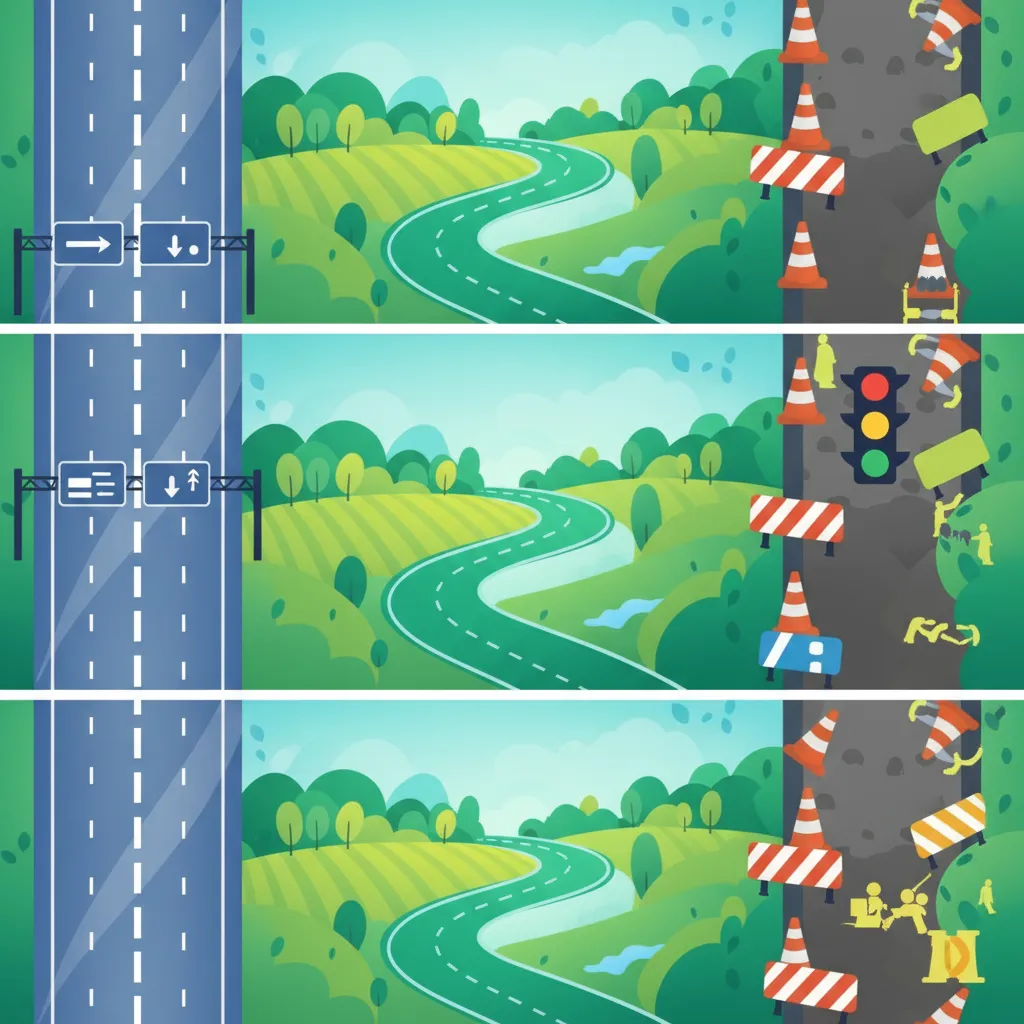
This lesson covers the specific challenges of driving on motorways, rural roads, and navigating roadworks. Learners will review lane discipline on high-speed roads and identify hazards common to rural roads, such as sharp bends and wildlife. It also explains the importance of adjusting speed and following temporary signage in construction zones.
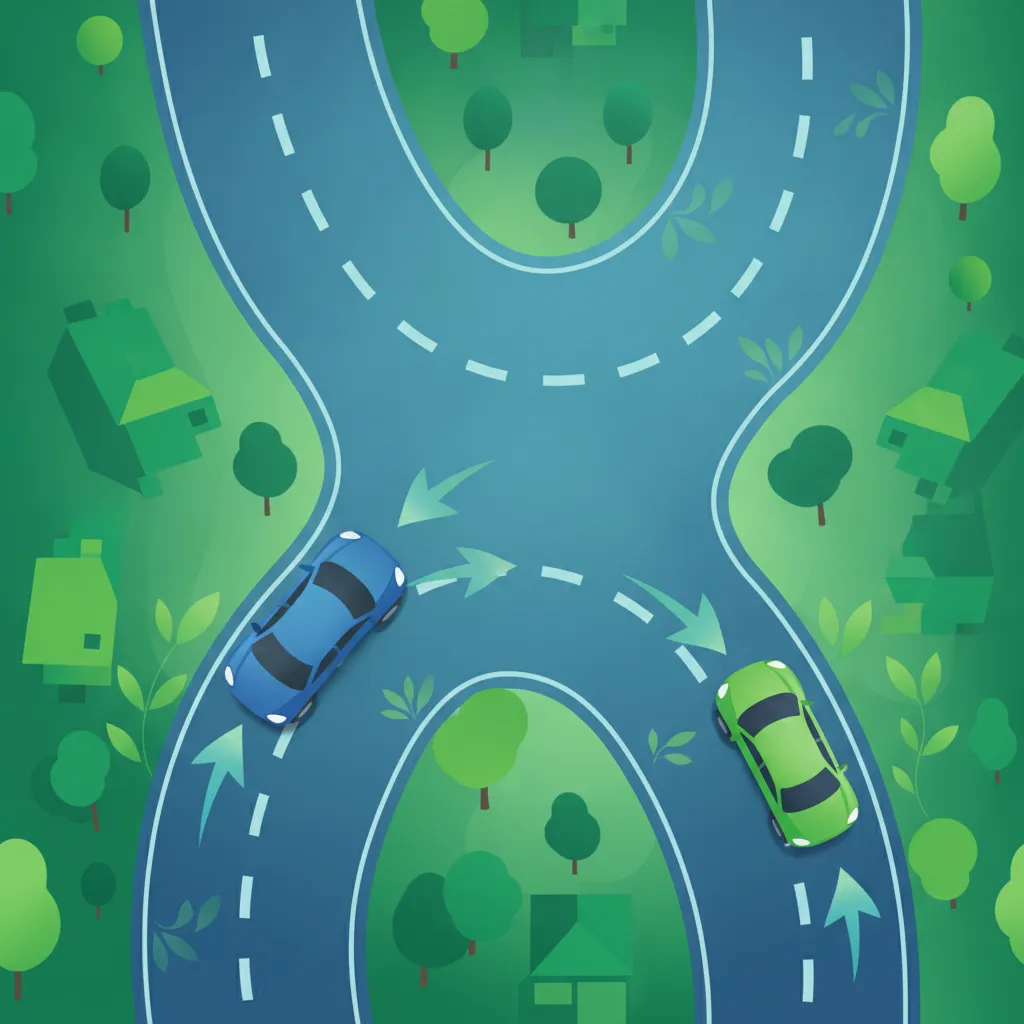
This lesson focuses on basic manoeuvres, covering the proper use of indicators, safe lane positioning, and correct steering for turns. Learners will study the importance of checking blind spots and maintaining appropriate speed for a smooth transition when changing lanes. It also addresses turning at intersections and signaling intentions clearly to other road users.
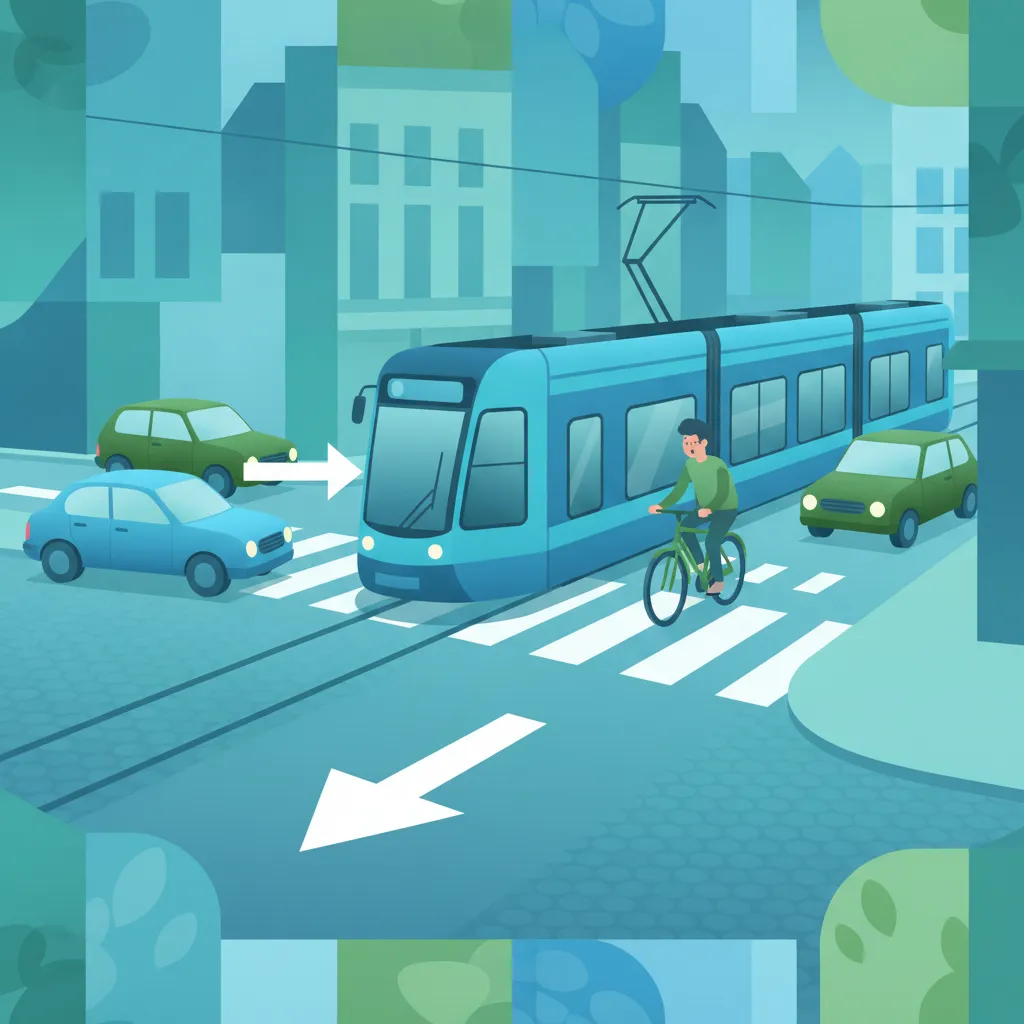
This lesson delves into the complex priority rules that govern Belgian roadways, with a strong focus on the default 'priority from the right' principle. It explains how to interpret priority signs, such as 'give way' and 'stop', and apply the correct right-of-way at various types of junctions. You will learn the hierarchy of road users and the specific rules for yielding in different traffic scenarios.
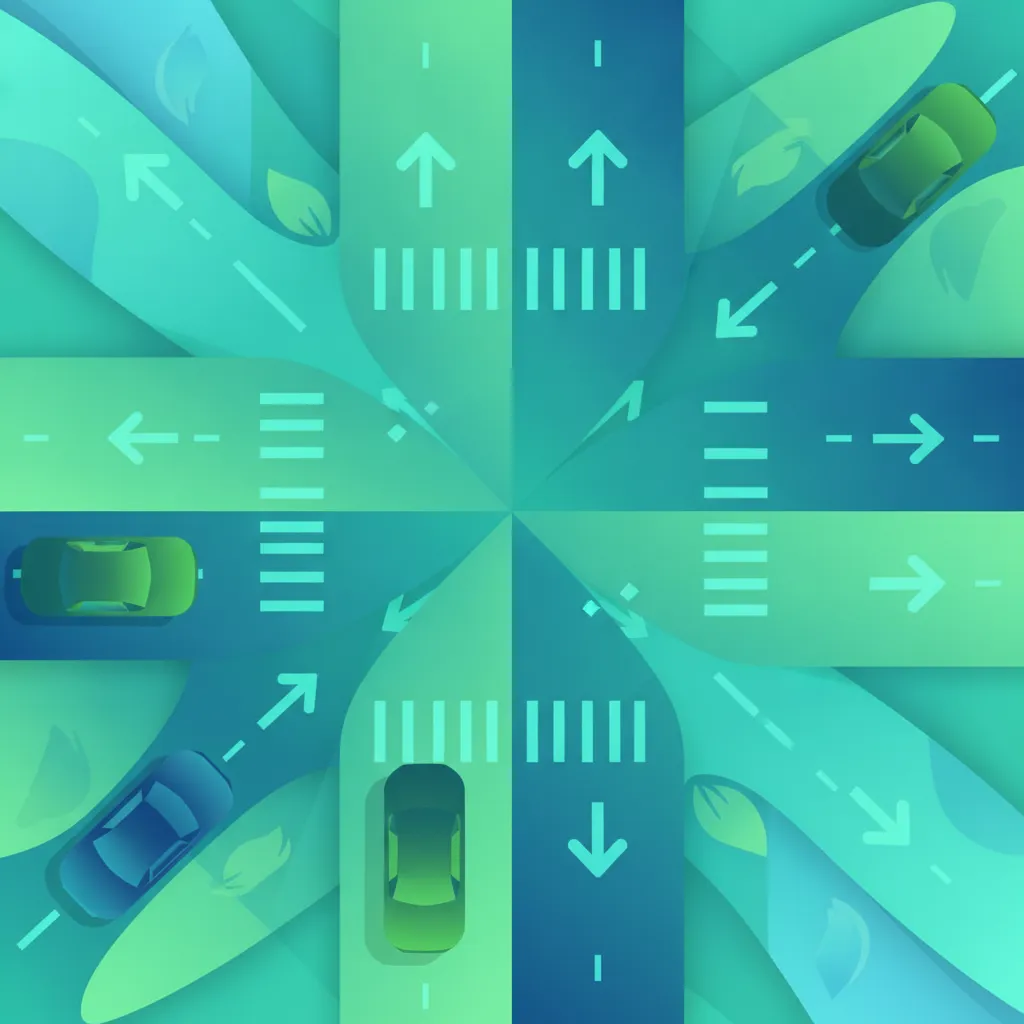
Directional symbols and arrows painted on the road surface guide drivers on permitted lane movements and turning directions. This lesson explains the interpretation of these arrows, covering rules for one-way streets, mandatory turns, and lane-specific instructions. Learners will understand how to comply with these symbols to navigate complex intersections safely and efficiently.
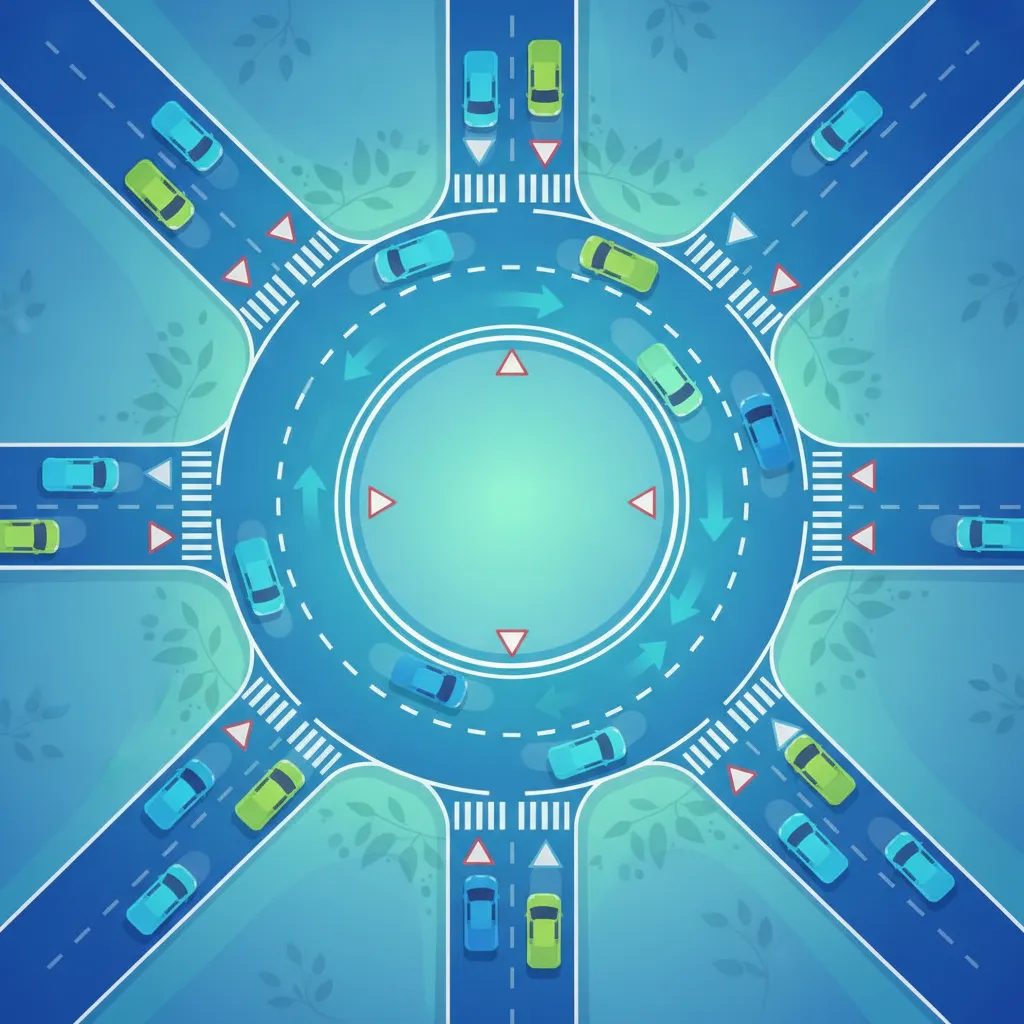
Roundabouts are a key feature of Belgian traffic management. This lesson explains how to approach, enter, navigate, and exit a roundabout safely, with a focus on yielding priority to traffic already circulating. Learners will also study correct lane positioning on multi-lane roundabouts and the appropriate use of signals.

This lesson provides a step-by-step guide to executing a safe overtaking maneuver in compliance with Belgian law. It covers the necessary pre-maneuver checks, proper signaling, and how to accurately judge the speed and distance of oncoming traffic. You will learn the correct procedure for passing a vehicle and safely returning to your original lane.
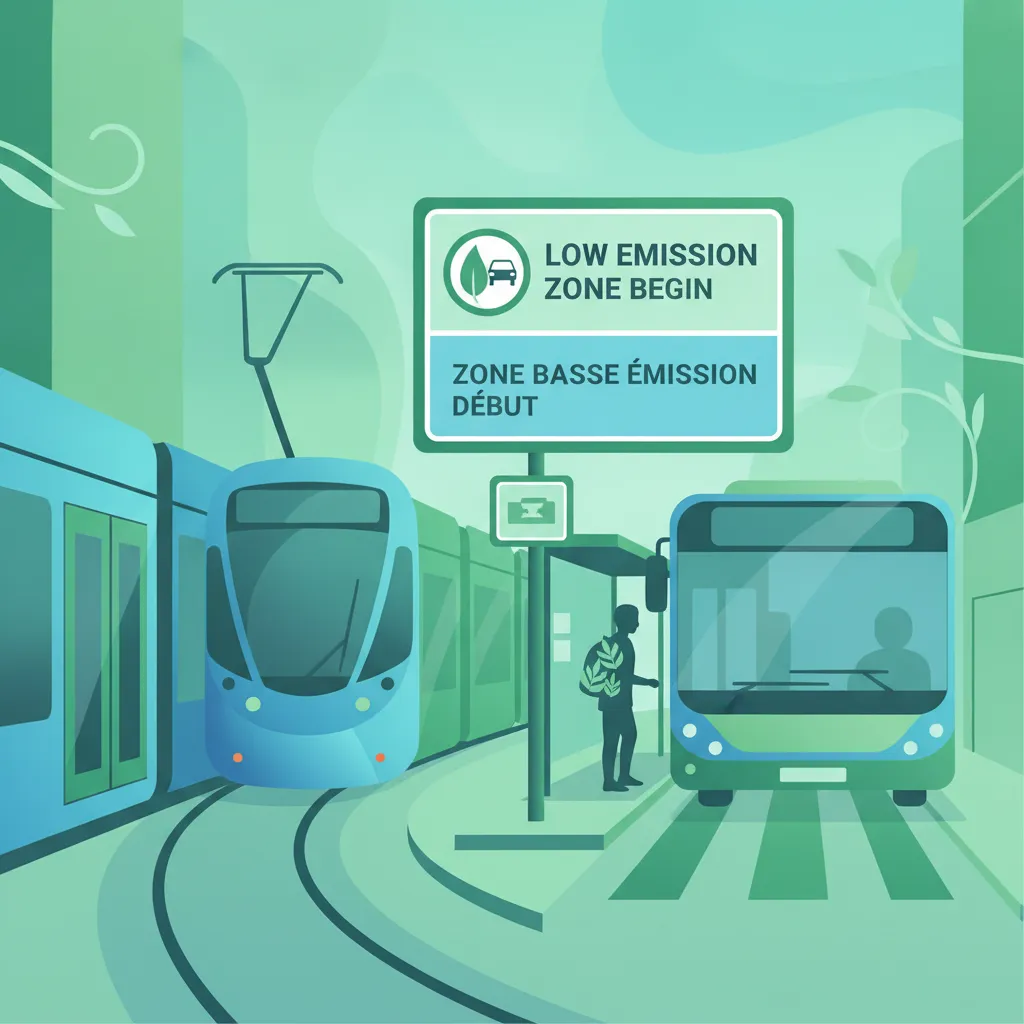
This lesson addresses unique traffic environments and special zones commonly found in Belgian urban areas. It clarifies the specific regulations concerning tramways, including where trams have absolute priority, and the conditions under which motorcycles may use bus lanes. The lesson also explains how to identify and comply with restrictions in low-emission zones.
Understand typical errors drivers make regarding lane discipline, road markings, and manoeuvres on Belgian roads. This lesson uses scenarios to highlight dangerous practices and how to avoid them for better driving theory.
Overtaking safely is a critical driving skill. This lesson explains where and how overtaking is permitted in Belgium, the importance of correct signaling, and maintaining a sufficient speed differential. Learners will understand the rules for passing on motorways and single-carriageway roads, and how to identify zones where overtaking is prohibited.
This lesson focuses on basic manoeuvres, covering the proper use of indicators, safe lane positioning, and correct steering for turns. Learners will study the importance of checking blind spots and maintaining appropriate speed for a smooth transition when changing lanes. It also addresses turning at intersections and signaling intentions clearly to other road users.
Directional symbols and arrows painted on the road surface guide drivers on permitted lane movements and turning directions. This lesson explains the interpretation of these arrows, covering rules for one-way streets, mandatory turns, and lane-specific instructions. Learners will understand how to comply with these symbols to navigate complex intersections safely and efficiently.
This lesson covers the specific challenges of driving on motorways, rural roads, and navigating roadworks. Learners will review lane discipline on high-speed roads and identify hazards common to rural roads, such as sharp bends and wildlife. It also explains the importance of adjusting speed and following temporary signage in construction zones.
Roundabouts are a key feature of Belgian traffic management. This lesson explains how to approach, enter, navigate, and exit a roundabout safely, with a focus on yielding priority to traffic already circulating. Learners will also study correct lane positioning on multi-lane roundabouts and the appropriate use of signals.

This lesson introduces the various types of road surface markings and their specific legal meanings in Belgium. Topics include the rules for solid and broken lines, double lines, and special markings for pedestrian zones, bus lanes, and tramways. Understanding these markings is essential for maintaining correct lane discipline and executing safe overtaking maneuvers.

This lesson provides a step-by-step guide to executing turns and lane changes safely and efficiently. It covers the critical sequence of checking mirrors, signaling intent, and performing a head check for blind spots before any maneuver. Learners will also understand how to manage their speed and balance during cornering to maintain full control of the vehicle.

This lesson focuses on warning signs designed to alert drivers to potential hazards ahead. Topics include warnings for sharp curves, steep gradients, slippery surfaces, and zones with high pedestrian or wildlife activity. Learners will understand how to correctly interpret these signs and adjust their driving behavior to maintain safety on the road.
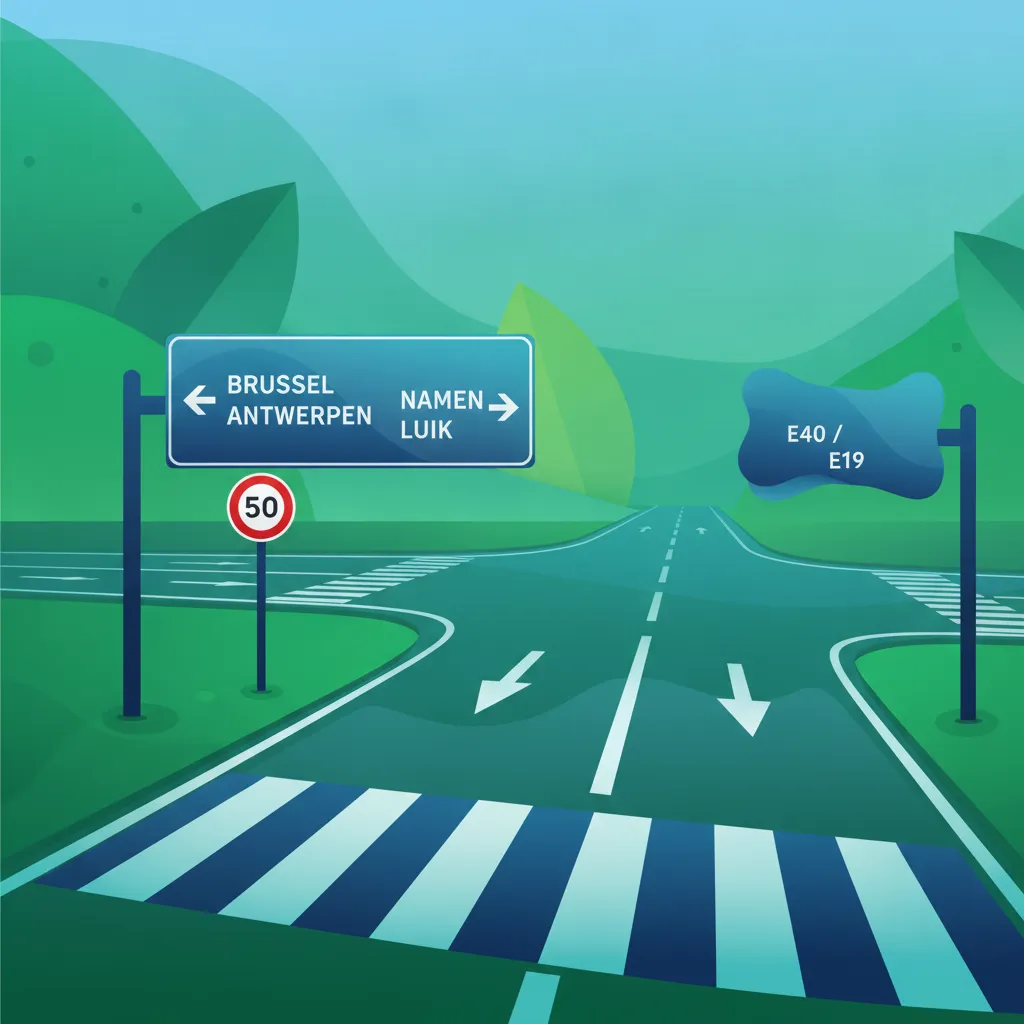
This lesson explains the role of information signs and road markings in guiding road users. It covers directional signs that help with navigation and markings that delineate lanes, pedestrian crossings, and zones for specific users like cyclists. Learners will understand how to use this information to maintain correct lane positioning and navigate their route efficiently and safely.

This lesson provides a detailed explanation of the various road markings found on Belgian roads and their specific significance for motorcyclists. It covers the rules associated with solid and broken lane lines, stop lines at junctions, and markings for pedestrian and bicycle crossings. Understanding these markings is essential for correct lane positioning and safe navigation.
Find clear answers to common questions learners have about Lane Discipline on Roads and Motorways. Learn how the lesson is structured, which driving theory objectives it supports, and how it fits into the overall learning path of units and curriculum progression in Belgium. These explanations help you understand key concepts, lesson flow, and exam focused study goals.
No, you should always drive in the right-most lane unless you are overtaking or moving to the left to prepare for a turn or exit. Driving in the middle lane unnecessarily is considered poor lane discipline and can be penalized.
Generally, overtaking on the right is prohibited. However, there are specific exceptions, such as when the driver in front is turning left, when driving in heavy traffic lanes, or when driving in roundabouts.
You must maintain a safe distance from cyclists and only cross a solid white line or enter a bicycle street with extreme caution. Respecting the space allocated for vulnerable road users is a critical aspect of lane discipline.
If you are in a lane with directional arrows, you must follow the direction of the arrow. If you realize you are in the wrong lane, do not make an illegal maneuver; proceed in the indicated direction and find a safe place to recalculate your route.
Ready to focus your Belgian driving theory revision? Utilize our powerful search tool to pinpoint exact topics, road signs, or difficulty levels. Engage with practice questions that directly address your learning needs and solidify your understanding of Belgian traffic laws for your upcoming exam.