
This lesson teaches you how to effectively manage the space around your motorcycle to maximize safety in diverse Belgian traffic conditions. Building upon your understanding of lane positioning, you will learn the essential two-second rule and how to identify escape paths to prepare for A, A1, and A2 theory exam questions.
Lesson content overview
Riding a motorcycle offers unparalleled freedom, but it also demands a heightened sense of awareness and responsibility. One of the most critical safety concepts for any motorcyclist, particularly within the Comprehensive Belgian Motorcycle Theory Course: Licence A, A1 & A2, is the diligent practice of maintaining adequate protective space. This crucial safety buffer, often referred to as a 'safety cushion', surrounds your motorcycle, providing the essential time and distance needed to react to unforeseen events and avoid collisions.
Protective space is more than just keeping a distance; it's a strategic safety zone that you, as a motorcyclist, must actively create and maintain around your vehicle. This buffer is absolutely vital due to the inherent characteristics of motorcycles: their smaller size makes them less visible to other road users, and their riders are significantly more vulnerable in the event of a collision compared to occupants of larger vehicles.
The logic behind maintaining this space is rooted in fundamental safety physics and human factors. Every action on the road, whether it's braking, swerving, or accelerating, requires both reaction time and physical distance. A motorcyclist's protective space compensates for:
Without sufficient protective space, even a momentary lapse in attention from another driver or a sudden change in traffic flow can lead to a dangerous situation with little to no time to react. This lesson integrates concepts from earlier topics such as ideal lane positioning, understanding and avoiding blind spots, and safe overtaking practices, all of which contribute to effective space management.
The two-second rule is a universally recognized and highly effective method for maintaining a safe following distance behind the vehicle directly ahead of you. It's a time-based measurement, which automatically adjusts the physical distance as your speed changes, making it far more practical than a fixed meter-based measurement.
A principle requiring motorcyclists to maintain a minimum gap equal to the distance traveled in two seconds between their motorcycle and the vehicle directly in front. This time-based measurement automatically adjusts the physical distance with changes in speed.
The principle is simple: when the vehicle in front of you passes a fixed reference point (like a road sign, a lamppost, or a tree), you should be able to count "one thousand one, one thousand two" before your motorcycle reaches that same point. If you reach the point before completing the count, you are following too closely and need to increase your distance.
For motorcyclists, the two-second rule is particularly vital for several reasons:
While two seconds is the minimum, it's a guideline for ideal conditions. You must increase this protective space in various situations:
A common misconception is that a fixed distance, like a few motorcycle lengths, is sufficient. This is dangerous because the physical distance covered in two seconds changes drastically with speed. At 50 km/h, two seconds covers approximately 28 meters. At 120 km/h, it's about 67 meters. Always use the time-based rule.
Beyond the distance to the vehicle ahead, the space you maintain to your sides, known as lateral protective space or side clearance, is equally critical for motorcycle safety. This space ensures you have room to maneuver and helps prevent other road users from encroaching on your safety zone.
The side clearance that must be maintained between a motorcycle and other road users (vehicles, cyclists, pedestrians, or obstacles). It ensures room for maneuverability and reduces the risk of sideswipe collisions.
Lateral protective space refers to the buffer you keep between your motorcycle and vehicles in adjacent lanes, parked cars, cyclists, pedestrians, or road hazards like potholes or debris. It's a dynamic zone that constantly needs monitoring and adjustment.
Motorcyclists are particularly vulnerable to lateral collisions for several key reasons:
When riding in urban traffic, avoid riding in the 'door zone' next to parked cars, which is the area where a car door could suddenly open. Position yourself further into the lane.
Maintaining protective space isn't just about static gaps; it's also about dynamically identifying and preserving an escape path. An escape path is a continuously available, clear, and unobstructed route that you can move into immediately if an emergency evasive action is required.
A clear, unobstructed path that a motorcyclist continuously identifies and maintains as an immediate option for evasive action to avoid a collision.
Riders must constantly scan their surroundings, not just for immediate threats, but for potential escape routes. This means looking beyond the vehicle directly in front, checking mirrors frequently, and understanding the traffic flow around you.
Having a readily available escape path is a cornerstone of defensive riding. It means you are never "trapped" in a situation with no way out. If the vehicle ahead brakes suddenly, or a car swerves into your lane, or an object falls onto the road, an escape path allows you to react by swerving rather than being forced into a collision or a dangerous emergency stop.
In Belgium, as in most European countries, the principles of maintaining adequate protective space are not merely recommendations; they are enshrined in traffic law. Adhering to these regulations is mandatory for all road users, and motorcyclists must be especially diligent.
Belgian traffic law (specifically, the Royal Decree of 1 December 1975 on the general regulation of the police on road traffic and the use of public roads, often referred to as the "Wegcode" or "Code de la Route") mandates that drivers must maintain a sufficient distance from the vehicle ahead to be able to stop safely in all circumstances. While the two-second rule is a universally accepted practical application, the law's wording emphasizes the ability to stop safely. This means the distance must be adjusted for speed, road conditions, and vehicle type.
The law also dictates that drivers must maintain sufficient lateral clearance when overtaking or passing other vehicles, pedestrians, or obstacles.
Failure to observe these regulations can result in fines and, in cases of an accident, can lead to charges of dangerous driving or negligence.
These legal requirements underscore the authorities' recognition of the critical role protective space plays in road safety. For motorcyclists, specifically, they compensate for:
Correct application of these rules means consistently applying the two-second rule and being constantly aware of your lateral positioning, never assuming other drivers will see you or give you space. Incorrect application involves tailgating, riding directly alongside other vehicles, or failing to give sufficient space to vulnerable road users.
Despite the clear importance of maintaining protective space, certain mistakes and dangerous habits are unfortunately common among motorcyclists. Recognizing these pitfalls is the first step toward avoiding them.
The concept of protective space is not static; it's dynamic and must be constantly re-evaluated and adjusted based on prevailing conditions. A safe distance in perfect weather on a wide, dry motorway will be completely inadequate on a wet, narrow urban street.
Think of protective space as your personal safety bubble. The more risks present (bad weather, heavy traffic, complex road layout), the larger and more robust that bubble needs to be.
Let's explore a few scenarios to see how the principles of protective space are applied in practical riding.
Situation: You are riding your motorcycle on a busy city street in Antwerp, with moderate traffic, traveling at approximately 30 km/h. A delivery van is directly ahead of you. Ahead, you see the traffic light turn amber.
Application of Protective Space:
Outcome: When the van suddenly brakes hard for the amber light, your two-second gap gives you ample time to react, apply your brakes smoothly, and come to a safe stop without needing an emergency swerve.
Situation: You are on a Belgian motorway (e.g., the E40) traveling at 100 km/h in the right lane, and you wish to overtake a slower-moving car.
Application of Protective Space:
Outcome: The overtake is executed smoothly and safely, minimizing any risk of collision or being caught in another vehicle's blind spot.
Situation: You are riding on a main road at 70 km/h during a steady rain. The road surface is visibly wet, and visibility is slightly reduced by spray from other vehicles.
Application of Protective Space:
Outcome: Despite the challenging conditions, you maintain stable control and are prepared for any sudden changes, significantly reducing your risk of an accident.
Understanding the specific vocabulary associated with protective space management is crucial for effective communication and safe riding.
Maintaining adequate protective space is not just a regulatory requirement; it is a fundamental aspect of defensive riding and personal safety for every motorcyclist. By consistently applying the two-second rule for following distances, diligently managing your lateral clearance, and continuously identifying an escape path, you significantly increase your reaction time and maneuvering options.
This proactive approach allows you to anticipate hazards, react to unexpected events, and ultimately avoid collisions, making your journey on Belgian roads safer and more enjoyable. Always remember to adjust your protective space according to speed, road conditions, weather, and traffic density. Your safety, and the safety of others, depends on it.
This lesson teaches the critical skill of maintaining a protective safety cushion around your motorcycle through the two-second rule, lateral spacing, and escape path identification. The two-second rule provides a time-based minimum following distance that automatically adjusts with speed, while lateral space protects against blind spots, wind blast, and sudden movements from adjacent vehicles. Belgian traffic law mandates sufficient distances and specific lateral clearances (0.5m from vehicles, 1-1.5m from cyclists). Your protective space must be dynamically adjusted for weather conditions, road surface, traffic density, and load—doubling the two-second gap on wet roads or when following large vehicles. Always maintain at least one clear escape path by positioning yourself strategically within your lane.
A short set of high-value points that capture the most important learning from this lesson.
Protective space is a dynamic safety buffer around your motorcycle that provides reaction time and maneuvering distance against unforeseen hazards
The two-second rule automatically adjusts physical following distance with speed: at 50 km/h it covers ~28m, at 120 km/h it covers ~67m
Lateral protective space protects against blind spots, wind blast from large vehicles, sudden lane changes, and opening car doors
An escape path must be continuously identified and preserved, with at least one side of your motorcycle kept clear at all times
Belgian law requires sufficient lateral clearance: at least 0.5m from vehicles, 1m from cyclists in urban areas, and 1.5m outside urban areas
Explore all units and lessons included in this driving theory course.
Always apply the two-second rule as a minimum; increase to four seconds or more in adverse weather, poor visibility, or when following large vehicles
Never ride alongside another vehicle for extended periods—accelerate to pass or drop back to avoid blind spots
Position yourself in the left or centre portion of your lane to maximize visibility and maintain an escape route
In heavy traffic, maintain larger gaps paradoxically, as sudden stops are more frequent and reaction time is compressed
Adjust your safety cushion dynamically based on speed, weather, road surface, traffic density, and whether carrying a passenger or load
Assuming a fixed distance in meters is sufficient; physical distance covered in two seconds changes drastically with speed
Lingering in a vehicle's blind spot, especially alongside its rear quarter, making you invisible during lane changes
Riding too close to the curb or road edge, which limits lateral escape options and exposes you to debris and parked cars
Failing to increase protective space in rain, fog, or icy conditions where braking distances are significantly extended
Riding in a 'sandwich' position boxed in by vehicles on all sides, eliminating all escape paths
Lesson content overview
A short set of high-value points that capture the most important learning from this lesson.
Protective space is a dynamic safety buffer around your motorcycle that provides reaction time and maneuvering distance against unforeseen hazards
The two-second rule automatically adjusts physical following distance with speed: at 50 km/h it covers ~28m, at 120 km/h it covers ~67m
Lateral protective space protects against blind spots, wind blast from large vehicles, sudden lane changes, and opening car doors
An escape path must be continuously identified and preserved, with at least one side of your motorcycle kept clear at all times
Belgian law requires sufficient lateral clearance: at least 0.5m from vehicles, 1m from cyclists in urban areas, and 1.5m outside urban areas
Explore all units and lessons included in this driving theory course.
Always apply the two-second rule as a minimum; increase to four seconds or more in adverse weather, poor visibility, or when following large vehicles
Never ride alongside another vehicle for extended periods—accelerate to pass or drop back to avoid blind spots
Position yourself in the left or centre portion of your lane to maximize visibility and maintain an escape route
In heavy traffic, maintain larger gaps paradoxically, as sudden stops are more frequent and reaction time is compressed
Adjust your safety cushion dynamically based on speed, weather, road surface, traffic density, and whether carrying a passenger or load
Assuming a fixed distance in meters is sufficient; physical distance covered in two seconds changes drastically with speed
Lingering in a vehicle's blind spot, especially alongside its rear quarter, making you invisible during lane changes
Riding too close to the curb or road edge, which limits lateral escape options and exposes you to debris and parked cars
Failing to increase protective space in rain, fog, or icy conditions where braking distances are significantly extended
Riding in a 'sandwich' position boxed in by vehicles on all sides, eliminating all escape paths
Explore search topics learners often look for when studying Maintaining Adequate Protective Space. These topics reflect common questions about road rules, driving situations, safety guidance, and lesson level theory preparation for learners in Belgium.
Browse additional driving theory lessons that cover connected traffic rules, road signs, and common driving situations related to this topic. Improve your understanding of how different rules interact across everyday traffic scenarios.
Explore practical, real-world scenarios for maintaining protective space on Belgian roads. Learn to apply concepts like the two-second rule and lateral clearance in complex traffic situations, crucial for your driving theory.
This lesson synthesizes key safety concepts into the practice of defensive riding, a proactive mindset focused on anticipation and risk reduction. It teaches you to continuously scan for potential hazards, predict the actions of other road users, and always maintain an escape path. By mastering these strategies, you learn to manage the space around you and take control of your own safety.
This lesson explores the unique challenges presented by dense urban environments, including riding in heavy traffic and navigating narrow streets. It provides strategies for positioning your motorcycle to avoid the 'dooring zone' of parked cars and to maintain visibility. You will learn defensive riding techniques to anticipate sudden actions from other drivers in congested conditions.
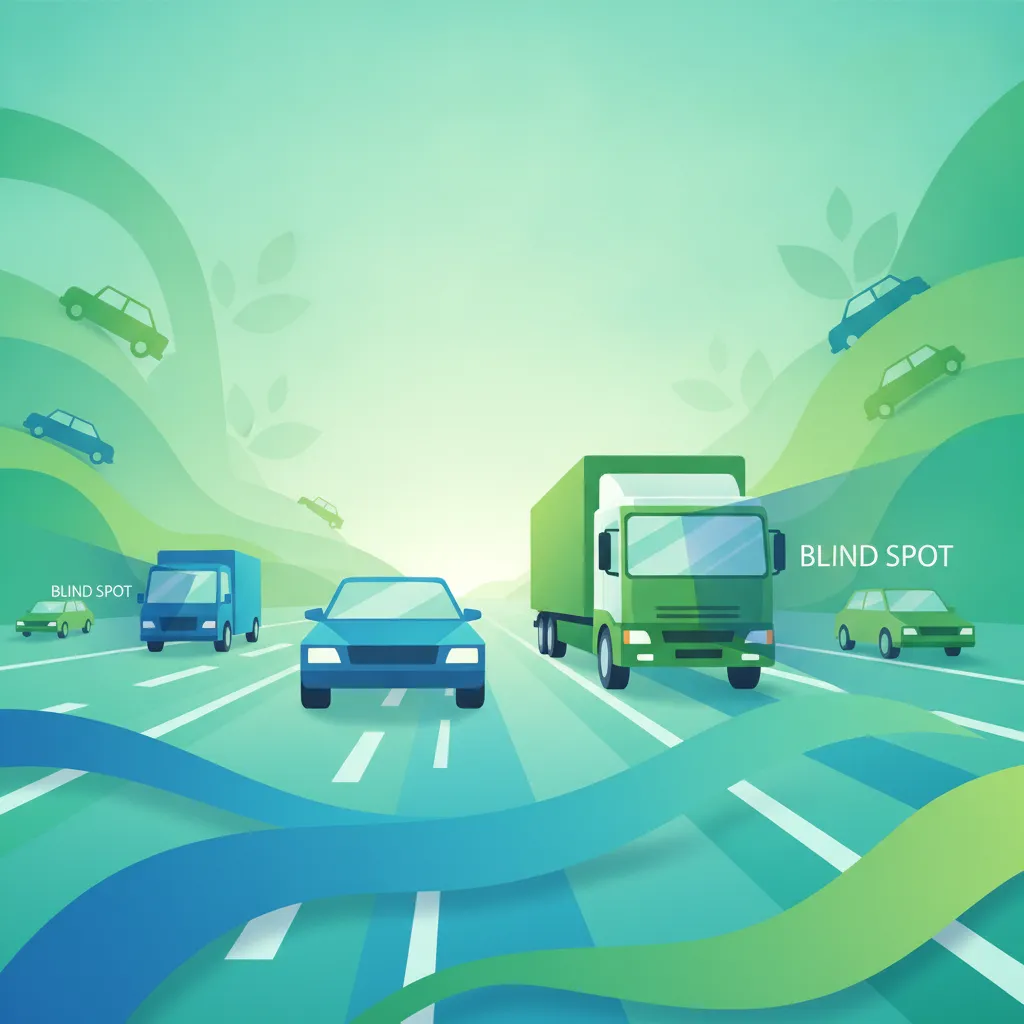
This lesson focuses on recognizing and staying out of the blind spots of other vehicles, especially large trucks and buses where 'no-zones' are significant. It provides practical strategies for managing your position on the road to ensure you remain visible to other drivers at all times. You will learn to anticipate lane changes and other maneuvers from vehicles that may not be aware of your presence.

This lesson details a motorcyclist's obligations when approaching various types of crossings, including marked pedestrian and bicycle lanes. It emphasizes the legal requirement to yield to vulnerable road users and the importance of thorough visual checks before proceeding. You will learn how to maintain a safe distance and anticipate the movements of pedestrians and cyclists in urban areas.

This lesson focuses on strategies for safely navigating situations where road space is limited, such as narrow lanes, road works, or between lines of traffic. It explains how to use assertive lane positioning to prevent other vehicles from crowding you. You will learn to anticipate and safely manage these 'squeeze points' to avoid being trapped or forced into a dangerous situation.

This lesson teaches motorcyclists how to safely navigate mixed traffic environments that include cars, buses, and trams. It highlights the significant blind spots of larger vehicles and explains the absolute priority of trams on their tracks. You will learn the rules for sharing space with public transport and how to maintain safe distances when following or overtaking buses.
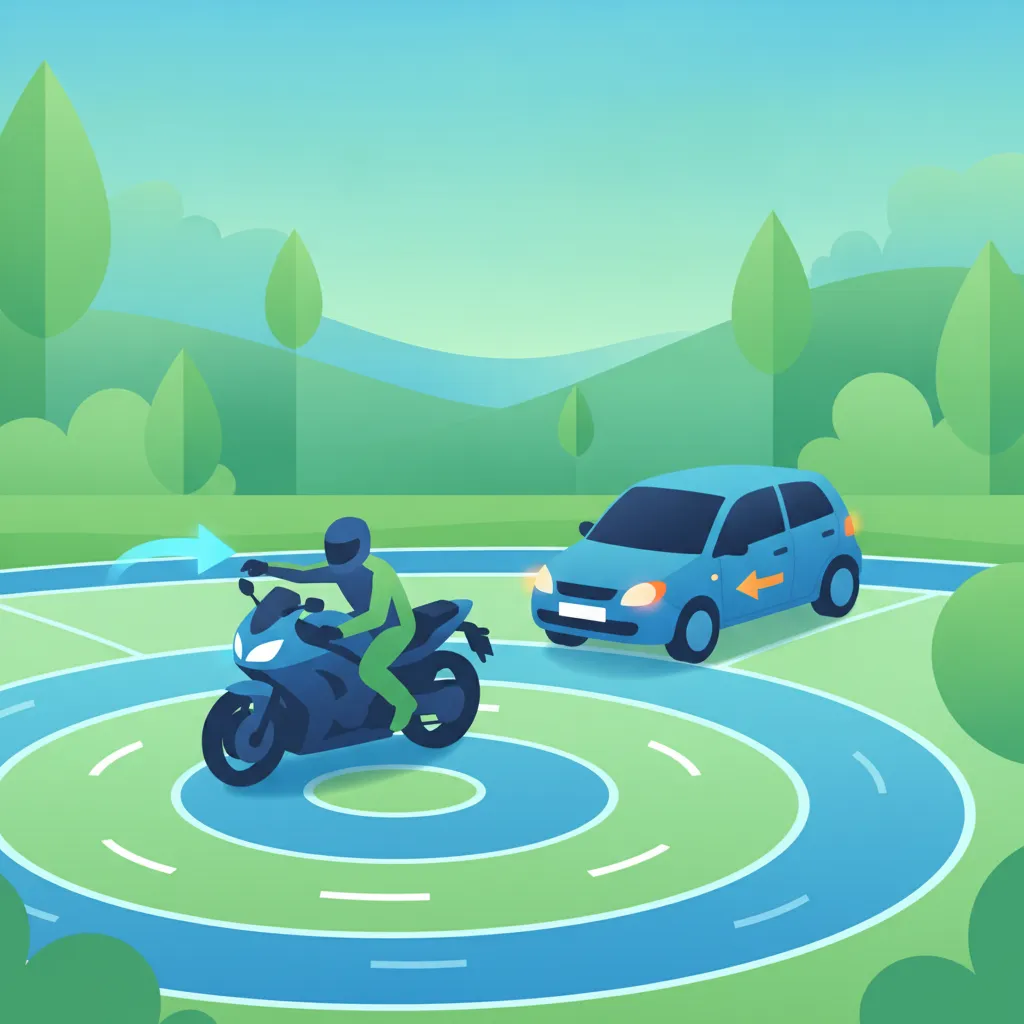
This lesson offers specific strategies for motorcyclists navigating roundabouts in Belgium. It covers the rules for entering the roundabout, including yielding to circulating traffic, and how to choose the correct lane for your intended exit. The content stresses the importance of clear signaling and maintaining awareness of other vehicles during entry and exit maneuvers.

This lesson provides instruction on how to react in an emergency situation, covering techniques for performing a rapid, controlled stop. It explains how to apply maximum braking force without locking the wheels and how to manage a skid if one occurs. You will also learn about avoidance maneuvers, such as swerving, and the psychological challenge of overcoming target fixation.

This lesson provides a step-by-step guide to executing a safe overtaking maneuver in compliance with Belgian law. It covers the necessary pre-maneuver checks, proper signaling, and how to accurately judge the speed and distance of oncoming traffic. You will learn the correct procedure for passing a vehicle and safely returning to your original lane.
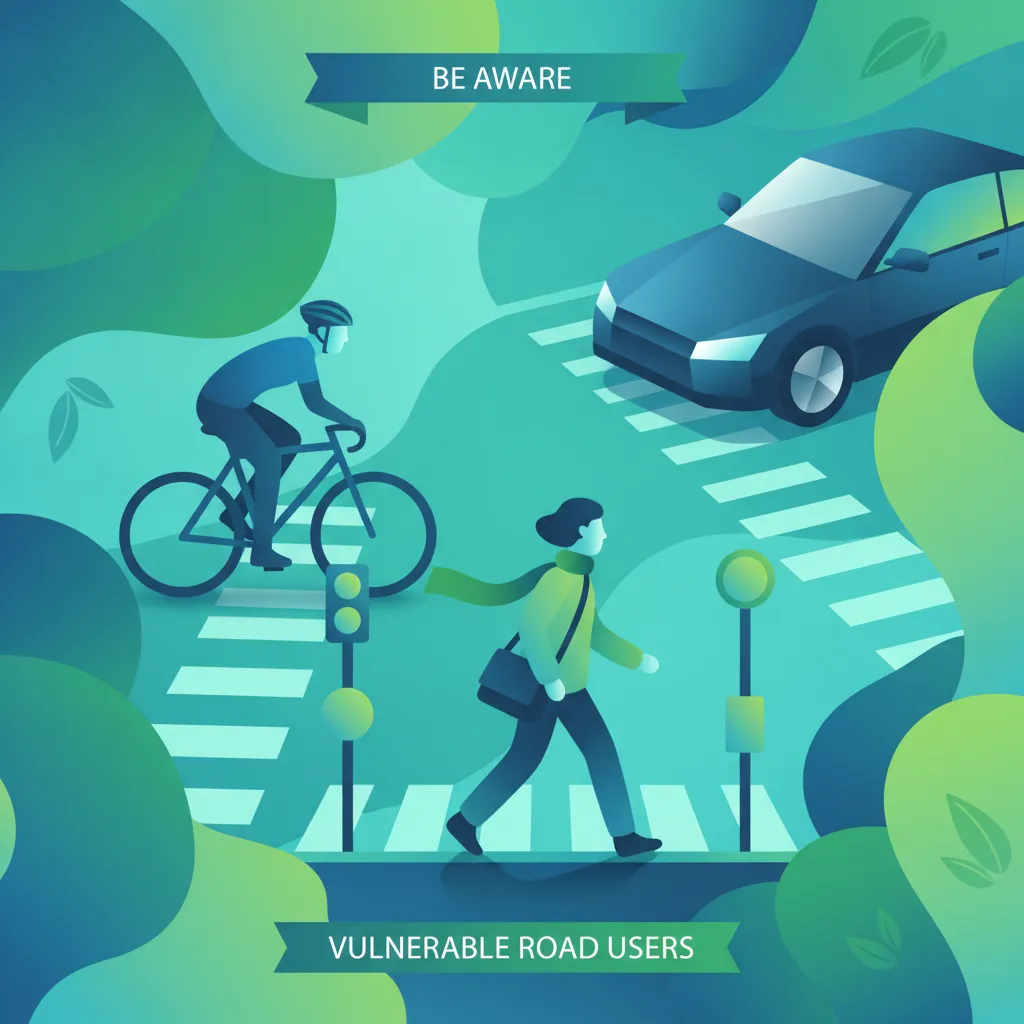
This lesson provides a systematic approach to navigating intersections, emphasizing the importance of observation, speed control, and correct positioning. It reinforces the application of priority-from-the-right and other right-of-way rules in real-world junction scenarios. You will learn effective visual scanning techniques to anticipate the actions of other road users and ensure a safe passage.
Master defensive riding strategies and learn how to proactively identify and avoid common motorcycle hazards on Belgian roads. Understand how protective space is key to preventing collisions and ensuring rider safety.
This lesson synthesizes key safety concepts into the practice of defensive riding, a proactive mindset focused on anticipation and risk reduction. It teaches you to continuously scan for potential hazards, predict the actions of other road users, and always maintain an escape path. By mastering these strategies, you learn to manage the space around you and take control of your own safety.
This lesson explores the unique challenges presented by dense urban environments, including riding in heavy traffic and navigating narrow streets. It provides strategies for positioning your motorcycle to avoid the 'dooring zone' of parked cars and to maintain visibility. You will learn defensive riding techniques to anticipate sudden actions from other drivers in congested conditions.
This lesson focuses on recognizing and staying out of the blind spots of other vehicles, especially large trucks and buses where 'no-zones' are significant. It provides practical strategies for managing your position on the road to ensure you remain visible to other drivers at all times. You will learn to anticipate lane changes and other maneuvers from vehicles that may not be aware of your presence.
This lesson provides instruction on how to react in an emergency situation, covering techniques for performing a rapid, controlled stop. It explains how to apply maximum braking force without locking the wheels and how to manage a skid if one occurs. You will also learn about avoidance maneuvers, such as swerving, and the psychological challenge of overcoming target fixation.

This lesson trains you to actively scan the road ahead for surface hazards that can compromise traction, such as oil spills, wet leaves, and loose gravel. It provides strategies for safely navigating these hazards, including avoidance maneuvers and gentle control inputs. You will also learn how to handle unexpected encounters with potholes and other road imperfections.
This lesson details a motorcyclist's obligations when approaching various types of crossings, including marked pedestrian and bicycle lanes. It emphasizes the legal requirement to yield to vulnerable road users and the importance of thorough visual checks before proceeding. You will learn how to maintain a safe distance and anticipate the movements of pedestrians and cyclists in urban areas.
This lesson focuses on strategies for safely navigating situations where road space is limited, such as narrow lanes, road works, or between lines of traffic. It explains how to use assertive lane positioning to prevent other vehicles from crowding you. You will learn to anticipate and safely manage these 'squeeze points' to avoid being trapped or forced into a dangerous situation.
This lesson offers specific strategies for motorcyclists navigating roundabouts in Belgium. It covers the rules for entering the roundabout, including yielding to circulating traffic, and how to choose the correct lane for your intended exit. The content stresses the importance of clear signaling and maintaining awareness of other vehicles during entry and exit maneuvers.
This lesson provides a step-by-step guide to executing a safe overtaking maneuver in compliance with Belgian law. It covers the necessary pre-maneuver checks, proper signaling, and how to accurately judge the speed and distance of oncoming traffic. You will learn the correct procedure for passing a vehicle and safely returning to your original lane.
This lesson provides a systematic approach to navigating intersections, emphasizing the importance of observation, speed control, and correct positioning. It reinforces the application of priority-from-the-right and other right-of-way rules in real-world junction scenarios. You will learn effective visual scanning techniques to anticipate the actions of other road users and ensure a safe passage.
Find clear answers to common questions learners have about Maintaining Adequate Protective Space. Learn how the lesson is structured, which driving theory objectives it supports, and how it fits into the overall learning path of units and curriculum progression in Belgium. These explanations help you understand key concepts, lesson flow, and exam focused study goals.
Yes. In adverse weather conditions like rain or snow, you must increase your following distance to at least four seconds to account for reduced grip and longer braking distances.
Lateral space provides a margin for error if a car drifts into your lane or if you need to swerve suddenly to avoid debris, which is critical given the narrower profile of a motorcycle.
Yes, theory questions often present a scenario and ask you to identify the safest lane position or the best direction to steer if a hazard emerges, requiring you to have identified an escape path beforehand.
No, the fundamental principles of defensive riding and maintaining a safety cushion apply to all motorcycle categories under Belgian traffic law.
Ready to focus your Belgian driving theory revision? Utilize our powerful search tool to pinpoint exact topics, road signs, or difficulty levels. Engage with practice questions that directly address your learning needs and solidify your understanding of Belgian traffic laws for your upcoming exam.