
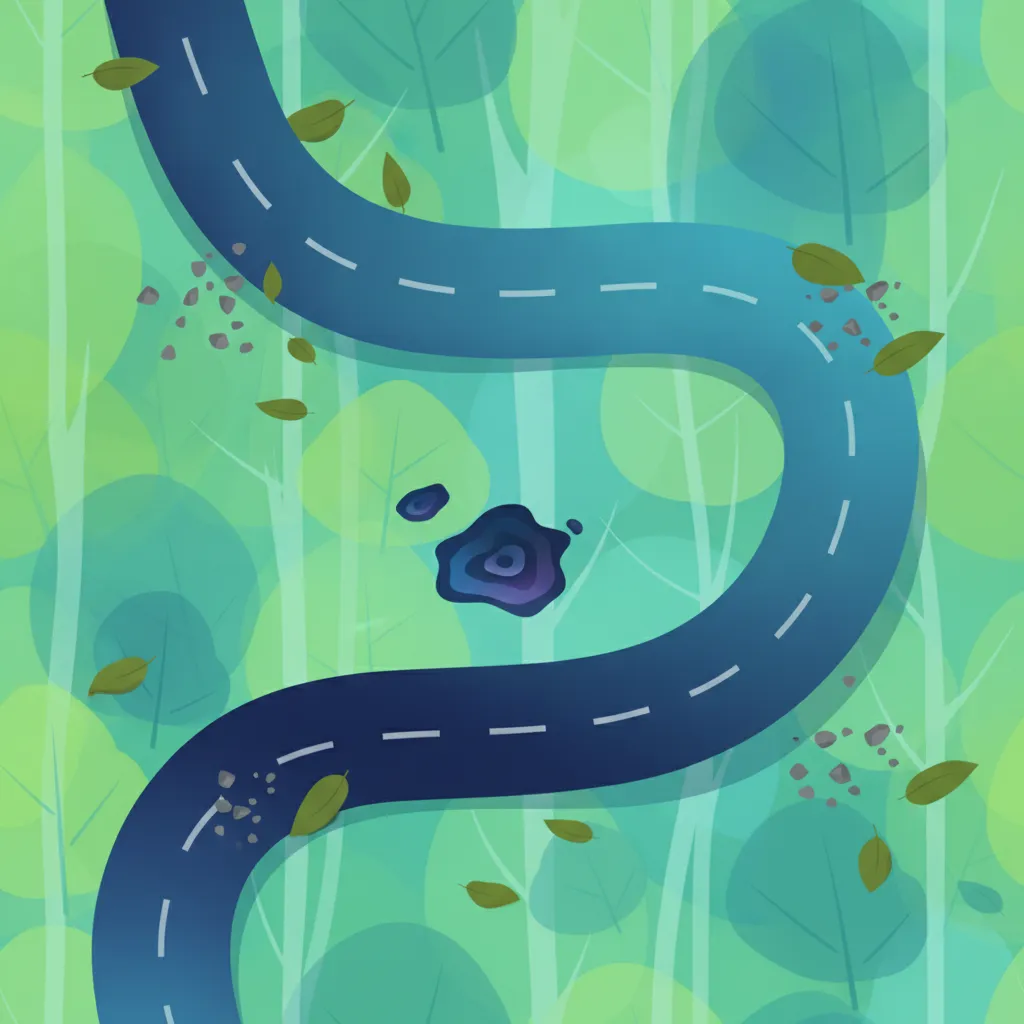
This lesson focuses on identifying and managing environmental hazards that threaten traction, a crucial skill for both your Belgian motorcycle theory exam and safe daily riding. You will learn to proactively scan for surface risks like oil, leaves, and loose gravel, ensuring you can adjust your riding technique in time. This knowledge is essential for the advanced risk management required for category A, A1, and A2 licence holders.
Lesson content overview
Riding a motorcycle demands constant vigilance, not just for other road users but also for the condition of the road surface itself. Surface hazards can drastically compromise your motorcycle's traction, leading to increased stopping distances, loss of control, and potentially serious accidents. This comprehensive lesson, vital for the Belgian motorcycle theory course for Licence A, A1, and A2, will equip you with the knowledge and strategies to identify, assess, and safely navigate various road surface hazards. Understanding how different conditions affect your grip is fundamental to becoming a safe and competent motorcyclist on Belgian roads.
The foundational concept for safely handling road surface hazards is traction.
The frictional force between your motorcycle's tires and the road surface, which enables you to accelerate, brake, and steer effectively.
Traction is the direct link between your motorcycle and the road. Without adequate traction, any input you make – accelerating, braking, or leaning into a turn – can result in a loss of control. The quality and type of road surface directly influence the available traction. A dry, clean asphalt road offers high traction, allowing for confident control. However, surfaces contaminated with oil, water, leaves, or loose materials significantly reduce this crucial grip.
The continuous adjustment of your riding technique, including speed, throttle, braking, and steering inputs, to maintain optimal traction given the prevailing road and environmental conditions.
Effective grip management involves subtle and smooth control inputs. Abrupt actions on a compromised surface are far more likely to cause a skid or loss of control than gradual ones. This principle applies universally, whether you are dealing with wet conditions, loose gravel, or slippery painted lines.
A key component of safe riding is hazard anticipation. This involves actively scanning the road ahead, not just for traffic, but specifically for surface irregularities or potential hazards. By spotting dangers early, you gain precious seconds to plan your response, reduce your speed, and adjust your line of travel.
The proactive process of continuously scanning the road and environment for potential dangers, allowing a rider to foresee and prepare for risks before they become immediate threats.
Reduced reaction time demands can mean the difference between smoothly avoiding a hazard and an emergency situation. Develop a habit of looking far ahead – at least 12-15 seconds in urban environments and even further on open roads – to identify changes in the road surface's color, texture, or reflectivity. This early warning system is your primary defense against unexpected surface dangers.
Oil, fuel, coolant, or even water mixed with oil can create extremely slick, low-friction layers on the road surface. These spills are among the most dangerous road hazards for motorcyclists due to their stealthy nature and severe impact on traction.
Oil spills can manifest in various ways. Fresh oil, especially on a wet road, might display a rainbow-like sheen. Older, dried oil patches often appear as dark, dull stains on the asphalt. In low light or overcast conditions, it can be particularly difficult to distinguish a dry oily patch from a mere wet spot. Even a seemingly dry road can have a thin, almost invisible layer of oil, especially in areas where vehicles frequently idle, such as intersections, toll booths, or parking exits.
The danger of oil is that it drastically reduces the friction coefficient between your tires and the road, often to near-zero. This means your tires have virtually no grip for braking, accelerating, or cornering. On a wet surface, oil can also contribute to hydroplaning, where your tires lose contact with the road entirely due to a film of water.
A phenomenon where a vehicle's tires lose contact with the road surface due to a film of water building up faster than the tire tread can disperse it, leading to a complete loss of steering, braking, and acceleration control.
Never lean into a turn or brake aggressively on an oil patch. The risk of immediate traction loss and a fall is extremely high.
Autumn brings beautiful foliage, but fallen leaves on the road, especially when wet or decomposing, create another significant hazard for motorcyclists. They can be as slippery as ice and obscure other dangers beneath them.
When dry, a thin layer of leaves poses minimal risk, though heavy accumulations can still be unstable. However, once wet, leaves become incredibly slick. As they decompose, they create an even more treacherous, slimy surface. Wet leaves create a near-zero friction layer, similar to oil, making any sudden control input perilous. Furthermore, leaves can conceal other hazards like potholes, loose gravel, or drain covers.
Identifying wet leaves is usually straightforward in autumn. Look for carpets of leaves, especially in shaded areas, residential streets, and rural roads where they are less likely to be cleared by traffic. After rain, their glossy, dark appearance often signals their hazardous state.
Gravel, loose stones, sand, or other aggregates on the road surface present a different challenge. Unlike oil or wet leaves that create a slick film, gravel introduces an unstable, shifting surface that prevents your tires from getting a firm grip on the underlying pavement.
Gravel and loose stones are common in several scenarios:
The danger lies in the unpredictability of the surface. Your tires will constantly be trying to find purchase on shifting stones, which can lead to a sudden loss of traction, especially during braking or cornering. Loose gravel also increases the risk of tire damage or punctures.
Identifying gravel is usually straightforward visually. Look for piles or scattering of small stones, a change in road texture, or a duller, less reflective surface compared to clean asphalt.
When encountering gravel in a turn, try to widen your turning radius slightly if safe, allowing for a less aggressive lean angle. Focus your gaze on the exit of the turn to help guide the bike through.
Potholes and other road imperfections such as cracks, bumps, or sunken drain covers are physical obstacles that can cause mechanical damage, loss of control, or even throw a rider off their motorcycle. They are formed by wear and tear, heavy traffic, and weather exposure, particularly freeze-thaw cycles.
Potholes are depressions or holes in the road surface. Their size and depth can vary dramatically, from minor surface blemishes to large, deep cavities capable of swallowing a wheel.
The dangers of potholes include:
Identifying potholes requires continuous scanning. They are often more prevalent after winter, heavy rains, or in areas with poor road maintenance. Shadows can make them difficult to see, especially in low light. They may also be partially filled with water, obscuring their true depth.
Never swerve suddenly to avoid a pothole if it puts you in the path of other traffic or a collision with another obstacle. A controlled hit is often safer than an uncontrolled swerve.
As a motorcyclist in Belgium, you have a legal obligation to adapt your speed and riding behavior to the prevailing road conditions, including surface hazards. This is enshrined in general traffic safety principles, which mandate that all drivers maintain full control of their vehicle at all times and ride in a manner that ensures their own safety and the safety of others.
Key Legal Principles:
Correct application of these rules means proactively identifying hazards and making necessary adjustments before an incident occurs. Incorrect application would be, for example, maintaining high speed over a section known for ice or gravel, or braking abruptly on a suspected oily patch. Adhering to these principles is not just about avoiding fines; it's about safeguarding your life and the lives of others.
Mastering the art of safely navigating road surface hazards is a crucial skill for any motorcyclist, especially those preparing for the Comprehensive Belgian Motorcycle Theory Course. From the insidious slickness of oil and wet leaves to the instability of gravel and the physical threat of potholes, each hazard demands a specific, cautious approach.
Key Takeaways for Safe Riding:
By integrating proactive scanning, gentle control inputs, and a deep understanding of how road surfaces affect traction, you will significantly reduce your risk of accidents and enhance your confidence and safety on two wheels.
This lesson teaches motorcycle riders how to identify and safely navigate road surface hazards including oil spills, wet leaves, loose gravel, and potholes. The core principle is that traction—the grip between tires and road—can be drastically reduced by these hazards, making smooth, gentle control inputs essential. Effective hazard anticipation involves scanning 12-15 seconds ahead to spot changes in road color, texture, or reflectivity. Each hazard type requires specific strategies: avoid oil entirely if possible, slow considerably and stay upright on wet leaves or gravel, and hit potholes square-on at reduced speed while standing on footpegs. Belgian traffic law requires riders to adapt speed and behavior to road surface conditions, making proactive hazard management both a safety requirement and a legal obligation.
A short set of high-value points that capture the most important learning from this lesson.
Traction is the critical frictional link between your tires and the road; surface hazards drastically reduce available grip for acceleration, braking, and steering
Active road scanning 12-15 seconds ahead lets you spot surface color, texture, or reflectivity changes before reaching hazards
On any compromised surface, keep the motorcycle upright and use only smooth, gradual control inputs to avoid skidding
Each hazard type requires specific techniques: avoid oil patches entirely, slow significantly for wet leaves and gravel, and hit potholes square-on
Belgian law obliges you to adapt speed and riding behavior to road surface conditions to maintain full control at all times
Explore all units and lessons included in this driving theory course.
Oil appears as rainbow sheen when fresh or dark dull stains when dry; it creates near-zero friction and can cause hydroplaning on wet surfaces
Wet leaves become as slippery as ice, hide other dangers underneath, and are most common in autumn on shaded residential and rural roads
Loose gravel shifts under tires preventing grip; slow down, hold handlebars lightly, and let the bike float through rather than fighting it
Pothole impacts can damage tires, rims, and suspension; if unavoidable, hit them straight-on while standing on footpegs to absorb the jolt
Engine braking is safer than friction braking on slippery surfaces because it applies force more gradually to the tires
Assuming a dark wet-looking patch is safe water; it could be a dry oil spill or invisible oil film from vehicle idling areas like intersections
Braking hard or leaning aggressively when encountering oil, wet leaves, or gravel, which immediately overwhelms the reduced traction available
Gripping the handlebars tightly over gravel; a death grip transmits instability and prevents the front wheel from self-correcting over the uneven surface
Swerving sharply for a pothole when it would put you in danger of colliding with traffic; a controlled impact is often safer than an uncontrolled maneuver
Riding at normal speeds through leaf-covered roads after rain, not recognizing that wet decomposing leaves create near-zero friction
Lesson content overview
A short set of high-value points that capture the most important learning from this lesson.
Traction is the critical frictional link between your tires and the road; surface hazards drastically reduce available grip for acceleration, braking, and steering
Active road scanning 12-15 seconds ahead lets you spot surface color, texture, or reflectivity changes before reaching hazards
On any compromised surface, keep the motorcycle upright and use only smooth, gradual control inputs to avoid skidding
Each hazard type requires specific techniques: avoid oil patches entirely, slow significantly for wet leaves and gravel, and hit potholes square-on
Belgian law obliges you to adapt speed and riding behavior to road surface conditions to maintain full control at all times
Explore all units and lessons included in this driving theory course.
Oil appears as rainbow sheen when fresh or dark dull stains when dry; it creates near-zero friction and can cause hydroplaning on wet surfaces
Wet leaves become as slippery as ice, hide other dangers underneath, and are most common in autumn on shaded residential and rural roads
Loose gravel shifts under tires preventing grip; slow down, hold handlebars lightly, and let the bike float through rather than fighting it
Pothole impacts can damage tires, rims, and suspension; if unavoidable, hit them straight-on while standing on footpegs to absorb the jolt
Engine braking is safer than friction braking on slippery surfaces because it applies force more gradually to the tires
Assuming a dark wet-looking patch is safe water; it could be a dry oil spill or invisible oil film from vehicle idling areas like intersections
Braking hard or leaning aggressively when encountering oil, wet leaves, or gravel, which immediately overwhelms the reduced traction available
Gripping the handlebars tightly over gravel; a death grip transmits instability and prevents the front wheel from self-correcting over the uneven surface
Swerving sharply for a pothole when it would put you in danger of colliding with traffic; a controlled impact is often safer than an uncontrolled maneuver
Riding at normal speeds through leaf-covered roads after rain, not recognizing that wet decomposing leaves create near-zero friction
Explore search topics learners often look for when studying Road Surface Hazards: Oil, Leaves, Gravel, and Potholes. These topics reflect common questions about road rules, driving situations, safety guidance, and lesson level theory preparation for learners in Belgium.
Browse additional driving theory lessons that cover connected traffic rules, road signs, and common driving situations related to this topic. Improve your understanding of how different rules interact across everyday traffic scenarios.
Explore advanced strategies for dealing with challenging road surfaces beyond basic identification. Learn about the physics of traction loss and how subtle control adjustments can prevent accidents in extreme conditions, crucial for Belgian motorcycle theory.
This lesson synthesizes key safety concepts into the practice of defensive riding, a proactive mindset focused on anticipation and risk reduction. It teaches you to continuously scan for potential hazards, predict the actions of other road users, and always maintain an escape path. By mastering these strategies, you learn to manage the space around you and take control of your own safety.

This lesson focuses on the critical skill of managing traction by understanding how tyres interact with different road surfaces. It teaches you to identify and react to low-grip surfaces such as wet roads, gravel, painted markings, and manhole covers. You will learn how to adjust your speed, braking, and cornering to prevent loss of traction and maintain control.
This lesson explores the unique challenges presented by dense urban environments, including riding in heavy traffic and navigating narrow streets. It provides strategies for positioning your motorcycle to avoid the 'dooring zone' of parked cars and to maintain visibility. You will learn defensive riding techniques to anticipate sudden actions from other drivers in congested conditions.

This lesson provides instruction on how to react in an emergency situation, covering techniques for performing a rapid, controlled stop. It explains how to apply maximum braking force without locking the wheels and how to manage a skid if one occurs. You will also learn about avoidance maneuvers, such as swerving, and the psychological challenge of overcoming target fixation.
This lesson details a motorcyclist's obligations when approaching various types of crossings, including marked pedestrian and bicycle lanes. It emphasizes the legal requirement to yield to vulnerable road users and the importance of thorough visual checks before proceeding. You will learn how to maintain a safe distance and anticipate the movements of pedestrians and cyclists in urban areas.

This lesson details the specific precautions and techniques required for riding in rain and fog. It explains how water on the road affects tyre grip and braking distances, and how to avoid aquaplaning. You will learn the correct use of lights to be seen in low visibility and how to adjust your speed and following distance accordingly.
This lesson covers the specific challenges of driving on motorways, rural roads, and navigating roadworks. Learners will review lane discipline on high-speed roads and identify hazards common to rural roads, such as sharp bends and wildlife. It also explains the importance of adjusting speed and following temporary signage in construction zones.
This lesson is dedicated to warning signs, which are designed to alert drivers to potential dangers ahead. It covers the interpretation of signs indicating sharp curves, steep gradients, slippery surfaces, and the presence of pedestrians or animals. By understanding these warnings, riders can anticipate potential hazards and adjust their speed and position proactively for safer travel.

This lesson focuses on strategies for safely navigating situations where road space is limited, such as narrow lanes, road works, or between lines of traffic. It explains how to use assertive lane positioning to prevent other vehicles from crowding you. You will learn to anticipate and safely manage these 'squeeze points' to avoid being trapped or forced into a dangerous situation.

This lesson teaches riders how to modify their technique and preparation in response to various weather conditions beyond just rain. It covers how to handle strong crosswinds, the effects of extreme heat on both the rider and the motorcycle, and the precautions for riding in cold temperatures. The focus is on proactive adaptation to ensure safety and comfort regardless of the weather.
Understand the fundamental relationship between various road conditions—including oil, wet leaves, gravel, and potholes—and motorcycle traction. This lesson details grip management strategies vital for safe riding in Belgium.
This lesson focuses on the critical skill of managing traction by understanding how tyres interact with different road surfaces. It teaches you to identify and react to low-grip surfaces such as wet roads, gravel, painted markings, and manhole covers. You will learn how to adjust your speed, braking, and cornering to prevent loss of traction and maintain control.

This lesson explores the concept of tire grip, or traction, and its importance for vehicle stability and control. It explains how different road surfaces, such as wet asphalt, gravel, or oily patches, can reduce grip and increase the risk of skidding. The content also highlights the role of correct tire pressure in maintaining optimal contact with the road, helping riders avoid a loss of traction.
This lesson details the specific precautions and techniques required for riding in rain and fog. It explains how water on the road affects tyre grip and braking distances, and how to avoid aquaplaning. You will learn the correct use of lights to be seen in low visibility and how to adjust your speed and following distance accordingly.
This lesson provides instruction on how to react in an emergency situation, covering techniques for performing a rapid, controlled stop. It explains how to apply maximum braking force without locking the wheels and how to manage a skid if one occurs. You will also learn about avoidance maneuvers, such as swerving, and the psychological challenge of overcoming target fixation.
This lesson teaches riders how to modify their technique and preparation in response to various weather conditions beyond just rain. It covers how to handle strong crosswinds, the effects of extreme heat on both the rider and the motorcycle, and the precautions for riding in cold temperatures. The focus is on proactive adaptation to ensure safety and comfort regardless of the weather.
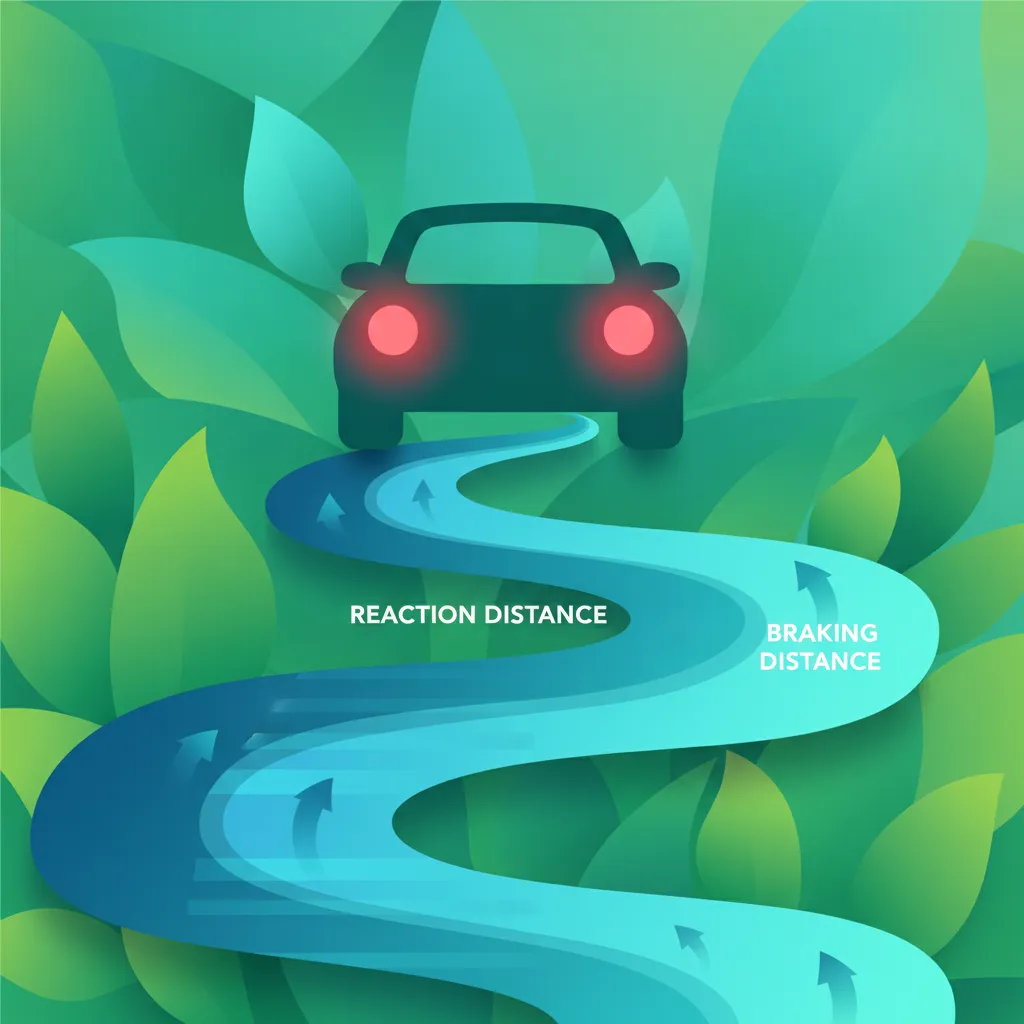
This lesson provides a comprehensive guide to motorcycle braking techniques, explaining the distinct roles of the front and rear brakes. It covers the concept of progressive brake application for smooth, controlled stops and the factors influencing total stopping distance. You will also learn about the function of Anti-lock Braking Systems (ABS) and how to adapt your braking for different conditions.

This lesson provides a detailed explanation of the various road markings found on Belgian roads and their specific significance for motorcyclists. It covers the rules associated with solid and broken lane lines, stop lines at junctions, and markings for pedestrian and bicycle crossings. Understanding these markings is essential for correct lane positioning and safe navigation.
This lesson focuses on strategies for safely navigating situations where road space is limited, such as narrow lanes, road works, or between lines of traffic. It explains how to use assertive lane positioning to prevent other vehicles from crowding you. You will learn to anticipate and safely manage these 'squeeze points' to avoid being trapped or forced into a dangerous situation.
This lesson explains the essential and often misunderstood principle of counter-steering, the primary method for initiating turns on a motorcycle at speed. It details how to apply this technique for precise and responsive directional control. You will also learn techniques for maintaining balance and stability, particularly during challenging low-speed maneuvers.

This lesson provides crucial advice for riding in rainy conditions, a frequent occurrence in Belgium. It explains how water on the road surface dramatically reduces tire grip, extends stopping distances, and creates a risk of hydroplaning. Riders will learn how to adjust their speed, increase following distances, and manage reduced visibility from rain and road spray to maintain safety.
Find clear answers to common questions learners have about Road Surface Hazards: Oil, Leaves, Gravel, and Potholes. Learn how the lesson is structured, which driving theory objectives it supports, and how it fits into the overall learning path of units and curriculum progression in Belgium. These explanations help you understand key concepts, lesson flow, and exam focused study goals.
If you notice an oil slick, avoid braking or accelerating sharply while on it. Keep the motorcycle as upright as possible and maintain a constant, steady throttle to preserve traction until you have safely cleared the patch.
No, you should never brake while inside a pothole as it can cause a loss of control or damage your suspension. Complete your braking before reaching the hole, release the brake as you pass over it, and then reapply it once your wheels are on smooth pavement.
Wet leaves are extremely slippery, similar to ice, and they can also hide hazards like potholes or uneven road surfaces. You should treat patches of wet leaves with the same caution as black ice by slowing down early and maintaining a straight line.
Gravel reduces the contact patch's grip, making your bike unstable during a lean. You must reduce your speed before entering the corner and minimize your lean angle to ensure the tires remain in contact with the road rather than sliding out.
Ready to focus your Belgian driving theory revision? Utilize our powerful search tool to pinpoint exact topics, road signs, or difficulty levels. Engage with practice questions that directly address your learning needs and solidify your understanding of Belgian traffic laws for your upcoming exam.