
This lesson focuses on the critical skill of navigating narrow road sections, road works, and areas where space is severely restricted. You will learn how to use assertive lane positioning to maintain a safety cushion and prevent other vehicles from forcing you into dangerous situations, which is vital for passing your Belgian motorcycle theory exam.

Lesson content overview
Motorcycle riding demands exceptional spatial awareness and precise control, especially when road space becomes limited. This comprehensive lesson, part of your Belgian Motorcycle Theory Course for Licence A, A1, and A2, focuses on the critical strategies for safely navigating squeeze points and inherently narrow road sections. Mastering these situations is vital for preventing collisions, maintaining your safety, and ensuring smooth traffic flow.
We will delve into effective lane positioning, proactive anticipation, and the legal requirements for yielding in constricted environments. A deep understanding of these principles builds upon your knowledge of ideal lane positioning, blind spot awareness, and safe overtaking practices, equipping you to manage challenging road conditions with confidence.
A squeeze point refers to any segment of a road where the effective lane width is significantly reduced, forcing vehicles into closer proximity than usual. For motorcyclists, these areas present unique challenges dueating to their smaller profile and the potential for other drivers to misjudge available space.
These points are not merely an inconvenience; they are high-risk zones where the margin for error shrinks considerably. Being unprepared can lead to dangerous situations, such as being forced into the curb, encountering oncoming traffic too closely, or even being boxed in by larger vehicles.
Common types of squeeze points include:
For motorcyclists, the dangers of squeeze points are amplified. Other drivers, especially those in larger vehicles, may not accurately perceive a motorcycle's need for space or might inadvertently push a rider into a dangerous position. A motorcycle's inherent instability at low speeds, combined with reduced escape routes, makes effective management of squeeze points a fundamental skill. Failing to anticipate and adjust for these constricted areas can lead to:
Beyond temporary squeeze points, many roads are inherently narrow road sections. These are stretches of road where the overall width is insufficient for two standard vehicles, like two cars or a car and a motorcycle, to pass comfortably side by side without one or both vehicles adjusting their position.
Examples include single carriageways in rural areas, residential streets with limited width, or lanes bordered by buildings or walls. In such scenarios, effective negotiation often requires one vehicle to yield or make specific accommodations for the other. Unlike squeeze points that often involve temporary obstructions, narrow road sections are a constant feature, demanding consistent awareness and adherence to yielding principles.
Successfully navigating squeeze points and narrow road sections hinges on two core principles: early anticipation and strategic lane positioning. By thinking ahead and making deliberate choices about where you ride within your lane, you can proactively manage risk and dictate your own safety.
Anticipation is a motorcyclist's most powerful tool. It involves constantly scanning the road ahead to identify potential hazards and changes in road conditions well before you reach them. For squeeze points, this means looking for:
Scan Far Ahead: Develop the habit of looking 10-15 seconds ahead to identify potential squeeze points and plan your approach. This gives you ample time to adjust speed and positioning.
Once a squeeze point is identified, mentally prepare for the reduced space. This includes assessing the severity of the constriction, identifying potential escape routes, and determining the optimal speed for negotiation. Early anticipation allows you to make smooth, controlled adjustments rather than sudden, reactive maneuvers.
Your lateral lane positioning is paramount in squeeze points. By assertively placing your motorcycle, you can communicate your intentions, deter other drivers from encroaching on your space, and maintain a crucial protective space around yourself.
The Goal: To maximize the safety buffer between your motorcycle and hazards, whether they are curbs, obstacles, or other vehicles.
When approaching a squeeze point, avoid riding passively. Instead, adopt an assertive lane position that discourages other vehicles from trying to share your already limited space.
Avoid the "Suicide Lane" Position: Never ride directly on the painted centre line if it means placing yourself directly in the path of oncoming traffic in a narrow section. Your positioning should always be about maintaining a safe buffer.
Protective space is the safety buffer you maintain around your motorcycle. In squeeze points, this buffer becomes even more critical. It gives you room to react to sudden changes, swerve to avoid obstacles, or stop safely.
In genuinely narrow road sections where two vehicles cannot pass simultaneously, one vehicle must yield or give way. The rules for yielding are designed to prevent deadlocks and ensure safe passage.
In Belgium and many other European countries, the general principle for vehicles meeting on a narrow road without specific signage is:
No Automatic Right-of-Way: Do not assume you have the right-of-way simply because you arrived first or are going straight. Assess the situation, prioritize safety, and be prepared to yield if it is the safest option.
Anticipate Early: Scan ahead for signs of narrowing, construction, or parked cars. Identify the squeeze point well in advance.
Adjust Speed: Slow down significantly before entering the squeeze point. A slower speed gives you more time to react, maintain balance, and make precise adjustments.
Optimize Lane Position: Move into an assertive lane position. This usually means slightly away from the curb and towards the centre of the available space, making your presence clear.
Maintain Protective Space: Ensure you have adequate space in front of you and to your sides. Avoid riding directly alongside other vehicles.
Observe Other Drivers: Watch for drivers who might not see you or who might try to cut into your space. Be ready to react.
Look for Escape Routes: Constantly identify potential paths to safety if a dangerous situation develops (e.g., a clear shoulder, an opening in traffic).
Exit Smoothly: Once past the constriction, smoothly return to your ideal lane position and resume an appropriate speed, continuing to scan ahead.
Navigating narrow sections and squeeze points is not just a matter of good riding practice; it's also governed by specific traffic regulations in Belgium. Adhering to these rules is mandatory and contributes significantly to road safety.
Belgian traffic regulations mandate that when encountering a narrow section or an obstruction that reduces lane width, drivers must:
This rule reinforces the concept of assertive lane positioning. It's not about hugging the kerb to "make space" for others, but about occupying your lane responsibly to prevent being pushed off the road or into a dangerous situation. The primary rationale is to prevent accidents caused by vehicles being too close to the kerb (running off, hitting obstacles) or colliding with oncoming vehicles due to insufficient clearance.
Failure to adhere to safe practices in squeeze points can lead to serious consequences, ranging from minor infractions to severe accidents.
These violations are not only illegal but also demonstrate a lack of defensive riding skills, which are crucial for every motorcyclist.
The strategies for handling squeeze points and narrow road sections must adapt to changing conditions. Factors like weather, road type, and the state of your motorcycle can significantly influence the safest approach.
system of control (Information, Position, Speed, Gear, Acceleration) to prepare for limited visibility and potential squeeze points.A heavily loaded motorcycle (with luggage, a passenger, or both) has altered handling characteristics:
If your motorcycle is heavily loaded, begin your adjustments for squeeze points and narrow sections even earlier. Allow more protective space, reduce your speed further, and ensure all inputs are smooth and deliberate.
Practice Slow Speed Control: Regularly practice slow-speed maneuvers, including tight turns and controlled stops, to improve your balance and confidence in constricted spaces.
Handling squeeze points and narrow road sections effectively is a hallmark of a skilled and safe motorcyclist. It's a continuous application of defensive riding principles, combining vigilant anticipation, assertive lane positioning, and disciplined protective space management.
Always remember to scan far ahead, adapt your speed, and make your presence known through intelligent lane choices. Understand the rules of yielding, but always prioritize safety and open communication with other road users. By integrating these strategies into your riding, you will confidently navigate even the most constricted roadways, ensuring your safety and contributing to a smoother traffic flow on Belgian roads.
This lesson teaches motorcycle riders how to safely navigate squeeze points and narrow road sections through assertive lane positioning and proactive anticipation. Squeeze points—where lane width is reduced by construction, parked cars, or lane merges—create high-risk zones where motorcyclists face amplified dangers due to their smaller profile and reduced escape routes. The core strategy involves scanning far ahead, adopting an assertive position away from the curb and toward the lane centre, and maintaining protective space on all sides. Belgian traffic regulations require riders to keep clear of the kerb without endangering oncoming traffic, and yielding obligations in genuine narrow sections fall to the vehicle nearest an obstruction. Riders must adapt their approach for weather conditions, road types, and vehicle load, with particular attention to wet surfaces, wind, and heavily loaded motorcycles that have altered handling characteristics.
A short set of high-value points that capture the most important learning from this lesson.
A squeeze point is any road section where effective lane width is reduced, forcing vehicles into close proximity and creating high-risk zones for motorcyclists.
Assertive lane positioning—staying away from the curb and slightly toward the lane centre—communicates your presence and discourages other vehicles from encroaching on your space.
Anticipation is critical: scan 10-15 seconds ahead for signs, markings, cones, parked cars, and traffic flow changes to identify squeeze points early.
Protective space must be maintained in all directions—frontal distance gives escape routes, lateral positioning buffers against roadside hazards and encroaching vehicles.
When vehicles cannot pass simultaneously on a narrow road, the vehicle nearest an obstruction or kerb typically must yield, but safety always takes priority over right-of-way assumptions.
Explore all units and lessons included in this driving theory course.
Belgian regulations require keeping as far clear of the kerb as possible without endangering oncoming traffic—hugging the curb is both illegal and dangerous.
Never ride directly on the centre line if it places you in the path of oncoming traffic; your positioning must always maintain a safe buffer.
In wet conditions, painted lines, manhole covers, and metal plates become extremely slippery—increase following distance and avoid sudden inputs.
A heavily loaded motorcycle has reduced maneuverability and longer braking distances, requiring earlier adjustments and more protective space.
The 7-step approach: Anticipate → Adjust Speed → Optimize Lane Position → Maintain Protective Space → Observe Other Drivers → Look for Escape Routes → Exit Smoothly.
Riding too close to the kerb, which increases vulnerability to debris, loss of balance, and being forced off the road by larger vehicles.
Failing to anticipate squeeze points in time, leading to sudden braking, swerving, or being caught off guard in constricted spaces.
Not yielding when required in narrow sections, causing road blockages or forcing dangerous head-on collision avoidance.
Riding directly on the centre line in narrow sections, effectively placing yourself in the path of oncoming traffic.
Allowing protective space to collapse by riding alongside other vehicles when entering a squeeze point, eliminating escape routes.
Lesson content overview
A short set of high-value points that capture the most important learning from this lesson.
A squeeze point is any road section where effective lane width is reduced, forcing vehicles into close proximity and creating high-risk zones for motorcyclists.
Assertive lane positioning—staying away from the curb and slightly toward the lane centre—communicates your presence and discourages other vehicles from encroaching on your space.
Anticipation is critical: scan 10-15 seconds ahead for signs, markings, cones, parked cars, and traffic flow changes to identify squeeze points early.
Protective space must be maintained in all directions—frontal distance gives escape routes, lateral positioning buffers against roadside hazards and encroaching vehicles.
When vehicles cannot pass simultaneously on a narrow road, the vehicle nearest an obstruction or kerb typically must yield, but safety always takes priority over right-of-way assumptions.
Explore all units and lessons included in this driving theory course.
Belgian regulations require keeping as far clear of the kerb as possible without endangering oncoming traffic—hugging the curb is both illegal and dangerous.
Never ride directly on the centre line if it places you in the path of oncoming traffic; your positioning must always maintain a safe buffer.
In wet conditions, painted lines, manhole covers, and metal plates become extremely slippery—increase following distance and avoid sudden inputs.
A heavily loaded motorcycle has reduced maneuverability and longer braking distances, requiring earlier adjustments and more protective space.
The 7-step approach: Anticipate → Adjust Speed → Optimize Lane Position → Maintain Protective Space → Observe Other Drivers → Look for Escape Routes → Exit Smoothly.
Riding too close to the kerb, which increases vulnerability to debris, loss of balance, and being forced off the road by larger vehicles.
Failing to anticipate squeeze points in time, leading to sudden braking, swerving, or being caught off guard in constricted spaces.
Not yielding when required in narrow sections, causing road blockages or forcing dangerous head-on collision avoidance.
Riding directly on the centre line in narrow sections, effectively placing yourself in the path of oncoming traffic.
Allowing protective space to collapse by riding alongside other vehicles when entering a squeeze point, eliminating escape routes.
Explore search topics learners often look for when studying Handling Squeeze Points and Narrow Road Sections. These topics reflect common questions about road rules, driving situations, safety guidance, and lesson level theory preparation for learners in Belgium.
Browse additional driving theory lessons that cover connected traffic rules, road signs, and common driving situations related to this topic. Improve your understanding of how different rules interact across everyday traffic scenarios.
Learn advanced techniques for navigating constricted roadways and squeeze points. This lesson covers assertive positioning, hazard anticipation, and defensive riding crucial for Belgian motorcycle theory, focusing on safety in tight urban and rural environments.
This lesson explores the unique challenges presented by dense urban environments, including riding in heavy traffic and navigating narrow streets. It provides strategies for positioning your motorcycle to avoid the 'dooring zone' of parked cars and to maintain visibility. You will learn defensive riding techniques to anticipate sudden actions from other drivers in congested conditions.

This lesson synthesizes key safety concepts into the practice of defensive riding, a proactive mindset focused on anticipation and risk reduction. It teaches you to continuously scan for potential hazards, predict the actions of other road users, and always maintain an escape path. By mastering these strategies, you learn to manage the space around you and take control of your own safety.
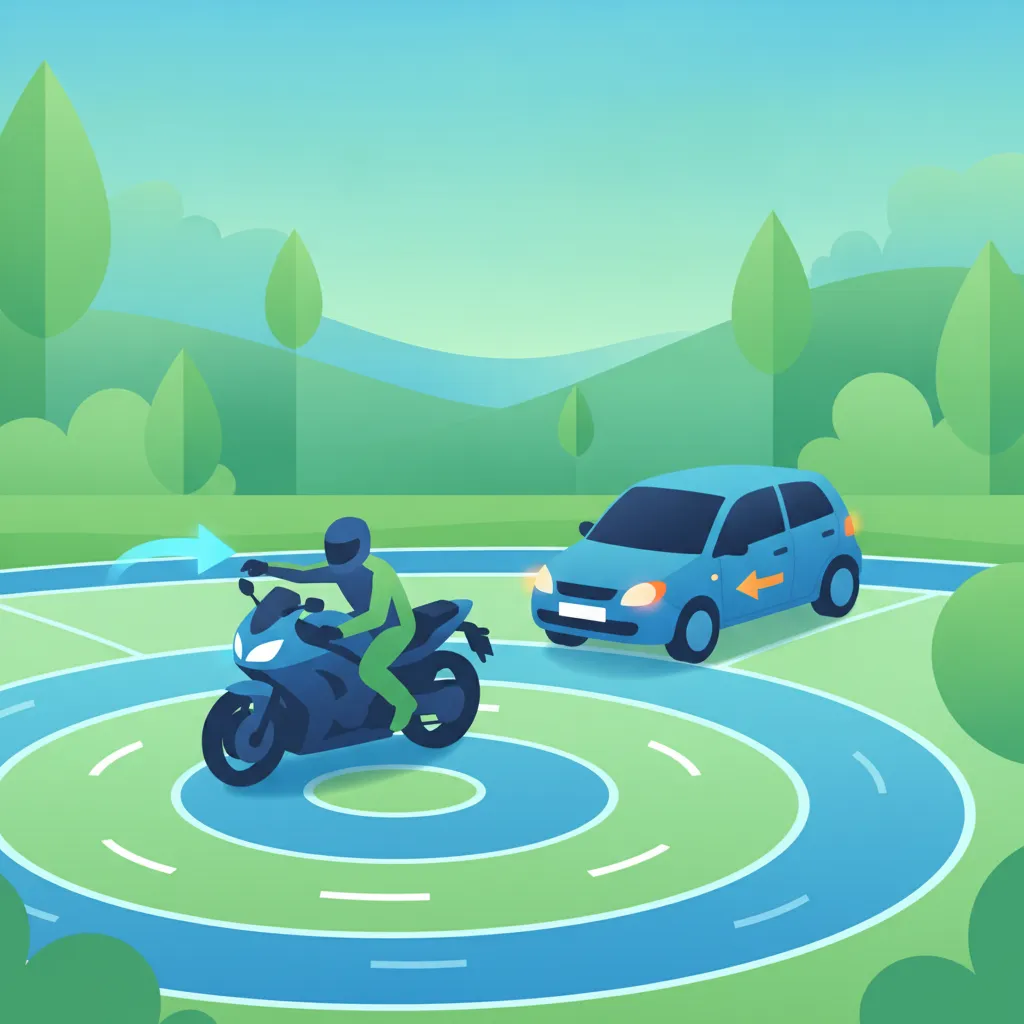
This lesson offers specific strategies for motorcyclists navigating roundabouts in Belgium. It covers the rules for entering the roundabout, including yielding to circulating traffic, and how to choose the correct lane for your intended exit. The content stresses the importance of clear signaling and maintaining awareness of other vehicles during entry and exit maneuvers.
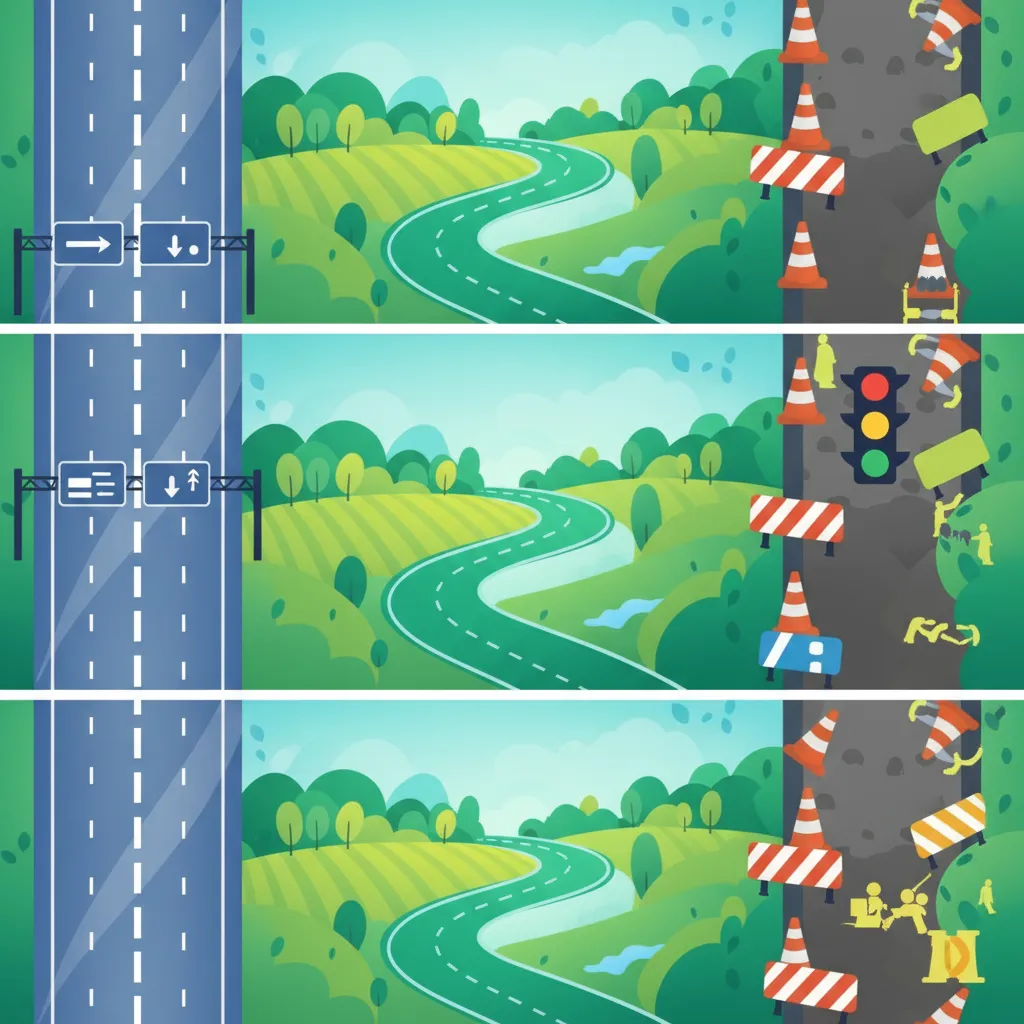
This lesson covers the specific challenges of driving on motorways, rural roads, and navigating roadworks. Learners will review lane discipline on high-speed roads and identify hazards common to rural roads, such as sharp bends and wildlife. It also explains the importance of adjusting speed and following temporary signage in construction zones.

This lesson provides instruction on how to react in an emergency situation, covering techniques for performing a rapid, controlled stop. It explains how to apply maximum braking force without locking the wheels and how to manage a skid if one occurs. You will also learn about avoidance maneuvers, such as swerving, and the psychological challenge of overcoming target fixation.

This lesson provides a comprehensive guide to motorway riding, starting with the procedure for safely merging into high-speed traffic from a slip road. It details the importance of strict lane discipline, including the rules for overtaking and the proper use of lanes. You will also learn the correct technique for planning and executing a safe exit from the motorway.

This lesson details a motorcyclist's obligations when approaching various types of crossings, including marked pedestrian and bicycle lanes. It emphasizes the legal requirement to yield to vulnerable road users and the importance of thorough visual checks before proceeding. You will learn how to maintain a safe distance and anticipate the movements of pedestrians and cyclists in urban areas.
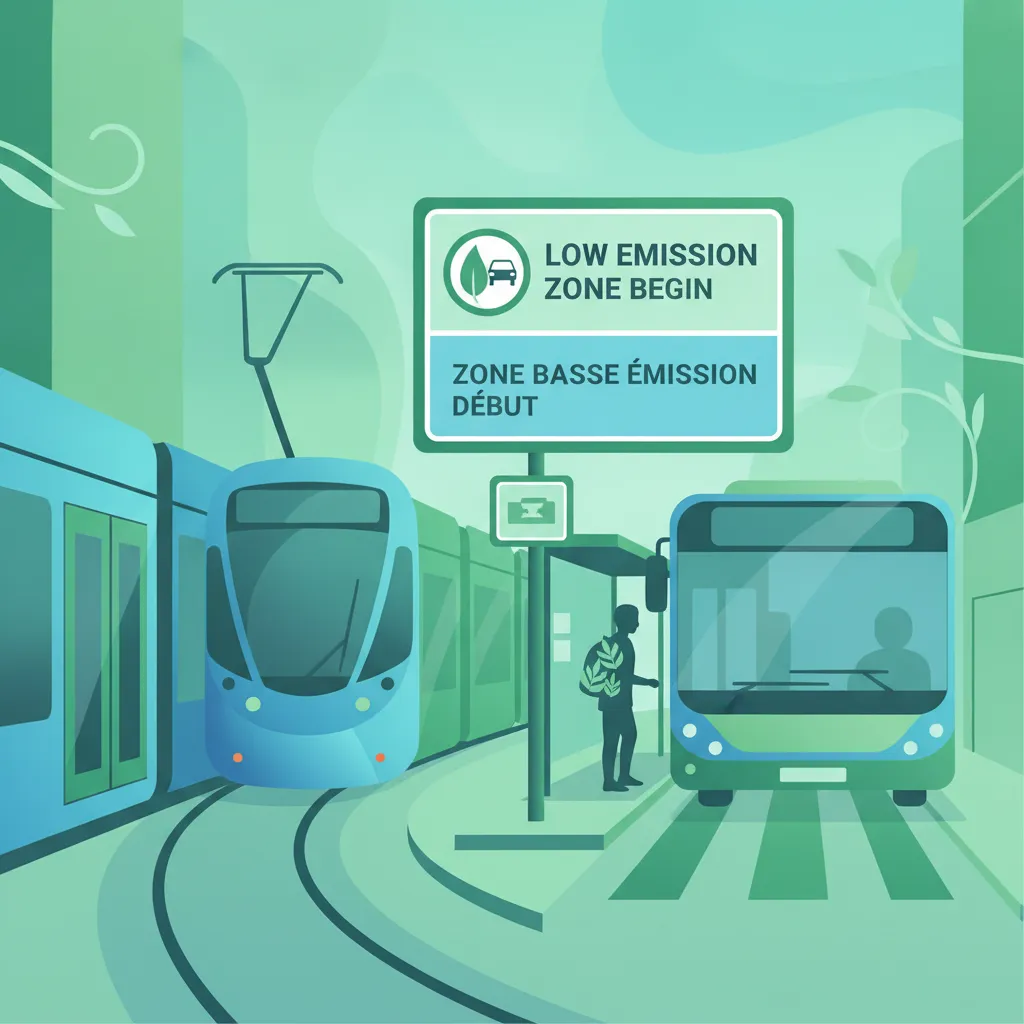
This lesson addresses unique traffic environments and special zones commonly found in Belgian urban areas. It clarifies the specific regulations concerning tramways, including where trams have absolute priority, and the conditions under which motorcycles may use bus lanes. The lesson also explains how to identify and comply with restrictions in low-emission zones.

This lesson trains you to actively scan the road ahead for surface hazards that can compromise traction, such as oil spills, wet leaves, and loose gravel. It provides strategies for safely navigating these hazards, including avoidance maneuvers and gentle control inputs. You will also learn how to handle unexpected encounters with potholes and other road imperfections.

This lesson provides a step-by-step guide to executing a safe overtaking maneuver in compliance with Belgian law. It covers the necessary pre-maneuver checks, proper signaling, and how to accurately judge the speed and distance of oncoming traffic. You will learn the correct procedure for passing a vehicle and safely returning to your original lane.
Explore the unique hazards and challenges of riding on various Belgian road types, from narrow rural lanes to busy urban streets. Understand how to adapt your riding for different environments to enhance safety and prepare for the theory exam.
This lesson covers the specific challenges of driving on motorways, rural roads, and navigating roadworks. Learners will review lane discipline on high-speed roads and identify hazards common to rural roads, such as sharp bends and wildlife. It also explains the importance of adjusting speed and following temporary signage in construction zones.
This lesson explores the unique challenges presented by dense urban environments, including riding in heavy traffic and navigating narrow streets. It provides strategies for positioning your motorcycle to avoid the 'dooring zone' of parked cars and to maintain visibility. You will learn defensive riding techniques to anticipate sudden actions from other drivers in congested conditions.
This lesson details a motorcyclist's obligations when approaching various types of crossings, including marked pedestrian and bicycle lanes. It emphasizes the legal requirement to yield to vulnerable road users and the importance of thorough visual checks before proceeding. You will learn how to maintain a safe distance and anticipate the movements of pedestrians and cyclists in urban areas.
This lesson trains you to actively scan the road ahead for surface hazards that can compromise traction, such as oil spills, wet leaves, and loose gravel. It provides strategies for safely navigating these hazards, including avoidance maneuvers and gentle control inputs. You will also learn how to handle unexpected encounters with potholes and other road imperfections.
This lesson addresses unique traffic environments and special zones commonly found in Belgian urban areas. It clarifies the specific regulations concerning tramways, including where trams have absolute priority, and the conditions under which motorcycles may use bus lanes. The lesson also explains how to identify and comply with restrictions in low-emission zones.

This lesson provides a detailed explanation of the various road markings found on Belgian roads and their specific significance for motorcyclists. It covers the rules associated with solid and broken lane lines, stop lines at junctions, and markings for pedestrian and bicycle crossings. Understanding these markings is essential for correct lane positioning and safe navigation.
This lesson focuses on the correct identification and interpretation of regulatory and informative road signs that are particularly relevant to motorcyclists. It covers signs that dictate speed limits, prohibit overtaking, and indicate compulsory routes or turns. You will learn to recognize different sign categories based on their distinct shapes and colors as defined by Belgian traffic law.
This lesson offers specific strategies for motorcyclists navigating roundabouts in Belgium. It covers the rules for entering the roundabout, including yielding to circulating traffic, and how to choose the correct lane for your intended exit. The content stresses the importance of clear signaling and maintaining awareness of other vehicles during entry and exit maneuvers.

This lesson details the specific precautions and techniques required for riding in rain and fog. It explains how water on the road affects tyre grip and braking distances, and how to avoid aquaplaning. You will learn the correct use of lights to be seen in low visibility and how to adjust your speed and following distance accordingly.
This lesson synthesizes key safety concepts into the practice of defensive riding, a proactive mindset focused on anticipation and risk reduction. It teaches you to continuously scan for potential hazards, predict the actions of other road users, and always maintain an escape path. By mastering these strategies, you learn to manage the space around you and take control of your own safety.
Find clear answers to common questions learners have about Handling Squeeze Points and Narrow Road Sections. Learn how the lesson is structured, which driving theory objectives it supports, and how it fits into the overall learning path of units and curriculum progression in Belgium. These explanations help you understand key concepts, lesson flow, and exam focused study goals.
A squeeze point is any road section where the available width is restricted, such as road works, narrow lanes with bollards, or congestion where vehicles leave insufficient space for you to pass safely.
Filtering (inter-lane riding) is a complex maneuver. You must ensure you are not creating a hazard and that you have an escape route. If the gap is too narrow to maintain a safety cushion, it is safer to remain in line with traffic.
By positioning yourself more towards the center of the lane rather than the edge, you discourage cars from trying to squeeze past you in the same lane, effectively claiming the space you need to ride safely.
Yes, the theory exam often tests your ability to identify hazards in traffic scenarios. You may be shown images of restricted roads and asked to identify the safest path or the most dangerous behavior.
Ready to focus your Belgian driving theory revision? Utilize our powerful search tool to pinpoint exact topics, road signs, or difficulty levels. Engage with practice questions that directly address your learning needs and solidify your understanding of Belgian traffic laws for your upcoming exam.