
This lesson teaches you how to identify the hidden blind spots of other vehicles, a critical skill for any rider on Belgian roads. You will learn specific positioning strategies to remain visible to trucks, buses, and cars, effectively reducing your risk in varied traffic conditions. Understanding these no-zones is vital for both your practical safety and your success on the official Belgian motorcycle theory exam.
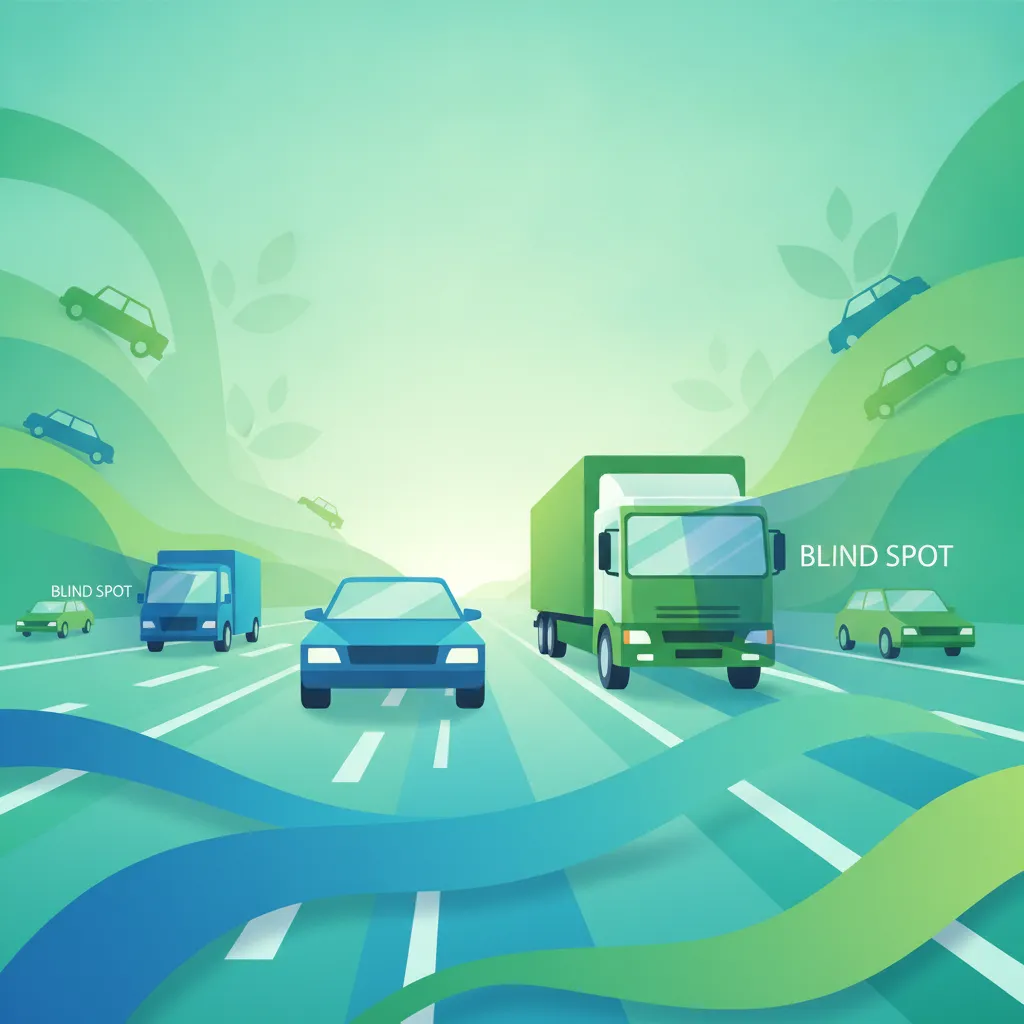
Lesson content overview
Navigating the roads safely as a motorcyclist requires a keen awareness of your surroundings and, critically, an understanding of how other drivers perceive you. One of the most significant hazards on the road involves blind spots – areas around a vehicle that the driver cannot see, even with properly adjusted mirrors. This lesson, part of the Comprehensive Belgian Motorcycle Theory Course, will equip you with the knowledge and strategies to identify these hidden zones and position yourself strategically to remain visible, thereby greatly enhancing your safety.
A blind spot is defined as an area around a vehicle that the driver cannot see directly through windows or indirectly through any of the vehicle's mirrors. These unseen zones are a significant contributing factor to collisions, as a driver might initiate a lane change, turn, or other manoeuvre without being aware of a vehicle in their blind spot.
For motorcyclists, this presents a heightened risk. Given their smaller size, motorcycles can be completely obscured within a larger vehicle's blind spot, making them virtually invisible to the other driver. Understanding the location and extent of these blind spots is the first step towards defensive riding.
Blind spots are not confined to just the sides of a vehicle; they exist in various areas around any moving vehicle. Recognizing these different categories helps motorcyclists anticipate potential dangers from all directions.
The practical implication of these blind spots is clear: if you are in one, the other driver simply doesn't know you're there. This lack of awareness can lead to sudden, unannounced actions from the other driver, putting you in immediate danger.
While all vehicles have blind spots, large vehicles such as heavy trucks, buses, and vehicles with trailers possess significantly larger blind spots known as no-zones. These no-zones are areas where other vehicles are virtually invisible to the driver, even with an array of mirrors. Due to their sheer size and design, these vehicles have expansive areas where smaller vehicles can disappear entirely.
Never assume a truck or bus driver can see you, even if you can see their mirrors. Always actively work to stay out of their no-zones.
Understanding blind spots is a cornerstone of defensive riding. It links directly to several other critical safety concepts:
By integrating these concepts, motorcyclists can create a comprehensive safety strategy that significantly reduces the risk of collisions related to limited driver visibility.
One of the most effective ways for motorcyclists to avoid blind spots is through proactive lane positioning. Your horizontal placement within your lane dictates your visibility to other drivers and your ability to react to hazards.
Lane positioning refers to where you place your motorcycle within the width of your designated lane. While often taught as simple lane discipline, for motorcyclists, it becomes a dynamic tool for safety.
The key is not to adopt a single static position but to constantly adjust based on the surrounding traffic, road conditions, and the need to be seen. Your goal is to be in a position where you can clearly see the mirrors of the vehicle you are near, and ideally, where the driver can see you.
If you can see the driver's face in their side mirror, it's highly likely they can see you. Use this as a guide for your positioning.
Safe following distance is the space required between your motorcycle and the vehicle in front of you, providing enough time to react to sudden braking or other maneuvers. This distance is paramount for avoiding rear-end collisions and for staying out of the lead vehicle's rear blind spot.
In Belgium, the general rule is to maintain a following distance that allows you to stop safely, which translates to the "two-second rule" in good conditions. For motorcyclists, it is often advisable to increase this to three or four seconds, especially behind larger vehicles.
Maintaining a sufficient following distance not only gives you crucial reaction time but also helps you stay out of the lead vehicle's rear blind spot. When you are far enough back to see the vehicle's rear tires on the pavement and still see several car lengths of road ahead, you are less likely to be completely invisible.
A method to estimate a safe following distance: when the vehicle in front passes a fixed object, you should count "one-thousand-one, one-thousand-two." If you pass the same object before finishing the count, you are following too closely.
Overtaking other vehicles, especially large ones, inherently involves entering and exiting blind spots. A methodical and well-executed overtaking technique is crucial for minimizing this risk and ensuring your visibility throughout the manoeuvre.
When preparing to overtake, motorcyclists must prioritize visibility and space.
Overtaking trucks and buses demands extra caution due to their extended no-zones and potential for air turbulence.
Cutting back into your lane too soon after overtaking a large vehicle is extremely dangerous. Always ensure you can see the entire front of the overtaken vehicle in your mirror before returning.
Belgian traffic laws emphasize the responsibility of all road users to contribute to safety, and this includes ensuring visibility. While other drivers have an obligation to check their surroundings, motorcyclists also have a duty to position themselves safely.
All road users, including motorcyclists, must ride or drive in a position where they are visible to drivers of surrounding vehicles, especially when approaching or riding beside larger vehicles.
This rule is mandatory and forms the foundation of defensive riding in relation to blind spots. Its rationale is straightforward: to reduce collision risk by ensuring mutual awareness among road users. For motorcyclists, this means actively choosing lane positions and distances that place them within other drivers' fields of vision or mirror views.
Belgian traffic regulations also govern how overtaking maneuvers must be performed, indirectly addressing blind spot risks.
These rules collectively reinforce the need for motorcyclists to be proactive in managing their visibility and avoiding other vehicles' blind spots.
Understanding common mistakes helps in actively avoiding them. Many blind spot-related incidents stem from predictable errors in judgment or positioning.
| Violation | Reason It’s Wrong | Correct Behavior | Consequence |
|---|---|---|---|
| Riding directly behind a truck or bus | You are completely invisible in the vehicle's rear no-zone. | Maintain a safe following distance; ensure you can see the driver's mirrors. | Rear-end collision if the large vehicle brakes suddenly. |
| Riding for extended periods in a vehicle's side blind spot | The driver may not see you when checking mirrors for a lane change. | Constantly adjust your position; accelerate past or drop back to remain visible. | Side-swipe collision during an unexpected lane change. |
| Cutting in too close after overtaking a large vehicle | You re-enter the front blind spot of the overtaken vehicle too quickly. | Wait until you can see the entire front of the vehicle in your rearview mirror before returning. | Accident during lane re-entry, or if the overtaken vehicle must brake. |
| Assuming all drivers check their blind spots | Drivers can be distracted or have improperly adjusted mirrors. | Always position yourself to be seen, regardless of the other driver's habits. | Unexpected lane changes or turns without warning. |
| Overtaking in a "no-zone" | You begin or end the manoeuvre while hidden from the other driver. | Initiate overtaking only when fully visible and complete it after clearing the blind spot. | Risk of side collision, especially with large vehicles. |
The risks associated with blind spots are not constant; they are significantly influenced by environmental and situational factors. Motorcyclists must adapt their strategies accordingly.
Vehicles carrying heavy loads or towing trailers have significantly different handling characteristics and extended blind spots.
While this lesson focuses on your visibility to others, it's also crucial to remember that you, as a motorcyclist, are a vulnerable road user. Other vulnerable road users such as cyclists and pedestrians are even smaller and harder to see. Always be aware of your own blind spots and ensure you check them thoroughly, especially when turning or changing lanes, to protect these road users.
The fundamental safety principle is: "You must be seen to be safe." This applies universally, but especially to motorcyclists who, by their nature, are less visible than cars or trucks.
Mastering the art of avoiding blind spots is crucial for any motorcyclist preparing for their Belgian motorcycle theory exam and for safe riding throughout their lives.
By internalizing these principles, motorcyclists can dramatically improve their road safety and ensure they are seen, understood, and respected on Belgian roads.
This lesson teaches motorcyclists to recognize and avoid the blind spots of other vehicles—areas where drivers cannot see through windows or mirrors. Front, side, and rear blind spots exist on every vehicle, but large trucks and buses have much larger no-zones that pose heightened risks for motorcyclists. Strategic lane positioning within your lane (left-third, centered, or right-third) and maintaining safe following distances using the two-second rule (extended to three or four seconds for motorcycles) are essential techniques. Belgian traffic rules emphasize that all road users must ensure their visibility, making proactive positioning a legal as well as safety responsibility. Overtaking should be executed decisively, minimizing time in blind spots, and you should never return to your lane until you see the entire front of the overtaken vehicle in your mirror.
A short set of high-value points that capture the most important learning from this lesson.
Blind spots exist around every vehicle in front, side, and rear areas where drivers cannot see through windows or mirrors.
Large vehicles like trucks and buses have significantly larger no-zones that can completely hide motorcycles for extended periods.
Dynamic lane positioning within your lane—left-third, centered, or right-third—should constantly adjust based on surrounding traffic to maximize your visibility.
The two-second rule for following distance should be extended to three or four seconds for motorcyclists, especially behind larger vehicles.
Never assume a driver can see you; always position yourself where you can see their mirrors and they can see you.
Explore all units and lessons included in this driving theory course.
If you can see the driver's face in their side mirror, they can likely see you—this is your positioning guide.
When overtaking, only return to your lane when you can see the entire front of the overtaken vehicle in your rearview mirror.
The right-hand side no-zone of large trucks is typically larger because the driver sits on the left side.
Weather conditions like rain, fog, and night riding drastically expand effective blind spots for all drivers.
Vehicles with trailers have dramatically increased blind spots, wider turning requirements, and slower braking distances.
Riding directly behind a truck or bus where you are completely invisible in their rear no-zone.
Lingering in a vehicle's side blind spot for extended periods, risking a side-swipe during an unexpected lane change.
Cutting back into your lane too soon after overtaking a large vehicle, re-entering their front blind spot.
Assuming all drivers properly check their blind spots or have correctly adjusted mirrors.
Attempting to overtake large vehicles without sufficient lateral clearance or in confined spaces.
Lesson content overview
A short set of high-value points that capture the most important learning from this lesson.
Blind spots exist around every vehicle in front, side, and rear areas where drivers cannot see through windows or mirrors.
Large vehicles like trucks and buses have significantly larger no-zones that can completely hide motorcycles for extended periods.
Dynamic lane positioning within your lane—left-third, centered, or right-third—should constantly adjust based on surrounding traffic to maximize your visibility.
The two-second rule for following distance should be extended to three or four seconds for motorcyclists, especially behind larger vehicles.
Never assume a driver can see you; always position yourself where you can see their mirrors and they can see you.
Explore all units and lessons included in this driving theory course.
If you can see the driver's face in their side mirror, they can likely see you—this is your positioning guide.
When overtaking, only return to your lane when you can see the entire front of the overtaken vehicle in your rearview mirror.
The right-hand side no-zone of large trucks is typically larger because the driver sits on the left side.
Weather conditions like rain, fog, and night riding drastically expand effective blind spots for all drivers.
Vehicles with trailers have dramatically increased blind spots, wider turning requirements, and slower braking distances.
Riding directly behind a truck or bus where you are completely invisible in their rear no-zone.
Lingering in a vehicle's side blind spot for extended periods, risking a side-swipe during an unexpected lane change.
Cutting back into your lane too soon after overtaking a large vehicle, re-entering their front blind spot.
Assuming all drivers properly check their blind spots or have correctly adjusted mirrors.
Attempting to overtake large vehicles without sufficient lateral clearance or in confined spaces.
Explore search topics learners often look for when studying Understanding and Avoiding Blind Spots of Other Vehicles. These topics reflect common questions about road rules, driving situations, safety guidance, and lesson level theory preparation for learners in Belgium.
Browse additional driving theory lessons that cover connected traffic rules, road signs, and common driving situations related to this topic. Improve your understanding of how different rules interact across everyday traffic scenarios.
Learn to identify and avoid the extended blind spots, or 'no-zones', of trucks and buses. This lesson provides crucial insights for motorcyclists to ensure they remain visible and safe when sharing the road with large vehicles in Belgium.

This lesson explains the concept of strategic road positioning to enhance safety and visibility. It teaches riders how to select the best position within a lane to be seen by other drivers and to have a good view of the road ahead. A key focus is on identifying and staying out of the large blind spots of cars, vans, and trucks to prevent dangerous situations.
This lesson teaches motorcyclists how to safely navigate mixed traffic environments that include cars, buses, and trams. It highlights the significant blind spots of larger vehicles and explains the absolute priority of trams on their tracks. You will learn the rules for sharing space with public transport and how to maintain safe distances when following or overtaking buses.
This lesson addresses unique traffic environments and special zones commonly found in Belgian urban areas. It clarifies the specific regulations concerning tramways, including where trams have absolute priority, and the conditions under which motorcycles may use bus lanes. The lesson also explains how to identify and comply with restrictions in low-emission zones.
This lesson details a motorcyclist's obligations when approaching various types of crossings, including marked pedestrian and bicycle lanes. It emphasizes the legal requirement to yield to vulnerable road users and the importance of thorough visual checks before proceeding. You will learn how to maintain a safe distance and anticipate the movements of pedestrians and cyclists in urban areas.
This lesson explores the unique challenges presented by dense urban environments, including riding in heavy traffic and navigating narrow streets. It provides strategies for positioning your motorcycle to avoid the 'dooring zone' of parked cars and to maintain visibility. You will learn defensive riding techniques to anticipate sudden actions from other drivers in congested conditions.
This lesson examines the interactions between private vehicles and public transport, focusing on buses and trams. Learners will understand the priority rules for these vehicles, recognizing dedicated lanes and stopping positions. Special considerations for motorcyclists, school buses, and other vulnerable users are also discussed to ensure safe coexistence.

This lesson focuses on techniques and equipment designed to enhance a rider's visibility on the road. It covers the effective use of reflective materials on clothing and the motorcycle itself, as well as the legal requirements for lighting under Belgian law. You will learn strategies to improve your conspicuity during the day, at night, and in adverse weather conditions.

This lesson provides a step-by-step guide to executing a safe overtaking maneuver in compliance with Belgian law. It covers the necessary pre-maneuver checks, proper signaling, and how to accurately judge the speed and distance of oncoming traffic. You will learn the correct procedure for passing a vehicle and safely returning to your original lane.
This lesson offers specific strategies for motorcyclists navigating roundabouts in Belgium. It covers the rules for entering the roundabout, including yielding to circulating traffic, and how to choose the correct lane for your intended exit. The content stresses the importance of clear signaling and maintaining awareness of other vehicles during entry and exit maneuvers.
This lesson covers the specific challenges of driving on motorways, rural roads, and navigating roadworks. Learners will review lane discipline on high-speed roads and identify hazards common to rural roads, such as sharp bends and wildlife. It also explains the importance of adjusting speed and following temporary signage in construction zones.
Discover essential strategies for motorcyclists to enhance their visibility and actively avoid the blind spots of other vehicles. This lesson focuses on proactive lane positioning and safe overtaking techniques relevant to Belgian traffic conditions.
This lesson explains the concept of strategic road positioning to enhance safety and visibility. It teaches riders how to select the best position within a lane to be seen by other drivers and to have a good view of the road ahead. A key focus is on identifying and staying out of the large blind spots of cars, vans, and trucks to prevent dangerous situations.
This lesson provides a step-by-step guide to executing a safe overtaking maneuver in compliance with Belgian law. It covers the necessary pre-maneuver checks, proper signaling, and how to accurately judge the speed and distance of oncoming traffic. You will learn the correct procedure for passing a vehicle and safely returning to your original lane.
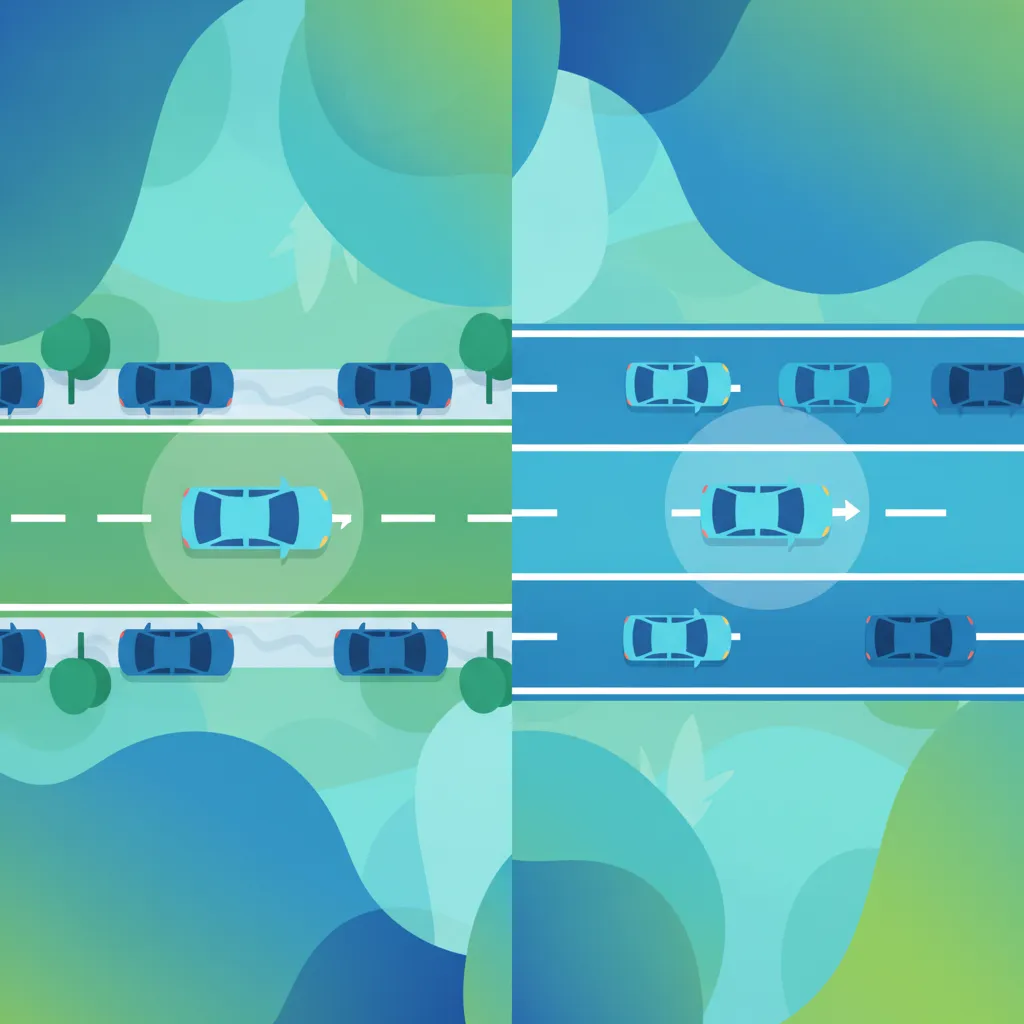
This lesson teaches the principles of strategic lane positioning to maximize your visibility to others and your view of the road ahead. It explains different positions within the lane and when to use them, such as when approaching intersections or riding on multi-lane roads. You will learn how to adapt your position based on traffic flow, road conditions, and potential hazards.
This lesson focuses on techniques and equipment designed to enhance a rider's visibility on the road. It covers the effective use of reflective materials on clothing and the motorcycle itself, as well as the legal requirements for lighting under Belgian law. You will learn strategies to improve your conspicuity during the day, at night, and in adverse weather conditions.
This lesson offers specific strategies for motorcyclists navigating roundabouts in Belgium. It covers the rules for entering the roundabout, including yielding to circulating traffic, and how to choose the correct lane for your intended exit. The content stresses the importance of clear signaling and maintaining awareness of other vehicles during entry and exit maneuvers.
This lesson teaches motorcyclists how to safely navigate mixed traffic environments that include cars, buses, and trams. It highlights the significant blind spots of larger vehicles and explains the absolute priority of trams on their tracks. You will learn the rules for sharing space with public transport and how to maintain safe distances when following or overtaking buses.

Overtaking safely is a critical driving skill. This lesson explains where and how overtaking is permitted in Belgium, the importance of correct signaling, and maintaining a sufficient speed differential. Learners will understand the rules for passing on motorways and single-carriageway roads, and how to identify zones where overtaking is prohibited.
This lesson explores the unique challenges presented by dense urban environments, including riding in heavy traffic and navigating narrow streets. It provides strategies for positioning your motorcycle to avoid the 'dooring zone' of parked cars and to maintain visibility. You will learn defensive riding techniques to anticipate sudden actions from other drivers in congested conditions.

This lesson explains how clothing choices significantly enhance a rider's visibility to other road users. It details the benefits of wearing bright, fluorescent colors for daytime conspicuity and the function of retro-reflective materials for nighttime safety. The content provides practical guidance on selecting appropriate apparel and maintaining its reflective properties to ensure maximum effectiveness.
This lesson provides a step-by-step guide to executing turns and lane changes safely and efficiently. It covers the critical sequence of checking mirrors, signaling intent, and performing a head check for blind spots before any maneuver. Learners will also understand how to manage their speed and balance during cornering to maintain full control of the vehicle.
Find clear answers to common questions learners have about Understanding and Avoiding Blind Spots of Other Vehicles. Learn how the lesson is structured, which driving theory objectives it supports, and how it fits into the overall learning path of units and curriculum progression in Belgium. These explanations help you understand key concepts, lesson flow, and exam focused study goals.
Motorcycles have a smaller profile and can easily disappear behind the mirrors or structural pillars of larger vehicles. Because you lack the protective shell of a car, being in a blind spot puts you at high risk of being hit during a lane change.
A no-zone is the large area surrounding a truck or bus where the driver cannot see you, especially directly behind, directly in front, and along the right-hand side. You should avoid lingering in these areas whenever possible.
A good rule of thumb is that if you cannot see the driver's eyes or their side mirrors, they almost certainly cannot see you. Always position yourself where you are clearly visible in at least one of their mirrors.
Yes, always use your indicators to signal your intentions clearly to other drivers, even if you are moving to a more visible position. This adds an extra layer of communication to ensure the driver is aware of your presence.
Ready to focus your Belgian driving theory revision? Utilize our powerful search tool to pinpoint exact topics, road signs, or difficulty levels. Engage with practice questions that directly address your learning needs and solidify your understanding of Belgian traffic laws for your upcoming exam.